

When you develop a dress, the outer fabric is only part of the construction. As a clothing manufacturer, we pay close attention to the materials used inside the garment because they can change the fit, weight and finished shape. A sample may follow the measurement chart but still feel restrictive or hang differently once the lining and support layers are sewn in. These details need to be checked during sample development, before the construction is approved for bulk production.
Why Internal Construction Needs Attention During Dress Development
Internal materials are easy to overlook when you are preparing a new collection. Most design discussions start with the outer fabric, color, silhouette and measurements. The problem often appears later, when the sample is assembled and the inner layers begin to affect how the garment sits on the body.
Take a fitted satin dress as an example. The outer fabric may have enough room around the hips, but a lining with less stretch can make the finished dress feel tight. On an A-line dress, a heavy lining may pull the skirt down and reduce its movement. A strapless bodice has another requirement: it needs enough internal support to stay in position without putting too much pressure on the wearer.
These are different construction problems, so the material choice should follow the design rather than a standard lining specification.
When reviewing a dress sample, we look at the outer fabric and internal layers as one construction. Changing one component can affect the balance of the whole garment, even if the pattern measurements remain unchanged.
Which Internal Materials Are Used in Dress Manufacturing?
The materials inside a dress depend on its fabric, construction and intended fit. Some styles need little more than a lining, while others require several layers to create the right shape.
1. Lining
Lining is used to improve coverage, comfort and the inside finish of a dress. It also affects the way the outer fabric hangs.
For lightweight satin, chiffon and other fluid fabrics, lining weight is particularly important. A lining that is too heavy can pull the shell downward. The dress may lose some of the soft movement shown in the original design.
For fitted styles, stretch compatibility matters more. If the outer fabric stretches but the lining does not, the wearer may feel tension around the bust, waist or hips.
Length is another detail worth checking. A lining that extends below the outer hem becomes visible, while one that is too short may pull upward when the wearer walks or sits. The correct length needs to be assessed on the sewn garment, not just from the flat pattern.
2. Underlining
Underlining is attached to the outer fabric and becomes part of the garment structure.
You may need it when a shell fabric is too lightweight, transparent or soft to hold the intended shape. It can provide additional body and make certain fabrics easier to handle during construction.
However, adding underlining does not automatically improve the result.
If your design depends on a soft drape, a firm underlining may make the dress look heavier or more rigid. On a lightweight skirt, that difference can be quite noticeable.
The decision should be based on how much structure the design needs, not simply on whether the outer fabric feels thin.
3. Interfacing
Interfacing is generally applied to selected areas that need more stability. Common examples include necklines, facings, waistbands, plackets and closure areas.
The main concern is whether the interfacing is suitable for the shell fabric.
A firm option may work well on a structured waistband but look too stiff around a lightweight satin neckline. The finished area can become bulky or lose the softness of the surrounding fabric.
When you review the sample, pay attention to the transition between interfaced and non-interfaced areas. The garment should hold its shape without making those areas look noticeably different.
4. Boning
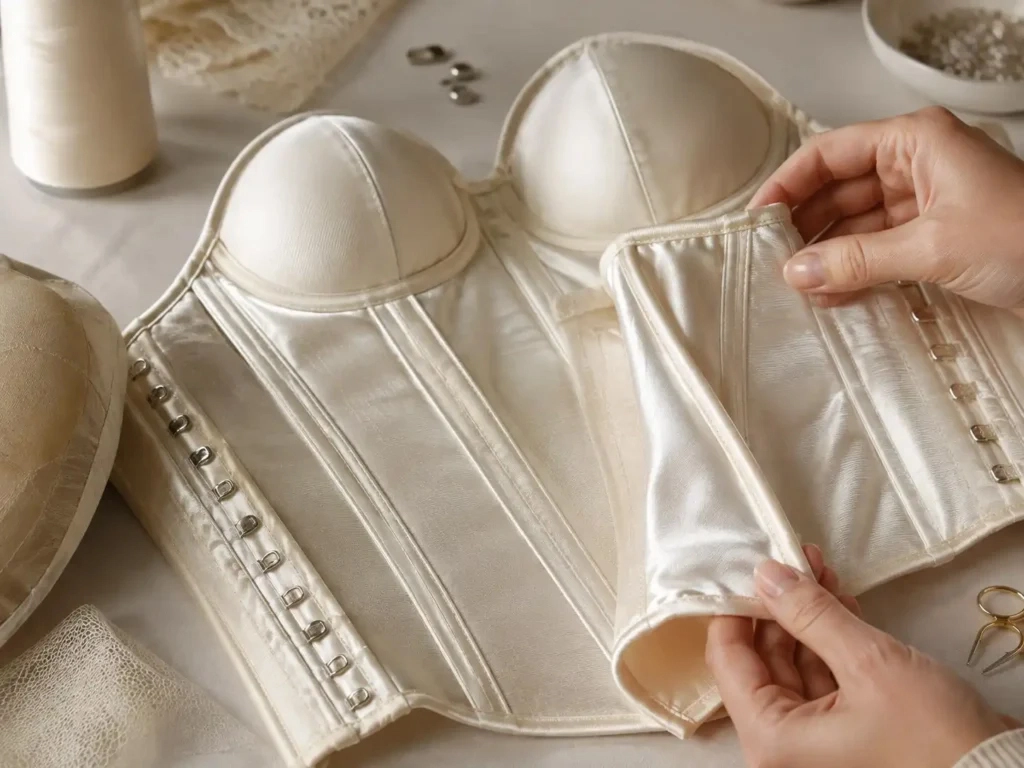
Boning is commonly used in corset dresses, strapless dresses and structured bodices. It helps the garment maintain its shape and supports the bodice around the bust and waist.
Its position matters as much as the material itself.
If the boning is too long, the ends may press into the wearer. If the channel is placed incorrectly, it can create visible lines or fail to support the area that needs it.
During fitting, check the boning while the dress is being worn. A bodice that looks correct on a table may feel uncomfortable once the wearer sits, moves or raises their arms.
Adding more boning is not always the answer. Its placement needs to work with the pattern and the intended fit.
5. Bra Cups
Bra cups are often used in fitted, strapless and evening dresses to provide bust shaping and reduce the need for a separate bra.
Cup thickness and shape affect the bust point and neckline. If you change the cups after the first fitting, the upper bodice may need to be reviewed as well.
For example, a thicker cup can change how the neckline sits, even when the outer pattern has not been altered. This is why cup selection should be confirmed as part of the bodice development.
6. Power Mesh and Elastic Support
Power mesh and elastic are used when a dress needs controlled stretch, compression or additional support.
They are particularly relevant to fitted styles. The inner layer needs to move with the body without becoming loose after wear.
One point to check is recovery. A material may stretch easily but fail to return to its original shape. If the support layer and outer fabric behave differently, the finished dress may gradually lose its intended fit.
Too much compression can be uncomfortable, so the goal is not to make the garment as tight as possible. It is to provide the support required by the design.

How Internal Materials Affect Dress Fit
The fit of a finished dress cannot always be judged from the outer fabric or measurement chart alone. The internal layers can change the amount of room available to the wearer.
Stretch, Recovery and Wearing Ease
For fitted dresses, check the stretch of the shell and lining separately.
A common situation is that the outer fabric has comfortable two-way stretch, but the lining has very little elasticity. Each layer may look acceptable when measured flat. Once sewn together, however, the lining can restrict the shell.
Recovery is also important. A fabric that stretches but does not return to its original dimensions may affect the fit after repeated wear. This is particularly relevant to bodycon dresses and fitted evening styles.
You should also consider wearing ease rather than relying entirely on a standard size chart.
Too little ease can cause pulling around the bust and hips, tension at the armholes or difficulty sitting and walking. Too much ease can make a fitted dress lose its intended shape.
When reviewing the sample, check where the restriction actually comes from. It may be the outer pattern, but it may also be the lining or internal support.
Bust, Waist and Neckline Fit
Internal components can change how the upper part of a dress sits on the body.
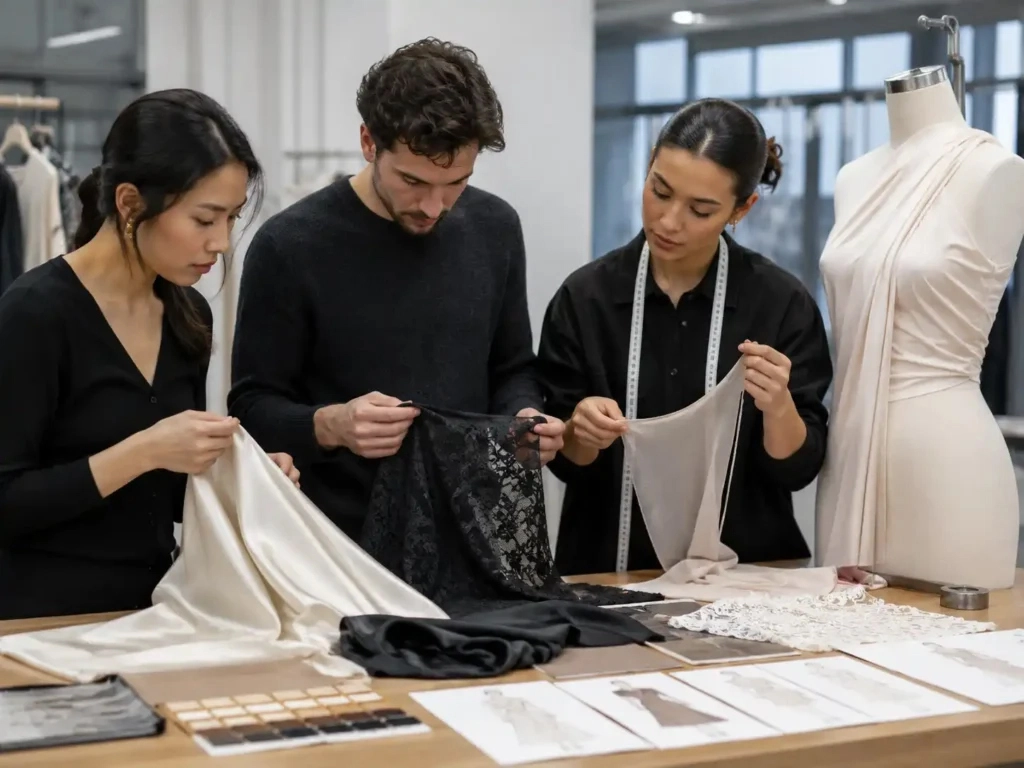
Bra cups affect bust shaping, boning influences bodice support, and interfacing helps selected areas maintain their shape. A lining with insufficient ease may also pull the bodice upward.
If the neckline gaps, the bodice feels tight or the waist does not sit correctly, do not assume that the outer pattern is the only issue.
Look at the finished garment from the front and side. Check for tension lines, gaping and pressure points. A sample can meet the listed measurements and still need adjustment.
Internal Construction Requirements for Different Dress Styles
A lining combination that works for one silhouette may not work for another. Your internal construction should reflect the way the dress is intended to look and move.
Bodycon and Fitted Dresses
A bodycon dress needs the inner layer to work with the stretch of the outer fabric.
If the lining is too tight, horizontal pulling may appear across the body. If it is too loose, unwanted folds can form inside the garment.
The two layers do not always need identical flat measurements. What matters is how they behave together when the dress is worn.
A-Line Dresses
On an A-line dress, internal material weight can change the skirt shape.
A firm underlining may make the skirt stand wider than intended. A heavy lining can pull the fabric downward and reduce its natural volume.
If your reference design has a soft, flowing skirt, pay attention to the weight and stiffness of the inner layers before approving the sample.
Slip and Bias-Cut Dresses
Slip dresses usually rely on the natural movement of the outer fabric. Satin, silk and other fluid materials can look quite different when paired with an unsuitable lining.
A heavy lining may affect the drape, while a lining with insufficient stretch can create tension across the body.
Bias-cut styles need another check. The fabric can settle after sewing, so the sample should hang before the hem is finalized. Adjusting the length too early may result in an uneven hem once the fabric has relaxed.
Strapless, Corset and Evening Dresses
These styles need more attention to internal support because the bodice is responsible for maintaining its shape.
Depending on the design, the construction may include boning, bra cups, power mesh, elastic, structured lining and interfacing.
The components need to work together. If the bodice is too loose, the dress may slide down. If the support is too firm, the wearer may feel pressure around the bust or waist.
For these styles, the internal construction should be considered during pattern and sample development, rather than added after the outer garment has been completed.
What Should You Check During Dress Sample Development?
When the first sample arrives, checking the color, length and measurements is only the beginning. You also need to understand how the internal construction affects the finished garment.
Here are five points worth reviewing before approving the sample.
1. Check the shell and lining together
Stretch the two layers separately and compare their behavior. If the shell moves easily but the lining restricts it, identify the affected area before requesting pattern changes.
2. Check the position of internal support
For boning, cups and elastic, compare the actual position with your design and construction notes. Small placement differences can change how a fitted bodice sits.
3. Test the dress while moving
Ask the fit model to sit, walk, raise their arms and move naturally. Some problems are not visible when the dress is laid flat.
4. Review the garment from different angles
Look at the front, side and back. A dress may appear balanced from the front but show pulling around the bust or waist from the side.
5. Check the hem after the fabric settles
This is particularly important for fluid and bias-cut fabrics. Allow the sample to hang before making the final length adjustment.
These checks help you decide whether the sample needs a pattern correction, a material change or an adjustment to the internal construction.
How to Specify Internal Materials in Your Tech Pack
If you are sending a design to a clothing manufacturer, a note such as “Lining: Polyester” is usually not enough for accurate development.
The factory still needs to know what type of lining you expect and how it should behave in the finished garment.
Include the following details where relevant:
| Specification | Details to Provide |
|---|---|
| Composition | Fiber content |
| Fabric type | Woven lining, stretch lining or power mesh |
| Weight | GSM or target fabric weight |
| Stretch | Stretch direction and percentage |
| Color | Required color or matching reference |
| Coverage | Full lining, partial lining or specific panels |
| Bra cups | Shape, size and thickness |
| Boning | Position, length and channel details |
| Interfacing | Application area and required firmness |
| Elastic | Width, stretch and placement |
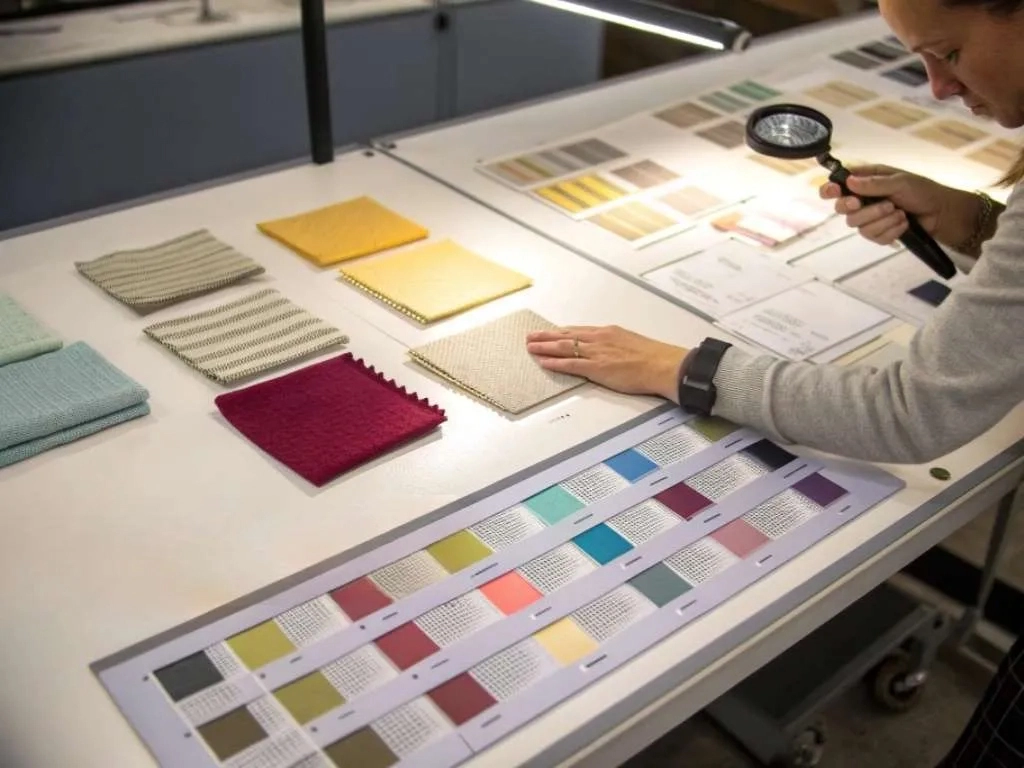
If you already have a preferred lining or support material, provide a swatch or fabric reference. If the material is still open for development, make that clear too.
For example, if the neckline must remain firm but the skirt needs to move freely, identify these as separate construction requirements. This gives the pattern and sample teams clearer instructions and reduces guesswork during development.
What Happens If Internal Materials Change After Sample Approval?
Material substitutions sometimes happen before bulk production. A selected lining may no longer be available, a cup may need to be changed, or the original support mesh may not work as expected.
The important point is to check the effect of the replacement before bulk cutting.
A different lining can change the garment’s weight, stretch, opacity and drape. A different cup may affect the bust point and neckline. Changing the interfacing can also make a previously soft area feel stiff.
Not every substitution requires the whole dress to be developed again. Some changes can be checked through a small construction test. However, if the replacement affects fit, support or silhouette, another sample or revised fitting check may be necessary.
We recommend keeping the approved material specifications together with the PP sample reference. That way, the materials used for bulk production can be checked against the construction that was actually approved.
FAQ
1. Can I use the same lining for several dress styles?
Yes, provided the lining suits the fabric and construction of each style. A lining that works in a woven A-line dress may restrict a stretch bodycon dress. Before using one material across a collection, check its weight, stretch and finished appearance in each relevant garment.
2. What if I do not know which internal materials my design needs?
You can send your reference garment, design photos or available tech pack to the factory. The pattern and sample team can review the intended silhouette and construction, then discuss suitable lining and support options. It is better to confirm these details before the first sample is finalized.
3. Will adding more boning make a strapless dress more secure?
Not necessarily. The position, length and construction of the boning matter more than simply increasing the amount. Excessive or poorly placed boning can cause pressure and discomfort. The bodice pattern, cups and other support components should be reviewed together during fitting.
4. Can I replace the specified lining with a lower-cost material?
Yes, if the alternative still meets the required performance and appearance. Compare its weight, stretch, opacity and hand feel with the approved lining. A lower-cost option should be tested in the garment before bulk production, particularly if the dress has a close fit or fluid drape.
5. Should internal materials be checked again before bulk production?
Yes. The materials used for bulk production should match the approved specifications. If the lining, cups, interfacing or support mesh has changed, the relevant construction points should be reviewed before cutting. This helps avoid differences between the approved sample and finished garments.
Conclusion
The inside of a dress can change how the entire garment fits and moves. Your lining, interfacing and support materials should be settled during sample development, with any later substitutions checked before bulk cutting. If you are preparing a new collection, Xiuyu Apparel can review your construction requirements as an experienced dress manufacturer, from initial sampling through bulk production.

