

When you develop a lined dress, the lining length can affect the finished hem, garment movement and fit. A lining that is too long may show below the outer fabric, while one that is too short can pull upward when worn. As a clothing manufacturer, we treat lining length as part of garment construction, not just another measurement in the tech pack.
How Much Shorter Should Dress Lining Be?
For a free-hanging dress lining, around 2–3 cm shorter than the finished outer hem is a useful starting point for many styles.
However, there is no single measurement that works for every dress. The correct difference depends on the skirt shape, fabric weight, lining construction and how the two layers move when the garment is worn.
Here are some initial references:
| Dress Style | Starting Reference |
|---|---|
| Mini dress | Around 1.5–2.5 cm |
| Midi dress | Around 2–3 cm |
| Maxi dress | Around 2.5–3.5 cm |
| Fitted dress | Check body tension and lining ease |
| Chiffon dress | Check lining visibility during movement |
| Bias-cut dress | Confirm after the garment has hung |
These are development references rather than fixed production specifications. You should not simply apply the same difference to every style in your collection.
One detail also needs to be clarified: a free-hanging lining and a lining attached to the outer hem are constructed differently. A free-hanging lining needs to finish above the outer hem, while an attached lining may require extra ease or a small pleat to prevent tension when the garment moves.
The construction method should be confirmed before the final length is entered into the size specification.
Why Should Dress Lining Be Shorter Than the Outer Dress?
The main purpose is to keep the lining inside the garment without interfering with the outer fabric.
When a dress is worn, the shell and lining do not always follow exactly the same movement. The outer layer may swing away from the body, while the lining stays closer to the legs.
If the lining finishes too close to the outer hem, it can become visible when walking or sitting.
The problem is particularly noticeable on loose skirts and lightweight dresses. A lining that looks hidden on a hanger may appear below the outer hem once the wearer starts moving.
A suitable length difference gives the outer fabric room to move while keeping the lining out of sight.
How Does Dress Style Affect Lining Length?
The silhouette is often more useful than the dress length when deciding where the lining should finish.
A-line and flared dresses
The outer skirt has more room to swing. When the wearer walks, the shell can move away from the lining. You need to check the lining from several angles rather than measuring only at the centre front.
Fitted and bodycon dresses
The lining follows the body more closely. If it is too short or too tight around the hips, it may ride upward when the wearer sits or walks. In these styles, lining ease and body fit matter as much as the finished length.
Maxi dresses
A longer skirt creates more fabric movement, particularly when the outer layer is lightweight. The lining should provide coverage without restricting the skirt or becoming visible during walking.
Bias-cut dresses
These need extra attention because the fabric can drop after hanging. The outer layer may change length after the first sample is sewn, so the hem should not be finalized too early.
A mini, midi or maxi label gives you a starting reference, but the actual pattern shape determines the final construction.
How Does Fabric Affect the Required Lining Length?
Two dresses with the same pattern measurements can behave differently when their fabrics are changed.
Satin
Satin often has a smooth surface and moves easily against another fabric. If the lining is heavier than the shell, it may affect how the outer layer hangs. During sampling, check whether the lining drags or creates fullness around the hem.
Chiffon
Chiffon is lightweight and moves easily. The outer layer can lift away from the lining when walking, making the lining more visible. The lining length and fabric weight both need attention.
Stretch fabrics
A stretch dress needs a lining that can move with the outer fabric. If the lining has less stretch or insufficient ease, it may pull against the shell even when the finished length looks correct.
Bias-cut fabrics
Bias-cut garments can relax under their own weight. The outer fabric may drop more than the lining after hanging, changing the original hem relationship.
Shrinkage also needs to be considered. If the outer fabric and lining respond differently to washing, steaming or pressing, the length difference can change after finishing.
For this reason, fabric selection should be settled before final sample approval. Changing the lining material after fitting can affect both the fit and the finished hem.
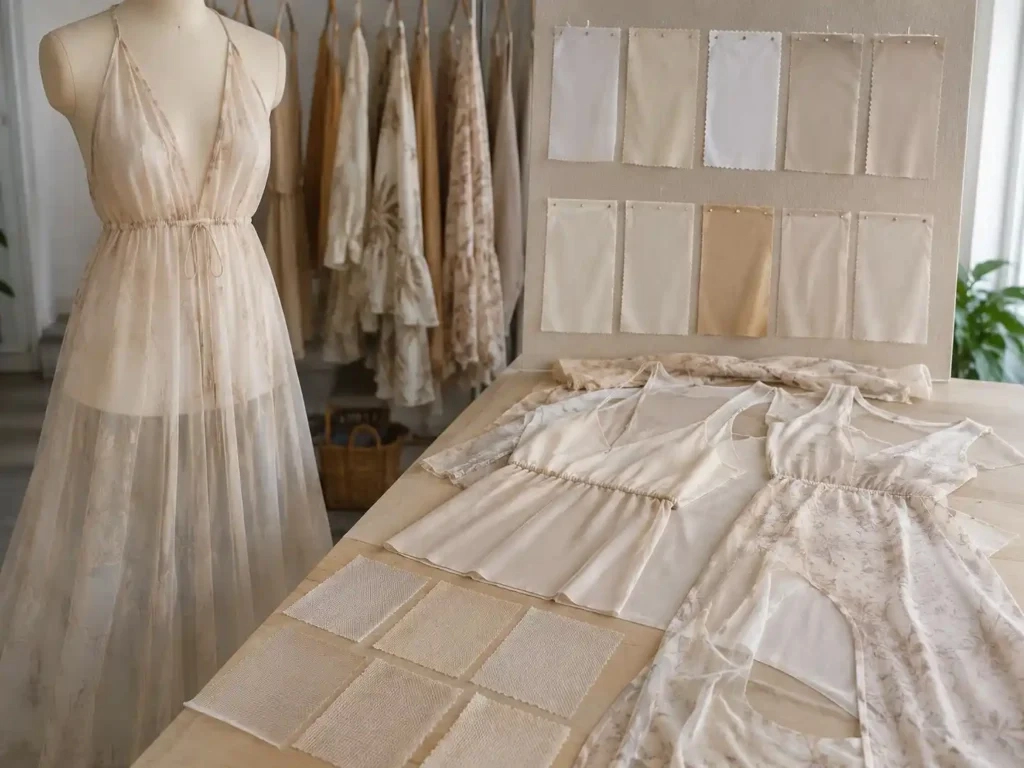
What Happens If the Lining Is Too Long?
The most obvious problem is that the lining extends below the outer hem. However, there are other signs worth checking.
- The lining appears when the wearer walks.
- The outer hem looks uneven or pushed outward.
- Lightweight fabric develops unwanted fullness near the bottom.
- The lining hangs lower at certain points instead of following an even line.
If you notice these problems on a sample, do not immediately cut the lining shorter.
First, check whether the outer fabric has stretched, relaxed or dropped after hanging. Also inspect the hem allowance and pressing result.
We have seen situations where the lining measurement was not the original problem. The outer fabric had changed position during finishing, so shortening the lining alone would not have corrected the hem.
What Happens If the Lining Is Too Short?
A short lining can create tension inside the dress.
You may notice that the dress looks fine on a hanger but behaves differently once worn. The lining can pull upward around the hips or thighs, especially when the wearer sits down.
On a fitted dress, insufficient lining ease can also pull the outer fabric out of its intended shape.
When reviewing this problem, check three areas:
- Lining length: Does it have enough length for the intended wearing position?
- Lining width: Is there enough room around the hips and thighs?
- Attachment: Are the lining seams or attachment points restricting movement?
Adding length alone will not solve the problem if the lining is also too narrow.
Should Lining Length Be Graded With the Dress?
Yes. If you are ordering several sizes, the lining specification should be included in the grading review.
A 2 cm difference that works on the sample size may not produce the same result across the full size range. Body length, hip proportions and skirt shape can change as the pattern is graded.
For fitted styles, pay particular attention to the relationship between lining length and hip measurements. For longer dresses, check whether the lining remains properly positioned across the size range.
Your size specification should show the finished lining length or clearly define its difference from the outer hem. Avoid leaving the pattern team to assume that one fixed allowance will work for every size.
Where the style has substantial grading, checking additional sizes during fit review can prevent problems from appearing only after bulk production.
Does Hem Construction Change the Lining Length?
Yes. The finished measurement depends partly on how the two layers are constructed.
A narrow rolled hem, baby hem and folded hem use different amounts of fabric. If you calculate lining length from the raw pattern edge rather than the finished hem position, the result may not match your intended specification.
You also need to distinguish between two construction methods:
Free-hanging lining: The lining has its own finished hem and hangs separately inside the dress. It normally finishes above the outer hem.
Lining attached to the outer hem: The two layers are connected at the bottom. In this construction, the lining may need additional ease or a small pleat so it does not pull against the outer fabric.
These methods should not be treated as interchangeable.
If your tech pack only states:
- Outer dress length: 90 cm
- Lining: 2 cm shorter
the factory may still need clarification.
Include the finished outer length, finished lining length, measurement point and hem construction. A simple construction drawing is particularly useful when the lining is attached to the shell or has a different shape from the outer skirt.
What Should You Include in the Tech Pack?
If you are sending a lined dress to a clothing manufacturer, the lining details should be clear enough for the pattern maker and sewing team to follow without guessing.
Your tech pack should include:
| Specification | What to Provide |
|---|---|
| Outer dress length | Finished measurement and starting point |
| Lining length | Finished measurement |
| Length difference | Intended difference from the outer hem |
| Outer fabric | Composition, weight and fabric details |
| Lining fabric | Composition, weight and stretch |
| Hem construction | Rolled, folded, attached or free-hanging |
| Attachment details | Where the lining joins the outer garment |
| Size grading | Measurement changes across sizes |
| Tolerance | Permitted measurement variation |
| Reference | Construction drawing or approved sample photos |
If you have a physical reference garment, include photographs of the inside construction. A picture showing the lining attachment, side seams and bottom hem can help avoid misunderstandings during sample development.
You do not need an unnecessarily complicated tech pack. You need one that makes the intended construction clear.
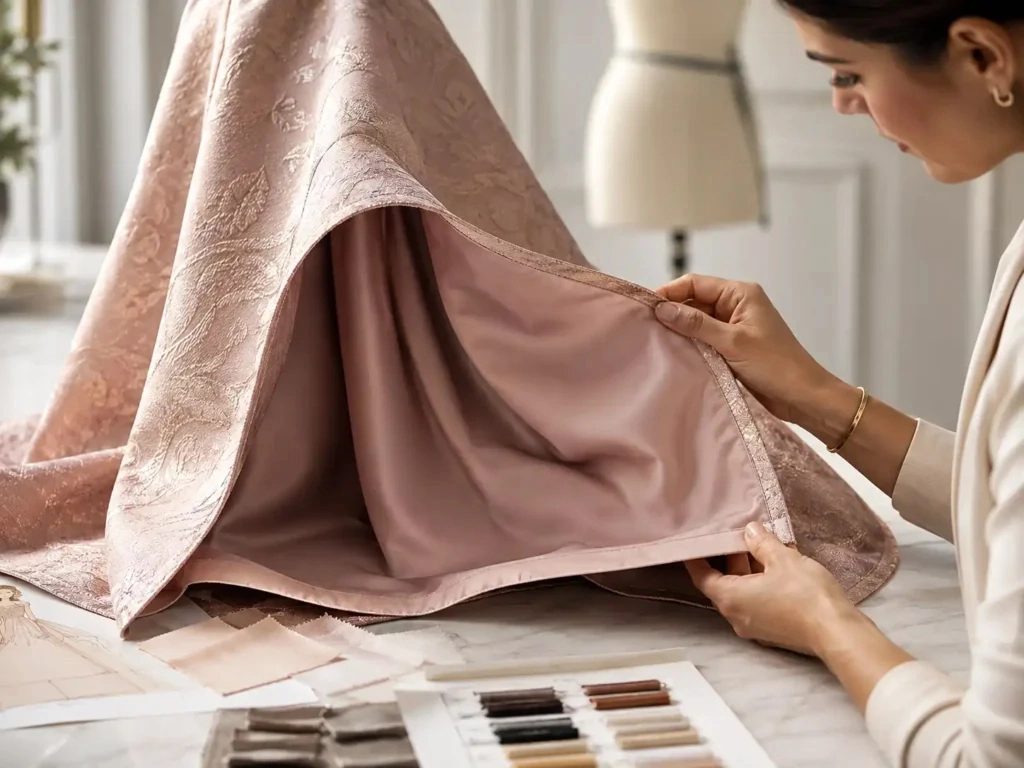
How Do We Check Dress Lining During Sampling?
The first sample is where you find out whether the measurements work with the actual materials.
We check the complete dress rather than relying only on the separate measurements of the shell and lining.
The inspection includes:
- Finished length: Measure both layers from the specified starting points.
- Hem position: Check whether the lining finishes evenly around the garment.
- Fabric movement: Look for twisting, dragging or unwanted fullness.
- Body fit: Check tension around the waist, hips and thighs.
- Attachment: Inspect seams, joining points and any ease built into the lining.
- Finishing: Review the hem again after pressing.
The garment should be checked flat and hanging. For fitted or flowing styles, a wear test is also useful. Walking and sitting can reveal problems that are not obvious when the dress is placed on a table.
For bias-cut garments, allow sufficient hanging time before confirming the final outer hem. Otherwise, you may approve a lining measurement against an outer layer that has not yet settled.
If an adjustment is needed, record the revised measurement and update the pattern before the production sample is approved.
When Should You Finalize the Lining Length?
The intended lining length can be included in your original tech pack, but the final measurement should be confirmed during sample development.
A practical production sequence is:
Tech Pack → Pattern Development → First Sample → Fit Check → Adjustment → PP Sample → Bulk Production
At PP sample approval, confirm the finished outer length, lining length, hem construction and relevant size specifications.
If you change the lining after approval, the revision should be documented and shared with the factory before bulk cutting begins.
Also check whether the change affects material consumption, pattern pieces, sewing operations or delivery time. A small measurement adjustment may be simple, but changing the lining construction can involve more work than expected.
The approved PP sample and updated measurement sheet should give both the buyer and production team the same reference.
Factory Tip: Do Not Correct the Lining Before Checking the Outer Hem
When a lined dress has an uneven hem, start with the outer layer.
Check whether the fabric has dropped, stretched during sewing or changed after pressing. Then compare the lining position around the full hem.
On a bias-cut or lightweight dress, the outer fabric may need time to settle before the final hem is marked.
This small check can save unnecessary pattern changes. Otherwise, you may shorten the lining to compensate for an outer hem problem that still needs correcting.
FAQ
1. Should I choose the lining fabric before requesting a factory quotation?
Yes, if you already have a preferred lining material, include its composition, weight and reference in your inquiry. If you have not selected one, provide the outer fabric details and intended use. The factory can then assess suitable options and include material costs in the quotation.
2. Can I use leftover lining fabric from another collection?
Possibly, but check the available quantity, color consistency and fabric condition first. Old stock may have different dye lots or limited usable width. Before sampling, confirm that the remaining fabric is sufficient for the planned sizes and order quantity.
3. Will adding a lining increase my dress production cost?
Yes, because it adds material consumption and sewing operations. The cost difference depends on the lining fabric, number of pattern pieces, attachment method and finishing requirements. For accurate pricing, include the lining construction in your original quotation request rather than adding it after sampling.
4. Can I change from a full lining to a partial lining after the first sample?
Yes, but the change may affect pattern pieces, fabric consumption, inside finishing and sewing time. Send the revised design or marked sample photos to the factory before requesting a new sample. This makes it easier to assess the construction changes and any cost difference.
5. How can I reduce lining-related problems when ordering multiple colorways?
Confirm the lining specification separately for each outer fabric or colorway if the materials differ. Similar-looking fabrics can have different weights, stretch and shrinkage. Keep the approved material references and sample records together so production does not rely on color names alone.
Conclusion
The right dress lining length is determined by the finished garment, not a fixed allowance. Fabric, silhouette, attachment method and hem construction all affect the result. Confirm these details during sampling and record them in your PP approval documents before bulk cutting. If you are developing a lined collection, an experienced dress manufacturer such as Xiuyu Apparel can help you review the construction before production begins.

