

When developing cocktail dresses for a new collection, the first sample rarely tells the whole story. A satin dress may need adjustments to its lining and seam construction, while a fitted style can require several rounds of pattern corrections before the measurements are right. Fabric costs, size grading, and sewing requirements also affect the final quotation. At Xiuyu Apparel, we review these details during development so buyers have a clearer idea of the work involved before approving bulk production.
What Are Cocktail Dresses?
Cocktail dresses are typically worn for semi-formal occasions, including weddings, parties, business events, and evening gatherings. They sit between casual daywear and formal evening gowns, with styles ranging from fitted mini dresses to more structured midi designs. The choice of length, fabric, and silhouette often reflects the occasion and the brand’s target customer.
For fashion brands, cocktail dresses can cover several customer groups and retail price ranges. The production requirements, however, can vary considerably from one design to another. A simple A-line dress and a fitted satin dress with internal boning may belong to the same category, but they require different pattern work and sewing operations. When planning your collection, start with the following details:
- Silhouette: A-line and wrap dresses allow more variation in skirt shape, while sheath and bodycon styles need closer control of bust, waist, and hip measurements.
- Fabric: Satin, crepe, chiffon, lace, and velvet each behave differently on the cutting table and sewing line. Their weight, surface texture, and drape also affect material consumption and labor.
- Construction: Details such as neckline reinforcement, lining attachment, zipper installation, and sleeve construction add different operations to the production process.
Fabric and construction should be discussed together rather than selected separately. For example, a deep V-neck satin dress may need neckline reinforcement and additional bodice support. If these details are left until after the first sample, the pattern and lining may need to be revised.
Popular Types of Cocktail Dresses and Production Details
Cocktail dresses come in a range of silhouettes, from simple A-line designs to closely fitted and asymmetric styles. The examples below cover several options for occasionwear collections, along with the pattern and sewing details worth considering during development.
A-line Mini Cocktail Dress
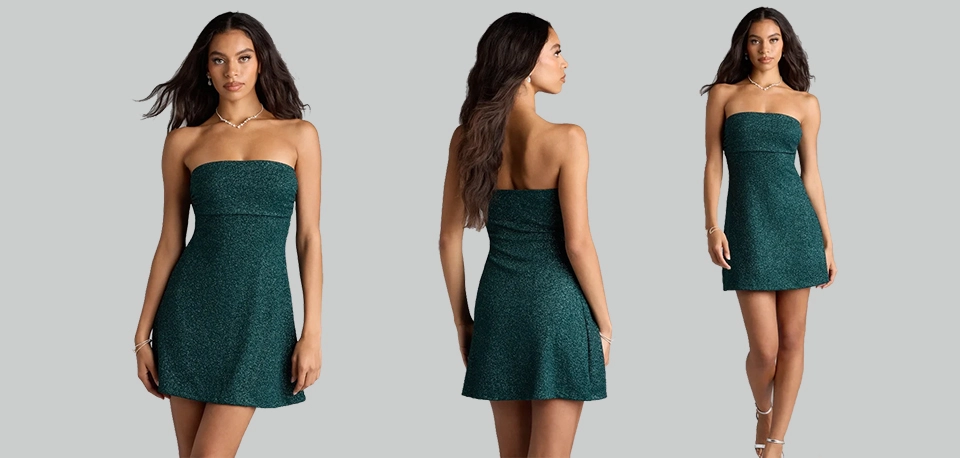
An A-line mini cocktail dress combines a fitted bodice with a skirt that opens gradually from the waist. For boutique collections, the same basic silhouette can be developed with a square neckline, thin straps, puff sleeves, or a fuller skirt. These changes give buyers several design options without completely changing the original pattern structure.
A satin skirt can hold a more defined shape, whereas chiffon creates a lighter, softer fall. Lace is often used on the bodice or as an overlay, but its placement needs to be considered when calculating fabric consumption and matching the seams.
One detail worth checking is the waist-to-skirt transition. If the waist seam is positioned incorrectly, the skirt may look too short or lose its intended shape. When developing multiple sizes, the skirt width and hem circumference also need to be graded carefully.
Midi Cocktail Dress
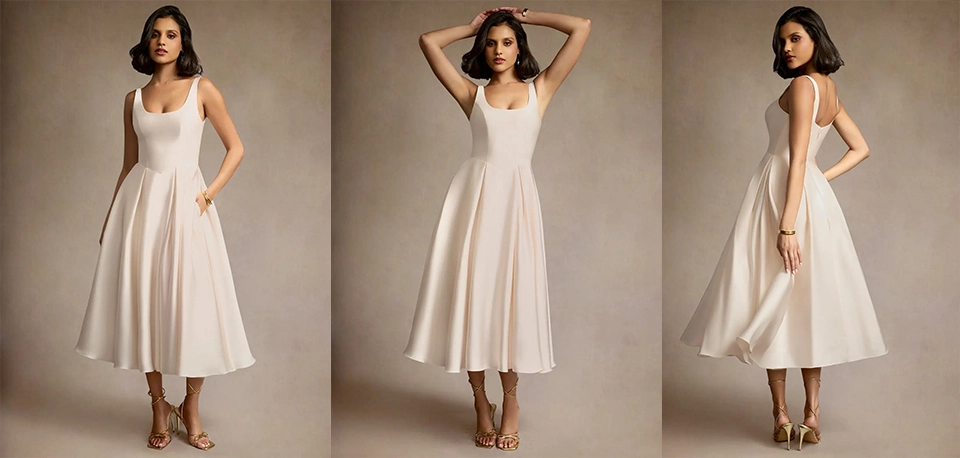
Midi cocktail dresses are often selected for wedding guest collections, business occasions, and more refined eveningwear.
The longer skirt makes fabric weight and drape more noticeable. Heavy satin or crepe can make the skirt hang close to the body, while lightweight chiffon may need an additional lining layer to achieve the intended shape.
During fitting, check the hem with the wearer standing and walking. A midi skirt should fall evenly without rotating around the legs. For styles with a slit or an asymmetric hem, also check that the opening and hemline remain balanced during movement.
Sheath Cocktail Dress
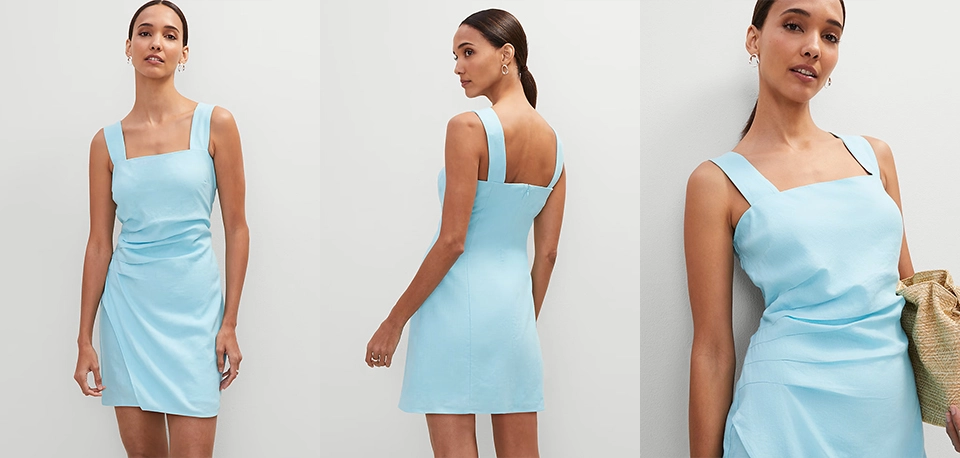
A sheath cocktail dress follows the natural body shape and has a relatively clean silhouette. Brands often use this silhouette for office events, wedding guest collections, and customers who prefer a cleaner look.
Since a sheath dress follows the body closely, even a small measurement error can become visible. Excess tension across the hips may create horizontal drag lines, while extra room at the waist can leave unwanted folds.
On the sample, inspect the side seams, waist shaping, and back zipper. Stretch crepe and non-stretch woven fabrics also need different pattern allowances. Switching between the two without revising the pattern can change the finished fit considerably.
Wrap Cocktail Dress
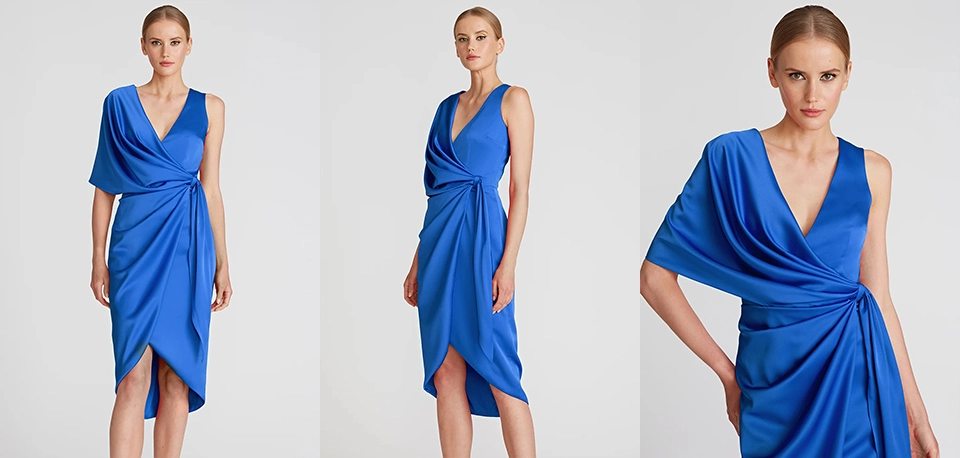
The wrap cocktail dress uses overlapping front panels, usually secured with a waist tie or internal fastening. It can be developed in different lengths and sleeve styles, making it suitable for both relaxed and more structured collections.
The front overlap needs enough coverage to stay in place when the wearer sits or bends. A narrow overlap can cause the neckline to open, while an incorrectly positioned waist tie may pull the front panels out of alignment.
During the fitting, have the wearer sit, bend, and walk in the dress. Watch whether the front panels separate and whether the waist tie stays secure. These checks are more useful than judging the wrap design from a standing photograph alone.
Spaghetti Strap Cocktail Dress
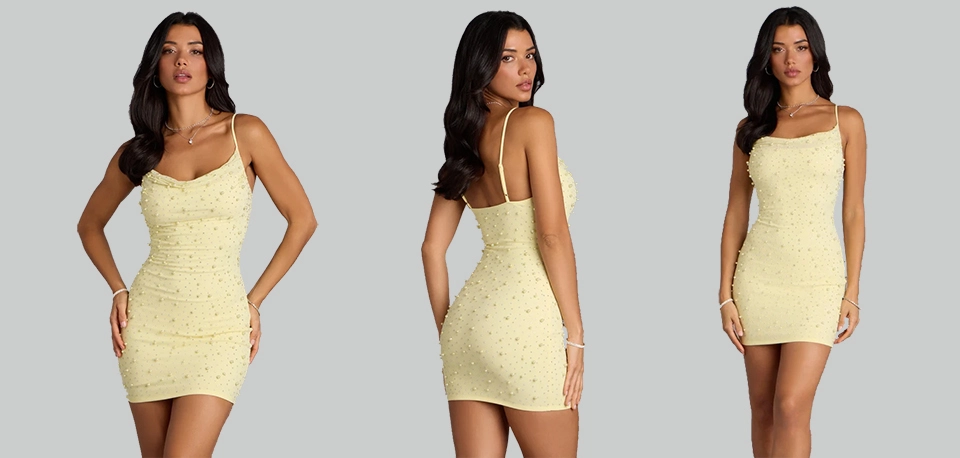
Thin shoulder straps give this style a light appearance, but they leave less room for supporting the upper bodice. Satin and silk blends are common choices, while chiffon can be used for softer designs.
The narrow straps carry much of the upper bodice tension. If they are not securely attached, they may stretch or pull away from the neckline during wear. Unequal strap lengths can also make one side of the bodice sit lower than the other.
For fitted satin styles or dresses with heavier embellishments, discuss the lining, strap reinforcement, and bodice support before pattern development. Adding these details after the sample is finished may require changes to the neckline and strap attachment.
Halter Neck Cocktail Dress
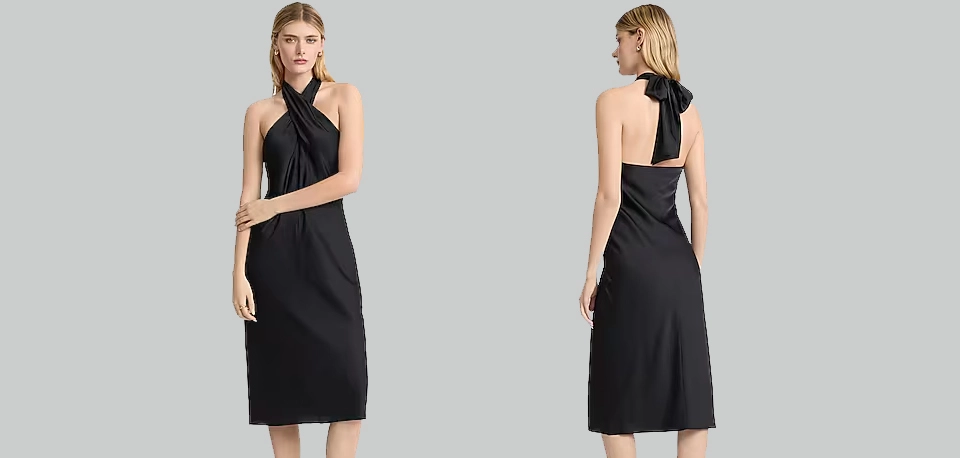
Halter neck cocktail dresses draw attention to the shoulders and neckline, often with an open back. They are suitable for collections that include more distinctive partywear and evening styles.
Unlike a dress supported by two shoulder straps, a halter design carries much of its upper-body tension around the neck and back. Heavy fabric or decorative details on the front bodice can make this pressure more noticeable.
During sampling, review the front neckline and back opening as one pattern structure. A deeper front opening may require changes to the back strap position or bodice support to keep the dress balanced.
One-Shoulder Cocktail Dress
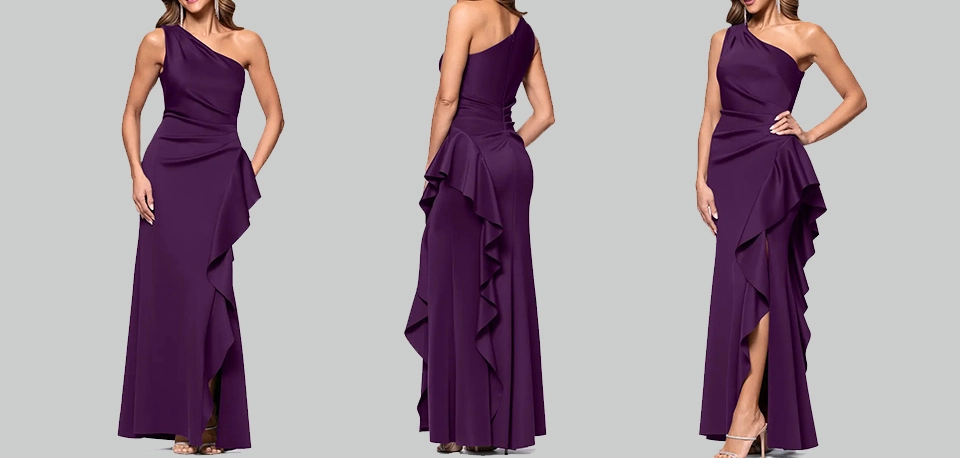
A one-shoulder cocktail dress creates an asymmetric look through an uneven neckline and shoulder design. Some versions use a clean fitted bodice, while others include draping, pleats, ruffles, or a statement sleeve.
The asymmetric neckline creates an uneven distribution of tension across the shoulders. Without sufficient support, the bodice may shift toward one side or the neckline may sit lower than intended.
Check the shoulder seam position and side seam alignment during fitting. If the design includes a ruffle, bow, or decorative sleeve on one side, assess the sample with that detail attached. Its weight can change how the neckline sits.
Off-Shoulder Cocktail Dress
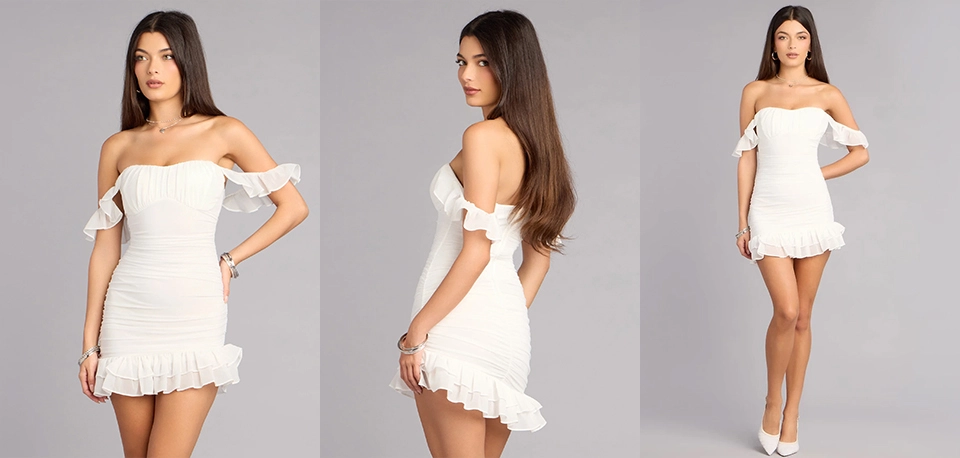
Off-shoulder cocktail dresses feature an open neckline that sits below the shoulders. Puff sleeves, fitted sleeves, and ruffle details can give the same basic design very different appearances.
The neckline needs to stay below the shoulders without sliding down during movement. Loose elastic may allow the bodice to shift, while excessive tension can leave pressure marks around the upper arms.
Raise and lower the arms during the fitting instead of checking the dress only in a relaxed position. Also inspect the sleeve attachment and neckline circumference together. Puff sleeves or heavier sleeve fabrics can pull the neckline out of position.
V-neck Cocktail Dress
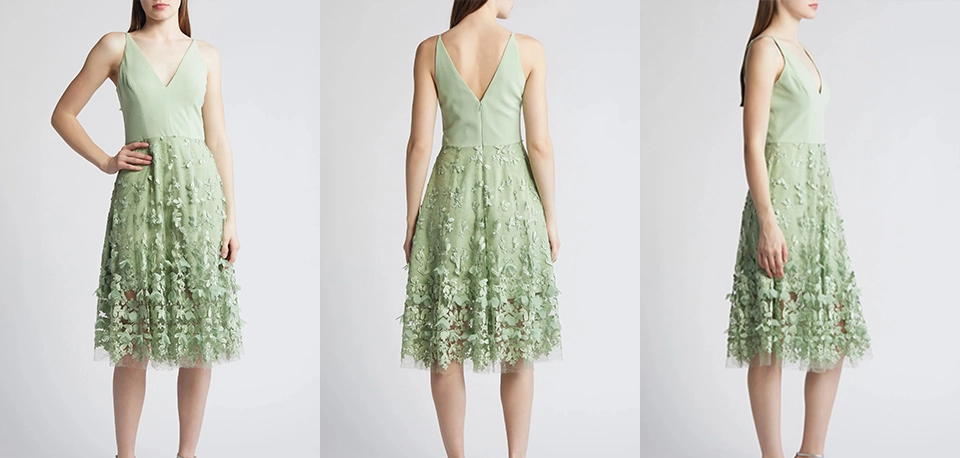
V-neck cocktail dresses can be combined with A-line, sheath, wrap, and fitted silhouettes. The depth of the neckline determines much of the overall appearance.
On a deep V-neck, the two front edges should lie flat against the body without gaping. Lightweight fabrics may need stay tape or interfacing along the neckline, while structured fabrics require accurate shaping around the bust.
Compare the two sides of the V after sewing and pressing. Uneven neckline edges or stretching during sewing can change the depth and angle of the finished neckline.
Backless Cocktail Dress
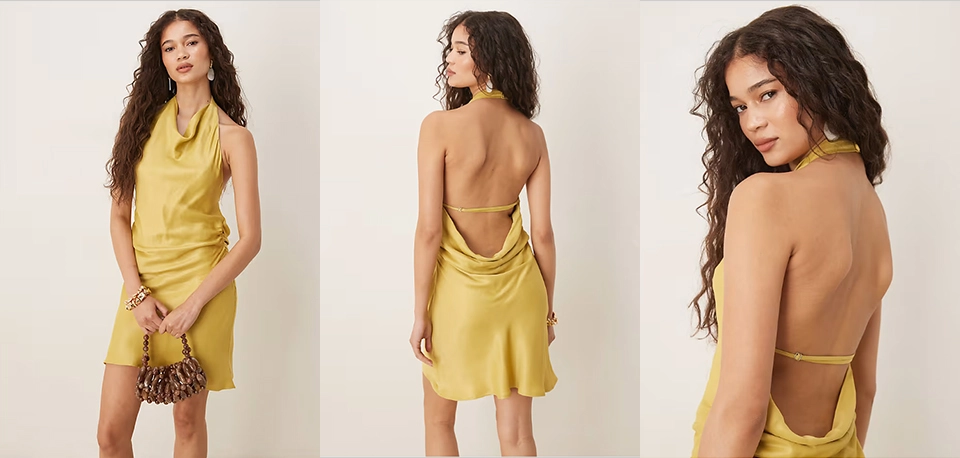
Backless cocktail dresses are often chosen for their distinctive appearance, but removing fabric from the back also reduces the garment’s natural support.
Some designs use sewn-in cups, side boning, narrow back straps, or a shaped lining to support the front bodice. The construction choice depends on how low the back opening sits and how much coverage the design retains around the sides.
Have the wearer walk, sit, and bend in the sample. Watch for the front bodice lifting, side panels shifting, or closures pressing against the skin. A backless design that looks correct on a mannequin may fit quite differently on a moving body.
Long Sleeve Cocktail Dress
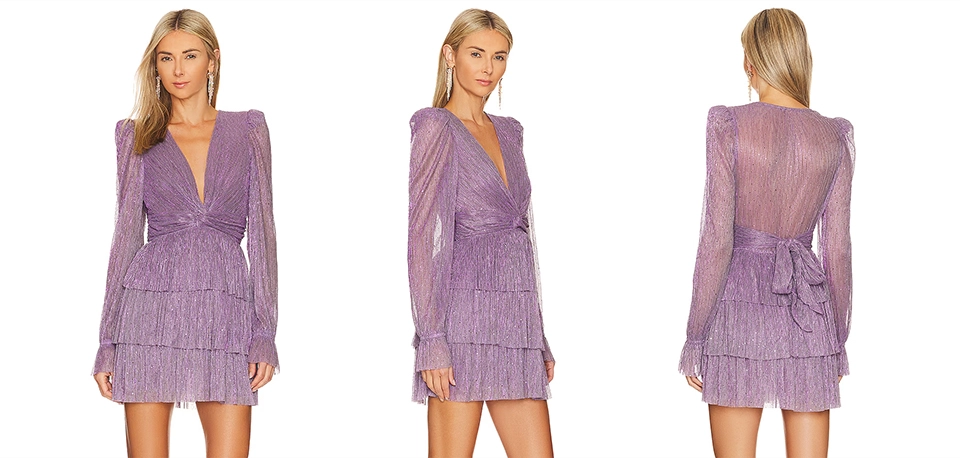
Long sleeve cocktail dresses are commonly used in autumn and winter collections, although lightweight lace and chiffon versions can also work for other seasons.
A fitted woven sleeve needs sufficient room around the elbow and upper arm. Sheer chiffon or lace sleeves present a different issue: bulky seam allowances and visible stitching can affect the appearance of the finished garment.
During fitting, bend the elbow and raise the arm to check the sleeve’s movement. Pay attention to the armhole depth, elbow width, and cuff opening. A sleeve can look neat when the arm hangs naturally but pull tightly across the elbow once the wearer moves.
How to Choose the Right Cocktail Dress Styles for Your Brand
When planning a cocktail dress collection, it is worth deciding which customers you want to reach before adding more styles. A first collection with too many silhouettes, fabrics, and decorative details can create unnecessary sampling work and leave you with a complicated size and color inventory. Start with designs that match your selling price and customer preferences.
Before confirming your range, consider the following:
Customer positioning: Look at the styles your existing customers already buy. A boutique focused on wedding guest outfits may sell more midi and sheath dresses, while a partywear label may need shorter lengths, open backs, and more distinctive necklines.
Target selling price: Set a target retail price before choosing the fabric and trims. Beading, sequins, lace overlays, and hand-finished details add material and labor costs. If the selling price is fixed, these details need to be considered when the design is first developed.
Size range: Decide your base size and measurement chart before sampling. A fitted sheath or bodycon dress may need closer grading adjustments around the bust, waist, and hips than a loose A-line design. Do not leave the size breakdown until bulk production is about to start.
Color and style quantities: More colorways mean more than just additional fabric orders. Each shade needs to be checked for availability, dye-lot consistency, and cutting arrangements. For a new collection, it may be easier to start with fewer colors and expand after identifying the styles that sell.
Repeat-order potential: If a style performs well, you may want to reorder it several months later. Before confirming the first order, ask whether the fabric can be sourced again and whether the same trims, colors, and construction details will remain available.
Fabric Choices for Cocktail Dress Manufacturing
A fabric swatch does not always show how the material will behave in a finished dress. Satin may show pressing marks, chiffon can shift during cutting, and velvet needs consistent pile direction. These differences affect fabric consumption, sewing time, and the appearance of the finished cocktail dress.
| Fabric | Common applications | What to check |
|---|---|---|
| Satin | Fitted and elegant cocktail dresses | Surface marks, seam puckering, pressing |
| Crepe | Sheath, wrap, and structured styles | Drape, stretch, seam behavior |
| Chiffon | Flowing and layered designs | Fabric slippage and seam finishing |
| Lace | Decorative bodices and sleeves | Pattern matching and lining |
| Velvet | Autumn and winter occasionwear | Pile direction and pressing marks |
| Silk blends | Lightweight premium designs | Fabric stability and handling |
Before placing the fabric order, check its composition, usable width, weight, color, and available stock. Shade variation between dye lots can be noticeable when dresses in the same collection are displayed together. For this reason, it is worth confirming whether the required quantity can be supplied from a consistent dye lot.
For satin, chiffon, and silk blends, a small fabric test before bulk cutting can reveal problems that are difficult to correct later. Check whether the material shifts during sewing, leaves marks after pressing, or stretches along the bias. These observations help the pattern and production teams decide how the fabric should be handled.
What to Confirm Before Bulk Cocktail Dress Production
Before requesting a production quotation, prepare the information the factory needs to assess your design. A professional tech pack is useful, but it is not the only way to start. A clear sketch, reference garment, fabric information, and basic measurements can also give the pattern team a starting point.
The development process generally follows these steps:
- Design information: Provide a tech pack, sketch, reference image, or physical sample.
- Fabric and trim confirmation: Specify fabric composition, color, lining, zippers, buttons, and decorative materials.
- Pattern development: Confirm garment measurements, construction, and size specifications.
- Sample making: Review the first sample for fit, appearance, and workmanship.
- Fit corrections: Mark the required changes with measurements and reference photographs.
- PP sample approval: Confirm the final sample and production specifications.
- Bulk production: Follow the approved construction, measurements, and quality requirements.
When requesting a quotation, include the quantity for each style and color, your size breakdown, and the expected delivery date. Fabric preferences and a target unit price are also useful. If you have not selected the final fabric yet, let the factory know. The quotation can then be based on an estimated material option, with the final cost reviewed after fabric confirmation.
Custom Cocktail Dress Manufacturing at Xiuyu Apparel
Xiuyu Apparel develops custom cocktail dresses for fashion brands, boutiques, retailers, and private label companies. Our in-house pattern makers and sample sewers handle design development, pattern adjustments, and sample revisions before bulk production.
- MOQ: Usually 50–100 pieces per style/color
- Sample development: Around 3–7 days
- Bulk production: Approximately 25–30 days after PP sample approval and fabric confirmation
- Services: OEM, ODM, custom fabrics, colors, labels, and packaging
Share your design references, estimated quantities, and target delivery date with our team to discuss your cocktail dress project.
Common Cocktail Dress Manufacturing Problems
Even when a sample looks correct, some issues may appear once production moves to larger quantities. These are the areas that deserve attention before bulk cutting and sewing.
1. Fabric Shrinkage and Measurement Changes
Fabric dimensions can change after steaming, pressing, or washing. If shrinkage is not measured before bulk cutting, the finished dresses may come out shorter or narrower than the approved specifications.
Test the fabric before cutting and record the shrinkage rate. The pattern team can then account for any dimensional change before the cutting markers are prepared.
2. Neckline Distortion
Deep V-necks, off-shoulder dresses, and one-shoulder designs are more vulnerable to neckline distortion because their edges do not have the same support as a regular round neckline.
Excess stretching during sewing can leave the neckline wavy or wider than the approved sample. Compare the finished neckline shape and measurements with the approved sample before continuing production.
3. Uneven Seams and Puckering
Satin and chiffon can shift under the presser foot, especially when several layers are joined together. The resulting puckering is often easiest to see around the waist seam, side seams, and zipper opening.
Needle selection, machine tension, and fabric handling all need to suit the material. Inspect the seams during sewing rather than waiting until the completed dress reaches final inspection.
4. Lining Pulling Against the Outer Fabric
If the lining is cut too short or sewn with insufficient ease, it can pull against the outer layer. The problem may show up as a raised hem, wrinkles near the waist, or tension along the side seams.
During fitting, compare the movement of the lining and outer fabric. The lining should sit smoothly inside the dress without pulling the hem upward or creating tension when the wearer walks.
5. Zipper and Closure Problems
On fitted cocktail dresses, a concealed zipper that is sewn under uneven tension can create visible ripples along the back or side seam. The zipper may also distort the surrounding fabric if the opening is not stabilized properly.
During sampling, inspect whether the zipper sits straight when the dress is laid flat and when worn. Record the zipper length, seam allowance, and installation method so the sewing line can follow the approved construction.
Frequently Asked Questions About Cocktail Dress Manufacturing
1. How can I reduce the development cost of a cocktail dress collection?
Start with a few designs that share similar fabrics or construction details. For example, two cocktail dresses may use the same satin but have different necklines or skirt shapes. This can simplify fabric sourcing and reduce some development work. Avoid adding complicated embellishments to every style in your first collection, especially when your order quantity is limited.
2. Can I combine different cocktail dress styles in one order?
Yes, different styles may be included in one order, but the MOQ needs to be discussed for each style and color. A satin mini dress and a lace midi dress, for example, may require separate fabric sourcing and production arrangements. Send the style list and quantities to the factory so the order structure can be reviewed before sampling.
3. What should I do if my sample does not match my design expectations?
Mark the problem areas on the sample or reference photos. Instead of writing only that the dress feels too tight, specify whether the issue is around the bust, waist, armhole, or hip. Measurements and photos taken from the front, side, and back give the pattern team a clearer reference for making corrections.
4. How should I plan the size breakdown for my first order?
If your brand already has sales data, use it to estimate the quantity needed for each size. For a new brand, the size breakdown should reflect your target market and customer profile. Fitted cocktail dresses deserve particular attention because small measurement differences around the bust, waist, and hips can affect how the dress fits across the size range.
5. What information should I provide to receive an accurate quotation?
Send a design photo, sketch, or tech pack together with your estimated quantity, size range, colorways, and delivery date. Include your preferred fabric and target unit price if available. If the fabric or construction is not finalized, mention that in your inquiry so the factory knows which parts of the quotation still need to be estimated.
Conclusion
A cocktail dress may look straightforward in a design sketch, but details such as neckline support, lining, fabric behavior, and size grading can change the work required to produce it. These points are easier to resolve during sampling than after bulk cutting has started.
At Xiuyu Apparel, we develop custom cocktail dresses and other occasionwear for fashion brands, boutiques, retailers, and private label buyers. As an experienced dress manufacturer, we support the process from pattern development and sample making to bulk production.

