
After more than 18 years in apparel manufacturing, we have seen many buyers compare factories mainly by quotation. After the first sample is approved, many production problems only appear when hundreds of pieces are made. A fabric that looks perfect on one sample may behave differently during cutting, sewing, and pressing.
When brands compare Uniqlo, Zara, and H&M, most conversations focus on retail price, design trends, and customer experience. However, after years of working in garment production, we see another side of the business. The final product is often decided much earlier — during fabric selection, pattern development, production planning, and quality control.
How Do Uniqlo, Zara, and H&M Approach Clothing Manufacturing?
From a clothing manufacturer’s perspective, Uniqlo, Zara, and H&M represent three very different production models. Although all three brands operate globally, the way they develop products, work with suppliers, and manage production is quite different.
From a production perspective, Uniqlo’s biggest challenge is maintaining consistency over time. In manufacturing, this is one of the hardest requirements to achieve. Producing one perfect sample is different from producing 50,000 pieces with the same measurement, color shade, and workmanship. Many of its core products remain in the market for longer periods, which means factories need to maintain stable fabric quality, accurate sizing, and repeatable production standards. For example, if a basic T-shirt or dress is reordered several months later, the new production batch needs to match the previous one in fabric feel, color shade, and measurement. This is where factory experience matters. Without stable material control and production standards, even a successful first sample can become difficult to repeat.
For factories, working with trend-driven brands creates different production requirements. We have experienced situations where a design was approved, but the original fabric was no longer available before bulk production. For fast-moving collections, communication speed between the brand and factory can directly affect delivery time. Sample approval speed, fabric availability, and communication efficiency often decide whether a seasonal style can reach the market on time. Factories working with trend-focused brands usually need faster sample development, quick material sourcing, and the ability to adjust production plans within a short timeline. The difficult part is keeping quality stable when production schedules change frequently.
H&M combines large-scale production with a broad product range. Compared with brands that focus on fewer essential styles, H&M requires strong production planning, supplier coordination, and cost management to handle high order volumes across different categories. In high-volume production, a small delay in fabric arrival or approval can affect multiple styles at the same time. This is why production scheduling and supplier communication become critical. In high-volume production, small problems can quickly become large problems. A delay in fabric approval, incorrect size grading, or missing production details can affect thousands of garments. This is why large-scale manufacturing depends heavily on planning and communication between every production stage.
Over the years, we have worked with brands at different stages. Some came to us with only a sketch, while others already had technical packs but needed help improving production efficiency. The challenges are usually different. A brand developing timeless collections needs a factory with strong manufacturing control and stable supply chains. A brand chasing seasonal trends needs more flexibility and faster development support.
For smaller brands, the important point is that the right factory depends on the product you want to build. A basic repeat style and a seasonal fashion collection require completely different production support.
Manufacturing Comparison Table
| Brand | Manufacturing Focus | Factory Requirement |
|---|---|---|
| Uniqlo | Product consistency and long-term basics | Stable fabrics, precise inspection process, repeat production capability |
| Zara | Speed and trend-driven development | Fast sampling, flexible sourcing, quick production response |
| H&M | Large-scale production and cost efficiency | Production planning, supplier coordination, volume management |
What Can Fashion Brands Learn From Uniqlo’s Manufacturing Approach?
If your brand focuses on wardrobe essentials, Uniqlo’s production philosophy offers useful lessons. Their products are built around repeat purchases, meaning customers expect the same quality from one season to the next.
From a manufacturing perspective, this requires strict control over:
- Fabric weight and composition
- Color consistency between production batches
- Sewing accuracy
- Garment measurements
- Quality inspection standards
For example, a basic cotton T-shirt may look simple, but producing thousands of pieces with identical fitting, stitching, and fabric performance requires a reliable production system.
When developing women’s dresses, manufacturers need to apply the same principles of consistency and clothing quality control. When you work with a professional dress manufacturer, these details become especially important because women’s dresses often involve more complicated construction, including lining, shaping, draping, and fabric handling.
Your customers may not see every production step, but they will notice when a garment keeps its shape after washing, feels comfortable on the body, and maintains a premium appearance.
Why Zara’s Fast Fashion Model Requires Different Manufacturing Skills
For factories, Zara’s model means shorter development cycles, faster sample approval, and closer coordination between design, sourcing, and production teams. The brand has built a reputation for responding quickly to changing fashion trends and bringing new designs to customers faster than many traditional retailers.
From our production experience, the biggest challenge is usually not making the first sample quickly. The harder part is keeping the same quality when the style moves into bulk production.
In our workshop, this usually means the development team needs to confirm fabric availability before sampling starts. A two-day delay in fabric approval can easily affect the whole production schedule, especially for seasonal collections.
If you are a fashion startup or boutique owner developing seasonal collections, speed can be a major advantage. However, faster production does not automatically mean better quality.
One European boutique brand we worked with wanted to launch a seasonal dress collection within 30 days. The order included lightweight women’s dresses made with soft woven fabric. During sampling, we found the original material created uneven draping around the waist and side seams after pressing.
How Does H&M Balance Cost, Style, and Production Volume?
H&M represents a high-volume fashion business model. The company needs to produce a large number of styles while maintaining competitive prices.
For smaller fashion brands, this model provides an important lesson: cost control should not come only from choosing the cheapest supplier.
When you develop your own collection, production cost is affected by:
- Fabric selection
- Order quantity
- Pattern complexity
- Sewing requirements
- Packaging details
- Quality standards
Many new brands focus too much on the unit price during supplier selection. However, a lower factory price may create additional costs later if the quality is unstable, delivery is delayed, or products require rework.
Your goal should be finding a manufacturer that understands your target market and can provide consistent quality at a realistic cost.
Fabric Quality: Why Material Selection Changes the Final Product
Many buyers compare clothing brands by appearance, but manufacturers look deeper into fabric performance.
The same design can produce completely different results depending on the material.
For example:
- A cotton dress with better yarn quality usually has better durability.
- A silk dress requires careful fabric inspection because surface defects are easier to notice.
- Stretch fabrics need accurate testing to maintain recovery after repeated wear.
When you develop products for your customers, fabric choice affects not only appearance but also return rates and customer satisfaction.
At our factory, we often recommend brands test fabrics before bulk production. Small differences in thickness, shrinkage, color stability, and hand feel can create major differences in the finished garment.
A capable factory should do more than follow your drawings. It should help identify possible material and production problems before they affect the final order.
How Manufacturing Experience and Quality Control Build Successful Fashion Brands
Large fashion brands such as Uniqlo, Zara, and H&M have built their businesses with strong manufacturing networks. However, for growing fashion brands and boutique retailers, working with a factory is not only about finding a place that can produce garments. It is about finding a manufacturing partner who understands the product and can help solve problems during development.
In our experience working with international clothing brands, many production issues do not start during sewing. They often appear much earlier — during fabric selection, pattern development, or sample approval. In our workshop, we have received samples that looked acceptable during the first fitting, but problems appeared after pressing or when the garment was laid flat for measurement. Lightweight fabrics such as satin and silk usually reveal these issues more easily.
A manufacturing partner should be able to support the complete production process, including:
- Fabric sourcing and material recommendations
- Pattern adjustment and fitting improvements
- Sample development and revision
- Production planning and timeline control
- Quality inspection during manufacturing
- Final packing and shipment preparation
We have seen this happen with lightweight satin and silk fabrics. A fabric may look smooth when inspected in rolls, but after cutting, pressing, and sewing, the final garment can show issues such as stretching, uneven drape, or unwanted wrinkles. Some fabrics shrink after washing, while others may affect the garment shape because of their weight or elasticity. These details need to be checked before bulk production begins.
With practical manufacturing experience, a factory can help brands identify these problems earlier and avoid unnecessary costs caused by repeated sampling or production delays.
A Real Example: Improving a Dress Collection Before Bulk Production
A European boutique brand approached us for a seasonal dress collection.
During the first sample review, we noticed the original fabric created uneven draping after pressing.
Instead of moving directly into bulk production, our team suggested changing the fabric structure and adjusting the pattern.
After the second sample approval, the collection moved into production smoothly with consistent fitting and finishing.
This experience showed us that solving production problems early is often more valuable than simply reducing the unit price.
Choosing a Manufacturing Partner Beyond Price
Price is an important factor when selecting a supplier, but it should not be the only consideration.
During our years working with fashion brands, we have seen that the lowest quotation does not always create the lowest final cost. A factory with poor communication, unstable quality, or limited production experience can lead to extra sample revisions, material waste, delayed shipments, and additional expenses.
Before choosing a manufacturing partner, brands should consider:
- Does the factory understand your product category and target market?
- Can they recommend suitable fabrics and construction methods?
- Can they handle your order quantity while maintaining quality?
- Do they have a clear sample approval process?
- Can they provide production updates during bulk manufacturing?
In our experience, the most successful factory relationships are not based only on production orders. Brands usually achieve better results when the factory can provide practical suggestions during development. The goal is to turn an initial design idea into a garment that can be produced consistently.
Why Quality Consistency Matters in Bulk Production
A good sample does not always mean good bulk production.
The real manufacturing challenge begins when a style moves from one sample piece to hundreds or thousands of garments. At this stage, small differences can become noticeable and affect the final customer experience.
Common production issues include:
- Different fabric shades between batches
- Uneven stitching quality
- Measurement differences between garments
- Incorrect pressing methods
- Missing finishing details
Quality control needs to happen throughout the entire manufacturing process, not only at the final inspection stage.
A professional clothing manufacturer usually checks quality at multiple points:
- Fabric inspection before production
- Cutting accuracy checking
- Sewing line inspection
- Measurement control during production
- Final garment inspection before shipment
Large brands such as Uniqlo succeed because customers know what quality level to expect when they buy their products. Smaller fashion brands also need this consistency, even if their production volume is much smaller.
Manufacturing experience is not simply about producing more garments. It is about understanding the details behind each style, controlling quality at every stage, and helping brands create products that customers can trust.
How Can Smaller Brands Compete With Fast Fashion Companies?
You may not compete with Zara or H&M on production volume, but you can compete through product value.
Many successful boutique brands grow because they offer something different:
- Better craftsmanship
- Unique designs
- Premium fabrics
- Limited collections
- Strong brand identity
This is why choosing the right production partner matters.
A flexible low MOQ clothing manufacturer can help emerging brands test new designs without committing to extremely large quantities.
For example, instead of ordering thousands of pieces immediately, you can start with smaller production runs, collect customer feedback, and improve future collections.
This approach reduces inventory risk and allows your brand to grow more sustainably.
What Do Professional Buyers Check Before Placing Bulk Orders?
Experienced buyers usually look beyond the product price.
They evaluate:
Factory Experience
A manufacturer with experience in your product category understands potential problems before production starts.
Production Capability
You need to know whether the factory can handle your expected order volume and timeline.
Quality Management
A good factory should have clear inspection procedures rather than relying only on final checking.
Communication
Fast and accurate communication reduces mistakes during sampling and production.
Many successful partnerships actually start before the first order. Clear discussions about target customers, pricing, and quality expectations usually prevent problems later.. Understanding your target customer, price range, and quality expectations helps create better results.
Why Working With the Right Clothing Manufacturer Improves Your Brand Growth
Your customers only see the finished garment, but many decisions happen behind the scenes.
Fabric selection, pattern development, sewing techniques, and product inspection all influence how customers view your brand.
When you work with an experienced OEM clothing manufacturer, you gain more than production support. You gain a partner who can help improve designs, solve manufacturing challenges, and create products that match your market position.
For fashion brands, the right factory relationship can become a competitive advantage.

Inside A Real Clothing Factory: From Fabric to Shipment
The real clothing manufacturing process at Xiuyu Apparel covers fabric inspection, cutting, sewing, pressing, final inspection, and packing. Each stage is monitored by our production and quality teams before shipment.
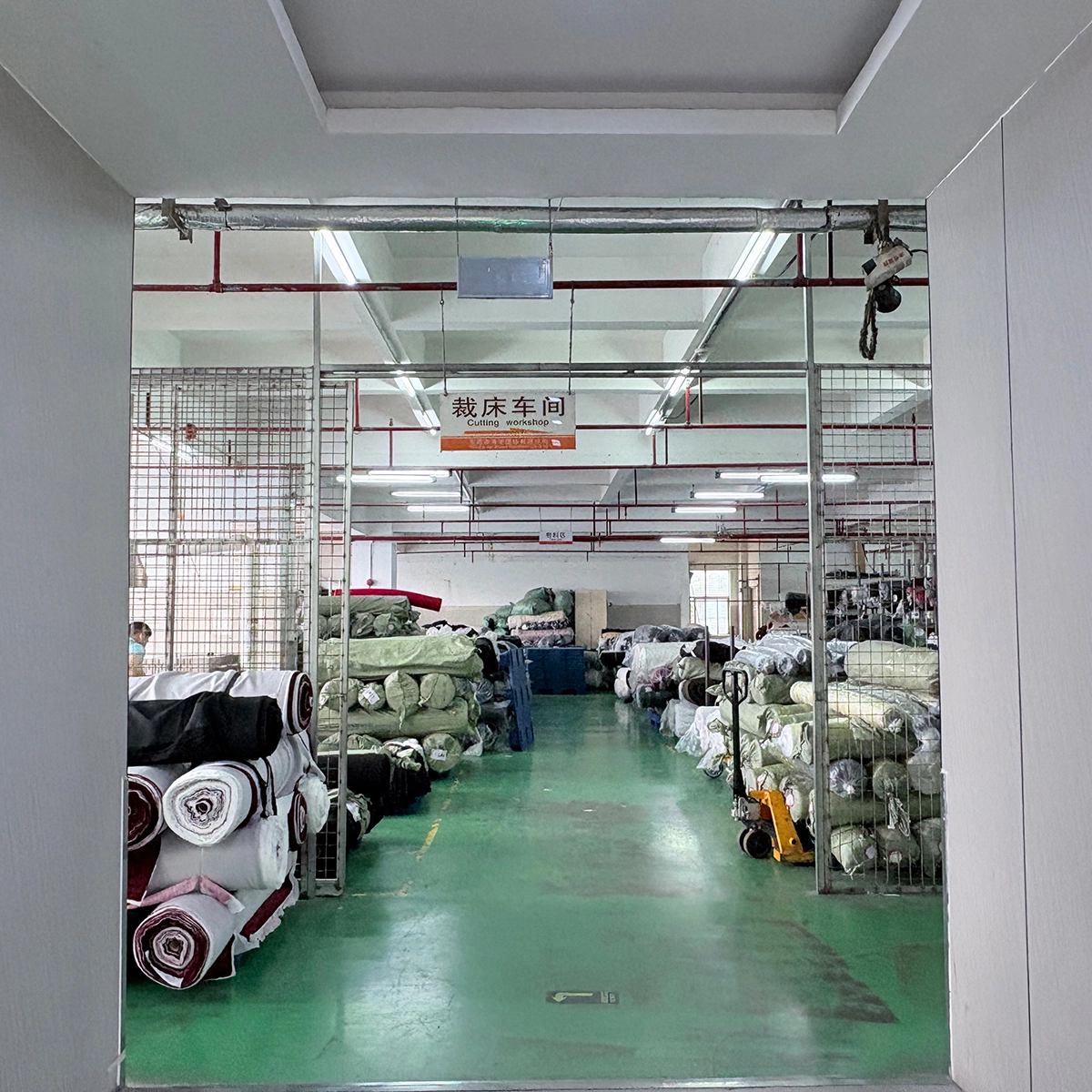
Fabric Warehouse
Our team records the batch details and confirms the fabric color, quantity, and condition. This preparation helps reduce fabric-related problems during garment production. The fabric team records incoming materials before production scheduling begins, including fabric composition, supplier information, color batch, and incoming quantity.
↓
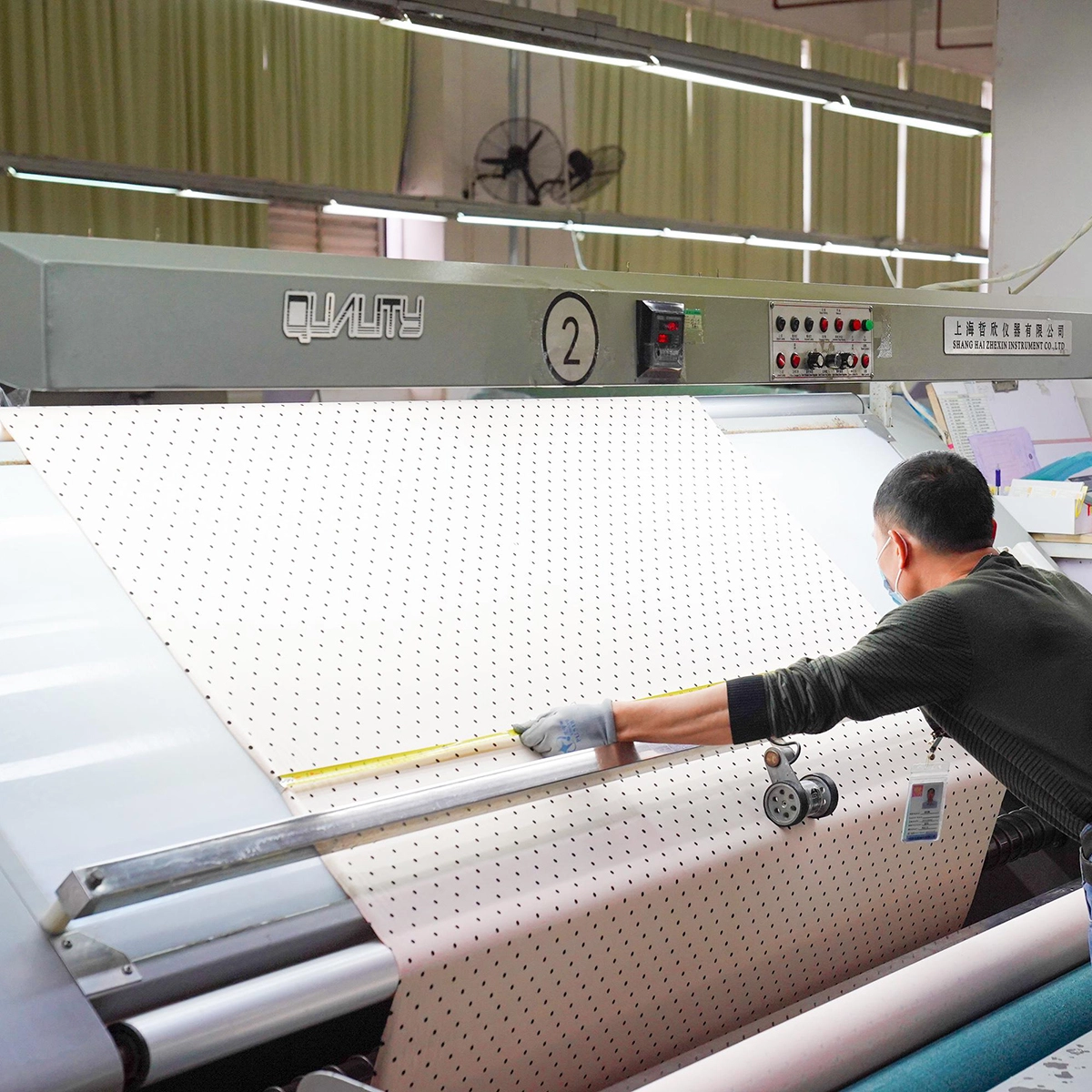
Fabric Inspection
Before fabrics move to cutting, our QC team inspects each fabric roll using the Four-Point Fabric Inspection System. Any fabric with serious defects is separated before production scheduling. This prevents problems from reaching the cutting stage. We check color accuracy, fabric condition, and visible defects to find potential issues early. This step is especially important for fabrics with satin, silk, or delicate surfaces, where small defects can affect the final appearance of the garment. For silk and satin fabrics, our QC team also pays attention to surface marks, weaving defects, and shade differences between rolls because these issues are difficult to correct after cutting.
↓
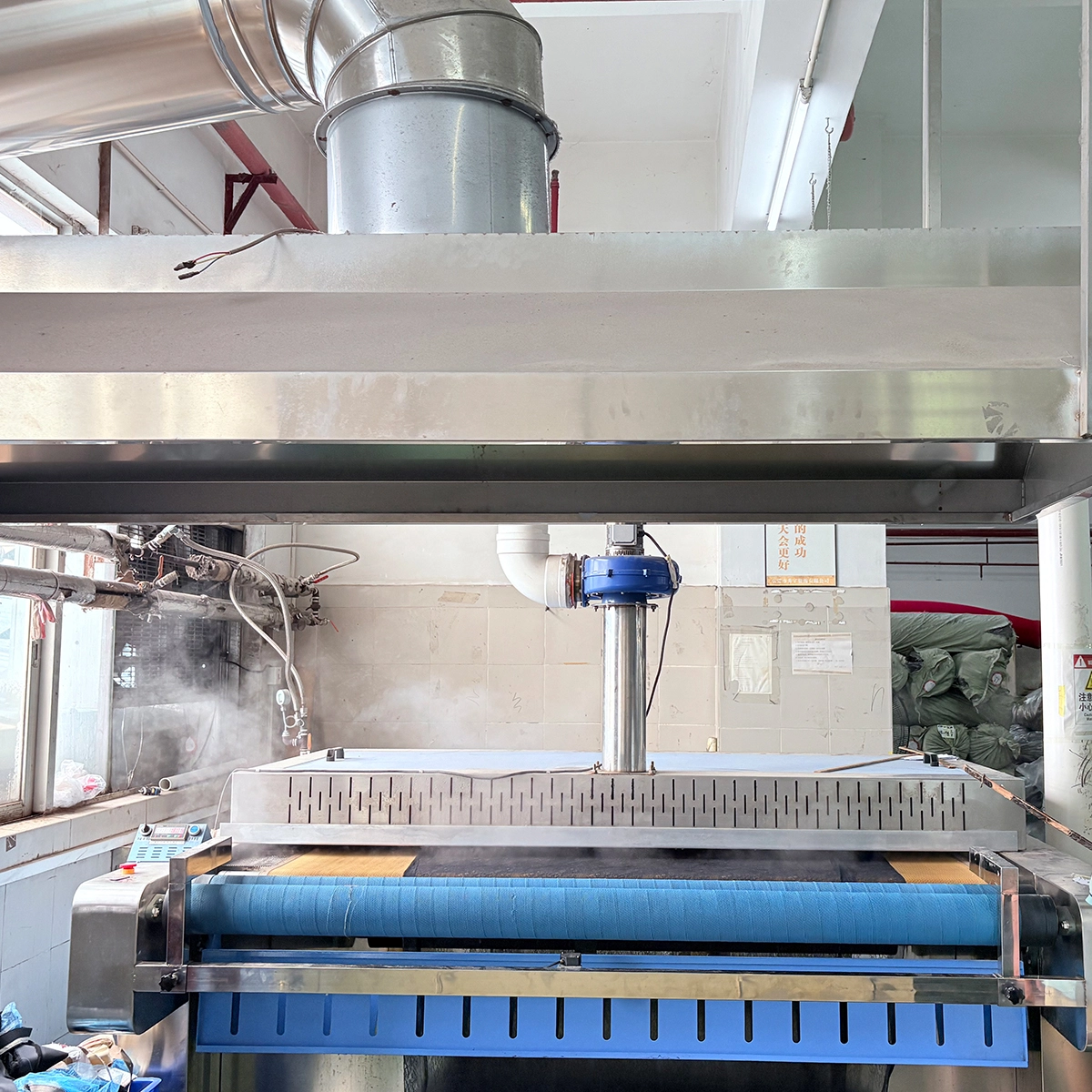
Fabric Pre-shrinking
After fabric inspection, approved fabrics are pre-shrunk before cutting to control shrinkage during washing. This reduces shrinkage-related measurement differences during bulk production.
↓
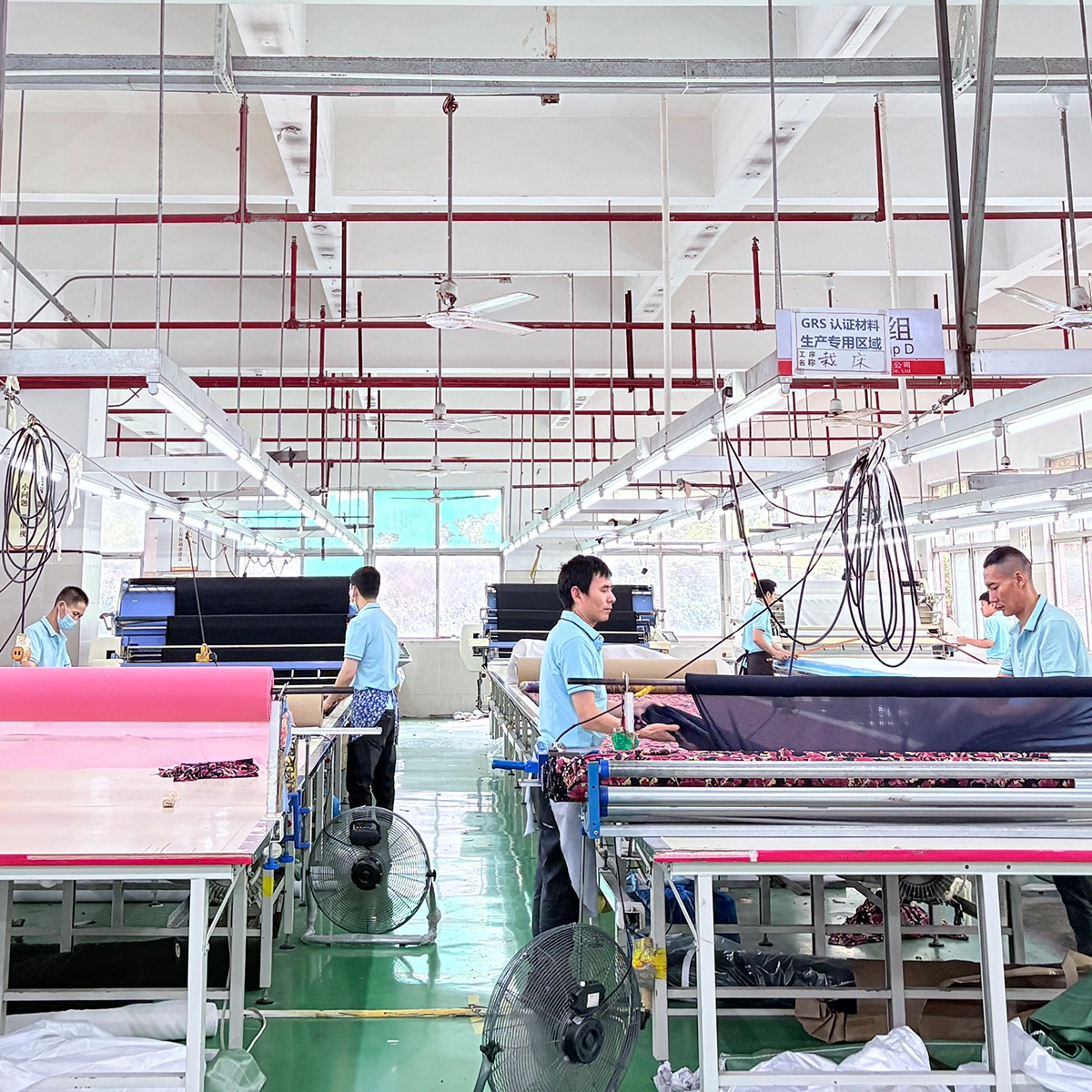
Automatic Cutting
Before bulk cutting starts, our cutting team checks the approved pattern, fabric direction, and size grading. For delicate fabrics such as silk satin, even small cutting errors can affect the final fitting. By reducing fabric waste and improving cutting efficiency, we support stable OEM & ODM bulk garment manufacturing.
↓
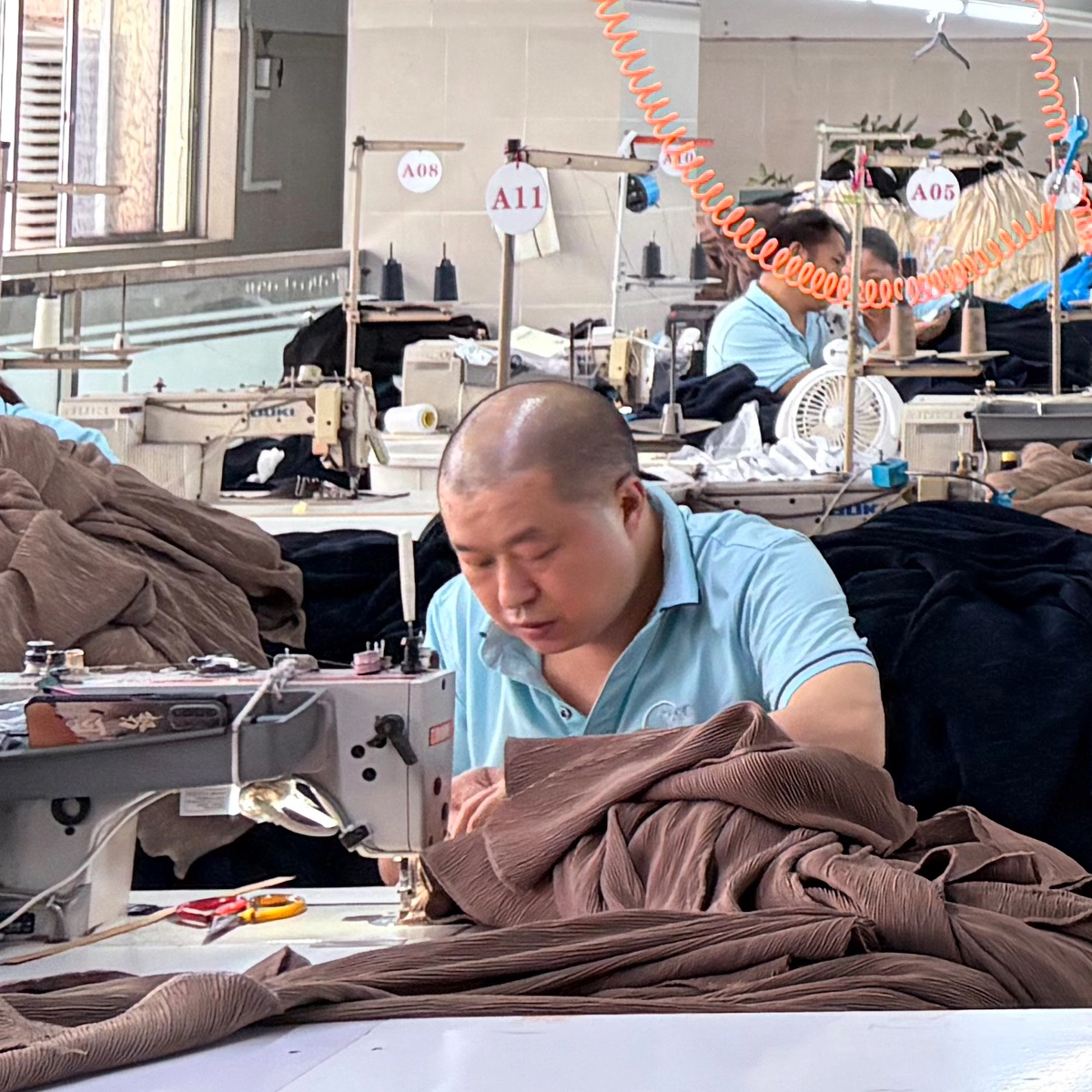
Bulk production Sewing
Skilled sewing operators work according to approved samples, patterns, and production requirements to ensure accurate garment assembly. During sewing, regular quality checks help maintain stitch consistency and construction accuracy for OEM & ODM bulk production.
↓
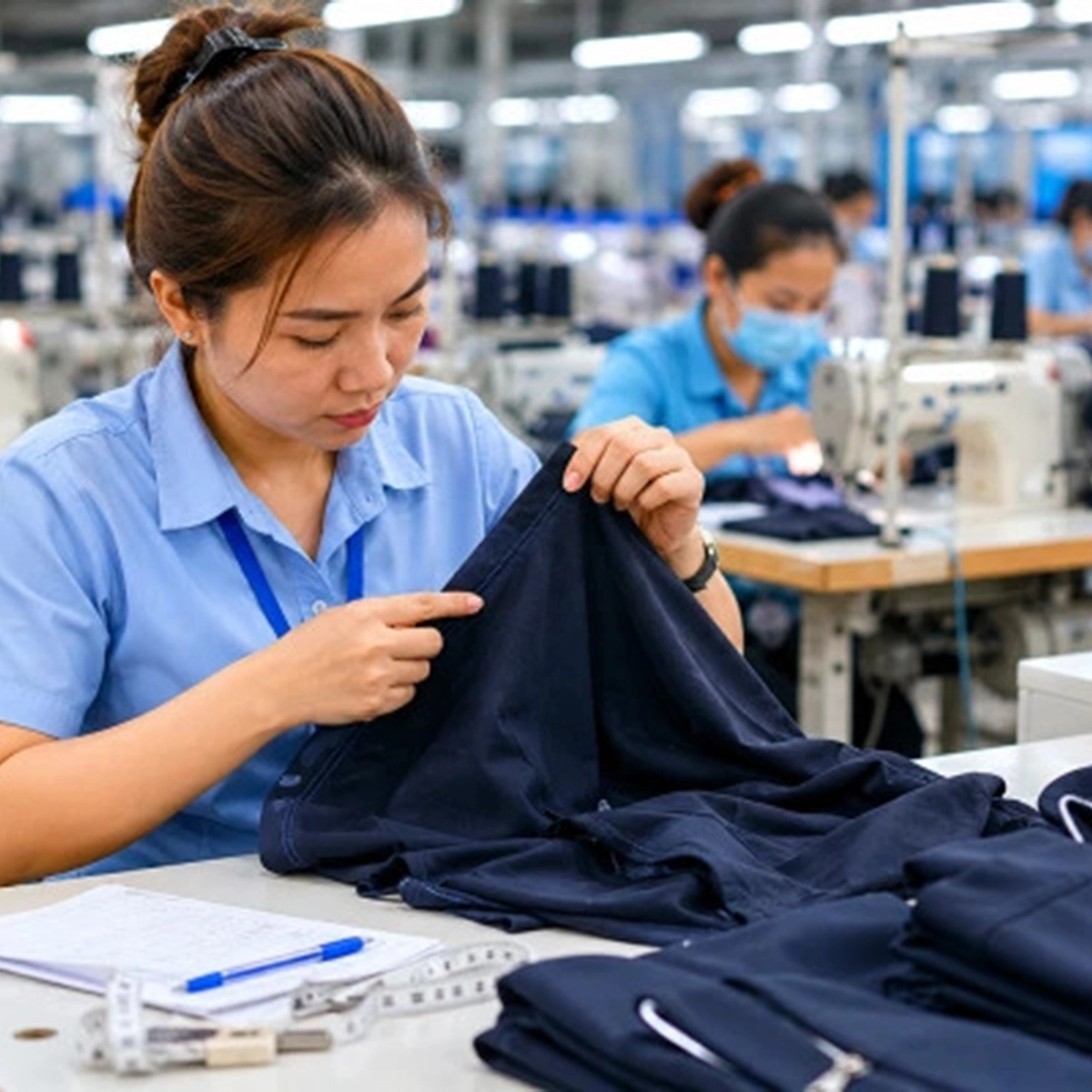
In-line Inspection
Our QC team monitors key steps from sewing to finishing, checking garment measurements, stitching details, and workmanship during production. Early checks help reduce rework and maintain consistent quality for bulk manufacturing.
↓
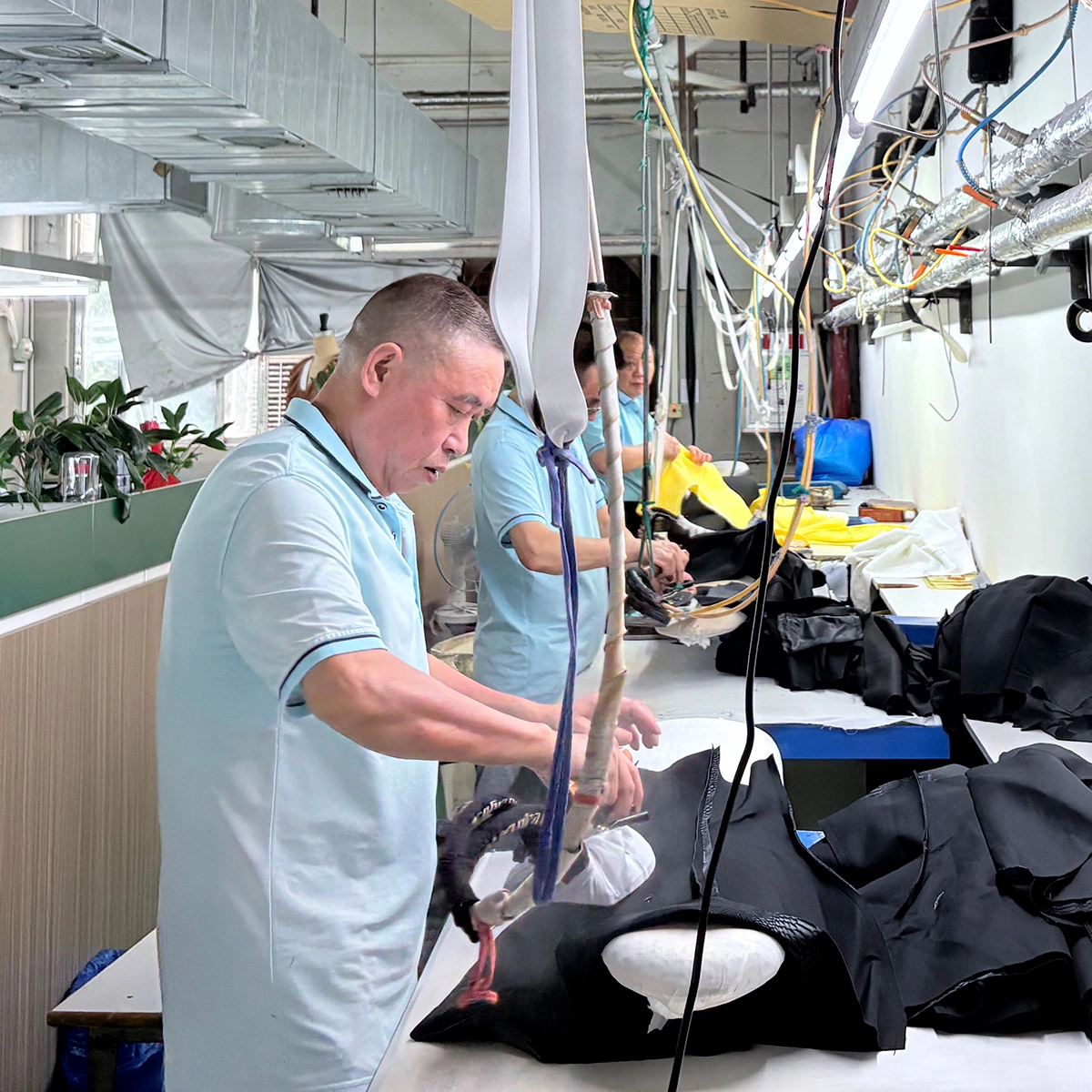
In-line Pressing
After garment assembly, each piece is pressed during production to remove wrinkles, shape key areas, and improve seam appearance. The pressing stage prepares garments for final inspection and packing before bulk shipment.
↓
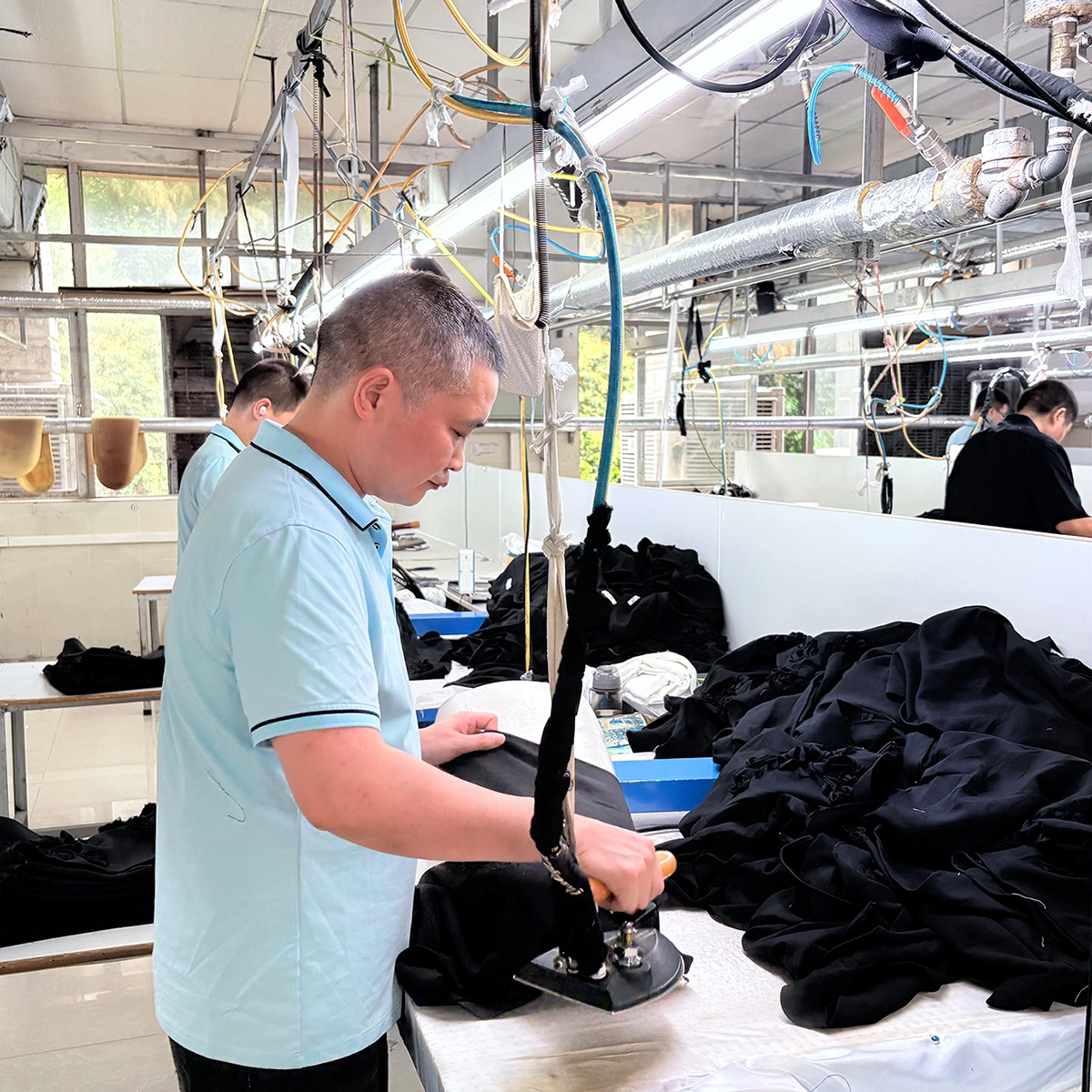
Final Pressing
Before packing, garments are pressed one last time to smooth seams, adjust key areas, and improve the final look. After pressing, our team checks garment appearance and workmanship before shipment.
↓
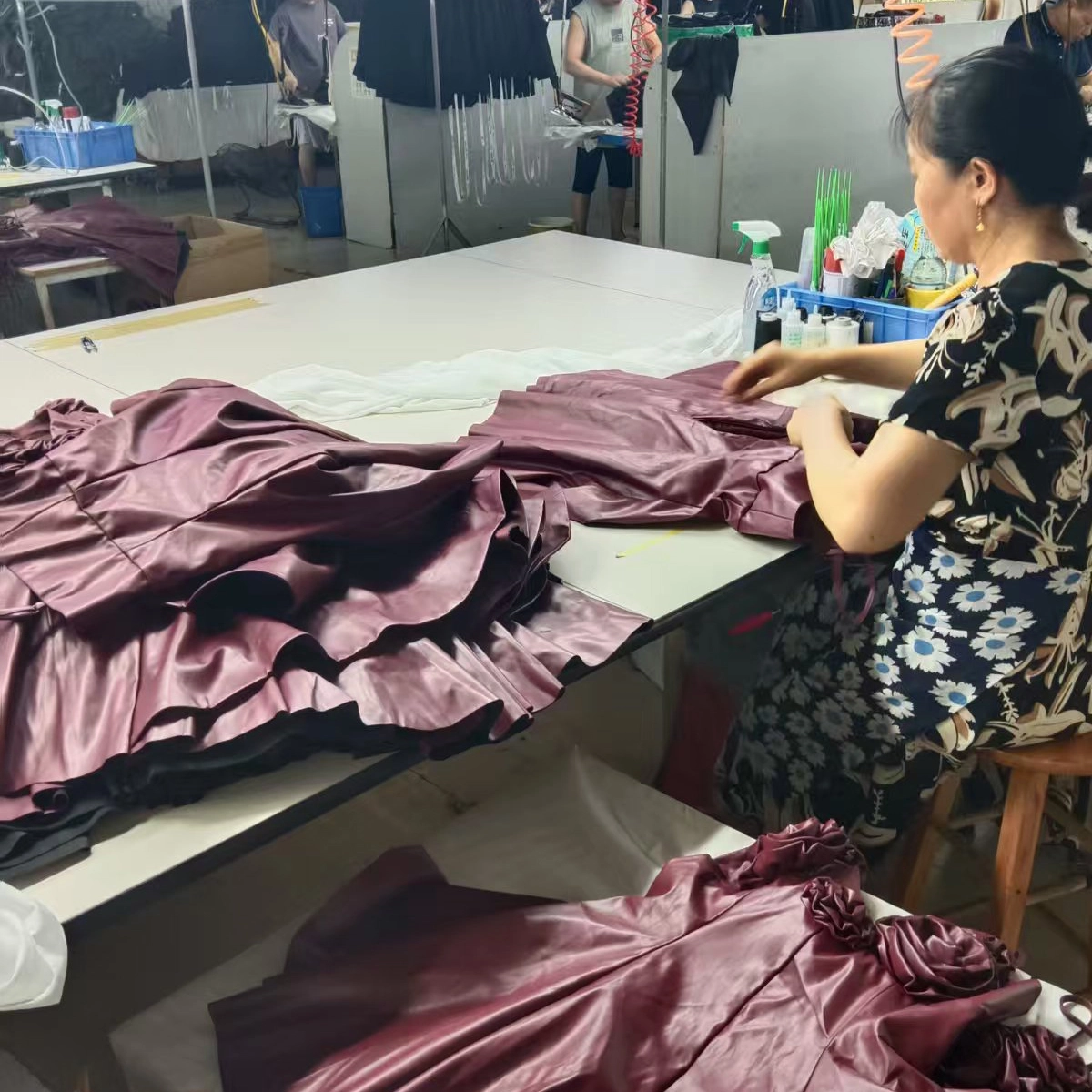
Final Inspection
Before loading, our QC team inspects finished garments for size, stitching quality, appearance, labels, and packing condition. After final checks are completed, orders are prepared for shipment.
↓
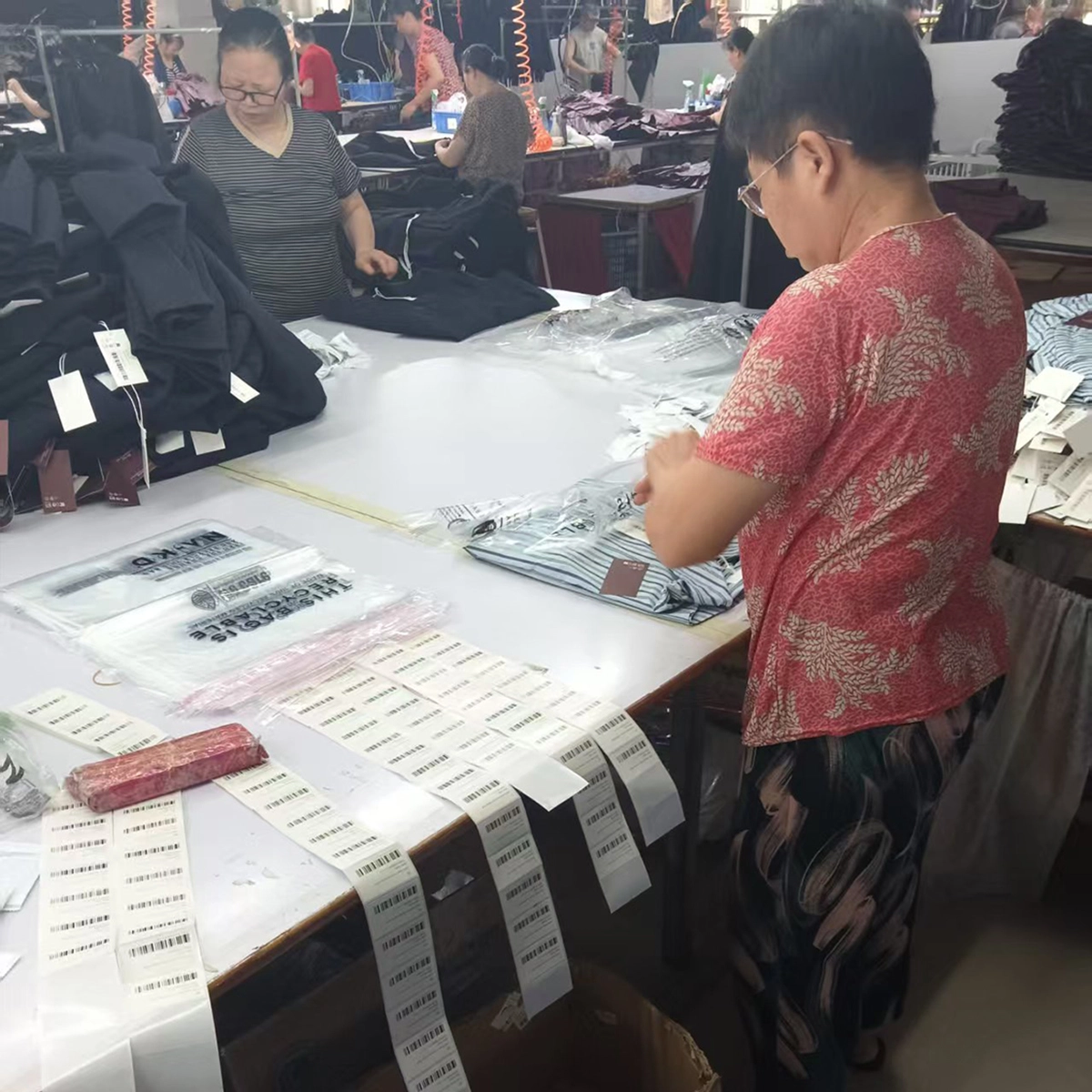
Garment Packing
After inspection, our packing team folds and packs finished garments following each order’s packing requirements. Labels, barcodes, and packaging details are checked before cartons are sealed and shipped.
↓
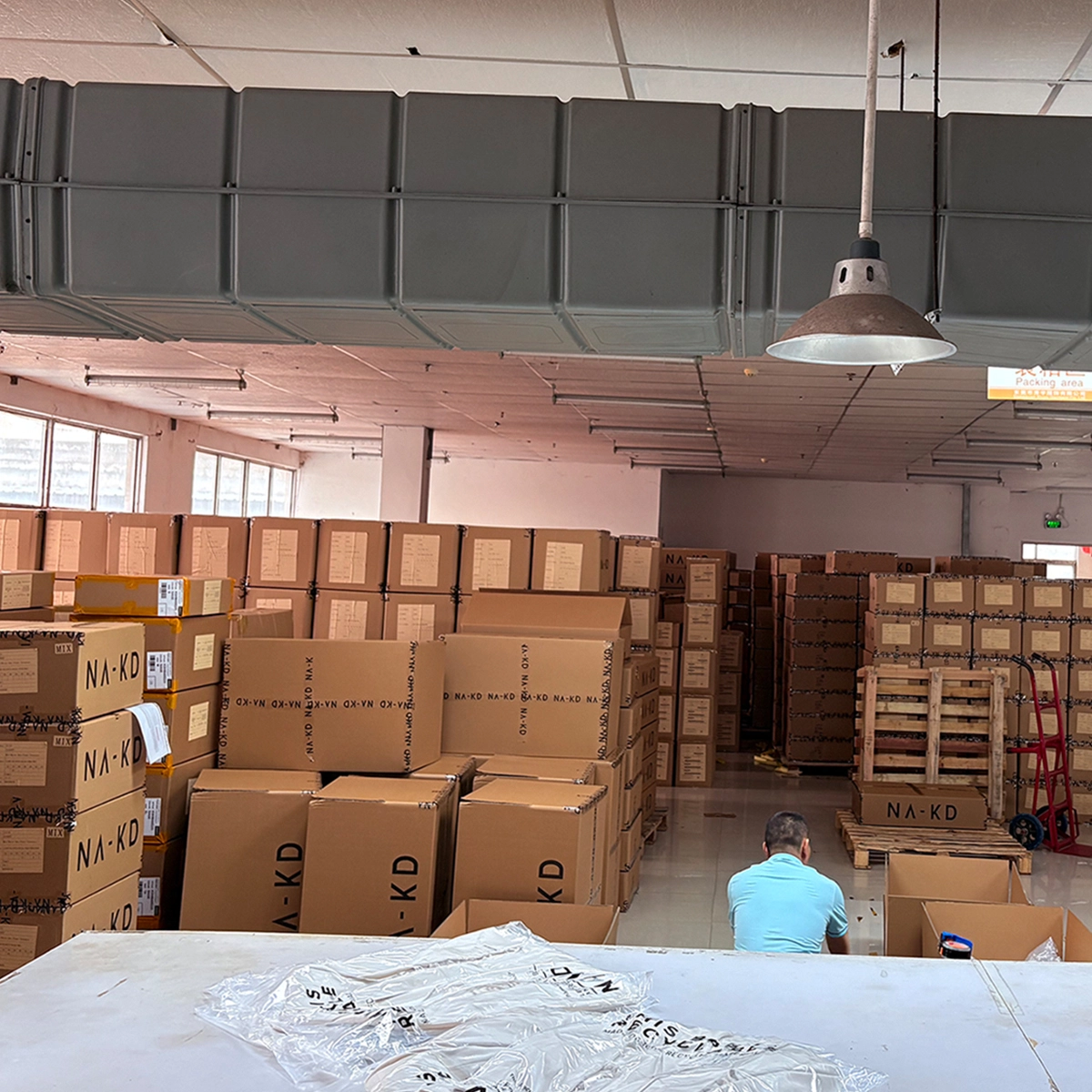
Finished Products
Finished garments are arranged by style, color, and size before shipment. Our team reviews quantities, labels, and packaging details to confirm the order matches the approved requirements before dispatch.
Our Manufacturing Capability
With over 18 years of apparel manufacturing experience, we provide OEM and ODM production support for fashion brands, wholesalers, and retailers worldwide. Our factory combines skilled workers, advanced sewing equipment, and efficient production management to handle both small-batch orders and large-scale production.
- 18+ Years Apparel Manufacturing Experience
- 150,000+ Pieces Monthly Capacity
- 750+ Skilled Workers
- 500+ Sewing Machines
- OEM & ODM Support
- Low MOQ Starting From 50–100 Pieces
Our production system is designed to support different brand stages, from small-batch development for startups to larger repeat orders for established retailers.
What Type of Brands Are We Suitable For?
After more than 18 years in apparel manufacturing, we have worked with different types of fashion businesses, from small emerging labels to established online retailers. We have found that every brand has different production needs. Some need flexibility for small quantities, some focus on consistent quality, and others need a reliable partner who can support them from the first sample to bulk production.
Our manufacturing service is designed for brands that value communication, product quality, and long-term cooperation rather than simply looking for the lowest factory price.
- Boutique Brands
- Fashion Startups
- Online Retailers
- Private Label Companies
With our complete OEM and ODM capabilities, we help private label businesses create customized apparel collections under their own brand identity. Our team works closely with clients to ensure every detail, from fabric selection to final inspection, meets their market requirements.
No matter the size of your brand, our goal is to provide a manufacturing solution that fits your stage of growth. We believe successful partnerships are built through clear communication, consistent quality, and reliable production support.
Frequently Asked Questions About Choosing a Clothing Manufacturer
1. Can a clothing factory produce small quantities for a new fashion brand?
Yes. Many clothing factories support small quantity orders for new fashion brands, especially during the testing stage. Many startups begin with around 50–100 pieces per style when testing a new collection.
2. What is the biggest manufacturing difference between Uniqlo, Zara, and H&M?
From our manufacturing experience, the main difference is how each brand organizes production. Uniqlo focuses more on consistency and repeatability, Zara requires faster development and flexible response, while H&M depends heavily on production planning and cost control.
3. How can I make sure my clothing quality stays consistent during bulk production?
In our experience, bulk quality problems usually start before sewing. They often come from unclear measurements, unapproved fabrics, or missing production details. You should work with a factory that checks materials before cutting, monitors sewing quality during production, and performs final inspections before shipment. Many quality problems can be prevented during the sample stage. Clear measurements, approved fabrics, and detailed production instructions help your final order match the original design.
4. What mistakes should brands avoid when developing their first collection?
Many new brands underestimate fabric selection, sample adjustments, and production planning. First-time buyers often focus on design ideas but overlook fabric testing, fitting revisions, and production preparation. Clear specifications and proper sample reviews help reduce delays, extra costs, and quality issues during bulk production.
5. Is OEM or private label manufacturing better for fashion brands?
OEM and private label serve different brand stages. Many new brands begin with OEM when they have clear designs, while growing brands often choose private label for more product control and customization. The right choice depends on your goals, including design support, branding, and production needs.
6. How important is MOQ when choosing a clothing manufacturer?
MOQ is important, especially for new fashion brands with limited budgets. From our experience, a suitable MOQ allows brands to test designs, manage inventory, and reduce risk before moving into larger production orders.
7. How do I check a factory before placing my first order?
Before placing a first order, check the factory’s experience, production capability, sample quality, and communication process. From our experience, reviewing previous projects, requesting samples, and understanding garment quality control steps can help brands avoid production issues later.
8. How long does it usually take to develop clothing samples?
Sample development usually takes around 3–7 days, depending on the design complexity, fabric availability, and fitting adjustments. Clear design details and fabric confirmation can help reduce unnecessary sample revisions.
Why Fashion Brands Work With Xiuyu Apparel
When you compare global fashion brands like Uniqlo, Zara, and H&M, one important lesson is clear: successful clothing businesses depend on strong production systems behind the products.
At Xiuyu Apparel, we have more than 18 years of experience helping international fashion brands, boutiques, retailers, wholesalers, and private label companies develop and manufacture apparel collections.
Our team is involved from the first fabric discussion to final shipment:
- Fabric sourcing and evaluation
- Custom sample development
- Pattern adjustment
- Bulk garment production
- Quality inspection
- Packaging preparation
As a manufacturing partner, we understand that every brand has different goals. Some brands need premium fabrics and detailed craftsmanship, while others need flexible production and competitive pricing.
Our role is not only to manufacture garments but also to help brands make better production decisions, from fabric selection and sampling to bulk manufacturing and delivery.
If you are looking for an experienced partner for custom clothing factory, private label collections, or OEM production, you can explore more about Xiuyu Apparel at Website https://www.xiuyuapparel.com.
Develop Your Next Clothing Collection With Xiuyu Apparel
Whether you are launching a boutique brand or expanding an existing fashion business, our team supports:
✓ Custom dress development
✓ Private label production
✓ Low MOQ manufacturing
✓ Fabric sourcing
✓ Quality control
Request a production consultation.
Conclusion
In garment production, many problems can be avoided before bulk manufacturing if the factory understands the product requirements from the beginning. Clear communication about fabrics, measurements, construction details, and fitting feedback helps prevent issues during production.
A good manufacturing process is not only about making the garment, but also about solving problems during development and turning the approved sample into consistent bulk production. Working closely at each stage helps keep the final products closer to the original design.
Explore More Dress Manufacturing Solutions