

When brands send a new dress project to a clothing manufacturer, the first file is often a flat sketch showing the design direction. However, during development, we often find that the sketch alone is not enough for pattern making and sampling. Unclear measurements can create problems with fit, pattern adjustments, and sample revisions. Details such as garment length, waist placement, wearing ease, and grading rules can change how the final sample fits and looks. Clear measurement specs help you communicate your expectations and reduce unnecessary revisions before bulk production.
Why Flat Sketches Cannot Fully Explain a Dress Design
A flat sketch gives the manufacturer an overview of the design direction, including the silhouette, neckline, sleeve shape, and overall style.
However, a sketch does not show every production detail needed to make the garment.
For example, a brand may send a sketch of a fitted dress with a defined waistline. Before making the pattern, the factory still needs to confirm several details:
- Where exactly the waist seam should sit
- How close the fit should be around the body
- How much ease is needed for wearing comfort
- What the finished dress length should be
Without these details, the factory has to make assumptions based on experience. Sometimes the first sample can look close to the drawing but still feel different from what you expected because the proportions or fitting balance are not clearly defined.
What Measurement Specs Tell Your Manufacturer
A garment measurement sheet gives the production team specific points to follow when developing your dress. The sketch explains the appearance, while the measurement sheet defines the actual dimensions and fitting requirements for production.
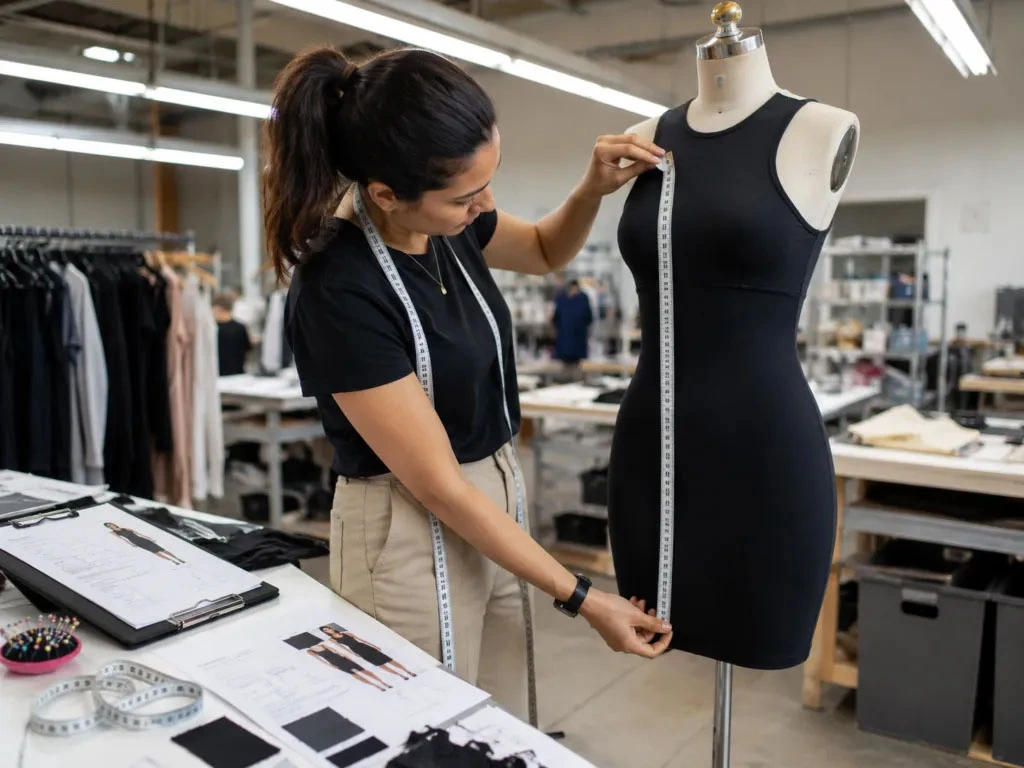
Garment Measurements Control the Final Shape
Measurements such as bust, waist, hip, shoulder, sleeve length, and dress length directly affect the garment silhouette.
For example, two dresses may both be labeled as size M, but they can have very different fits. One brand may want a close-fitting shape, while another may prefer more room through the body.
Your measurement specs give the pattern team a reference for your brand’s sizing approach before pattern development begins.
Measurements Help Confirm Fit Expectations
Fit issues are one of the most common reasons for sample revisions.
A designer may describe a dress as “slim fit” or “relaxed fit,” but these descriptions can mean different things to different teams. A manufacturer needs measurable information to understand how the garment should sit on the body.
With defined measurements, both your team and the factory can review the sample against the same standard.
Measurement Specs Support Size Grading
If you plan to produce multiple sizes, measurement specifications also guide the grading process.
Size grading is not a simple process of adding the same increment to every measurement point. The pattern team needs to consider how different areas of the garment change between sizes.
This is especially important for dresses with fitted structures, such as bodycon dresses, corset dresses, and formal dresses.
How Measurement Specs Affect Dress Sampling
During dress sampling, many brands focus on whether the sample looks similar to the original design. The sample review is not only about appearance. The team also checks whether the measurements, construction, and fit are consistent with the original requirements.
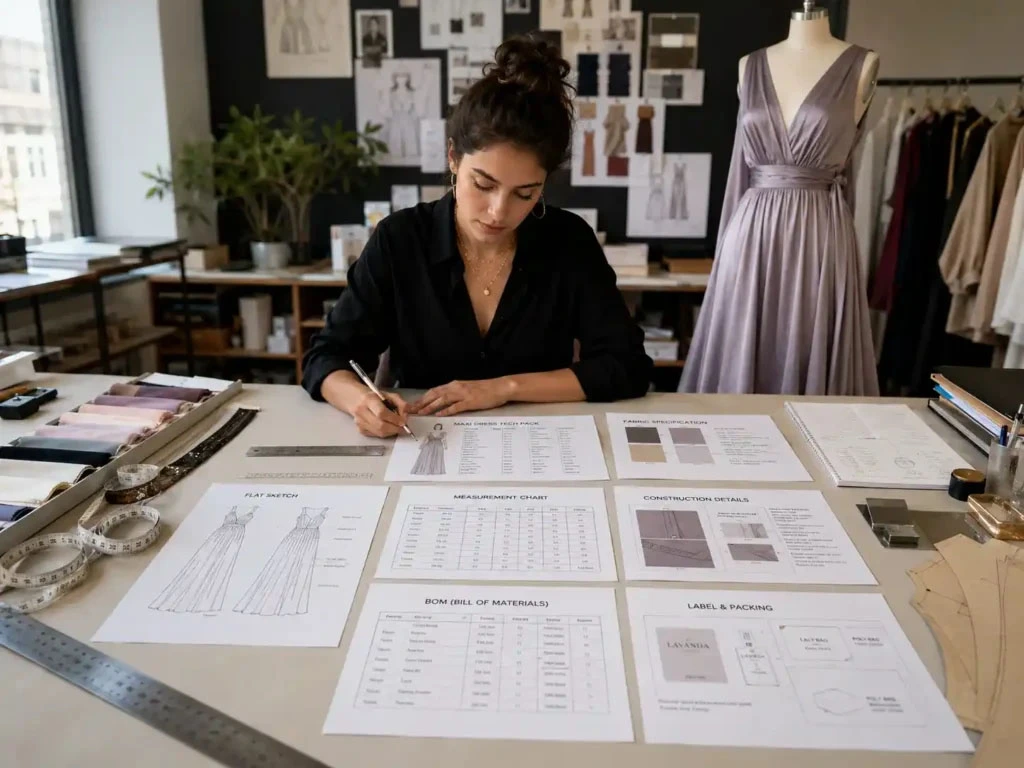
A typical dress sampling process involves:
Pattern Making
Before the first sample is made, the pattern maker reviews the measurement requirements and translates them into the garment pattern.
If key measurements are unclear, the pattern may need to be corrected after fitting, which can add another sampling round.
First Sample Review
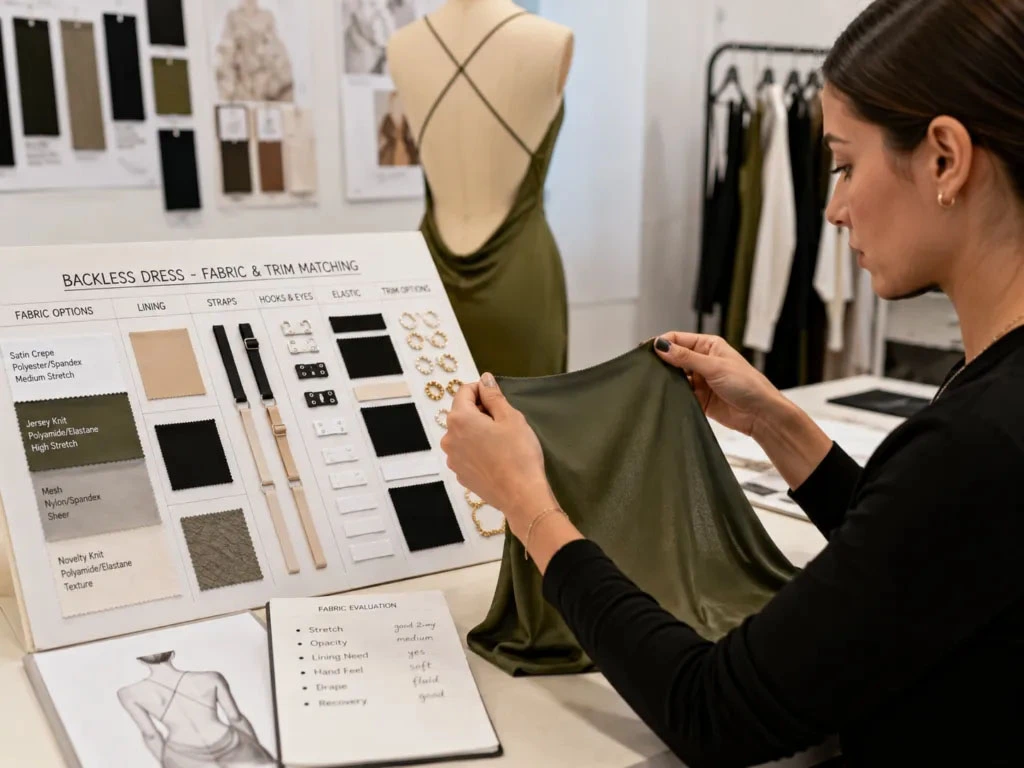
When you receive the first sample, you can review the fit, proportions, and construction based on the confirmed measurements.
This makes your fitting comments more specific. Instead of saying “the dress feels too loose,” you can identify which measurement needs adjustment.
Fit Approval and Bulk Production
After revisions are completed, the approved sample and measurement details become an important reference for bulk production.
The production team can use the confirmed specifications to maintain consistency during cutting, sewing, and final inspection.
Common Measurement Spec Problems We See During Dress Development
1. Sending Only a Sketch Without a Measurement Sheet
We often see this with new brands preparing their first collection. The design direction is usually clear, but the production team still needs actual measurements before creating the pattern.
2. Mixing Body Measurements With Garment Measurements
Body measurements describe the wearer, while garment measurements describe the finished clothing.
Confusing these two can affect fit because the factory also needs to consider fabric stretch, ease, and construction.
3. Missing Key Measurement Points
Different dress constructions require attention to different measurement points.
For example, a fitted dress may require more attention to bust, waist, hip, and seam placement, while a loose silhouette may focus more on length and overall proportion.
4. Changing Measurements Too Late
When key measurements change after pattern making or sampling begins, the factory may need to adjust patterns and remake samples.
For fitted dresses, even a small change in waist position or bust measurement can affect the balance of the whole pattern.
Confirming important specifications earlier can save development time.
5. Using General Fit Descriptions Only
Words such as “tight,” “loose,” or “oversized” provide direction but are not enough for production.
Combining these descriptions with actual measurements gives the manufacturer a clearer understanding of your expectations.
What Should Be Included in a Dress Measurement Sheet?
A practical measurement sheet does not need dozens of pages. It needs the key information required for pattern making and production.
For most dress projects, you should include:
- Front and back design references
- Size range
- Measurement points
- Measurements for each size
- Tolerance requirements
- Fit comments
- Construction notes
If you have a previous sample or reference garment, sharing it with the manufacturer can also help explain the intended shape and fitting result.
How Manufacturers Review Measurement Specs Before Sampling
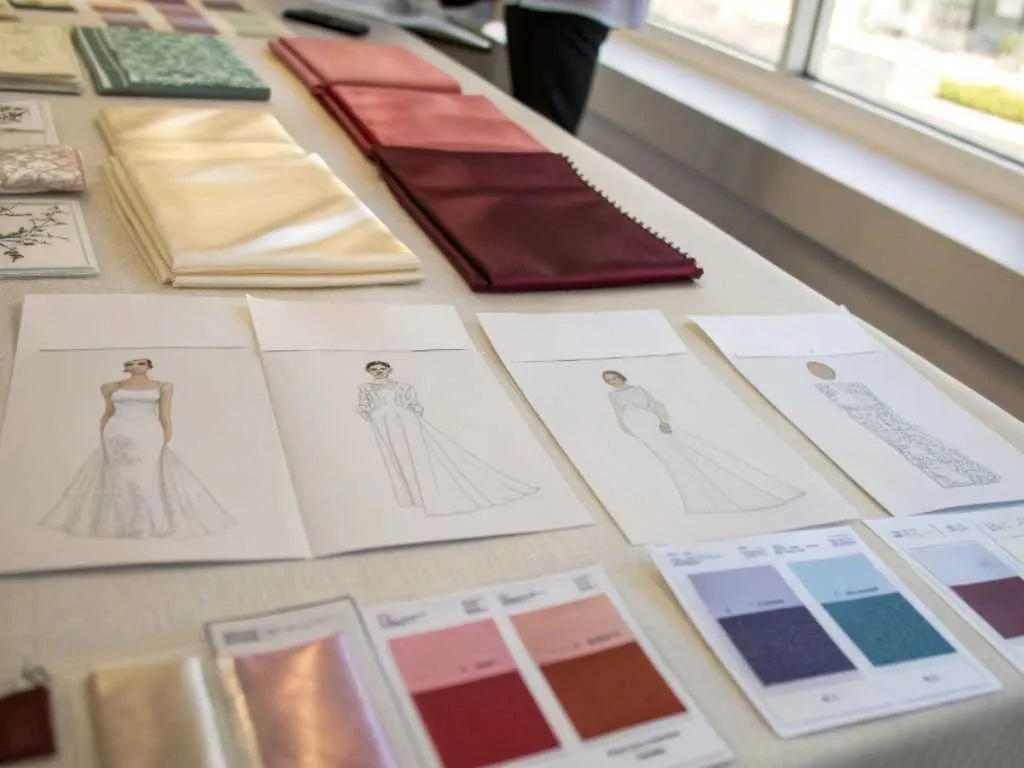
Before creating the first sample, the production team usually reviews measurement specs together with the design details.
The pattern maker checks whether the measurements work with the selected fabric, construction method, and expected silhouette. If the pattern team notices a possible fitting or construction issue, it is usually better to confirm it before making the first sample.
In our experience, many sample revisions are not caused by difficult designs. They often happen because important production details were not clearly confirmed at the beginning.
FAQ
Can a clothing manufacturer make a dress without measurement specs?
A manufacturer can sometimes develop a sample from a sketch or reference garment, but the result depends heavily on interpretation. Without clear measurements, the first sample may require more adjustments before reaching the expected fit.
Are measurement specs only needed for custom dresses?
No. Measurement specs are useful for custom dresses, private label collections, and repeat production. They provide a reference when you produce new colors, change fabrics, or develop follow-up collections.
How detailed should a measurement sheet be for a new dress project?
The required details depend on the dress style and construction. A simple casual dress may need fewer measurements, while structured styles with fitted panels, corsets, or special shapes usually require more information.
Can a manufacturer help review measurement specifications?
Yes, manufacturers can review measurements before sampling and point out possible production issues. Early discussion can help identify problems related to fit, construction, or fabric behavior.
What is the difference between a measurement sheet and a tech pack?
A measurement sheet focuses mainly on garment dimensions and fit points. A complete tech pack usually includes measurements along with materials, trims, construction details, artwork, and other production requirements.
Conclusion
A flat sketch shows what you want to create. Measurement specs tell the production team how to make it. Preparing accurate measurements before sampling gives the factory a stronger starting point and makes the transition from first sample to bulk production smoother.
Related Dress Manufacturing Services
If your project involves a specific dress fabric or construction, you can also review our related manufacturing pages:
- Silk Dress Manufacturer
- Evening Dress Manufacturer
- Bodycon Dress Manufacturer
- Wrap Dress Manufacturer
- Formal Dress Manufacturer
Get a Quote for an Existing Dress Style
If you are transferring an existing dress style to a new manufacturer, send us the latest approved sample, tech pack, product photos, or measurement chart together with your target quantity.
As a dress manufacturer, we can review the construction, fabric, trims, measurements, and current production status with you before confirming the sampling requirements.

