

When you develop a new dress collection, the design concept is usually the first step to confirm. However, during production, details such as fabric specifications, trims, and construction requirements often determine whether the first sample matches your expectation. As a clothing manufacturer, we often see brands spend extra time adjusting samples because fabric, trims, or construction requirements were not fully defined at the beginning.
What Is a Dress BOM in Clothing Manufacturing?
A dress BOM (Bill of Materials) is a document that lists the materials and components required to produce a garment. For a custom dress project, it usually includes fabric, lining, trims, labels, packaging, and other production-related items.
For a fashion brand or buyer, a BOM is not only a material list. It gives the manufacturer a clearer reference for developing the garment according to your expected materials, details, and construction requirements.
When you provide details such as fabric composition, fabric weight, lining requirements, zipper type, or decorative elements, the factory can review the production requirements more accurately. Without these details, some parts of the development process may need to be adjusted later after sampling.
Why Does a BOM Affect Dress Manufacturing Cost?
During early cost discussions, some buyers mainly look at the design appearance and may underestimate the impact of materials and construction details.
Fabric Details Affect Material Cost and Production Planning
Fabric selection has a direct impact on dress cost. Different fabrics require different cutting layouts, handling methods, and sewing control. For example, slippery satin may require more attention during cutting and stitching, while stretch fabrics need different fitting considerations during pattern development.
For example, a chiffon dress with a soft drape usually requires different cutting and sewing considerations compared with a structured satin dress. Even when two dresses have similar designs, fabric width, weight, stretch, and finish can change the amount of material needed and the difficulty of production.
With clear fabric information included in the BOM, the manufacturer can calculate material consumption and production requirements more accurately before quoting.
Trims and Details Can Change the Production Process
A zipper, button, lace panel, or decorative element may require different sourcing methods and additional sewing steps during production.
In our production experience, some designs appear simple at the sketch stage but become more complicated after reviewing the actual trims and construction requirements. Confirming these details early helps avoid cost differences between the initial quotation and the final sample.

Construction Requirements Influence Labor and Workmanship
During production review, the BOM helps the technical team check what materials and construction methods are required before sample making begins.
For example, adding lining, boning, padding, special seams, or handmade decorations can change the production steps involved. These details affect sewing time, quality control points, and the skills required during manufacturing.
How Does a BOM Improve Dress Sampling Accuracy?
Sampling is the stage where your design idea is turned into a physical garment. Complete production information allows the sample team to make fewer assumptions during development and create a sample closer to the approved design.
Reduces Material-Related Sample Issues
A fabric name alone is often not enough for accurate sampling.
For example, two fabrics may both be called satin, but they can have different thickness, shine, weight, and drape. These differences can affect the final silhouette of the dress.
Providing these details gives the pattern makers and sample room a clearer reference before cutting and sewing begin.
Helps Avoid Unnecessary Sample Revisions
In sample development, revisions often happen when certain production details are confirmed after the pattern or sample has already started.
You may need to adjust the sample if the zipper position changes, lining is added later, or decorative elements require different construction methods.
We often review these details during the early development stage because changes are usually easier to manage before the sample is completed.
Provides a Reference for Bulk Production
After your sample is approved, the BOM becomes one of the references used for production preparation.
The production team can check materials, trims, and packaging requirements together with the approved sample and specifications before bulk cutting begins.
This helps keep the final production closer to the approved version.
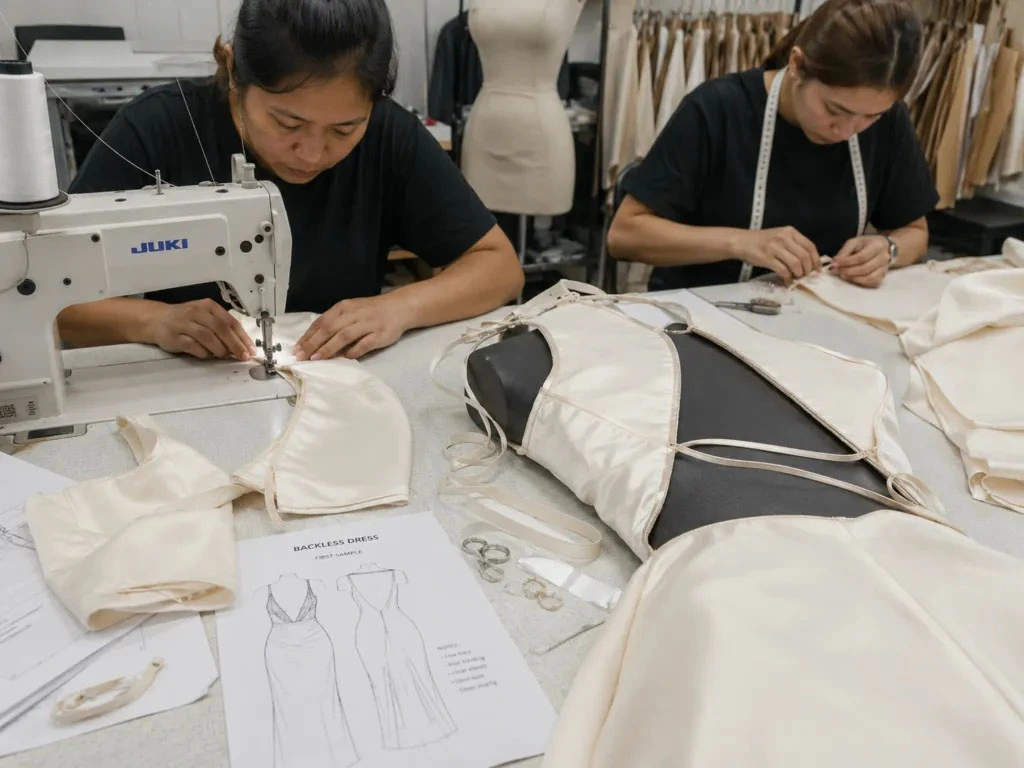
What Should Be Included in a Dress BOM?
The exact BOM format can vary between brands, but a complete dress BOM usually covers the main materials and production components.
Fabric Information
A typical fabric section in a dress BOM may include:
- Fabric composition
- Fabric weight or GSM
- Color reference
- Finish requirements
- Supplier information if available
These details allow the manufacturer to review fabric behavior and production requirements before development starts.
Lining Information
For lined dresses, include:
- Lining material
- Lining color
- Lining position
- Special lining requirements
The lining can affect comfort, fitting, and the overall appearance of the finished garment.
Trim Information
Important trim details include:
- Zipper type and length
- Buttons or snaps
- Lace or decorative materials
- Elastic
- Beads, sequins, or embroidery
These details are especially important for dresses with special designs or complicated finishes.
Label and Packaging Details
For brands selling through retailers, boutiques, or online channels, you should also confirm:
- Woven labels
- Care labels
- Hangtags
- Barcode requirements
- Packaging instructions
These details are often reviewed before shipment preparation.
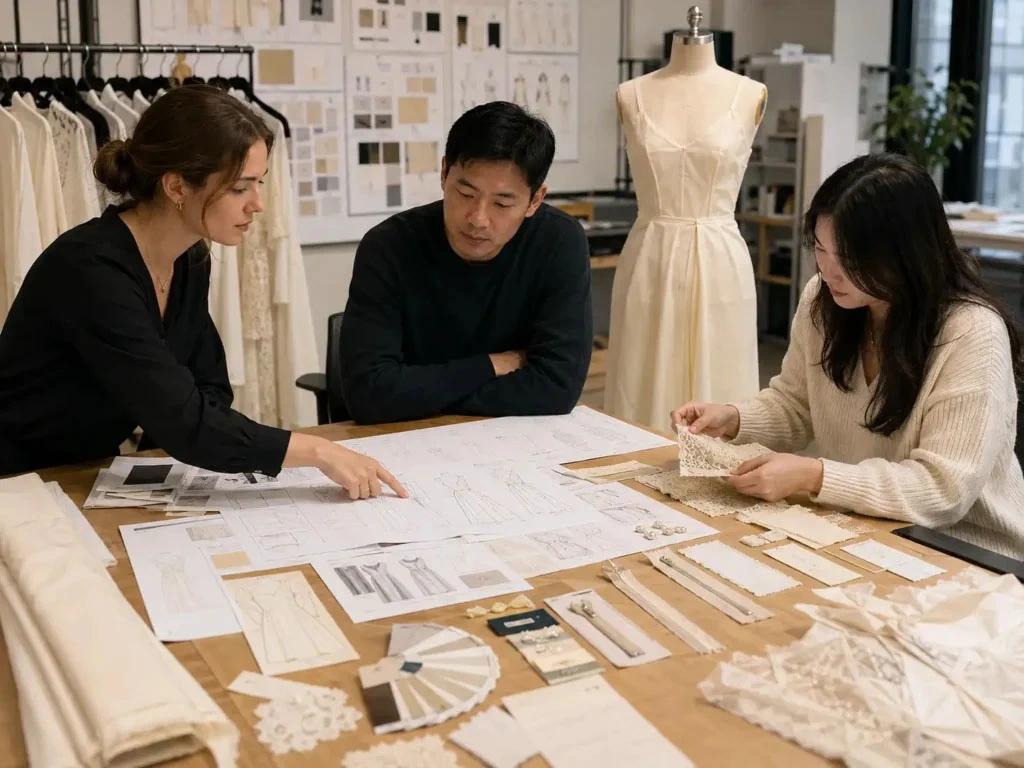
Common BOM Mistakes Fashion Brands Make
Only Providing General Material Names
Descriptions like “lace dress” or “satin dress” can show the design direction, but they do not provide enough information for production evaluation.
Different materials can create different costs and garment results.
Forgetting Secondary Materials
Some brands focus on the main fabric but overlook lining, zippers, buttons, or packaging.
These items may seem minor, but they are still part of the final production cost.
During sample review, we sometimes find that lining, zippers, or packaging details were not confirmed at the beginning. These missing items can affect both quotation accuracy and production preparation.
Updating Designs Without Updating the BOM
During sample development, design changes are common. However, if the BOM is not updated after changes, different teams may follow different information.
Keeping the BOM aligned with the latest approved version helps avoid confusion during production.
Leaving Packaging Details Until the End
For wholesale buyers and retailers, packaging requirements are part of product preparation.
Confirming these details earlier can prevent delays before shipment.
BOM vs Tech Pack: What Is the Difference?
A BOM and a tech pack provide different types of production information.
A BOM focuses on what materials and components are needed, including fabric, lining, trims, labels, and packaging.
A tech pack focuses more on how the garment should be made, including measurements, construction details, artwork placement, and sewing instructions.
For many custom dress projects, both documents work together. The BOM helps confirm production materials, while the tech pack provides detailed manufacturing instructions.
How Does a Clothing Manufacturer Use a BOM During Production?
Before quotation, the manufacturer reviews the BOM to understand material requirements and possible production challenges.
During sampling, the sample room and pattern team use this information together with design references to prepare the garment and evaluate fitting or construction issues.
Before bulk production, the BOM is checked with the approved sample and production specifications to confirm that the correct materials and details are prepared.
From our production experience, the problems that slow down development are often not caused by complex designs, but by unclear information at the beginning. A clear BOM gives both sides a better understanding before production moves forward.
FAQ
1. What information should I prepare if I do not have a complete BOM?
You can start with basic product information such as design images, fabric preference, size requirements, and special details. The manufacturer can help review missing points, but clearer information usually leads to faster communication and more accurate development.
2. Can a BOM affect my dress quotation from a manufacturer?
Yes. Material choices and construction details directly influence production costs. A BOM with fabric, trims, and finishing requirements allows the manufacturer to evaluate the project more accurately instead of estimating based only on appearance.
3. Should the BOM be completed before making a dress sample?
It is recommended to prepare the main BOM details before sampling starts. Some adjustments are normal during development, but confirming important materials early can reduce changes caused by incorrect fabric or trim selections.
4. How is a BOM used after the sample is approved?
After approval, the BOM becomes a production reference together with the final sample and specifications. It helps the production team confirm materials and components before bulk manufacturing begins.
5. Can small trim details really affect dress production?
Yes. Items such as zippers, buttons, lace, or decorative elements can affect sourcing, sewing methods, and production time. Although these components may look small, they can still influence the overall manufacturing process.
Conclusion
In dress manufacturing, a BOM is not only used for listing materials. It helps both the brand and manufacturer confirm production details before sampling, quotation, and bulk manufacturing. By confirming materials, trims, and construction details early, you can improve quotation accuracy, reduce unnecessary sample revisions, and make the transition to bulk production smoother. For brands working with a clothing manufacturer, a well-prepared BOM creates a clearer production process from development to bulk manufacturing.
Related Dress Manufacturing Services
If your project involves a specific dress fabric or construction, you can also review our related manufacturing pages:
- Lace Dress Manufacturer
- Party Dress Manufacturer
- Chiffon Dress Manufacturer
- Bridesmaid Dress Manufacturer
- Corset Dress Manufacturer
Get a Quote for an Existing Dress Style
If you are transferring an existing dress style to a new manufacturer, send us the latest approved sample, tech pack, product photos, or measurement chart together with your target quantity.
As a dress manufacturer, we can review the construction, fabric, trims, measurements, and current production status with you before confirming the sampling requirements.

