

When you work with a clothing manufacturer, confirming the unit price is only the beginning. Fabric costs, construction details, sample revisions, and production arrangements can all affect your final order. From our experience in dress manufacturing, problems often start when buyers and factories have different expectations about what has been agreed. Asking the right questions before placing an order helps you control costs, avoid production misunderstandings, and plan your collection with fewer surprises.
1. Does the Factory Have Experience With Your Type of Dress?
Not every dress manufacturer has the same production experience. A basic cotton dress and a fitted evening gown require different pattern-making skills, sewing techniques, and quality checks.
Before choosing a factory, ask whether it has produced styles similar to yours. Previous work can help you judge whether the team understands the construction rather than simply whether it can sew garments.
Pay particular attention to details such as:
- Neckline shaping and support
- Waistline positioning and garment balance
- Sleeve construction and fit
- Zipper installation and seam finishing
- Lace placement, beading, and decorative details
- Fabric drape and lining construction
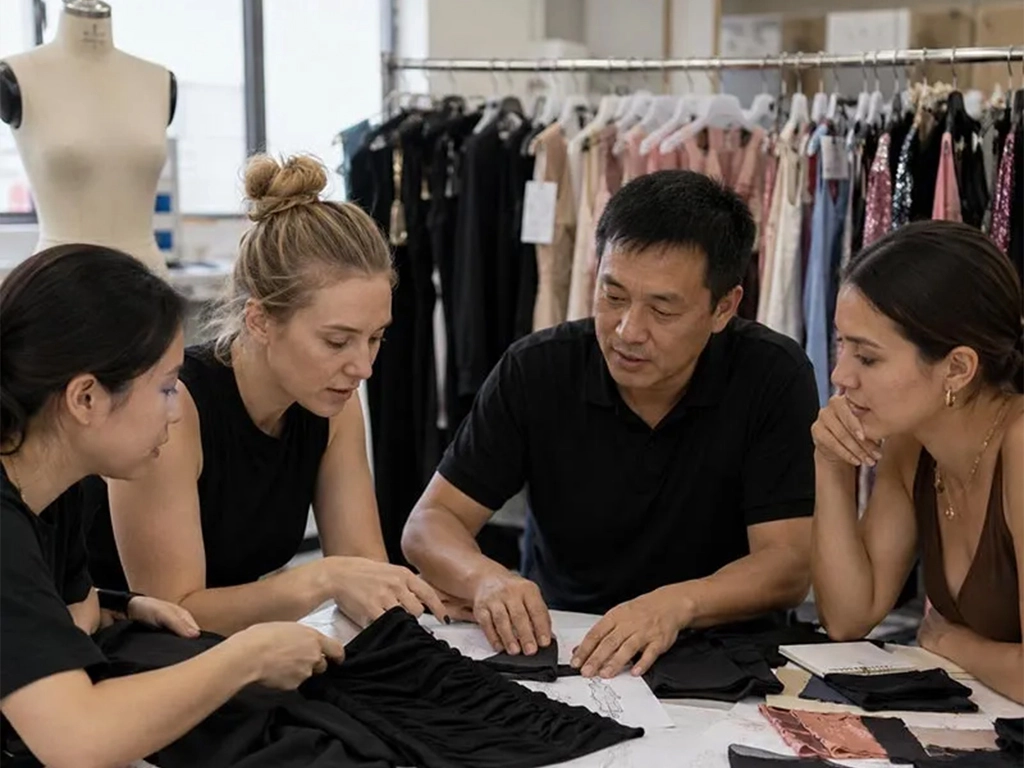
You should also ask which production stages are handled in-house. Pattern development, sample making, fabric cutting, sewing, finishing, and inspection may involve different teams.
Some factories outsource embroidery, printing, washing, or other special processes. This is not necessarily a problem, but you should know who manages those suppliers and who takes responsibility for the finished work.
A factory’s production experience matters more when it can explain the technical challenges of your particular design.
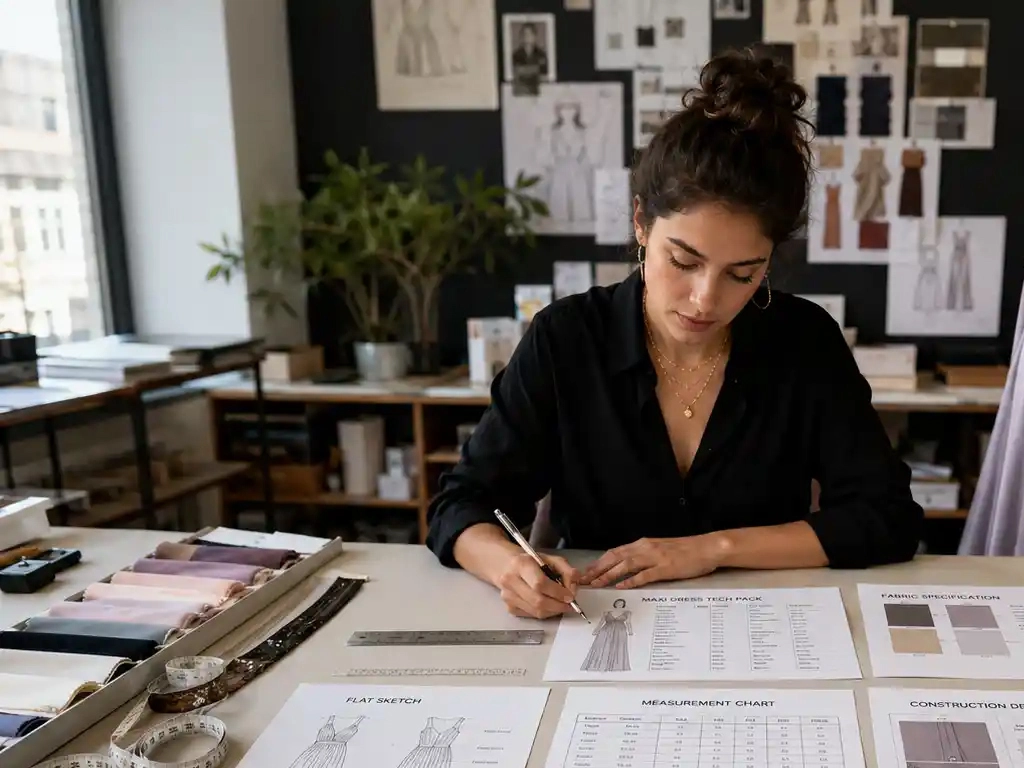
2. Is Your Design Information Ready for Production?
A reference photo may show exactly how you want a dress to look, but it rarely explains everything needed to manufacture it.
If you have a tech pack, send it with your initial inquiry. The more technical information you provide, the fewer assumptions the factory needs to make when preparing the quotation.
Your documents should cover:
- Garment measurements and size specifications
- Fabric composition, weight, and stretch
- Construction and stitching details
- Lining and trim requirements
- Color references and print artwork
- Labels, hangtags, and packaging instructions
- Measurement tolerances
If you are still developing the collection, you may not have every detail confirmed. Separate the approved specifications from the parts that need further discussion.
For example, a sketch might show a fitted bodice, but the factory still needs to understand how the neckline is supported, whether the garment requires boning, and how the lining is attached.
We prefer to review these details before pattern development. Some construction decisions affect the pattern itself, so changing them after the first sample can mean repeating part of the development work.
You should also establish how revisions are recorded. When a sleeve measurement or zipper position changes, the updated information needs to reach the pattern maker and sample team, not just the sales contact.

3. Can the Manufacturer Source Your Required Fabric?
If you do not have a fabric supplier, ask whether the manufacturer can source materials for your collection.
Fabric selection affects more than appearance. It influences garment weight, drape, stretch, shrinkage, sewing difficulty, and even the amount of material needed for each piece.
For example, two satin fabrics can look similar on a swatch but behave differently when used for a bias-cut dress. One may drape smoothly, while the other may twist or stretch during sewing.
Before confirming your material, discuss:
- Fabric composition and weight
- Surface finish and hand feel
- Stretch and recovery
- Color availability
- Shrinkage requirements
- Lining compatibility
You should also check whether the fabric is available in the quantity and color you need.
Custom dyeing can involve a separate MOQ from garment production. If you are ordering several colors for a small collection, this can have a noticeable effect on your initial investment.
If the original fabric becomes unavailable, ask the manufacturer to provide alternatives for your approval. Do not allow a substitute to enter bulk production simply because its composition appears similar.
A new fabric should be checked for color, weight, drape, and performance before you approve it.
4. What Is the MOQ Per Style and Color?
When you contact a clothing manufacturer, ask how its minimum order quantity is calculated.
Some factories apply MOQ per style, while others may have separate requirements for colors or special fabrics. You need to understand the difference before planning your collection.
For example, if you want to order 150 dresses across three colors, clarify whether the factory accepts 50 pieces per color or requires a larger quantity for each style.
Also ask whether different sizes can be mixed within the order.
For startup brands and boutiques, these details can determine whether a collection is commercially practical.
Do not look at garment MOQ in isolation. Fabric suppliers may have their own minimums, particularly when you need custom dyeing, printing, or special finishing.
A factory might accept a small production run but still need to purchase more material than your order consumes.
Before confirming the quantity, make sure you understand both the garment requirement and the material commitment.
5. What Is Included in the Factory Quotation?
Two manufacturers can quote very different prices for what appears to be the same dress.
Before comparing the numbers, check whether both factories are working from identical specifications.
A quotation should clearly identify the main components:
- Main fabric and lining
- Zippers, buttons, and other trims
- Cutting and sewing
- Special workmanship or decoration
- Labels and hangtags
- Individual packaging
- Carton requirements
- Separate sampling or development charges
Consider a dress with a fully lined bodice, concealed zipper, and hand-applied decoration. If one quotation excludes part of the workmanship while another includes it, comparing unit prices will give you the wrong impression.
You should also ask what assumptions were used to calculate the price.
Fabric consumption, construction complexity, decoration placement, and size distribution can all affect the final cost.
From the factory side, one of the most common quotation problems is receiving incomplete design information and then discovering that the buyer expected additional details to be included.
Get the specifications and exclusions written down before approving the price. This gives both sides a clear reference if the design changes later.
6. How Does the Sample Approval Process Work?
A sample is where your design starts becoming a physical garment. It allows you to check whether the pattern, fabric, measurements, and construction work together.
Ask how long the first sample will take and whether the factory already has the required fabric and trims.
A straightforward design using available materials may move quickly. A dress with complicated draping, special fabric, or detailed decoration can require more development time.
When you receive the sample, check the garment against your intended design rather than judging it only by appearance.
For fitted dresses, pay attention to:
- Bust, waist, and hip measurements
- Neckline shape and depth
- Shoulder and sleeve fit
- Waistline position
- Skirt length and hem balance
- Fabric drape and overall silhouette
If something needs changing, provide specific comments. Marked photographs and revised measurements are more useful than general feedback such as making the dress tighter or improving the fit.
We often see development take longer when fitting comments arrive in several separate messages. A consolidated revision list helps the pattern maker understand which changes belong to the same sample revision.
Before bulk production, confirm the final PP sample and make sure the approved measurements, fabric, trims, and construction details match the latest documents.
7. When Does Bulk Production Actually Start?
A factory may quote 25–30 days for bulk production, but you need to understand what happens before that period begins.
Placing an order does not automatically mean the factory can start cutting fabric the next day.
The production team may still be waiting for:
- Final PP sample approval
- Fabric delivery
- Trim and accessory availability
- Confirmed order quantity
- Final size and color breakdown
Ask which conditions must be completed before the production schedule starts.
You should also separate the bulk manufacturing period from the total order timeline.
If your launch date is fixed, work backward from the date you need the goods. Allow time for sampling, revisions, material purchasing, production, inspection, and shipping.
Another useful question is how the factory handles schedule changes.
A delayed fabric delivery or late approval can affect the production plan. You should know who will inform you and how quickly you will receive an updated schedule.
A realistic delivery commitment is more valuable than a short production promise that ignores the work required before bulk manufacturing.
8. How Does the Factory Check Quality During Production?
Quality problems are easier to deal with when they are found before the garments are finished.
Ask your manufacturer what inspections are carried out during production and what the team checks at each stage.
For dress manufacturing, the main checks may include:
Fabric inspection: Checking visible defects, shade differences, fabric condition, and shrinkage before cutting.
Cutting inspection: Checking fabric direction, pattern placement, and panel consistency.
In-line inspection: Checking stitching, measurements, seam construction, zipper installation, and workmanship while sewing is underway.
Final inspection: Checking garment appearance, measurements, loose threads, stains, labels, and finishing before packing.
You should also ask what happens when the same defect appears on multiple pieces.
For example, if the waist measurement is consistently larger than the approved specification, the factory needs to investigate the pattern or sewing process. Checking every finished garment will not solve the underlying problem.
Another point worth confirming is how bulk production is compared with the approved sample.
The factory should have clear measurement specifications, tolerances, construction instructions, and material references for the QC team.
Without these documents, different people may judge the same garment differently.
9. Have You Confirmed the Packaging Requirements?
Packaging should be discussed before the garments reach the finishing stage.
Your retail channel may have specific requirements for individual packaging, product identification, and carton preparation.
Check whether you need:
- Individual polybags
- Brand labels and hangtags
- Size stickers and barcodes
- Specific folding methods
- A fixed number of garments per carton
- Carton markings and shipping labels
If you sell through retailers or boutiques, confirm their receiving requirements before production is completed.
You should also establish who supplies the packaging materials. If you provide custom labels or barcodes, the factory needs enough time to receive and check them.
Small details can cause unnecessary rework when garments have already been finished and packed. A clear packing instruction from the beginning helps avoid that situation.
10. Can the Factory Handle Your Future Orders?
If you expect to reorder a successful style, ask how the manufacturer keeps production records.
The original pattern, size specifications, approved sample, fabric details, trims, and construction notes can all be important for repeat production.
Imagine returning to the same manufacturer six months after your first order. You may want to increase the quantity, introduce a new color, or adjust the size range.
Without the original development records, the factory may need to check details again, and the next production run may not match the first one as closely as expected.
You should also discuss what happens when a material is discontinued.
An alternative fabric may be available, but even a similar composition can have a different weight, drape, or shrinkage rate. Request a new approval before using it for repeat production.
For continuing styles, good production records are just as important as the initial sample.
What Should You Confirm Before Placing a Dress Order?
Before approving the purchase order, make sure the following details have been agreed upon:
| Area | What You Need to Confirm |
|---|---|
| Factory | Relevant experience and production responsibilities |
| Design | Latest tech pack and construction details |
| Fabric | Composition, weight, color, and availability |
| MOQ | Quantity per style and color |
| Pricing | Included costs and possible adjustments |
| Sampling | Revision arrangements and PP sample approval |
| Production | Start conditions and delivery schedule |
| QC | Inspection stages and defect standards |
| Packaging | Labels, barcodes, polybags, and cartons |
| Repeat Orders | Pattern and production record management |
One practical step is to put all final decisions into a single approved order specification. This should match the purchase order, approved sample, and production instructions.
If a detail was agreed upon during development but never made it into the final documents, the production team may not know about it.
FAQ
1. Should you sign a manufacturing agreement before starting production?
Yes. Your agreement should cover payment obligations, delivery responsibilities, confidentiality, intellectual property, and procedures for handling disputes. For overseas production, make sure both parties understand the applicable terms and retain written records of important commercial commitments.
2. Can you arrange an independent factory inspection?
Yes. You can appoint a third-party inspection company to visit the factory and assess its production setup or inspect finished goods. Agree on the inspection scope, standards, and timing beforehand so the factory knows what will be checked.
3. Who owns the patterns and designs developed for your collection?
Clarify ownership before pattern development begins. If you provide an original design or pay for custom pattern making, discuss who owns the resulting files, whether the factory can retain copies, and whether the pattern can be used for other customers. Put the agreement in writing.
4. How should you arrange payment for an overseas clothing order?
Discuss the deposit, balance payment, payment milestones, and accepted methods before signing the order. Many manufacturers request a deposit before purchasing materials, with the remaining balance due under the agreed shipment terms. Your payment schedule should be clearly documented.
5. What can you do if the finished garments do not meet the agreed quality standard?
Keep the approved sample, order specifications, inspection records, and photographs of the affected garments. Report the problem promptly and identify the quantity involved. Discuss the cause and an appropriate corrective action with the factory before agreeing on a settlement.
Conclusion
Choosing a dress manufacturer involves more than finding an acceptable unit price. You need a factory that understands your design, communicates clearly, and can manage the details from sampling through bulk production. Confirming specifications, costs, responsibilities, and delivery expectations before placing an order gives your business a much clearer starting point. At Xiuyu Apparel, we bring our manufacturing experience as a dress manufacturer to the development and production of dresses for fashion brands and private label businesses.

