

If you have a dress idea but do not have every technical detail ready, an ODM dress manufacturer can help turn that starting point into a production-ready garment. You may have a sketch, reference garment, fabric idea, or product photo, while the factory works through the pattern, fit, construction, and sample revisions with you before bulk production.
What Is an ODM Dress Manufacturer?
ODM stands for Original Design Manufacturer.
In dress manufacturing, an ODM manufacturer takes part in developing the product rather than only making a garment from a completed tech pack.
You may come to the factory with a reference dress, sketch, product photo, moodboard, physical sample, or a general idea of the style you want. Some details may already be fixed, while others still need to be worked out.
That is where the development work starts.
You still decide who the product is for, what kind of look you want, what price level you need to reach, and which design details cannot be changed. The manufacturer helps turn those decisions into workable fabric choices, patterns, construction details, samples, and a production plan.
The important part is not the ODM label itself, but how the factory manages development from the first idea to bulk production.
ODM Is Not Always the Same as a Catalog Style
Some suppliers call an existing factory style an ODM product.
You may be shown a finished dress and offered changes to the color, fabric, length, labels, or packaging. This can work well when you need a product quickly, but the basic pattern and construction may already be established.
A development-led ODM project starts from your product direction.
For example, you might send a fitted satin midi dress with a corset-style bodice as a reference. The picture gives the factory a visual target, but it does not answer questions such as:
- Should the satin have stretch?
- Does the bodice need cups or boning?
- How much support should the bust have?
- Where should the waist sit?
- Does the dress need a full lining?
- What type of closure should be used?
- How should the fit change between sizes?
- What production cost needs to be maintained?
Those decisions have to be worked out before the dress is ready for repeat production.
A supplier that only sends you a price has not necessarily solved the development problem.
How Does ODM Dress Manufacturing Work?
You do not need to arrive with every technical detail finished. You do need to give the manufacturer enough information to understand what you are trying to make.
Start With What You Already Have
Your starting material could be:
- A sketch
- A reference photo
- A physical garment
- A moodboard
- A previous product
- A fabric reference
- A rough size range
- A target price
- An estimated quantity
In practice, it helps to separate the details that are fixed from those still open to discussion.
For example, the neckline, waist position, skirt length, and overall silhouette may be essential to your design. You may be more flexible about the lining, zipper, interfacing, or construction method.
That distinction helps the factory make technical changes without changing the parts of the dress that matter to you.
Check the Design Before Making the Sample
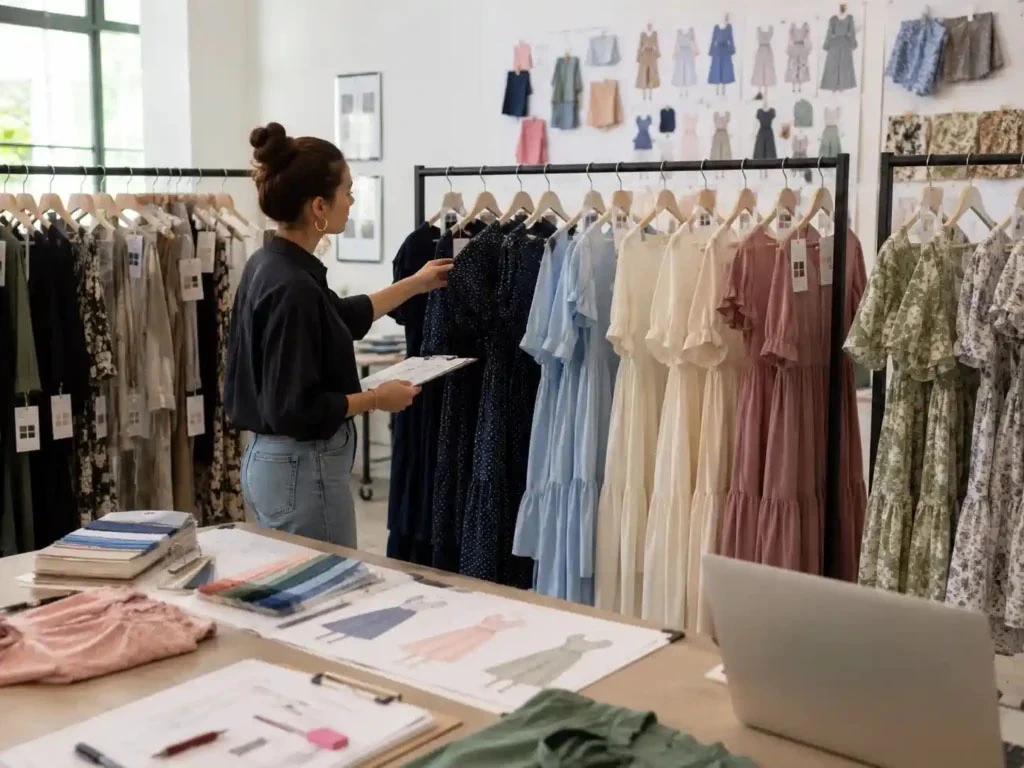
A reference image only shows the outside of the garment. It does not tell the factory how much support the bodice needs, whether a satin needs lining, or how a cut-out will behave when the size changes.
Those details usually become clear during development. A strapless dress may need more internal structure, while a fitted style may need changes around the bust, waist, or hip to keep the intended shape without making the garment uncomfortable.
The practical question is how the dress will behave on the body, not only whether the first sample looks right on the table.
Can the customer sit comfortably? Does the neckline stay in place? Is there enough movement through the hip? Does the fabric recover after stretching? Does the construction still make sense in larger sizes?
These questions become more important with fitted, structured, satin, lace, mesh, corset, strapless, and heavily embellished dresses.
A detail that works on one sample is not always easy to reproduce consistently in bulk production.
Fabric and Pattern Need to Be Considered Together
Fabric selection can change the pattern.
A stretch satin does not behave like a rigid woven. A bias-cut fabric behaves differently from a straight-grain construction. Lace may need placement planning, while sequins can change the sewing and finishing process.
When you review fabric options, look beyond the fiber content.
You may need to compare:
- Weight
- Width
- Stretch
- Recovery
- Drape
- Opacity
- Hand feel
- Shrinkage
- Surface finish
- Lining requirements
Two fabrics can both be called polyester satin and still produce very different dresses.
If the fabric changes after the first sample, the pattern may have to change with it. That is why material decisions should be discussed early rather than treated as a separate purchasing step.
Make the First Sample
The first sample gives you something physical to evaluate.
You may discover that the neckline is too low, the waist sits too high, the skirt needs more volume, the armhole feels tight, or the lining changes the fit.
This is normal in product development.
What matters is how clearly those changes can be communicated.
A comment such as:
Raise the neckline by 1.5 cm.
gives the pattern maker a measurable adjustment.
A comment such as:
Make it more elegant.
does not.
The same applies to hem length, sleeve width, waist position, bust point, and armhole depth. The more specific your comments are, the easier it is to make a useful revision instead of another round of guessing.
Approve the Production Standard
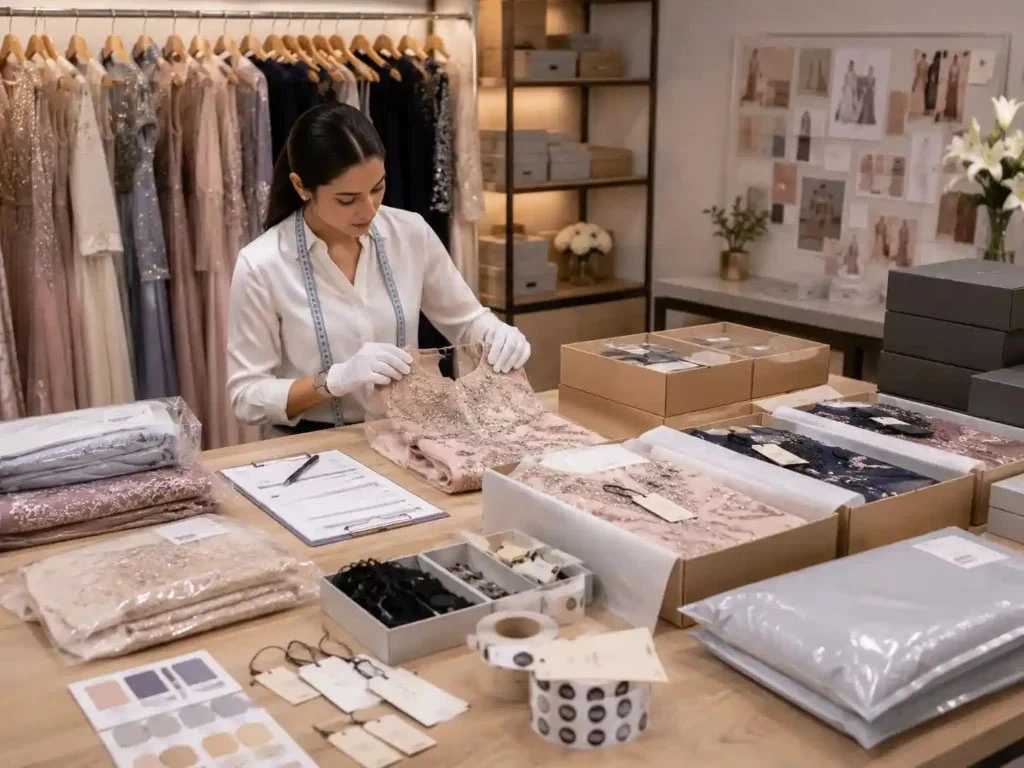
Once the sample looks right, you still need a clear reference for bulk production.
That normally includes the approved sample together with details such as:
- Final pattern
- Measurement chart
- Fabric reference
- Color approval
- Trim information
- Construction details
- Labels
- Packaging
- Inspection requirements
The physical sample matters because some things cannot be fully described in a spreadsheet.
The way satin falls, how much a neckline stretches, how a structured bodice feels, or how a seam sits on the body may be difficult to communicate through measurements alone.
For repeat orders, the approved sample and written production information should stay together.
Move Into Bulk Production
Once the production standard is approved, bulk production should follow that version rather than relying on memory.
Before cutting, the factory needs to check the correct fabric, color, shrinkage, fabric lot, grain direction, print placement, size ratio, and pattern version.
During sewing, certain areas may need closer control depending on the dress.
These could include:
- Neckline shape
- Strap length
- Bust position
- Waist measurement
- Zipper alignment
- Slit height
- Finished length
- Seam placement
The first sample is only the reference point. During bulk production, the challenge is keeping the approved version consistent across sizes, colors, and production batches.
What Is the Difference Between ODM, OEM, and Private Label?
These terms often appear together in clothing manufacturing, but they refer to different parts of the relationship.
ODM means the manufacturer participates in product development.
OEM generally means you already have the product specifications and the factory manufactures the garment to those requirements.
Private label is mainly about how the finished product is branded and packaged for your business.
In practice, these models can overlap. A brand might develop a new dress with an ODM manufacturer, then place its own labels, hangtags, and packaging on the finished product.
ODM vs. OEM
With OEM, you may already have:
- Complete tech pack
- Technical flats
- Measurement specifications
- Fabric specifications
- Construction details
- Grading information
- Artwork
- Packaging requirements
- Approved sample
The factory’s job is mainly to manufacture against those requirements.
With ODM, you may have only part of that information.
You may know what the dress should look like without knowing the exact fabric, pattern, internal construction, or measurements needed to produce it.
That is where the manufacturer’s development work becomes more involved.
If you already have a complete product-development team and approved production specifications, you may not need as much ODM support.
ODM vs. Private Label
Private label does not replace ODM.
You can use ODM development to create the garment and then sell it under your own brand.
Your private-label requirements may include:
- Main labels
- Size labels
- Care labels
- Hangtags
- Barcodes
- SKU stickers
- Branded polybags
- Carton markings
- Packaging inserts
When discussing this with a supplier, ask what is actually included.
A factory offering “ODM + private label” may provide very different levels of development and branding support from another factory using the same terms.
What About Pattern Ownership?
This is worth discussing before the first sample.
If you are bringing your own design, artwork, measurements, or proprietary product details, clarify which development files belong to you and which parts come from the manufacturer’s existing blocks or methods.
You should also discuss whether the finished style can be reused for other customers, whether your pattern can be accessed later, and how confidential unpublished designs are handled.
Do not assume that paying a sample fee automatically answers all of these questions.
What Can You Customize With an ODM Dress Manufacturer?
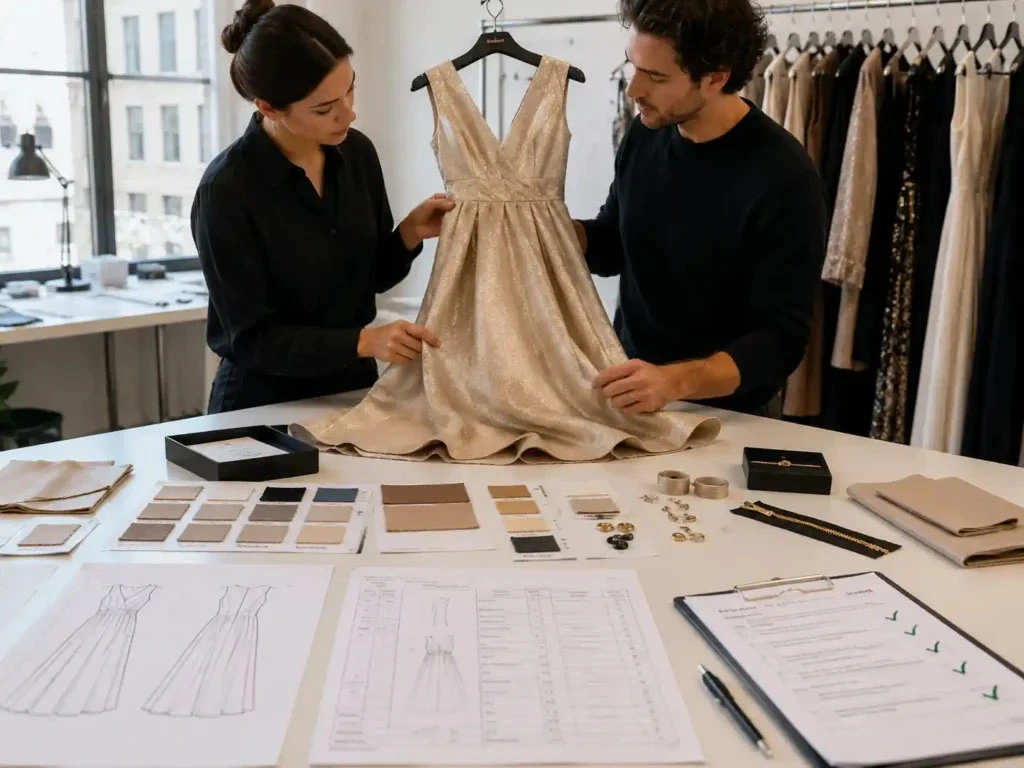
Most ODM dress projects involve changes to the design, fabric, fit, or branding. The important part is that these areas are connected. A change in one can affect the others.
But each change can affect something else.
Design
You may want to change:
- Neckline
- Sleeve shape
- Strap width
- Waist position
- Back coverage
- Hem length
- Slit height
- Ruching
- Ruffles
- Draping
- Cut-outs
- Skirt volume
A change that looks small in a sketch can create a larger production change.
Moving a waist seam affects the proportions of the bodice. Increasing skirt volume increases fabric consumption. Raising a slit changes coverage. Adding internal structure can change both construction and cost.
So when a factory says a change is possible, it is also worth asking what else needs to change with it.
Fabric and Color
You can discuss existing fabric qualities as well as custom colors, printing, dyeing, lace, and other materials when the project requires them.
For repeat production, you should also ask how the factory will control color and fabric consistency between batches.
There can be separate minimums for custom fabrics, printing, lace, or trims. Your garment quantity may be acceptable while the material supplier requires a much larger order.
That difference can affect your actual production cost.
Fit and Construction
Fit is one of the areas where the development process becomes most important.
You may need to adjust the bust, waist, hip, shoulder width, torso length, armhole depth, neckline, or overall length. But the same measurement can feel very different in stretch mesh, rigid woven fabric, lined satin, or a structured bodice.
That is why a physical fit check is still useful before the final grading is approved.
A size chart does not tell you everything about how a dress will fit.
For that reason, it is useful to approve the base-size physical fit before the final grading is applied.
Labels and Packaging
Your branding can be added during the manufacturing process.
This may include woven or printed labels, care labels, hangtags, barcodes, SKU stickers, polybags, carton marks, and other packaging requirements.
The garment itself can affect how it should be packed.
Sequins can catch on other garments. Satin can crease easily. Structured dresses may need more careful folding or support.
It is better to settle these details before production than to make packing decisions after the garments are already finished.
Is ODM Right for Your Dress Brand?
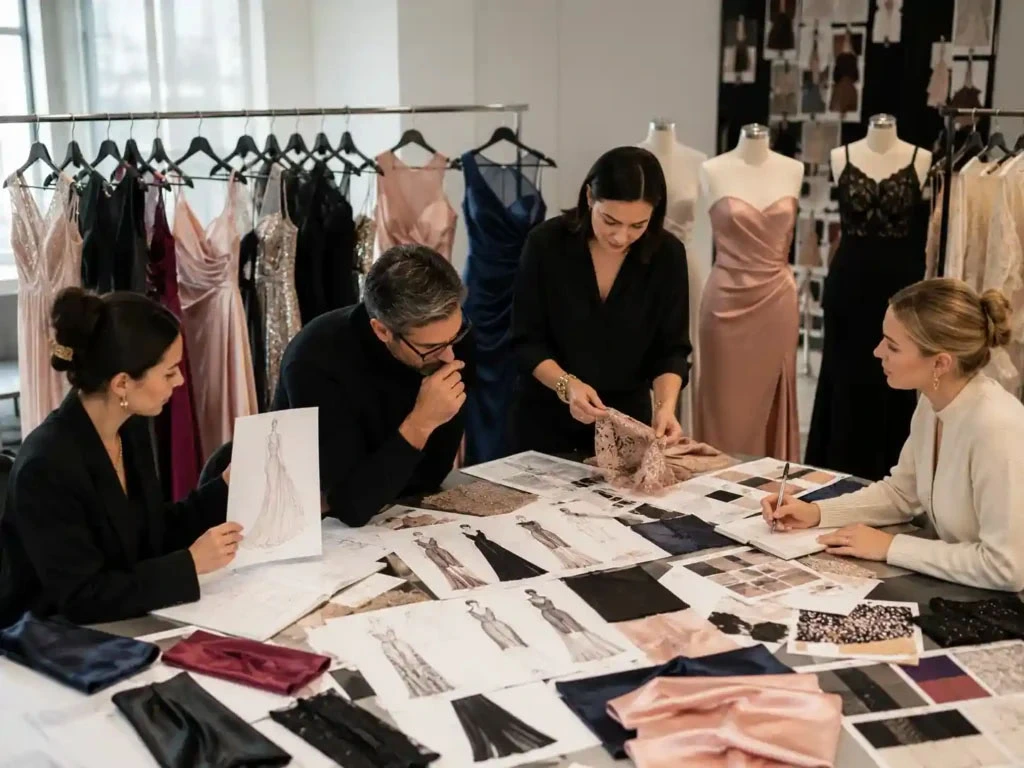
ODM is most useful when the product direction is clear but some of the technical work is still missing.
This is common with startup brands that have a collection concept but no in-house pattern maker, designers who need help turning a finished concept into a production pattern, and retailers or private-label companies testing a new dress category.
In these cases, the factory takes on part of the development work before the style moves into bulk production.
ODM May Be a Good Fit If You:
- Have a clear design direction but incomplete specifications
- Need help selecting fabrics
- Need pattern development
- Need fit corrections
- Are developing a new dress category
- Want development and production handled through one supplier
- Need to turn references into production samples
For example, you may know that you want a fitted satin occasion dress for a particular customer group, but you may not know which fabric weight gives the right drape or how much support the bodice needs.
Those choices affect the pattern, construction, fabric consumption, and final cost, so they need to be worked through during development rather than after the garment is already sampled.
OEM May Be Better If You Already Have the Technical Package
If your team already has a complete production package, you may prefer an OEM process.
You may already have:
- Approved pattern
- Complete measurements
- Grading rules
- Fixed fabric specification
- Construction instructions
- Established fit standard
- Packaging requirements
In that situation, you mainly need a factory that can reproduce the product correctly.
You can also use both approaches within the same collection.
An established core style may follow an OEM production process, while a new seasonal style requires more development before it is ready for production.
How Do You Choose an ODM Dress Manufacturer?
The first price and the product photos will not tell you enough.
If you are looking for ODM support, you need to understand what happens between your first reference and the approved production sample.
Look at the Pattern and Sample Process
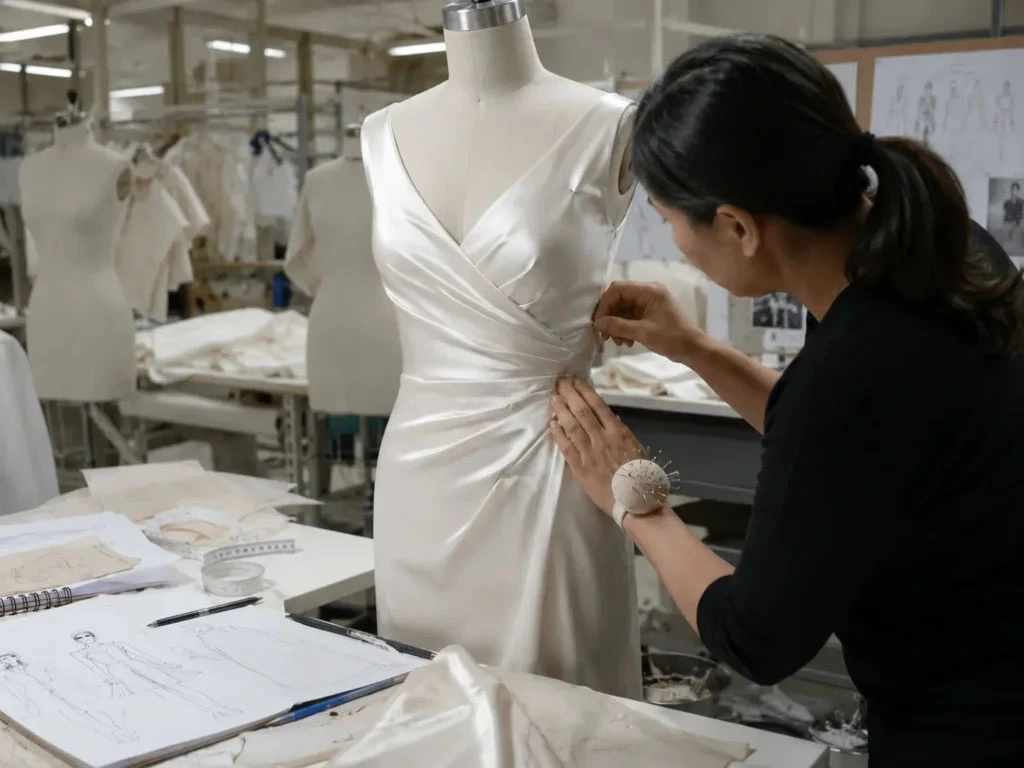
Start by finding out who handles the pattern and fitting work.
Ask how your fitting comments are recorded, what happens after the first sample, and how the final pattern is controlled before bulk production.
A factory that can make one attractive sample is not necessarily equipped to develop a style through several rounds of changes. The development process matters more than the first sample alone.
Ask About MOQ Beyond the Garment
A garment MOQ is only one part of the calculation.
You may also need to check minimums for:
- Fabric
- Custom dyeing
- Printing
- Lace
- Trims
- Labels
- Packaging
A supplier may accept a relatively small dress order while your custom fabric requires a much larger commitment.
Finding this out before development saves you from changing the product later because the original material plan is no longer practical.
Find Out How the Approved Sample Is Used
Ask what happens after you approve the sample.
Does the factory keep the final pattern version? Is the measurement chart updated? Is the approved fabric recorded? Are construction details documented? Does the production team work from the approved sample?
This matters because the person who makes your first sample may not be the person sewing every garment in bulk.
The production floor needs enough information to reproduce the approved version.
Pay Attention to Technical Communication
Fast replies are useful, but technical replies are more important.
If you ask to make the skirt fuller, for example, a useful factory response should tell you whether fabric consumption will increase, whether the lining needs to change, whether the target cost is affected, and whether the existing pattern can be adjusted.
That kind of discussion tells you whether the supplier is actually involved in development.
Questions to Ask Before Starting an ODM Dress Project
Before you start sampling, a few questions can prevent problems later.
Will the pattern be developed specifically for my project?
The answer should be specific: is the pattern being made from scratch, adjusted from one of the factory’s blocks, or adapted from an existing style?
How are sample revisions charged?
Ask whether revisions are included, what counts as a major change, and whether changing the fabric or construction starts a new development round.
How is the final fabric approved?
Confirm how you will approve the fabric, color, weight, stretch, shrinkage, and availability before bulk production.
What happens if the fabric is no longer available?
Ask whether the factory will contact you before substituting a material and whether a new sample is required.
What information is kept for repeat orders?
You want to know whether the final pattern, measurement chart, fabric reference, trim details, construction information, and approved sample are retained.
How are my designs handled?
Discuss confidentiality, pattern ownership, reuse, and access to development files before you start.
What are the actual MOQ requirements?
Check the garment MOQ separately from fabric, printing, dyeing, lace, trims, labels, and packaging minimums.
How is quality checked during production?
Ask whether quality is checked during cutting and sewing as well as at final inspection.
These questions help you understand what you are actually getting from an ODM service. You are not only paying for sewing capacity. You are working with a development process that needs to turn an incomplete product idea into a garment that can be reproduced consistently.
FAQ
1. What information should you prepare before contacting an ODM dress manufacturer?
Start with whatever you already have, but separate the essentials from the details you are still flexible about. A reference image, target customer, approximate quantity, target price, size range, preferred fabric, and delivery target give the factory a much more useful starting point than a product photo by itself.
2. How can you tell whether an ODM supplier really develops products?
Look at what happens after you send the reference. The factory should be able to explain how the pattern is developed, who checks the fit, how sample comments are recorded, and what happens when a design detail cannot be produced as originally shown. A catalog and price list will not tell you much about that process.
3. What should you do if your target price is lower than the factory’s development estimate?
Ask the factory to break down the main cost drivers before changing the design. Fabric consumption, lining, construction, trims, embellishment, and material minimums can all affect the price. Once you know where the extra cost comes from, you can decide which details need to stay and which can be simplified.
4. How should you handle a design change after the sample is approved?
Have the factory confirm the impact before making the change part of the bulk order. A new fabric, lining, seam position, skirt volume, or internal support can require pattern changes and may affect cost. It is safer to update the approved version than to leave the production team working from an earlier sample.
5. What should a new brand watch for when developing its first dress with a factory?
Look beyond the first sample price. Fabric availability, sample revision costs, material MOQs, pattern ownership, measurement consistency, and repeat-order records can all affect the project later. These details are worth clarifying before development starts.
Conclusion
An ODM dress manufacturer can be useful when you have a clear product direction but not every technical detail is ready.
The factory’s role goes beyond sewing. The work usually starts well before bulk sewing: pattern development, fabric selection, fitting, sample revisions, and finally production control.
When comparing ODM suppliers, look closely at that development process. The ODM label itself does not tell you how much technical support a factory will actually provide.
Related Dress Manufacturing Services
If your project involves a specific dress fabric or construction, you can also review our related manufacturing pages:
- Halter Dress Manufacturer
- Maxi Dress Manufacturer
- Bodycon Dress Manufacturer
- Wrap Dress Manufacturer
- Chiffon Dress Manufacturer
Get a Quote for an Existing Dress Style
If you are transferring an existing dress style to a new manufacturer, send us the latest approved sample, tech pack, product photos, or measurement chart together with your target quantity.
As a dress manufacturer, we can review the construction, fabric, trims, measurements, and current production status with you before confirming the sampling requirements.

