

When you develop a lace dress, the wrong fabric choice can affect the fit, sewing process and final appearance. A stretch lace may lose its shape after repeated tension, while a non-stretch lace can restrict movement if the pattern does not allow enough room. As a clothing manufacturer, we evaluate both fabrics during sampling so you can avoid fitting problems and unnecessary changes before bulk production.
Stretch Lace vs Non-Stretch Lace: Key Differences
Stretch lace contains elastic fibers or has a knitted construction that allows it to extend under tension. Non-stretch lace has little usable elasticity and relies more on the pattern and garment construction to achieve a comfortable fit.
For your collection, the choice is not simply about whether the dress needs to stretch. You also need to consider the lace structure, motif size, fabric weight, lining and finished silhouette.
| Fabric Feature | Stretch Lace | Non-Stretch Lace |
|---|---|---|
| Elasticity | Extends under tension | Little usable stretch |
| Recovery | Needs to return after stretching | Usually less relevant |
| Pattern requirements | Must account for stretch direction | Requires planned wearing ease |
| Motif placement | Can change under tension | Often easier to position |
| Fitted dresses | Useful when recovery is suitable | Needs careful fit and closure planning |
| Loose silhouettes | Can be used | Often suitable |
| Lining | May require compatible stretch | Can use stable lining |
| Main production concern | Distortion and loss of shape | Restricted movement and fit |
One detail worth remembering: not all stretch lace behaves the same way. A lace with elastane, a stretch mesh lace and a lace with mechanical give can respond differently during cutting and sewing.
The fabric name alone is not enough to determine whether it will work for your design.
How Stretch Lace Affects the Fit of a Dress
When you develop a fitted lace dress, the fabric’s stretch determines how much movement the garment can accommodate.
A suitable stretch lace can follow the body without requiring as much additional ease. However, if the fabric stretches easily but has poor recovery, the finished dress may gradually become loose around the waist, hips or neckline.
We pay attention to four areas during fitting:
- Bust and waist: Check whether the lace maintains the intended body measurements without excessive tension.
- Hips: Make sure the wearer can sit and walk without pulling across the skirt.
- Neckline: Poor recovery can cause the neckline to lose its original shape.
- Armholes: The fabric needs enough movement for comfortable arm movement without pulling the bodice.
Stretch direction also affects the pattern. Some lace stretches mainly across the width, while others have usable movement in both directions. If the greatest stretch is placed vertically instead of around the body, the finished fit may be quite different from what you expected.
For this reason, fabric orientation should be confirmed before the pattern is finalized.
Which Lace Is Better for Different Dress Styles?
The silhouette should guide your fabric selection. A fitted dress, a loose skirt and a decorative overlay do not place the same demands on lace.
Bodycon Lace Dresses
Stretch lace is often a suitable starting point for bodycon dresses because the fabric needs to follow the body’s shape.
However, a high stretch percentage does not automatically mean a better result. If the lace has poor recovery, the dress may fit well during the first fitting but become loose after wear.
Pay attention to the waist, hip and neckline measurements, as well as the seams that receive repeated tension.
If you choose non-stretch lace for a bodycon design, the pattern needs to provide enough wearing ease. You may also need to reconsider the closure and panel construction.
Related: Bodycon Dress Manufacturer
Fitted Mini Dresses
Both stretch and non-stretch lace can work for a fitted mini dress.
Stretch lace provides more flexibility around the body. Non-stretch lace can give you more control over the garment shape, but the bust, waist and hip measurements need to be developed with sufficient ease.
The opening is another detail buyers sometimes overlook. A dress may have the correct finished measurements but still be difficult to put on if the neckline or zipper opening is too small.
Related: Mini Dress Manufacturer
Fitted Midi Dresses
A fitted midi dress needs enough room through the hips and lower skirt for walking and sitting.
If the outer lace stretches but the lining does not, the lining may pull against the lace when the wearer moves. This can create wrinkles around the hips or cause the skirt to ride up.
For this style, check the assembled garment rather than approving the lace and lining separately.
Related: Midi Dress Manufacturer
A-Line Lace Dresses
A-line dresses generally provide more room through the skirt, making non-stretch lace a practical option.
Stable lace can help maintain the shape of individual panels and make decorative placement easier to control. Stretch lace is also suitable when the design requires a softer drape or more flexibility.
The decision should depend on the skirt volume, lace weight and appearance you want to achieve.
Related: A-Line Dress Manufacturer
Lace Overlay Dresses
For lace overlays, motif placement can be more important than stretch.
If your design uses large floral patterns, embroidered motifs or scalloped edges, stretching during handling can change the distance between motifs. This becomes noticeable when the panels are joined at the side seams or center front.
You should also consider how the lace will be positioned over the base fabric. A stable overlay may be easier to control, particularly when the pattern requires symmetrical placement.
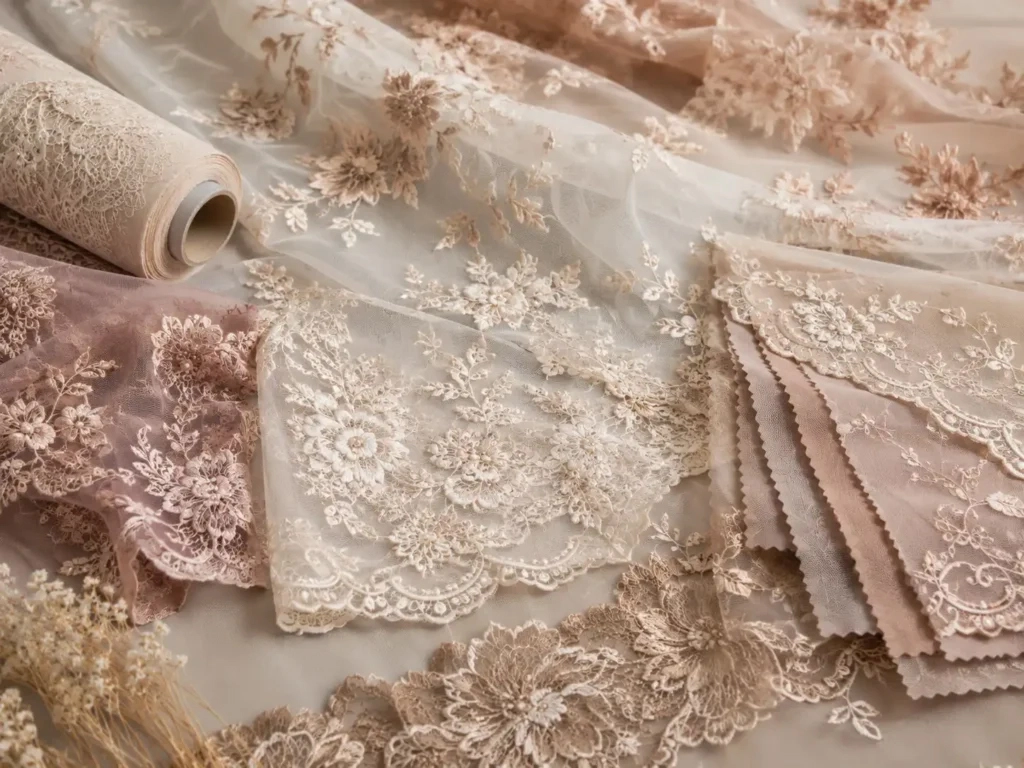
Stretch and Recovery: What Should You Check?
Stretch and recovery are not the same measurement.
Stretch tells you how far the fabric extends under tension. Recovery tells you how well it returns after the tension is released.
This difference is particularly important for fitted lace dresses.
Imagine that your selected lace stretches comfortably over the hips during the first fitting. After several hours of wear, however, the fabric may remain slightly extended. The original waist or hip shape can then become difficult to maintain.
When comparing lace samples, check:
- How much the fabric extends across the width.
- Whether it also stretches along the length.
- Whether the fabric returns after repeated stretching.
- Whether the lace structure or motifs become distorted.
- Whether the result changes after the fabric has been relaxed or conditioned.
Do not rely entirely on a supplier’s stated stretch percentage. Ask how it was measured and compare the actual fabric under consistent conditions.
How Lace Fabric Affects Pattern Making and Cutting
A pattern developed for stretch lace should not automatically be used for non-stretch lace.
With stretch fabric, the pattern needs to account for the amount and direction of usable elasticity. The pattern maker also needs to consider how the fabric behaves after it has been laid out and handled.
Non-stretch lace requires a different approach. The bust, hip and armhole measurements need enough ease for the wearer to move comfortably. If the design is closely fitted, the opening and closure must also be considered.
Cutting brings another issue: lace motifs are not always distributed evenly across the fabric.
A large floral repeat or scalloped border can limit how pattern pieces are placed. Even when the nominal fabric width is sufficient, the usable area may be smaller than expected.
For your order, this can affect fabric consumption. If the lace has a directional pattern, symmetrical front panels or matching motifs at the side seams, additional material may be required.
During sampling, we pay particular attention to:
- Fabric direction and stretch orientation.
- Motif placement across joining seams.
- Scalloped edges and decorative borders.
- Panel symmetry.
- Changes in fabric dimensions during handling.
These details are worth resolving before calculating the final bulk consumption.
What About Lining and Construction?
The lining is part of the fit, not simply an inside layer added for coverage.
A stretch lace dress with a stable woven lining may lose some of its intended flexibility. The lace can move with the body while the lining restricts that movement.
For fitted stretch lace designs, you may need a lining with compatible stretch. The exact choice also depends on whether the lining is attached throughout the garment or only at selected sections.
For non-stretch lace, a stable lining can be easier to manage, but it still needs to work with the garment’s measurements and drape.
Construction matters as well. If the lace has a delicate open structure, seams and stress points may need additional support. Shoulder seams, waist seams and zipper areas deserve particular attention because they can carry more tension than decorative sections.
You should also decide whether the design needs full lining, partial lining or underlining. These methods produce different results in terms of coverage, garment structure and visible lace details.
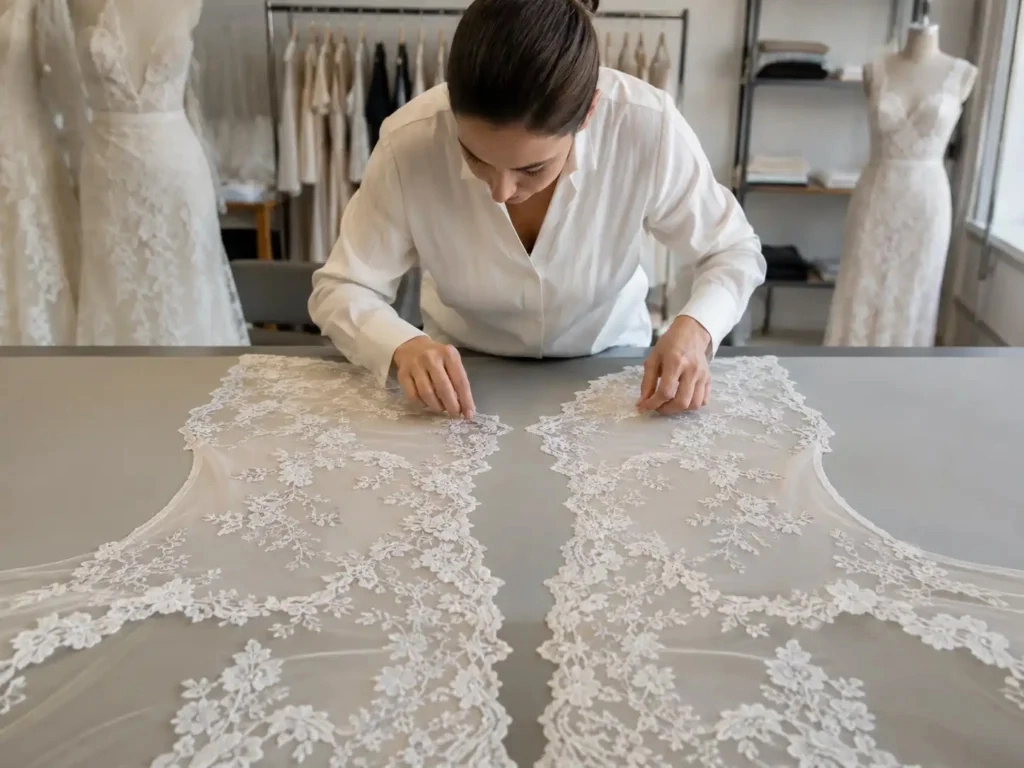
Zippers, Seams and Sewing Considerations
A fabric that performs well during fitting can still create problems during sewing.
Stretch lace may move under the presser foot, making seam lengths inconsistent if the fabric is stretched while feeding. Non-stretch lace can be easier to handle in some constructions, but delicate motifs may still shift or become damaged during stitching.
Zipper installation needs particular attention.
For a fitted non-stretch dress, the zipper opening should allow the garment to pass over the body comfortably. On stretch lace, a zipper may still be necessary when the finished garment is too fitted to be pulled on easily.
Before approving the construction, check:
- Whether the seams can withstand the expected tension.
- Whether the lace needs reinforcement around the zipper.
- Whether the seam finish is suitable for the fabric thickness.
- Whether embroidery or open motifs will be damaged by stitching.
- Whether the neckline and waist require additional stabilization.
A zipper that is installed through a delicate lace motif without sufficient support can distort the surrounding area. Correcting this after bulk sewing is much harder than adjusting the sample.
Common Problems During Lace Dress Production
Some fabric issues do not show up until the dress reaches the sample room or sewing floor.
1. The Lace Changes Shape During Cutting
Stretch lace can become extended when it is pulled or handled on the cutting table. If the panels are cut before the fabric has settled, finished measurements may differ from the pattern.
For fabrics that relax after being unrolled, allow suitable resting time before cutting and follow the fabric supplier’s handling recommendations.
2. Motifs Do Not Match Across Seams
Large floral patterns and scalloped edges can create visible differences between panels. This is particularly noticeable on the center front, side seams and fitted bodices.
The pattern layout needs to account for the repeat and the desired visual alignment.
3. The Lining Pulls Against the Lace
A lining with less stretch than the outer fabric can restrict movement. This may create tension across the hips, waist or lower bodice.
The complete layered construction should be checked during sampling.
4. Seams Become Wavy
If stretch lace is pulled during sewing, the finished seam may become longer than the intended measurement. This can affect the neckline, waist and other visible edges.
Machine settings, feeding method and seam construction should be tested on fabric offcuts before production.
5. Bulk Fabric Does Not Match the Approved Sample
A change in fabric construction, finishing or production lot may affect stretch, color and surface appearance.
Keep an approved physical swatch as your reference and compare incoming production fabric before releasing it for cutting.
How to Approve Lace Before Bulk Production
If you are sourcing lace for a new collection, use the following checks before confirming the production material.
1. Confirm the fabric specification
Record composition, weight, usable width, construction and color. For lace with a large repeat, also record the motif dimensions.
2. Check stretch and recovery
Measure both directions using the same testing method. Compare the results with the fabric used for the approved sample.
3. Review the cutting layout
Check whether the design can be cut efficiently without losing important motifs or scalloped edges.
4. Test the complete construction
Make sure the lining, seams, zipper and other components work with the lace. A fabric swatch cannot show how all these elements interact.
5. Confirm the approved sample
Keep the final sample and fabric reference for comparison during production. Record any approved changes to measurements or construction.
6. Check the bulk fabric before cutting
Compare the incoming fabric with the approved reference. If the width, stretch, recovery or appearance has changed, raise the difference before production moves forward.
These checks give your purchasing and production teams a clearer basis for approving the material and controlling quality.
What Buyers Should Ask a Lace Supplier
When you request a quotation for a lace dress, the fabric price is only one part of the purchasing decision.
You should also ask your supplier:
- Is the lace available in the required color and usable width?
- Is the fabric stretch or non-stretch, and in which direction?
- Can the same construction and finishing be maintained for the bulk order?
- What is the minimum fabric order quantity?
- Is the lace available from existing stock or does it require a new production run?
- Can the supplier provide a reference swatch from the production lot?
These questions are particularly useful when you are launching a new collection with several styles using the same lace.
If the fabric has to be custom-produced, confirm the material lead time before setting your garment delivery schedule. Otherwise, sample approval may be completed while the bulk fabric is still unavailable.
Frequently Asked Questions
1. Can I change from stretch lace to non-stretch lace after approving the sample?
You should not treat the two fabrics as interchangeable. The change may affect wearing ease, finished measurements, zipper placement and lining construction. Ask your manufacturer to review the pattern and make a revised sample before confirming the replacement fabric for bulk production.
2. What happens if the lace supplier changes the fabric after my order is confirmed?
Request written confirmation of the new fabric specification and ask for a replacement swatch before accepting the change. If the construction, width or finishing differs from your approved reference, your production team should assess the impact on garment measurements, consumption and delivery.
3. Can one lace fabric be used for both dresses and sleeves?
It can, but the fabric needs to suit both applications. A lace that works well across a fitted bodice may feel too restrictive in a close-fitting sleeve. Check arm movement, seam tension and motif placement before using the same material throughout the garment.
4. How should I calculate lace fabric consumption for a collection?
Start with the approved pattern and cutting layout rather than estimating from the garment length alone. Include usable width, motif repeats, scalloped edges, matching requirements and cutting waste. If several styles share one lace, calculate their consumption together before confirming the supplier’s order quantity.
5. What information should I send a manufacturer when requesting a lace dress quotation?
Provide a reference photo or tech pack, intended lace type, lining requirements, size range, colorways and estimated order quantity. If you have already selected a supplier, include the fabric composition, width and swatch. These details help the manufacturer assess construction and prepare a more realistic quotation.
Conclusion
Stretch lace and non-stretch lace can both work well in dress production, provided the fabric matches the intended fit and construction. The important part is checking how the lace behaves after cutting, sewing and lining, rather than relying on its appearance or stretch specification alone. If you are developing a new collection, Xiuyu Apparel can be approached as your dress manufacturer to discuss fabric selection, sample development and production requirements.

