

Organza and tulle can look quite similar on the fabric table, but they behave differently once we cut and sew them into a dress. A skirt may hold more shape than expected, several layers of tulle may add more volume than planned, or a sleeve may need a different construction once the fabric is on the garment.
For this reason, we prefer to check the fabric against the pattern and construction during sampling, not only from a small swatch.
Organza vs Tulle at a Glance
When we compare the two, we start with the dress shape rather than the fabric name. The fabric name alone does not tell you how the finished garment will behave.
| Organza | Tulle | |
|---|---|---|
| Structure | Crisp and relatively firm | Can range from very soft to quite firm |
| Drape | Holds a cleaner shape | Usually softer and more flexible |
| Volume | Builds defined volume | Builds volume through layering |
| Surface | Smooth woven surface | Open net-like surface |
| Transparency | Sheer with a smooth appearance | Sheer with a visible mesh structure |
| Typical use | Structured skirts, sleeves, bows, overlays | Layered skirts, underskirts, overlays, sleeves |
| Production concern | Pressing, seam appearance and shape | Stretching, shifting and snagging |
| Best starting point | Defined or sculptural silhouettes | Soft, airy or layered silhouettes |
The actual fabric can still give a different result. Soft organza, crisp organza, soft tulle and firm tulle can behave quite differently once they are cut and sewn. We would still check the actual fabric quality before making a decision. Soft organza can behave very differently from a crisp quality, and tulle has the same variation.
What Is Organza?
Organza is a lightweight woven fabric with a smooth surface and a crisp hand. Its main advantage in dress production is that it can hold a shape instead of falling directly against the body.
Organza is often a good fit for a defined skirt, puff sleeve, bow, ruffle or structured overlay. It can give these details a cleaner outline without relying entirely on internal support.
That firmness is not always an advantage. On a very crisp quality, gathers can become bulky and seams may sit farther away from the body than they did on the paper pattern.
This is why we prefer to test organza on the actual pattern. A gathered sleeve can behave very differently from the same fabric in a small swatch, especially around the seam and sleeve opening.
What Is Tulle?
Tulle is a lightweight net fabric with an open construction. The hand can vary considerably, from very soft tulle that falls easily to firmer qualities used to build substantial skirt volume.
For dresses, you can use tulle as an outer layer, underskirt, sleeve detail, gathered panel or part of a multi-layer skirt.
One advantage of tulle is the amount of control you get from layering. The same fabric can give a fairly light skirt with one or two layers, or much more volume when you add layers, change the gathering or use a firmer quality underneath.
Lightweight tulle can be more demanding in production. It may move during cutting, stretch around seams or catch more easily during sewing.
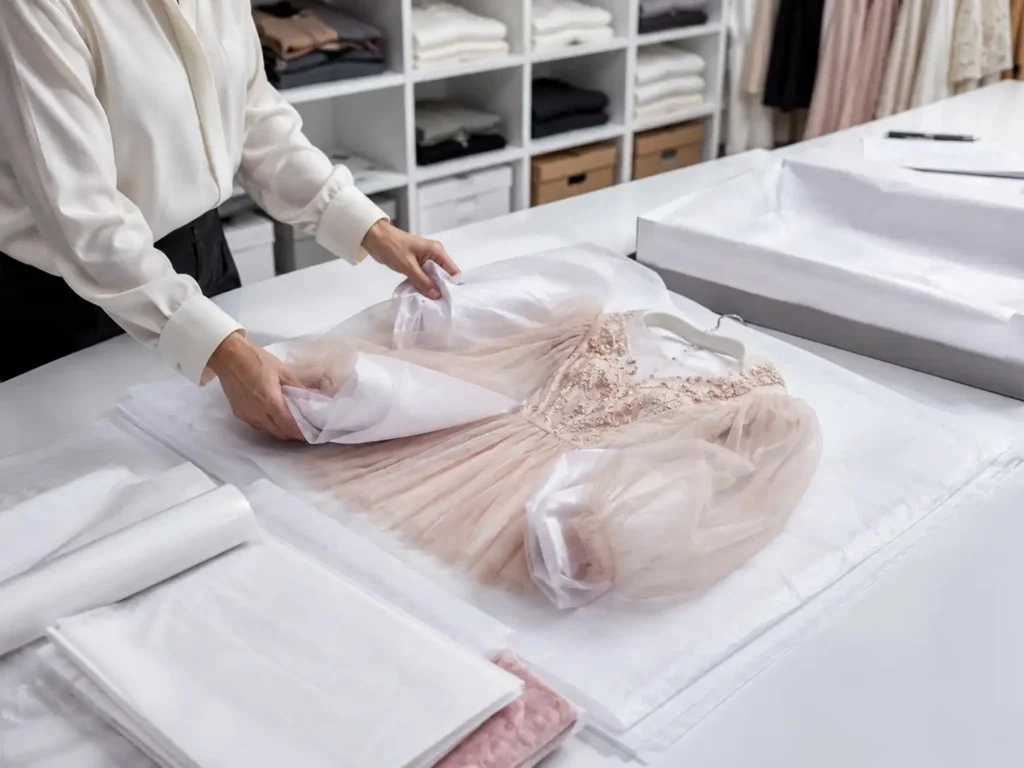
Organza vs Tulle: The Main Differences
Structure and Stiffness
Organza usually gives you a more defined structure from one layer of fabric. If your design needs a sleeve to stand away from the arm or a skirt to keep a clean outline, this can be useful.
Tulle gives you more range because you can select a softer or firmer quality and then build additional volume through layering.
How much structure does your dress actually need?
If you only need controlled volume, a medium-weight tulle may already be enough. For a sharper edge or more sculptural shape, organza is usually the better fabric to test first.
Drape and Movement
Organza tends to keep its own shape. It can create folds that look sharper and more controlled.
Soft tulle behaves differently. It usually follows the body or the supporting layer more easily and can create movement without adding the same visual weight.
If you are developing a flowing evening dress, this difference becomes important around the skirt and hem. A soft tulle may move with the body, while organza can keep the folds more defined. This is easier to judge on the finished sample than from a loose fabric swatch.
Volume
Both fabrics can create volume, but they do it differently.
With organza, the fabric itself contributes more to the shape. A gathered panel can hold its form quite well.
With tulle, volume is often built layer by layer. You can make the skirt fuller by changing the layer count, stiffness or gathering ratio.
Transparency
Both fabrics are sheer, but the visual effect is not the same.
Organza has a smooth woven surface, so the transparency usually looks cleaner. Tulle has an open mesh structure, which remains visible even when the fabric is layered.
If you are developing a white, nude or pastel dress, you should check the outer fabric with the actual lining. The lining color can change the perceived shade, while gathering and stretching can change how transparent the fabric appears.
Hand Feel
Organza generally feels crisp and slightly dry in the hand.
Tulle can be much softer, although firmer tulle can also have a structured feel.
If the fabric will touch the skin, we check it during fitting rather than judging it from the skirt alone. A fabric that looks good in a full skirt may feel too firm around the neckline or sleeve opening.
Layering
Tulle gives you more room to adjust the final volume through layering. A softer quality can be used on the outside, with a firmer layer underneath when more support is needed.
Organza can also be layered, but the added structure becomes more noticeable as the number of layers increases. Gathers and seams can become firmer and more bulky.
If the approved sample uses two layers but production uses four, the garment can change quite a bit. Volume, weight, transparency and fabric consumption will all be affected.
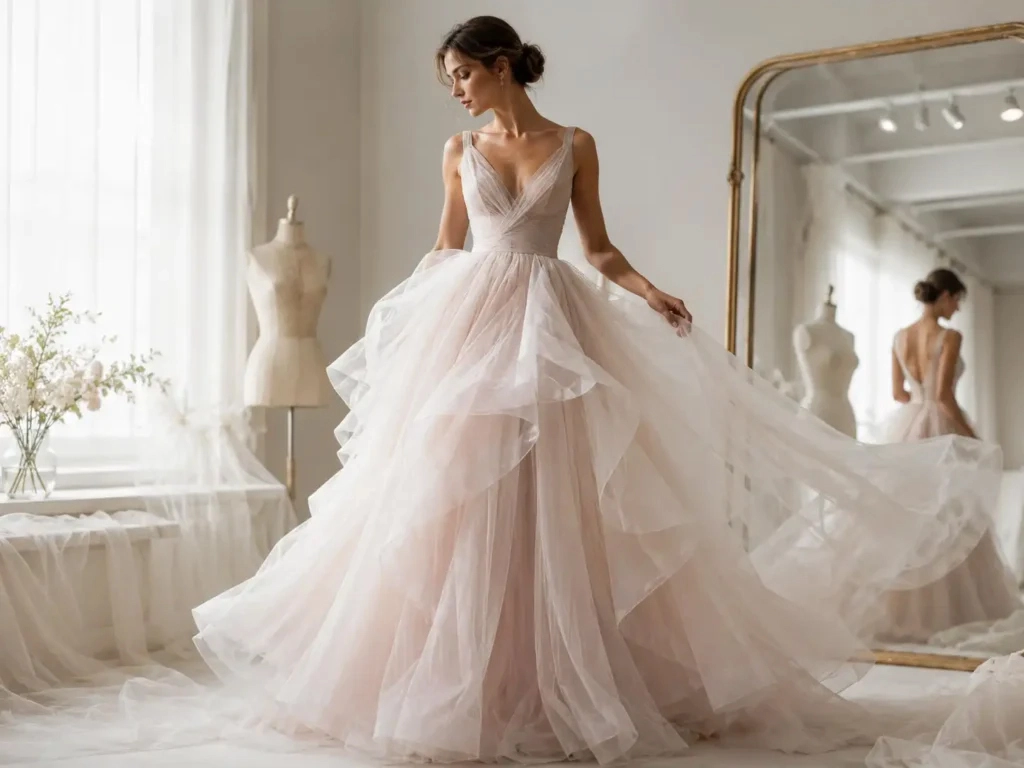
Which Fabric Is Better for Different Dress Styles?
A-Line Dresses
With an A-line dress, the first thing we look at is how much shape the skirt needs to keep.
Organza can work well for a cleaner A-line with controlled volume. Tulle is useful when you want the skirt to feel lighter or when the volume will come from several layers.
If you are developing the same A-line pattern in different price levels, fabric choice can also change the amount of lining and internal support you need.
Ball Gowns
For a full ball gown, tulle is often easier to adjust during development because the volume can be changed through the number of layers and the stiffness of each layer.
The important point is to approve the final layer construction. A skirt that looks right with three layers can become noticeably heavier and fuller when production moves to five.
Evening Dresses
For evening dresses, neither fabric is automatically the better choice.
Organza can give you a cleaner and more structured outer layer. Soft tulle can create a lighter, more fluid appearance.
If the dress has a fitted base with a sheer overlay, test both fabrics over the same base. The difference in surface, transparency and movement is easier to judge on the finished garment than on separate swatches.
Puff Sleeve Dresses
Organza is often considered when you want a puff sleeve to keep a clear shape.
Tulle can also work, especially when you want a softer sleeve with less visual weight.
Pay attention to the armhole, sleeve opening and elastic or cuff construction during fitting. A fabric that gives enough volume at the sleeve cap may still feel too stiff when the arm moves.
Layered Dresses
If the design depends heavily on several lightweight layers, tulle is often the easier material to adjust.
You can control the finished effect through layer count, gathering and fabric stiffness.
Organza is more useful when you want each layer to contribute visible structure. The final dress may look more substantial even when the individual fabric is lightweight.
What Changes When the Fabric Goes Into Production?
A fabric can look right during development and still create problems once the actual dress is cut and sewn. This is something we pay close attention to as a clothing manufacturer, especially when a sheer fabric is used for layered skirts, puff sleeves or structured details.
Cutting
You should check how the fabric behaves when it is laid in multiple layers.
Lightweight tulle can move or stretch during cutting. Organza is generally more stable, but its crispness can make inaccurate cutting more noticeable in structured details.
Fabric width also matters. If the usable width is smaller than expected, the pattern may require more fabric than your original consumption estimate.
For a production order, we check consumption from the actual pattern. The usable fabric width on the spec sheet is only the starting point, especially for wide skirts and gathered styles.
Sewing
Tulle can shift, stretch or snag during sewing, particularly in lightweight qualities.
With organza, seam puckering, visible seam allowances and extra bulk are more common concerns around gathers and curved seams.
For gathers, curved seams or several layers joining at one point, we usually test that section before approving the construction.
Pressing
Pressing is another area where the two fabrics need different handling.
Organza can show pressing marks or changes in shape if excessive heat or pressure is used.
Tulle can lose part of its intended texture or volume when exposed to unsuitable heat.
For bulk production, the pressing method used on the approved sample should also be followed. Changing the heat or pressure at the finishing stage can alter the shape of organza and affect the volume or surface of tulle.
Seams and Layered Construction
The fabric may behave well on its own but differently when several layers are joined.
A waistband, for example, can become noticeably bulkier when multiple layers of gathered tulle are attached. The same area in organza can become firm enough to affect how the waist sits.
These construction points are much easier to judge on the actual sample than from fabric specifications alone.
What We Check Before Approving Organza or Tulle
Check the Actual Fabric Quality
Do not approve a fabric simply because the fiber composition matches the development sample. We also compare width, weight, stiffness, transparency and hand feel against the approved quality.
Check:
- Width
- Weight
- Stiffness
- Transparency
- Surface
- Hand feel
- Color
- Dimensional stability
Two fabrics can have similar specifications and still produce different dresses. Width, stiffness, finishing and construction all affect the final result.
Test the Fabric With the Actual Pattern
This is particularly important for dresses with gathers, curved seams or multiple layers.
A loose swatch cannot show how the fabric will behave around the bust, waist, sleeve or hem.
We normally prefer to see the fabric in the garment before making a final production decision, especially when the silhouette depends strongly on drape or volume. As a dress manufacturer, we also need to make sure the approved fabric can be handled consistently during cutting, sewing and finishing.
Check the Lining and Outer Fabric Together
For sheer dresses, the lining is part of the visual result.
You should check the actual outer fabric and lining combination under normal lighting. A fabric that looks correct by itself may appear darker, lighter or less transparent once the lining is added.
Check Fabric Consumption
Do not estimate material usage from the fabric price alone.
Layered skirts, gathered panels and wide-volume designs can consume considerably more fabric than a simple dress with the same finished length.
If you are working toward a target FOB price, confirming consumption during development can prevent a cost adjustment later.
Check the Finished Garment After Pressing
The garment should be judged after the normal finishing process.
Look at the skirt volume, sleeve shape, hem and seam appearance after pressing. Some differences only become visible after the garment has been finished.
This is particularly important when you are comparing two fabrics that looked similar during initial selection.
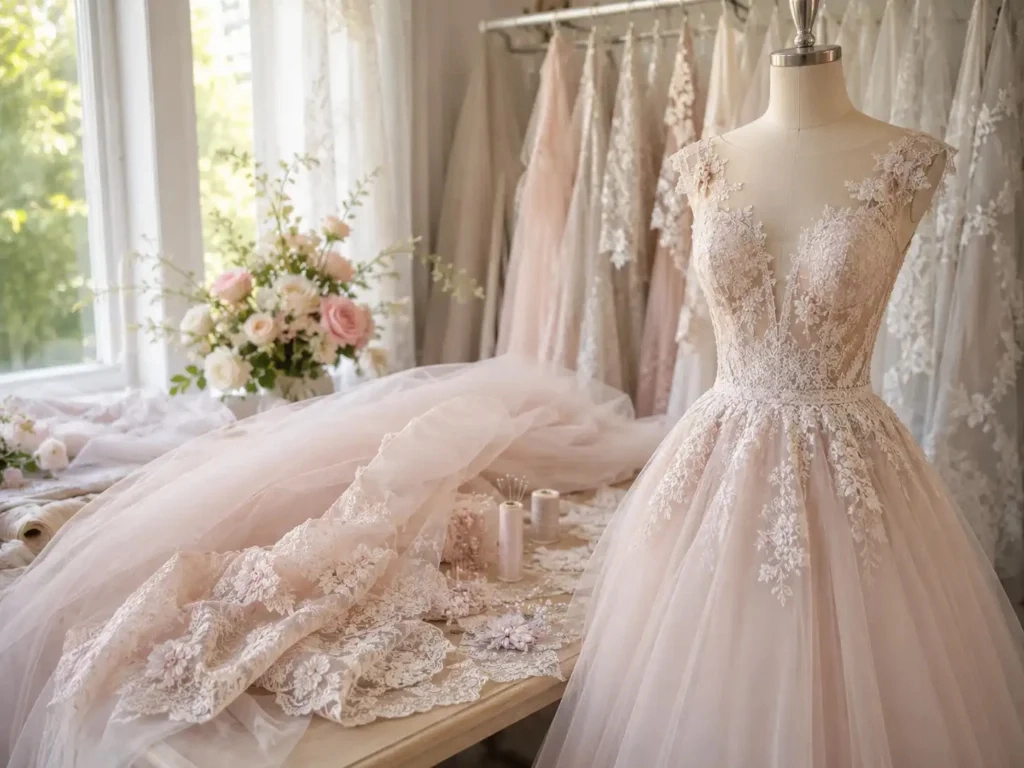
Common Mistakes When Choosing Between Organza and Tulle
Choosing by Fabric Name Alone
Not every organza is crisp, and not every tulle is soft. The quoted fabric quality matters more than the fabric name on the material list.
Approving From a Small Swatch
A small swatch is useful for checking color and basic hand feel, but it cannot reproduce a full gathered skirt or multi-layer sleeve.
If the fabric is central to the silhouette, make a sample using the actual construction.
Underestimating Layer Count
The number of layers changes the garment.
It can affect weight, fullness, seam bulk, transparency and fabric consumption.
If your final design uses four layers but the development sample uses two, the production result may not be comparable.
Comparing Fabric Price Instead of Garment Cost
A lower price per yard does not necessarily mean a lower garment cost.
You also need to consider consumption, lining, layer count, cutting efficiency and sewing time.
When we quote a dress, fabric price is only part of the calculation. Consumption, lining, layer count and sewing time can move the final garment cost quite a bit.
Changing Fabric After Approval
If the original fabric becomes unavailable and a similar replacement is proposed, you should treat it as a new fabric for testing.
Even when the composition is the same, changes in stiffness, width, transparency or finish can affect the finished dress.
Organza vs Tulle: Which Fabric Should You Choose?
Use the dress silhouette as your starting point.
| If You Need… | Consider Starting With… |
|---|---|
| A crisp, defined skirt | Organza |
| Soft layered volume | Tulle |
| A structured puff sleeve | Organza |
| A lightweight layered skirt | Tulle |
| A smooth sheer appearance | Organza |
| A visible mesh texture | Tulle |
| Structured bows or ruffles | Organza |
| Adjustable volume through layering | Tulle |
| A softer, lighter effect | Soft tulle |
| A more sculptural silhouette | Organza |
These are starting points, not fixed rules. Fabric weight, finishing and construction can change the result.
If you are developing a new dress, the safest approach is to test the actual fabric with your pattern, lining and planned layer count. Once the sample has been sewn and finished, you can judge the silhouette, comfort, appearance and production cost together.
FAQ
1. Can organza and tulle be combined in one dress?
Yes, and the combination can be useful when you want different parts of the garment to behave differently. You might use tulle for soft skirt volume and organza for a structured sleeve or bow. The joining areas should be tested because the two fabrics can pull or sit differently at the seam.
2. Which fabric is more suitable for a small production run?
For a small production run, construction usually matters more than the fabric name. A style with several layers, heavy gathers or difficult seams can take more sewing and QC time, regardless of whether the fabric is organza or tulle.
3. Does fabric width affect the choice between organza and tulle?
Yes. This can become important with wide skirts and gathered styles. If the usable width is limited, you may need additional panels or more fabric. When you are working to a fixed garment cost, check the actual pattern consumption before selecting the final fabric, especially for fuller silhouettes.
4. Can the same dress pattern be used for both organza and tulle?
Not always without adjustment. The fabric can change the way gathers, seams and volume sit on the body. A pattern developed for soft tulle may produce a much firmer silhouette in organza. You may need to adjust ease, gathering or support after testing the second fabric.
5. What is the best way to compare two fabric qualities before placing a bulk order?
Use the same pattern and construction for both fabrics and compare the finished samples side by side. Check them after sewing and pressing, then compare the silhouette, transparency, consumption and production handling. This gives you a much better basis for approving the fabric for bulk production.
Conclusion
Organza and tulle can both be used for sheer dresses, but they create different shapes and require different handling in production.
If the design depends on a crisp skirt, structured puff sleeve, bow or defined ruffle, organza is a good fabric to test. If most of the volume comes from several lightweight layers, tulle gives you more room to adjust the result during development.
For a new style, we would approve the fabric together with the pattern, lining and planned layer count. We also check consumption and the finished garment after pressing. For bulk production, the approved sample should be the reference for fabric behavior, layer count, pressing and construction. That is what we use to decide whether the fabric is ready for bulk production.
Explore More Dress Manufacturing Services
If you are developing a new dress and need support with fabric selection, internal construction, sampling, and bulk production, working with an experienced clothing manufacturer can help reduce unnecessary development changes.
At Xiuyu Apparel, we work with fashion brands, startups, designers, and private label companies from sample development through bulk production.
Get a Clothing Manufacturing Quote Based on Your Design
If you already have a garment design, send us the product photo, tech pack, or reference sample together with your target quantity.
As a dress manufacturer, we can review the fabric, lining, construction, trims, workmanship, and finishing requirements and prepare a quotation based on the actual garment rather than a general price range.

