

When you send a new dress to a clothing manufacturer, a reference image is usually only the starting point. The sample room also needs to know the fabric direction, intended fit, construction details and which parts of the design need to stay unchanged.
A clear sampling request gives the factory enough information to start the pattern and sample work without guessing at the important details.
What Does a Clothing Manufacturer Need Before Sampling?
Not every detail has to be finalized before you contact a factory.
For a new dress project, you may have a complete tech pack, an existing garment, a sketch, several reference photos, or only an early collection concept. Tell the factory which details are already decided and which ones still need to be developed.
A useful sampling request normally gives the factory information about:
- The dress design and silhouette
- Fabric or fabric direction
- Measurements and expected fit
- Construction details
- Trims and closures
- Size range
- Sample requirements
- Expected bulk quantity
- Target timing
- Private-label requirements
If something is not decided yet, say so.
For example, if you know that you want a lightweight woven fabric but have not selected the final quality, it is better to state that clearly than to leave the factory assuming a specific fabric.
“The sample room can then see which details are fixed and which ones can still be discussed before pattern making.”
Start With the Design, But Do Not Stop at the Picture
A reference image is usually the starting point.
You may send a front and back image, a sketch, a product photo, a reference garment, or several images showing different details. These give the pattern maker a first idea of the silhouette and key details.
But a picture rarely answers every production question.
For example, you may be able to see that a dress has:
- A fitted bodice
- Thin shoulder straps
- A low back
- A gathered skirt
- An invisible zipper
You may not be able to tell the factory exactly where the seams should sit, how much ease you want through the body, whether the skirt is lined, or how the back opening should be finished.
If these details matter to your design, mark them on the reference or describe them separately.
Make the Important Details Easy to Find
Not every part of the garment needs a long explanation.
If the neckline is fixed but the hem length is still open, say that.
If the back detail needs to match the reference, mark it clearly.
If the sleeve can be adjusted after fitting, mention that as well.
A short note such as:
“Keep the neckline and back opening as shown. Hem length can be adjusted after the first fitting.”
can be more useful than several paragraphs describing the entire dress.
The pattern maker then knows where there is room for adjustment.
Give the Factory a Fabric Direction
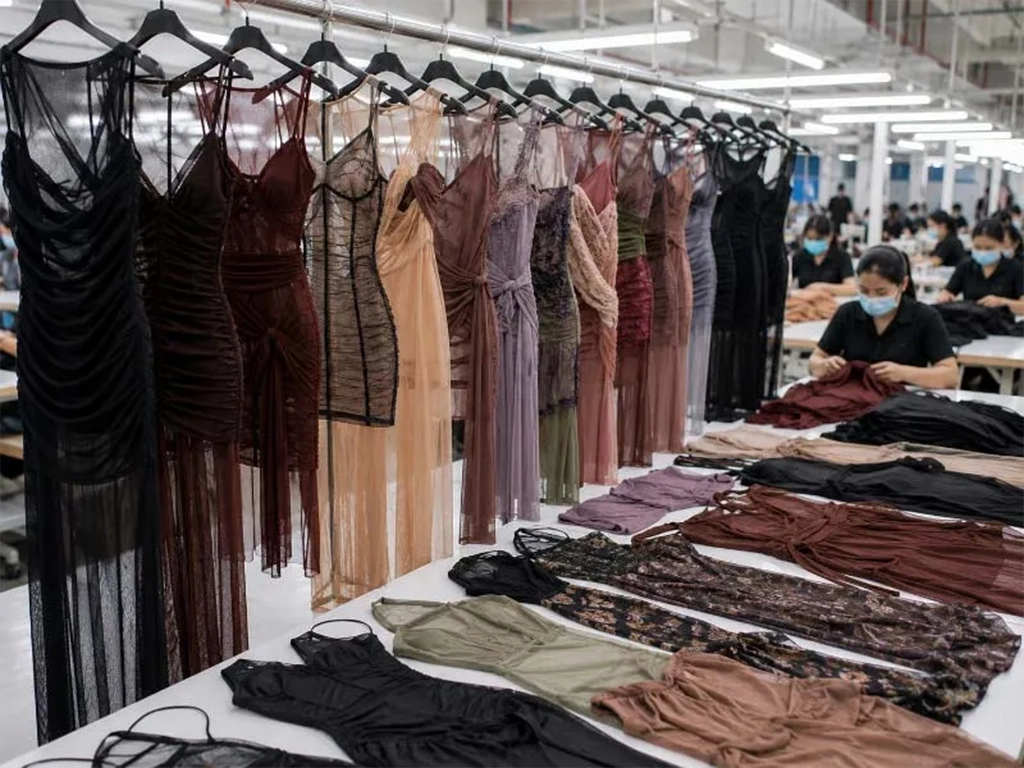
Fabric selection should be part of the sampling discussion, even when you have not chosen the final fabric.
A dress can look correct in a reference image and still require a different fabric construction to achieve the same result.
You should provide whatever information you already have, such as:
- Fiber composition
- Fabric weight or GSM
- Stretch level
- Drape
- Hand feel
- Opacity
- Surface finish
- Lining requirement
- Fabric swatch or supplier reference
You can start with fabric behavior even if you do not know the exact fabric name.
If you are looking for a soft, fluid dress, describe the behavior you need.
If you are developing a fitted dress, explain whether the fabric needs stretch and recovery.
If the skirt needs to hold a particular shape, mention that rather than simply asking for “a similar fabric.”
Why Fabric Matters During Sampling
The pattern cannot be separated from the fabric.
A lightweight woven fabric will not behave like a stable ponte. A stretch jersey will not fit like a non-stretch crepe. A soft satin can fall differently from a heavier satin even when the fiber composition is similar.
If the sample fabric is only an approximation, the pattern may still need to be adjusted once the production fabric is confirmed.
If you already have the intended fabric, sending a swatch or supplier reference gives the factory a much better starting point.
Explain How You Want the Dress to Fit
A product photo cannot tell the factory how the dress should fit.
Two dresses can have almost identical silhouettes in photographs but fit very differently.
You should provide the size range and the measurements you already have. These may include body measurements or finished garment measurements, depending on how your development system is set up.
For a dress, the important points may include:
- Bust
- Waist
- Hip
- Shoulder
- Armhole
- Dress length
- Sleeve length
- Across shoulder
- Neckline measurements
- Other style-specific points of measure
If you have an approved fit sample or reference garment, its measurements can also help.
Tell the Factory What “Fit” Means to You
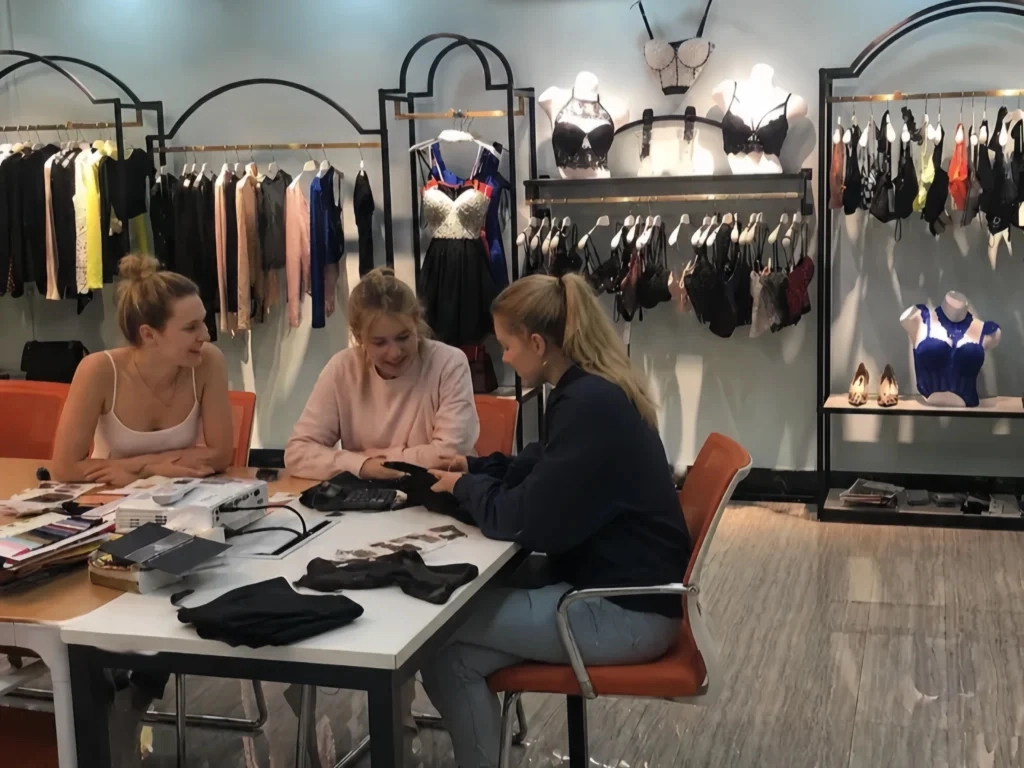
Numbers are important, but they do not always explain the intended fit.
You may want the dress to be:
- Close-fitting through the waist
- Relaxed around the hip
- Fitted through the bust
- Slightly loose at the armhole
- Longer than the reference
- Designed with more movement
These comments tell the pattern maker how you want the dress to fit beyond the measurement numbers.
For fitted styles, this becomes even more important because fabric stretch, body measurements and garment measurements have to work together.
Mention Construction Details That Affect the Sample
You do not need to describe every sewing operation in a sampling request.
Focus on details that can change the pattern, appearance or construction.
For example:
- Invisible or exposed zipper
- Fully lined or partially lined
- Elastic or fixed waistband
- Adjustable or fixed straps
- Pleating
- Gathering
- Ruching
- Boning
- Pocket construction
- Binding
- Hem finish
- Special seam treatment
If you want an open-back dress, the back shape is not the only issue. The factory also needs to consider how the opening is supported, where the straps attach, how the edge is finished and how the garment stays in position when worn.
The factory can review these details during development, but the intended design needs to be clear from the start.
What Should the First Sample Check?
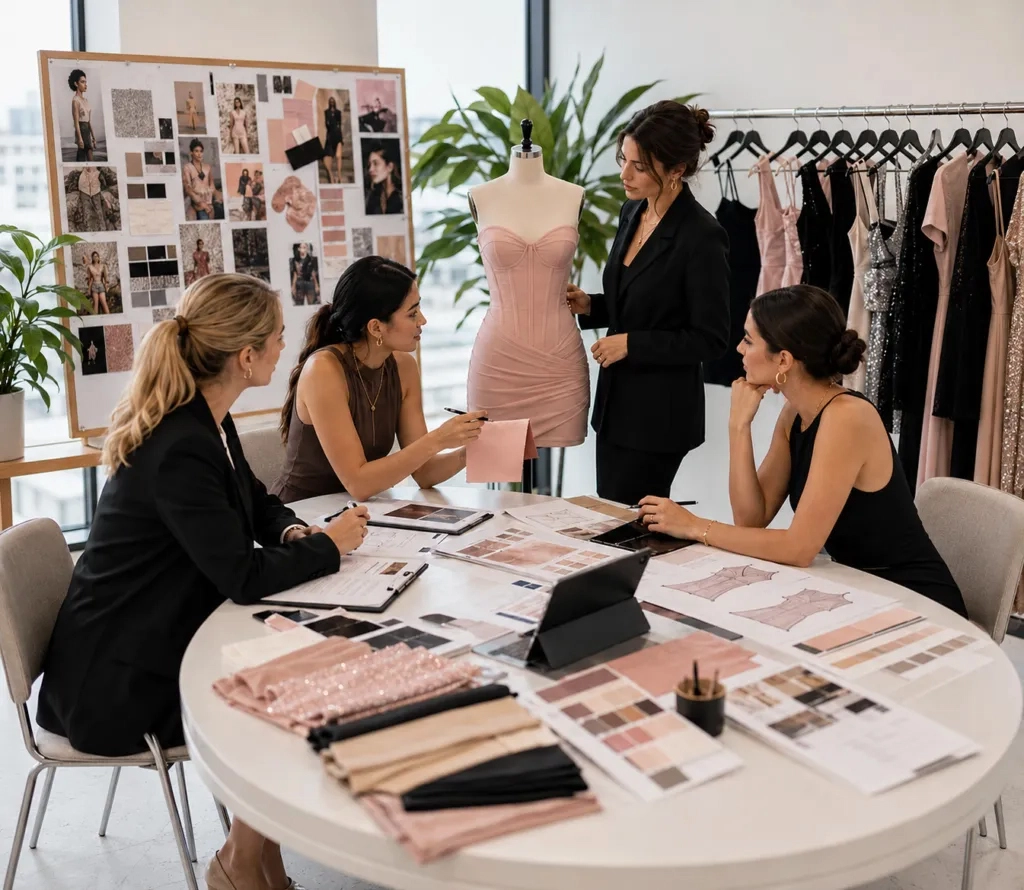
A first sample does not always have one single purpose.
You may mainly want to check:
Fit
Does the dress sit correctly on the body?
Silhouette
Does the garment create the shape shown in your design?
Fabric
Does the selected fabric have the right weight, drape and recovery?
Construction
Are the seams, closures, lining and other details working as expected?
Proportion
Are the neckline, waist, skirt and hem positioned correctly?
Decide what you are checking before you review the sample.
For example, if you are still testing the fabric, it may be too early to judge every finishing detail as final. If the fabric is already approved, the first sample can give you a much clearer indication of fit and construction.
This also helps when you send comments back to the factory.
Instead of saying:
“The sample doesn’t look right.”
you can identify what needs attention.
“The waist is too loose, but the skirt volume is close to the reference.”
That gives the pattern maker something specific to correct.
Separate What Is Confirmed From What Is Still Open
This gives the sample room a clearer list to work from.
You may already have some fixed requirements:
Confirmed
- Main silhouette
- Color
- Size range
- Logo position
- Closure type
And some details may still be open:
To Be Reviewed
- Final fabric quality
- Lining
- Hem length
- Trim
- Certain construction details
You should not feel that every decision has to be completed before contacting a manufacturer.
For new collections, some decisions naturally become clearer during sampling.
The important thing is that the factory knows which details are instructions and which details are still under discussion.

Include Your Expected Quantity
The factory may ask about quantity even when you are only requesting a sample.
This does not mean the sample itself has to meet the bulk MOQ.
The expected quantity also tells the factory what kind of production order you are planning.
For example, there is a difference between developing a dress for:
- 50 pieces
- 300 pieces
- 2,000 pieces
The expected quantity can affect fabric sourcing, trim sourcing, production planning and the way the factory evaluates the development.
If you are planning several colors, give the factory an approximate breakdown when possible.
The final quantity may change. An estimated range is still useful at the sampling stage.
Give the Factory a Realistic Timeline
Set the sample deadline according to the date you need the collection.
You may have:
- A fitting date
- A photo shoot
- A buyer presentation
- A showroom deadline
- A seasonal launch
- A target bulk shipment date
Tell the manufacturer about the important dates.
A sample is not necessarily the final garment. If the first sample requires fit correction, you need time for the pattern to be adjusted and another sample to be reviewed.
The same applies if the fabric or construction changes during development.
If your launch date is fixed, it is better to work backward from the required bulk delivery date than to plan only around the first sample.
Include Private Label Requirements When They Matter
If you are developing a private-label dress, you should mention branding requirements during the initial project discussion.
These may include:
- Woven labels
- Size labels
- Care labels
- Hangtags
- Barcodes
- Custom packaging
- Polybags
- Carton markings
Some of these details can be finalized after the first sample.
However, if a label needs a specific position, a logo is embroidered into the garment, or the packaging affects the folding method, the factory should know early.
This avoids treating branding as a separate issue after the garment has already been approved.
What Happens After the Sampling Request Is Sent?
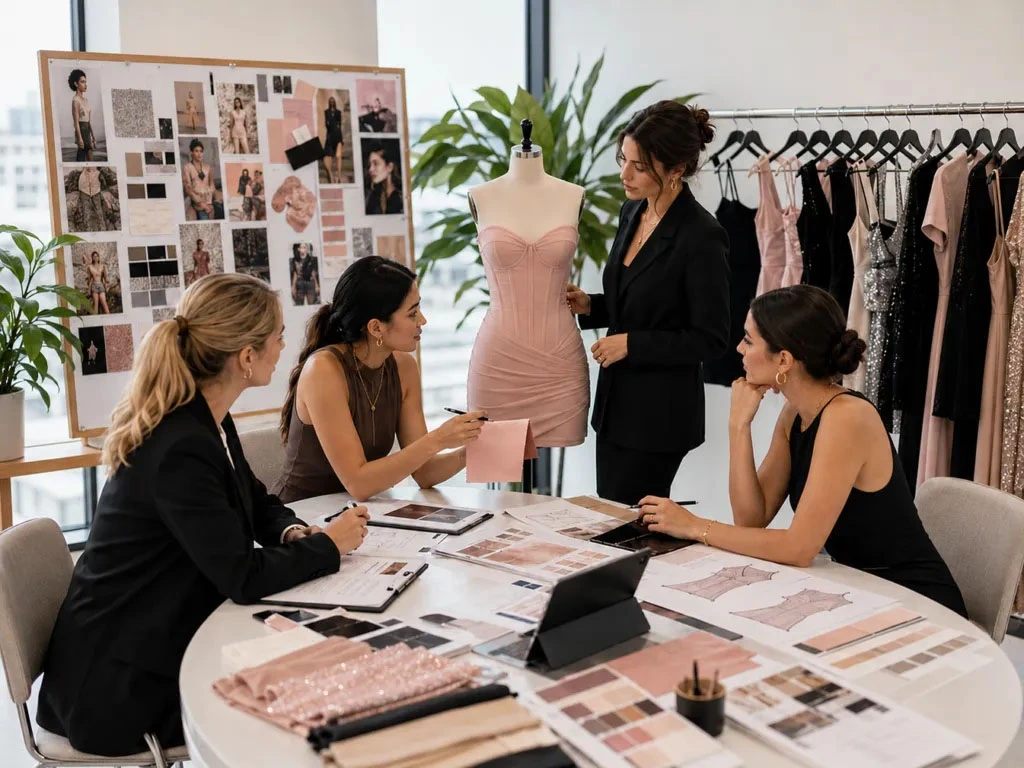
After reviewing the request, the factory can flag anything that needs clarification before pattern development starts.
A typical development sequence looks like:
Sampling Request
→ Technical Review
→ Quotation / Clarification
→ Pattern Development
→ First Sample
→ Fit Correction
→ PP Sample
→ Bulk Production
→ Final Inspection
Not every dress follows exactly the same number of steps.
A simple casual dress may move through development quickly. A structured evening dress with lining, boning, draping or detailed embellishment may require more fitting and construction work.
The first sample should therefore be viewed as a development stage rather than automatically treated as the production standard.
Problems That Often Slow Down Dress Sampling
The factory receives only a product photo
The overall design may be clear, but the factory still has to guess the fabric, measurements and construction.
Better approach: send the image together with whatever technical information you already have.
The fabric is described only as “similar”
There can be several fabrics that look similar in a photograph but behave very differently during cutting and sewing.
Better approach: describe the fabric properties that matter to the garment.
The quantity is discussed only after sampling
The sample may be technically possible, but the fabric or trim used for development may not work commercially at the planned order quantity.
Better approach: give the factory an estimated bulk quantity early.
Major design changes are made after the first sample
Changing a hem length is one thing. Changing the neckline, fabric, fit and construction together can require substantial redevelopment.
Better approach: identify the parts of the design that are fixed before the pattern is started.
Fit comments are too general
“Too tight” does not tell the pattern maker exactly where the problem is.
Better approach: identify the measurement or body area and explain what needs to change.
For example:
“The waist needs to come in, but keep the hip measurement close to the approved spec.”
That is much easier to act on.
Dress Sampling Request Checklist
Before sending your request, check whether you have the following:
| Information | What You Can Provide |
|---|---|
| Design | Sketch, reference images or original garment |
| Fabric | Swatch, composition, GSM, stretch or fabric direction |
| Fit | Size range, measurement chart and fit comments |
| Construction | Closure, lining, straps, seams and special details |
| Trims | Zippers, buttons, labels and other components |
| Sample | Sample quantity and what you want to review |
| Bulk | Estimated order quantity and color breakdown |
| Timing | Sample deadline and target bulk delivery |
| Branding | Labels, hangtags, barcode and packaging |
| Open Items | Details that still need discussion or factory advice |
You do not have to wait until every box is complete.
If the design is still being developed, identify the missing information rather than leaving the factory to guess.
Dress Sampling Request FAQs
1. Can you contact a clothing manufacturer before your tech pack is complete?
Yes. A complete tech pack makes the review easier, but it is not always necessary for the first discussion. A clear sketch, reference garment or collection concept can be enough to start. You should point out which technical details are already decided and which ones still need development.
2. What if your target price has not been decided yet?
Give the manufacturer the budget range if you have one, but do not create an artificial target just to get a quotation. If cost is a major concern, explain the parts of the design you are willing to adjust, such as fabric, trims or construction, so the factory can suggest practical alternatives.
3. What should you do if different reference images show conflicting details?
Choose one reference as the main design and clearly identify which details you are taking from the other images. For example, you might use the bodice from one dress and the skirt shape from another. Marking these differences prevents the sample room from deciding which reference to follow on its own.
4. How should you prepare comments after receiving the first sample?
Try the garment on using the intended fit method and compare it with the measurement specification. Record specific changes by location rather than giving one overall opinion. Photos with marked areas can also help, especially when the issue involves neckline position, drape, proportion or seam placement.
5. What if you need several dress styles developed at the same time?
Give each style its own reference, measurements and construction notes, even when the fabrics or branding requirements are shared. A collection-level summary can cover common information, while style-specific details should remain separate. This makes it easier for the factory to track revisions and prevents details from being mixed between styles.
Conclusion
A good sampling request does not need every final decision. The factory mainly needs to know what you are trying to make, how you want it to fit, what fabric direction you have, and which details cannot change.
If something is still open, mark it clearly. That gives the pattern maker room to develop the sample without guessing at the parts of the design that matter most.
The more specific your request is at the start, the easier it is to review the first sample and make useful fit or construction corrections before bulk production.
Related Dress Manufacturing Services
If your project involves a specific dress fabric or construction, you can also review our related manufacturing pages:
- Evening Dress Manufacturer
- Corset Dress Manufacturer
- Bridesmaid Dress Manufacturer
- Ruffle Dress Manufacturer
- Sequin Dress Manufacturer
Get a Quote for an Existing Dress Style
If you are transferring an existing dress style to a new manufacturer, send us the latest approved sample, tech pack, product photos, or measurement chart together with your target quantity.
As a dress manufacturer, we can review the construction, fabric, trims, measurements, and current production status with you before confirming the sampling requirements.

