

A dress quotation can change after the first sample, especially when the order quantity, fabric, or size breakdown has not been confirmed. A brand may start with a stock fabric and later switch to a custom color, or revise the size ratio after reviewing sample fit. Both decisions can affect material consumption, development work, and the bulk production plan.
If you are preparing your first dress order, it helps to understand which details affect the unit price and which changes may add cost after sampling.
What Determines the Cost of a Custom Dress?
A dress quotation starts with the specifications, not just the sketch. Two dresses can look similar in a design image but require different amounts of fabric, different sewing operations, or different finishing methods.
For a typical custom dress project, the main cost areas include:
- Fabric, lining, interfacing, and trims
- Pattern development, grading, and sample making
- Fabric preparation, spreading, cutting, and sewing
- Special treatments such as printing, embroidery, pleating, or beadwork
- Pressing, inspection, labels, packaging, and other agreed requirements
A sleeveless dress in a stable woven fabric may need relatively little handling, while a lined dress with a shaped bodice, gathered skirt, and invisible zipper requires more sewing operations and additional checks.
When comparing factory quotations, check that each price covers the same fabric composition, lining, closures, trims, and packaging. Even fabrics sold under the same name can differ in weight, width, and quality. A lower quote may simply exclude items that another factory has included.
How Order Quantity Affects Custom Dress Manufacturing Costs
Why Small Orders Can Have a Higher Unit Price
If you are starting with 50 dresses, you may still need a pattern, a development sample, fit corrections, fabric preparation, and production setup. These activities do not disappear simply because the order is small.
However, the total project cost and the unit price are two different considerations. A larger order may reduce the unit price while requiring you to invest more money upfront and hold more inventory.
For a new brand, the cheapest unit price is not always the safest choice. If you have not tested the fit, fabric, or customer response, producing too many pieces can create a different financial problem: stock that takes longer than expected to sell.
You should therefore decide how much inventory you can reasonably commit to before asking the factory to optimize the unit price.
What Changes When You Increase the Order Quantity?
A larger order can make production planning more efficient, particularly when the garments share the same construction and materials.
For example, a factory may be able to arrange a larger cutting lay, reduce repeated preparation between small batches, or keep operators working on the same sewing operations for longer. Material suppliers may also offer different purchasing terms at higher quantities.
Consider a buyer ordering 300 dresses. If all pieces use the same fabric and construction, the production plan may be relatively straightforward. If the same 300 pieces are divided across several styles and colors, the work becomes more fragmented. Each group may need separate cutting arrangements, material checks, and production tracking.
For production planning, 300 pieces in one style is not the same as 300 pieces split across several styles and colors.
Why Your Quantity Per Style and Color Matters
When planning a collection, avoid looking only at the total number of garments.
An order for 300 pieces in one style and one color is different from an order for 300 pieces divided across several styles and colorways. Small batches can create additional coordination work, and some fabric suppliers have minimum purchasing requirements for each color.
This matters most when a style requires custom-dyed fabric or a specific print. Before placing the fabric order, check the supplier’s minimum quantity for each color and compare it with your planned consumption. If the minimum exceeds what the first run needs, decide whether the leftover fabric can be used for a repeat order or whether the extra stock would tie up too much cash.
Before finalizing the assortment, ask the factory to review the quantity for each style and color. If you can use stock fabric or adjust the color selection, mention it early so the quotation can reflect those options.
How Fabric Choice Changes Dress Manufacturing Costs
Stock Fabric or Custom-Dyed Fabric?
Your fabric decision affects more than the material price per meter.
Stock fabric may suit a smaller initial order because the material is already available. It can also shorten the sourcing stage if the required composition, color, width, and quantity are in stock. But availability needs to be confirmed: a swatch or sample length does not guarantee that enough matching fabric remains for bulk production.
Custom-dyed fabric gives you more control over color, which can matter when you are building a recognizable brand palette. The process may involve laboratory dips, color approval, minimum dyeing quantities, and additional lead time.
Compare the fabric price, minimum order, confirmed stock quantity, color approval requirements, and likely leftover material. For a first run, available stock may reduce purchasing risk. For a repeat collection built around a specific brand color, custom dyeing may justify the additional commitment.
Fabric Width and Cutting Consumption
The price per meter does not tell you how much fabric each dress will consume.
Fabric width, garment length, sleeve shape, skirt fullness, lining, and pattern placement all affect consumption. A narrow fabric may require more length to accommodate the pattern pieces. Directional prints, stripes, and checks can also limit how pieces are arranged because the design may need to match across seams.
A full-length dress with a wide skirt will generally need more material than a fitted mini dress. But even two dresses with similar silhouettes can use different quantities if their fabric widths or construction details differ.
Once the pattern pieces are available, the cutting team can assess how they fit across the fabric width and estimate consumption more reliably. A garment-length estimate can help with an early budget, but it does not account for every pattern layout, print-matching requirement, or cutting allowance.
Ask whether the quoted consumption is an estimate or is based on a completed pattern layout. If the fabric width or print-matching requirements change, the cutting plan and material estimate may need to be recalculated.
Fabric Behavior Can Add Work on the Production Floor
Some fabrics are easy to handle; others require more care at several stages.
Lightweight chiffon can shift during spreading and cutting. Stretch jersey needs suitable handling to maintain dimensions and seam performance. Satin can show needle marks, pressing marks, or surface damage if the process is not appropriate for the material.
These characteristics can affect sewing time, handling methods, and quality inspection. A fabric with a lower purchase price may not result in a lower finished-garment cost if it is difficult to cut or sew consistently.
Fabric shrinkage can affect garment measurements and proportions, particularly if the material changes after washing or another specified treatment. Before bulk cutting, confirm whether testing or pre-shrinking is required. For stretch jersey and delicate fabrics, also check seam appearance, measurement stability, and pressing results on the sample.
How Size Range and Size Distribution Affect Production Costs
Adding Sizes Is Not the Same as Ordering More Pieces
Your size range describes the sizes you offer, such as XS through XXL. Your size distribution describes how many garments you need in each size.
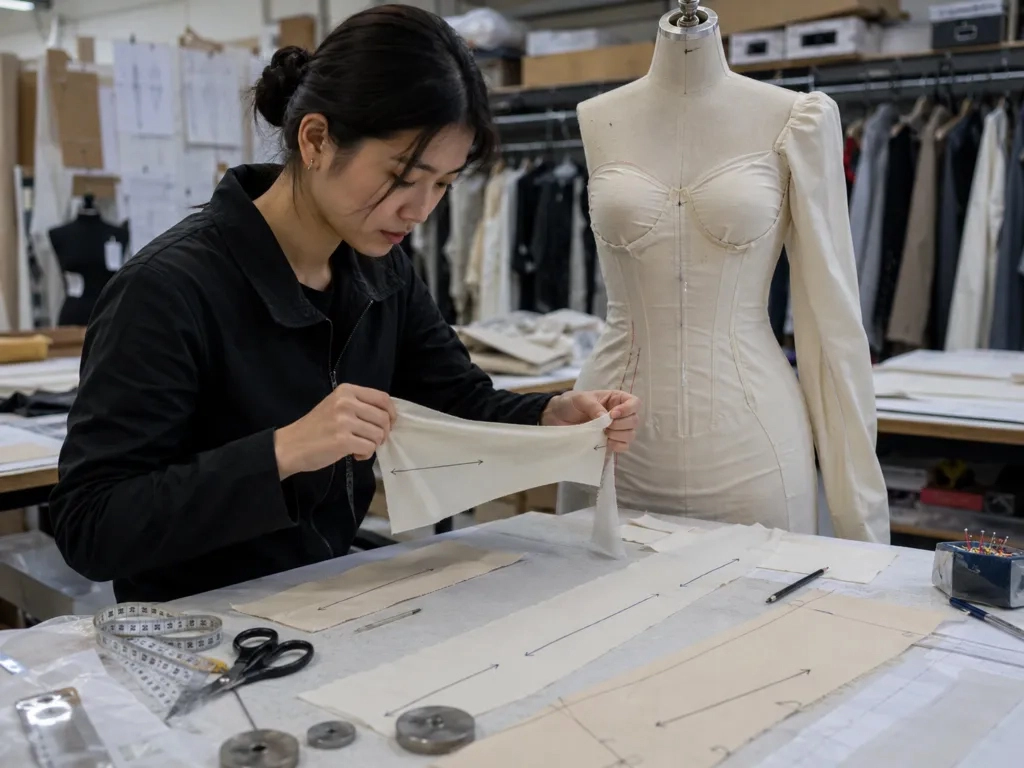
Adding sizes may require pattern grading and additional fit checks, particularly when the factory is developing a new pattern or working from incomplete measurements. Ordering more pieces in an already approved size range mainly changes the production quantity and material requirements.
Grading is not simply a matter of making every measurement larger by the same amount. Bust, waist, hip, shoulder, armhole, and garment length may need different adjustments to maintain the intended fit.
For a fitted dress, grading around the bust or armhole can affect comfort and appearance. A loose silhouette may require closer attention to shoulder width, garment length, and overall proportions. The pattern and approved measurement chart determine which areas need the most attention.
If you already have an approved measurement chart or reference garment, provide it before sampling. It gives the pattern team a clearer starting point and reduces the need to interpret measurements from a design image alone.
How Size Distribution Affects Fabric Requirements
The number of pieces in each size affects how the factory plans the cutting process.
Larger sizes generally use more fabric than smaller sizes, although the difference depends on the design. A straight-cut dress and a full-skirted dress will not have the same consumption pattern across sizes.
Suppose you are ordering 100 dresses in sizes XS to XL. An even split would mean 20 pieces per size, but your sales history or launch plan may call for a different ratio. Send the factory your planned quantities for each size so the material estimate and cutting plan reflect the assortment you intend to sell.
The factory needs this breakdown to estimate the total material requirement and arrange the pattern pieces for cutting. If the size ratio changes after the fabric has been purchased, the original estimate may no longer match the order.
If the size ratio is still under review, send the factory your current estimate and mark it as provisional. The material calculation can then be updated when the final quantities for each size are confirmed.
Fit Approval Before Bulk Cutting
A sample that fits well in the base size does not automatically prove that every graded size will fit correctly.
Before approving bulk production, check the measurements and the areas most likely to affect the silhouette: neckline depth, shoulder position, armhole, bust shaping, waist placement, and skirt balance. For designs with fitted bodices or structured details, these checks are particularly important.
If your brand requires a wider size range, confirm whether a full size set or selected fit samples are needed. The appropriate approach depends on the garment and the level of fit control your brand requires.
Once the bulk fabric has been cut, a late measurement change may mean recutting pieces or accepting a fit issue that cannot be corrected easily. Confirm the measurement chart, approved sample, and required size checks before releasing the order for cutting.
How to Balance Quantity, Fabric and Size Range
These three factors are connected, so changing one may affect the others.
Consider a brand planning a first order of 100 dresses. The design is ready, but the fabric color and final size ratio are still undecided. Choosing an available fabric could simplify material sourcing, while confirming the size breakdown would help the factory estimate consumption. If the brand later switches to custom dyeing and expands the size range, the original plan may need to be revised.
A repeat order is often easier to estimate when the approved pattern, fabric, and construction remain unchanged. The factory still needs to check current fabric availability and confirm the new quantity by style, color, and size.
When comparing quotations, mark each specification as confirmed or provisional. A fabric that has not been selected, for example, should not be treated as a final material cost.
| Decision | What you should confirm | Why it matters |
|---|---|---|
| Order quantity | Pieces per style and color | Helps assess production setup and material purchasing |
| Fabric | Composition, width, color, and sourcing method | Establishes material requirements and sourcing conditions |
| Size range | Sizes offered and approved measurements | Determines grading and fit-check requirements |
| Size distribution | Quantity required in each size | Supports consumption estimates and cutting plans |
| Construction | Lining, closures, trims, and special finishes | Clarifies the work included in the quote |
If you want to compare different production options, ask the factory to price the same garment specification under clearly defined scenarios. That way, you can see whether a change in quantity or fabric makes a meaningful difference without confusing it with a change in product quality or construction.
What to Prepare Before Requesting a Dress Manufacturing Quote
You do not need every detail finalized before contacting a factory, but the information you provide should be clear enough to support a useful estimate.
Prepare your design sketch, reference photos, or tech pack if available. Include the estimated quantity for each style and color, your size range and size breakdown, and any fabric preferences. If you require lining, embroidery, special closures, custom labels, hangtags, or individual packaging, list those requirements rather than assuming they are included.
Your target price and delivery date are also useful. They help the factory identify which specifications need closer review and whether the proposed material and production plan are realistic.
If the fabric or size ratio is not final, request a provisional quote and state the assumptions behind it. You can compare stock fabric with a custom-dyed option, or ask the factory to estimate costs using a tentative size breakdown. Keep the other specifications unchanged so you can identify which decisions are driving the price difference.
Before approving the quotation, confirm what is included, which details remain provisional, and what would trigger a price or schedule revision. A clear agreement at this stage makes later changes easier to assess and reduces avoidable misunderstandings between your team and the factory.
Frequently Asked Questions
1. How long is a custom dress quotation usually valid?
The validity period should be stated on the quotation. If the order uses stock fabric or material sourced specifically for your design, reconfirm the available quantity and price before placing the order. If the quotation expires before you approve it, ask the factory to issue an updated price and delivery estimate.
2. Should I approve a bulk order before receiving the production sample?
For a custom design, bulk production should generally wait until the required sample and specifications have been approved. The approval process establishes the reference for construction, measurements, fabric, and finishing. If your internal team needs several rounds of review, agree on the approval timeline before setting a firm production schedule.
3. What happens if I change the design after approving the sample?
Ask the factory to review the change before proceeding. A small detail adjustment may be straightforward, but a new neckline, altered skirt length, different fabric, or change to the garment’s measurements may require a revised sample and updated costing. Confirm any impact on price and delivery in writing before approving the change.
4. Are shipping, duties, and taxes always included in a factory quotation?
No. The quotation should specify whether it covers garment production only or also includes freight, insurance, import duties, and taxes. These charges depend on the agreed delivery arrangement and destination. Confirm the applicable shipping terms and who is responsible for each cost before calculating the full landed cost of your order.
5. How should I handle a difference between the approved sample and bulk garments?
Compare the bulk garments with the approved sample, measurement chart, and agreed quality requirements. Record the affected measurements or construction details and share clear photos with the factory. The corrective action will depend on the issue and how many garments are affected. Agree on measurement tolerances, workmanship requirements, and inspection procedures before production so both sides have a clear basis for resolving differences.
Conclusion
The most useful dress quotation is one based on clear specifications, not simply the lowest unit price. Before placing a bulk order, confirm the quantity per style and color, fabric requirements, size breakdown, and construction details that affect the finished garment.
If you are preparing a new collection or comparing production options, an experienced dress manufacturer can review your specifications and identify details that need confirmation before sampling. You can also explore Xiuyu Apparel to learn more about our custom dress manufacturing services.