

When you compare dress factories in China and the USA, the unit price is only one part of the decision. As a clothing manufacturer, we see buyers overlook fabric costs, sample revisions, material minimums and shipping when requesting quotations. These details can change the final cost considerably. Before choosing a factory, you need to know how each production setup handles your designs, order quantities and delivery requirements.
China vs USA Dress Manufacturing: What Is the Difference?
The difference between China and USA dress manufacturing becomes clearer when you look at the work involved in producing a collection.
A factory making simple jersey dresses has different requirements from one producing lined satin gowns, corset dresses or styles with extensive embellishment. The number of patterns, fabric types, construction details and order quantities all affect how production is organized.
For your brand, the comparison should start with the actual products you intend to make.
| Factor | China | USA |
|---|---|---|
| Manufacturing cost | Often more competitive | Generally higher |
| Fabric sourcing | Extensive textile and trim supplier network | Depends on local and imported materials |
| OEM/ODM development | Established garment manufacturing sector | Available, depending on factory |
| MOQ | Varies by factory and materials | Varies by factory |
| Large-volume orders | Strong manufacturing infrastructure | Depends on available production capacity |
| Domestic US delivery | International shipping required | Shorter domestic delivery |
| Made-in-USA positioning | Not applicable | Advantage for qualifying products |
| Multi-style collections | Established material and production networks | Depends on factory specialization |
These are general sourcing differences, not guarantees. A well-equipped US factory may be a better choice for a particular design, while a Chinese factory may be more suitable for another.
China vs USA Dress Manufacturing Cost
When we prepare a dress quotation, the sewing price is only one part of the calculation.
A typical cost breakdown includes:
- Main fabric and lining
- Zippers, buttons and other trims
- Pattern development and sampling
- Cutting and sewing
- Special workmanship
- Finishing and pressing
- Labels and packaging
- Quality inspection
The cost of each operation depends on the garment.
A simple sleeveless dress may require relatively few sewing operations. A structured evening dress with lining, boning, multiple panels and hand-applied embellishments takes considerably more work.
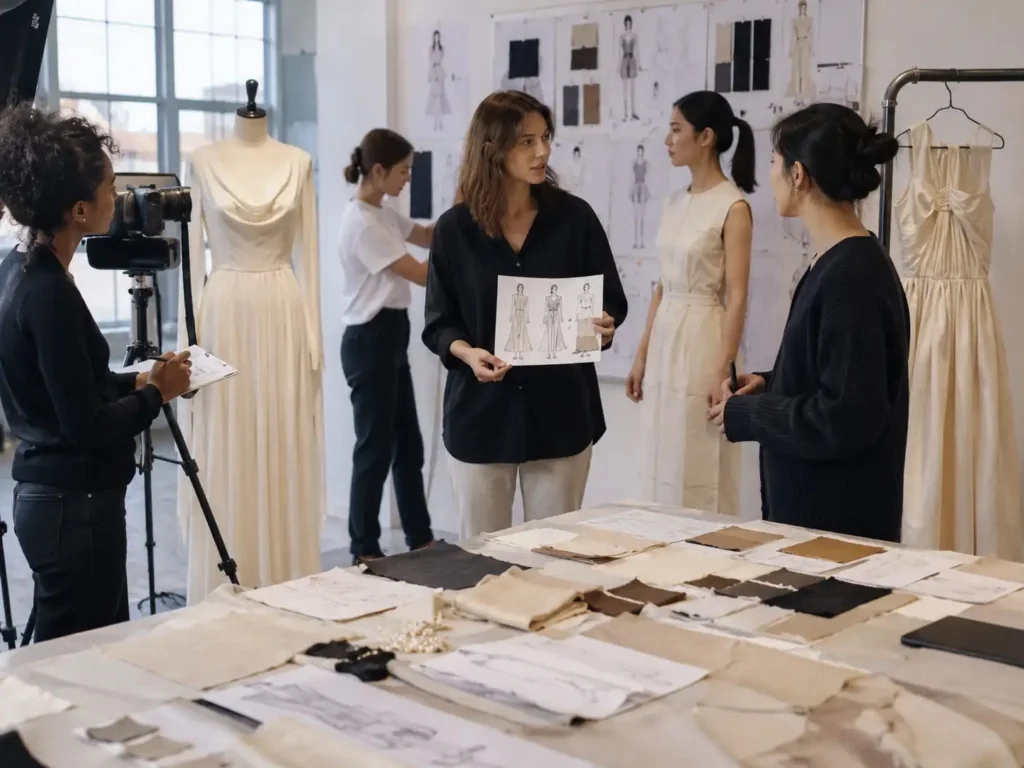
Fabric Consumption and Construction Affect Your Price
Fabric cost is not determined by the composition alone. Fabric width, weight, surface finish and cutting direction also affect how much material a dress requires.
For example, a bias-cut satin dress may consume more fabric than a straightforward A-line design. Velvet and directional prints also require careful fabric placement during cutting.
We have to consider these details before giving a reliable quotation. If the fabric width changes after sampling, the original consumption estimate may no longer be accurate.
Construction adds another cost difference. A dress with gathering, pleats, invisible zippers, layered skirts or complicated neckline finishing requires more handling on the production floor.
When you request prices from different factories, make sure they are quoting the same construction and material specifications.
Calculate the Landed Cost
If you are sourcing from China for the US market, the factory quotation does not represent the final amount you pay.
Your landed cost may include:
Garment Cost + Packaging + International Freight + Import Duties and Taxes + Other Logistics Expenses
US production can reduce international transportation and customs-related work. Chinese production may offer a lower manufacturing price, but the final difference depends on the product, quantity, shipping method and applicable import charges.
For US buyers, import duties should be checked using the correct product classification and current regulations rather than relying on a general percentage.
A lower factory quotation is useful only when the finished garments can reach your warehouse at a commercially acceptable total cost.
China vs USA Dress Fabric Sourcing
Fabric sourcing can make a noticeable difference when you are developing several dress styles in one collection.
China has an extensive textile and garment supplier network. You can source different types of satin, chiffon, lace, mesh, velvet, stretch fabric, lining and decorative trims through established supply channels.
US factories can also source imported and domestic materials, but their available options and supplier relationships vary.
Check Material Availability Before Sampling
One situation we encounter during development is a fabric that works well for the first sample but becomes difficult to secure in the required bulk quantity.
There are several reasons this happens:
- The supplier has limited stock.
- A custom color requires a minimum dyeing quantity.
- The bulk fabric comes from a different production batch.
- The available fabric width changes.
- The material has different shrinkage or stretch characteristics.
For your collection, confirm material availability before approving the production schedule.
If you are developing several colors of the same dress, ask whether the supplier can maintain consistent shades across the required quantities. For printed or custom-dyed materials, allow additional time for color approval and material preparation.
The fabric approved for sampling should also be the reference for bulk production. Substituting a similar-looking material without checking its behavior can create fit and appearance problems.
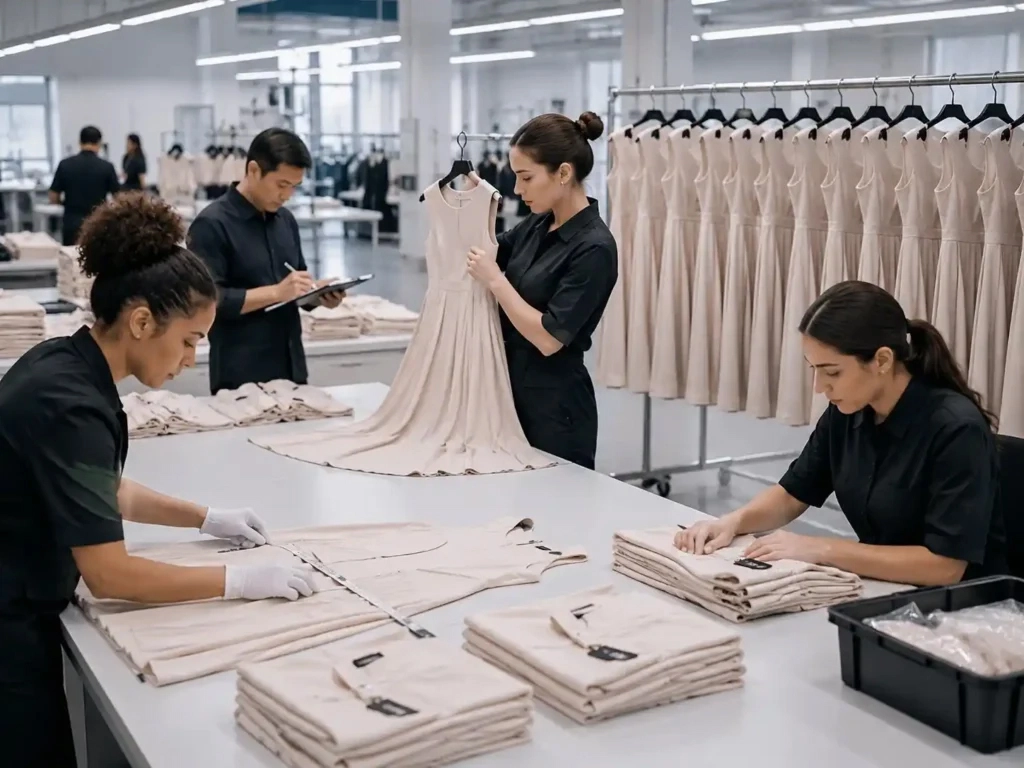
China vs USA Dress Sampling and Product Development
A factory’s sampling ability becomes particularly important when you are developing original designs.
The first sample is not simply a smaller version of the finished order. It is where the pattern, fabric and construction are tested together.
A typical development process looks like this:
Tech Pack → Fabric Confirmation → Pattern Development → First Sample → Fit Comments → Revision → PP Sample → Bulk Production
During fitting, you may find that the bust is too tight, the waist seam sits incorrectly or the skirt does not hang as expected.
Sometimes the problem comes from the pattern. In other cases, the fabric weight, stretch or drape changes the way the garment sits on the body.
Give Your Factory Specific Fit Comments
A comment such as “the waist does not look right” leaves too much room for interpretation.
If you are reviewing a sample, mark the affected area and provide measurements whenever possible.
For example:
- Reduce the waist circumference by 1 cm.
- Lower the waist seam by 1.5 cm.
- Add 0.5 cm to the bust measurement.
- Shorten the sleeve by 2 cm.
Photos taken during fitting can help explain problems with garment balance, seam placement and drape.
From the pattern team’s perspective, one updated measurement sheet is much easier to follow than several separate messages containing different corrections.
When comparing factories, also check how sample revisions are handled. Ask whether pattern adjustments are included in the development price and whether major design changes require additional sample charges.
China vs USA Dress Manufacturing Quality
Quality does not come from the manufacturing location alone. It comes from how the fabric, pattern, cutting, sewing and finishing are controlled.
For your collection, the approved sample should serve as the reference throughout bulk production.
Fabric Inspection Before Cutting
Fabric needs to be checked before it reaches the cutting table.
Depending on the material, inspection may cover shade differences, stains, holes, width variation, surface defects and other visible problems.
With satin or velvet, even a slight shade or surface difference can become noticeable across finished garments.
If defective sections are discovered after cutting, replacement material and additional labor can increase the order cost.
Pattern and Cutting Accuracy
Pattern accuracy is especially important for fitted dresses, corset styles and designs with multiple panels.
For example, the front and back panels may look correct separately but create an imbalance once they are sewn together.
The cutting team also needs to follow the correct fabric direction. This matters with velvet, directional prints and bias-cut garments.
For larger orders, consistent marker placement and cutting preparation help reduce unnecessary fabric waste and measurement differences.
Sewing and Finishing
During production, your quality requirements should cover more than the general appearance of the garment.
Check:
- Seam consistency and stitch quality
- Zipper installation
- Neckline and armhole finishing
- Lining attachment
- Sleeve and shoulder balance
- Hem shape and length
- Pressing and garment appearance
- Final measurements
A dress can look acceptable on a hanger but still have problems when worn. Fit, comfort and construction need to be considered together.
Check Quality Before the Whole Order Is Finished
In-line inspection helps identify problems while production is still running.
For example, if the first production pieces show inconsistent waist measurements, the team can check the pattern, cutting or sewing operation before the same problem affects the remaining garments.
Final inspection is still necessary, but it should not be the first time anyone checks the finished product against the approved specifications.
China vs USA Dress Manufacturing MOQ
MOQ is one of the first things a startup or boutique buyer usually asks about.
However, the number advertised by a factory does not always explain how the minimum order is calculated.
If a factory quotes 100 pieces, clarify whether that means:
- 100 pieces per style
- 100 pieces per color
- 100 pieces per fabric
- 100 pieces for the entire order
For example, if you are developing six dress styles in three colors, the total inventory commitment can become much larger than the original MOQ suggests.
Separate Garment MOQ From Fabric MOQ
The garment minimum and material minimum are two different things.
You may be able to produce a relatively small number of dresses, but the fabric supplier may require a larger quantity for custom dyeing, printing or special finishes.
For a new collection, using available stock fabrics can sometimes make more sense than ordering custom materials immediately.
At Xiuyu, our usual garment MOQ reference is 50–100 pieces per style and color, although the final requirement needs to be checked against the fabric, construction and order details.
When requesting a quotation, ask the factory to explain both minimums. This helps you calculate inventory requirements before committing your budget.
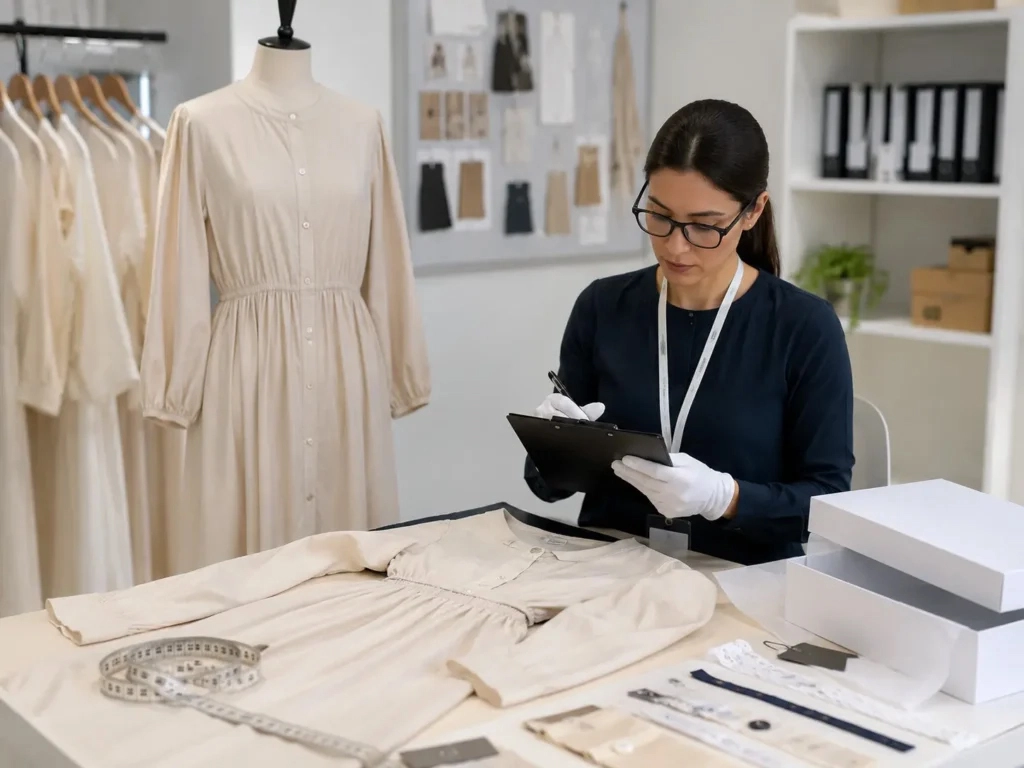
China vs USA Dress Manufacturing Lead Time
The time required to manufacture a dress is not the same as the time required to receive your order.
Your schedule includes several stages:
Fabric Sourcing → Sampling → Revisions → Approval → Material Preparation → Cutting → Sewing → Finishing → QC → Packing → Shipping
If your collection is intended for a particular season, delays during material sourcing or sample approval can affect the launch date just as much as production delays.
Ask for Separate Development and Production Timelines
When requesting a quotation, ask the factory for two different estimates.
Sample development: Time needed to prepare the first sample and complete the necessary revisions.
Bulk production: Time required to manufacture the approved quantity after the PP sample and materials have been confirmed.
For reference, our standard sample development period is approximately 3–7 days. Bulk production is generally around 25–30 days after PP sample approval and fabric confirmation.
These are working references, not guaranteed delivery dates for every dress. Complicated construction, custom materials, large quantities and production scheduling can change the timeline.
Work Backward From Your Delivery Date
If you need stock in your US warehouse before a collection launch, calculate the schedule backward from that date.
Include sample approval, fabric preparation, production, inspection, packing, freight and customs clearance.
Also consider whether you will ship by air or sea. Air freight may be useful for urgent orders, but the additional cost can change the economics of a small production run.
A realistic delivery plan should be agreed upon before bulk production begins, not after the garments are finished.
China vs USA Dress Manufacturing for Growing Brands
Your production needs will probably change as your business develops.
A startup may begin with 100–300 dresses to test a new design. A successful style could later require several thousand pieces for a seasonal reorder.
The factory that handles your first order may not automatically be suitable for the next stage.
Check Available Production Capacity
When discussing a larger collection, ask about:
- Monthly production capacity
- Available sewing lines
- Cutting and preparation resources
- Pattern and sample development teams
- Material sourcing arrangements
- Quality inspection resources
- Current production schedule
A factory’s advertised capacity is not necessarily the capacity available for your order.
For example, producing ten different dress styles involves more coordination than making several thousand pieces of one basic design. Each style may have its own pattern, material, trims, measurements and sewing requirements.
You need to know whether the factory can manage those differences without losing control of the production schedule.
Keep Production Records for Repeat Orders
Once a style has been approved, its production information should be retained.
This includes the final pattern, measurement chart, fabric specification, color reference, construction details, label information and packaging requirements.
When you reorder the same dress, these records reduce unnecessary development work.
However, a repeat order still needs material and sample-reference checks. A new fabric batch can behave differently even when the garment pattern has not changed.
For established brands, this production history becomes increasingly valuable as collections expand.
Which Is Better for Your Fashion Brand: China or USA?
China may be a suitable choice if your collection involves multiple dress styles, broader fabric sourcing, OEM/ODM development, competitive manufacturing costs or larger repeat orders.
US production may suit your business better when domestic manufacturing, shorter local delivery, easier factory visits or Made-in-USA positioning are important.
Your order size also changes the calculation. A small test order has different priorities from a seasonal program involving several thousand garments.
For a startup, inventory risk and sample costs may carry the most weight. For an established retailer or wholesaler, production consistency and available capacity may matter more.
The best decision comes from comparing factories against your actual product requirements rather than choosing a country based on reputation alone.
How to Compare China and USA Dress Factories
Before requesting quotations, prepare one RFQ and send the same information to every factory.
Include:
- Technical drawings, reference photos or a tech pack
- Fabric composition and material requirements
- Estimated quantity per style and color
- Size range and measurement chart
- Construction and workmanship details
- Label and packaging requirements
- Target delivery date
- Final shipping destination
Once the quotations arrive, check these points:
1. Fabric specification
Confirm that the quoted fabric, lining, weight, width and finish are comparable.
2. Development charges
Check whether pattern making, first samples and revisions are included.
3. Actual MOQ
Confirm the minimum per style, color and material.
4. Production start date
Find out whether the lead time starts after deposit, fabric arrival or PP sample approval.
5. Revision arrangements
Clarify how additional sample corrections or design changes are charged.
6. Quality procedures
Ask about fabric inspection, in-line checks, measurement tolerances and final inspection.
7. Repeat-order support
Check whether the factory retains the approved specifications and can manage future production.
You can then compare the quotations on the same basis instead of choosing the lowest number on the first page.
Frequently Asked Questions
1. Can you work with a Chinese factory if your design team is based in the USA?
Yes. Many brands manage development remotely. The important part is having clear technical documents, organized fit comments and approved sample references. For complicated designs, arrange a video fitting review or use detailed photographs with measurements marked directly on the garment.
2. Should you use the same factory for samples and bulk production?
Ideally, yes. When the same production team handles both stages, it has a better understanding of the approved pattern and construction. If you move the order elsewhere, make sure the new factory receives complete technical specifications and a properly approved reference sample.
3. What happens if your sales forecast changes after placing an order?
Discuss possible quantity adjustments before bulk cutting starts. Once fabric has been purchased and garments have entered production, reducing the order can leave unused materials and unfinished inventory. Your purchase agreement should explain how quantity changes are handled.
4. How should you protect your dress designs when working with an overseas manufacturer?
Use written manufacturing agreements, clear ownership terms and appropriate confidentiality provisions. Share technical files only with the people who need them, and clarify who owns patterns, artwork and custom-developed materials. For commercially important designs, seek legal advice on suitable IP protection in the relevant markets.
5. Is a trading company always a disadvantage compared with a direct factory?
Not necessarily. A trading company may help coordinate multiple product categories or suppliers. However, you should know who actually develops the patterns, makes the samples and handles bulk quality control. Ask whether factory communication and production inspections are direct or managed through an intermediary.
Conclusion
Choosing between China and USA dress manufacturing requires more than comparing unit prices. Your fabric, construction, order quantity, development requirements and delivery destination all affect the final decision. As a clothing manufacturer, Xiuyu Apparel understands how these details influence a production order. If you are looking for a suitable dress manufacturer, start by comparing factories against the same product specifications, production requirements and delivery expectations.

