

When you plan a dress collection with a clothing manufacturer, the hard part is rarely coming up with more designs. The harder decisions are which styles should move into sampling, which ones justify deeper quantities, and which ideas are better treated as small tests. In production, collections usually become harder to manage when too many similar silhouettes, colors, or complicated fabrics are developed at the same time. A balanced range gives your customer choice without making the production plan unnecessarily complicated.
What Does a Balanced Dress Collection Look Like?
A balanced collection does not mean giving every category the same number of styles.
You may have 20 dresses, but if half of them are fitted mini party dresses with similar necklines and fabrics, the range can still feel narrow. Changing the color or adding a different trim does not always create enough difference from a customer’s point of view.
Before you start sampling, give each style a clear role.
Some dresses need to be dependable commercial products. Some are there to bring seasonal newness. A few may be designed mainly for campaigns or brand image. Others can test a new silhouette, fabric, or detail without taking a large inventory position.
Give Each Style a Commercial Role
A practical collection can be divided into four working groups:
| Style Role | What It Does | Typical Examples |
|---|---|---|
| Core styles | Carry regular sales and repeat orders | Slip midi, A-line, clean bodycon |
| Fashion styles | Add seasonal newness | Halter maxi, printed resort dress |
| Statement styles | Create visual impact | Corset gown, embellished dress |
| Test styles | Check whether a new idea has demand | New proportion, fabric, or construction |
You do not need to follow a fixed percentage.
A partywear brand may need more fashion and statement dresses. A brand selling everyday occasionwear may need more core styles. Decide the role of each dress before you set colors or quantities.
A new corset shape using custom lace does not need the same initial quantity as a proven satin midi. If both are treated as equal-volume products, the more complicated style can tie up much more money before you know whether customers actually want it.
Start With the Customer, Not the Sketches
Before looking at silhouettes, define who the collection is being made for.
Age and location give you a starting point, but they are not enough to plan the range. You also need to know what occasions customers buy for, what price range they accept, how much coverage they prefer, and where fit problems have appeared in previous products.
If your customer regularly buys dresses for weddings and dinners, a collection full of clubwear shapes is not going to become balanced simply because you add three different colors.
Look at the Occasion
List the main reasons your customers buy dresses:
- Wedding guest
- Dinner
- Birthday
- Vacation
- Resort
- Brunch
- Work
- Graduation
- Party
- Cocktail
- Formal events
You do not need a dress for every occasion.
Start with the occasions that matter most to your customer and build the range around those needs. A satin midi, for example, can work for a wedding, dinner, birthday, or holiday depending on the styling. A very specific club dress has a much narrower use.
This matters when you decide how much stock to carry.
A style that can be worn several ways may have more repeat-order potential than a dress that is highly memorable but only works for one event.

Check the Selling Channel
Your sales channel also changes the way you should build the range.
For ecommerce, every extra style creates more work: photography, measurements, product copy, stock management, customer questions, and returns.
For boutiques and wholesale, the problem is slightly different. The buyer needs to see enough difference between styles to justify putting both on the rack.
If two dresses use almost the same silhouette and fabric, but one has a different neckline, you may be better off developing a genuinely different shape.
The market matters too. A resort collection sold in a warm climate may need lightweight fabrics and breathable construction for much of the year. A cooler market may require sleeves, layering options, and heavier materials.
How Many Dress Categories Should You Include?
Do not add mini, midi, and maxi dresses just to make the range look complete.
Each length should solve a customer or commercial need.
Build a Useful Length Mix
Mini dresses can work well for party, birthday, club, and vacation styles. Body length, coverage, rise, and hem movement all need to be checked during fitting.
Midi dresses often cover more occasions, but the exact hem position matters. A midi that looks balanced on one model can sit awkwardly on another body height if the proportion is not controlled.
Maxi dresses work well for resort, formal, evening, and holiday collections. They also create more production considerations around total length, fabric consumption, lining, drape, and packing.
There is no reason to force an equal split between the three.
Look at what your customer already buys.
Group Styles by Silhouette
When you review the collection, group dresses into silhouette families instead of counting sketches.
For example:
- Fitted — bodycon, corset, fitted slip
- Waist-defined — A-line, fit-and-flare, skater
- Relaxed — shift, babydoll, loose slip
- Draped — wrap, cowl, ruched
- Structured — panelled, tailored, boned
- Volume-led — tiered, ruffled, full-skirted
- Asymmetric — one-shoulder, uneven hem
This is one of the quickest ways to find duplication.
You may have eight different designs on paper, but if seven are fitted, sleeveless dresses with a similar waist position, the collection is still concentrated.
There is also a production reason to look at silhouettes this way.
A corset needs support and balance. A bias-cut slip needs careful grain control. A ruched dress needs consistent tension. A full skirt changes fabric consumption and sewing time.
Adding a new silhouette also adds another development and production requirement. Each new silhouette also adds another development and production requirement, from pattern work and support construction to fabric consumption and sewing time.

Build a Working Color Palette
Color decisions become expensive when they are made one style at a time.
A new color means another style-color combination, another fabric requirement, another cutting group, another inventory position, and another set of finished garments to inspect.
Start With a Working Color Palette
A practical collection can combine:
- Proven brand or commercial colors
- Seasonal colors
- A smaller number of accents or prints
The exact mix depends on the brand.
Giving every new style five or six colors before it has proved itself can quickly increase the SKU load.
If you are sampling a new silhouette, one or two commercially useful colors may be enough for the first stage. Once the fit and sales are proven, you can extend the color range.
For an established core style, adding more colors is easier to justify because you already know how the product fits and how customers respond to it.
Before adding another color, ask:
Does this color give the customer something she cannot get from the existing colors?
If the answer is no, you may get more value from putting the quantity into the stronger existing color.
Check Fabric Risk Before Sampling
Fabric should be considered before the final design is locked.
A fabric swatch can look perfect on a table and behave very differently once it is cut and sewn into a dress.
For dress development, you should check:
- Weight and width
- Stretch and recovery
- Shrinkage
- Opacity
- Drape
- Colorfastness
- Seam behavior
- Pressing response
- Care requirements
Satin can show puckering or seam impressions. Chiffon can create fraying and lining problems. Mesh needs the correct stretch direction. Jersey can grow after wear. Lace may require motif matching, which increases cutting waste.
These points can affect the pattern, construction, sample result, costing, and even whether a style makes sense for the collection.
Do Not Put Too Many High-Risk Fabrics Together
Look at the whole collection, not just individual styles.
If half of your new dresses require custom-dyed fabric, special lace, unusual trims, or complicated embellishment, one material delay can affect a large part of the launch.
Core styles are often easier to manage when they use materials that can be reordered.
You can still use special fabrics for statement pieces. Some production risk is unavoidable. The problem is concentrating too much of it in one collection.
Build the Price Structure Around Your Main Selling Point
Your dresses should have enough price separation for the customer to understand why one costs more than another.
You may have:
- Entry styles with simpler construction
- Core styles around your main selling price
- Premium dresses using better fabric or internal structure
- Statement pieces with labor-intensive details
The largest part of the collection normally needs to sit around the price point where your customer actually buys.
When a style is too expensive during costing, do not immediately remove the feature that makes the dress interesting.
Look at the construction first.
You may be able to reduce unnecessary seams, change a hidden component, simplify the lining, adjust trim placement, or select a more stable fabric.
The factory quotation is easier to manage when these decisions are made before the final sample rather than after the PP sample has already been approved.
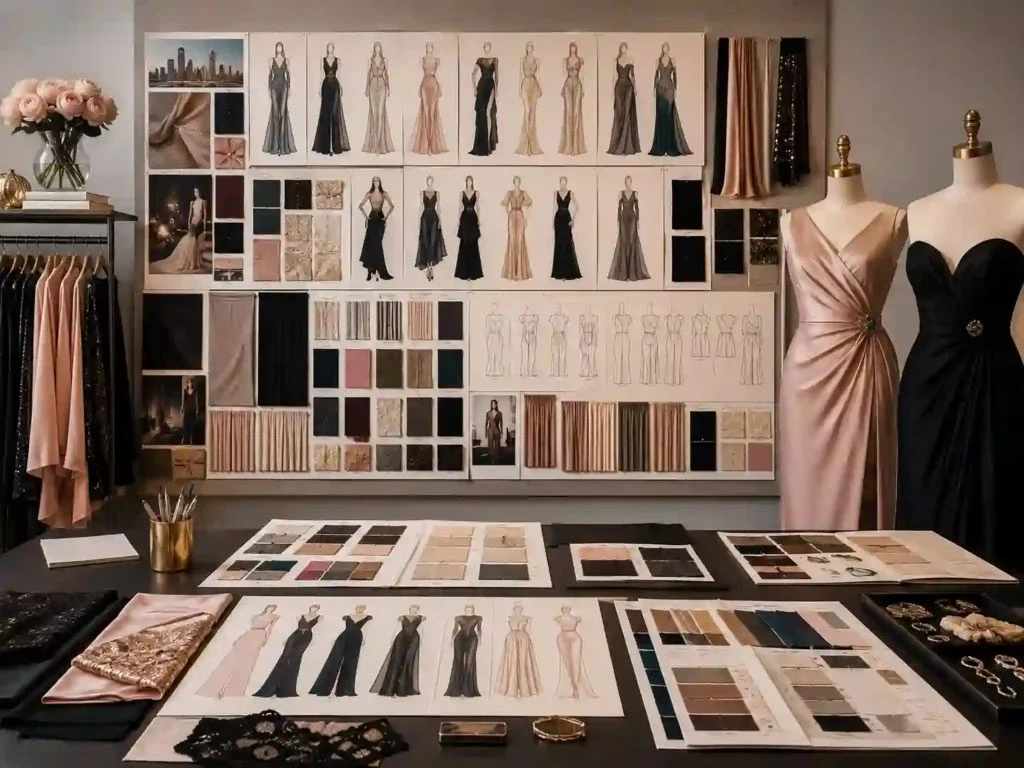
Decide the Number of Styles by SKU Load
There is no fixed number that works for every brand.
Your starting point should be based on:
- Development budget
- Target customer
- MOQ
- Selling channel
- Expected launch quantity
- Number of colors
- Size range
- Fabric availability
- Sampling capacity
- Delivery schedule
An 18-style collection may be enough for one brand and too small for another. The more useful question is whether those 18 styles occupy different product spaces.
Six dresses can look very different in sketches but still end up as short, fitted, sleeveless party dresses around the same price.
In that case, removing two similar styles may actually improve the collection.
Count the Real SKU Load
The basic calculation is:
Styles × Colors × Sizes = SKUs
For example:
12 styles × 2 colors × 6 sizes = 144 SKUs
If you add a third color to every style:
12 styles × 3 colors × 6 sizes = 216 SKUs
You have increased the SKU count by 50% without developing another silhouette.
The extra SKUs also affect fabric booking, cutting, size allocation, inspection, warehouse handling, photography, product data, and cash tied up in stock.
For an established core style, adding more colors is easier to justify because you already know how the product fits and how customers respond to it.
Plan Size Quantities From Sales Data
Do not automatically split every size equally.
Your size curve should come from your own sales history when possible.
A fitted stretch dress may sell differently from a relaxed woven wrap dress. A structured corset may have a different size pattern from a loose maxi.
Look at:
- Sales by size
- Size stockouts
- Remaining stock
- Return reasons
- Fit comments
- Market differences
A style can look like a strong seller because M and L sold out quickly while XS and XXL remained untouched.
That tells you something different from a style where every size sells steadily.
Also check the grading itself. Adding XS–XXL to a range does not guarantee good fit across all sizes. Strap length, armhole width, bust position, waist placement, hip ease, and total length may all need adjustment.
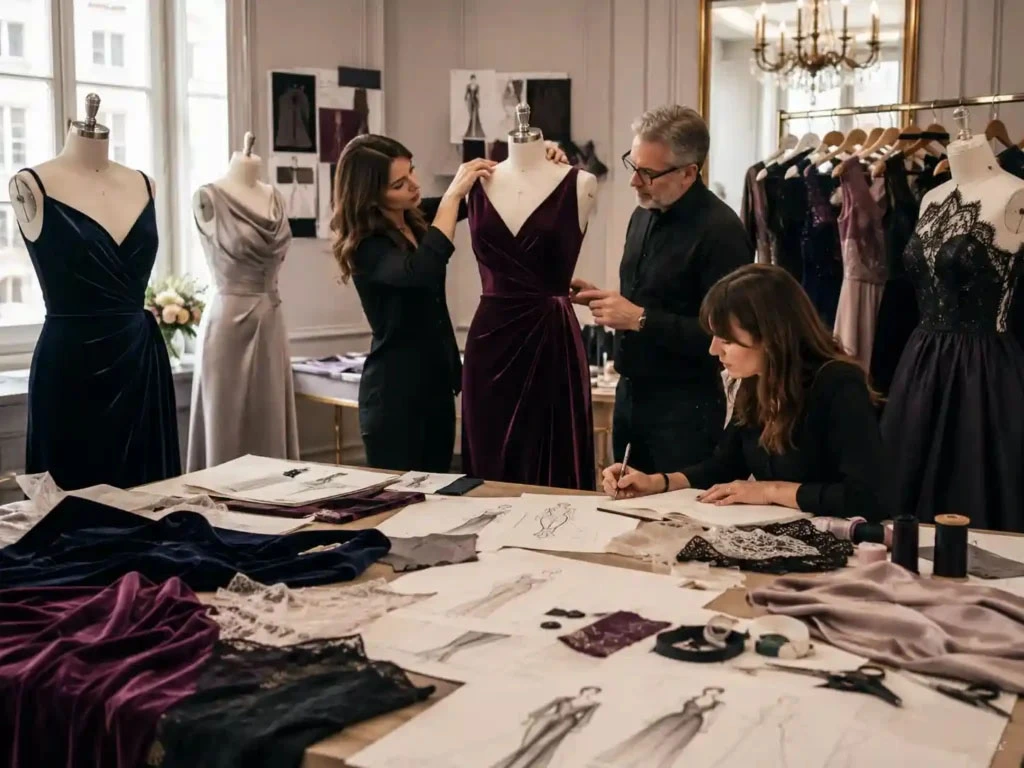
Set Initial Quantities by Risk and Reorder Potential
This is where collection planning and factory planning meet.
Initial quantities are easier to justify when you have evidence from:
- Proven silhouettes
- Stable fabrics
- Broad occasions
- Clear price positioning
- Lower return rates
- Styles with previous sales data
- Products that can be reordered quickly
New silhouettes, unusual fabrics, narrow occasions, and heavily embellished dresses carry more uncertainty.
Those styles can still be important. They just do not necessarily need the same first-order depth as your core products.
Think About the Second Order Before the First
Before placing a bulk order, ask:
If this dress sells quickly, can I make it again?
This question is easy to miss.
A fabric may be available for the first order but difficult to reorder. A custom color may require a larger minimum. A special lace may have a long lead time. A supplier may discontinue a seasonal fabric.
If a dress is intended to become a core product, material continuity matters.
A slightly less complicated fabric that can be reordered consistently may be more useful than a perfect-looking fabric that disappears after the first production run.
What Should You Prepare Before Sampling?
Clear development information leaves less room for interpretation during sampling.
Ideally, provide:
- Front and back sketches
- Measurements
- Size chart
- Fabric composition
- Fabric weight
- Color reference
- Lining information
- Trim details
- Closure details
- Artwork or print files
- Label requirements
- Packaging requirements
- Target quantity
- Target delivery date
A full tech pack is helpful, but development can still start from a reference garment, detailed photos, a sketch, an existing sample, or a moodboard.
The important part is identifying what is confirmed and what still needs discussion.
If the reference photo does not show the internal construction, do not assume the factory will interpret it exactly the way you intended.
How Many Samples Do You Need?
The first sample answers one question:
Can the factory interpret the design correctly?
It does not automatically answer whether the dress is ready for bulk production.
For fitting, review:
- Bust position
- Waist position
- Neckline depth
- Armhole
- Strap length
- Hip ease
- Skirt movement
- Total length
- Zipper behavior
- Lining
- Transparency
- Seam tension
Also try the garment while sitting, walking, and moving.
A dress can look fine in a fitting photo and still have a strap that slips, a hem that rides up, or a neckline that opens too much during movement.
Leave Room for Sample Corrections
Leave some time in the launch calendar for sample corrections. The first sample is not always the approved sample, especially when the style uses corsetry, lace, mesh, sequins, draping, cut-outs, or mixed-stretch fabrics.
Simple woven styles may move quickly.
Corsets, lace, mesh, sequins, draping, cut-outs, and mixed-stretch constructions often need more adjustment because the material and construction directly affect fit.
It is much easier to correct these issues at sample stage than after bulk cutting.
What Needs to Be Locked Before Bulk Production?
Before bulk production, you should have a clear approved standard.
That normally includes:
- Approved PP sample
- Final measurements
- Grading
- Fabric and trim specifications
- Color references
- Labels
- Packaging
- Construction details
- Inspection requirements
The PP sample should become the physical reference for bulk production.
During production, the factory should also control material inspection, cutting, bundle separation, sewing, inline checks, pressing, finished-garment measurements, final inspection, and packing.
When several styles use similar fabrics or trims, material identification and bundle separation need extra attention.
A collection with 20 styles creates more opportunities for mixing labels, linings, zippers, shades, or bundles than a collection with five styles.
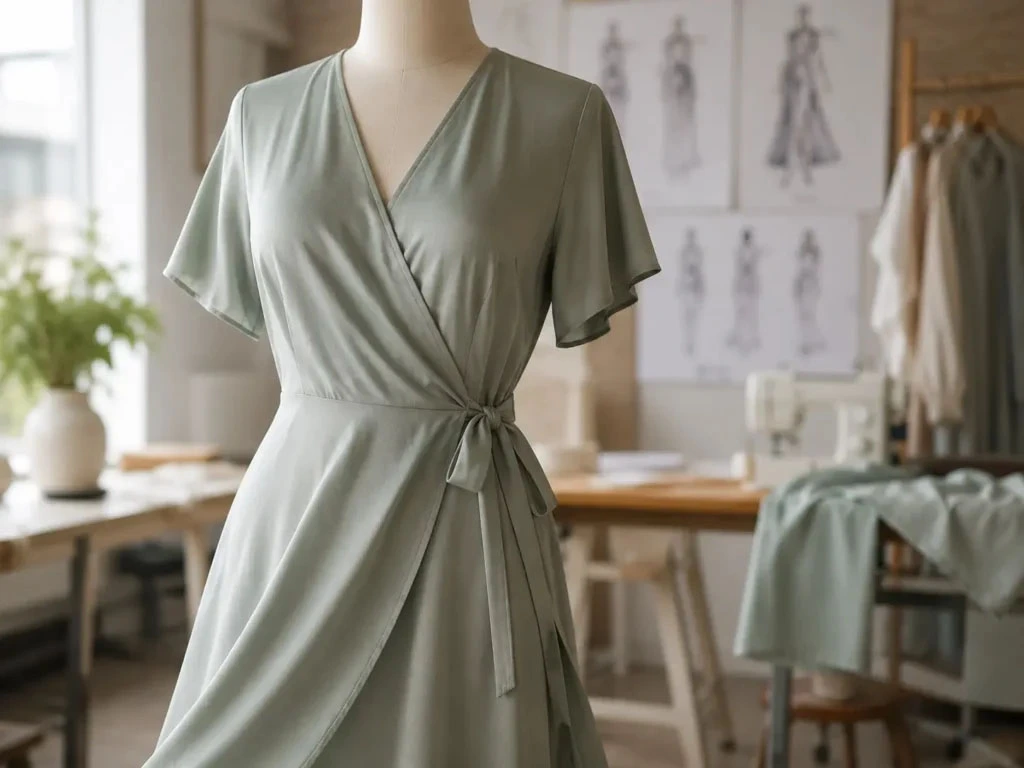
How Should You Use Sales Results for the Next Collection?
Your first collection gives you information that the design meeting cannot.
After launch, look at:
- Full-price sales
- Sell-through
- Stockouts
- Returns
- Return reasons
- Color performance
- Size demand
- Markdown rate
- Customer requests
- Repeat-order requests
Do not only ask which style sold the most.
Ask why.
A style may sell because the price was right. Another may have strong traffic but weak conversion. Another may sell well but have a high return rate because of fit.
Those are three different product situations.
Return comments should also be made more specific.
“Too small” is not enough.
Was it the bust? Waist? Hip? Upper arm? Total length?
When those comments are recorded properly, they become useful information for the next pattern and size chart.
A Simple Collection Review Before You Send It to the Factory
Before finalizing the range, put every style into one working sheet.
| Style | Occasion | Length | Silhouette | Fabric | Price Tier | Role | Colors | Quantity | Production Risk |
|---|---|---|---|---|---|---|---|---|---|
| A | Wedding Guest | Midi | Fit & Flare | Satin | Core | Core | 2 | Higher | Low |
| B | Party | Mini | Bodycon | Mesh | Core | Fashion | 2 | Medium | Medium |
| C | Formal | Maxi | Corset | Lace | Premium | Statement | 1 | Lower | High |
| D | Resort | Maxi | Relaxed | Chiffon | Core | Test | 1 | Lower | Medium |
Then look at the whole sheet instead of approving each design separately.
Ask:
Does each style serve a different purpose?
Are too many styles using the same silhouette?
Are the complicated fabrics concentrated in one part of the range?
Are you putting too many colors into untested styles?
Which styles could realistically be reordered?
Can the sampling schedule handle the collection before your launch date?
Those questions usually tell you more than simply asking whether every design looks attractive.
FAQ
1. Can I send a collection to a manufacturer before all the designs are finalized?
Yes. You do not have to finish every design before talking to a manufacturer. Early feedback can reveal fabric availability, construction difficulty, MOQ, or costing issues while the collection is still being developed. That can save sampling budget on styles that are difficult to produce within your target price or launch schedule.
2. What if my designs look different but use almost the same construction?
Put the styles next to each other and compare the actual pattern features. If the waist, length, fit, fabric behavior, and wearing occasion are almost identical, the difference may not justify developing both. The factory can produce them, but your team still needs to decide whether both deserve sampling and inventory.
3. Should I order more fabric for a style that I expect to become a bestseller?
Discuss reorder conditions before bulk production. If the fabric is custom dyed, seasonal, or has a high minimum, the second order may require a new fabric booking or a longer lead time. For a potential core style, check repeat availability with the fabric supplier before committing to larger quantities.
4. What happens when the sample looks good but the production cost is too high?
Review the construction before changing the whole design. Check fabric consumption, lining, trims, seam count, labor-heavy details, and cutting waste. Sometimes a small construction adjustment brings the cost back into range without changing the feature that gives the dress its commercial appeal.
5. How can I tell whether a dress is worth repeating?
Look beyond the total units sold. Check whether the style sold at full price, which sizes moved, whether returns were low, whether the fabric can be reordered, and whether customers asked for another color. A style with repeatable materials and a stable fit is much easier to reorder and carry forward.
Conclusion
A balanced collection comes from deciding which styles deserve sampling, deeper quantities, more colors, and further testing before production starts.
Review the collection by occasion, silhouette, fabric, price, SKU load, and production risk before you send it into development. Keep stronger commitments for styles with evidence behind them, and give untested ideas room to prove themselves without putting too much inventory at risk.
Before bulk production, make sure the PP sample, measurements, materials, labels, packaging, and quality standards are all clear. That gives the factory a fixed production reference and gives your team a better basis for the next collection.
Related Dress Manufacturing Services
If your project involves a specific dress fabric or construction, you can also review our related manufacturing pages:
- Cocktail Dress Manufacturer
- Mini Dress Manufacturer
- Lace Dress Manufacturer
- Ruffle Dress Manufacturer
- Mesh Dress Manufacturer
Get a Quote for an Existing Dress Style
If you are transferring an existing dress style to a new manufacturer, send us the latest approved sample, tech pack, product photos, or measurement chart together with your target quantity.
As a dress manufacturer, we can review the construction, fabric, trims, measurements, and current production status with you before confirming the sampling requirements.

