

When you develop dresses for your own brand, sewing is only one part of the job. The factory may also need to develop the pattern, source fabric, make samples, revise the fit, prepare labels, and keep the approved details unchanged during bulk production.
A private label dress manufacturer handles these production stages for your brand, with the finished dresses sold under your own label.
What Is a Private Label Dress Manufacturer?
A private label dress manufacturer makes dresses for your brand rather than selling them under its own retail name.
You may come to the factory with a finished tech pack, a sketch, a reference garment, or an early product idea. The amount of work required from the factory changes with the starting point.
If your pattern and specifications are already complete, the main job may be sample making and bulk production. If you only have a sketch, the project may involve pattern development, fabric sourcing, fitting, and several sample revisions before the dress is ready for production.
Your brand controls the product direction and branding. The factory handles the agreed production work needed to turn that direction into finished garments.
This difference becomes important when you compare suppliers. Two factories may both call themselves private label manufacturers, but the work they actually handle can be very different.
What Does a Private Label Dress Manufacturer Do?
The factory’s role can cover several stages before the garments reach your warehouse.
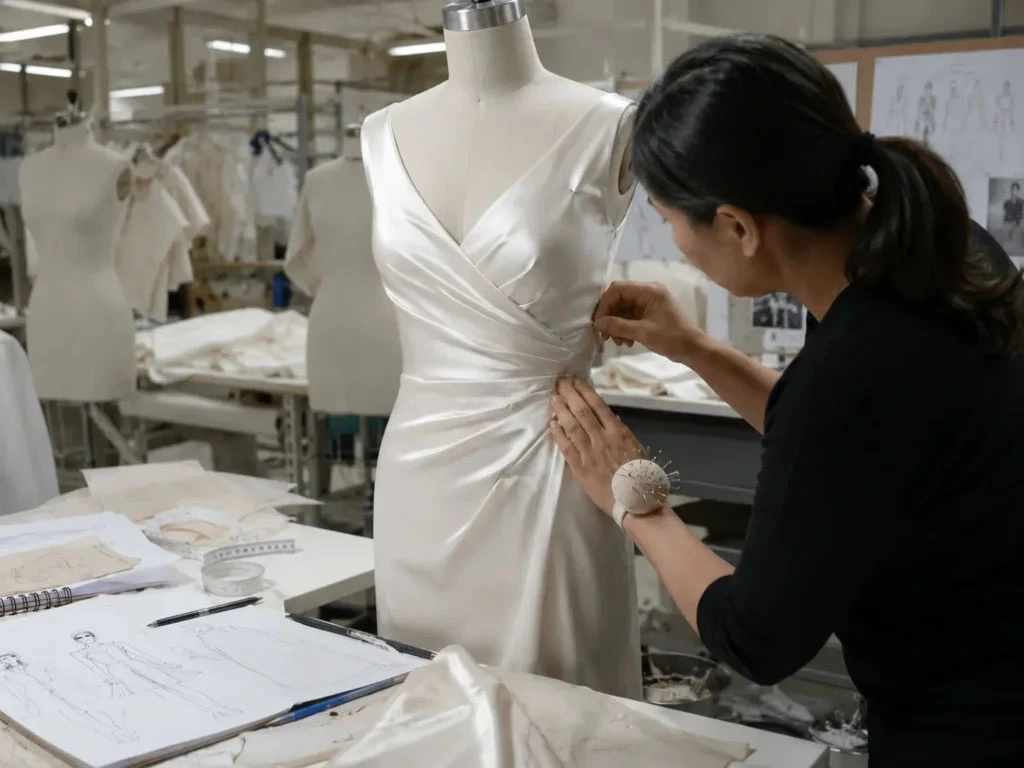
Pattern Development
A sketch can show the look of a dress without showing how it should actually be constructed.
The pattern team has to translate the design into pieces that can be cut and sewn. This includes measurements, seam positions, ease, neckline and armhole shapes, sleeve proportions, garment length, and other construction details.
With a production-ready pattern, this part of the work is smaller. A sketch or reference garment is different. The pattern team still has to develop the pieces before the first sample can be made.
Fabric Sourcing
The fabric you choose affects the pattern and the finished shape.
A satin dress, for example, may behave differently when the fabric weight or drape changes. A stretch fabric can affect measurements and fit. Lightweight fabrics can also behave differently around seams, gathers, and hems.
If you ask the factory to source the fabric, provide the composition, weight, stretch, color, hand feel, or a reference fabric where possible. A fabric name alone is often not enough for the sourcing team to identify the right material.
Sample Development
The first sample is not simply a smaller version of the final order.
It gives you a physical garment to check before the production specifications are locked.
You can review the fit, measurements, fabric behavior, construction, lining, closures, straps, sleeves, hem, and finishing. Some problems are obvious only after the garment has been made.
For example, a neckline may sit differently than expected, a skirt may need more volume, or a lightweight fabric may require a different construction.
Fit Revision
Sample comments need to give the pattern team a clear direction.
Instead of saying that the dress feels too loose, identify whether the bust, waist, shoulder, armhole, or garment length needs to change.
The revised pattern then becomes the basis for the next sample.
For brands developing several styles at once, keeping each style’s comments and revised measurements organized can help prevent changes from being carried over to the wrong version.
Bulk Production
Once the sample and production details are approved, the factory moves from development into bulk manufacturing.
This can include fabric inspection, pre-shrinking where required, bulk cutting, sewing, in-line QC, pressing, finishing, final inspection, and packing.
The approved sample is important here because production workers need a physical reference as well as the written specifications.
What Does the Brand Usually Provide?
You do not need a finished tech pack to start a conversation with a factory. A sketch, reference dress, measurements, or even a product photo can give the pattern and sampling team a starting point.
The important part is to show which details are already fixed and which ones are still open.
You may provide:
- Tech pack
- Sketch
- Reference garment
- Measurement chart
- Size specifications
- Fabric requirements
- Color references
- Print artwork
- Embroidery artwork
- Construction details
- Label information
- Packaging requirements
If you are a new fashion brand, you may not have all of these ready.
A reference dress and a clear list of required changes can sometimes be more useful than an incomplete tech pack with missing measurements.
What matters is making a clear distinction between approved information and information that is still open for discussion.
What Does the Factory Handle?
The exact scope should be agreed before sampling starts.
A private label dress manufacturer may handle:
- Pattern making
- Fabric sourcing
- Sample development
- Pattern revision
- Size grading
- Fabric cutting
- Sewing
- In-line quality control
- Pressing and finishing
- Final inspection
- Labels and hangtags
- Packaging
Ask about these details before sampling starts.
For example, if the factory is sourcing the fabric, find out whether fabric testing or shrinkage control is included. If you need custom labels, confirm who supplies them and when they need to be approved.
The service name itself does not tell you enough about what is included.
Private Label vs. OEM vs. ODM
Private label, OEM, and ODM are often used together in clothing manufacturing, but they refer to different parts of the working relationship.
| Model | Your Input | Factory Role | Typical Situation |
|---|---|---|---|
| Private Label | Your brand and product requirements | Produces garments for sale under your label | Building your own branded collection |
| OEM | Your defined product specifications | Manufactures according to those specifications | You already know what needs to be made |
| ODM | Product direction or general requirements | Provides design and product development as well as manufacturing | You need more development support |
In practice, these models can overlap.
You may use an OEM clothing manufacturer to develop a dress from your specifications and then sell the finished garment under your private label. Another brand may select a factory-developed design and customize the fabric, color, measurements, labels, and packaging.
When comparing factories, ask what each supplier actually handles rather than relying on the label OEM, ODM, or private label. The same term can describe different levels of development and production support from one factory to another.
How Does Private Label Dress Manufacturing Work?
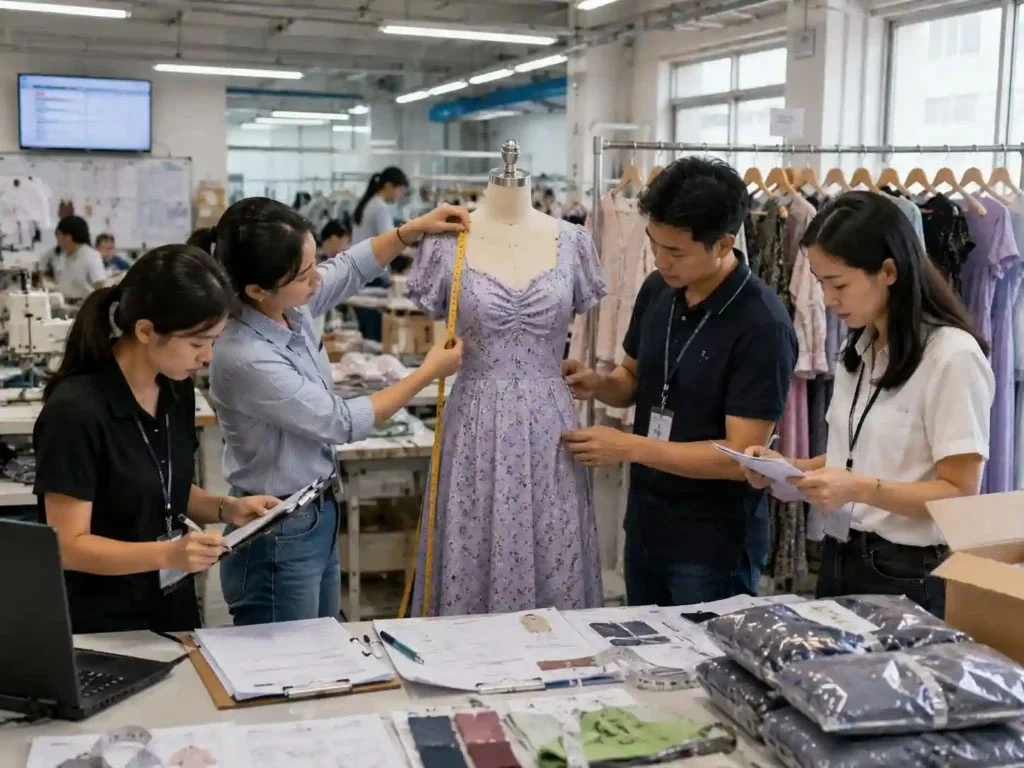
From the first design file to bulk production, several details need to be confirmed before cutting starts.
1. Send the Design Information
You send the factory whatever product information you have.
This may be a tech pack, sketch, reference sample, garment photo, measurement chart, or fabric direction.
The factory reviews the information first, then checks which details are ready for sampling and which ones still need to be confirmed.
2. Develop the Pattern
If you do not already have a production-ready pattern, the pattern team develops one from the available information.
The pattern needs to work with the selected fabric and construction, not just match the appearance of the sketch.
3. Make the First Sample
The first sample is used to check the actual garment.
You can evaluate fit, proportions, fabric behavior, construction, and finishing before committing to bulk production.
4. Revise the Fit
If measurements or construction need to change, the pattern is revised.
You may have one revision or several depending on the style. Fitted dresses, structured bodices, unusual necklines, and complicated constructions often need closer fitting work.
5. Approve the PP Sample
The PP sample becomes the physical reference for bulk production.
At this point, the final specifications should also be clear, including measurements, fabric, color, construction, labels, trims, packaging, and quantity.
The purpose is to make sure the production floor is not working from an earlier sample or outdated instruction.
6. Cut and Sew the Bulk Order
After fabric confirmation and production approval, the factory moves into bulk cutting and sewing.
In-line QC can catch problems during production instead of leaving every issue until the final inspection.
7. Finish and Inspect
The garments go through pressing, trimming, finishing, measurement checks, and final inspection.
The inspection points depend on the dress style. A fitted dress with shaped seams may require different checks from a loose cotton dress.
8. Pack the Finished Garments
The final stage can include labels, hangtags, folding, polybags, carton packing, carton marks, and quantity checks.
If your garments are going directly to retailers or customers, packaging requirements should be confirmed before production begins.
What Should You Check Before Choosing a Private Label Dress Manufacturer?
A factory website shows its product range, but it does not always show how the factory handles development and production. Ask about the actual process before you start sampling.
Can the Factory Develop Your Type of Product?
Ask how the factory works with your starting point.
If you have a complete tech pack, ask about sample development and fit revisions. If you mainly work from sketches or reference garments, ask whether the factory has an in-house pattern team and sample room.
What Is the MOQ?
Do not look only at the number.
Ask whether the MOQ applies per style, per color, or per style and color.
For example, a collection with eight styles and three colors can create a much larger order commitment than the headline MOQ suggests.
You should also ask whether different fabrics, colors, or sizes affect the minimum.
How Long Does Sampling Take?
Ask when the sample lead time starts.
A quoted sample time may begin after the factory receives the required fabric and complete design information, not from the day you first contact the supplier. Make sure this starting point is clear when you plan a new collection.
How Are Changes Recorded?
Ask how sample comments are transferred into the final production information.
You want the revised measurements, construction details, fabric approval, and final sample to be clearly identified.
This becomes particularly important when several dress styles are being developed at the same time.
How Is Bulk Quality Checked?
Ask what happens during production, not only what happens at the end.
You can ask whether the factory checks fabric before cutting, monitors sewing during production, measures finished garments, and carries out final inspection before packing.
The answer should explain an actual process rather than simply state that the factory has QC.
Can the Factory Handle Private Labels and Packaging?
If you need woven labels, care labels, size labels, hangtags, barcodes, polybags, or custom cartons, confirm these requirements early.
Also confirm who provides each item and which version has been approved.
A label problem discovered during packing is much harder to fix than one caught before production starts.
Common Problems in Private Label Dress Production
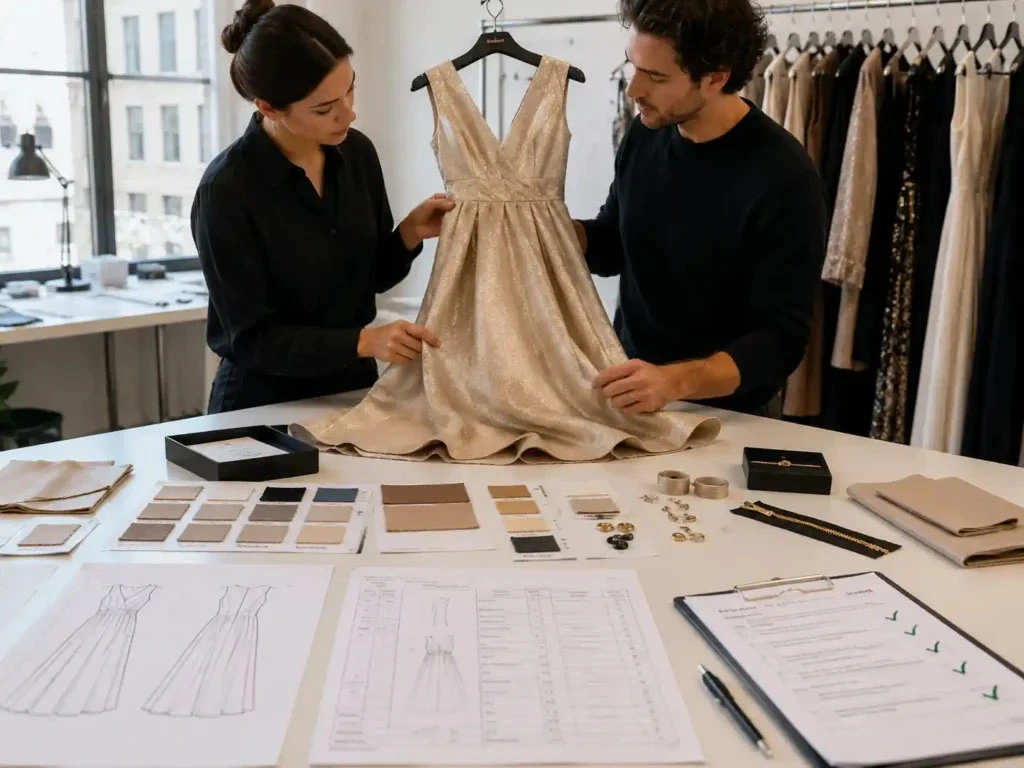
The Bulk Garments Do Not Match the Approved Sample
A common cause is an older pattern or measurement chart reaching the production floor.
Keeping the approved PP sample and final specifications together gives the production floor a clear reference.
Fabric Shrinkage Changes the Finished Measurements
A fabric can shrink during processing, which may affect the finished garment measurements.
This is particularly important for dresses where the fit depends on precise body measurements.
Fabric inspection, testing, and pre-shrinking where required should be considered before bulk cutting.
The Fabric Looks Right but Behaves Differently
Two fabrics can have similar colors and compositions but different weight, drape, stretch, or surface behavior.
A fabric substitution made after sampling can therefore change the way the dress fits or hangs.
If the material changes, you should not assume the approved pattern will produce exactly the same result.
Fit Changes Across Different Sizes
A dress that looks balanced in one size may not keep the same proportions after grading.
This can be more noticeable in fitted bodices, shaped seams, puff sleeves, and other styles where proportions are part of the design.
Size grading needs to be checked during product development. A larger or smaller size is not always a simple increase or decrease in every measurement, especially when the style relies on fitted seams or specific proportions.
Labels and Packaging Do Not Match the Order
Errors can occur with size labels, care labels, hangtags, barcodes, carton marks, or packing instructions.
These details should be checked against the final order information before packing starts.
Too Many Changes Are Made After Approval
Once bulk materials have been ordered or cutting has started, late changes become more complicated.
If a measurement, fabric, construction detail, or packaging requirement changes, make sure the factory has one clearly identified current version to follow. Old comments, earlier measurement charts, and previous samples should not remain open for production reference.
When Does Private Label Manufacturing Make Sense?
Private label manufacturing is an option for brands that want their own dress collection without running an in-house production facility.
You may be a new fashion brand testing a first collection, a boutique developing exclusive styles, a retailer adding an own-label range, or an established brand entering a new category.
The factory support you need will depend on how much product development your team handles internally.
If you already have patterns, tech packs, and approved materials, production consistency may be the main concern. If you are starting from sketches, you may need support with pattern making, fabric selection, sampling, and fit.
Private Label Dress Manufacturing Checklist
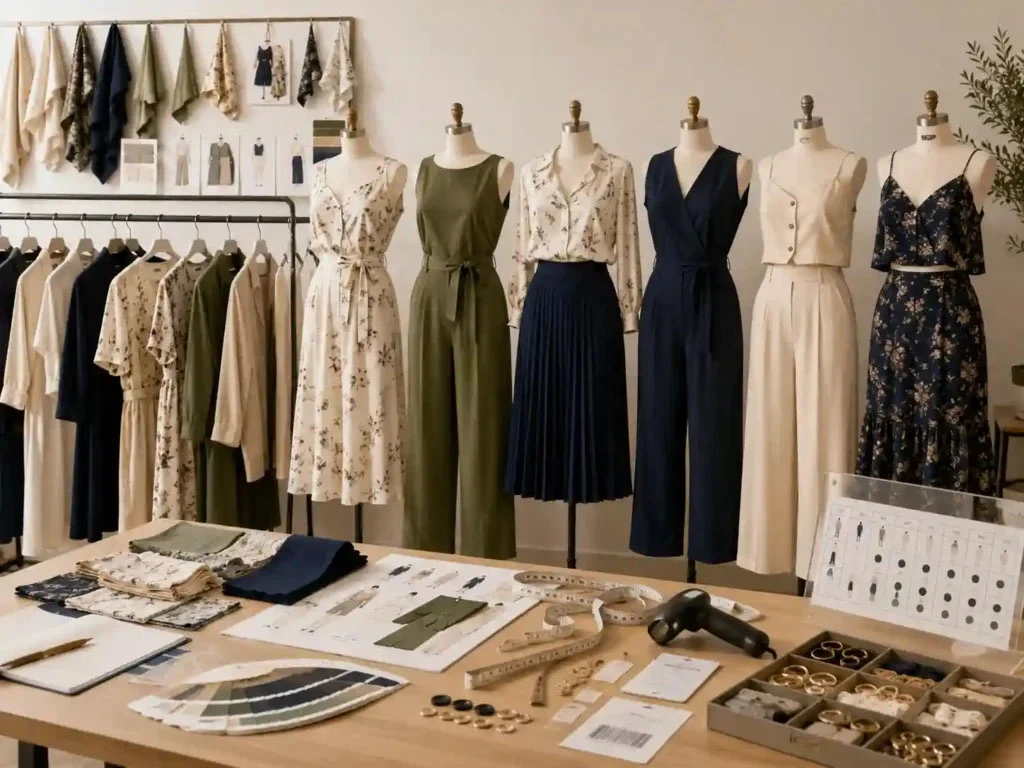
Before moving a dress into bulk production, check that you have confirmed:
- Final design version
- Fabric and color
- Measurements
- Size range
- Pattern or pattern development responsibility
- Construction details
- Approved PP sample
- Labels and hangtags
- Trims
- Packaging
- Production quantity
- QC requirements
- Delivery requirements
You do not need every item finalized before the first conversation with a factory.
You should, however, know which details are already fixed and which ones still need development.
Frequently Asked Questions
Can you develop private label dresses from a sketch instead of a tech pack?
Yes, if the manufacturer has pattern and sample development capability. A sketch can show the intended style, but the measurements, construction, fabric, and finishing still need to be developed. A reference garment or detailed measurements can also help the pattern team prepare the first sample.
How many dress styles should you develop at the same time?
There is no fixed number. A first collection might have a few styles or several more. Budget, launch timing, sample workload, and the differences between styles all affect how many you can develop at once.
What should you do when the sample needs major changes?
Separate fit problems from design changes first. A measurement adjustment may only require a pattern revision, while a different neckline, fabric, or construction can affect several parts of the garment. Mark each change clearly so the next sample is based on one updated version.
Should you choose the fabric before making the first sample?
Ideally, the fabric used for sampling should be close to the material intended for bulk production. Weight, stretch, drape, and shrinkage can all affect the fit. If you change to a substantially different fabric later, the sample may no longer represent the final garment.
What should you keep after approving a dress sample?
Keep the approved sample together with the final measurement chart, fabric details, color reference, construction instructions, labels, trims, and packaging information. These records give you something specific to compare against during bulk production and make it easier to identify where a difference occurred.
Conclusion
A private label dress manufacturer handles the production work behind your own branded dresses, but the exact scope depends on what you bring to the project and what the factory provides. Before bulk production, confirm the pattern, fabric, measurements, construction, labels, packaging, and PP sample. Once cutting starts, these confirmed details become the reference for the production team and QC checks.
Related Dress Manufacturing Services
If your project involves a specific dress fabric or construction, you can also review our related manufacturing pages:
- Chiffon Dress Manufacturer
- Lace Dress Manufacturer
- One Shoulder Dress Manufacturer
- Mermaid Dress Manufacturer
- Mesh Dress Manufacturer
Get a Quote for an Existing Dress Style
If you are transferring an existing dress style to a new manufacturer, send us the latest approved sample, tech pack, product photos, or measurement chart together with your target quantity.
As a dress manufacturer, we can review the construction, fabric, trims, measurements, and current production status with you before confirming the sampling requirements.

