

Changing dress manufacturers gets more complicated once a style has already been approved, sampled, or scheduled for production. You may already have the garment, tech pack, fabric reference, and delivery date. The new factory still needs to understand how the style was developed. If key details are missing, the first sample can turn into another development round and push the bulk schedule back. The new factory needs to know which parts of the style are already fixed and which parts still need development.
Start With the Existing Dress, Not a New Order
When transferring an existing dress style, start with a review of the current sample and production information rather than bulk production.
Start by giving the factory enough information to understand what you already have.
Your latest approved sample is often the most useful starting point because it shows the finished garment rather than only describing it on paper. The factory can check the construction, proportions, finishing, and fit first, then determine what needs to be developed again.
You should also tell the factory where the current production stands.
For example:
- Has the sample already been approved?
- Has the fabric been purchased?
- Has the pattern been completed?
- Has bulk cutting started?
- Are labels and trims already available?
- Is there a fixed launch or shipment date?
These details tell the factory how much of the previous development can be carried over and what still needs to be done.
If you only send a purchase order and a few product photos, the new production team has to fill in too many gaps.
Give the New Factory the Latest Approved Version
One common problem is that the factory receives an earlier sample instead of the latest approved version.
A brand may have an original sample, a revised sample, and a final sample after fitting. If the wrong version is sent, the pattern maker may end up reproducing a style that was changed months ago.
Mark the current approved sample clearly.
If there are measurement changes that were agreed after sampling, keep those with the sample rather than relying on an old email thread.
Production Information to Transfer to a New Dress Manufacturer
The new factory does not need a perfect technical package at the beginning. It does need enough information to understand what has already been decided.
Approved Sample
Send the latest approved garment whenever possible.
The sample allows the production team to look at details that may not be obvious from photographs:
- seam construction
- lining
- zipper position
- neckline shape
- hem finish
- gathers or pleats
- panel shape
- overall fit
If the garment has special construction, photographs alone are rarely enough.
Measurement Chart
Your measurement chart should match the version you want the new factory to produce.
Pay particular attention to measurements that changed during fitting. A one-centimeter adjustment at the waist, neckline, or length can affect the pattern considerably.
If the physical sample and measurement chart do not match, tell the factory which reference is final before sampling begins.
Pattern Files
If you have the original pattern, provide it.
An existing pattern can save development time. Before using it for production, the new factory should still check it against the approved sample, measurements, fabric, construction, and grading.
Fabric and Trim Details
Give the factory whatever information you have about the original materials:
- composition
- fabric weight
- usable width
- stretch
- color reference
- supplier or fabric code
- lining
- zipper
- buttons
- labels
- other trims
If the original fabric cannot be sourced, the sample may have to be developed with a substitute material first. This can lead to another fitting round once the correct fabric is available.
Previous Fitting and QC Comments
Keep the previous fitting and QC history when you change suppliers.
If the previous factory had to correct the armhole, reduce the waist, change the lining, reinforce a seam, or adjust the zipper construction, those details can help the new factory avoid repeating the same problem.
We often find that old fitting comments are more useful than a long product description because they show where the garment actually needed attention.

Do You Need a New Sample When Changing Dress Manufacturers?
Even when the previous manufacturer has already approved the style, allow time for sampling at the new factory.
The new factory has not made the garment before, so the pattern and construction still need to be checked against the existing sample.
The new factory may use different pattern-making methods, sewing equipment, construction methods, and fabric sources. The finished garment can therefore change even when everyone is working from the same design.
Here, the first sample is mainly used to check whether the new factory can reproduce the approved garment, rather than develop the design from scratch.
The first sample should be checked against the existing garment for:
- measurements
- fit
- fabric behavior
- construction
- finishing
- placement of details
If the first sample is close but not correct, record the differences clearly and move into the next fitting round.
It is better to correct the pattern during sampling than discover the problem after bulk cutting.
Checking the First Sample From the New Factory
A side-by-side visual check is useful, but measurements should come first.
Check the areas that affect fit most directly:
- bust
- waist
- hip
- shoulder
- armhole
- garment length
- sleeve length, where applicable
Measurements are only part of the check. Differences in construction, lining, pressing, finishing, or fabric behavior can make the new sample look or fit differently from the approved garment.
For fitted styles, stretch and recovery can also affect the result.
If the fabric is different from the original, you should expect the factory to review the pattern rather than simply copy the old measurements.
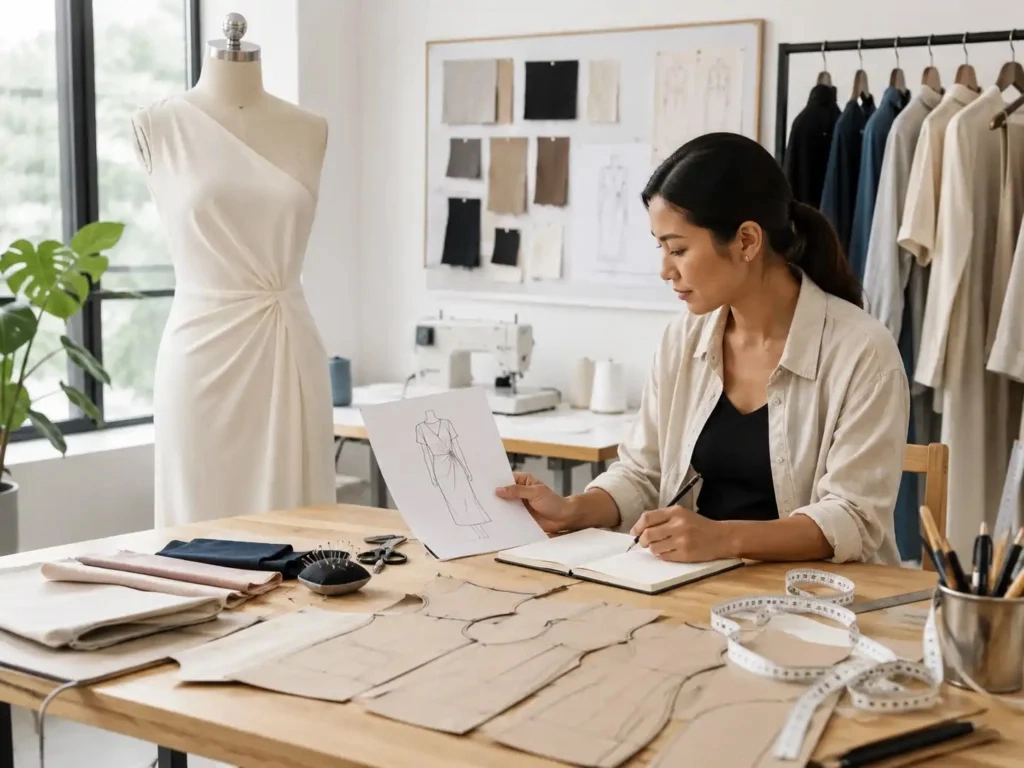
Record Corrections in a Way the Factory Can Use
Avoid comments such as:
“The body feels too loose.”
Give the factory a measurable correction instead:
“Reduce the finished waist measurement by 1 cm.”
The same applies to construction.
Instead of:
“The zipper does not look right.”
Specify where the problem occurs and what needs to change.
Clear measurements also give the pattern maker and production team the same correction to work from.
What If the Original Fabric Is No Longer Available?
Fabric replacement is another common source of delay during a manufacturer transfer.
You may find a fabric that looks similar in a supplier’s swatch book, but appearance alone does not tell you whether it will work for the dress.
Compare the replacement fabric for:
- weight
- width
- stretch
- recovery
- drape
- hand feel
- shrinkage
- surface finish
A fabric that looks similar on the swatch can still change the fit, drape, and finished measurements of the dress.
For example, a fitted dress made from a fabric with less stretch may require a different pattern even if the fiber composition looks similar on paper.
If the original material cannot be sourced, approve the replacement fabric before finalizing the production sample.
This gives the pattern maker a chance to adjust the pattern before bulk cutting.
Using the PP Sample Before Bulk Cutting
When a dress is moved to another factory, the PP sample gives both sides a final production reference before bulk cutting. By the PP stage, the major fitting and construction changes should already be settled.
Check the:
- final measurements
- fabric
- color
- construction
- trims
- labels
- finishing
- overall fit
If you make changes after the PP sample, update the production information at the same time.
Do not leave the latest correction only in a message or conversation.
Everyone involved in production should be working from the same final version.
Once bulk fabric is cut, a measurement change is no longer a simple sample adjustment.
Rebuilding the Production Schedule
Moving the style to another factory usually means creating a new production schedule. The new schedule should include pattern review, sampling, fitting, PP approval, and the remaining bulk production stages.
For example:
Existing sample review → pattern review → fabric confirmation → sample → fitting → PP sample → approval → bulk cutting → sewing → finishing → final inspection → packing
The timeline depends mainly on the style, how complete the production information is, and whether the required materials are ready.
Sampling is generally faster when the pattern is already available and the fabric has been confirmed. If the pattern has to be rebuilt, the fabric needs replacing, or special trims still have to be sourced, allow additional time.
Give the factory the actual shipment requirement before sampling starts.
If the launch date is fixed, tell the factory before sampling starts. The remaining production time is much easier to plan when the shipment requirement is known from the beginning.
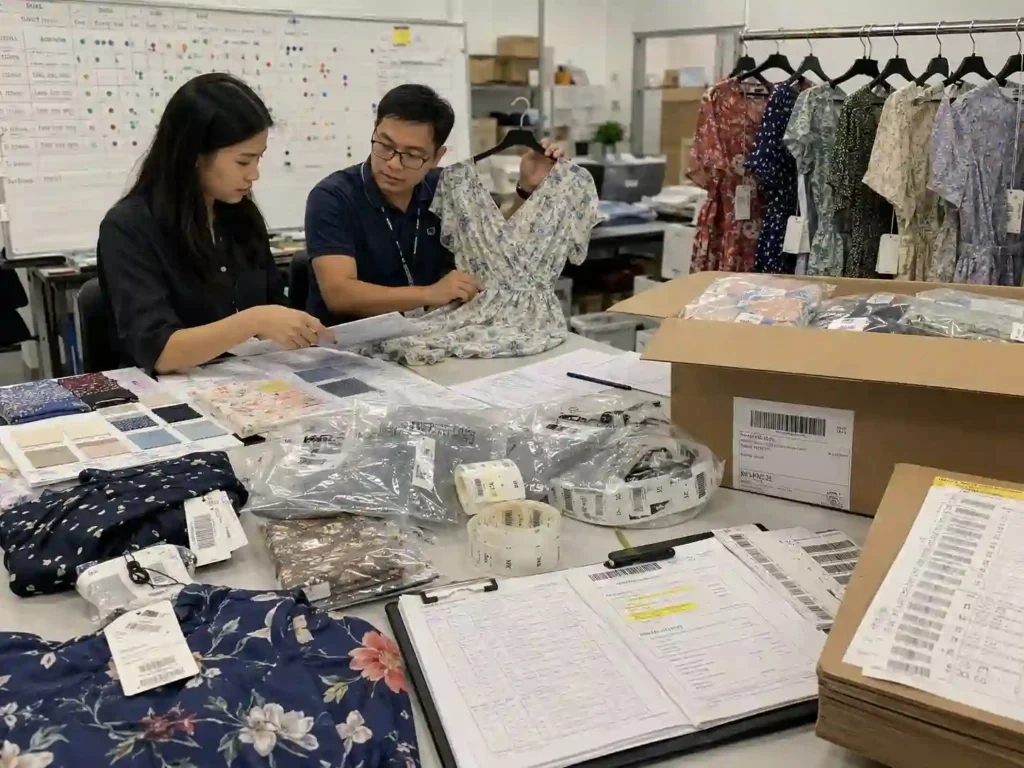
Final Checks Before Bulk Cutting
Before bulk cutting, all production information should be aligned to one final version.
Check that the following are aligned:
- approved PP sample
- final measurement chart
- production pattern
- fabric and color
- trims
- labels
- order quantity
- size breakdown
- packaging
- shipment requirement
The physical sample and written specifications should describe the same garment.
This matters even more when the designer, buyer, and production contact are updating different parts of the same order.
For example, the designer may approve a fit change while the buyer updates the quantity and the production contact confirms a new fabric. If those changes are spread across different emails or messages, confirm which version the factory should follow.
All changes should be settled before bulk cutting so the production team is working from one final version.
What If the Previous Manufacturer Will Not Give You the Pattern?
Even without the original pattern, the style can still be transferred if you have an approved physical sample. The new factory can use the garment to develop a new pattern.
The process may take longer because the pattern maker has to reconstruct the measurements and construction instead of checking an existing file.
If the pattern is unavailable, the following information can still help the pattern maker:
- approved sample
- measurement chart
- tech pack
- garment photos
- fabric information
- fitting comments
- construction details
- trim specifications
Rebuilding the pattern from a physical garment can also mean more fitting rounds before the sample is approved.
Allow for this development time when setting the production deadline.
How Long Does It Take to Transfer a Dress to a New Manufacturer?
The information available at the start of a transfer varies from order to order. One brand may have the approved sample, pattern, fabric, and full specifications ready. Another may only have a finished garment and target quantity.
The main timing factors are:
- style complexity
- pattern availability
- fabric availability
- number of fitting changes
- trim sourcing
- order quantity
- sample approval speed
For straightforward styles, sample development can take 3–7 days. Bulk production is commonly around 25–30 days after sample or PP sample approval and fabric confirmation, but the actual schedule depends on the style, order volume, material availability, and production requirements.
Confirm the full timeline before transferring the order, especially when the shipment date is fixed.
A Simple Production Transfer Checklist
Before moving your dress order, check these points.
Before development
- Latest approved sample
- Tech pack
- Measurement chart
- Pattern files, if available
- Fabric information
- Trim information
- Previous fitting comments
- Previous QC issues
- Order quantity
- Target shipment date
During sampling
- Review the existing garment
- Confirm fabric availability
- Review the pattern
- Develop the sample
- Measure the new sample
- Record fitting corrections
- Confirm construction details
Before bulk production
- Approve the PP sample
- Confirm bulk fabric
- Confirm final pattern
- Confirm measurements
- Confirm quantity and size ratio
- Confirm labels and packaging
- Confirm production schedule
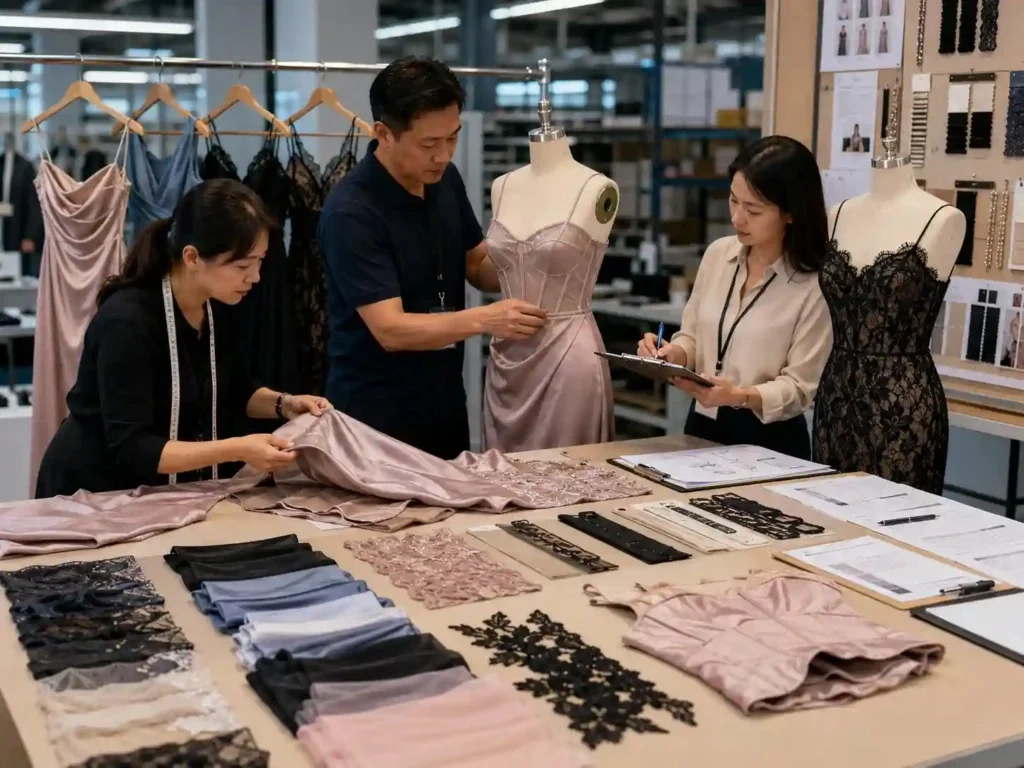
What Commonly Goes Wrong When Brands Change Dress Manufacturers?
The old sample is sent without the production history
The new factory can see the finished garment, but not why earlier changes were made.
A replacement fabric is selected only by appearance
The new material looks similar, but its weight, stretch, or drape changes the fit.
The original delivery date is treated as fixed
The new manufacturer has not yet completed pattern review or sampling, but the bulk deadline remains unchanged.
Sample comments are too general
“Make it tighter” or “improve the fit” can be interpreted differently by different people.
The latest correction is not added to the production reference
A change may be agreed during fitting but never make it into the final measurement chart or pattern.
Bulk cutting starts before the production version is settled
Once fabric is cut, correcting a pattern or measurement becomes much more costly.
Frequently Asked Questions
Can I change dress manufacturers if my current order is already in production?
Yes, but first check how much of the order has already been completed. If the previous factory has purchased fabric, cut panels, or started sewing, moving the unfinished balance may be more complicated than transferring an order that has not entered production. Before switching, confirm what quantity, fabric, and cut panels are still with the previous factory.
Is changing manufacturers a good time to change the design too?
You can make design changes at the same time, but this makes the transfer harder to manage. If possible, transfer the existing approved style first and handle major design changes in a separate development round. This makes it easier to identify the source of any fitting or construction problem.
What should I do if my brand has a fixed launch date?
Tell the new manufacturer the actual launch or shipment requirement before sampling starts. Then ask for a realistic development and production schedule. If the schedule is already tight, discuss which styles must ship first and whether partial shipment is possible. Sampling and PP approval still need enough time to confirm the production version.
Can the new factory use my old manufacturer’s sample as the only reference?
It can be used as the main physical reference, but it is better to provide supporting information whenever possible. A finished garment does not show every measurement, pattern detail, fabric specification, or construction decision. Supporting information also means the new factory has less pattern and construction detail to reconstruct.
What happens if the first sample from the new factory is close but not identical?
Small differences are common during a production transfer. Measure the differences and identify whether they come from the pattern, fabric, construction, or finishing. The next sample can then be checked against those specific corrections rather than only against the overall appearance.
Conclusion
Changing dress manufacturers does not necessarily mean starting from zero. Your approved sample, measurements, pattern, fabric information, fitting history, and production requirements can give the new factory a much clearer starting point. Before bulk cutting, make sure the new factory has the latest approved version and enough time for sampling and PP approval. That gives the production team one clear reference and allows fitting or construction issues to be corrected before they reach bulk production.
Related Dress Manufacturing Services
If your project involves a specific dress fabric or construction, you can also review our related manufacturing pages:
- Dress Manufacturer
- Clothing Manufacturer
- OEM Clothing Manufacturer
- Private Label Clothing Manufacturer
- Wrap Dress Manufacturer
Get a Quote for an Existing Dress Style
If you are transferring an existing dress style to a new manufacturer, send us the latest approved sample, tech pack, product photos, or measurement chart together with your target quantity.
As a dress manufacturer, we can review the construction, fabric, trims, measurements, and current production status with you before confirming the sampling requirements.

