

When you develop a midi skirt collection, the challenge is not simply getting a sample made. You need to know whether the approved design can be reproduced accurately across different sizes and bulk quantities. Fabric drape, waist fitting, hem balance, and construction all affect the result. As a clothing manufacturer, we pay close attention to these details during development because problems that go unnoticed in sampling can become costly once bulk production starts.
1. Reviewing Your Midi Skirt Design Before Sampling
Before pattern development starts, your manufacturer needs a clear understanding of the garment you want to produce. A reference photo can show the overall silhouette, but it cannot always explain how the waistband is constructed, how much volume the skirt has, or how the hem should fall.
If you have a tech pack, include the measurement chart, fabric composition, construction details, and reference images. If you are still developing the design, provide a sketch or existing garment sample with your main requirements.
For midi skirts, a few details deserve attention from the beginning:
- Waist and hip proportions: These determine how the skirt sits and how much ease is needed for movement.
- Skirt volume: A straight skirt, A-line skirt, and gathered midi skirt require different pattern shapes and fabric consumption.
- Waistband construction: A narrow waistband, wide waistband, or elasticated waist changes both the fit and sewing method.
- Slits and openings: Their position and length affect walking ease and the overall appearance.
- Lining: The lining needs to work with the outer fabric without pulling, twisting, or showing below the hem.
Consider a fitted midi skirt with a back slit. If the slit is too short, walking becomes uncomfortable. If it is too long, the garment may lose the intended appearance. These details should be discussed before the first pattern is made rather than corrected after bulk production.
2. Choosing Fabric That Works for Your Skirt Design
Fabric selection has a direct effect on how a midi skirt hangs, moves, and holds its shape. A material that looks attractive in a swatch may behave differently when it is cut into a full skirt panel.
For example, satin is often selected for fluid midi skirts, but its smooth surface makes cutting and sewing more demanding. Chiffon may need a lining to provide adequate coverage. Cotton twill holds a more defined shape, while jersey requires attention to stretch and recovery around the waist and hips.
You should review several properties before confirming your material:
Fabric weight and drape
A lightweight fabric can create a soft, flowing silhouette, but it may not provide enough structure for a skirt with defined pleats. A heavier fabric gives more body but can make a gathered skirt look bulky around the waist.
Shrinkage and dimensional stability
Fabric shrinkage can change the finished skirt length and waist measurement. Pre-production testing helps identify whether the material needs pre-shrinking or other preparation before cutting.
Stretch and recovery
If you are using jersey or another stretch fabric, check how well it returns to its original shape. Poor recovery can cause the waistband or hip area to become loose after wear.
Color and surface consistency
Check for shade differences, weaving defects, stains, and other visible issues before the fabric enters bulk cutting.
One detail worth discussing is fabric relaxation. Some materials change slightly after being unrolled and allowed to rest. Bias-cut fabric is particularly sensitive because the panels can drop after cutting. For these styles, the hem may need to settle before final hemming. Otherwise, a skirt that looks level on the cutting table may hang unevenly after assembly.

3. Pattern Development and First Sample Making
Once the fabric and design details are confirmed, the pattern team develops the initial pattern.
For a midi skirt, pattern accuracy affects more than the waist measurement. It determines how the garment follows the hips, where the side seams sit, how much volume appears at the hem, and whether the skirt hangs evenly.
The first sample gives you a chance to assess these details on an actual garment.
When reviewing it, pay attention to:
- Whether the waistband sits at the intended position
- Whether the hip area feels too tight or has excessive ease
- Whether the front and back lengths look balanced
- Whether the side seams hang straight
- Whether the skirt opens comfortably when walking
- Whether the lining follows the outer fabric correctly
A common issue with fitted midi skirts is that the garment looks fine when laid flat but pulls across the hips when worn. This can change the position of the side seams and make the hem appear uneven.
Pleated styles have different challenges. The pleats need to fall in the intended direction and maintain consistent spacing. If the waist area is too bulky, the finished skirt may not sit as smoothly as the original design.
During development, we look at the garment as a whole rather than correcting individual measurements without considering their effect on the silhouette. A change to the hip measurement, for example, may also affect the side seam and hem balance.
4. Fit Adjustments and PP Sample Approval
After receiving the first sample, you should provide specific fitting comments. General instructions such as “make it looser” or “shorten the skirt slightly” leave room for different interpretations.
A better approach is to identify the measurement point and the amount of adjustment required.
For example:
- Reduce the waist by 1 cm.
- Add 1.5 cm to the hip circumference.
- Shorten the skirt by 2 cm from the side seam.
- Move the back slit opening down by 1 cm.
You should also check the garment while standing, sitting, and walking. This is particularly useful for fitted skirts, bias-cut designs, and styles with slits.
Once the corrections are completed, the updated sample should be checked against the final specifications. The approved PP sample becomes the reference for bulk production.
Before approval, make sure the following are settled:
- Final measurements and size chart
- Fabric and color
- Waistband and closure details
- Lining and interfacing
- Stitching and hem construction
- Labels, trims, and finishing requirements
If you change the fabric or construction after approval, the factory may need to reassess the pattern and sample. It is better to settle these decisions before bulk cutting begins.
5. Fabric Spreading and Bulk Cutting
Once the PP sample and production materials are confirmed, the factory prepares the cutting plan.
Fabric spreading and cutting require more attention than simply following the pattern outline. The cutting team needs to consider fabric width, grain direction, size combinations, print matching, and the number of layers that can be handled accurately.
Midi skirts with different structures create different cutting requirements.
For an A-line skirt, the marker layout needs to use the fabric efficiently without changing the grain direction. For a bias-cut skirt, pattern placement needs careful control because the fabric stretches and hangs differently along the bias. With checked or striped fabrics, the panels may need to be positioned to keep the pattern aligned at the seams.
Pleated skirts also require sufficient fabric allowance to create the intended pleat depth. Reducing the fabric consumption without reviewing the pattern can change the volume of the finished garment.
Before cutting, the factory should confirm that the fabric batch, color, pattern pieces, and size breakdown match the approved production documents.
A cutting mistake can affect dozens or hundreds of garments at once, so this is one stage where checking the setup before work begins saves considerable rework later.
6. Sewing and Construction Details
The sewing sequence varies with the skirt design. A simple straight midi skirt may have relatively few operations, while a pleated or fully lined style involves more assembly and pressing work.
Some construction points have a noticeable effect on the finished garment.
Waistband attachment
The waistband needs to sit evenly without twisting or stretching. Interfacing selection and seam allowance influence how well it keeps its shape after sewing and pressing.
Zipper installation
An invisible zipper should follow the seam line smoothly. If the fabric shifts during installation, the zipper area may develop waves or visible puckering. Satin and lightweight fabrics need particularly careful handling.
Lining attachment
The lining should allow the wearer to move comfortably without pulling against the outer skirt. Its length must also be controlled so that it does not extend below the outer hem.
Pleat construction
Pleat positions need to match the approved pattern and sample. Inconsistent folding or pressing can make the waist look uneven and change the skirt’s volume.
Hem finishing
The hem method should suit the fabric. A lightweight chiffon skirt may need a narrow rolled hem, while a structured cotton midi skirt can use a different finishing method. The wrong hem treatment can make the lower edge look too heavy or cause unwanted waviness.
During sewing, operators should follow the approved construction details. If a particular fabric causes problems with the original sewing method, the production team should review the adjustment before applying it throughout the order.
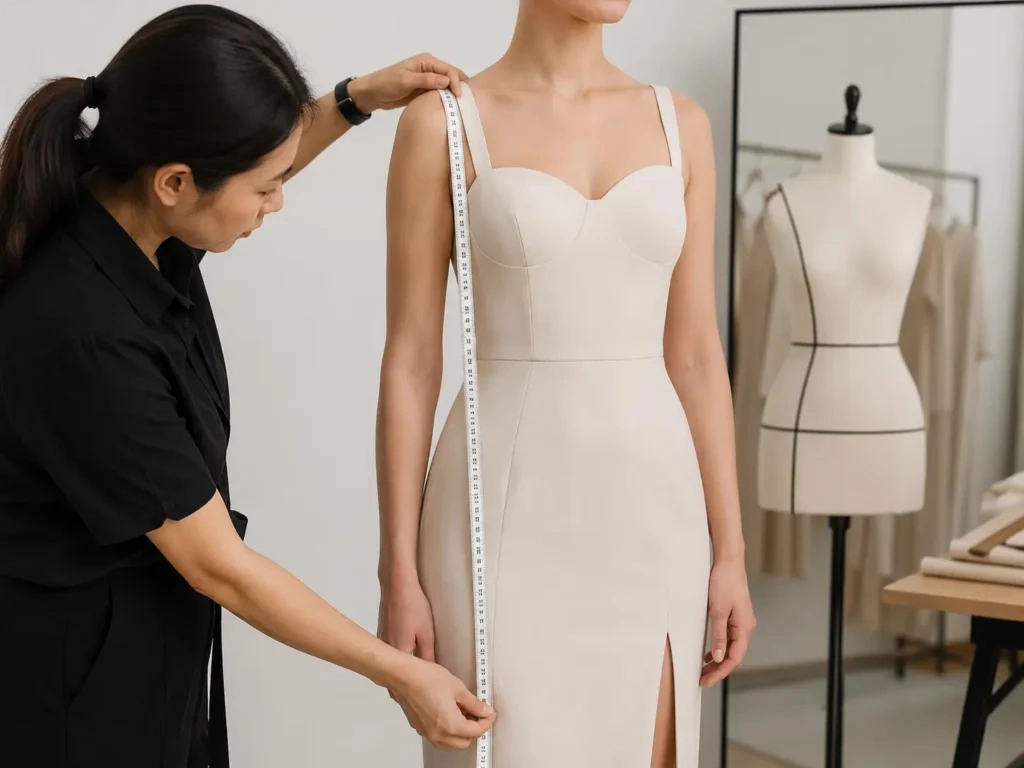
7. In-Line Inspection and Production Corrections
Quality control should not be left until the garments are fully assembled. By then, a measurement or construction problem may already have affected a large part of the order.
During production, inspectors should check the garments at suitable stages rather than relying only on a final inspection.
For midi skirts, the main checkpoints include waist measurements, hip measurements, skirt length, side seam alignment, zipper installation, stitching, pleat positioning, and hem finishing.
It is also worth checking more than one size. A sample size may fit correctly while a larger size shows problems around the hip or waistband because of an incorrect grading adjustment.
When an issue appears, the team needs to identify where it started. For example, an uneven hem may come from inaccurate cutting, fabric relaxation, or inconsistent sewing tension. Simply correcting the finished edge without finding the cause may allow the same problem to continue in the remaining pieces.
For your order, early inspection reduces the amount of rework and gives the production team a chance to correct problems while the relevant operation is still underway.
8. Final Inspection and Order Preparation
After sewing and finishing, the completed midi skirts go through final inspection before packing.
The inspection should compare the finished garments with the approved sample and production specifications. This includes checking measurements, appearance, stitching, closures, labels, and overall finishing.
If you are producing for your own brand, labeling and packing requirements should already be confirmed by this stage.
These may include:
- Woven brand labels
- Size and care labels
- Custom hangtags
- Barcode or SKU stickers
- Individual polybags
- Carton labels and packing quantities
Packaging also needs to suit the fabric. Satin and other fabrics that show pressure marks easily should be folded and protected carefully. Incorrect folding or tight packing can leave creases that are difficult to remove before retail display.
Before shipment, the factory should confirm that the inspected quantities, size breakdown, and packing details match your order instructions.
What Do You Need to Prepare for a Midi Skirt Manufacturing Quote?
You do not need a complete production-ready tech pack to start a conversation with a manufacturer. However, the more information you provide, the easier it is to evaluate the design and estimate the work involved.
Try to prepare:
- A sketch, product photo, or reference sample
- Preferred fabric composition and material references
- Estimated order quantity per style and color
- Required size range and measurement chart, if available
- Details of lining, zippers, waistbands, pleats, and slits
- Custom label, hangtag, and packaging requirements
- Your target delivery date
If you are still deciding on fabric or construction, make that clear in your inquiry. The factory can then identify which details need to be confirmed before sampling and quotation.
FAQ
1. What is the minimum order quantity for custom midi skirts?
MOQ is usually calculated by style and color, but the exact requirement depends on the factory and material. For many standard custom styles, 50–100 pieces per style and color is a common starting range. Special fabric sourcing or complicated construction may require a different quantity.
2. Why can two midi skirt designs with similar appearances have different prices?
The appearance alone does not determine production cost. Fabric consumption, pattern complexity, lining, pleats, closures, and sewing operations all affect the quotation. A simple straight skirt and a bias-cut skirt may look similarly minimal but require quite different production work.
3. Can I develop a midi skirt collection with several designs in one order?
Yes. You can submit several styles for development, but each design needs its own construction review and sample approval. Shared fabrics or trims may help simplify sourcing, while differences in pattern structure and sewing operations still need to be considered when planning the order.
4. How can I keep the same fit when placing a repeat order?
Keep the approved sample, measurement chart, graded patterns, fabric details, and construction specifications from the original order. Before repeating production, confirm that the fabric and trims are still available. Even a similar-looking replacement fabric can change the drape and fit.
5. What happens if my target delivery date is earlier than the factory’s normal lead time?
Share your deadline when requesting a quotation rather than after approving the sample. The factory needs to check fabric availability, sampling work, production capacity, and finishing requirements. A shorter schedule may be possible for simpler styles with ready materials, but it should be confirmed before the order is accepted.
Conclusion
A midi skirt may have a simple appearance, but its fit and finish rely on accurate pattern work, suitable fabric, and controlled construction. Sorting out these details before bulk production helps you avoid unnecessary revisions and inconsistent orders. At Xiuyu Apparel, we work with fashion brands and private label buyers as an experienced clothing manufacturer, supporting custom garment development from initial sampling to bulk production.

