

When you develop an A-line dress collection, the design is only the first step. The bigger question is whether the style can maintain the same fit and appearance when it moves into bulk manufacturing. Before production starts, you need to understand how fabric selection, pattern development, sampling, and manufacturing decisions affect the final product. As a clothing manufacturer, we review production details with brands, develop samples, and adjust construction before moving into bulk production.
From Design Concept to Production: How A-Line Dresses Are Developed
Although the A-line silhouette looks straightforward, production still requires careful decisions on construction, fabric behavior, and fitting.
Before development begins, the basic construction details should be confirmed, including:
- silhouette and overall shape
- waist position
- skirt volume
- neckline and sleeve details
- lining structure
- closure method
- fabric characteristics
A design that looks suitable on paper may require adjustments after considering fabric behavior and production limitations. For example, a soft chiffon A-line dress and a structured satin A-line dress may follow the same silhouette, but they require different handling during pattern making and sewing.
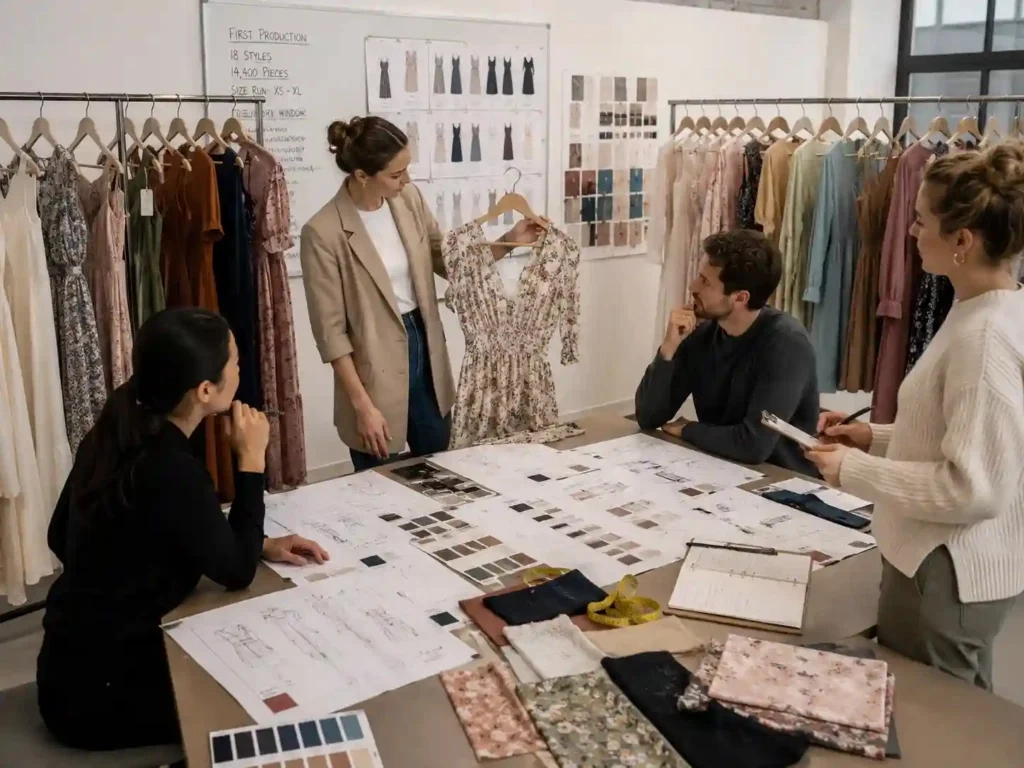
Step 1: Reviewing Design Details and Production Requirements
Before sampling starts, the factory needs to understand the design details, construction requirements, and expected production result. Working with an experienced dress manufacturer allows brands to review production feasibility before moving into sample development.
When you send a design to a manufacturer, the level of detail you provide will affect how efficiently the factory can develop the first sample. A complete production package may include:
- technical drawings
- measurement specifications
- fabric requirements
- construction details
- reference images or samples
- branding requirements
If some details are missing, the factory may need additional communication before creating the first sample. This is common when brands develop new styles, especially when the design includes unusual cuts, special fabrics, or complicated details.
A clear starting point helps reduce unnecessary sample adjustments later.
Step 2: Fabric Selection and Preparation
A fabric that looks suitable during design review may behave differently after cutting and sewing, which is why fabric testing and confirmation are completed before bulk production.
During development, you need to consider factors such as:
Chiffon A-Line Dresses
Chiffon gives the dress a softer drape, especially for layered skirts and flowing silhouettes, but it requires careful handling during cutting, layering, and sewing.
Satin A-Line Dresses
Satin provides a smooth surface and elegant appearance, but it can easily show pressing marks, seam problems, or tension issues if handled incorrectly.
Stretch Fabrics
Stretch materials require attention to recovery, fitting balance, and size consistency between different production batches.
Before bulk cutting begins, fabric inspection and preparation help identify potential problems early.
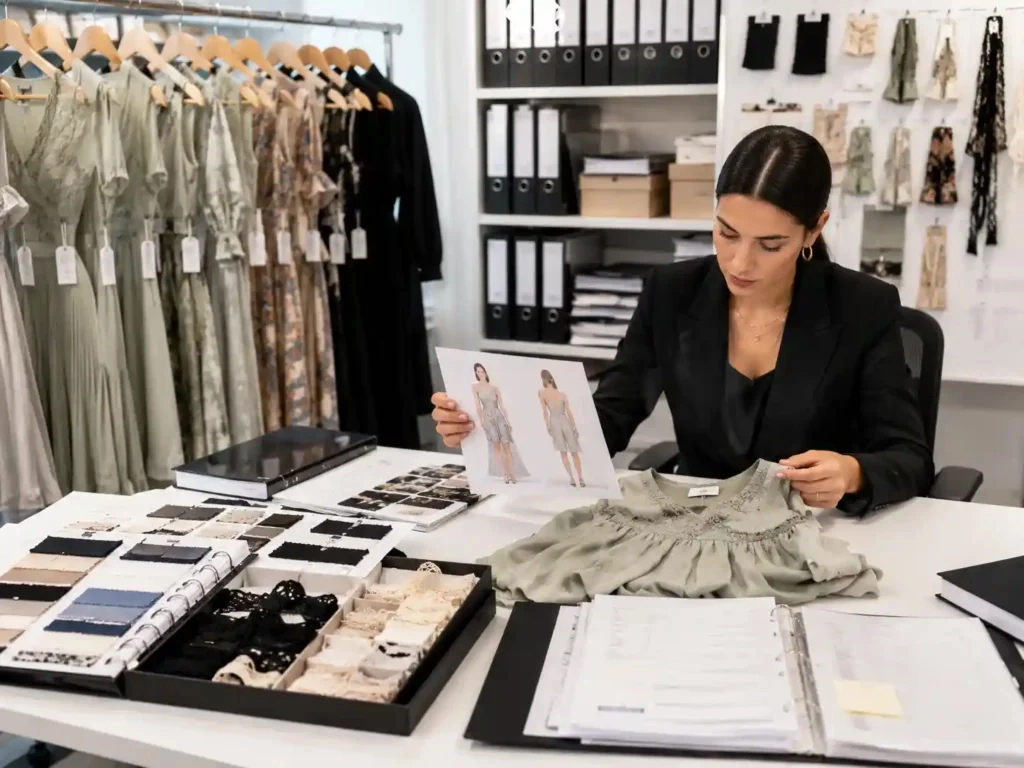
Step 3: Pattern Making and Sample Development
Pattern development is the stage where the original design is adjusted into a structure that can be sampled and produced.
The pattern maker needs to translate your design into production details, including:
- garment measurements
- panel shapes
- seam positions
- fitting balance
- construction methods
After the first pattern is completed, a sample is produced for evaluation.
During sample review, you usually check:
- whether the fit matches your target customer
- whether the skirt shape falls correctly
- whether the fabric works with the design
- whether construction details meet expectations
For many brands, the first sample is not the final version. In many cases, the first sample reveals details that are difficult to identify from drawings alone. Changes are often made after the first fitting to correct measurements, improve appearance, or make the style easier to produce consistently.
Step 4: Sample Approval Before Bulk Production
Without a clear reference sample, differences can appear between the approved style and bulk production. This is why sample approval is an important checkpoint before cutting starts.
Before approval, you should confirm:
- measurements
- fabric and color
- trims and accessories
- stitching quality
- labels and packaging details
- overall garment appearance
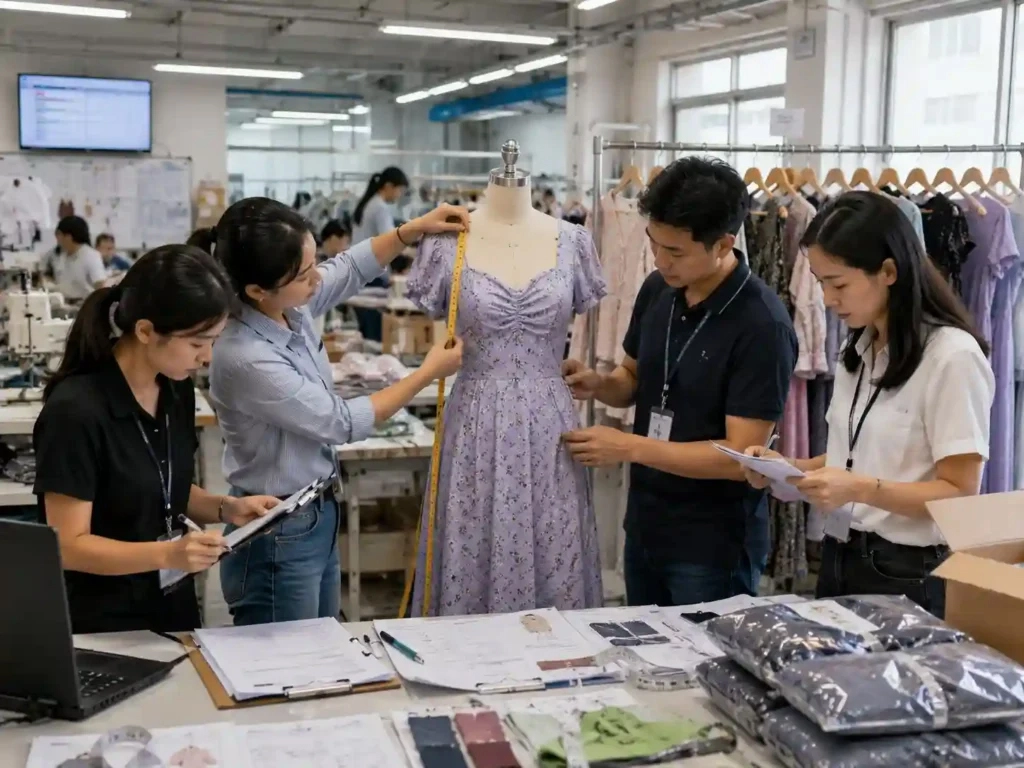
Step 5: Bulk Production of A-Line Dresses
After sample approval and fabric confirmation, bulk production begins.
The production floor usually follows several key steps:
Fabric Inspection
Before cutting, fabric is checked for defects, color variation, and possible issues that may affect production.
Cutting
Approved patterns are used to cut fabric panels. Accurate cutting is important because small differences in panel size can affect fitting consistency across the order quantity.
Sewing Assembly
During sewing, different garment sections are assembled, and operators check seam quality, construction details, and fitting consistency throughout production.
In-Line Quality Control
In-line checks allow the production team to correct sewing or construction issues before a large quantity of garments is completed.
Pressing and Finishing
Proper pressing improves garment shape and presentation before final inspection.
Final Inspection and Packing
Finished garments are checked against approved requirements before shipment preparation.
Common Production Issues When Manufacturing A-Line Dresses
Even simple silhouettes can create production challenges if important details are not controlled.
Uneven Skirt Shape
An inconsistent skirt flare may come from inaccurate pattern adjustments, cutting issues, or fabric handling problems. This issue is easier to correct during sampling than after bulk cutting begins.
Fabric Shrinkage After Production
Some fabrics require pre-shrinking or testing before bulk production because unexpected shrinkage can affect garment measurements after washing or finishing.
Incorrect Fabric Handling
Some fabrics require different handling methods during cutting and sewing. Incorrect handling can affect the final shape and appearance of the dress.
Seam Puckering
Lightweight or delicate fabrics require suitable sewing settings to avoid uneven seams or puckering.
Fit Differences Between Samples and Bulk
Without proper production control, bulk garments may vary from the approved sample. Clear specifications and production checks help maintain consistency.
How Long Does It Take to Manufacture A-Line Dresses?
Production time depends on the style details, material availability, order quantity, and sample approval process.
For many custom A-line dress projects:
- Sample development usually takes around 3–7 days
- Bulk production normally takes around 25–30 days after sample approval and fabric confirmation
Styles with embroidery, beading, special printing, or complicated construction may require additional development time.
For brands planning seasonal collections, confirming materials and production schedules early can help avoid delays.
What Should Brands Prepare Before Starting A-Line Dress Production?
Having these details ready helps the factory understand your expectations before development starts.
You should consider preparing:
- design drawings or reference samples
- expected order quantity
- target market
- fabric preferences
- size range
- customization requirements
- packaging requirements
Clear production information allows the manufacturer to evaluate feasibility earlier and provide more accurate suggestions during development.
FAQ
1. Can a manufacturer help improve my A-line dress design before sampling?
Yes. Many brands have a design concept but need production feedback before making samples. A manufacturer can check whether the design works for production, including fabric suitability, sewing methods, and possible issues that may appear during sampling. This feedback can help you adjust the style before investing in bulk production.
2. What information affects the manufacturing timeline of A-line dresses?
The production schedule is mainly influenced by material readiness, sample approval time, and whether the final specifications are confirmed before production. Changes after approval, especially related to fabric or construction, may require additional development time.
3. How can brands maintain consistent quality when ordering A-line dresses in bulk?
Consistent bulk quality requires control at each stage, especially fabric checking, cutting accuracy, sewing standards, and production inspections. Regular communication between the brand and manufacturer also helps identify problems before they affect the full order.
4. What should buyers consider when choosing fabrics for A-line dresses?
Buyers should consider how the fabric affects the silhouette, fitting, comfort, and production process. A fabric that looks good in a photo may behave differently during cutting, sewing, or wearing.
5. Is it possible to produce small quantities of custom A-line dresses?
Small quantity orders may be possible, but the available MOQ depends on the style construction, fabric requirements, and production arrangement. Complex designs may require higher quantities because of setup and material preparation.
Conclusion
Producing A-line dresses requires attention to details throughout development and manufacturing. Fabric selection, pattern adjustments, sample approval, and production control all influence the final quality. Understanding these stages helps you communicate clearly with your manufacturer and avoid unnecessary changes during production.
Related Dress Manufacturing Services
If you are developing a new dress and need support with fabric selection, internal construction, sampling, and bulk production, an experienced clothing manufacturer can help you deal with these decisions before they become production problems.
At Xiuyu Apparel, we work with fashion brands, startups, designers, and private label companies from sample development through bulk production.
Get a Clothing Manufacturing Quote Based on Your Design
If you already have a garment design, send us the product photo, tech pack, or reference sample together with your target quantity.
As a dress manufacturer, we can review the fabric, lining, construction, trims, workmanship, and finishing requirements before preparing a quotation based on the actual garment rather than a general price range.

