

Many fashion brands, designers, and buyers contact several dress manufacturers before starting production. However, the differences between manufacturers often become clearer once sampling starts, when issues such as fitting adjustments, fabric handling, or unclear production details begin affecting the project.
Prepare Your Product Details Before Contacting a Manufacturer
Before contacting a dress manufacturer, it helps to prepare basic information about your designs, materials, and order requirements. Without enough product information, it is difficult for a manufacturer to evaluate the production difficulty, material requirements, and expected cost accurately.
For a new dress collection, you may need to prepare:
- Design sketches or reference images
- Fabric preferences or material requirements
- Size range
- Estimated order quantity
- Target selling market
- Customization requirements
For example, a simple chiffon dress and a structured evening dress may look similar in a sketch, but the production process behind them can be completely different.
Clear information at the beginning helps the manufacturer understand your expectations and reduces unnecessary revisions during development.
Check the Manufacturer’s Experience With Similar Dress Styles
Many brands start supplier selection by comparing prices or locations first. However, production capability for the specific dress category is often more important.
You should check whether the manufacturer has worked with similar products, such as:
- Satin dresses with delicate fabric handling
- Chiffon dresses requiring proper drape
- Bodycon dresses with fitting requirements
- Formal dresses with structured construction
- Bridesmaid dresses in multiple colors and sizes
When a manufacturer understands the construction details of your dress, they can often identify possible issues before sampling or bulk production begins. For example, stretch fabrics require different fitting control compared with woven fabrics, while layered or embellished dresses require more attention during sewing and inspection.
When a manufacturer understands how your dress is constructed, they can often identify possible issues before sampling or bulk production begins.
Review How the Manufacturer Develops Samples
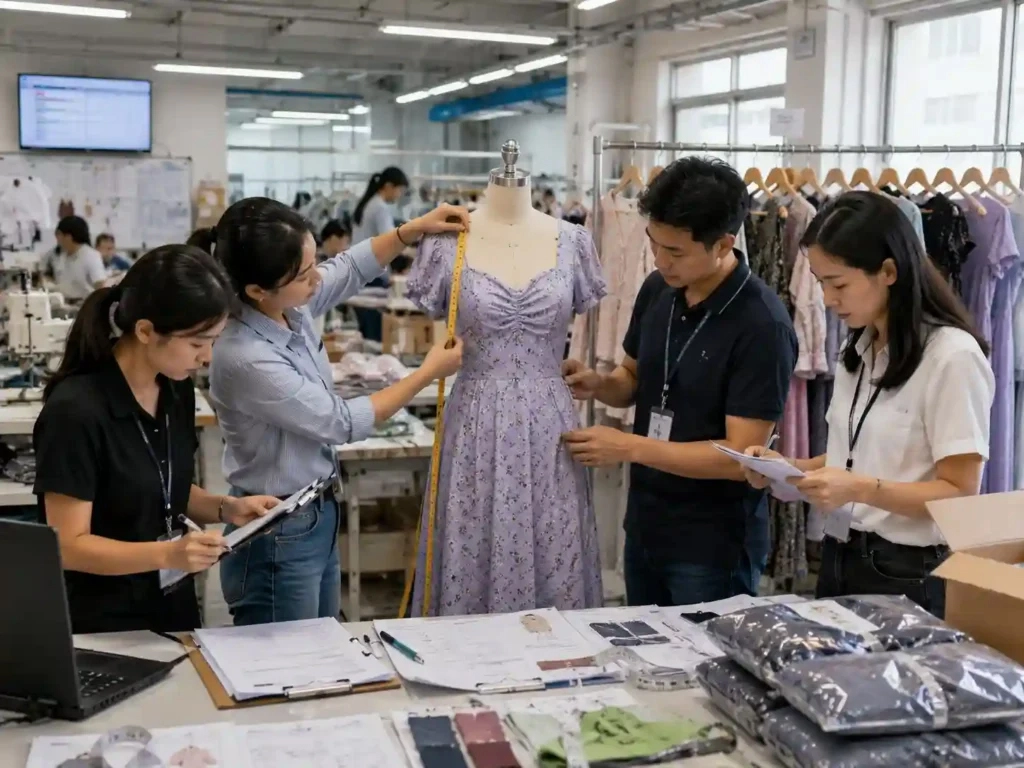
The sample stage is where many production details are confirmed. Sampling is not only about creating a smaller version of the final garment. It is the stage where fitting, construction, and production details are checked before moving into bulk manufacturing.
During sample development, you need to check:
- How patterns are created from your design
- How measurements are reviewed
- How fitting comments are handled
- How fabric behavior affects the final shape
- How revisions are managed before bulk production
For custom dresses, the first sample often requires adjustments. Necklines, waist positions, skirt volume, lining structure, and zipper placement may need to be refined before approval.
A proper sample process allows these details to be checked and adjusted before bulk cutting starts.
Consider MOQ Based on Your Business Stage
MOQ is an important factor, especially for startup brands and private label companies. A low MOQ may be useful for testing new products, but it should still match the manufacturer’s production process and your collection plan.
You need to consider:
- Whether you are testing a new collection
- How many styles you plan to launch
- Expected sales volume
- Required production timeline
A small brand may prefer smaller quantities for market testing, while retailers and wholesalers usually need larger runs to keep production costs more manageable.
When discussing MOQ, make sure you understand whether it applies per style, color, or size range. This detail can affect your actual production plan.
Evaluate the Manufacturer’s Production Process
Product photos and samples can show the final appearance, but they do not always show how the manufacturer controls production.
Before choosing a manufacturer, check how the factory manages:
- Fabric inspection before cutting
- Pattern checking
- Cutting accuracy
- Sewing line management
- In-line quality checks
- Final inspection before shipment
During bulk production, consistency becomes more important than making one perfect sample.
From factory experience, many issues happen because details confirmed during sampling are not properly followed during production. Clear production instructions and quality checks help reduce these problems.
Pay Attention to Communication During Product Development
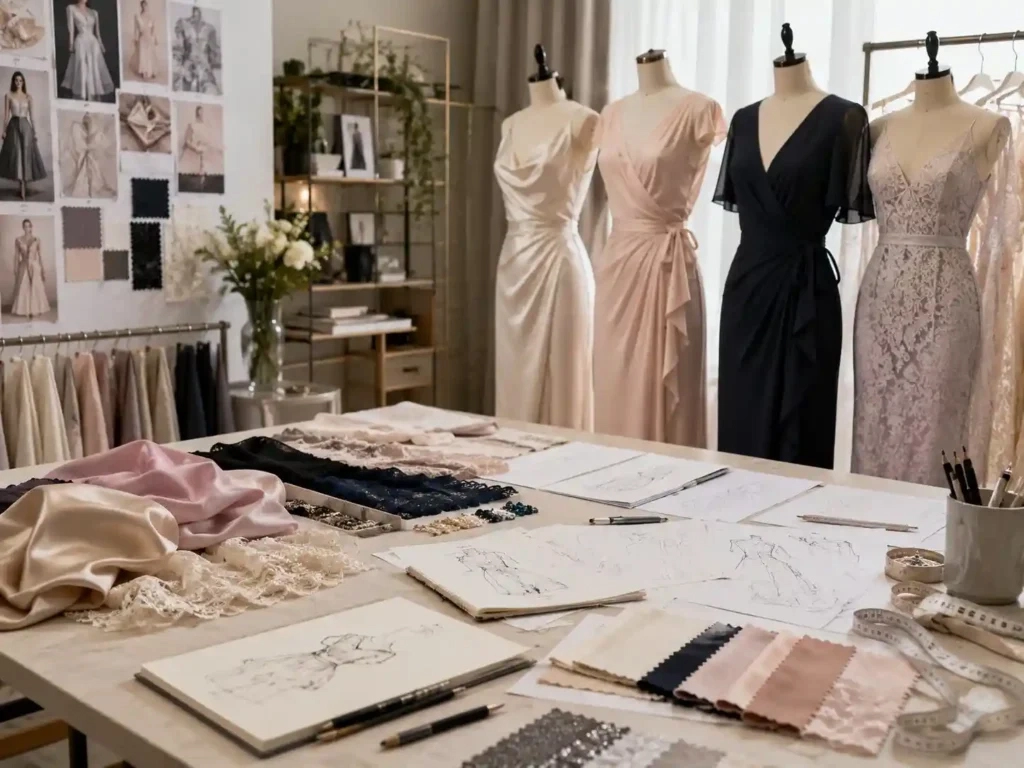
When buyers compare manufacturers, they often spend more time reviewing prices and samples than understanding how communication will work during development.
A dress project usually involves many details:
- Measurement changes
- Fabric substitutions
- Sample feedback
- Production updates
- Packaging requirements
You need a manufacturer that can understand your comments and respond with practical solutions.
For international brands, communication quality is especially important because you may not be able to visit the factory regularly. Regular updates during development help buyers understand progress and handle changes before they affect production.
Confirm Private Label and Customization Capability
For brands selling under their own label, production usually involves more than making the garment itself.
You may need support with:
- Custom labels
- Care labels
- Hangtags
- Packaging
- Special trims
- Printing or embroidery
Before starting cooperation, confirm which customization options the manufacturer can handle and what materials need to be provided by your team.
Clear confirmation at this stage helps avoid missing details when production starts.
Discuss Production Details Before Placing Your Order
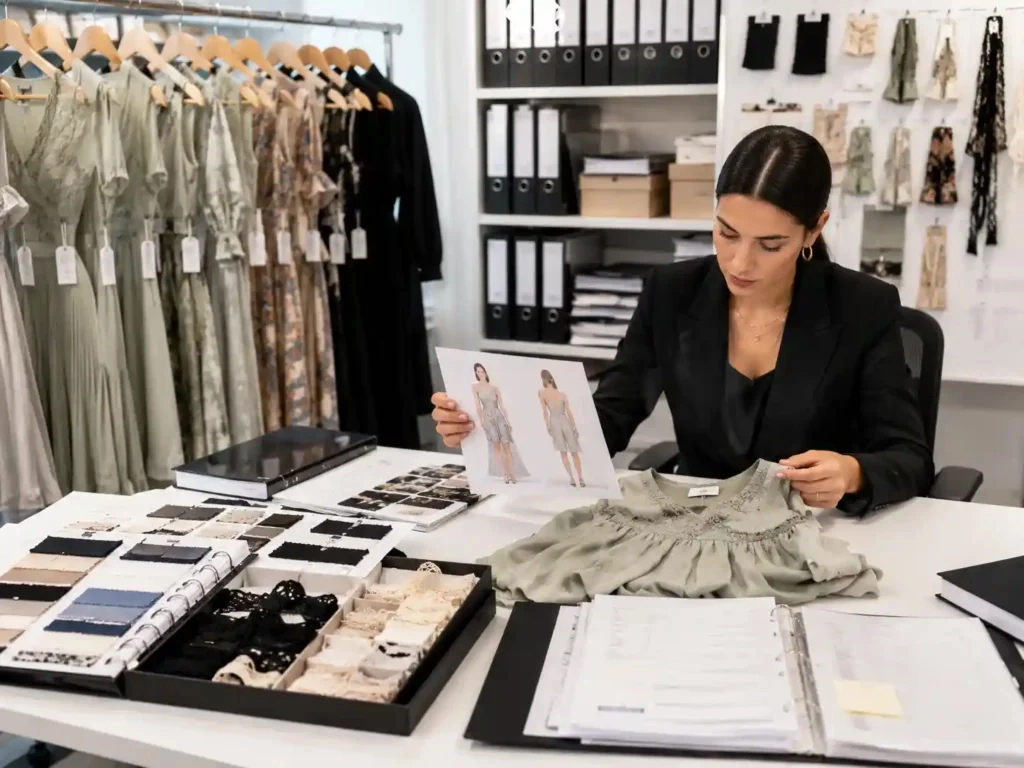
Before placing an order, you can learn a lot from the questions you ask and the answers you receive.
Useful questions include:
- What types of dresses do you mainly produce?
- How do you handle sample revisions?
- What information do you need before development?
- How do you control quality during bulk production?
- What is the expected timeline from sample approval to shipment?
The goal is not only to find a factory that can make dresses, but to find one that understands your production requirements.
FAQ
How many manufacturers should I contact before making a decision?
There is no fixed number. Many buyers review several factories first, then narrow down the list based on product experience, communication, MOQ, and production capability.
Should I choose a manufacturer with the lowest price?
A lower quotation may look attractive at the beginning, but extra sample revisions, material changes, or quality corrections can increase the final cost.
What should I check when reviewing a manufacturer’s previous work?
Finished product photos are useful, but they are not enough. Check whether previous projects include similar fabrics, construction methods, and production difficulty.
How can I reduce problems during the first production order?
Prepare complete design information, communicate expectations clearly, and review samples carefully before bulk production. Many first orders face problems because details about measurements, materials, or finishing are not fully confirmed before production starts.
Is visiting the factory necessary before cooperation?
A factory visit can help you understand production capability, but it is not always possible for international buyers. You can also request production photos, process information, and clear communication about how orders are managed.
Conclusion
Choosing a dress manufacturer is mainly about understanding how a factory works before production starts. Reviewing sample development, communication, production control, and quality management can help you avoid problems when moving from the first design to bulk orders. Understanding these factors before cooperation can help you avoid unnecessary production issues and make future collection development smoother.
Related Dress Manufacturing Services
If you are developing a new dress and need support with fabric selection, internal construction, sampling, and bulk production, an experienced clothing manufacturer can help you deal with these decisions before they become production problems.
At Xiuyu Apparel, we work with fashion brands, startups, designers, and private label companies from sample development through bulk production.
Get a Clothing Manufacturing Quote Based on Your Design
If you already have a garment design, send us the product photo, tech pack, or reference sample together with your target quantity.
As a dress manufacturer, we can review the fabric, lining, construction, trims, workmanship, and finishing requirements before preparing a quotation based on the actual garment rather than a general price range.

