

When developing dresses with adjustable straps, most brands first focus on fabric selection, silhouette, and overall design. However, the strap adjuster is also a small production detail that can affect fitting, comfort, and consistency during bulk manufacturing.
Why Strap Adjuster Selection Matters in Dress Manufacturing
In garment production, strap hardware problems often appear during fitting or after bulk production starts.
For example, a lightweight chiffon dress usually needs a different solution from a satin slip dress. The fabric surface, strap thickness, and overall garment weight all affect how the hardware performs.
When developing a new collection, brands usually need to consider more than appearance or unit cost when selecting strap adjusters. Working with an experienced dress manufacturer can help brands evaluate whether the hardware matches the dress construction, fabric behavior, and the target price range of the collection.
Metal Strap Adjusters for Dresses
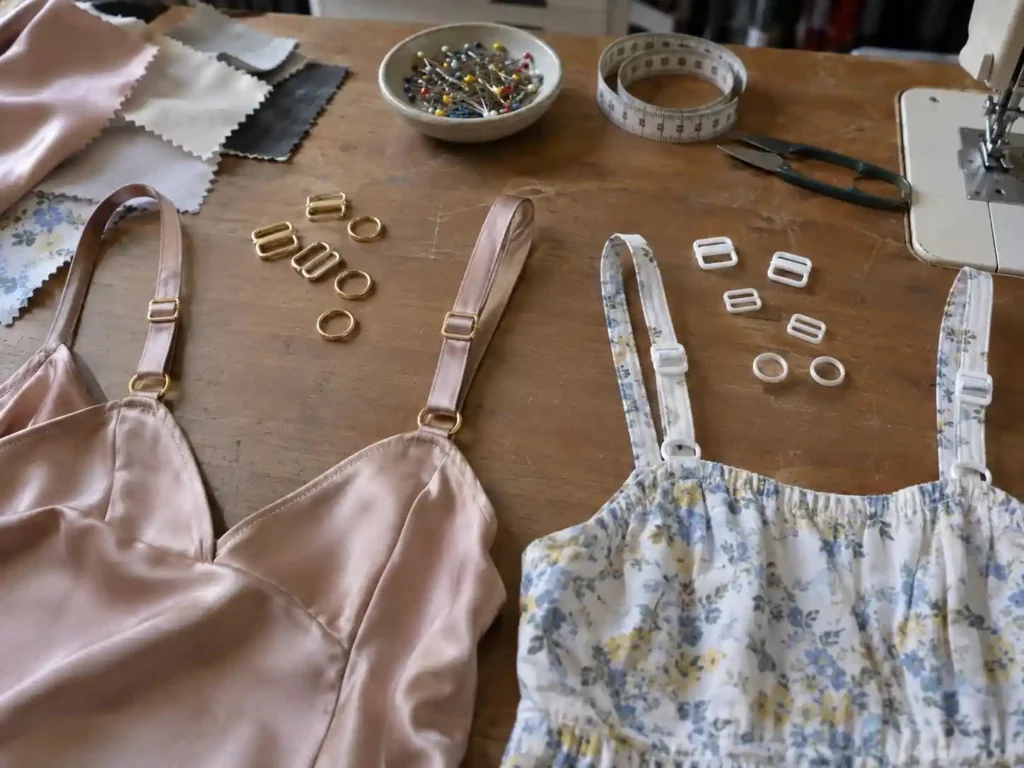
Metal strap adjusters are commonly used for dresses where the hardware itself becomes part of the visible design, such as satin slip dresses, evening dresses, and bridal styles.
Why Brands Choose Metal Strap Adjusters
One reason brands choose metal hardware is the cleaner and more finished look it creates. A well-matched metal slider can make a simple strap look more elevated, especially on minimalist dresses where small details are easy to notice.
Compared with lightweight plastic options, metal adjusters generally provide stronger support and keep their shape better after repeated adjustment. This can be useful for dresses with longer straps, heavier fabrics, or designs that require more stable strap positioning.
However, the final performance of metal hardware also depends on the finishing quality and whether it matches the garment construction.
What Should You Check Before Using Metal Hardware?
Before confirming metal strap adjusters for bulk production, you should check several points:
Hardware Edge
The edge of the adjuster needs to be smooth. During sampling, we usually check whether the hardware leaves marks on satin, catches chiffon, or creates pressure points around the strap area.
Hardware Weight
For lightweight fabrics such as chiffon or mesh, heavier metal components may pull the strap area and change the original shape of the dress.
In sample fitting, we also check whether the strap area keeps the original balance after adding the hardware.
Color and Finish
Gold, silver, and other finishes should match the overall design. Color differences between samples and bulk production can affect the final presentation.
Strap Compatibility
The adjuster size should match the strap width. A wrong size can cause slipping or make adjustment difficult.
Plastic Strap Adjusters for Dresses
Plastic strap adjusters are commonly used for lightweight dresses and larger commercial collections. They help reduce unnecessary weight and are often a practical option for brands managing larger production quantities.
Why Brands Choose Plastic Strap Adjusters
The biggest advantage of plastic hardware is its lightweight construction. For dresses with thin straps or soft fabrics, reducing unnecessary weight can help maintain comfort and garment balance.
Plastic options are also suitable for designs where the hardware is intended to remain less noticeable.For larger collections, they may provide more flexibility when brands need to control production costs while maintaining acceptable performance.
However, plastic quality can vary between suppliers, so we recommend checking the strength, color, and fitting performance before bulk production.
What Should You Check Before Using Plastic Hardware?
When selecting plastic strap adjusters, you should focus on:
Material Strength
The adjuster needs enough strength to hold the strap securely without cracking or deforming during adjustment.
Color Consistency
For colored plastic hardware, you should confirm whether the color remains consistent between sample production and bulk orders.
Long-Term Performance
The component should maintain its function after repeated use, especially for dresses positioned as everyday or commercial products.
Metal vs Plastic Strap Adjusters: Which Option Is Better for Your Dress?
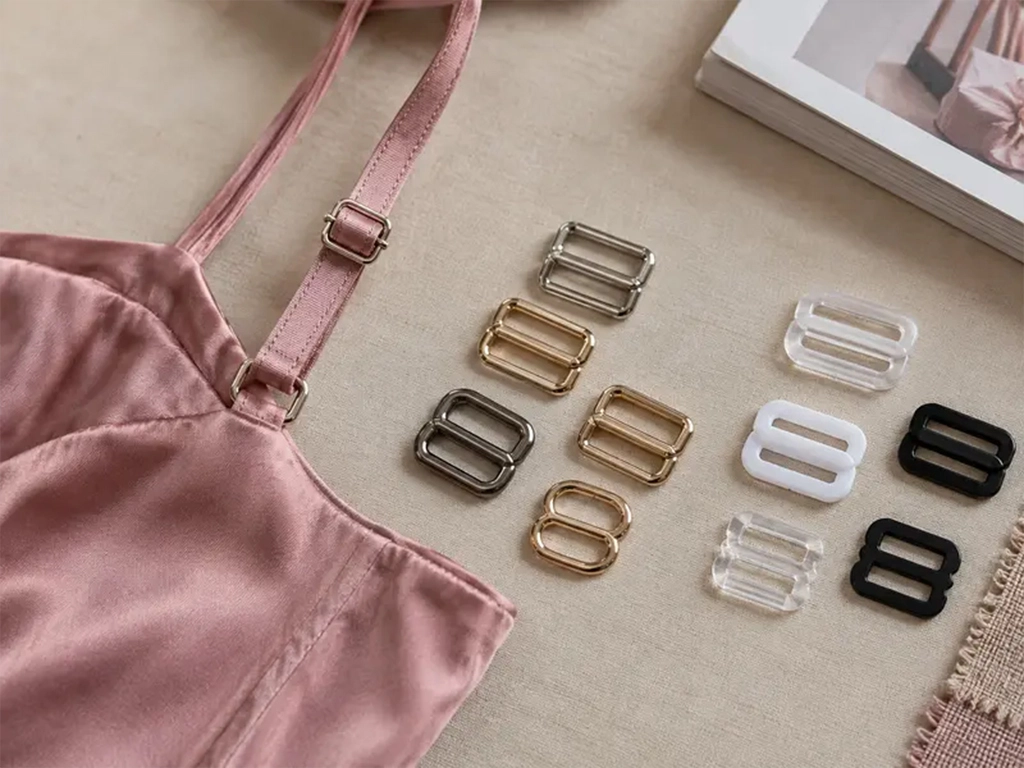
The suitable option is usually decided by the dress design, fabric weight, price level, and production requirements.
| Consideration | Metal Strap Adjuster | Plastic Strap Adjuster |
|---|---|---|
| Appearance | More visible design detail | Cleaner and simpler look |
| Weight | Heavier | Lightweight |
| Cost | Higher hardware cost | More cost-controlled |
| Durability | Strong and stable | Depends on material quality |
| Best match | Satin, evening, bridal dresses | Lightweight and commercial styles |
Instead of choosing the more expensive option, you should choose the option that supports the complete garment design.
How to Choose Strap Adjusters for Different Dress Types?
Satin Slip Dresses
For satin slip dresses, many brands prefer metal adjusters because the hardware becomes part of the visible design. This is especially important for brands developing satin collections with a slip dress manufacturer.
However, satin has a smooth surface that easily shows marks. The hardware edge and finishing should be checked during sampling to make sure it does not leave marks or affect the final satin appearance.
Chiffon Dresses
Chiffon dresses usually require lighter solutions because the fabric has a soft drape.
For many chiffon dresses, lightweight plastic adjusters can help maintain the soft drape without adding extra weight around the shoulder area.
Bridesmaid Dresses
For bridesmaid collections, the hardware choice is usually related to the price level and overall design direction.
If the collection is positioned toward a more elegant look, metal hardware may better support the design direction. If the goal is a larger commercial collection with controlled costs, a good-quality plastic option can also meet production requirements.
What Should Brands Confirm Before Bulk Production?
Before starting bulk production, you should confirm the strap hardware details during sample development.
The sample stage is the right time to check:
Strap Construction
Confirm the strap width, attachment method, and adjuster size together. These details affect whether the strap stays in the correct position during wear.
Fabric Performance
Test how the hardware interacts with the actual fabric. Different fabrics respond differently when the strap hardware adds weight or creates friction during wear.
Adjustment Function
The strap should adjust smoothly without slipping. A small fitting issue during sampling can become a larger quality problem in bulk production.
Production Consistency
The approved sample should clearly define the hardware type, size, material, color, and finishing requirements before bulk cutting begins. For OEM and private label projects, these details are usually recorded together with the tech pack by an experienced clothing manufacturer to keep the same standard during bulk production.
Common Strap Adjuster Problems in Dress Production
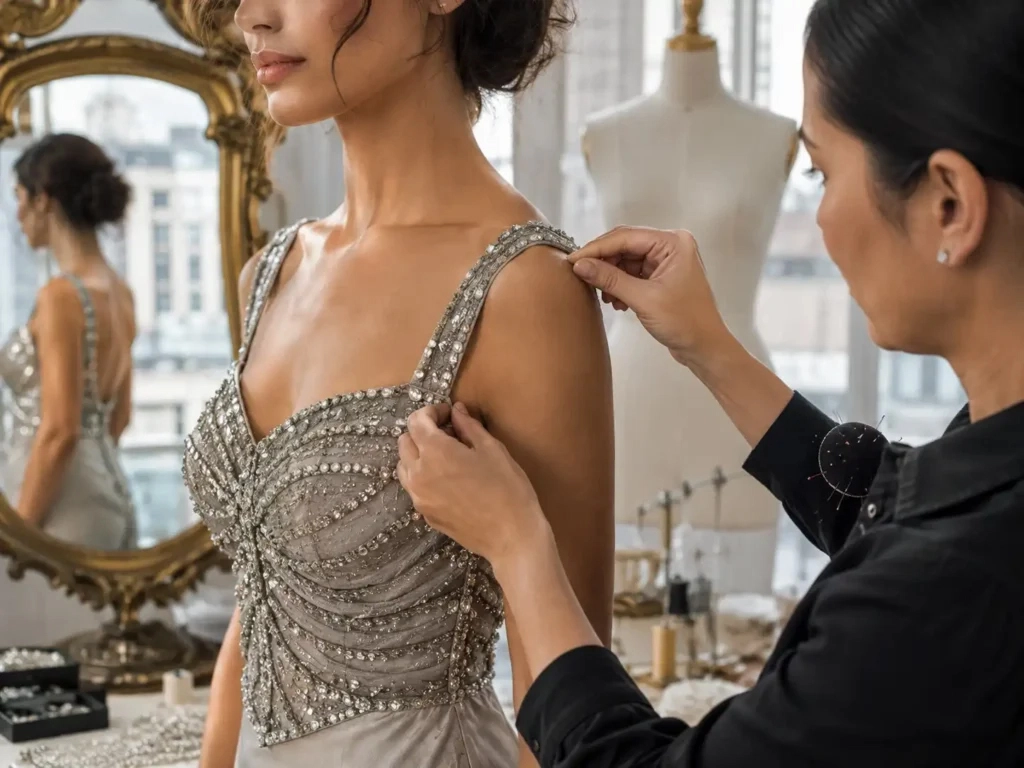
During sampling and production, incorrect hardware selection may cause issues such as:
- straps becoming loose after adjustment
- hardware moving during wear
- uneven strap length between garments
- fabric pulling around the shoulder area
- hardware scratches appearing after pressing or packing
Most of these problems can be identified during the sample and fitting stage before they affect the full order.
FAQ
Can the same strap adjuster be used for all dress styles?
No. Different dress styles require different strap constructions and hardware choices. A slider that works for a lightweight casual dress may not provide enough support for a satin or evening style.
Should brands choose metal hardware if they want a higher-end dress?
Metal hardware can create a more refined look, but it is not the only factor. The fabric quality, pattern, sewing construction, and overall design direction also affect how the finished dress is perceived.
How can brands avoid strap adjuster problems during bulk orders?
The best approach is to confirm the hardware during sample development. Testing the actual strap, fabric, and adjuster together can reveal slipping, weight, or fitting problems before production starts.
Are plastic strap adjusters reliable for large dress collections?
Yes. Many large commercial collections use plastic strap adjusters because they are lightweight and easier to manage for cost-sensitive production.
What information should a brand provide when requesting dress production?
When requesting dress production, brands should provide the dress design, strap width, fabric details, reference images, and expected price positioning.
Conclusion
The final hardware choice should be confirmed during sample development after checking the fabric, strap construction, price positioning, and production requirements. A clear hardware specification on the approved sample helps maintain consistency from sampling to final production.
Related Dress Manufacturing Services
If you are developing a new dress and need support with fabric selection, internal construction, sampling, and bulk production, an experienced clothing manufacturer can help you deal with these decisions before they become production problems.
At Xiuyu Apparel, we work with fashion brands, startups, designers, and private label companies from sample development through bulk production.
- Formal Dress Manufacturer
- A Line Dress Manufacturer
- Party Dress Manufacturer
- Off Shoulder Dress Manufacturer
Get a Clothing Manufacturing Quote Based on Your Design
If you already have a garment design, send us the product photo, tech pack, or reference sample together with your target quantity.
As a dress manufacturer, we can review the fabric, lining, construction, trims, workmanship, and finishing requirements before preparing a quotation based on the actual garment rather than a general price range.

