

When a new dress collection reaches our factory, we look at more than the individual designs. Some styles may share too much of the same construction, others may require fabrics that are difficult to source, and a few may need more development work than expected. Reviewing these details before sampling helps you avoid unnecessary revisions, control development costs, and give your collection a more practical route into production.
Review Your Collection Before Sending It to a Manufacturer
A collection can look complete in a design presentation but raise different questions once the styles are placed side by side.
You might have several fitted dresses with slightly different necklines, two skirts with almost identical proportions, or multiple designs relying on complicated construction. Individually, these styles may look attractive. Together, they may not offer enough variety to justify developing every one.
Before sending your designs to a clothing manufacturer, put the full range together. Compare the silhouettes, lengths, fabrics, and main construction details.
The purpose is not to make every dress look different. A consistent design direction is important for a fashion brand. What you want to avoid is spending money developing several products that eventually serve almost the same purpose.
If two styles are very similar, ask yourself whether customers would notice a meaningful difference when they see them together. If the answer is no, one of them may need further development before sampling.
Decide Which Styles Deserve More Development Attention
Not every dress in your collection has the same commercial importance.
A core product that you expect to reorder deserves a different level of attention from a seasonal statement piece. The first may need more work on fit, comfort, and repeat production. The second may involve distinctive details that make the collection more recognizable.
Before sampling, identify which styles are:
- Core products with regular sales potential
- Seasonal designs responding to current demand
- Occasion dresses for specific customer groups
- Supporting styles that complete the collection
- Statement pieces with distinctive construction or details
This also helps you communicate your expectations to the factory.
For example, if a fitted dress is intended to become a long-term bestseller, it makes sense to spend time checking the waist position, bust fit, skirt balance, and size grading. A statement dress with heavy embellishment may require more attention to trim placement and workmanship.
When the manufacturer understands the role of each style, discussions about construction, development time, and target cost become more useful.
Check the Silhouette and Length Mix
Silhouette is one of the easiest ways to identify overlap within a dress collection.
Compare the main shapes: fitted or relaxed, straight or flared, defined waist or dropped waist, narrow skirt or fuller skirt. Then look at how the lengths are distributed across the range.
A collection containing mostly fitted mini dresses may appeal to a different customer and occasion than one combining midi, maxi, and more relaxed styles.
However, changing the length alone does not always create enough product differentiation. Two dresses with the same body shape, neckline, and construction may still look very similar, even if one finishes above the knee and the other reaches the ankle.
Pay attention to how the proportions change when you adjust the length. A maxi dress may need a different amount of skirt fullness to maintain its intended movement. A shorter fitted dress may require adjustments to the hem balance and overall fit.
You do not need to force variety into every style. If a particular silhouette represents your brand, repeating it can make commercial sense. Just make sure the collection does not become a group of products with almost identical customer appeal.
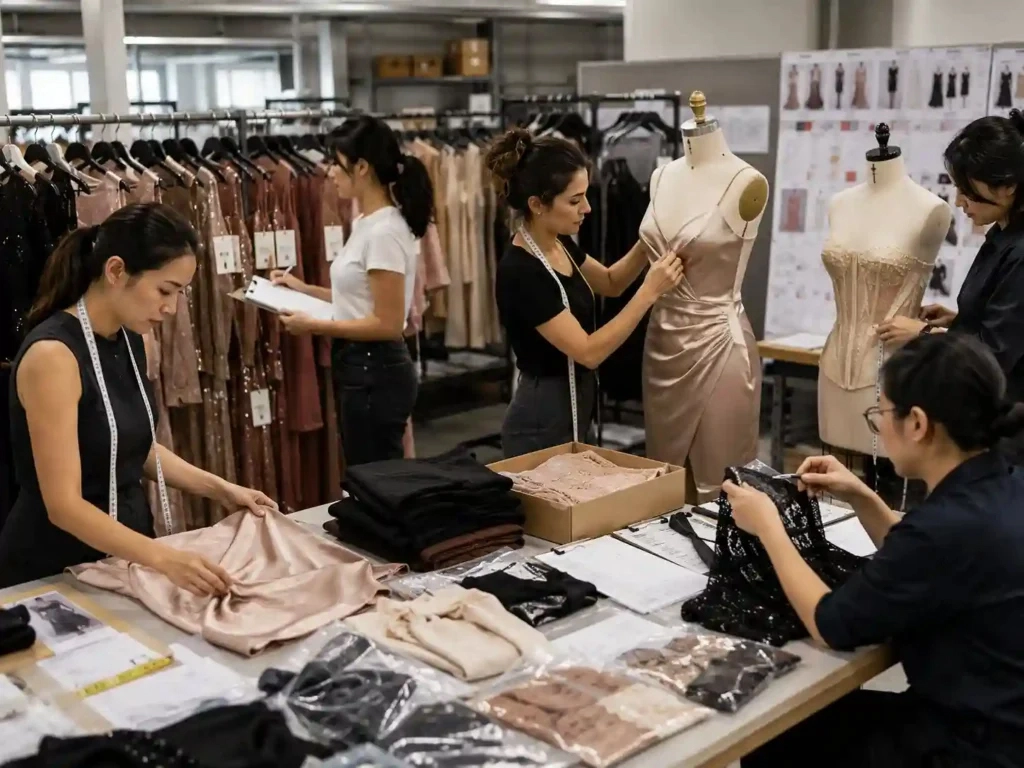
Confirm Fabric Before Finalizing the Pattern
One issue we often see during dress development is that the fabric decision is made after the design has already been treated as final.
The problem is that fabric affects more than appearance. It changes how a garment hangs, stretches, holds its shape, and behaves during sewing.
Take a fitted dress as an example. A stretch jersey fabric requires attention to recovery and negative ease, while a non-stretch woven fabric needs a different approach to fit and closure placement. For a flowing skirt, chiffon and satin will not produce the same drape, even when the pattern is similar.
Before confirming the material, check:
- Fabric weight and thickness
- Stretch and recovery
- Drape and stiffness
- Usable fabric width
- Shrinkage
- Opacity
- Surface finish
- Lining requirements
Fabric width deserves attention during costing. A narrow fabric may require a different cutting layout, particularly for full skirts or designs with large pattern pieces. This can increase consumption even when the price per meter looks reasonable.
If you are considering two fabric options, ask the manufacturer to assess both against the intended design. Changing the material after the first sample may require adjustments to the pattern, fit, lining, and construction.
It is usually less expensive to settle the fabric direction before several rounds of sampling have been completed.
Look Inside the Garment, Not Just at the Sketch
Some dress designs appear simple from the outside but involve considerable internal construction.
A corset dress, for example, may require separate panels, boning channels, cups, lining, and careful seam control. A dress with multiple layers of mesh may need additional work to prevent bulk around the seams. Heavy embellishment can also affect fabric handling, garment weight, and sewing arrangements.
When reviewing your collection, identify details such as:
- Boning and internal support
- Multiple lining layers
- Sequins, beading, and appliqué
- Pleating and complicated draping
- Special closures
- Asymmetric seams
- Delicate lace or mesh combinations
- Embroidery and decorative placement
These details do not make a design unsuitable for production. They simply need to be considered before you confirm the development schedule and target price.
A useful question to ask your manufacturer is which parts of the design need to be tested during sampling. For a structured bodice, that may involve checking the internal support and bust fit. For a heavily embellished skirt, it may involve testing how the decoration affects the garment’s weight and movement.
A little discussion at this stage can prevent unnecessary changes after the first sample is made.
Choose a Practical Sampling Order
Sampling every design at once is not always the most efficient way to develop a collection.
Start with the styles that can answer important questions for the rest of the range.
If several dresses use similar construction, one representative style may help establish the pattern and workmanship direction. If you are introducing a new fabric, sampling a design that uses it early can show whether the material works as expected.
The same applies to complicated designs. A corset dress or a heavily draped style may need more fitting and construction adjustments than a simple shift dress. Allowing extra development time for these styles can help you avoid scheduling problems later.
However, related designs should not automatically share the same approval. Different necklines, skirt proportions, fabric weights, and internal construction can still affect the finished fit.
From the factory side, the first sample is often a working reference rather than a finished product. It shows what needs to be corrected before the design is ready for approval.
When planning your launch, allow time for fit comments, pattern corrections, and another sample where necessary. Do not build the entire schedule around an assumption that the first version will be approved.

Prepare the Information Your Pattern Team Needs
Once you have selected the styles for sampling, the next step is to make sure the manufacturer understands what needs to be developed.
A complete tech pack is useful, especially when measurements, construction details, and material specifications have already been confirmed. But if you are a startup or still developing the collection, you can also begin with sketches, reference garments, and fabric ideas.
For each style, provide as much of the following information as possible:
- Front and back design references
- Available garment measurements
- Fabric composition or preferred material
- Color and print requirements
- Lining and closure details
- Trim and artwork placement
- Special construction instructions
- Intended size range
Separate confirmed details from decisions that are still open.
For instance, you may know that a dress requires a concealed zipper but have not confirmed the exact zipper length. That is different from leaving the entire closure method undefined.
A reference garment can be particularly helpful when you want to communicate a specific fit or proportion. If you are using an existing dress as a reference, explain which features should be followed and which should be changed.
This gives the pattern team a clearer starting point and reduces the amount of back-and-forth during development.
Match Your Style and Color Plan to the MOQ
A collection may look manageable in a design sheet but become more complicated when the purchasing quantities are calculated.
Imagine you are developing eight dress styles in four colors each. That creates 32 style-color combinations, before considering the size breakdown.
Each combination needs to be considered for fabric purchasing, color confirmation, trims, production planning, and inventory.
For a new brand, spreading a limited budget across too many combinations can leave you with small quantities of every product but insufficient stock in the styles customers actually want.
Before confirming the collection, discuss the MOQ with your clothing manufacturer. Our usual MOQ at Xiuyu Apparel is around 50–100 pieces per style and color, although the final arrangement depends on the fabric, construction, and order requirements.
There is another point worth checking: the fabric supplier may have a separate minimum purchasing quantity. A garment order that meets the factory MOQ does not necessarily mean the fabric can be purchased in exactly the same quantity.
If you are using custom-dyed fabric, special prints, or materials with limited availability, confirm these purchasing requirements before finalizing the color range.
For a first collection, it may be more practical to concentrate your budget on fewer styles and colors. You can expand the range once you have a clearer picture of which products customers respond to.
Review the Sample Against the Actual Requirements
When the sample arrives, do not judge it only by whether it looks similar to the original sketch.
Check how the garment fits and moves. Look at the neckline, shoulder position, waist, armhole, skirt balance, and hem. Then inspect the construction details.
A zipper may sit flat when the dress is hanging but become wavy when worn. A lining may look fine from the outside but pull around the hips. A long skirt may need more hem control to hang evenly.
These are the details that photographs and design sketches cannot always show.
During sample review, record measurable corrections wherever possible. Instead of writing “make the waist smaller,” specify the measurement change and where it should be applied. Instead of saying “improve the neckline,” explain whether the front drop, width, or shoulder position needs adjustment.
Once the corrections have been made, review the revised sample against the original specifications.
After final sample approval, the PP sample and confirmed measurements, materials, and construction details should become the reference for bulk production. Any major change after this stage needs to be discussed before production begins.
Common Problems That Affect Dress Collection Development
Too many similar styles
Minor changes to color, neckline, or print may not create enough difference between products. Review the full range before paying for multiple samples.
Fabric decisions made too late
A change in fabric can affect pattern measurements, drape, lining, and garment cost. Confirm the material direction before development moves too far.
Construction requirements not discussed early
Internal support, special closures, and decorative details may require additional development work. Make sure these are included in the initial discussion.
Unrealistic purchasing quantities
The factory MOQ, fabric supplier MOQ, and your expected sales volume all need to be considered together. A collection should be designed around a workable purchasing plan.
Not allowing enough time for revisions
A first sample is not always ready for production. Allow time to correct fit and construction issues before confirming your bulk order.
FAQ
1. Can a manufacturer help develop a dress collection from reference photos?
Yes. Reference photos can be used as a starting point, even if you do not have a complete tech pack. The important part is explaining which features you want to reproduce, what needs to be changed, and your preferred materials. The factory can then identify the information still needed for development.
2. What happens if I need to change a design after sampling has started?
It depends on the type of change. Adjusting a measurement is usually different from changing the fabric, neckline construction, or overall silhouette. Tell the manufacturer as soon as a decision changes, because the pattern, material preparation, or sample already in progress may need to be revised.
3. Can I request different size ranges for different dress styles?
Yes. Your size range can be planned according to the intended customer and garment design. However, each style needs clear measurement specifications and grading requirements. A fitted corset dress, for example, may need different fitting considerations from a relaxed shirt dress.
4. How should I handle a design that exceeds my target production budget?
Ask the manufacturer to identify which parts of the garment contribute most to the cost. Sometimes changing a trim, simplifying an internal construction detail, or selecting a more readily available fabric can help. You do not necessarily need to redesign the entire dress to make it more commercially practical.
5. What information should be confirmed before placing a repeat order?
Keep the approved sample, final measurements, fabric specifications, color references, trim details, and any agreed workmanship changes. For repeat orders, also confirm whether the original materials are still available. A previous approval is useful only when the new production follows the same confirmed specifications.
Conclusion
Planning your collection before sampling gives you more control over development costs, purchasing quantities, and production schedules. Review the styles together, settle the important material and construction decisions, and give your manufacturer clear development information. If you are preparing a new range, an experienced dress manufacturer can help you assess the practical requirements before bulk production. Learn more about Xiuyu Apparel and its clothing manufacturing services.

