

When you source dresses from China, the factory price is only one part of your purchasing cost. Freight charges, carton volume, garment construction, and delivery deadlines all affect what you eventually pay. As a clothing manufacturer, we deal with these details before bulk orders leave the production floor. If you are planning your first import or arranging repeat orders, understanding how shipping works can help you avoid unexpected costs and stock arriving later than planned.
How Does Shipping Dresses from China Work?
Shipping preparation should begin before bulk production is finished. By the time your dresses reach the packing stage, the destination, shipping method, and delivery requirements should already be clear.
A typical bulk order follows this process:
Bulk Production → Final Inspection → Packing → Carton Measurement → Shipping Documents → Export Clearance → International Freight → Import Clearance → Final Delivery
Once the garments pass final inspection, the factory confirms the packed quantity, carton dimensions, gross weight, and net weight. Your freight forwarder uses these figures to arrange transportation and calculate the final freight charge.
If you have your own freight forwarder, share their contact details with the factory early. If you are importing for the first time, you can ask the manufacturer to coordinate with a shipping partner.
Before requesting a quotation, prepare:
- Destination country and delivery address
- Estimated order quantity
- Number of dress styles and cartons, if available
- Required arrival date
- Individual packing and labeling requirements
- Preferred shipping arrangement
One detail worth confirming is the final delivery point. Shipping to a destination port is different from delivering directly to your warehouse. Make sure you know which service the quotation actually covers.
What Shipping Methods Can You Use for Dress Orders?
The four common options are express delivery, air freight, sea freight LCL, and sea freight FCL. Each serves a different order size and delivery requirement.
Express Shipping
Express services such as DHL, FedEx, and UPS are commonly used for samples, replacement garments, and small urgent parcels.
When you are developing a new dress style, receiving a revised sample quickly can help your design team check the fit, fabric, and construction before approving bulk production.
For a large production order, express shipping is usually expensive on a per-piece basis. It makes more sense when speed matters more than freight savings.
Air Freight
Air freight is worth considering when you have several cartons but cannot wait for sea transportation.
Fashion brands often use it for seasonal launches, urgent replenishment, or orders with a fixed retail delivery date.
The decision comes down to your inventory and selling schedule. If an earlier arrival allows you to meet a launch date, the additional freight cost may be justified. If you already have enough stock, the extra expense may not bring much value.
Sea Freight LCL
LCL stands for Less than Container Load. Your goods share container space with shipments from other exporters.
For a smaller brand importing several cartons of dresses, this can be a practical alternative to booking an entire container.
Keep in mind that LCL involves consolidation and additional cargo handling. The quoted ocean freight is also not necessarily the full destination cost. Check local handling, customs clearance, and delivery charges before comparing it with other options.
Sea Freight FCL
FCL means Full Container Load. You reserve an entire container for your shipment.
This can make sense when you are ordering a large collection, combining several dress styles, or arranging repeat production with substantial carton volume.
However, filling a container is not automatically the cheapest solution. Compare the total container cost with the volume and delivery requirements of your actual order.
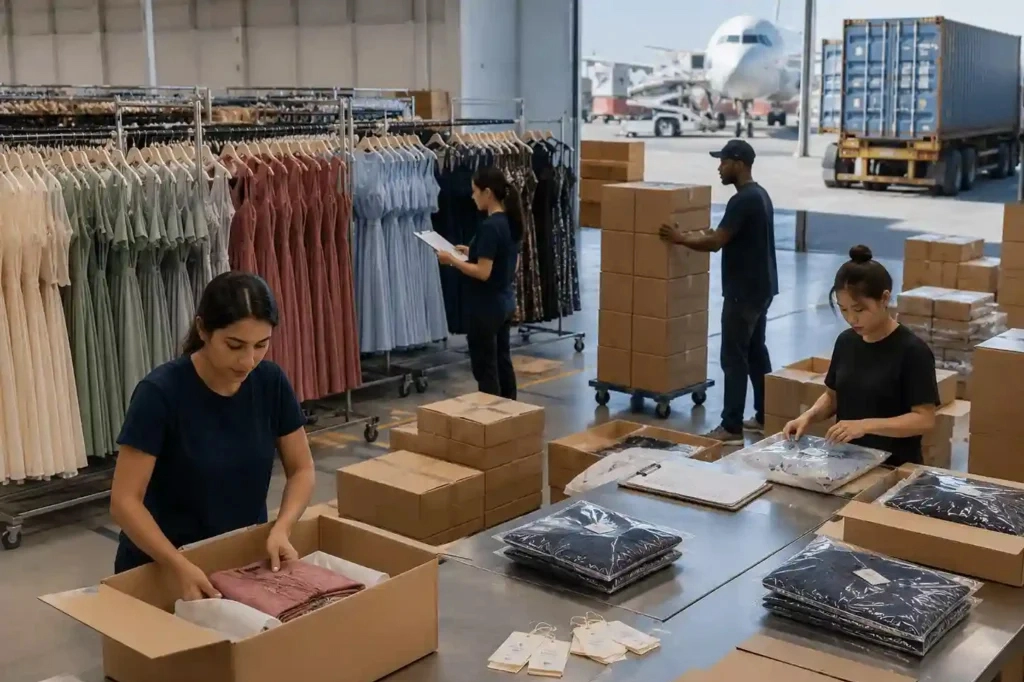
Air Freight vs. Sea Freight for Dress Orders
If you are deciding between air and sea transportation, look at the relationship between freight cost, inventory requirements, and arrival time.
| Shipping Method | Suitable Orders | Speed | Cost Level |
|---|---|---|---|
| Express | Samples and urgent parcels | Fastest | High |
| Air Freight | Small to medium urgent orders | Fast | Medium–High |
| Sea Freight LCL | Smaller bulk shipments | Slower | Lower |
| Sea Freight FCL | Larger production orders | Slower | Lower per unit at suitable volume |
For a new fashion brand, air freight may be reasonable when your first collection has a fixed launch date. As your sales become more predictable, sea freight can help control transportation costs.
Consider a situation where your dresses are ready, but your retail launch is only a few weeks away. Choosing the cheapest sea freight option may leave your stock arriving after the planned selling period.
On the other hand, if you are replenishing an established style and have enough inventory, paying extra for air freight may put unnecessary pressure on your product margin.
The best option is the one that fits your purchasing schedule, not simply the one with the lowest initial quotation.
What Affects the Cost of Shipping Dresses from China?
The number of dresses in your order is only one part of the freight calculation. Carton measurements, actual weight, destination, and packing requirements also matter.
Carton Volume and Garment Construction
For clothing shipments, carton volume can be just as important as weight.
A lightweight chiffon dress may have a low actual weight but occupy considerable space because of its full skirt. A corset dress with boning and molded cups may also need more room than a simple jersey dress.
Fabric thickness, lining, embellishment, and folding methods all affect how many pieces can fit into one carton.
When we prepare bulk orders, we pay attention to the garment’s finished shape rather than estimating carton space from the fabric weight alone.
Gross Weight and Dimensional Weight
Freight companies may calculate charges using actual weight or dimensional weight, depending on the carrier and shipping method.
Dimensional weight reflects the space occupied by a shipment. If your cartons are large but relatively light, the chargeable weight may be higher than the actual weight.
This is why a freight estimate based only on the number of garments can be inaccurate. Wait for the packed carton measurements before treating the quotation as final.
Destination and Additional Charges
The destination country and delivery address affect the total transportation cost.
Your final expenses may include:
- International freight
- Export handling
- Customs clearance
- Import duties and taxes
- Port or airport handling
- Local transportation
- Warehouse delivery fees
A quotation to the destination port should not be compared directly with one that includes customs clearance and delivery to your warehouse.
Delivery Schedule
Your target arrival date should be discussed before the production schedule is finalized.
If you are preparing for a seasonal collection, fashion campaign, or retail launch, allow enough time for inspection, packing, export handling, international transportation, and customs clearance.
Finishing sewing on schedule does not mean your inventory will be available for sale on that same date.
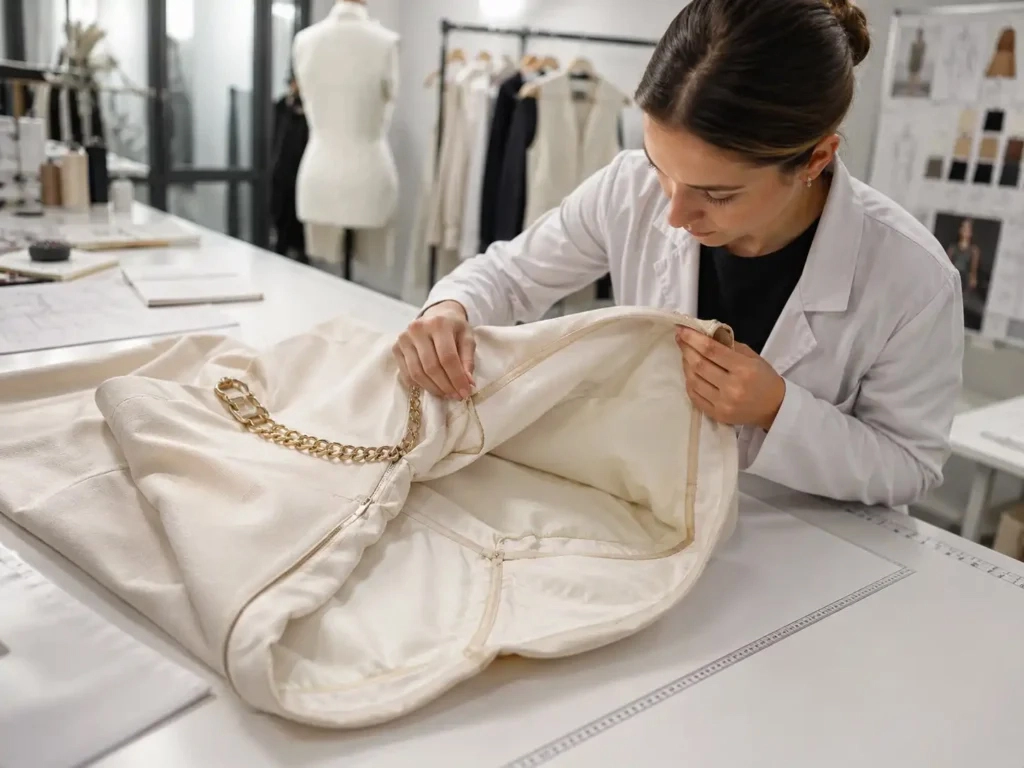
How Does Dress Packaging Affect International Shipping?
Packing affects both freight volume and the condition of your garments when they arrive.
You may want to reduce carton space to save on transportation, but excessive compression can leave dresses badly creased or affect their shape. Using too much protective material can have the opposite problem, increasing carton volume unnecessarily.
The packing method needs to suit the garment.
- Satin and silk dresses: Smooth surfaces show pressure marks easily. Pay attention to folding points and avoid excessive compression.
- Lace dresses: Exposed lace edges can catch on neighboring garments or packaging materials. A protective layer helps reduce snagging.
- Sequin dresses: Sequins can rub against other garments during transportation. Individual protection is useful for heavily embellished styles.
- Velvet dresses: Long periods under pressure can flatten the fabric pile and leave visible marks.
- Structured dresses: Corset cups, boning, and shaped bodices need enough protection to maintain their intended form.
Your retail packaging requirements should also be confirmed before bulk production is packed. Individual polybags, size stickers, barcodes, hangtags, and carton markings can all affect the packing arrangement.
Changing these details after the garments have been packed may require additional labor and new carton measurements.
What Documents Are Needed to Ship Dresses Internationally?
Most international clothing shipments require a set of export and import documents. The exact requirements depend on the destination, shipping method, and agreed trade terms.
Common documents include:
- Commercial invoice
- Packing list
- Bill of lading or air waybill
- Shipping instructions
- HS code information
- Certificate of origin, when required
- Destination-specific customs documents
For mixed dress orders, make sure the style descriptions, quantities, and carton breakdowns are clearly recorded.
For example, if your order contains five styles in different colors and sizes, the packing list should make it easy for your customs broker and warehouse team to identify each group of garments.
The declared product information and values also need to be accurate. Confirm who is preparing the documents and who is responsible for customs clearance before the shipment is booked.
What Are FOB, CIF, DAP, and DDP for Dress Orders?
These trade terms determine how transportation costs, delivery responsibilities, and risks are divided between the buyer and seller.
FOB (Free on Board)
Under FOB, the seller handles the agreed export-side responsibilities and delivers the goods on board the nominated vessel at the named port of shipment. The buyer arranges the main ocean freight and subsequent transportation.
This arrangement can suit buyers who already have their own freight forwarder and import procedures.
CIF (Cost, Insurance and Freight)
Under CIF, the seller arranges and pays for ocean freight and insurance to the named destination port. Import clearance, duties, taxes, and destination charges generally remain the buyer’s responsibility.
Remember that CIF insurance has a defined minimum coverage requirement. If you need broader protection, confirm the additional coverage separately.
DAP (Delivered at Place)
Under DAP, the seller arranges transportation to the agreed destination. The buyer generally handles import clearance, duties, and taxes.
DDP (Delivered Duty Paid)
Under DDP, the seller takes responsibility for delivery to the agreed destination, including import clearance and applicable duties and taxes.
For your quotation, check the exact named place and the services included. The three-letter term alone does not explain every practical arrangement between the parties.
How Can You Calculate the Landed Cost of Your Dress Order?
When comparing clothing manufacturers, looking at the unit price alone can give you an incomplete picture.
Your landed cost is the total expense of bringing the garments to the agreed destination.
A basic calculation is:
Landed Cost = Product Cost + Packing Cost + International Freight + Import Duties and Taxes + Destination Charges + Local Delivery
For example, one factory may quote a lower price per dress but use a less efficient packing arrangement. Another may have a slightly higher garment price but better carton utilization and a more suitable shipping plan.
For your purchasing decision, calculate the total cost per sellable garment after the goods arrive.
Import duties should be checked using the correct HS classification, country of origin, and destination requirements. Different garment categories may not receive the same duty treatment.
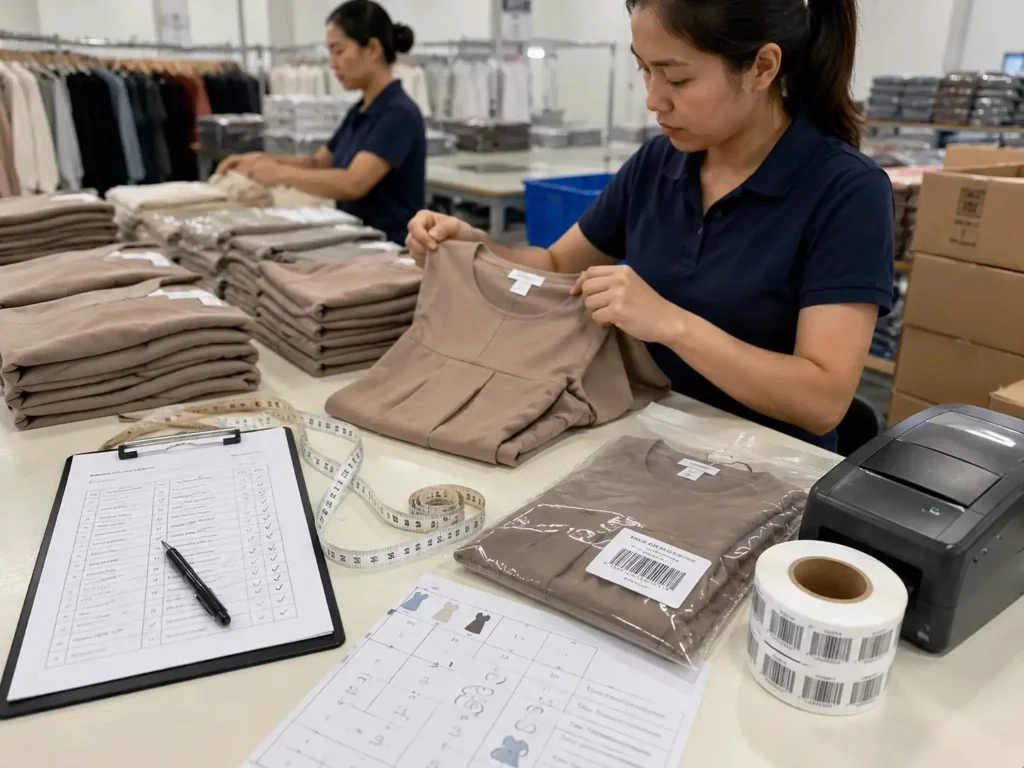
What Should You Check Before Your Dresses Leave the Factory?
Before the shipment is collected, the finished garments and packing details should match the approved order requirements.
From the factory side, the final review should cover:
- Style, color, and size breakdown
- Key garment measurements
- Fabric appearance and workmanship
- Labels, hangtags, and trims
- Individual garment packing
- Pieces per carton
- Carton dimensions and markings
- Gross and net weight
The approved pre-production sample should remain the reference for bulk quality.
For your purchasing team, request the final packing list and carton information before collection. These records help your forwarder arrange transportation and prepare the shipping documents without having to estimate the shipment from the original order quantity.
Common Shipping Problems When Importing Dresses from China
Some shipping delays and extra charges start before the freight company collects the cartons.
Carton volume changes after bulk packing.
An early estimate may be based on sample garments or an assumed folding method. The final volume can change when the actual bulk order is packed, particularly for full skirts, layered dresses, and structured styles.
The production completion date is mistaken for the delivery date.
Your factory may finish the order on schedule, but inspection, packing, export handling, transportation, and customs clearance still need to take place.
Warehouse requirements are confirmed too late.
If your fulfillment center needs specific carton labels, barcodes, or delivery appointments, missing information can create additional work after the shipment arrives.
Shipping quotations cover different services.
One forwarder may quote port-to-port freight, while another includes customs clearance and final delivery. Compare the included services before deciding which quotation is actually cheaper.
How Should Fashion Brands Plan Shipping for Repeat Orders?
After your first shipment, keep the actual packing and freight information with the corresponding style and purchase order.
Useful records include carton dimensions, pieces per carton, gross weight, packing method, shipping route, transit time, and final landed cost.
These figures are particularly useful when you reorder a successful dress style. You can estimate the next shipment using actual carton data instead of starting with a rough calculation.
As your business grows from a few hundred pieces to several thousand, your preferred shipping method may change. An LCL arrangement that worked for your first order may no longer be the most economical choice when you combine several collections.
Review the volume and delivery requirements of each order before booking transportation.
Frequently Asked Questions
1. Can I combine dress orders from different production batches into one shipment?
Yes, provided the orders are ready around the same time and the shipment documentation can cover all the goods accurately. If one style finishes later than the others, discuss whether holding the completed cartons will cost less than arranging a separate shipment.
2. Why do two freight forwarders quote very different prices for the same dress order?
Check the chargeable weight, route, transit arrangement, destination handling, and services included. One quotation may exclude customs clearance or warehouse delivery. Ask both forwarders to quote against the same carton measurements and delivery address before comparing their prices.
3. Should I purchase cargo insurance for my dress shipment?
Consider the value of your goods, the transportation route, and the protection already included in your shipping arrangement. Do not assume the carrier’s basic liability covers the full commercial value. Ask your forwarder what risks are covered and what evidence is required for a claim.
4. Can I change the shipping method after bulk production is completed?
Usually, yes, provided the goods have not already been handed over to the carrier and the alternative service is available. However, a last-minute change can affect collection arrangements, booking availability, and freight costs. Make the decision as soon as you know your delivery schedule has changed.
5. How should I plan shipping when ordering several dress styles with different delivery priorities?
Separate the styles according to their launch dates and inventory needs. If some dresses are needed earlier, ask your manufacturer whether they can be inspected and packed first for a separate shipment. This can help you avoid paying urgent freight rates for your entire collection.
Conclusion
Shipping dresses from China requires coordination between garment production, packing, freight, and delivery. Your fabric choices, dress construction, carton volume, and inventory schedule all influence the final cost. Discussing these details before bulk production is completed gives you more control over transportation and arrival dates. If you are developing a new collection, an experienced dress manufacturer such as Xiuyu Apparel can help coordinate production and packing requirements before shipment.

