

When a brand develops a new womenswear style with a clothing manufacturer, we usually want to know the target selling price quite early in the process. It gives us an idea of how much room there is for fabric, construction, finishing and sampling before too many details are fixed.
Otherwise, a design can look right on the sample but still miss the required margin once the actual costs are calculated. If the target is too tight for the chosen fabric or construction, it is better to find that out during development than after the final sample has been approved.
What Are Entry, Mid and Premium Price Points in Womenswear?
Entry, mid and premium price points are different positions within your product range. The price level also sets expectations for the garment itself. A lower-priced style normally leaves less room for expensive fabric or labor-intensive construction, while a higher-priced style gives you more room to invest in those areas.
An entry-level style normally has less room for extra labor and expensive materials. The construction needs to stay relatively straightforward, especially if the garment is expected to sell at a competitive price.
Once you move into the mid-market range, there is usually more flexibility. You might spend more on the fabric, improve the lining or put another fitting round into the development without changing the whole design.
Premium products are different again. A higher price needs to be supported by the garment itself. That can come from the fabric, but it can also come from the way the dress is cut, fitted, constructed and finished.
Start With Your Selling Price, Then Work Backward
If you are developing a new dress, it is tempting to start with the design and ask the factory for a price afterward.
That can create problems.
Suppose your intended retail price is $120. The factory quotation is not the only cost you need to consider. Depending on how you sell the garment, you may also have wholesale margins, freight, duties, packaging, payment costs, marketing expenses and other operating costs.
When a buyer gives us only a design and asks for the factory price, we can quote it, but that number does not tell us whether the product will work commercially.
It is more useful to know the cost ceiling first:
“What does this garment need to cost for the business to make sense?”
From there, you can work backward from the retail or wholesale price to the landed cost and finally to the ex-factory target.
How to Plan an Entry Price Point
For an entry-level product, cost control usually starts with the construction rather than simply choosing the cheapest fabric.
You may be able to simplify:
- Number of pattern pieces
- Sewing operations
- Decorative trims
- Internal construction
- Lining
- Closures
- Special finishing
You should still protect the parts customers can see and feel.
For example, a simple slip dress does not necessarily need an expensive construction to look clean. A well-selected fabric, accurate pattern and neat finishing may matter more than adding several decorative details.
From the factory side, we often see the opposite problem. A dress may look simple on the tech pack, but several small operations can add up once we make the sample. Extra panels, binding, gathers or detailed finishing may each look minor, but together they can add noticeable sewing time.
It is better to identify those details during development than after the sample has already been made.

How to Plan a Mid-Market Price Point
The mid-market level is often where you have the most room to balance cost and product quality.
You can spend more on the elements that customers notice without making every component of the garment expensive.
Fabric quality is one option. Better lining, improved fit, cleaner seams or more careful finishing can also make a difference.
For example, if your target retail price allows more room, you might upgrade the fabric while keeping the basic silhouette unchanged. In another case, the fabric may already be suitable, but the garment needs better structure or finishing to justify the price.
This is why we prefer to review costing while the sample is still being developed. If something is pushing the price up, there is still time to change that particular part instead of cutting quality across the whole garment.
If the sample costs too much, you can look at individual areas rather than reducing the quality of the entire garment.
How to Plan a Premium Price Point
A premium garment should not become expensive simply because a more expensive fabric was selected.
The whole garment still has to justify the higher price. Expensive fabric alone does not always make a dress feel premium.
A premium dress may involve:
- Better fabric and lining
- More fitting and pattern development
- More complex draping or internal support
- Higher-end trims
- More detailed finishing and pressing
Take a bias-cut silk dress as an example.
The finished dress may look very simple, but the pattern layout can require more fabric, and the fabric itself can be less forgiving during cutting and sewing. Small fitting issues can also become much more visible because of the way the fabric falls on the body.
For that reason, we look at more than the fabric price per meter when costing this type of dress. Fabric consumption, cutting, sewing, pressing and fitting all need to be considered.
What Should Your Target Garment Cost Include?
Your target garment cost needs to leave enough room for the other costs in your business.
Your costing can be viewed in this order:
Retail Price
↓
Selling / Wholesale Price
↓
Target Margin
↓
Maximum Landed Cost
↓
Freight + Duty + Packaging + Other Costs
↓
Target Ex-Factory Cost
The numbers will be different for a DTC brand, a wholesale business and a brand selling through retailers.
If you sell directly to consumers, your cost structure will be different from a wholesale brand selling to boutiques or retailers.
For a wholesale business, this distinction becomes especially important. The retailer also needs enough margin, so your wholesale price cannot simply be a percentage below your retail price without considering the rest of the cost structure.
Once the ex-factory target is clear, it becomes much easier to decide whether a fabric, lining or construction detail fits the product.
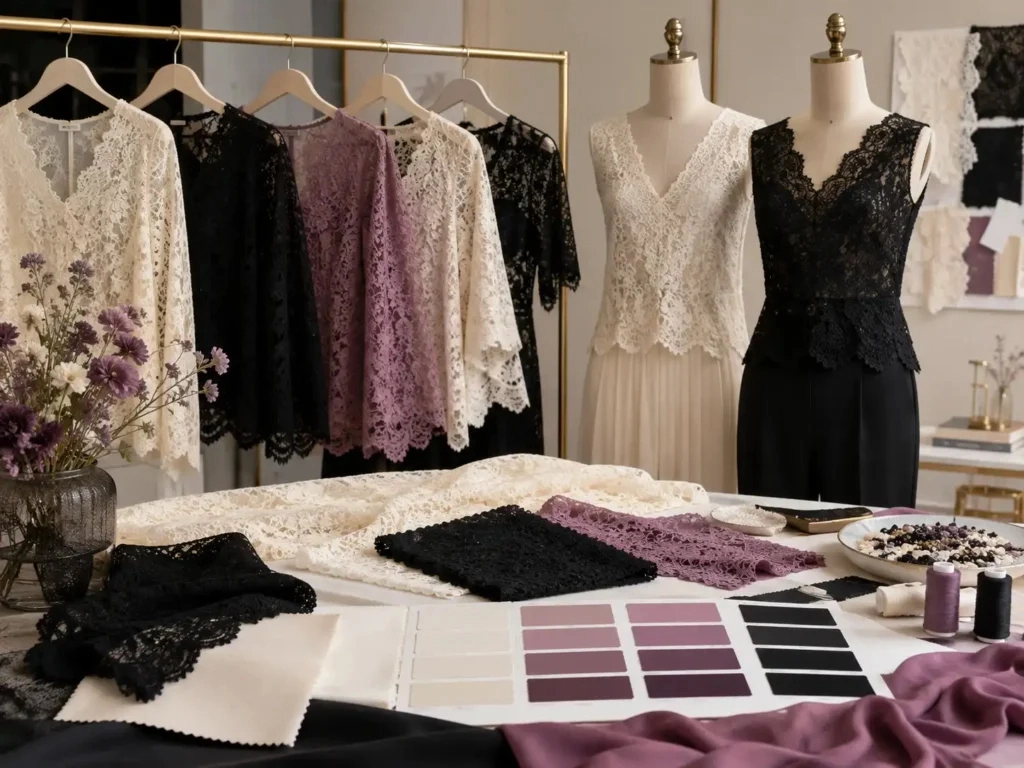
Fabric Can Change the Price More Than You Expect
Fabric selection is often where a costing problem first becomes visible.
The price per meter is only the starting point.
Check:
- Fabric width
- Fabric consumption
- Shrinkage
- Pattern placement
- Cutting waste
- Lining requirements
- Fabric availability
- Color minimums
- Custom dyeing requirements
We have seen cases where a lower fabric price did not result in a lower garment cost because the fabric required more consumption or created more cutting waste.
For example, if the fabric has a narrow width or the pattern requires a particular grain direction, consumption may increase. A fabric with a slightly higher meter price can sometimes produce a better overall result if the pattern uses it more efficiently.
For smaller brands, minimum fabric quantities can also matter. If you need a custom color for a relatively small production run, the fabric minimum may affect the unit economics before sewing even starts.
For this reason, we normally check fabric availability and garment costing together rather than treating them as two separate decisions.
Construction Has a Direct Effect on Your Cost
A technical sketch can look simple while the actual garment is not.
A dress may require additional labor because of:
- Multiple panels
- Gathers
- Pleats
- Binding
- Invisible zippers
- Lining
- Boning
- Internal support
- Embroidery
- Beading
- Special pressing
The sewing time is only part of the issue.
Some construction details also require more careful cutting, handling, pressing or inspection.
If you have a design detail that is important to the appearance of the garment, there is no reason to remove it immediately because of cost.
Instead, ask whether the same effect can be achieved through a simpler construction.
These changes are much easier to make before the pattern and sample are locked.
Give the Manufacturer a Target Before Sampling
If you already know your target price, share it with your dress manufacturer during the early development stage.
You do not need to have every number finalized.
A manufacturer can work with an approximate target if you provide enough information about the product.
Useful information includes:
- Target retail price
- Target ex-factory cost, if known
- Expected order quantity
- Fabric preference
- Color requirements
- Size range
- Lining
- Trims
- Packaging
- Reference samples or sketches
From our side, we normally look at these points together because changing one can affect another.
For example, changing fabric may affect cutting. Changing the pattern may affect consumption. Adding lining may affect sewing and finishing.
Costing works better when we look at the garment as a whole. A change to the fabric can affect consumption, while a pattern change can affect both sewing time and fabric usage.
What to Do When the First Costing Is Too High
If the first costing is too high, we normally start by finding the reason for the difference.
Suppose you expected a dress to cost $18 ex-factory, but the first costing comes back at $23.
Do not start by asking the factory to remove $5 from the price.
First find out where the extra cost is coming from.
Maybe the fabric consumption is higher than expected.
Maybe the fabric itself is expensive.
Maybe a lining or trim adds more than anticipated.
Maybe the construction takes too many operations.
Maybe the order quantity is too low to achieve the expected efficiency.
After we identify the main cost driver, we can decide what is worth changing.
You might change the fabric, adjust the pattern, remove one construction detail, simplify a finishing method or review the quantity.
In many cases, you do not need to redesign the entire garment.
How MOQ Affects Your Price Point
Your planned quantity should be part of the pricing discussion from the beginning.
At 100 pieces, some costs are spread across a much smaller order. Fabric purchasing may be less efficient, production setup takes a larger share of the order, and the sewing line has less room to build efficiency.
This is particularly relevant if you are launching a new brand or testing a new style.
You may have a good retail price and a workable design, but the initial quantity can still make the unit cost higher than your long-term target.
You should therefore separate two questions:
What should this garment cost at scale?
and
What can this first production run realistically cost?
Those numbers do not always need to be identical.
Build Price Tiers Around Product Differences
If you are creating entry, mid and premium products, avoid making the difference purely cosmetic.
Each tier should have a reason to exist.
For example:
| Entry | Mid | Premium | |
|---|---|---|---|
| Fabric | More accessible | Upgraded | Higher-grade |
| Construction | Simple | Moderate | More detailed |
| Lining | Basic / optional | Standard | Premium |
| Finishing | Clean | Refined | More detailed |
| Sampling | Limited development | More fitting | More development |
| Customer expectation | Accessible | Main collection | Higher perceived value |
You can use the same design direction across the three levels, but the product should still feel intentional at each price.
A premium version should not look like an entry garment with an expensive fabric added at the end.
Example: Planning Three Price Points for a Slip Dress
Imagine you are developing a slip dress collection.
For the entry version, you might use an accessible satin, keep the construction clean and limit unnecessary details.
For the mid-market version, you could use a better-quality fabric, improve the lining and spend more time refining the fit.
For the premium version, you might move to silk, use a higher-quality lining and pay more attention to pattern balance, drape and finishing.
The exact retail price is less important here than the difference between the three products.
What matters is whether you can give the customer a clear reason to pay more.
If the difference between the three versions is difficult to see or feel, increasing the price may be difficult to justify.

When Should You Set Your Price Point?
You should establish a working price target before detailed sampling starts.
It does not have to be perfect.
At the early stage, you may only know that your dress needs to sit around a particular retail price or that the ex-factory cost needs to stay below a certain level.
That is enough to start.
As the sample develops, you can replace estimates with actual costing.
A practical process looks like this:
Set the selling price
→ Calculate your margin
→ Set the target cost
→ Select fabric
→ Review construction
→ Make the sample
→ Check actual costing
→ Adjust where necessary
→ Approve the final sample
→ Move into bulk production
This gives you an opportunity to solve cost problems while the garment can still be changed.
Common Pricing Mistakes in Womenswear
1. Retail price is decided without checking the factory target
A product may look commercially attractive at retail but leave too little room for the actual cost structure.
2. The fabric is fixed before the cost target is clear
Once a fabric becomes central to the design, changing it later can be difficult.
3. Premium is treated as “more expensive fabric”
Fabric matters, but fit, construction, finishing and development also affect perceived value.
4. The first-order quantity is ignored
A costing that works at production scale may not work for a small first order.
5. Costing is checked only after the final sample
By then, many design decisions may already be fixed.
6. Quality is reduced across the whole garment
It is usually better to identify the specific cost drivers and adjust those first.
Turning a Price Target Into a Production-Ready Garment
The target price should stay connected to the actual garment throughout development. If fabric, construction or quantity pushes the first costing above target, deal with that specific cost driver while the sample can still be changed.
That is much easier than trying to reduce the price after the garment has already been finalized.
FAQ
1. What if your target cost changes after the first sample?
The first costing is often based on estimated fabric usage and construction time. Once the sample is made, the actual consumption may be higher. In that case, compare the sample costing with the original target and find out what changed before deciding whether to adjust the design or the target.
2. Should you give the manufacturer your retail price?
Yes. A retail price gives the manufacturer useful commercial context, especially during early development. If you already know the target ex-factory cost, share that as well. The two numbers answer different questions and make the costing discussion much clearer.
3. Can a small brand use the same price structure as an established fashion brand?
Not necessarily. A new brand may order 100 pieces of a style while an established customer orders 1,000 or more. The unit economics can be quite different, so it is safer to build your own price structure around your expected quantity, sales channel and costs.
4. What happens if a fabric supplier has a minimum larger than your planned order?
Sometimes the easiest solution is to use an existing stock color or combine the same fabric across several styles. If neither works, we normally look for another fabric with a more suitable MOQ.
5. Should every product in a collection have the same profit margin?
Not necessarily. One style may have a lower margin because it is intended to bring customers into the collection, while another style carries more margin. What matters is whether the collection works commercially as a whole rather than forcing every product to have exactly the same margin.
Conclusion
Price planning is easier when it starts before the sample is locked.
From our side as a clothing manufacturer, the most useful starting point is knowing roughly where the garment needs to sell and what cost the business can support. From there, fabric, construction, quantity and finishing can be reviewed against the target instead of being decided independently.
If the first costing is too high, that does not always mean the design has to be changed completely. Find the part creating the extra cost first. It may be fabric consumption, a construction detail, the order quantity or the finishing process.
The earlier you find that problem, the more options you have to fix it.
Explore More Dress Manufacturing Services
If you are developing a new dress and need support with fabric selection, internal construction, sampling, and bulk production, an experienced clothing manufacturer can help you deal with these decisions before they become production problems.
At Xiuyu Apparel, we work with fashion brands, startups, designers, and private label companies from sample development through bulk production.
Get a Clothing Manufacturing Quote Based on Your Design
If you already have a garment design, send us the product photo, tech pack, or reference sample together with your target quantity.
As a dress manufacturer, we can review the fabric, lining, construction, trims, workmanship, and finishing requirements before preparing a quotation based on the actual garment rather than a general price range.

