

When a brand comes to us with a new dress collection, production cost is usually one of the first things we discuss. But once sampling starts, other issues often become just as important.
Fabric availability, sample development and construction details can all affect what happens later on the production line. Communication with the factory matters too, especially when changes are made during sampling.
As a clothing manufacturer, we have seen that some production problems start long before the sewing line. A fabric may not behave as expected. A sample may need several fitting changes. Sometimes, a construction detail looks fine in a sketch but needs to be handled differently once it reaches the sewing line.
For some brands, it is useful to have one China dress manufacturer involved from sampling through bulk production.
China Provides More Options for Dress Development
A dress usually requires more development work than a basic garment. The fabric, pattern, fit and construction all affect the finished piece.
China has a large network of fabric suppliers and garment factories, so brands can usually compare more fabric and production options when developing different dress styles.
Fabric behavior is also something we check during sampling.
For example, a slippery satin may need more careful cutting and handling. Stretch mesh can change the fit once it is sewn into the garment. Velvet has a nap direction that needs to be considered during cutting. These details may not be obvious from a fabric swatch alone.
We normally test the actual fabric on the sample before confirming it for bulk production.
Custom Dress Development Usually Takes More Than One Sample
Many brands already have a clear design when they contact a dress manufacturer. The challenge is turning that design into something ready for production.
The development process can involve:
- Fabric selection
- Pattern making
- Sample sewing
- Fitting adjustments
- Measurement confirmation
- Construction changes
- Pre-production preparation
The first sample is rarely the final version.
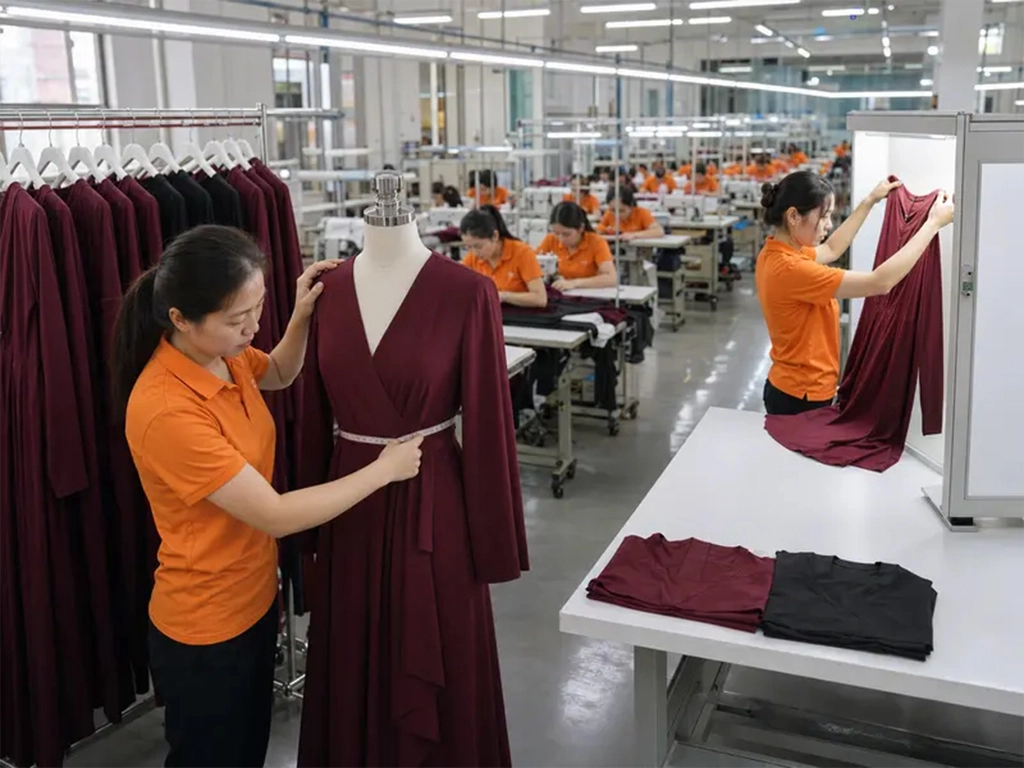
A neckline may need to be adjusted after fitting. A sleeve may need more ease. A lining may pull against the outer fabric. Sometimes the fabric itself needs to be changed because it does not give the required drape or recovery.
These changes are much easier to handle before bulk cutting begins.
This is also where a manufacturer can give practical feedback instead of simply following the sketch exactly.
China Can Work for Both Small and Growing Brands
Not every fashion brand starts with a large order.
Startups, boutique brands and private label companies may want to test a small collection first and increase quantities after seeing how customers respond.
Before choosing a factory, it is worth confirming:
- MOQ per style and color
- Sample cost and sample timing
- Fabric availability
- Bulk production lead time
- Quality control process
- Whether repeat orders can use the same fabric and construction
MOQ is particularly important for new brands. A low unit price does not help much if the factory requires an order quantity that is too high for your current sales volume.
Repeat orders become important once a style starts selling well. You need to know whether the factory can source the same or a comparable fabric, keep the approved measurements and reproduce the construction consistently.
Quality Control Starts Before Bulk Production
Quality problems are not always caused by poor sewing.
Sometimes the problem starts with the fabric or pattern.
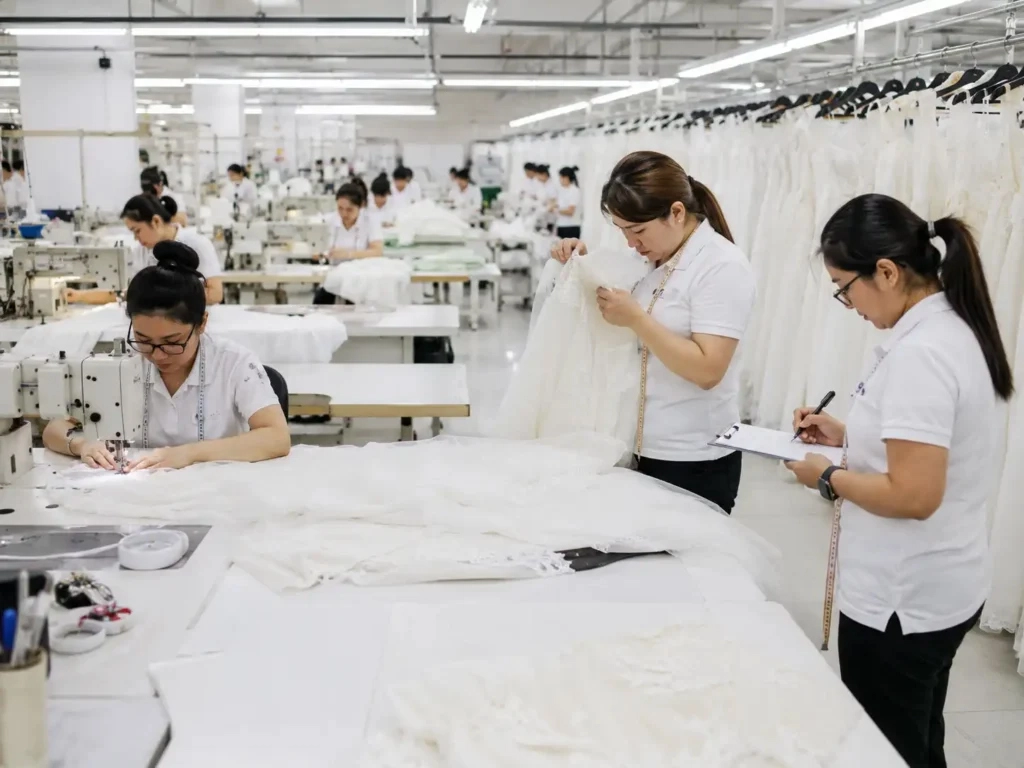
A stretch fabric may recover differently after sewing. A lining that is too tight can pull the outer layer out of shape. A delicate fabric may show marks during handling. Pressing temperature can also affect certain materials.
During production, quality control can include fabric inspection, cutting checks, sewing inspection, pressing checks and final inspection.
The exact process varies by factory, but it is worth asking how these checks are handled before placing an order.
For dress production, small details can have a noticeable effect on the finished garment. Checking them during sampling is usually easier than discovering the problem after the entire order has been produced.
Communication Matters During Sampling
Dress development often involves changes.
You may receive a sample and decide that the waist needs to be smaller, the skirt needs more volume, the sleeve needs to be changed or the fabric needs to be softer.
The way a factory handles these changes can have a direct effect on your production schedule.
Clear measurements, reference photos, tech packs and sample comments give the factory something concrete to work from. At the same time, the factory needs to understand which details are essential to the design and which can be adjusted for production.
In our production work, clear communication at the sample stage often saves more time than trying to correct an unclear instruction during bulk production.
Why Fashion Brands Choose China for Dress Manufacturing
Every manufacturing country has its own advantages, and the right choice depends on your product, order quantity and production requirements.
China is often considered for dress manufacturing because several parts of the supply chain are available within the same manufacturing network:
- A wide range of fabrics and trims
- Pattern and sample development
- Experienced garment production teams
- Support for detailed dress construction
- Established supplier networks
This can be useful when a collection includes several fabrics or more complicated designs.
For example, a brand producing satin slip dresses, velvet dresses and mesh styles may need different fabric suppliers and different sewing approaches. Having access to a broader production network can make this easier to manage.
The advantage is not simply a lower factory price. It is the ability to coordinate more parts of the development and production process.
What Should You Prepare Before Contacting a China Dress Manufacturer?
You do not need a perfect tech pack before contacting a factory, but the more information you can provide, the easier it is to discuss the project.
Useful information includes:
- Design sketches or technical drawings
- Reference samples or photos
- Fabric preferences
- Measurement charts
- Size range
- Estimated order quantity
- Target delivery date
- Packaging or private label requirements
If you already have a sample, sending clear photos and measurements can also help the factory understand the construction more accurately.
For new designs, it is normal for some details to change during sampling. What matters is that the important specifications are confirmed before bulk production begins.
Choosing a China Dress Manufacturer Is About More Than Price
When comparing manufacturers, the lowest quotation is not always the lowest production cost in the long run.
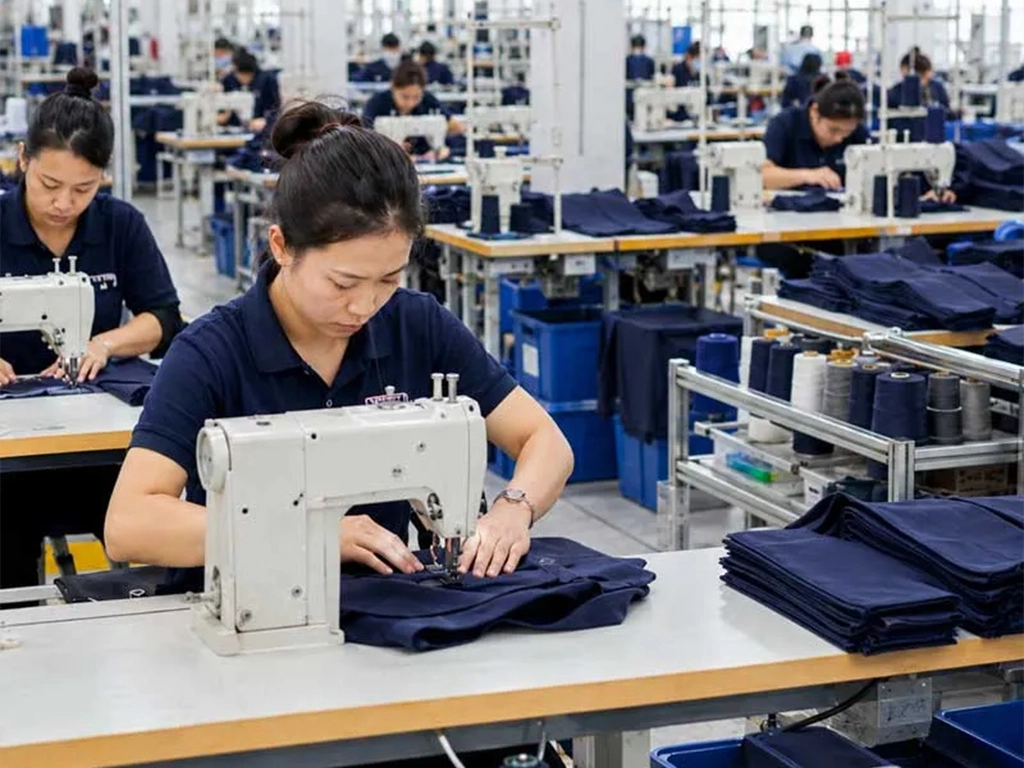
A factory that understands your dress construction, communicates clearly during sampling and manages quality properly may save you from repeated samples, fabric problems and production delays later.
This is particularly important for fashion brands that plan to develop several collections rather than place a single order.
The best manufacturing partner is not necessarily the factory with the lowest price. It is the one that can consistently turn your approved design into the finished product you expect.
FAQ
1. Is China a good choice for new fashion brands with small order quantities?
It can be. The important point is to check MOQ by style and color, rather than looking only at the factory’s general MOQ. If you are starting with smaller quantities, also ask about sample costs, fabric MOQ and repeat-order requirements.
2. How long does it take to develop a custom dress sample?
There is no fixed time for every dress. A simple style may move through sampling quickly, while delicate fabrics, special construction or several fitting changes can add time.
3. What should I check when selecting a China dress manufacturer?
Look beyond the quotation. Check whether the factory has experience with your type of dresses, how it handles sampling and fitting changes, what its MOQ is, how quality is inspected and whether it can maintain consistent production when you place repeat orders.
4. Can a manufacturer help improve a dress design before production?
Yes. A manufacturer can often point out production issues that are difficult to identify from a drawing alone. For example, a fabric may require a different seam construction, a neckline may need additional support, or a particular detail may need to be adjusted to make bulk production more reliable.
5. What causes common problems during dress production?
Many problems begin with details that were not fully confirmed before bulk production. Incorrect measurements, unsuitable fabrics, unclear construction instructions and changes made after bulk cutting can all create additional work. A properly approved sample gives both the brand and factory a clear production reference.
Conclusion
China remains an important manufacturing location for fashion dresses because brands can access a broad supply network, different fabric options and experienced garment production capabilities.
When comparing manufacturers, look beyond the initial quotation. Pay attention to how the factory handles fabric selection, sampling, quality control and repeat production.
For a growing brand, what matters is having a factory that can take the order from the first sample through consistent bulk production.
Explore More Dress Manufacturing Services
If you are developing a new dress and need support with fabric selection, internal construction, sampling, and bulk production, an experienced clothing manufacturer can help you deal with these decisions before they become production problems.
At Xiuyu Apparel, we work with fashion brands, startups, designers, and private label companies from sample development through bulk production.
- Chiffon Dress Manufacturer
- Ruffle Dress Manufacturer
- Corset Dress Manufacturer
- A Line Dress Manufacturer
Get a Clothing Manufacturing Quote Based on Your Design
If you already have a garment design, send us the product photo, tech pack, or reference sample together with your target quantity.
As a dress manufacturer, we can review the fabric, lining, construction, trims, workmanship, and finishing requirements before preparing a quotation based on the actual garment rather than a general price range.

