

When buyers compare China and India for dress production, we usually start with the quotation. But once we receive the tech pack, the discussion normally moves to fabric, MOQ, sampling and production timing.
Once we work from an actual tech pack, other issues come into the picture. The fabric may not be readily available, a sample may need two or three rounds of changes, or the MOQ may look acceptable until the fabric supplier’s minimum is checked.
From our side as a clothing manufacturer, these are usually the points that make a bigger difference than the country name itself.
China vs India Dress Manufacturing: What Actually Changes?
Both countries have large garment industries, but the production experience can be quite different depending on the type of dress and the supplier you choose.
For a fashion brand, price is only one part of the comparison. The more useful question is whether the factory can handle the product you actually want to make—and keep handling it when the collection changes or the order grows.
You should be asking:
- Can the factory source your fabric without creating unnecessary delays?
- Can it develop the sample properly?
- Is the MOQ realistic for your first order?
- Can the factory repeat the same style later?
- Can production increase if the style sells well?
- How closely can the supplier follow your measurements and construction details?
In practice, the answers to these questions often tell us more about a supplier than the country printed on the quotation.
| Production Factor | China | India |
|---|---|---|
| Dress styles | Broad range of commercial and fashion styles | Strong in many textile- and craft-related categories |
| Fabric sourcing | Wide supplier network and material selection | Strong textile base, particularly in cotton and traditional fabrics |
| Sampling | Well suited to repeated development and revisions | Capable, depending on factory specialization |
| MOQ | Varies by factory, fabric and order size | Varies considerably by factory and material |
| Custom production | Strong OEM, ODM and private label capabilities | Strong customization in suitable product categories |
| Production scale | Suitable for small programs through larger production | Good capacity, but varies widely between suppliers |
| Fabric variety | Broad range of woven, knit, synthetic and natural fabrics | Strong in cotton, natural textiles and specialty fabrics |
| Best fit | Brands needing flexibility, variety and scalable production | Brands needing specific textiles, embroidery or craft-based production |
This is only a starting point. Once you put an actual dress into development, the differences become much easier to evaluate.
Start With the Dress, Not the Country
Before comparing factories, we normally look at the dress itself.
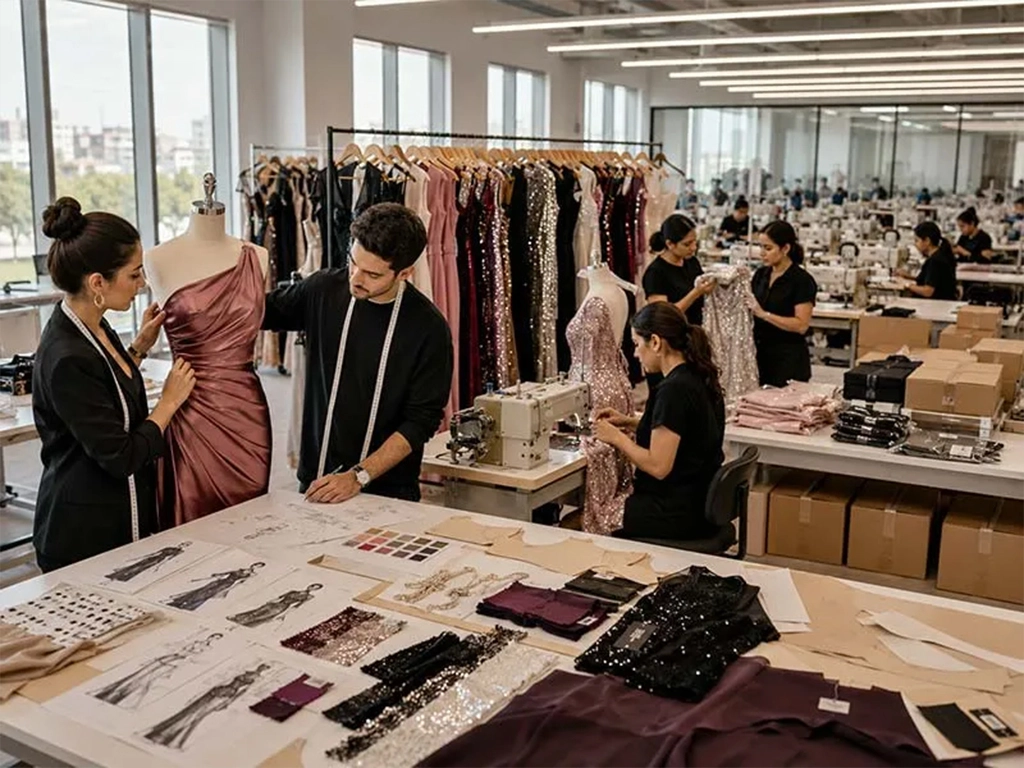
A cotton summer dress, a bias-cut silk dress and a structured bodycon style can place very different demands on a factory. The construction, fabric behavior and finishing requirements can change the production process considerably.
Your design may require:
- A particular fabric weight
- Custom dyeing
- Lining
- Embroidery
- Beading or sequins
- Special seam construction
- Invisible zippers
- Bias cutting
- Multiple size grades
- Specific finishing or pressing
A dress manufacturer that does basic cotton dresses very well may not be the same factory you would choose for a bias-cut silk dress or a heavily embellished evening style.
If you are a designer or startup brand, you should therefore show the factory the actual design before making a country decision. A supplier’s response to your product can be more useful than a general statement about manufacturing in China or India.
Dress Manufacturing Cost: The First Quote Can Be Misleading
Price is usually one of the first things a buyer compares.
That makes sense, but comparing two unit prices without checking the specifications can give you the wrong answer.
Suppose one factory quotes a lower price but uses a different fabric weight, lining construction or finishing method. The two dresses may look similar in a quotation sheet but cost different amounts to produce correctly.
When we compare two quotations for the same style, we first make sure the specifications are actually the same.
- Fabric composition
- Fabric weight
- Fabric width
- Garment measurements
- Lining
- Trims
- Printing or embroidery
- Packaging
- Quantity
- Size breakdown
Then look at the complete production cost.
The Lowest Unit Price Is Not Always the Lowest Cost
Your real cost can also include:
- Sample development
- Fabric testing
- Freight
- Import duties
- Inspection
- Rework
- Packaging
- Storage
- Repeated sampling
For a small brand, extra sample rounds can add up quickly. The cost is not only the sample fee. You may also be paying for additional fabric, courier charges and several days of development time.
For a larger buyer, the calculation is different. Once an approved style moves into repeat production, consistency and delivery reliability often matter more than saving a small amount on the first order.
Fabric Sourcing Can Become a Bigger Issue Than Labor Cost
Fabric is one of the areas where a quotation can change quite quickly.
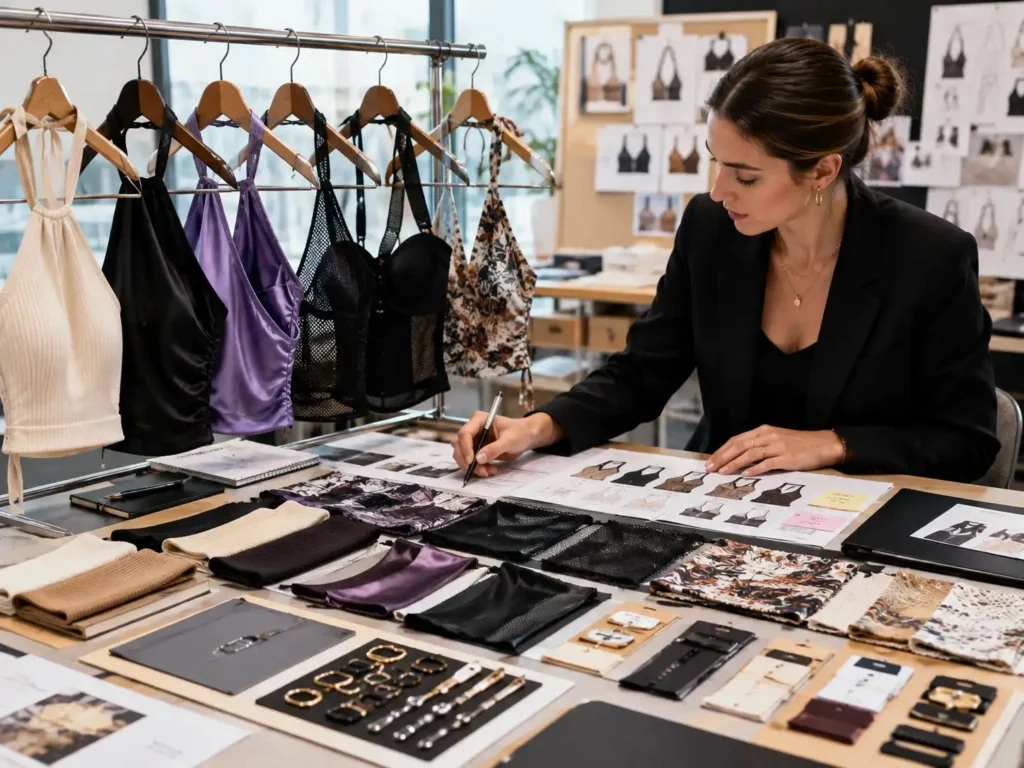
A buyer may send a reference fabric and ask for something “similar.” That sounds simple until we start checking weight, width, composition, stretch and available stock. If the fabric needs custom dyeing, the minimum order and lead time can change again.
India has a large textile industry and strong capabilities in cotton, printed textiles, embroidery and traditional textile techniques.
China also has a very broad fabric supply chain. Depending on your product, you can source woven fabrics, knits, satin, chiffon, silk, linen, rayon, polyester and various blends through a large network of mills, traders and supporting suppliers.
But having many fabrics available does not mean every factory has access to the right one.
When you send a fabric reference, ask the manufacturer:
Can you source this exact fabric, or only something similar? If the fabric is important to the design, “similar” is not always close enough.
That distinction becomes important when the fabric is central to the look of the dress.
Fabric Substitution Needs to Be Controlled
Sometimes a supplier cannot find the exact material and proposes an alternative.
That can be perfectly reasonable, but you should not approve a substitute simply because the appearance looks close in a photograph.
Check:
- Weight
- Hand feel
- Stretch
- Drape
- Shrinkage
- Opacity
- Color
- Surface finish
A fabric that looks almost identical on a screen can behave very differently once it is cut and sewn.
MOQ Is More Complicated Than One Number
If you are launching a new brand, MOQ can be more important than the headline factory price.
You may want to test 100 pieces of a dress before committing to a much larger order.
But there can be several different minimums:
Garment MOQ
The minimum number of finished dresses the factory will produce.
Color MOQ
The minimum quantity required for each color.
Fabric MOQ
The minimum quantity the fabric supplier requires.
Custom Fabric MOQ
The minimum needed if you want a new color, print or fabric development.
This is why two factories can both say “low MOQ” and still give you very different answers when you ask for an actual order.
Ask What the MOQ Actually Applies To
If you are a boutique, startup or private label company, ask this question early:
“Is the MOQ per style, per color, or per fabric?”
It can save you a lot of back-and-forth later.
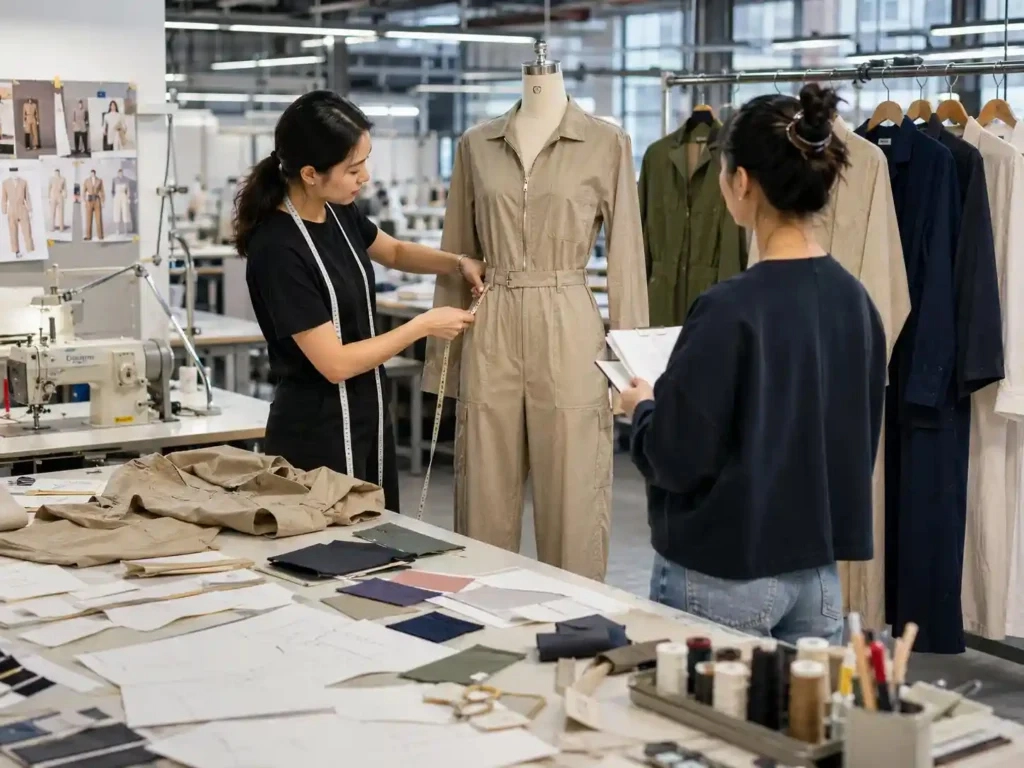
A factory may accept a smaller garment order but still need a larger fabric purchase. In some cases, available stock fabric can solve the problem; in others, custom material development makes a small order less practical.
Sampling Is Where You Learn How a Factory Really Works
A clothing manufacturer can look impressive on a website and still be difficult to work with during sample development.
The first sample tells you more than whether the garment looks good in a photo. It shows how well the factory understands your measurements, construction notes and comments.
For example, when a buyer says the waist feels too low, the useful response is not simply “we will adjust it.” The factory needs to understand whether the problem comes from the pattern, the measurement or the way the garment is constructed.
One revision is normal. Two or three are not unusual for a new style either.
What matters is whether each revision is moving toward the approved design.
A Good Sample Process Is Not Just About Speed
You may see factories offering very fast samples.
That sounds attractive, but speed alone does not tell you whether the sample is useful.
For your first development, you should pay attention to whether the factory notices production problems and asks sensible questions.
For example, if your chosen fabric is too lightweight for a particular construction, a good production team should raise the issue before bulk manufacturing.
That kind of communication can save much more time than receiving a fast but incorrect first sample.
Production Capacity Matters When a Style Takes Off
Your first order may be small.
That does not mean your production requirements will stay small.
A fashion startup might begin with a few hundred dresses and later reorder several thousand after a style performs well.
You should think about that before choosing a supplier.
Ask yourself:
Can this manufacturer support the next stage of my brand?
A factory may have plenty of sewing machines and still struggle with a sudden increase in orders.
Cutting, material preparation, sewing, finishing, QC and production scheduling all have to keep pace. If one part of the process becomes a bottleneck, the extra machines do not solve the problem by themselves.
A supplier may be suitable for a small test order but struggle when you suddenly need more units within the same delivery window.
For growing brands, this can become a bigger issue than the initial MOQ.
Repeat Orders Deserve More Attention
The first production run gets most of the attention because everything is new.
The second order can reveal whether the manufacturing relationship is actually stable.
You want the next batch to match the approved style without having to explain the same construction details all over again.
Before a repeat order, we normally keep the following as the production reference:
- Approved fabric
- Color standard
- Measurements
- Pattern version
- Construction details
- Labels
- Packaging
- Approved sample
This gives you a reference when the style is reordered several months later.
For buyers managing several suppliers, this documentation becomes especially useful when a successful dress moves from a trial order into regular production.
What to Check When Comparing Dress Quality
When comparing China and India, it is easy to ask:
“Which country has better quality?”
There is no useful answer to that question without looking at the actual factory and the actual garment.
Quality comes down to how the individual factory manages your product.
For dresses, you should look at things such as:
- Measurement accuracy
- Seam quality
- Stitch density
- Fabric defects
- Color consistency
- Zipper function
- Lining attachment
- Hem finish
- Pressing
- Final appearance
One thing we normally check with a new buyer is when the factory plans to inspect the garments.
If quality problems are found only after the entire order has been sewn, correcting them becomes expensive.
In-line inspection gives the production team a chance to correct recurring problems while the order is still running.
The Approved Sample Should Be the Bulk Production Reference
Once the PP sample is approved, we use it as the physical reference for bulk production.
This is especially important for fashion dresses because many details are difficult to describe precisely in an email.
Terms such as:
- relaxed fit
- soft drape
- oversized sleeve
- fitted waist
- slightly longer hem
can be interpreted differently.
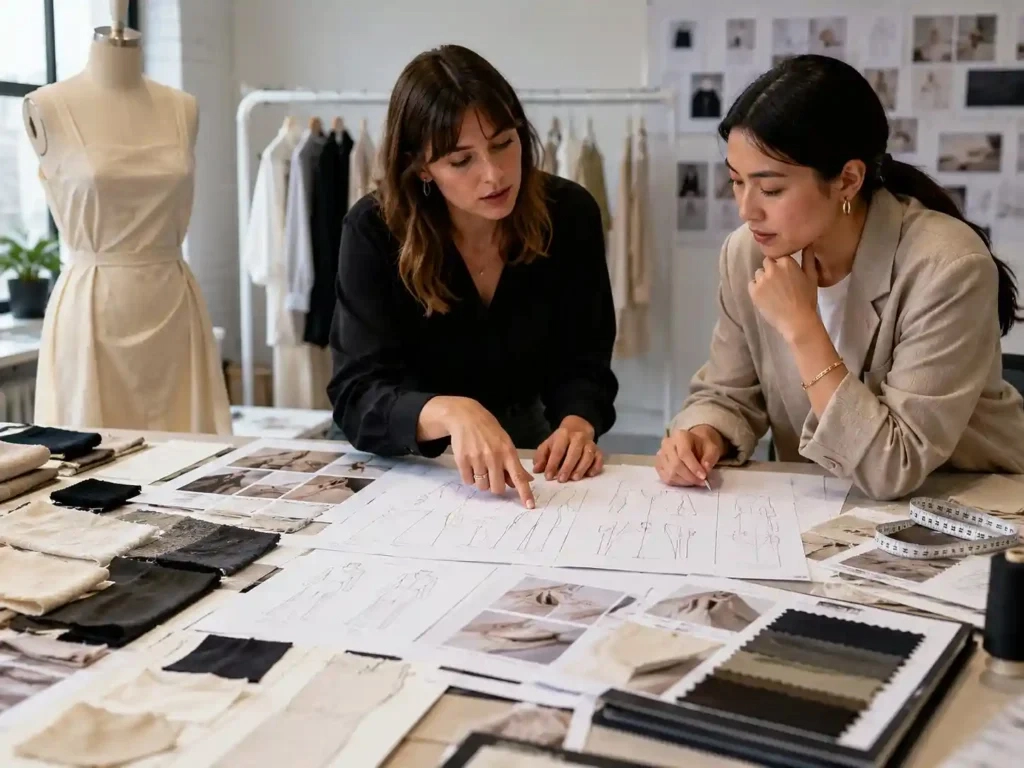
A measurement chart helps, but the approved sample gives the production team a physical reference for construction, proportion and finishing.
Customization and Private Label Requirements
Private label orders often involve more details than the garment itself.
A buyer may need custom labels, hangtags, packaging, buttons, printed lining, embroidery or a specific size range. Each additional item can affect sourcing and production, so it is better to include these requirements before the quotation is finalized.
You may require:
- Custom labels
- Hangtags
- Branded packaging
- Custom buttons
- Printed lining
- Embroidery
- Special trims
- Custom measurements
- Multiple size ranges
China and India both have manufacturers capable of custom production.
The more important question is whether the specific supplier has experience with your product.
For example, a factory experienced in basic cotton dresses may not be the right production partner for a complicated silk evening dress.
The factory’s specialization matters more than its country.
Lead Time Starts Before Sewing
When buyers ask us for a production lead time, we first check what has already been prepared.
If the fabric is in stock and the pattern is approved, the schedule is very different from an order that still needs custom dyeing, fabric development and several sample revisions.
A typical development and production process can involve:
Fabric sourcing → fabric approval → sampling → pattern revisions → sample approval → material production → cutting → sewing → finishing → inspection → packing → shipping
If the fabric is already available, production planning can be straightforward.
If you need custom dyeing, a special print or a new fabric, the material stage can add significant time before the first garment enters production.
That is why it is useful to separate:
Sample lead time
from
Bulk production lead time
and then look at the complete calendar.
Shipping Should Be Compared With Your Selling Market
The factory price is only one part of the delivery calculation. Your selling market, shipping method and final warehouse location can change the landed cost considerably.
For a buyer comparing two suppliers, it is better to calculate the route all the way to the warehouse rather than comparing factory prices alone.
If you sell mainly in Europe, European production can offer logistical advantages in some cases.
If your customers are mainly in the US, Australia or other markets, you should compare the complete route from factory to your warehouse.
Look at:
- Freight method
- Transit time
- Shipping cost
- Duties
- Delivery frequency
- Warehouse location
- Packaging requirements
A lower ex-factory price does not automatically mean a lower landed cost.
When China May Be a Practical Choice
From our experience working with fashion brands, China is often a practical option when the collection involves several dress categories, different fabrics and ongoing product development.
This is especially relevant if you expect to:
- develop several styles at the same time
- revise samples before bulk production
- use different fabric types
- add OEM or ODM development
- build a private label collection
- start with a smaller order and increase quantities later
For brands whose collections change from season to season, having access to a broader supporting supply chain can make development easier.
When India May Be the Better Fit
India can be a strong option for collections where cotton textiles, embroidery, handwork or traditional textile techniques are central to the product.
For example, you may place more importance on:
- Cotton-based collections
- Indian textiles
- Embroidery
- Handwork
- Traditional textile techniques
- Existing supplier relationships in India
If those elements are central to your collection, proximity to the relevant textile and craft supply chain may outweigh other considerations.
Start with the product requirements, then build the factory shortlist around them.
Your product should determine the shortlist.
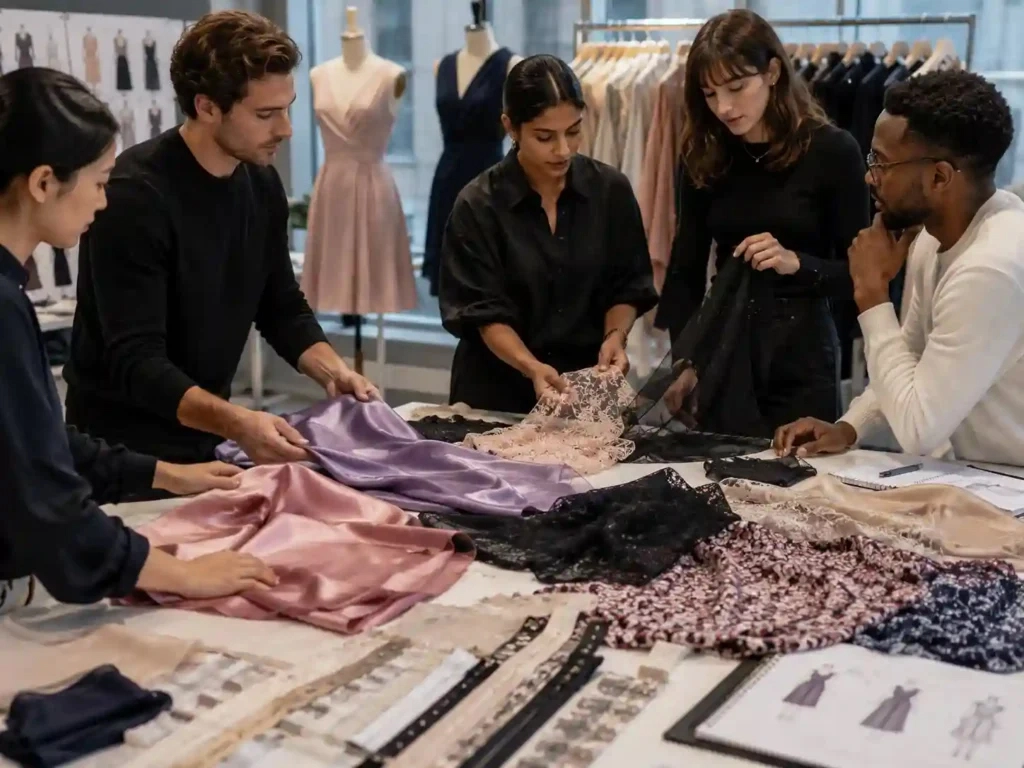
How Should You Compare Two Dress Manufacturers?
Once you have shortlisted suppliers in China and India, give them the same product information.
Give both factories the same information:
- The same design
- The same tech pack
- The same fabric specification
- The same quantity
- The same size breakdown
- The same packaging requirements
- The same target delivery date
Then compare their responses.
Pay attention to the questions they ask before they quote or sample the dress.
A manufacturer that notices a potential problem with your fabric, measurements or construction before sampling may be more useful than one that simply sends back the lowest quotation.
For us, the real test is whether the same style can be made again without changing the fit, fabric or finishing from one order to the next
You are choosing a production partner to help turn your specification into a repeatable garment.
Questions to Ask Before Your First Production Order
Before you place the bulk order, make sure both sides have agreed on the details that can cause problems later.
Ask:
- Which fabric version is approved?
- Which color standard should production follow?
- What are the measurement tolerances?
- Which sample is the bulk reference?
- Who approves changes during production?
- When does fabric inspection happen?
- When does bulk cutting begin?
- How is finished-garment inspection handled?
- What happens if part of the order does not meet the approved specification?
These questions may seem basic, but they become important when several people are involved in your buying team, design team and factory communication.
FAQ
1. Can I use a fabric supplier outside the country where my dresses are made?
You can, but you should confirm the arrangement before sampling. The factory will need to know how the fabric will be delivered, who checks it and what happens if there is a shortage or quality issue. Imported materials can also change your production schedule.
2. What should I do if the factory and my designer disagree about the fit?
Ask both sides to work from the same measurement chart and approved sample rather than discussing fit only through messages. Mark the exact areas that need changing—such as the armhole or waist—and record the revision before another sample is made.
3. How should I handle a dress that uses several special trims?
List every trim separately in the specification instead of describing them generally as “custom details.” Buttons, lace, beads, zippers and labels can have different suppliers and lead times. Your factory should confirm which items it can source and which ones you need to provide.
4. What happens if my sales forecast changes after I place the first order?
If your forecast changes, talk to the factory as early as possible. A higher quantity may require additional fabric, trims or production capacity, while a lower quantity may affect material purchasing and production planning. It is easier to adjust the next order than to change a production order that is already in cutting or sewing.
5. Should I choose a factory based on its product photos?
Product photos are useful for checking whether a factory makes products similar to yours, but they are not enough to judge production capability. Ask for information about sampling, construction, quality checks and previous experience with the type of garment you are developing.
Conclusion
There is no single answer to the China vs India manufacturing question without looking at the actual dress.
For a buyer, the useful comparison starts with the product: fabric, construction, MOQ, sample requirements, delivery schedule and expected reorder volume.
If your collection needs several fabric types, frequent development work, private label services or a clear path from smaller orders to larger production, China may be a practical choice.
If your collection is closely tied to cotton textiles, embroidery, handwork or specific Indian textile capabilities, an Indian supplier may make more sense.
Whichever market you choose, compare factories using the same tech pack and the same production requirements. The quality of the supplier’s questions, sample work and production process will usually tell you much more than the country name on the quotation.
Explore More Dress Manufacturing Services
If you are developing a new dress and need support with fabric selection, internal construction, sampling, and bulk production, an experienced clothing manufacturer can help you deal with these decisions before they become production problems.
At Xiuyu Apparel, we work with fashion brands, startups, designers, and private label companies from sample development through bulk production.
- Mesh Dress Manufacturer
- Velvet Dress Manufacturer
- Chiffon Dress Manufacturer
- Evening Dress Manufacturer
Get a Clothing Manufacturing Quote Based on Your Design
If you already have a garment design, send us the product photo, tech pack, or reference sample together with your target quantity.
As a dress manufacturer, we can review the fabric, lining, construction, trims, workmanship, and finishing requirements before preparing a quotation based on the actual garment rather than a general price range.

