

When you compare a dress factory with a trading company, the quotation is usually the easy part. The difference becomes clearer once you start making samples, changing measurements, choosing fabrics, or preparing an approved style for bulk production.
From the factory side, these are the stages where communication has the biggest effect on the order. If you are developing a new collection, it helps to know who is actually handling the pattern, sample, fabric, and production changes behind your order.
Dress Factory vs Trading Company: What Is the Actual Difference?
A direct dress factory is involved in the actual production of the garment. A trading company usually takes care of the customer relationship and then places the production with one or more factories.
At the beginning, the difference may not be obvious. Both suppliers can quote from your tech pack, arrange a sample, send you photos, and take the order forward.
The difference usually shows up when something has to change.
A sleeve needs to be altered after fitting. The fabric does not drape the way you expected. The lining feels too heavy. A measurement needs to be corrected before cutting.
With a direct factory, you can usually discuss those issues with the people handling the pattern, sample, or production. With a trading company, the same request may need to go from you to the trading team and then to the factory.
That extra communication step is not necessarily bad. It simply becomes more noticeable when a collection involves a lot of development work.
Where the Difference Shows Up in Production
Sample Development
Your first sample is rarely the final version.
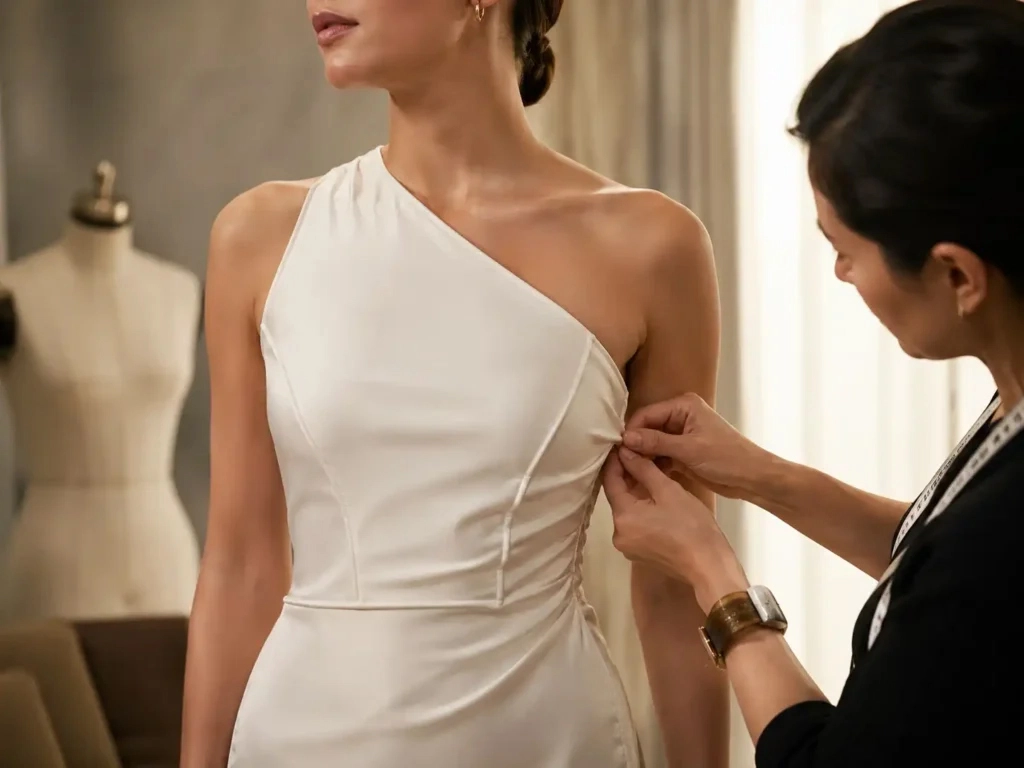
During fitting, the neckline may need to come up, the waist may need to move, or the skirt may need more volume. Sometimes the fabric itself changes the way the original pattern looks once the dress is made.
These are normal parts of garment development. The way the change is handled is what matters.
When we work on a fitting revision, we look at more than the measurement itself. A waistline change can affect the balance of the bodice. A wider sleeve opening can change the armhole. Adding volume to a skirt can increase fabric consumption and change the way the dress hangs.
It is much easier when the person discussing the fitting change can also check the pattern and production method, especially when you work directly with a dress manufacturer.
Fabric Sourcing
A fabric swatch can look right and still create problems in a finished dress.
The color may be correct, but the fabric can drape differently once it is cut into a full garment. Stretch fabric may not recover as expected. Lightweight fabric can become too transparent. A heavier fabric can change the shape of the original pattern.
As a clothing manufacturer, we look at these details before the fabric reaches production. We need to know how it cuts, how it sews, how it responds to pressing, and how it behaves after the garment is assembled.
We pay even more attention to this with silk, satin, velvet, chiffon, and stretch fabrics. A difference in weight, stretch, or construction that seems minor on a swatch can be quite noticeable in the finished dress.
Changes Before Bulk Production
Last-minute changes can also come in at this stage.
The zipper may be replaced. The lining may need to be lighter. A sleeve opening may need to be adjusted. Sometimes the final fit needs one more measurement change.
None of these changes is unusual. The bigger issue is making sure the latest version reaches the production team before cutting starts.
Before bulk production, we prefer to keep the approved sample, updated measurements, fabric details, and construction changes together in one production file. This gives the cutting and sewing teams one clear version to work from.
Is a Direct Dress Factory Always Cheaper?
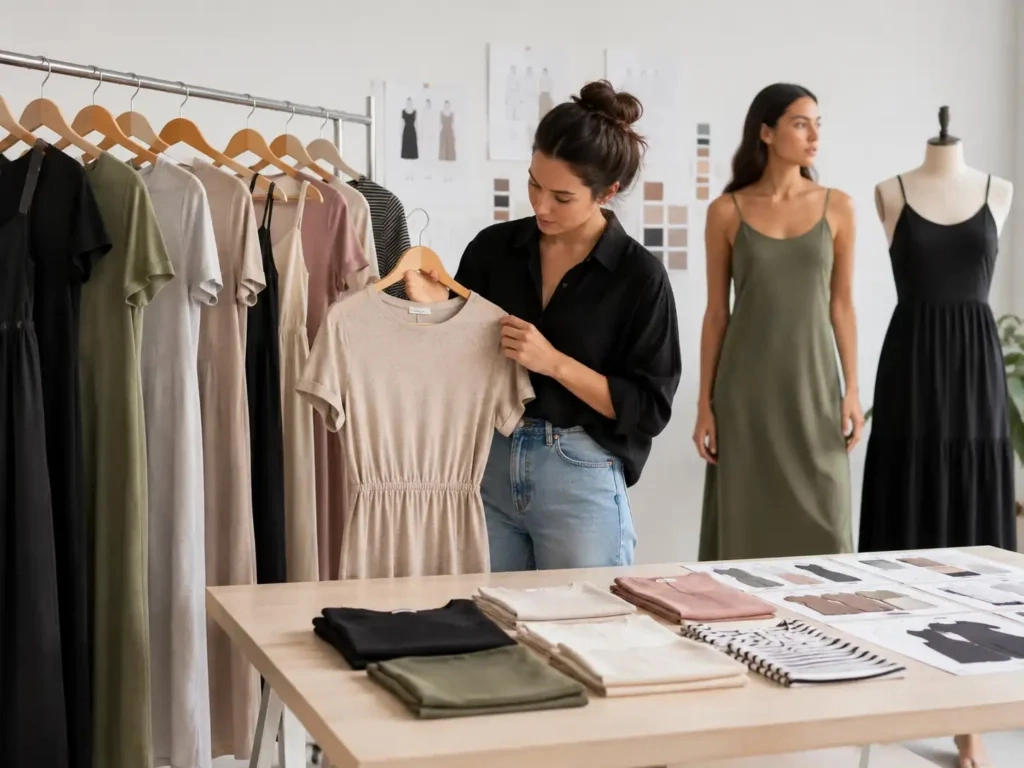
A lower quotation does not always mean the two suppliers are offering the same thing.
The fabric may be different, the lining may be simpler, or sample revisions may not be included. Even packaging and shipping terms can be calculated differently.
Once those details change, the two quotations are no longer a direct comparison.
- Fabric consumption
- Fabric MOQ
- Sample revisions
- Pattern adjustments
- Sewing complexity
- Rework
- Packaging requirements
- Shipping arrangements
- Production delays
A supplier quoting a lower price may still cost you more if the sample takes several extra rounds to approve or if a quality problem appears during bulk production.
For a fashion brand, the better question is not:
“Who gives me the lowest price?”
It is:
“What am I getting for the price, and how much production risk am I taking?”
When Does a Trading Company Make Sense?
A trading company can be a practical choice in some situations.
If you need products from several different factories, having one company coordinate the orders can save you time.
This can be useful when your product range includes dresses, tops, trousers, jackets, accessories, and other categories that require different production capabilities.
You may also prefer a trading company if you do not have an internal sourcing team and want someone to handle factory communication, quotations, production follow-up, and shipping coordination.
For some buyers, having one company coordinate everything is simply easier.
Before you choose this route, make sure you understand what the trading company is actually handling for you.
Ask where the garments will be made, who develops the samples, who checks the quality, and who you will speak with if a technical problem comes up during production.
When Is a Direct Dress Factory a Better Fit?
A direct factory is usually worth considering when you need more involvement in product development.
Direct factory communication is especially useful if you:
- Develop your own dress designs
- Need several rounds of fitting
- Have detailed fabric requirements
- Need custom measurements
- Develop private label collections
- Repeat successful styles
- Require consistent construction across different orders
- Need quick decisions when production issues appear
You notice the difference more when you are developing new styles rather than simply reordering an existing product.
A startup brand may still be changing measurements, fabrics, trims, or construction details while the first samples are being made. An established brand may already have those specifications locked down and mainly need the factory to reproduce them consistently.
When you are developing a collection from scratch, you may not know which details will cause problems until the first sample is made.
A good production partner should be able to explain what is happening rather than simply telling you that something cannot be done.
The answer may be a pattern adjustment, a fabric change, or a different sewing method. That conversation is much easier when you can communicate directly with the manufacturing side.
What to Check Before Choosing a Supplier
Before choosing either option, look at the way the supplier actually works.
1. Who Makes the Garment?
Do not assume that a company calling itself a manufacturer owns the production facility.
Ask where your dresses will be cut and sewn.
If production is outsourced, ask which parts are handled internally and which are handled by another supplier.
2. Who Develops the Samples?
Ask who actually makes the pattern and sample.
It is useful to know whether the sample room and the bulk production team are part of the same operation. If the approved sample is made by one supplier and bulk production is later moved somewhere else, you may need another round of checking before production starts.
3. How Are Fabric Decisions Made?
If you have a specific fabric requirement, ask how the supplier checks it.
When we review a fabric for a new style, we normally look at composition, weight, width, stretch, shrinkage, finish, and lining rather than judging it from photos alone.
If the supplier only sends you a few photos and asks you to choose, you may not get enough information to judge whether the fabric will work for your design.
4. What Happens After Sample Approval?
This is worth asking before you place the order.
Find out what happens if you request a change after the sample has been approved. More importantly, ask how that change is recorded and how the updated specification reaches the cutting and sewing teams.
A measurement written in an email is not necessarily the same as a measurement updated in the production file. You want to know which version the factory will actually use when bulk production starts.
5. How Is Quality Checked?
Do not stop at the question, “Do you have QC?”
Ask when the checks actually happen.
Fabric should be checked before it reaches the cutting table. Measurements and construction can be checked while sewing is underway. Finished garments should be inspected again before pressing, packing, and shipment.
What you really want to know is where the checks happen, what the team checks, and what happens when they find a problem.
6. What Is the MOQ for Your Actual Order?
A supplier may advertise a low MOQ, but that number may not apply to every style, color, or fabric.
Ask whether the MOQ applies per style, per color, or per fabric.
This matters when you are a startup brand testing several designs rather than ordering large quantities of one style.
For Startup Fashion Brands
For a new brand, the first order is often less about getting the largest possible quantity and more about finding out what actually sells.
You may want to test several styles, keep the initial inventory manageable, and make changes after seeing the first samples.
In that situation, MOQ is important, but it is not the only thing to look at. You also want to know how the supplier handles sample revisions, small production runs, and reorders when one style starts performing well.
A factory that can handle a 100-piece test order and then reproduce the same style at 500 or 1,000 pieces gives you more room to grow without changing suppliers too quickly.
For Established Fashion Brands
Once your brand has approved patterns, graded measurements, fabric standards, labels, packaging requirements, and QC procedures, your priorities are different.
At this stage, consistency usually matters more than helping you decide how the garment should be made.
The questions become more practical:
- Can the same fabric be reproduced?
- Can measurements remain consistent between production runs?
- Will the bulk order follow the approved sample?
- How are defects recorded and corrected?
- Can the factory handle repeat orders at the required volume?
- Who receives updated specifications when your requirements change?
For established brands, a supplier that gets the first order right but struggles with repeat production may not be the right long-term partner.
Dress Factory vs Clothing Manufacturer: Are They the Same?
It comes down to what you are actually producing.
If most of your collection is dresses, a dress manufacturer with strong dress production experience may be more familiar with fitting, drape, closures, lining, and dress-specific construction.
If you are producing dresses alongside tops, skirts, trousers, jackets, or other categories, a broader clothing manufacturer may make supplier management easier because more of the collection can stay with one production partner.
A Practical Comparison Before You Place an Order
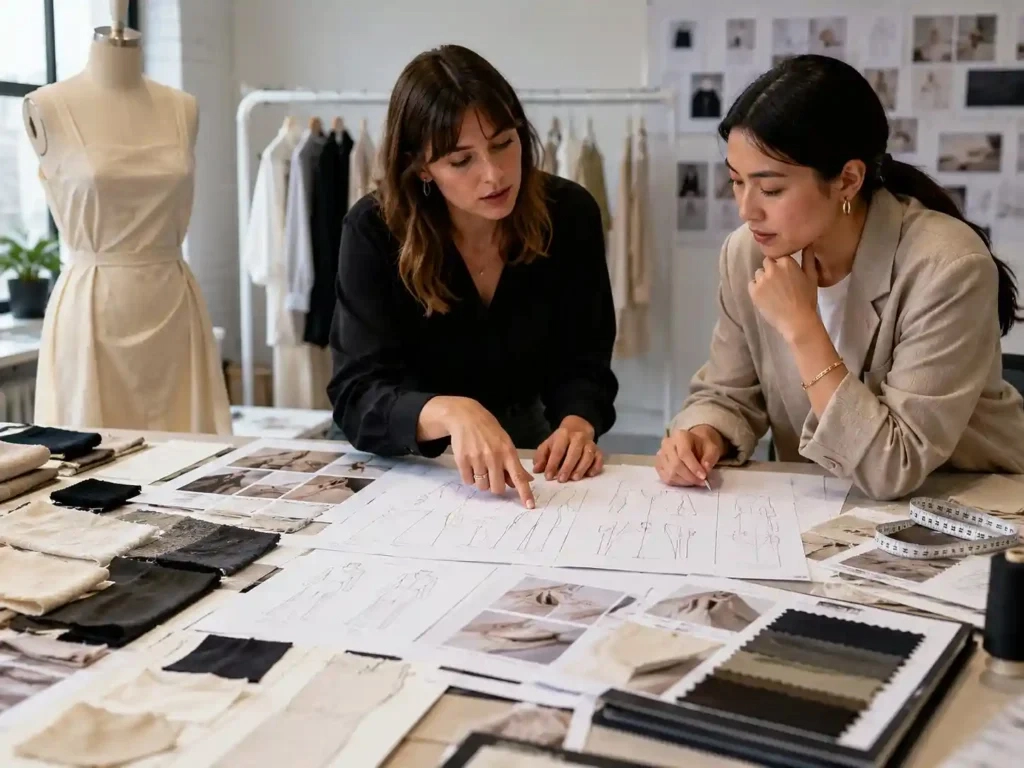
Before making your decision, compare suppliers using the same information.
| What to Check | Why It Matters |
|---|---|
| Actual production location | Tells you who is making the garments |
| Sample development | Shows how design changes are handled |
| Fabric sourcing | Helps prevent fabric-related production problems |
| MOQ | Affects how much inventory you need to commit |
| QC process | Shows when production problems are identified |
| Communication | Determines how quickly technical issues can be resolved |
| Production changes | Shows how updated requirements are controlled |
| Repeat orders | Important if a successful style becomes a core product |
| Lead time | Helps you plan launches and inventory |
| Production capability | Shows whether the factory fits your product |
Do not compare factories only from the quotation sheet.
If two suppliers have similar prices, look at how they handle the parts of production that are difficult to see from a spreadsheet.
That is often where the bigger difference appears.
FAQ
Can a small fashion brand work directly with a dress factory?
Yes. What matters first is whether the factory actually works with smaller development and production runs.
Ask about the MOQ, sample process, payment terms, and what happens if you need to change the style before bulk production. For a new brand, these details can be more important than finding the factory with the biggest production capacity.
Should you send a tech pack when contacting a factory?
If you already have a tech pack, send it with your inquiry. It gives the factory something concrete to review, especially for measurements, construction, fabric, trims, and finishing.
A complete tech pack is not essential for every first conversation, though. If your design is still being developed, sketches, reference photos, measurements, and fabric information can also give the factory enough to start discussing the project.
How many suppliers should you compare before choosing one?
You usually do not need dozens of quotations. Look at the fabric, MOQ, sample process, lead time, QC, and production capability alongside the price.
Five suppliers quoting different assumptions are less useful than three suppliers quoting the same product requirements.
What should you do if two factories quote very different prices?
Start by checking whether both quotations are based on the same product.
Compare the fabric, fabric weight, lining, trims, construction, packaging, MOQ, sample requirements, and shipping terms. A large price difference often comes from different specifications rather than a major difference in the factory’s actual sewing cost.
Is it risky to change factories after a style has already been produced?
It can be, particularly when the style depends on a specific fabric, pattern, sewing method, or finishing process.
When moving the style to another factory, provide the approved sample and the complete production specifications. Photos alone are usually not enough to reproduce a garment accurately.
The first sample from the new supplier should be treated as a production check, even if the style has already been made before.
Conclusion
The better supplier is the one that fits the way you develop and produce your collection.
If you mainly need someone to coordinate several product categories and factories, a trading company can make the process easier. If you are developing your own dresses, making fitting changes, working with specific fabrics, or planning repeat production, direct communication with the manufacturing side can be more useful.
Before choosing a supplier, look past the first quotation. Find out who makes the sample, where production takes place, how changes are recorded, how QC is handled, and what happens when you place the next order.
The price on the first quotation is only one part of the decision. The way a supplier handles samples, changes, quality, and repeat production will have a much bigger effect once the order is underway.
Explore More Dress Manufacturing Services
If you are developing a new dress and need support with fabric selection, internal construction, sampling, and bulk production, an experienced clothing manufacturer can help you deal with these decisions before they become production problems.
At Xiuyu Apparel, we work with fashion brands, startups, designers, and private label companies from sample development through bulk production.
- Cocktail Dress Manufacturer
- Formal Dress Manufacturer
- Evening Dress Manufacturer
- Corset Dress Manufacturer
Get a Clothing Manufacturing Quote Based on Your Design
If you already have a garment design, send us the product photo, tech pack, or reference sample together with your target quantity.
As a dress manufacturer, we can review the fabric, lining, construction, trims, workmanship, and finishing requirements before preparing a quotation based on the actual garment rather than a general price range.

