

When you develop a fitted dress, the wrong stretch fabric can create problems that are not obvious until the first sample is sewn. You may find the fabric stretches well by hand but pulls across the hips, loses its shape around the waist or changes the fit after sewing. As a clothing manufacturer, we check fabric direction, stretch, recovery and dimensional stability before approving material for production.
What Is 2-Way Stretch Fabric?
2-way stretch fabric stretches mainly in one direction, most commonly across the fabric width. The other direction has little or noticeably less stretch.
The amount of elasticity depends on the fabric construction, yarn and fiber composition. A woven fabric with elastane and a knitted fabric can both have 2-way stretch, but their behavior during cutting and sewing may be quite different.
When you develop a dress with this material, pay attention to the direction of the stretch before the pattern is placed. If the fabric stretches across the body, that direction should be considered when positioning the front and back panels.
We sometimes see a fabric that feels comfortable when pulled by hand but becomes restrictive after it is cut into a fitted bodice. The issue may not be the amount of stretch alone. The pattern could be using the fabric in the wrong direction.
2-way stretch is worth considering when your design needs some flexibility without excessive movement in every direction. Selected fitted dresses, skirts and styles with more controlled construction can work with this type of material.
What Is 4-Way Stretch Fabric?
4-way stretch fabric stretches in both the widthwise and lengthwise directions. This gives the garment more flexibility when the wearer moves, sits or bends.
For close-fitting dresses, this can make a noticeable difference. The material can move with the body rather than relying on stretch in only one direction.
Bodycon dresses and fitted jersey styles are common applications. The fabric needs to accommodate the bust, waist and hips without creating excessive tension around the seams.
However, 4-way stretch does not automatically mean better quality.
A fabric may stretch considerably in both directions but still have poor recovery. After being stretched, it may remain slightly longer or wider instead of returning to its original dimensions. On a fitted dress, this can lead to loose areas around the waist, hips or seat.
When you compare 4-way stretch fabrics, look at how much they stretch and how well they recover. These are two different properties, and both affect the finished garment.
2-Way vs 4-Way Stretch Fabric: What Is the Difference?
| Factor | 2-Way Stretch | 4-Way Stretch |
|---|---|---|
| Stretch direction | Mainly one direction | Both width and length |
| Movement | More controlled | Greater flexibility |
| Pattern placement | Main stretch direction is critical | Both directions need checking |
| Fit | Can provide a firmer feel | Often suitable for close-fitting styles |
| Recovery | Depends on construction | Equally important in both directions |
| Fabric behavior | Usually more stable in the less-stretch direction | More flexible overall |
| Common dress applications | Selected fitted and structured styles | Bodycon and fitted jersey dresses |
The main difference is the direction in which the fabric stretches, not simply how elastic it feels.
A 2-way stretch fabric can have more widthwise stretch than a particular 4-way stretch fabric. Likewise, two 4-way stretch materials can have very different elasticity and recovery.
When sourcing fabric for your collection, ask the supplier for the stretch percentage in both directions rather than relying on the product description.
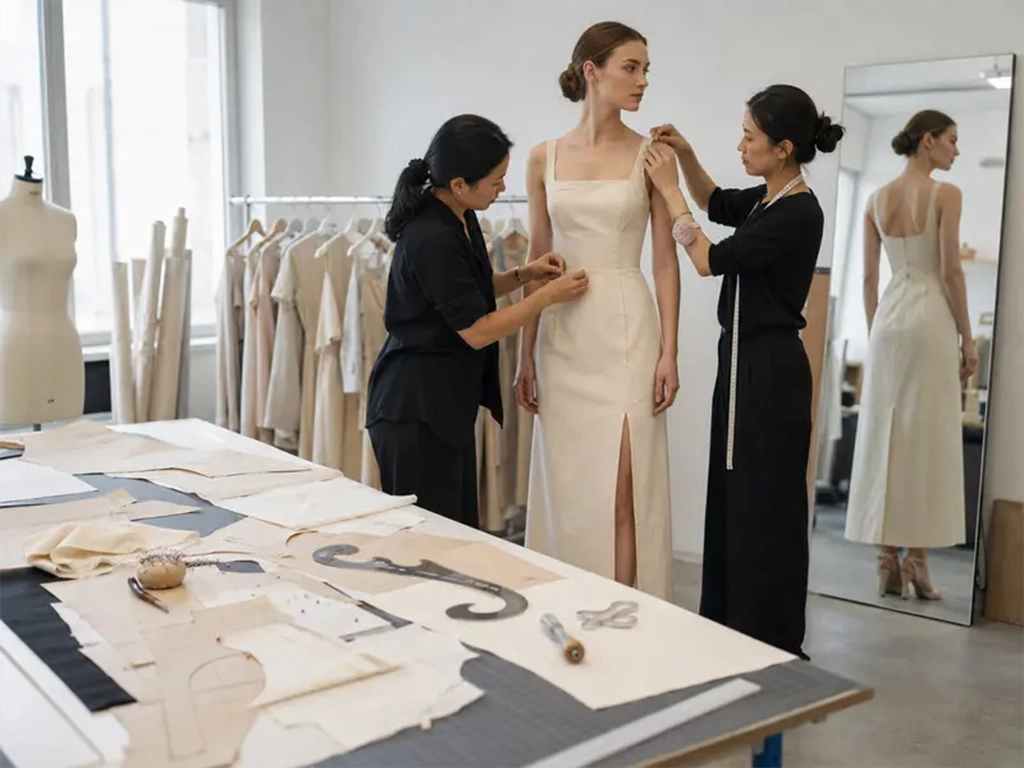
Which Stretch Fabric Works Best for Different Dress Styles?
Bodycon Dresses
Bodycon dresses place considerable demands on fabric stretch and recovery.
Your fabric needs enough elasticity to pass over the bust, waist and hips without putting excessive pressure on the seams. Once the garment is worn, it should also return close to its intended shape.
A common problem is fabric that stretches easily during fitting but becomes loose after movement. You may notice bagging around the waist or hips, even though the first sample looked correct.
When developing this type of dress, we pay particular attention to the hip panels, waist seams and areas where the garment experiences repeated tension.
A fabric described as high stretch is not enough information for approval. Its recovery and behavior in the actual pattern matter just as much.
Fitted Dresses
A fitted dress does not always need 4-way stretch.
If your design uses darts, princess seams or shaped panels, too much elasticity can make the finished garment harder to control. The fabric may stretch during sewing, causing the seams or garment measurements to differ from the intended pattern.
For these styles, a stable fabric with moderate stretch may produce a cleaner result.
You should consider how the fabric works with the construction rather than choosing the material based on stretch percentage alone.
Slip Dresses
With slip dresses, stretch is only part of the fabric decision.
You also need to consider drape, weight and how the material hangs from the shoulder straps. A fabric that stretches too easily may affect the neckline position or cause the dress to hang differently after wearing.
This is particularly important with satin, silk blends and other lightweight materials.
When developing a slip dress, we look at how the material falls after the garment is sewn. A fabric that looks smooth on a flat table may behave differently around the neckline, side seams and hem once it is worn.
Structured Dresses
Structured dresses generally need more controlled fabric behavior.
If your design has a fitted bodice, defined waistline or shaped panels, excessive stretch may affect the intended silhouette.
A moderate 2-way stretch can be suitable for some designs, particularly when you want a little wearing comfort without making the whole garment too flexible.
Lining and interfacing should also be considered. If the outer fabric stretches but the lining does not, the two layers may pull against each other when the wearer moves.
Jersey Dresses
Jersey dresses often work well with 4-way stretch when the design requires a close fit and freedom of movement.
But not all jersey fabrics behave alike. Knit construction, fabric density, weight and elastane content can change the way the finished garment feels.
For example, two jersey fabrics may have similar stretch percentages, but one may cling closely to the body while the other provides more support.
If you are developing several jersey styles in one collection, test each fabric against its intended pattern. A material that works well for a loose jersey dress may not provide enough support for a fitted version.
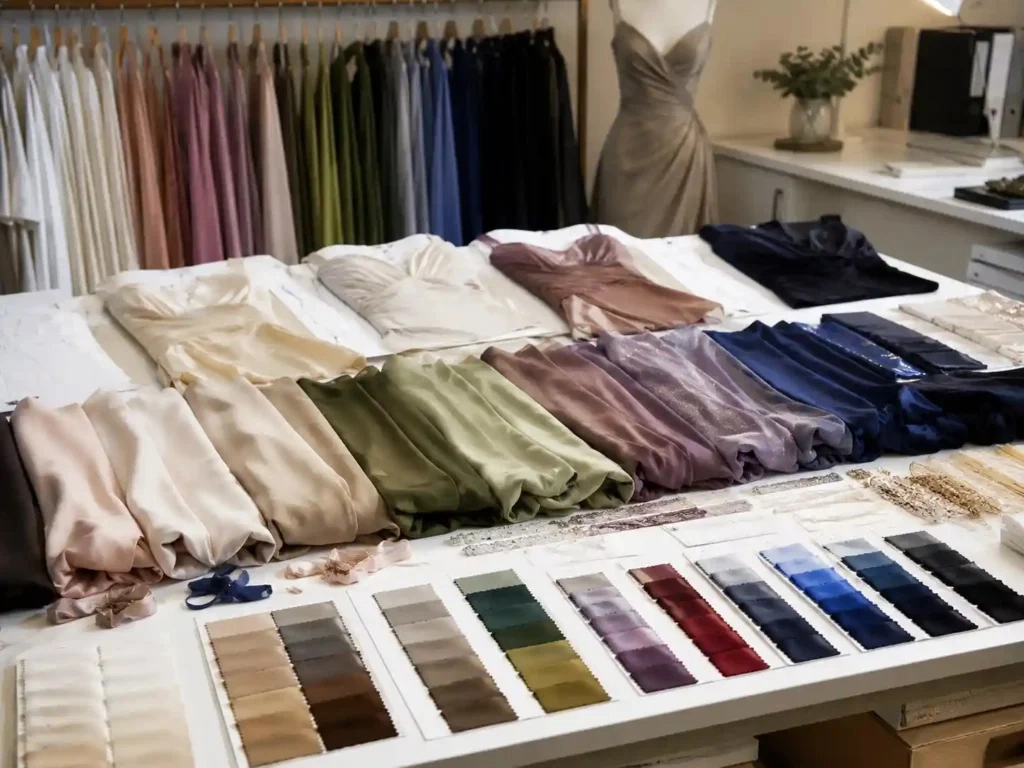
What Should You Check Before Approving Stretch Fabric?
A fabric specification sheet gives you a starting point, but it does not tell you everything about how the material will behave after cutting and sewing.
Before approving a new fabric, pay attention to the following details.
1. Stretch Direction
First, identify which direction the fabric stretches.
This is particularly important with 2-way stretch. If the pattern is placed incorrectly, the finished dress may feel tight even when the fabric has sufficient elasticity.
For 4-way stretch, check both directions. Do not assume the widthwise and lengthwise stretch are equal.
When we review a new material, we mark the fabric direction before discussing pattern placement. This is a small step, but it can prevent problems when the fabric moves to cutting.
2. Stretch Percentage
Descriptions such as medium stretch, high stretch and super stretch are not precise enough for comparing different suppliers.
You can record stretch percentage by marking a section of fabric, measuring its original length and then measuring it again under a consistent pulling force.
The calculation is:
Stretch percentage = (Stretched length − Original length) ÷ Original length × 100
For example, if a 10 cm section stretches to 12 cm, its stretch percentage is 20%.
For 4-way stretch, record both widthwise and lengthwise results.
When comparing suppliers, use the same specimen size, pulling method and testing conditions. Otherwise, the figures may not be directly comparable.
3. Recovery
Recovery is often more important than buyers initially expect.
Stretch the fabric, release it and check whether it returns close to its original dimensions. If it remains noticeably longer or wider, it may not be suitable for a dress that needs to maintain a close fit.
We pay particular attention to recovery around areas that experience repeated movement, especially the waist and hips.
A fabric can pass the initial fitting and still develop loose areas after being stretched several times. This is why a quick hand test should be treated as an initial check rather than final approval.
4. Fabric Weight
GSM and stretch percentage need to be considered together.
A lightweight fabric with high elasticity may feel very different from a heavier fabric with similar stretch. The lighter material may drape more closely to the body but provide less support or coverage.
If your design requires a smooth silhouette, consider whether the fabric needs lining or additional support.
The appropriate weight depends on the dress construction, intended fit and the way the garment will be worn.
5. Fabric Construction
Two fabrics with the same fiber composition can still behave differently.
Knitted structure, yarn arrangement, fabric density and finishing all influence stretch, recovery and dimensional stability.
This becomes particularly important when you compare alternative materials from different suppliers.
A replacement fabric may look similar and have a comparable composition but behave differently during sewing. Before changing materials, check it against the approved reference rather than assuming the original pattern will still work.
6. Shrinkage and Dimensional Stability
Stretch fabric should also be checked for dimensional changes after the expected washing or finishing process.
A small change in fabric length may not seem important on a swatch. On a finished dress, it can affect the hem position, garment proportions and overall fit.
If you are developing several sizes or colorways, keep the dimensional stability requirements consistent. Otherwise, the finished garments may not maintain the same proportions across the collection.
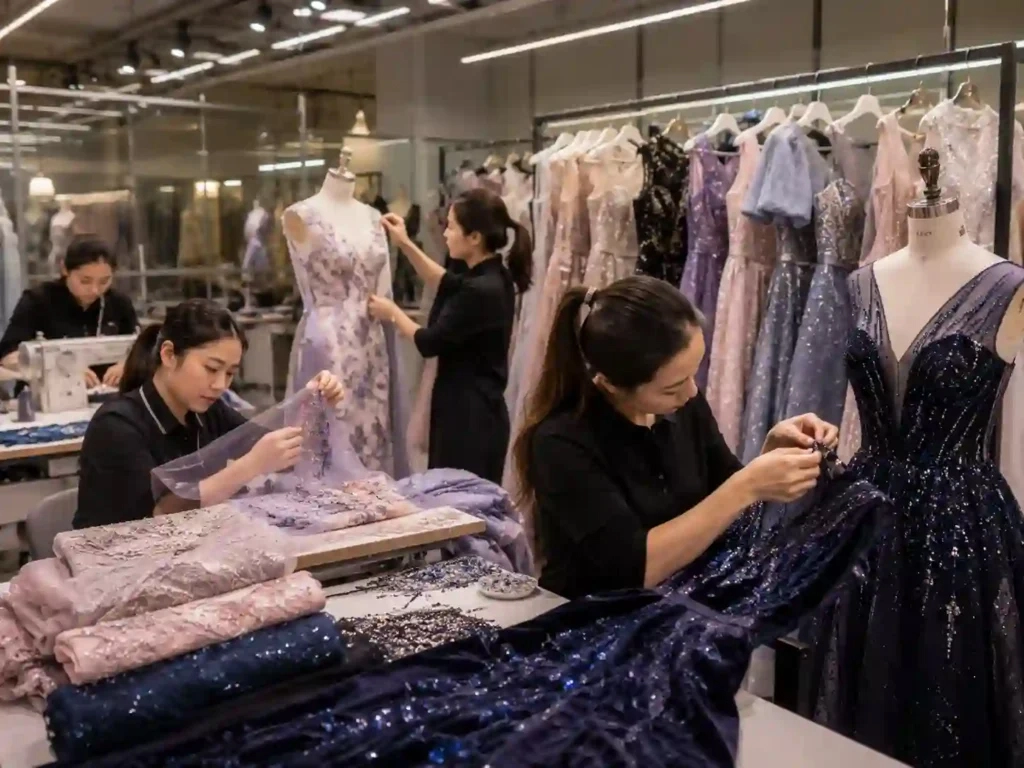
How Does Stretch Affect Dress Pattern and Fit?
Fabric and pattern development should be treated as one process.
Imagine that you develop a fitted dress using a fabric with 20% stretch. After approving the sample, you decide to use another material with considerably more elasticity.
Even if the replacement fabric has a similar weight and appearance, the original pattern may no longer produce the same fit.
The dress could become looser around the waist, or the neckline and side seams may sit differently on the body. A less elastic replacement can create the opposite problem, with excessive pulling around the bust and hips.
In these situations, your pattern maker may need to review the measurements, wearing ease, panel proportions or seam construction.
This is why fabric selection should be settled as early as possible. Changing the material after fit approval can mean repeating part of the sampling process.
Why Can the Same Stretch Fabric Fit Differently in Production?
You may approve a sample and still find that the bulk garments feel slightly different. This does not always mean the factory has changed the pattern.
Fabric can vary between production lots. Dyeing and finishing may affect its dimensions, hand feel and stretch behavior. Even when the supplier uses the same fabric specification, the delivered material should be compared with the approved reference.
Fabric relaxation is another detail worth checking.
Some materials change dimensions after being unpacked and allowed to rest. If the sample fabric and bulk fabric are handled differently before cutting, the finished measurements may not be consistent.
Cutting and sewing also matter. A fabric that moves during spreading or stretches under sewing tension can affect the finished garment measurements.
For fitted dresses, even a small difference around the waist or hip can change how the garment sits on the body.
Before bulk cutting, check the delivered fabric against the approved material and confirm that its dimensions and stretch characteristics remain within the agreed requirements.
How Should You Test Stretch Fabric Before Bulk Production?
Before releasing a stretch dress for bulk production, you should have both an approved sample and a clear fabric reference.
The production material needs to be checked against the specifications used during development.
A practical fabric approval process should cover:
- Fabric composition and construction.
- Widthwise and lengthwise stretch percentage.
- Recovery after stretching.
- Fabric weight and usable width.
- Shrinkage after relevant washing or finishing.
- Fabric performance in the approved sample.
- Finished garment measurements against the approved pattern.
- Comparison between the bulk fabric and the approved reference.
We pay particular attention to the material delivered for bulk production. If its stretch or recovery differs noticeably from the approved fabric, it is better to investigate before cutting starts.
A swatch tells you how the fabric feels in your hand. A sewn sample shows what happens around seams, armholes, waistlines and other construction areas. Both checks are necessary when you want consistent results.
What Problems Can the Wrong Stretch Fabric Cause?
Choosing unsuitable stretch fabric can affect garment quality and production efficiency.
Some problems you may encounter include:
- Loose waist or hip areas: The fabric does not recover sufficiently after stretching.
- Pulling across the bust: The material does not provide enough movement for the approved pattern.
- Distorted seams: Excessive elasticity makes consistent sewing more difficult.
- Neckline deformation: The fabric loses its shape around the neckline.
- Uneven garment length: Dimensional changes affect the finished proportions.
- Inconsistent sizing: Different fabric lots produce different fit results.
- Cutting difficulties: The material shifts or stretches during spreading and cutting.
For a small sample order, these problems may mean another development round. For a bulk order, the impact can be much greater if the material has already been cut.
It is easier to resolve fabric suitability issues during development than to correct finished garments across an entire order.
Should You Choose 2-Way or 4-Way Stretch for Your Dress?
There is no single stretch type that works for every dress.
If your design needs controlled elasticity and a more stable feel, 2-way stretch may be sufficient. If the garment needs to follow the body closely and accommodate movement in different directions, 4-way stretch may be more suitable.
Before making the final decision, consider the pattern, fabric weight, recovery and intended construction.
For your next collection, test the selected material with the actual production pattern rather than relying on the fabric description alone. It is a much more reliable way to judge whether the material will give you the fit and appearance you want.
Frequently Asked Questions
1. Can I use the same stretch fabric for different colors in one collection?
You can request the same fabric specification across different colors, but the finished materials should still be checked. Dyeing and finishing may cause differences in shade, hand feel or dimensions. If color consistency is important to your collection, approve the colors against physical references before confirming the full order.
2. What should I do if my original stretch fabric becomes unavailable?
Ask the supplier for an alternative with matching composition, weight, construction and stretch characteristics. Do not approve a replacement based only on appearance. If the original material is no longer available, a new sample may be needed before confirming the production pattern and final cost.
3. Can I provide my own stretch fabric to a clothing manufacturer?
Yes. Many factories can work with buyer-supplied fabric. Before sending it, confirm the required quantity, usable width, fabric specifications and delivery schedule. You should also allow enough material for sample development and possible fit corrections, particularly if the design has several sizes or complicated panels.
4. How should I plan fabric quantities for a stretch dress order?
Start with the garment pattern, usable fabric width, size range and planned color quantities. Stretch fabrics can require careful spreading and handling, so the estimated consumption should be reviewed against the actual marker rather than a rough garment measurement. Ask your factory to confirm the fabric requirement before placing the material order.
5. Can I change the fabric after approving the dress sample?
You can, but changing the fabric after sample approval may affect the fit, drape, construction and final measurements. Before proceeding, provide the replacement material for evaluation. Depending on how different it is from the original, the factory may recommend another sample and fit review before bulk production.
Conclusion
Choosing between 2-way and 4-way stretch fabric depends on your dress design, not simply on how far the material stretches. Fabric recovery, pattern compatibility and dimensional stability all affect the finished fit. Checking these details before bulk cutting can prevent unnecessary sampling and production corrections. At Xiuyu Apparel, we support brands through fabric evaluation, sample development and bulk production as an experienced dress manufacturer.

