

When you develop a white, ivory or pastel dress, fabric transparency can become a problem after the first sample is made. A swatch may look fine, but the finished garment can show more than you expected, particularly around fitted areas. As a clothing manufacturer, we check fabric coverage before approving a sample for bulk production. Finding the problem at this stage helps you avoid changing the lining, replacing fabric or revising the construction after production has started.
Why Do White and Light-Colored Dresses Show More Transparency?
The problem with light-colored fabric is not always that the material is too thin. Sometimes the fabric itself is suitable, but its color makes the body or inner layers more visible.
Dark colors tend to hide what is underneath. White, ivory and pale shades offer much less visual coverage, so even a fabric that looks reasonably dense on the table may appear sheer when worn.
This becomes more noticeable when you use lightweight fabrics for summer dresses, flowing skirts or fitted bodices.
For example, a black chiffon dress may look acceptable with limited lining, while the same fabric in white may show the body underneath. The pattern and fabric construction have not changed, but the finished appearance is quite different.
If you are developing a collection with several colorways, this is worth checking before you approve the full sample range. A dark sample cannot tell you whether the white or pastel version will provide enough coverage.
Which Dress Fabrics Are More Difficult to Control for Transparency?
Different fabrics need different checks. A solution that works for satin may not work for chiffon or lace, particularly when you want to preserve the original drape.
Silk and Silk Satin
When developing a light-colored silk dress, you should look beyond the color reference and fiber composition.
Silk weight, weave density and finishing all affect how much light passes through the material. Momme weight is useful when comparing silk qualities, but it does not guarantee that two fabrics will provide the same coverage.
Two suppliers may both offer ivory silk satin, yet one fabric may look more transparent than the other when made into a dress.
Pay particular attention to bias-cut skirts and fitted bodices. These areas can behave differently after cutting and sewing because the fabric follows the body rather than remaining flat.
If your design needs a smooth, flowing appearance, compare the fabric and lining together before changing to a heavier silk quality.
Chiffon and Georgette
Chiffon and georgette are popular for lightweight dresses, layered skirts and sheer sleeves. Their soft drape is attractive, but coverage can be difficult to control in pale colors.
A single layer of white chiffon may work for a sleeve or overlay, but it may not be suitable for an unlined bodice.
Adding another layer can improve coverage, although it also changes the weight and movement of the garment. On a flowing skirt, too much lining can make the fabric hang heavily instead of moving freely.
When you choose these fabrics, decide which parts of the dress are intended to be sheer. This gives the pattern and sample teams a clearer direction when planning the lining.
Lace
With lace, transparency is often part of the design. The challenge is deciding where you want that effect and where you need more coverage.
For example, white lace over nude lining looks quite different from white lace over ivory lining. The same lace can produce a noticeably different appearance without changing its construction.
If your design includes a lined bodice and sheer sleeves, make sure the two sections are evaluated separately. Otherwise, the finished sample may look more exposed than the reference design.
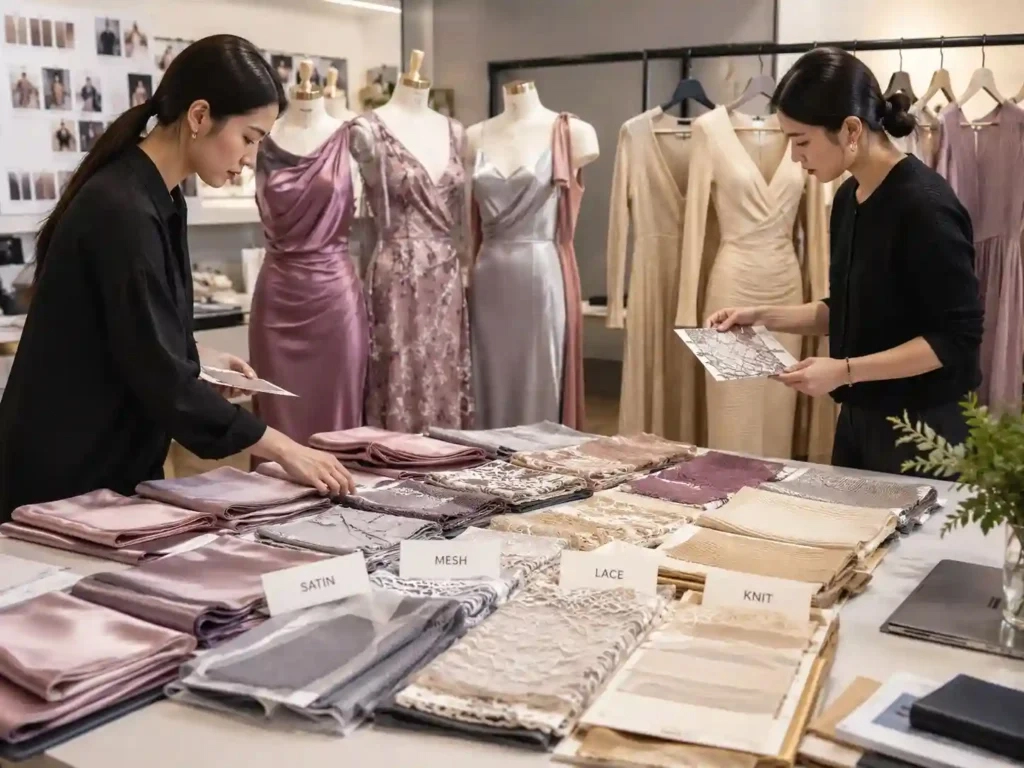
What Makes a Dress Fabric More Transparent?
Before changing your fabric, it helps to identify what is causing the problem. Fabric weight, construction, stretch and lining can all affect the result, but they do not work independently.
Fabric Weight and GSM
GSM tells you how much a square meter of fabric weighs. It is useful for comparing material options, but a higher GSM does not automatically mean better coverage.
A compact fabric with a lower weight can sometimes provide better opacity than a heavier fabric with a more open construction.
When comparing suppliers, check the actual swatches rather than choosing material based on the specification sheet alone. Also consider whether increasing the weight will affect the silhouette you want.
For a fitted dress, a denser fabric may be a reasonable choice. For a soft chiffon maxi dress, a heavier alternative could make the skirt lose its original movement.
Fabric Construction
The way yarns are woven or knitted affects how light passes through the fabric.
Two materials with the same fiber content and similar GSM can still have different levels of transparency. A tightly constructed fabric may provide better coverage, while a more open structure can reveal more of the body underneath.
This is why a description such as 100% polyester or 100% silk is not enough when you are sourcing material for a white dress.
Stretch and Recovery
Stretch is particularly important when you develop bodycon dresses or fitted knit styles.
A fabric may look covered when it is relaxed but become noticeably sheer when stretched across the bust, waist or hips.
You should also check recovery. If the material does not return to its original shape properly, the garment may become loose after wearing, which can affect how it sits on the body.
During sampling, we look at the fabric under the tension created by the actual pattern. Testing a small piece while it is flat will not give you the same result.
Lining and Inner Construction
Lining is one of the most direct ways to improve coverage, but it needs to suit the outer fabric.
A thick lining under lightweight chiffon can make the skirt feel heavy. A lining with the wrong color can also change the appearance of white or ivory fabric.
For a light-colored dress, compare the lining’s weight, color and drape with the outer material. If the design only needs extra coverage around the bodice or skirt, full lining may not be necessary.
The construction should follow the design rather than adding extra layers everywhere.

How Do We Check Fabric Transparency During Dress Sampling?
The first fabric swatch gives you an initial idea of the material, but it does not show how the finished garment will behave. We pay more attention to the actual sample, especially when the order includes white or pastel colorways.
1. Check the Exact Fabric Color
Start with the color you intend to use in production.
If your collection includes black, ivory and pale pink, check the light shades separately. Do not approve the white version based on a darker fabric sample.
Keep the approved fabric reference so that the same material can be checked again when the production lot arrives.
2. Check the Fabric Under Different Lighting
A fabric can look different under showroom lighting, daylight and ordinary indoor lighting.
Strong backlighting often makes transparency easier to notice. This is particularly relevant for white skirts, sheer sleeves and lightweight bodices.
If the dress is intended for outdoor events or daytime wear, check the sample in natural light rather than relying only on the sampling room.
3. Check Fitted Areas After Sewing
For a fitted dress, the bust, waist and hip areas deserve particular attention.
Once the garment is sewn and worn, the fabric may stretch more than it did during the initial fabric inspection. This can expose coverage problems that were not visible on the flat swatch.
We check these areas against the intended fit, rather than pulling the fabric to an unrealistic level of tension.
4. Check Seams, Gathers and Layered Sections
Transparency is not always consistent across the whole garment.
Darts, seams, gathers and overlapping panels can change how the fabric sits. A gathered skirt may provide more coverage in one area, while a single-layer section remains noticeably sheer.
If your dress has different construction details, check each section instead of judging the garment from one area.
5. Approve the Finished Sample Before Bulk Cutting
The finished sample is the final reference for fabric coverage and construction.
Check the bodice, skirt, sleeves and lining. Look at the garment from the front and back, and pay attention to how the fabric moves when worn.
If the coverage is not right, decide whether the problem comes from the outer fabric, lining or pattern construction. Make the necessary adjustment and review the revised sample before releasing the style for bulk cutting.
How Can You Avoid Transparency Problems Before Bulk Production?
For fashion brands and purchasing teams, the best time to deal with transparency is before the fabric order and bulk cutting are confirmed.
A few details in the development stage can save considerable revision work later.
Approve light colors separately. If you order the same dress in several shades, check the white, ivory and pastel versions rather than assuming the darker sample is sufficient.
Specify the intended coverage. Tell the factory whether the bodice, skirt and sleeves need full coverage. If certain areas are intentionally sheer, mark them in the tech pack or reference images.
Confirm lining details. Include the lining color and fabric specification in your sample comments. Avoid leaving these decisions until the production stage.
Keep the approved physical sample. A photograph is not a reliable reference for fabric opacity because camera exposure and lighting can change the appearance.
Recheck replacement fabrics. If your original material becomes unavailable, do not accept an alternative simply because the composition and GSM look similar. The replacement needs to be checked against the approved sample.
These details are particularly important for repeat orders. A new fabric lot may look close to the original but still produce a different result after sewing.

What Information Should You Give the Factory When Developing a Light-Colored Dress?
When you contact a clothing manufacturer about a new dress, try to provide more than a product photograph or fabric name.
The sampling team needs to understand how the finished garment should look, fit and feel.
Useful information includes:
- Design reference: Tech pack, sketch, reference photograph or physical sample.
- Fabric specification: Composition, GSM, fabric type and preferred hand feel.
- Color reference: Pantone number or physical color swatch.
- Coverage requirements: Which areas need lining and which can remain sheer.
- Fit information: Size range, finished measurements and intended silhouette.
- Order details: Estimated quantity, colorways and expected delivery date.
If you have not selected the final fabric, you can still send the design reference and explain your coverage requirements.
For example, a white fitted dress requiring full coverage needs a different fabric and lining decision from a loose maxi dress with intentionally sheer sleeves.
Giving the factory this information at the beginning makes fabric selection and sample development much more straightforward.
FAQ
Can the factory make a white dress more opaque without changing the outer fabric?
In many cases, yes. The factory can review the lining, add an inner layer to selected sections or adjust the construction. However, the revised version still needs to be sampled. Adding coverage without checking the garment’s weight and drape can create a different problem.
Will adding lining always increase the unit price?
Not necessarily by a large amount, but additional lining means more material consumption and sewing operations. The final cost depends on how much of the dress needs lining and how complicated the construction is. It is better to include this requirement before the quotation is finalized.
What should a buyer do when the original approved fabric is no longer available?
Ask the factory or fabric supplier to propose a replacement, then compare it with the original reference. Similar composition, GSM and color names do not guarantee the same performance. If the replacement changes the coverage or drape, a new sample should be approved before bulk production.
Can the factory guarantee that a white dress will not become transparent under every lighting condition?
No fabric can be judged under every possible lighting condition. The buyer and factory should agree on the intended coverage and check the approved sample under representative lighting. If the garment will be photographed or worn outdoors, include those conditions in the sample review.
Should fabric transparency be included in the purchase order or technical specification?
Yes. For repeatable production, record the approved fabric, color, lining details and coverage requirements in the technical specification. This gives the factory a reference when checking incoming materials and helps prevent different interpretations between sampling and bulk production.
Conclusion
Fabric transparency in white and light-colored dresses is easier to manage when you address it during development rather than after bulk cutting. The right fabric, lining and construction need to work together without changing the intended fit or drape. At Xiuyu Apparel, we approach these details as part of our work as a dress manufacturer, helping buyers review fabric and sample requirements before moving into bulk production.

