

When you are developing a lace dress, the fabric can affect the fit long before the finished garment is made. In our sampling work, we do not just ask whether the lace stretches. We look at how much it moves, which direction it moves in, and how well it returns after fitting. Those differences usually become much easier to see once the lace is cut, lined and sewn into the dress.
For a dress manufacturer, these fabric checks are part of the development process rather than something left until bulk production.
Stretch Lace vs Non-Stretch Lace: What’s the Difference?
Stretch lace gives the dress more room to move during wear. Non-stretch lace is much less forgiving, so the fit has to be built into the pattern and closure from the beginning. We usually see the difference during the first fitting.
A swatch can feel flexible in your hand, but that does not always tell you how it will behave as a bodice, sleeve or skirt panel. Once the lace is cut into panels and joined with seams, the tension is distributed differently.
Before we approve a lace for production, we check more than its stretch. We also look at recovery, usable width, motif stability and how the lace works with the lining. A lace may perform well in one area and still cause problems once it is made into the actual dress.
Stretch Lace vs Non-Stretch Lace for Dresses
| Consideration | Stretch Lace | Non-Stretch Lace |
|---|---|---|
| Stretch | Has usable elasticity | Little or no useful stretch |
| Recovery | Important for fitted garments | Usually less of a concern |
| Fitting tolerance | Can accommodate some body movement | Requires more planned ease |
| Pattern behavior | Can change under tension | Generally more stable |
| Bodycon dresses | Often a practical option | Requires careful pattern and closure planning |
| A-line dresses | Useful but not always necessary | Often easy to control |
| Lace overlays | Depends on motif and construction | Often provides stable placement |
| Lining | Outer fabric and lining may need compatible movement | Usually easier to pair with stable lining |
| Production risk | Stretch inconsistency can affect measurements | Insufficient ease can affect wearability |
Two lace fabrics can look almost identical on a hanger and still behave very differently after cutting and sewing.
How Stretch Affects the Fit of a Lace Dress
If you are developing a fitted dress, stretch changes how much ease you need in the pattern.
Stretch lace can make a fitted dress easier to wear, but we do not judge it by stretch alone. A lace that stretches easily and recovers poorly may look fine during the first fitting and become loose around the waist or neckline after repeated wear.
During fitting, the stretch direction becomes easier to see. A lace may move well across the body but have very little give vertically. These checks tell us more than the stretch percentage printed on a supplier’s specification sheet.
Which Lace Is Better for Different Dress Styles?
The dress comes first. A bodycon dress and a loose A-line dress can need very different lace, even when the lace looks similar.
Bodycon Dresses
For a bodycon lace dress, stretch lace is usually where we start. It gives the wearer more movement without requiring as much ease in the pattern.
The waist, neckline and seams usually tell us the most during fitting. If the lace keeps stretching during wear but does not recover well, the dress can lose the close-fitting shape that looked right during sampling.
The stretch direction also needs to match the way the pattern is designed.
Fitted Mini Dresses
A fitted mini dress can use either stretch or non-stretch lace.
Stretch lace gives you more room to work with during fitting. Non-stretch lace needs more ease in the pattern, and the opening has to be large enough for the wearer to get the dress on comfortably.
Fitted Midi Dresses
With a fitted midi, we check the skirt as well as the bodice. Walking and sitting can put more tension on the lower part of the dress, especially when the lace and lining have different amounts of stretch.
The skirt may need to accommodate walking, sitting and normal movement. If the outer lace stretches but the lining does not, the two layers can behave differently and create pulling or uneven tension.
The finished sample gives a more reliable result because the lace and lining are being tested together.
A-Line Dresses
An A-line dress gives you more flexibility because the skirt does not need to stay close to the body.
Non-stretch lace can be a good option when predictable panel dimensions and stable motif placement are important. Stretch lace also works, but on a deliberately loose garment, the extra flexibility often adds little.
Lace Overlay Dresses
If lace is being used as an overlay, stability can become more important than stretch.
You may need the floral or geometric motifs to line up across several panels. Excessive stretch can make that placement harder to control, particularly when the lace is being handled during cutting and sewing.
How Much Stretch Should Lace Have for a Dress?
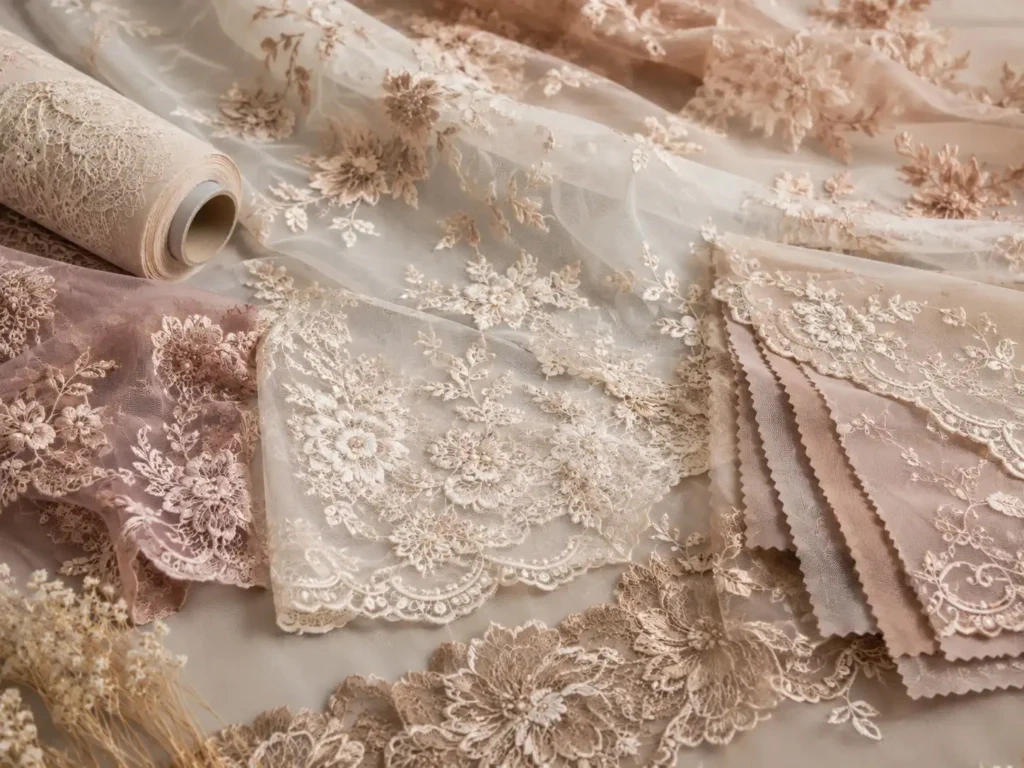
We do not use one stretch percentage for every lace dress. A fitted bodycon style may need very different fabric behavior from an A-line dress or a lace overlay.
The stretch percentage on a fabric sheet is useful, but it does not tell the whole story. During sampling, we are mainly looking for two things: enough movement and enough recovery to keep the dress in shape.
Low Stretch
Low-stretch lace is often suitable for decorative panels, overlays and looser silhouettes where the pattern already provides enough wearing ease.
Moderate Stretch
Moderate stretch is useful for many fitted dress applications. Recovery still needs to be checked because stretch alone does not tell you how the fabric will behave after wear.
High Stretch
High-stretch lace is more suitable when the design relies heavily on fabric flexibility. In these cases, recovery, seam tension and dimensional stability become more important.
Stretch and Recovery Are Not the Same
Stretch and recovery are two different things. A lace may stretch easily during fitting, but that does not mean it will return to the same shape afterward. On a fitted dress, recovery can be just as important as the amount of stretch.
For example, you may find a lace that stretches easily over the hips during fitting. If the fabric recovers poorly, however, the waist or neckline may not return to the intended measurement after repeated wear.
On fitted styles, we pay particular attention to the waist, hips, neckline and armholes because these areas usually receive the most repeated tension.
A supplier’s stretch specification is useful for comparison, but we still test the actual fabric before approving it for production.
How Stretch Lace Affects Pattern Making
When stretch lace is used, the pattern needs to account for the fabric’s actual movement. The amount and direction of usable stretch should be checked before deciding how much ease to include.
Before we adjust the pattern, we measure the usable stretch in both directions and check recovery, finished measurements, seams, necklines and sleeves. The lining is checked at the same stage. This is one reason an experienced clothing manufacturer will usually evaluate the fabric together with the sample instead of treating the fabric specification as a separate issue.
How Non-Stretch Lace Changes the Pattern
Non-stretch lace is more dimensionally stable, but fitting still requires careful planning.
Because the fabric provides little flexibility, body movement has to be built into the pattern and garment construction.
For a fitted non-stretch dress, we pay more attention to bust and hip ease, arm movement, sitting comfort and how the wearer gets the dress on. Closure and seam placement also become more important.
A dress can have the correct bust and waist measurements and still be uncomfortable if the wearer cannot move or put it on easily.
During fitting, we also check whether the sample can be put on and taken off easily.
What About Lining?
The lining can change the fit even when the outer lace looks correct.
If your outer lace has stretch but the lining is stable, the lining can restrict the movement of the outer layer. You may see pulling around the waist, hips or seams even though the lace itself fits correctly.
For stretch lace dresses, you should therefore check whether the lining has enough flexibility for the intended construction.
For non-stretch lace, a stable lining is often easier to control, but you still need to consider the finished garment’s ease and comfort.
You can also change the visual effect of lace by changing the lining color. A nude lining, matching lining and contrast lining can make the same lace look quite different after assembly.
We normally approve the lace and lining together during sampling.
What About Zippers and Other Closures?
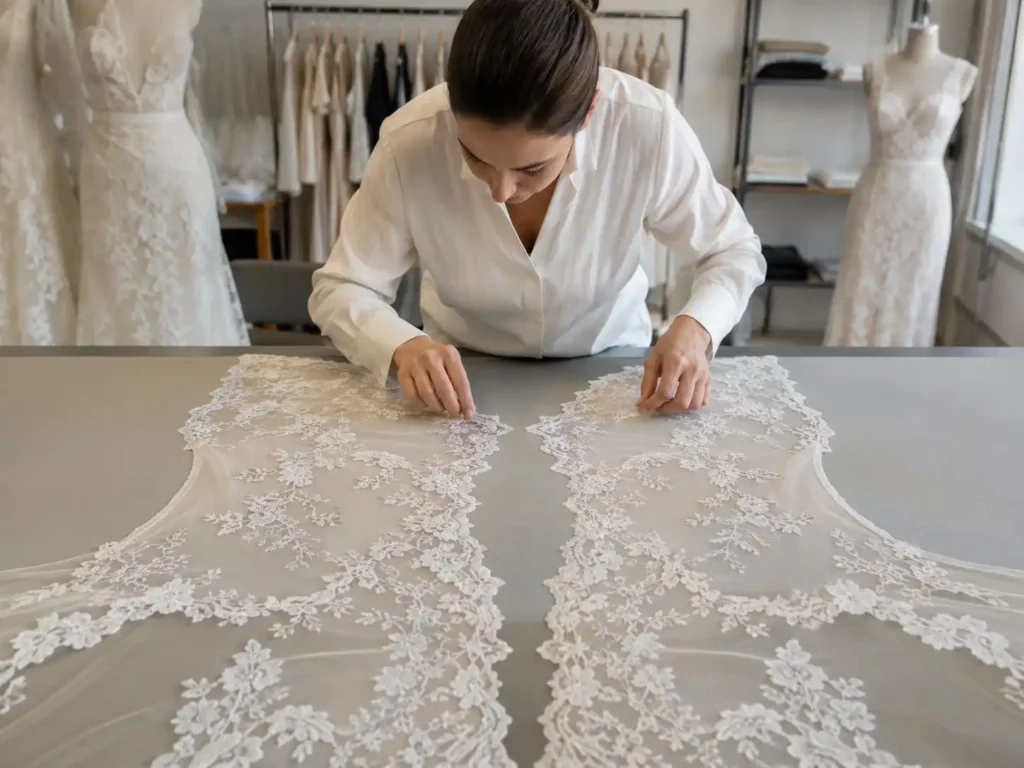
The closure depends on how the finished dress needs to be put on and taken off.
Stretch lace may allow more flexibility during dressing, depending on the finished measurements and amount of usable stretch.
With non-stretch lace, you usually need to plan the opening more carefully. A back zipper, side zipper or another closure may be necessary when the garment cannot pass over the body without additional opening.
Dense lace, delicate motifs, lining layers and high seam tension can all affect zipper installation. In practice, we normally decide the closure during garment development, after checking the fabric, opening and finished measurements together.
Common Problems We See During Lace Dress Sampling
Some lace problems do not become obvious until the fabric is made into a garment.
The Lace Stretches More Than Expected
A lace can look stable on the table and stretch more once it is pulled through cutting, sewing and fitting. We have seen this affect finished measurements on close-fitting styles, so we prefer to confirm the usable stretch before the final pattern is locked.
The Fabric Stretches but Does Not Recover Well
This can be more difficult to notice in a loose garment but becomes obvious on fitted styles.
The neckline, waist or hip area may gradually lose its original shape.
The Lace Motif Becomes Distorted
Floral and geometric lace patterns can change visually when the fabric is stretched.
If the motif is important to the design, you should check it on the actual garment rather than only on the flat fabric.
The Lining Restricts the Outer Lace
The lace may have enough flexibility, but the lining can limit it.
This can create tension between the two layers and change the way the dress hangs.
The Sample Fits, but the Garment Is Difficult to Put On
This is particularly common with fitted non-stretch dresses.
A sample can have accurate finished measurements and still have insufficient opening for practical dressing.
Changes are much easier to make while the sample is still on the table. Once the bulk fabric has been cut, changing the material or pattern becomes a much bigger problem.
How to Test Lace Before Bulk Production
Before bulk cutting, the actual production lace should be tested on the garment.
1. Start With Usable Width
Usable width matters because lace often contains decorative edges or areas that cannot be placed freely.
2. Test Both Stretch Directions
Measure the stretch across both width and length. Some lace gives easily across the body but barely moves vertically, which can become a problem when the pattern is cut in the wrong direction.
3. Check Recovery After Stretching
Stretch the fabric, release it and observe how well it returns. For fitted styles, repeat the test rather than relying on one quick pull.
4. Look for Motif Distortion
Look at floral, geometric or embroidered motifs while the lace is under normal tension.
5. Test Lace and Lining Together
Place the actual lace over the intended lining and look at the combined behavior.
6. Confirm the Sewn Sample
This is usually where material differences become easiest to see.
Once the lace has seams, lining, closures and pressing, we can see how it actually behaves as a garment.
During production development, we check fabric behavior before the pattern is finalized. Once bulk cutting has started, correcting a material-related problem becomes much more difficult and expensive.
How to Choose Between Stretch and Non-Stretch Lace
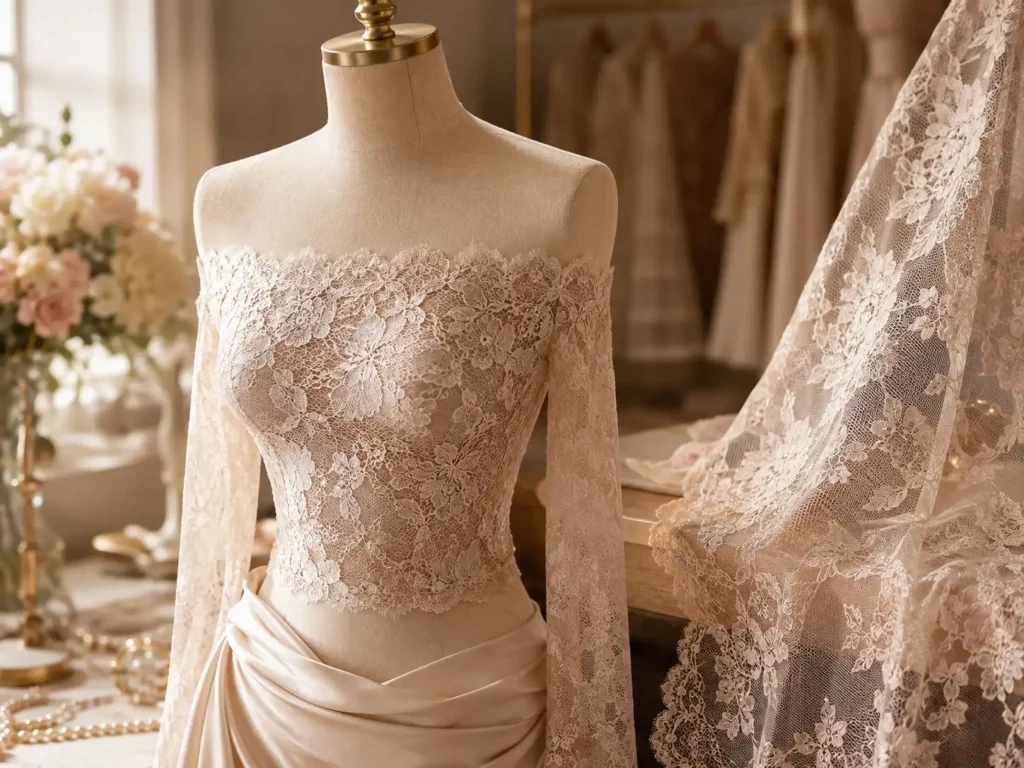
When choosing between stretch and non-stretch lace, we normally start with the dress design rather than the fabric itself.
Stretch lace is often the easier starting point for close-fitting dresses, while non-stretch lace can be preferable when panel stability and motif placement matter more. A dress manufacturer can also help assess how the fabric choice will affect pattern development, lining, closures and final production.
If both options appear suitable, make a sample with the fabric you are most likely to use in bulk. In sampling, the better option is usually the fabric that achieves the required fit and appearance without creating extra construction problems.
What Buyers Should Confirm With a Lace Supplier
Before approving lace for a new dress, buyers should confirm more than the fabric name and composition.
Useful information includes:
- Composition
- Usable width
- Stretch direction and approximate stretch
- Recovery
- Weight and lace repeat
- Consistency between lots
For a new supplier, I would also ask whether the bulk fabric will be made to the same construction and finishing as the approved sample.
A specification can look acceptable on paper, but even a small change in construction or finishing can affect the way a fitted dress behaves. For a new collection, it is safer to confirm this during development than to discover the difference after the production fabric has arrived.
Frequently Asked Questions
1. Why can two laces with the same specification fit differently?
Two suppliers can list similar composition, weight and stretch percentages while producing fabrics with different construction, recovery or finishing. For a fitted style, we recommend comparing the actual swatches and, when possible, testing the production fabric before approving the final pattern.
2. Is a lace swatch enough to approve a dress fabric?
A swatch is fine for the first selection, but we would not use it as the final approval for a new dress. The fabric can behave differently after cutting, lining and sewing, so the finished sample is a safer reference.
3. What if the bulk lace is different from the approved sample?
Stop before cutting the full order and compare the bulk fabric with the approved reference. Check color, width, weight, stretch, recovery and surface appearance. If the difference could affect fit or construction, adjust the production plan before cutting rather than trying to correct the finished garments later.
4. Can lace width increase garment consumption?
It can. The usable width determines how efficiently your pattern pieces can be placed, especially when the lace has scalloped edges or a large repeat. A narrower fabric may increase consumption and create additional placement requirements even when the fabric price per meter appears similar.
5. Should lace be tested after washing?
If your final garment will go through a specific washing or finishing process, the fabric should be evaluated under those conditions during development. Changes in hand feel, dimensions or recovery can affect the finished measurements, so testing the fabric before bulk production gives you a safer basis for approval.
Conclusion
For us, the decision usually comes down to how the lace behaves in the finished dress, not simply whether it is stretch or non-stretch. The production fabric should be checked in a complete sample before bulk cutting.
Explore More Dress Manufacturing Services
If you are developing a new dress and need support with fabric selection, internal construction, sampling, and bulk production, working with an experienced clothing manufacturer can help reduce unnecessary development changes.
At Xiuyu Apparel, we work with fashion brands, startups, designers, and private label companies from sample development through bulk production.
Get a Clothing Manufacturing Quote Based on Your Design
If you already have a garment design, send us the product photo, tech pack, or reference sample together with your target quantity.
As a dress manufacturer, we can review the fabric, lining, construction, trims, workmanship, and finishing requirements and prepare a quotation based on the actual garment rather than a general price range.

