

A dress can fit correctly on the pattern and still look wrong after the fabric is changed. We see this during sampling more often than buyers might expect. A fabric can look right on a swatch, but once it is cut and sewn, the dress may look too flat, too stiff, too clingy, or simply different from the approved design.
In our experience, the pattern is not always the first thing that needs to be changed. The fabric, lining and construction can all affect how the pattern looks on the body.
What Is Fabric Drape?
Fabric drape describes how a fabric falls, folds and moves once it is used in a garment.
Some fabrics drop close to the body and form soft folds. Others keep more shape and give the garment a cleaner outline. You can see the difference much more clearly on a finished dress than on a small fabric swatch.
A swatch gives us a starting point. The sample tells us much more.
A small swatch can show color, surface, thickness, and hand feel. It cannot always show how the fabric will behave in a full skirt, around the hip, on the bias, through gathers, or together with a lining.
Once we start sampling, the fabric has to be checked on the pattern itself. A swatch is simply not enough for some styles.
Why Fabric Drape Matters to Dress Silhouette
Depending on the design, you may want the skirt to keep a clear A-line shape, a slip dress to fall close to the body, or a maxi dress to move freely without becoming too heavy.
A pattern can look correct on paper and still produce the wrong silhouette after sampling.
A skirt that should hold an A-line flare may collapse toward the body when the fabric is very soft. On the other hand, a fluid design can look bulky when the fabric has too much body. Stretch and weight create their own issues: poor recovery can affect a fitted dress, while a heavier fabric can pull a longer skirt down and reduce its volume.
How Fabric Drape Affects Different Dress Silhouettes
A-Line Dress
An A-line dress normally needs enough body for the skirt to move away from the waist while still looking natural.
If the fabric is very fluid, the skirt may fall closer to the legs. The dress can still technically be A-line, but the visual effect will be softer. A firmer fabric can create a clearer triangular shape.
The amount of flare also matters. A narrow A-line skirt is less demanding than a fuller skirt with a wide hem sweep. As the hem becomes wider, the fabric needs enough body and movement to maintain the intended shape without making the skirt look heavy.
For longer A-line dresses, fabric weight becomes more noticeable because more material is hanging below the waist. During sampling, we normally check the waist, hip, skirt flare, hem movement and finished length together rather than judging one measurement on its own.
Slip Dress
Slip dresses are particularly sensitive to fabric behavior because there is usually very little structure to hide a fabric problem.
For most slip dresses, the fabric needs to fall close to the body rather than stand away from it.
We have used silk satin, lightweight satin, crepe and rayon for slip dresses, but the result can be quite different depending on the fabric weight, finish and movement. For brands developing a custom slip dress, these fabric differences are worth checking during sampling rather than after the pattern has been finalized.
Bias-cut slip dresses are more sensitive to fabric behavior. Cutting on the bias changes how the fabric stretches and falls. It can give the dress the fluid movement associated with this style, but it also makes cutting, sewing and finished measurements more sensitive.
Bodycon Dress
For a bodycon dress, drape works together with stretch and recovery.
The fabric needs enough stretch for the intended fit, but stretch alone is not enough. Recovery is just as important.
We sometimes see a sample that looks fine during the first fitting but becomes noticeably looser around the waist or hip after repeated movement.
Stretch direction also needs to be checked before the pattern is finalized.
If the fabric stretches mainly across the width, rotating the pattern can change the finished fit considerably.
For fitted styles, we test the actual fabric extension and recovery rather than relying on a supplier description such as “stretch fabric”. One fabric may return to shape well after fitting, while another may start relaxing around the waist or hip.
Maxi Dress
Maxi dresses make fabric weight more noticeable because of their length. A lightweight fabric can give the skirt a lighter, more fluid movement, while a heavier fabric will usually produce a more controlled fall and may pull the skirt closer to the body.
With a maxi dress, the fabric needs to be considered from the waist or shoulder seam down to the hem. Small differences in weight and stretch become much more noticeable over that distance.
This is particularly important for chiffon, lightweight rayon, and other fabrics that can shift during cutting or settle differently after hanging.
If the hem looks even immediately after sewing but changes after the garment hangs for a period of time, the fabric behavior needs to be considered during development.
Mini Dress
Drape may be less noticeable on a mini dress, but fabric structure can still change the finished shape.
A gathered mini dress in a very soft fabric may have less volume than expected, while a crisp fabric can make the gathers more pronounced. For fitted mini dresses, too much stiffness can also make the garment look rigid.
During sampling, we judge the fabric on the finished garment because the cutting table does not show how the dress will look and move when worn.
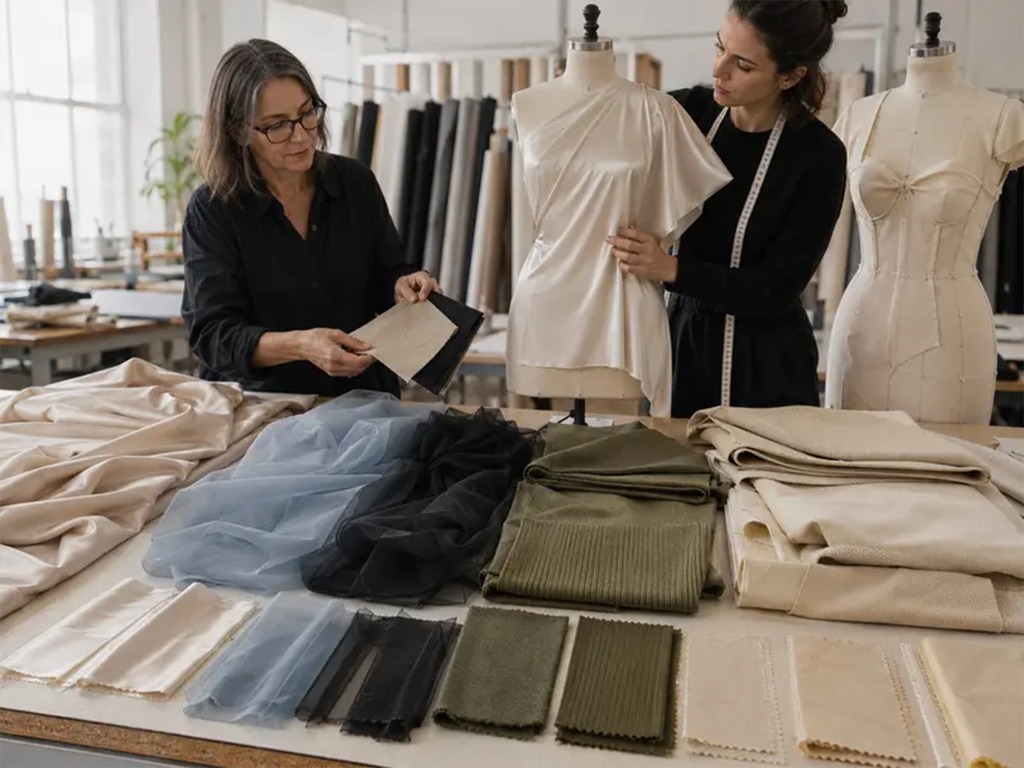
Fabric Drape, Weight and Structure
Drape and weight are related, but they are not the same. Two fabrics with similar GSM can still behave very differently once they are cut and sewn.
When you compare fabrics for a dress, look at several characteristics together:
| Fabric Characteristic | What You Should Watch |
|---|---|
| Weight / GSM | How much body the garment may have |
| Thickness | Seam bulk, coverage and structure |
| Drape | How the fabric falls and folds |
| Stretch | How much the garment extends |
| Recovery | Whether the fabric returns to shape |
| Width | Fabric consumption and cutting efficiency |
| Shrinkage | Changes to finished measurements |
| Opacity | Whether lining may be needed |
| Surface finish | Appearance, pressing and handling |
| Grain behavior | How the fabric responds during cutting |
This is something we run into quite often when a buyer compares fabrics by name alone.
Two satin fabrics, for example, may look similar on a supplier’s sheet but behave very differently once they are cut and sewn. One may be light and fluid; another may have more body and hold its shape.
When a supplier tells us a fabric is “satin,” that is not enough for sampling. We still need to check its weight, width, stretch, finish and actual behavior before putting it into the garment.
How Lining Changes the Drape of a Dress
You may choose the shell fabric correctly and still get the wrong result because of the lining.
Lining adds another layer between the garment and the body. Its weight, surface, and movement can affect how the outer fabric falls.
We have also seen a lightweight chiffon sample lose much of its movement simply because the lining was too heavy.
A slippery satin combined with an unsuitable lining may move differently during wear.
For a fitted dress, lining can also affect how smoothly the garment sits against the body.
We treat the shell and lining as one system during development. A lining selected later can change the weight, movement and feel of the finished dress.
Why the Same Pattern Can Look Different in Different Fabrics
One approved pattern can produce noticeably different results when the fabric changes.
For example, you may make the first sample in a medium-weight crepe. The waist sits correctly, the skirt has the expected movement, and the hem looks balanced.
You then replace the fabric with a softer satin.
The measurements are unchanged, but the finished dress may now:
- Fall closer to the body
- Show more folds
- Look longer
- Reveal more body lines
- Move differently around the hip
- Require different lining
- Need different pressing
For this reason, we compare the actual fabric with the intended construction before treating the problem as a pattern issue.
Why Fabric Swatches Can Be Misleading
A swatch is useful, but you should be careful about making a final decision from it.
A small piece of fabric does not carry the same weight as a full garment.
It also does not show how the fabric will behave around seams, curves, gathers, zippers, lining, or large pattern pieces.
For some dress styles, you should check:
Fabric swatch → hanging test → actual pattern → first sample → fitting
Styles with bias cutting, heavy gathers, close fitting or long flowing skirts are especially difficult to judge from a small swatch.
We have seen materials that look almost identical when placed side by side produce noticeably different results once they are made into the same dress.
That is why fabric approval should be based on performance, not appearance alone.
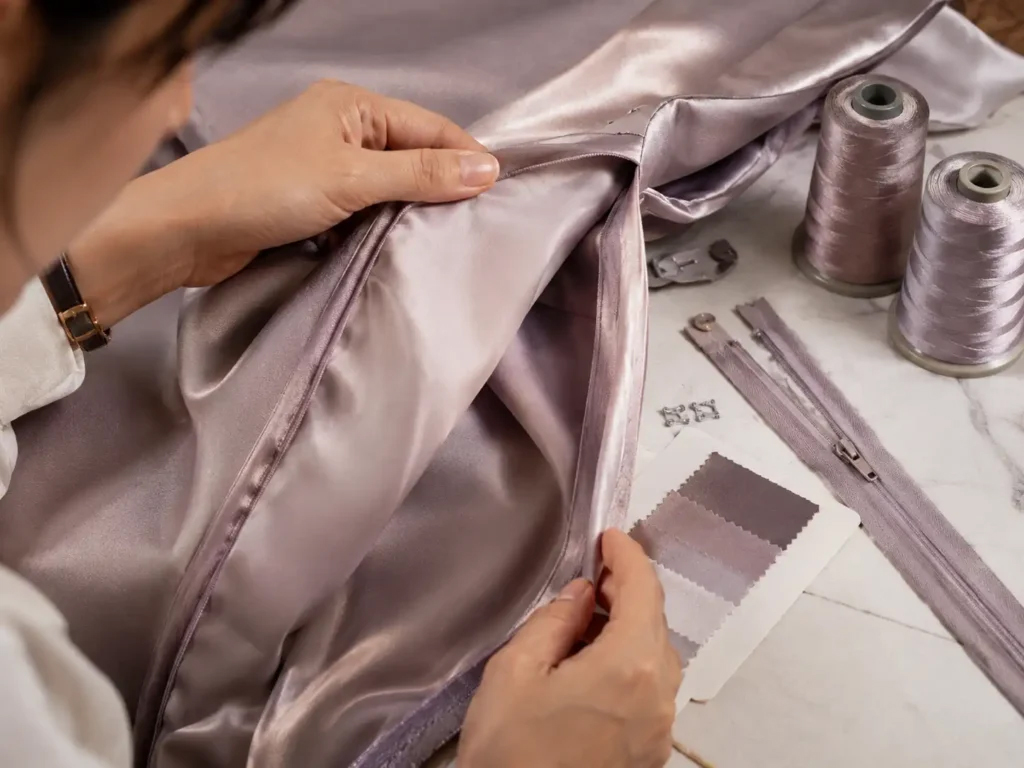
How We Evaluate Fabric Before Sampling
When a buyer sends us a new dress design, we look at the fabric together with the pattern and construction rather than approving the material on appearance alone. This is part of the development work we handle as a clothing manufacturer, especially when a fabric needs to be tested before bulk production.
1. Check the Fabric Specification
We start with the basic information:
- Fiber composition
- GSM or fabric weight
- Fabric width
- Stretch percentage
- Recovery
- Shrinkage
- Finishing
A fabric name such as “satin” or “crepe” is not enough for production. We need to know the actual specification before deciding whether it is suitable for the style.
2. Check the Fabric by Hand and by Hanging
We also hang the fabric before cutting. At this stage, we are mainly looking at how quickly it drops, where the folds form and whether it keeps more body than the style requires. It is a quick check, but it can save us from cutting a fabric that is clearly unsuitable for the first sample.
It does not replace a sample, but it gives us a quick way to identify fabrics that are unlikely to work before we start cutting.
3. Compare the Fabric With the Actual Pattern
This becomes particularly useful for:
- Bias-cut panels
- Large gathers
- Full skirts
- Draped sections
- Ruched areas
- Fitted bodices
- Long hems
At this stage, we are looking at whether the fabric gives the pattern enough movement, support or stretch where it is needed.
4. Make the First Sample
The first sample gives us information that a swatch cannot.
We check whether the waist sits correctly, whether the skirt keeps the intended volume, whether the neckline stays in position, whether the fabric pulls around the hip, whether the lining interferes with movement and whether the hem settles evenly.
5. Adjust the Material and Pattern Together
If the sample does not look right, we do not automatically change the pattern.
First, we check whether the fabric is causing the problem. A fabric that is too soft may not be fixed simply by narrowing the skirt. If the material itself cannot hold the required shape, changing the pattern may only create another fitting problem.
Once the material is confirmed as suitable, the pattern can be adjusted around its actual behavior.
Common Fabric Selection Problems in Dress Development
Choosing by Fabric Name
“Satin,” “crepe,” “jersey,” or “chiffon” does not describe one exact production specification.
When we receive a fabric described simply as “satin” or “crepe,” we still need the actual composition, weight, width, stretch and finish before using it for sampling.
Relying Only on the Swatch
A swatch can look perfect while the finished dress does not.
The risk is higher when your design relies heavily on drape, bias cutting, stretch, or a long flowing skirt.
Ignoring Fabric Width
Fabric width becomes a real cost issue when we start marker making. A fabric that looks inexpensive by the meter may require more yardage simply because the pattern pieces cannot be laid out efficiently.
A fabric may look inexpensive by the meter, but the cost changes if its usable width makes the marker inefficient.
Changing Fabric After Pattern Development
If you change the fabric significantly after the pattern has been developed, you may need to review the pattern again.
This is particularly important for fitted or fabric-sensitive styles.
Looking Only at Fabric Price
The lowest fabric price does not always produce the lowest garment cost.
Fabric consumption, cutting waste, lining, sewing time, handling and finishing can all change the actual cost per piece. A fabric that costs slightly more per meter may still be more economical if it gives better yield and fewer production problems.
How Fabric Choice Affects Manufacturing Cost
Your fabric decision can affect more than the look and feel of the dress.
It can influence:
- Fabric consumption
- Cutting efficiency
- Sewing time
- Lining requirements
- Pressing
- Pattern efficiency
- Sample revisions
- Production waste
Bias-cut designs are a good example. The bias gives the dress its fluid movement, but it can also make marker planning less efficient and increase fabric consumption.
Delicate materials can also require more careful handling during cutting and sewing.
These factors are worth considering together when you calculate the actual cost per piece.
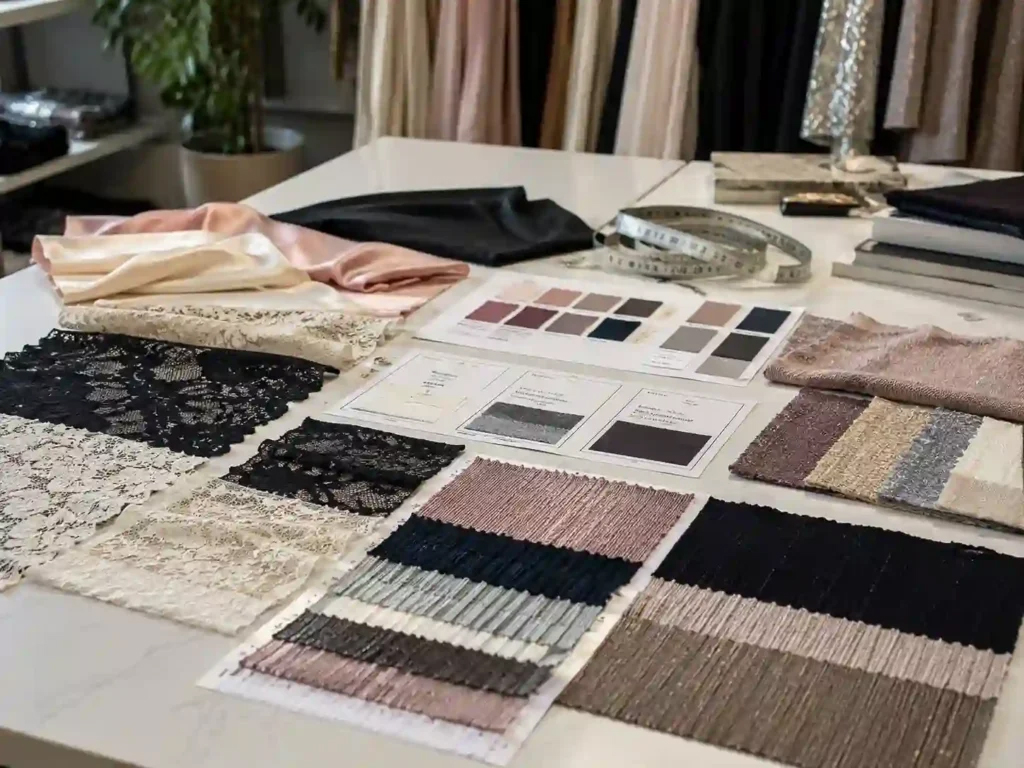
A Practical Fabric Selection Checklist for Buyers
Before approving a fabric for a new dress, you can use this checklist:
- Does the fabric create the intended silhouette?
- Is the weight appropriate for the garment length?
- Does the fabric have enough structure?
- If it stretches, does it recover properly?
- Is the fabric width suitable for the pattern?
- Will the garment require lining?
- Has shrinkage been considered?
- Does the fabric behave correctly after pressing?
- Does the bulk fabric match the approved sample, including weight, stretch, recovery, finish and shrinkage?
When Should You Finalize the Fabric?
For a new dress collection, the main fabric direction should be established before the pattern and sample are fully locked. This is especially important when working with a dress manufacturer because fabric changes made after fitting can affect both the pattern and the sampling process.
A practical sequence is:
Design → Fabric Selection → Pattern Development → Sample → Fit Test → Pattern Adjustment → PP Sample → Bulk Production
If you change the fabric after the fit has already been approved, you may need to repeat part of the development process.
For collections using the same fabric across several silhouettes, we normally test the fabric first on the style that is most sensitive to drape, stretch or structure. If it performs well on that style, the other designs are easier to assess.
What Buyers Should Compare When Choosing Between Two Fabrics
If both fabrics meet the basic requirements, compare them through the complete production process.
| Question | Why It Matters |
|---|---|
| Which one gives the correct drape? | Controls the silhouette |
| Which one has the right weight? | Affects movement and structure |
| Which one fits the target price? | Protects your product margin |
| Which one uses fabric more efficiently? | Controls material cost |
| Which one is easier to cut? | Reduces production difficulty |
| Which one works with your lining? | Affects comfort and movement |
| Which one is more consistent between batches? | Helps repeat production |
| Which one matches the approved sample? | Reduces bulk-production risk |
In practice, the fabric that looks more premium on a swatch is not always the one that works best in production.
FAQ
Can the same fabric specification produce different results between suppliers?
Yes, we see this quite often during sample development. Two fabrics may have the same fiber content and GSM but still feel or behave differently because of yarn, construction, finishing and fabric processing. That is why we test the actual fabric before confirming the final pattern and production.
Does fabric composition tell you enough about how a dress will behave?
Not by itself. Fiber content is only one part of the specification. Weight, construction, finishing and stretch can all change how the finished fabric behaves. When you are developing a dress, the actual fabric specification and sample behavior give you a much better basis for approval.
Can fabric performance change between production batches?
Yes. We have seen repeat-order fabrics behave differently when the new lot has changes in weight, finishing, shrinkage or stretch. For repeat production, we recommend keeping the approved fabric specification and checking the new lot against the previous material before bulk cutting.
How can a buyer avoid problems when using a new fabric supplier?
Ask for clear fabric specifications and a production-quality sample rather than relying only on photos. You should also confirm the usable width, composition, weight, shrinkage, colorfastness, and available quantity. If the fabric is critical to the design, test the actual lot before committing to bulk cutting.
Should the fabric supplier or clothing manufacturer choose the final fabric?
The brand should define the target look, hand feel, price and performance first. The fabric supplier can then recommend suitable materials, while the clothing manufacturer checks whether those materials actually work with the pattern and construction.
Conclusion
Fabric selection is part of dress development, not a decision that can always be made separately from the pattern.
For fabric-sensitive dresses, we recommend testing the production fabric against the intended construction before the style is fully approved. This can help avoid unnecessary pattern changes, repeated samples and unexpected differences during bulk production.
For buyers, the safest approach is to approve the fabric on the actual garment, not only from a swatch. That extra check can save a pattern revision, another round of sampling, or a production problem later.
Explore More Dress Manufacturing Services
If you are developing a new dress and need support with fabric selection, internal construction, sampling, and bulk production, working with an experienced clothing manufacturer can help reduce unnecessary development changes.
At Xiuyu Apparel, we work with fashion brands, startups, designers, and private label companies from sample development through bulk production.
Get a Clothing Manufacturing Quote Based on Your Design
If you already have a garment design, send us the product photo, tech pack, or reference sample together with your target quantity.
As a dress manufacturer, we can review the fabric, lining, construction, trims, workmanship, and finishing requirements and prepare a quotation based on the actual garment rather than a general price range.

