

When you are developing a satin dress, the fabric can look right on a swatch and still give you the wrong result after cutting and sewing. Lightweight satin can give a beautiful drape, but it may not have enough body for the pattern. Heavy satin gives you more structure, but the dress can feel noticeably different once it is made. In our factory, we do not choose the satin weight from the swatch alone. As a clothing manufacturer, we look at the pattern, construction, target price, and the way the finished dress needs to fall.
Heavy Satin vs Lightweight Satin: What Is the Main Difference?
The first thing we look at is how much body the satin gives the dress.
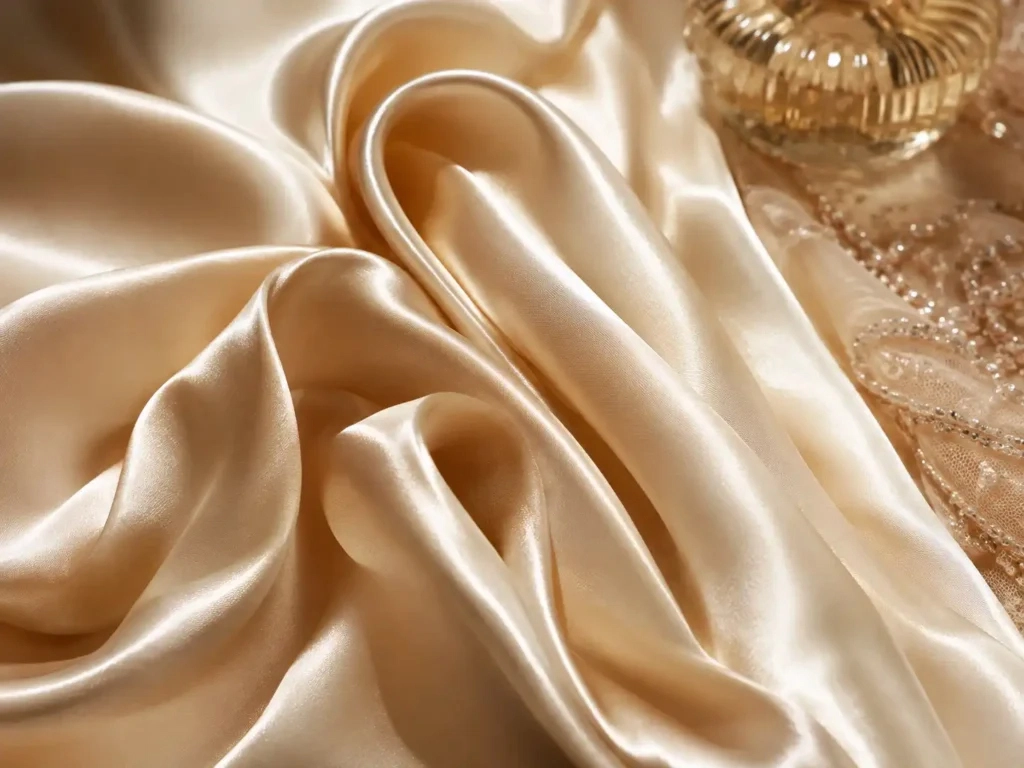
Lightweight satin usually moves more easily and gives a softer drape. We often see it used for slip dresses, bias-cut styles, and other flowing silhouettes.
Heavy satin has more body and holds its shape better. It is useful for structured evening dresses, fuller skirts, and designs that need a stronger silhouette.
GSM is only part of the fabric check.
A heavy satin can work very well on a structured evening dress but feel too stiff on a simple slip dress. Lightweight satin has the opposite problem on some fitted styles — it may look good but simply not give the pattern enough body.
| Feature | Lightweight Satin | Heavy Satin |
|---|---|---|
| Drape | Softer and more fluid | Fuller and more controlled |
| Fabric body | Lower | Higher |
| Movement | More fluid | More stable |
| Structure | Limited | Better suited to structured styles |
| Common uses | Slip, bias-cut, flowing dresses | Evening, formal, structured dresses |
| Cutting | Can require more control | Usually easier to handle |
| Main concern | Cling, transparency, lack of body | Stiffness, seam bulk, heavier feel |
This is what we see most often. Even two satins with a similar weight can behave differently once they reach production.
Lightweight Satin in Dress Production
For dresses that need a lot of movement, we often start by testing a lightweight satin.
When you hold lightweight satin vertically, it usually drops quickly and forms softer folds. On the finished dress, this gives a softer line from the shoulder down to the hem.
Lightweight satin is often used for:
- Slip dresses
- Bias-cut dresses
- Cowl-neck dresses
- Draped dresses
- Soft maxi dresses
- Some lightweight occasion dresses
We see the difference more clearly once the fabric is spread on the cutting table.
The fabric can move more easily during spreading and cutting. On a bias-cut pattern, this becomes even more noticeable. During fitting, we may also see more movement around the neckline, side seams, or hem.
For these styles, we prefer to judge the fabric on the finished garment rather than from a swatch alone. A small swatch cannot show you how a long skirt panel or bias-cut side seam will behave.
Where Heavy Satin Works Better
Heavy satin gives the pattern more body to work with.
It is useful for patterns that need cleaner lines or sections of the dress that have to hold their shape. Fuller skirts, structured bodices and some formal silhouettes can benefit from this extra stability.
Heavier satin is often used for:
- Structured evening dresses
- Formal dresses
- Fuller skirts
- Some bridal and bridesmaid styles
- Fitted dresses with clean panel lines
- Dresses where opacity is important
There is a limit, though.
Heavy does not automatically mean better. If the fabric is heavier than the design needs, the dress can lose some of its movement. Gathers may look thicker, draped panels may sit differently, and seams containing several layers can become bulky.
Satin Weight and the Manufacturing Process
We usually see the difference more clearly once the fabric reaches cutting and sewing. For a dress manufacturer, these differences matter because the same satin can behave very differently during cutting, sewing, pressing, and final fitting.
Cutting
Lightweight satin usually needs more control during cutting because the smooth layers can move.
We notice the problem more often with:
- Long skirt panels
- Bias-cut pieces
- Large flowing sections
- Multi-layer cutting
- Slippery satin constructions
If the layers shift slightly, the problem may not be obvious until the garment is assembled.
Before bulk cutting, we check the usable width, grain direction, shrinkage, fabric defects, and marker efficiency.
The nominal width on a fabric specification sheet is not always the same as the usable width for your actual pattern.
Heavy satin is usually more stable on the cutting table, but we still check it before bulk cutting. A heavier fabric can have different shrinkage, width, surface finish or cutting loss from another satin that looks almost identical.
Sewing
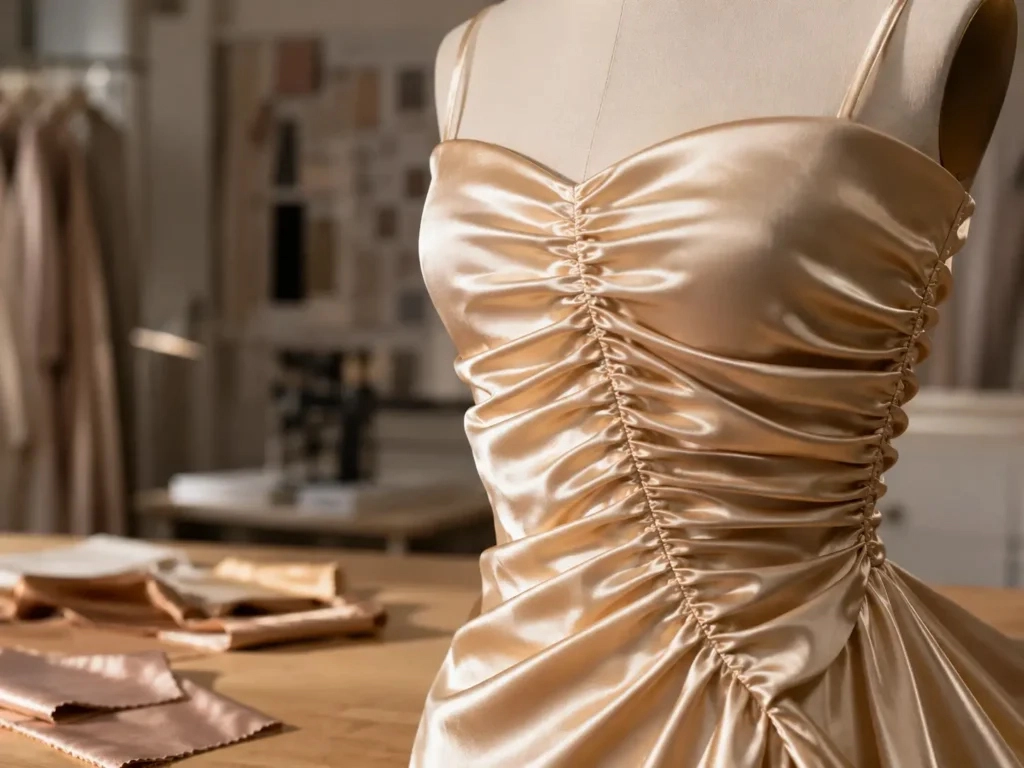
Satin tends to show sewing problems clearly because the smooth surface reflects light.
With lightweight satin, thread tension, needle selection and fabric feeding become more sensitive. Problems such as seam puckering, needle marks or slight distortion can become visible after pressing.
Heavy satin presents a different problem.
When several layers meet at a seam, the fabric can build up quickly. This matters around zippers, waist seams, armholes, gathered sections and structured bodices.
We test the actual fabric rather than carrying sewing settings over from another satin style.
Two fabrics can both be called “satin” and still behave differently on the sewing line.
Lining
The outer satin weight also affects the lining choice.
With lightweight satin, lining may be needed to improve opacity, body or comfort. But the lining itself can change the way the dress falls.
If the outer satin is very fluid but the lining is stiff, the two layers may not move together. The finished dress can then look different from the original sample.
Heavy satin may already have enough body, so the reason for adding a lining may be more related to opacity, comfort or finishing.
For fitted dresses, we check the outer fabric and lining together during sampling.
Pressing
Pressing is another area where satin weight matters.
The smooth surface can make marks more visible, especially under strong lighting or photography.
A pressing method that works well on one satin may leave shine, marks or distortion on another.
Before production, we test:
- Temperature
- Steam
- Pressure
- Seam opening
- Pressing cloth
- Final garment pressing
This is especially important for dark or highly reflective satin, where surface problems tend to stand out.
Choosing Satin Weight for Different Dress Styles
The best weight becomes easier to choose when you start with the garment rather than the fabric. This is also how we approach fabric selection when developing dresses for private label brands and wholesale buyers.
Slip Dresses
Slip dresses usually need a satin that moves easily with the body.
Lightweight or medium-weight satin is often a better starting point for this silhouette.
If the fabric is too heavy, a simple slip silhouette can start to look more rigid than intended.
Bias-cut slip dresses need an extra check after hanging because the fabric can settle differently from the initial sample. The bias direction can change the way the dress falls and can affect the final hem length and fit.
Evening Dresses
Both lightweight and heavy satin can work for eveningwear.
Lighter satin works well for soft, fluid designs with cowl necklines or draped sections. For a stronger bodice or fuller skirt, we would test a heavier satin first.
The final shape also depends on the interfacing, lining, boning, gathers and seam construction.
Bias-Cut Dresses
Bias-cut dresses need more checking than a basic straight-grain style.
Lightweight satin can give you the fluid movement associated with this style, but that same movement can make fitting less predictable.
We check the neckline, side seams, hem and finished length again after the garment has had time to settle.
A fabric that looks perfect immediately after sewing may not give exactly the same result after hanging.
Structured Dresses
For structured dresses, heavier satin is often easier to work with because it provides more body.
It can give cleaner panel lines and more stability to areas that need to hold their shape.
If the fabric is too heavy, seam bulk can become a problem, especially where several layers meet. The lining and support materials also need to work with the satin rather than simply adding more weight.
Maxi Dresses
For maxi dresses, the silhouette makes a big difference.
A soft, flowing maxi usually suits a lighter satin. A formal maxi with a fuller skirt or stronger construction often needs more body.
Fabric width also becomes important here. A long maxi dress can consume a significant amount of fabric, so the usable width and marker efficiency can affect the final garment cost.
Mini and Cocktail Dresses
There is no single satin weight for every mini or cocktail dress.
A fitted cocktail dress may need more body, while a draped mini dress may look better with a softer satin.
Look at the construction before choosing the weight. If the design contains several seams, gathers or overlapping layers, check how much bulk the fabric creates before approving it.
Does Higher GSM Mean Better Satin?
Not necessarily.
GSM is useful for comparing fabric specifications, but it does not tell you how the satin will behave on the actual dress. When developing a satin dress, we also check the fabric construction, finish, drape and sewing behavior.
Two satins with similar GSM can still feel different because of their composition, construction and finishing.
We look at several things together:
- GSM
- Thickness
- Drape
- Composition
- Fabric width
- Opacity
- Shrinkage
- Surface finish
- Stretch and recovery
- Sewing behavior
When we develop a dress, the question is usually not:
“Which satin has the highest GSM?”
It is:
“Which satin gives this particular pattern the right result?”
In production, that is usually a more useful comparison than GSM alone.
What Problems Can the Wrong Satin Weight Cause?
The wrong fabric weight can create problems that are difficult to fix once bulk production has started.
When the satin is too light, common problems include:
- Excessive cling
- More transparency
- Not enough body
- Difficult cutting
- More sensitive seams
- A different silhouette from the approved sample
Heavy satin creates a different set of problems:
- Less movement
- Bulkier seams
- A heavier garment
- Different gathers
- A stiffer drape
- Changes to the original silhouette
Changing the fabric after pattern approval is where the cost can start to add up.
If you discover the problem during sampling, you can still adjust the fabric, pattern or construction. Once hundreds of pieces have been cut, your options become much more limited.

How Should You Test Satin Before Bulk Production?
We prefer to test the satin on the actual garment rather than judging it from a swatch alone.
1. Record the Fabric Specification
Keep the composition, GSM, usable width, color, finishing and shrinkage information with the approved swatch.
This gives you something to compare against when the bulk fabric arrives.
2. Make the Actual Garment Sample
Use the intended pattern and construction.
If the final dress will have lining, interfacing, zipper or other support materials, include them in the sample.
The sample should use the same pattern and construction planned for bulk production.
3. Check the Sample After Pressing
Look at the finished garment under normal room lighting as well as stronger lighting.
Check:
- Drape
- Surface appearance
- Seam quality
- Hem shape
- Lining movement
- Fit
- Pressing marks
4. Compare the Bulk Fabric With the Approved Reference
When the production fabric arrives, compare it against the approved swatch before cutting.
Check the weight, width, color, surface, hand feel and finishing.
If the bulk fabric behaves differently, it is better to identify the issue before cutting rather than after the garments are assembled.
How Does Satin Weight Affect Dress Cost?
For B2B production, fabric price per yard is only part of the calculation. When you work with an OEM/ODM clothing manufacturer, fabric width, consumption, cutting loss and sewing time can all affect the final garment cost.
The finished garment cost also depends on:
- Fabric width
- Fabric consumption
- Cutting loss
- Lining
- Sewing time
- Finishing
- Pressing
- Order quantity
A cheaper satin may not produce the cheaper dress.
For example, if the fabric is narrower, your pattern may require more yardage. If the lightweight satin needs additional lining or more careful handling, that can also affect the finished cost.
When we compare two satin options, we look at the expected cost of the finished garment, not just the fabric price.
Choosing Between Heavy and Lightweight Satin
For soft movement, close-to-body drape and fluid folds, lightweight or medium-weight satin is usually where we start.
If you need more body, stability or a stronger silhouette, heavy satin may be more suitable.
But the fabric weight should follow the dress design, not the other way around.
When two weights both look suitable, the simplest test is to make the same pattern in both fabrics. Compare the finished garments after sewing and pressing.
In our experience, making the same pattern in both fabrics tells you more than comparing the swatches or GSM numbers.
Frequently Asked Questions
1. Can changing from lightweight to heavy satin change the final dress measurements?
Yes. The fabric can affect how the garment hangs, especially around the bust, waist, hip and hem. If the fabric weight changes after pattern approval, we recommend making another sample before bulk production.
2. What information should you give a factory when requesting satin fabric?
Give the target composition, approximate weight, usable width, color standard, finish and intended dress style. If you already have a reference garment or approved swatch, send it as well. A physical reference helps a lot when the color, surface and hand feel need to match closely.
3. How do you control fabric variation between production lots?
For repeat orders, keep the approved swatch with the production specification and original sample. When a new fabric lot arrives, compare it before cutting. We check the weight, width, color, surface, hand feel and shrinkage because a small change can become visible across a large production run.
4. Can a factory work with buyer-supplied satin?
Yes, we can work with buyer-supplied satin. Before cutting, we check the fabric width, defects, shrinkage and consistency. If the supplied fabric behaves differently from the approved sample, the pattern or production method may need to be reviewed first.
5. What should you do if the approved satin is no longer available?
Do not replace it with another satin simply because the color looks similar. Ask for a physical replacement swatch and compare its weight, width, drape, surface and hand feel with the approved fabric. Make a new sample if the difference could affect the silhouette or construction.
Conclusion
There is no single satin weight that works for every dress. A lightweight satin may be the better choice for a fluid slip or bias-cut style, while a heavier satin can make more sense for a structured evening dress or fuller skirt.
If you are choosing between two weights, we would rather test both on the same pattern than make the decision from GSM alone. Check the finished garment after sewing and pressing, and make sure the bulk fabric matches the approved sample before cutting.
That extra check is much easier to do before production starts than after hundreds of dresses are already on the sewing line.
Explore More Dress Manufacturing Services
If you are developing a new dress and need support with fabric selection, internal construction, sampling, and bulk production, working with an experienced clothing manufacturer can help reduce unnecessary development changes.
At Xiuyu Apparel, we work with fashion brands, startups, designers, and private label companies from sample development through bulk production.
Get a Clothing Manufacturing Quote Based on Your Design
If you already have a garment design, send us the product photo, tech pack, or reference sample together with your target quantity.
As a dress manufacturer, we can review the fabric, lining, construction, trims, workmanship, and finishing requirements and prepare a quotation based on the actual garment rather than a general price range.

