

When a buyer is developing women’s clothing, GSM and fabric thickness are sometimes treated as if they mean the same thing. In production, they can lead to quite different results.
We have had fabrics meet the requested GSM and still feel too thin, too bulky, or behave differently from the reference sample. We normally check both before confirming a fabric for sampling.
What Is Fabric GSM?
GSM means grams per square meter. It describes the weight of a square meter of fabric.
When you compare fabrics from different suppliers, GSM is a useful starting point. If the construction and composition are similar, it gives you a quick way to see which fabric is heavier.
What GSM cannot tell you is how that fabric will feel or behave once it is made into a garment.
For example, two fabrics can both measure 180 GSM and still have very different stretch, drape, surface and hand feel. One may be comfortable for a relaxed jersey dress, while the other may feel too firm or stable for the same pattern.
GSM is only one part of the fabric specification. For approval, composition, width, stretch and hand feel also need to match the requirement.
When you send a fabric requirement to a clothing manufacturer, a more useful specification includes the composition, target GSM, fabric width, stretch requirement, hand feel and a physical reference swatch when available.
What Is Fabric Thickness?
Fabric thickness describes how thick the material physically is.
It is closer to what you notice when you hold a fabric between your fingers. A thicker fabric will usually give the garment more coverage or body. A thinner fabric may feel lighter and move more easily, but it can also show more easily through the garment or around seams.
Thickness does not directly tell you how much the fabric weighs.
Brushing can make a fabric feel much thicker because the surface becomes raised. The change in hand feel does not necessarily come with the same increase in GSM.
The same thing can happen with knitted fabrics, fleece, textured fabrics and some loosely constructed materials.
If a specification only says “medium weight” or “thick fabric,” you still need more information before using the material for a production style.
Fabric GSM vs Fabric Thickness: What Is the Difference?
GSM measures fabric weight. Thickness measures the physical thickness of the fabric.
They can influence each other, but they are not interchangeable.
| Specification | What It Measures | What You May Notice in a Garment |
|---|---|---|
| GSM | Weight per square meter | Overall fabric weight and potential consumption |
| Thickness | Physical thickness | Coverage, bulk and layering |
| Composition | Fiber content | Hand feel, stretch, durability and care |
| Construction | Woven or knitted structure | Drape, stability and stretch |
| Width | Usable fabric width | Pattern layout and consumption |
| Finishing | Treatment after fabric formation | Surface, hand feel, shrinkage and appearance |
This is also why two suppliers can quote what appears to be the same fabric specification and still produce different results. The GSM may match, but the construction, finishing, usable width or hand feel may not.
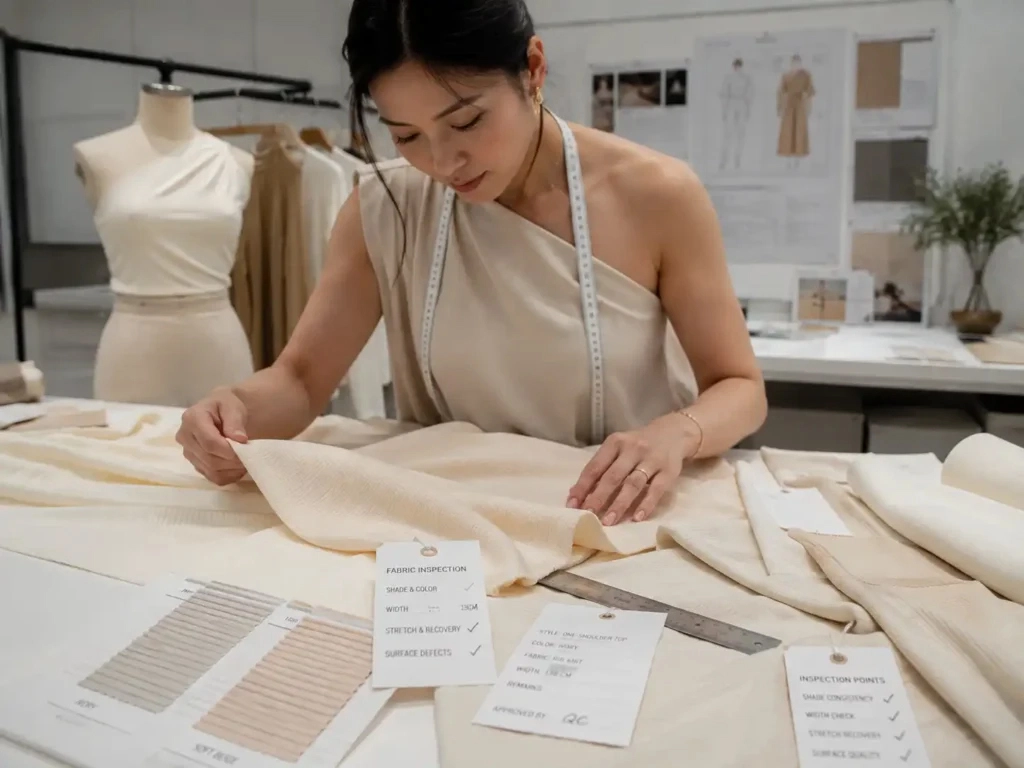
Higher GSM Does Not Always Mean a Thicker Fabric
Not necessarily.
A higher GSM means the fabric weighs more per square meter. It does not automatically mean that the fabric is physically thicker.
Take two fabrics with a similar GSM. One may be tightly constructed and compact, while the other has more air or surface volume in its structure. The second can feel thicker even though both fabrics weigh about the same.
A dense fabric can also feel relatively thin while still having a fairly high GSM.
For clothing development, this difference matters because the finished garment responds to the fabric structure, not to the GSM number alone.
If you are developing a dress, and the fabric needs a particular drape, coverage or body, checking the actual material against the garment is more useful than simply choosing the higher GSM option.
Same GSM, Different Fabric Thickness
Yes. Two fabrics with the same GSM can still have noticeably different thickness.
The final thickness can be affected by:
- Yarn size
- Yarn density
- Weave or knit construction
- Fiber type
- Surface treatment
- Brushing
- Finishing
- Stretch structure
We have seen fabrics with similar GSM behave quite differently after they were made into the same garment.
One may fall closer to the body, while another creates more volume. One may sit cleanly around a seam, while the other creates noticeable bulk at the seam allowance.
You may not see that difference clearly from a small swatch. It often becomes obvious only after the fabric has been cut and sewn.
If you are comparing two suppliers, place the fabrics side by side and check more than weight. Look at the surface, hand feel, drape, stretch, recovery and usable width. When the fabric is close on paper, we usually put both options into the same sample before making the bulk decision.
How Does GSM Affect Women’s Clothing?
GSM can affect the overall feel and weight of your garment, but the effect depends on the fabric type and construction.
For a summer dress, a very heavy material may make the finished garment feel warmer or less fluid than you intended.
For a fitted jersey dress, a higher GSM may provide better coverage, but it may also change how the garment stretches and recovers.
For a flowing skirt, the fabric weight can influence how the hem falls and how much movement you see when the wearer walks.
There is no single GSM that works for every women’s clothing style. For us, the number on the fabric report is only the starting point. If the fabric does not give the dress the right coverage or drape, the GSM figure does not solve the problem.
Where Fabric Thickness Shows Up in a Dress
Thickness tends to show up more clearly in areas where the fabric has to be folded, layered or sewn together.
A thicker material may give a dress more body, but it can also create additional bulk around:
- Seams
- Waistbands
- Zippers
- Hems
- Collars
- Cuffs
- Gathered sections
For example, if your dress has a concealed zipper, a fabric that is slightly bulkier than the approved sample may make the zipper area look less smooth.
A sleeve with several layers can also become heavier than expected.
These problems are much easier to fix during sampling. Once bulk production has started, changing the fabric or construction can affect the pattern, consumption and production schedule.
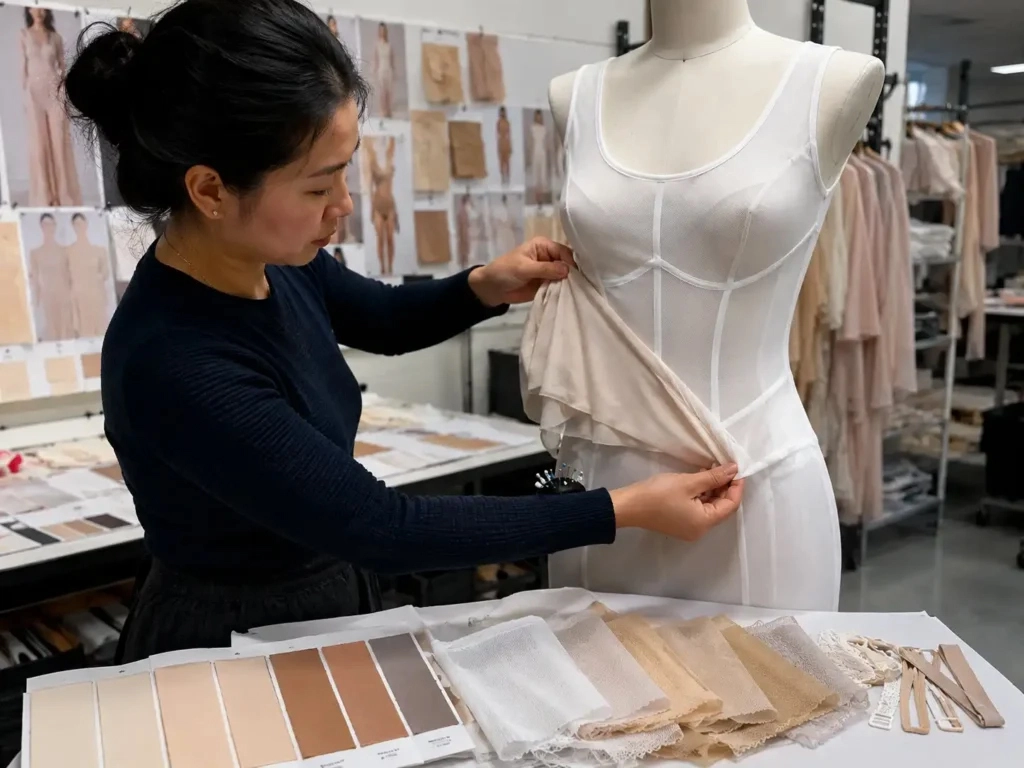
Why Fabric Construction Changes the Result
Composition, GSM and thickness give us different pieces of information about a fabric, but none of them tells us exactly how the fabric will behave in a garment. We also look at the construction and finishing, because that is often where the difference shows up during cutting and sewing.
Construction matters too.
A polyester jersey and a polyester woven fabric can have similar GSM while behaving completely differently. The jersey may stretch and recover, while the woven fabric remains comparatively stable.
Finishing can change the fabric again.
A softening process may change the hand feel. Brushing can change the surface and apparent thickness. Washing or compacting can affect dimensions and shrinkage.
For important styles, the finished fabric and sewn sample should be checked as well. A specification sheet cannot show everything that will happen once the fabric is cut and sewn.
Does Fabric Thickness Affect Sewing?
Yes, particularly when your design has multiple layers or detailed construction.
A thicker fabric can change how seam allowances sit and how easily several layers pass through the sewing machine.
You may also need to look at:
- Needle selection
- Thread
- Seam allowance
- Presser-foot pressure
- Stitch density
- Edge finishing
- Pressing method
A thin fabric can create a different set of problems. Lightweight materials may shift more during cutting and sewing, and delicate hems can require more careful handling.
The sewing method therefore needs to match the actual fabric rather than simply the fabric name. A dress manufacturer will normally consider the fabric together with the pattern and construction before confirming the sewing method for bulk production.
Does GSM Affect Fabric Consumption?
GSM itself does not determine how many meters you need for a garment.
Fabric consumption is affected more directly by the pattern, usable width and garment construction.
A wide fabric may require fewer meters than a narrow one. A full skirt may use considerably more material than a straight skirt. Bias-cut pieces can also increase consumption because the pattern layout cannot always be optimized in the same way.
GSM still matters because it affects the weight and therefore the cost of the material, but you should not use GSM alone to estimate the final garment cost.
For bulk costing, we normally calculate consumption from the actual pattern and usable fabric width rather than estimating from garment length alone.
What Should You Check When Comparing Two Fabrics?
If two suppliers offer fabrics with the same GSM, we do not assume they are equivalent. We usually check the following points before making a decision:
1. Composition
Check the actual fiber content rather than relying on a fabric name such as “crepe,” “satin,” or “jersey.”
2. GSM
Confirm the actual weight and make sure the measurement is based on the same testing conditions when comparing suppliers.
3. Thickness
If thickness matters to your design, compare the physical fabric rather than relying on GSM as a substitute.
4. Fabric Width
Check usable width, not only the quoted width. Selvages, defects and finishing can reduce the area available for pattern placement.
5. Drape and Hand Feel
These are difficult to judge from numbers. If you have a reference garment or fabric swatch, send it with the tech pack.
6. Shrinkage
A fabric that changes significantly after washing or finishing can affect finished measurements and fit.
7. Stretch and Recovery
For fitted women’s clothing, this can be more important than a small difference in GSM.
8. Finished Sample
For an important style, we prefer to make the final comparison on the actual garment.
A fabric that looks correct on the table may behave differently once it becomes a skirt, sleeve, fitted bodice or layered dress.
Common Mistakes Buyers Make With GSM and Thickness
Choosing the Higher GSM Automatically
A higher GSM does not automatically mean better quality.
We sometimes see buyers choose the heavier option because it feels more substantial in the hand. That may be suitable for some styles, but not for a lightweight dress or a fabric that needs to move easily.
The heavier fabric is not necessarily the better fabric. It still needs to match the design, fit and finished look.
Treating GSM and Thickness as the Same Measurement
GSM and thickness describe different characteristics.
If thickness is important for your product, specify it separately rather than assuming that the target GSM will control it.
Comparing Fabric by Name Only
“Polyester satin” or “cotton jersey” can cover many different qualities.
The fabric name does not tell you the exact construction, GSM, width, finishing or performance.
Approving the Fabric Before Making the Garment
A swatch tells you a lot, but it does not show exactly how the material will behave in your pattern.
We have seen fabrics that looked very close on the table produce different results after cutting and sewing.
Ignoring Fabric Width During Costing
Two fabrics with the same GSM can have different usable widths.
That difference can change pattern layout, consumption and ultimately your cost per garment.
What Information Should You Give the Factory?
If you are sending a new women’s clothing project to a factory, try to give more than the fabric name.
A useful specification can include:
- Fabric composition
- Target GSM
- Fabric thickness, if critical
- Fabric width
- Color reference
- Stretch requirement
- Hand-feel reference
- Shrinkage requirement
- Finished garment measurements
- Size range
- Reference garment or fabric swatch
- Expected order quantity
It also helps to explain what you want the fabric to do.
For example, instead of saying:
“I need 180 GSM polyester fabric.”
A more useful specification would be:
“I need a medium-weight polyester fabric for a fitted midi dress, with good coverage, moderate stretch, smooth hand feel and enough recovery to maintain the fit after wear.”
That gives the production team a much clearer starting point.
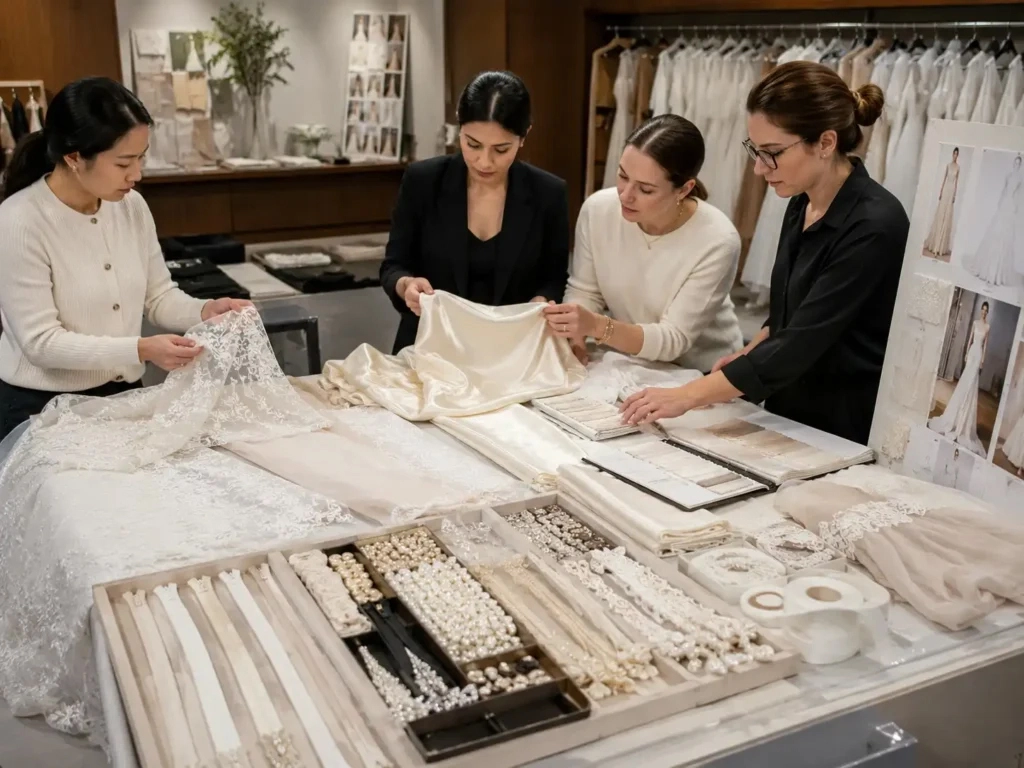
When Should You Focus More on GSM and When Should You Focus More on Thickness?
GSM and thickness do not always need the same level of attention.
If your main concern is material weight and costing, GSM is usually more useful.
If the design depends on coverage, bulk or layering, thickness becomes more important.
For fitted garments, stretch and recovery may matter more than either one. For flowing dresses, drape may be the deciding factor.
For production costing, usable width and pattern consumption can matter more than a small difference in GSM.
A Practical Way to Approve Fabric Before Bulk Production
When two fabric options look similar on paper, we would not make the final decision from the specification sheet alone.
For an important style, we would put both fabrics through the same pattern and compare the finished samples for:
- Fit
- Drape
- Coverage
- Seam appearance
- Bulk
- Hem behavior
- Stretch and recovery
- Overall hand feel
The difference is usually much easier to judge once the fabric is in the actual garment.
A fabric that looks slightly better on the roll may not necessarily produce the better dress.
FAQ
Can a buyer specify both GSM and fabric thickness in a tech pack?
Yes. If both characteristics are important to your product, listing them separately gives the factory a clearer target. For a repeat style, keep the approved fabric reference with the specification so the next production run can be compared against the same standard.
What should you do if the bulk fabric meets the GSM but feels different from the approved sample?
Do not approve it based on GSM alone. Compare the bulk fabric with the approved reference for hand feel, thickness, width, color and finish. If the difference could affect the garment, make a small confirmation sample before releasing the full cutting order.
Can fabric thickness change after washing or finishing?
Yes. Washing, compacting, brushing and other finishing processes can change the fabric’s dimensions and surface. If the finished garment has strict measurement or fit requirements, the fabric should be checked after the relevant treatment rather than relying only on the original fabric specification.
Should a startup brand set a fixed GSM for every fabric?
No. We would not recommend using one GSM target across different fabric types. A chiffon dress, fitted jersey dress and structured woven dress can need very different fabric specifications.
What should you compare when two factories quote the same GSM fabric?
Look beyond the GSM number. Compare the composition, usable width, construction, finishing, shrinkage and hand feel. If the fabric is important to the style, ask for a sewn sample before approving the bulk material.
Conclusion
In production, we do not approve a fabric from the GSM number alone. The final check is how it looks, feels and behaves in the actual garment.
If you are choosing between fabrics, check the GSM together with construction, usable width, drape, stretch, shrinkage and hand feel. For an important style, the sewn sample is still the best way to confirm whether the fabric works.
Explore More Dress Manufacturing Services
If you are developing a new dress and need support with fabric selection, internal construction, sampling, and bulk production, working with an experienced clothing manufacturer can help reduce unnecessary development changes.
At Xiuyu Apparel, we work with fashion brands, startups, designers, and private label companies from sample development through bulk production.
Get a Clothing Manufacturing Quote Based on Your Design
If you already have a garment design, send us the product photo, tech pack, or reference sample together with your target quantity.
As a dress manufacturer, we can review the fabric, lining, construction, trims, workmanship, and finishing requirements and prepare a quotation based on the actual garment rather than a general price range.

