

When you are developing a dress, chiffon and georgette can look quite similar on a fabric swatch. The difference usually becomes clearer after cutting and sewing.
A chiffon skirt may move more lightly, while a georgette version can feel a little more substantial. The change is not only about appearance. Lining, fabric width, cutting layout and actual consumption can all change the finished result.
For a fashion brand, boutique or private label collection, we prefer to judge the fabric as part of the dress, not as a separate swatch.
Chiffon vs Georgette: What Is the Difference?
Chiffon is generally known for its light, smooth appearance and fluid movement. It is often chosen when you want a dress to feel airy and soft, particularly around flowing skirts, sleeves, ruffles and layered sections.
Georgette has a slightly textured, crepe-like surface. Compared with very lightweight chiffon, it can give the garment a little more body while keeping a soft drape.
That difference may sound small when you are looking at fabric rolls. It becomes more noticeable once the material is made into a garment.
| Feature | Chiffon | Georgette |
|---|---|---|
| Surface | Smooth and light | Slightly textured |
| Drape | Very fluid | Fluid with more body |
| Transparency | Usually more sheer | Often slightly less sheer |
| Hand feel | Soft and delicate | Soft with a crepe-like feel |
| Visual effect | Light and floating | Soft with more substance |
| Common dress use | Layered and flowing styles | Occasion and flowing styles |
| Production focus | Handling, stability and finishing | Weight, texture and sewing behavior |
The table gives you a starting point, but it is not how we approve fabric for production. Chiffon and georgette both come in different weights and constructions. Two fabrics can carry the same name on a supplier quotation and still behave differently on the cutting table.
Once the fabric reaches the sample room, the question is less about what it is called and more about how it behaves on the actual pattern.
How Chiffon Behaves Once It Becomes a Dress
If you choose chiffon, the main reason is usually its movement. A lightweight skirt can fall away from the body without adding much weight to the dress.
The production side needs a little more attention, though. Narrow panels can move on the cutting table, especially when the pieces are long. During sewing, a curved neckline can also lose a little of its shape if the fabric has been stretched during handling.
A fabric can look perfect on the swatch and still need a different seam allowance or handling method once it reaches the sewing line.
Most of these issues are easier to catch during sampling than after bulk production has started. They are not necessarily fabric defects. In some cases, the fabric is fine and the pattern simply needs to be adjusted to suit it. We would rather find that out during sampling than after the bulk cutting order has been released.
If your design has several layers or a large amount of gathering, fabric consumption should also be checked early. The width of the fabric and the cutting layout can have a bigger effect on your final cost than the quoted price per meter.
How Georgette Behaves in Dress Production
Georgette is often considered when you want some of the movement of chiffon but do not want the fabric to look quite as light or transparent.
Its surface has more texture, and some qualities feel slightly more substantial when handled. This can be useful for dresses where you want the skirt or sleeve to move without appearing extremely delicate.
One thing to keep in mind is that “georgette” covers quite a range of fabrics.
A lightweight georgette, a heavier georgette and a stretch georgette can behave very differently. We normally check the weight and usable width first, then look at stretch, recovery and drape when those properties are relevant to the design.
For fitted styles, recovery can matter quite a bit. For loose or flowing styles, we usually pay more attention to drape and fabric weight.
Before we lock the pattern, our sampling team checks the fabric weight, usable width, stretch, recovery and drape. If the fabric is wider, stretches more or recovers differently from the original quality, the pattern may need to be adjusted before cutting.
In the sample room, we judge the fabric by the finished garment, not by the fabric name alone.

Which Has Better Drape: Chiffon or Georgette?
It depends on the shape you are trying to achieve.
For a very light, floating skirt, chiffon is usually the first fabric we would sample. If the dress needs a little more body, we would normally test georgette as well.
When the swatches are close, we prefer not to make the decision from the table. We put both fabrics through the same pattern and compare the finished samples.
Once the dresses are made, the differences are much easier to see. Look at how the skirt falls from the waist, how it moves when the model walks, and how the gathers sit. The neckline, sleeve opening and hem can also tell you whether the fabric is working with the pattern.
We have seen fabrics that looked almost identical on the roll behave differently after they were cut into the same skirt. The pattern can expose differences that are easy to miss on a swatch.
Which Is More Sheer: Chiffon or Georgette?
Chiffon is generally the more sheer option, especially in lighter weights.
That can be exactly what you want for a layered summer dress or soft evening style. It can also create extra work if the finished garment needs more coverage.
Depending on the design, we may use a full lining, line only the bodice, or leave areas such as the sleeves sheer. A double-layer skirt can also provide enough coverage without making the whole dress feel heavy.
The choice depends on where the fabric is transparent and how much movement the design needs.
If coverage is important for your collection, test the fabric in the final color instead of approving it from a white or neutral swatch.
Chiffon or Georgette for Maxi Dresses?
For a flowing maxi dress, chiffon is often attractive when the design depends on soft movement and a lightweight skirt. The same fabric considerations also become important when developing other lightweight styles, such as a slip dress, where drape, lining and fabric weight can directly affect the finished silhouette.
A full maxi skirt can use considerably more fabric than a straight or narrow silhouette. If the fabric is narrow, the cutting layout may require more material. Multiple layers can increase consumption again.
For a wide maxi skirt, we pay more attention to usable width than the nominal fabric width shown on the quotation.
Georgette can be a better option when you want the maxi dress to have a little more body and a less delicate appearance.
If your target retail price is fixed, compare the actual consumption of both fabrics on the final pattern. A lower price per meter does not necessarily mean a lower garment cost.
When we quote a dress collection, we normally look at the marker and actual fabric consumption rather than calculating the cost from the fabric price alone.
Which Fabric Works Better for Ruffles and Gathered Details?
Chiffon is often a good match for ruffles because its light weight allows you to build volume without adding too much weight to the garment.
But ruffles also expose fabric differences quickly.
If the material stretches slightly during gathering, one ruffle can end up fuller than another. If the cutting width is inconsistent, the finished edge may not look even. With long gathered panels, small differences can become quite visible.
Georgette can give ruffles and gathers a somewhat different appearance because the fabric has more surface texture and body.
If your design includes a large amount of gathering, it is worth testing the actual ruffle width and gathering ratio before bulk production. A small change in the ratio can affect both the appearance and the amount of fabric used.
Does GSM Matter When Choosing Chiffon or Georgette?
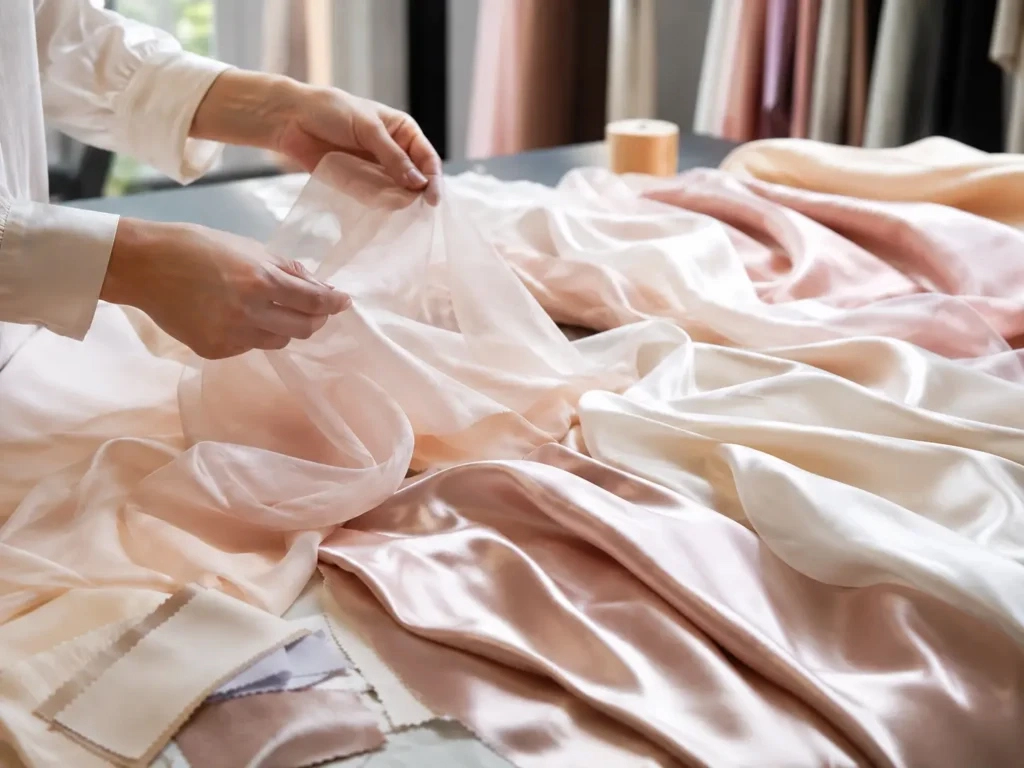
Yes. GSM is useful, but we would not use it by itself to judge how a chiffon or georgette will behave in a dress.
When we compare fabrics, we normally look at GSM together with fabric width, drape, transparency, hand feel, shrinkage, stretch and recovery, surface construction and sewing behavior.
We have had fabrics with almost the same GSM behave differently once they were cut into the same skirt. One may fall closer to the body, while the other keeps more movement away from it.
Fabric width also deserves attention from a purchasing perspective. If the skirt pieces are wide and the usable fabric width is limited, consumption can increase even when the fabric itself looks inexpensive.
A few centimeters of usable width can make a surprising difference when the pattern contains large skirt panels.
Before confirming bulk quantities, we normally check the fabric specification against the cutting layout.
Does Lining Change the Final Result?
Lining can change the weight and movement of the finished dress.
With chiffon, lining can affect the weight and movement of the dress. With georgette, it can also change how the fabric feels against the body and how the finished silhouette sits.
When we sample a new style, we prefer to test the outer fabric and lining together. Changing the lining later can change the weight and movement of the finished dress.
Check whether the two layers move together. Look at the neckline after pressing. Check the hem after the garment has been hanging for a while. If the lining is shorter, heavier or less flexible than expected, the finished dress may not behave like the first sample.
This matters quite a bit when a collection includes lightweight occasion dresses. The lining is part of the garment construction, not simply an extra material added inside it.
How Should You Test Chiffon or Georgette Before Bulk Production?
A fabric swatch is useful for initial selection, but we would not use it for final approval.
For a new dress style, we prefer to test the actual fabric on the intended pattern. Before bulk production, we normally check:
Drape: Does the finished dress create the intended silhouette?
Transparency: Does the garment provide enough coverage in the actual color?
Shrinkage: Do the key measurements remain stable after the required treatment?
Width: Can the pattern pieces be placed efficiently within the usable width?
Seam behavior: Do the seams stay clean without unwanted puckering or stretching?
Hem: Does the edge remain even after sewing and pressing?
Color: Does the bulk fabric match the approved shade?
Consumption: Does the actual marker stay within the expected fabric allowance?
A fabric specification will not tell you everything. Some problems only become obvious once the fabric is cut and sewn.
What Happens If Your Approved Fabric Is Replaced?
This is worth discussing before a large order is placed.
If the original fabric becomes unavailable, we would not treat another chiffon or georgette as a direct replacement simply because the composition and GSM are similar.
The replacement may have a different width, surface, finish, drape or shrinkage rate.
If you are working on a seasonal collection, ask for the replacement fabric before cutting starts. Compare it with the approved material and make another sample if the difference is significant.
A fabric substitution can sometimes require a small pattern adjustment. If the replacement is introduced after bulk cutting, however, there is much less room to correct the problem.
When a buyer changes the fabric after PP sample approval, we usually check the pattern again before releasing the cutting order.
For a buyer, the safer point to approve a substitute is before production rather than after the fabric has already entered the cutting room.
How Does Fabric Choice Affect Dress Cost?
When we compare chiffon and georgette for a dress collection, the fabric price is only the starting point. For a B2B buyer working with a clothing manufacturer, usable width, actual consumption, number of layers, lining, cutting waste, sewing time and finishing all contribute to the final garment cost.
A cheaper fabric can still produce a more expensive dress if the usable width is narrow or the pattern consumes more material. This is especially common with full skirts, gathered dresses and styles with large pattern pieces.
For bulk costing, we calculate consumption from the actual pattern and usable fabric width whenever possible. Estimating from dress length alone can give a very different number, especially with full skirts and gathered styles.
Chiffon vs Georgette: Which Fabric Should You Choose?
For a light, floating dress with soft movement, chiffon is usually where we would start.
If the dress needs a little more body and a less delicate surface, georgette may be a better fit.
When both fabrics look workable on the swatch, we would make the same style in both and compare the finished garments. That gives us a much clearer view of drape, transparency, construction and actual fabric consumption.
For a B2B dress project, the better fabric is not simply the one that looks better on the swatch. It needs to work with the pattern, lining, target cost and production process as well.
What Information Should You Give the Factory?
If you are sending a new dress project to a factory, the fabric name alone is not enough.
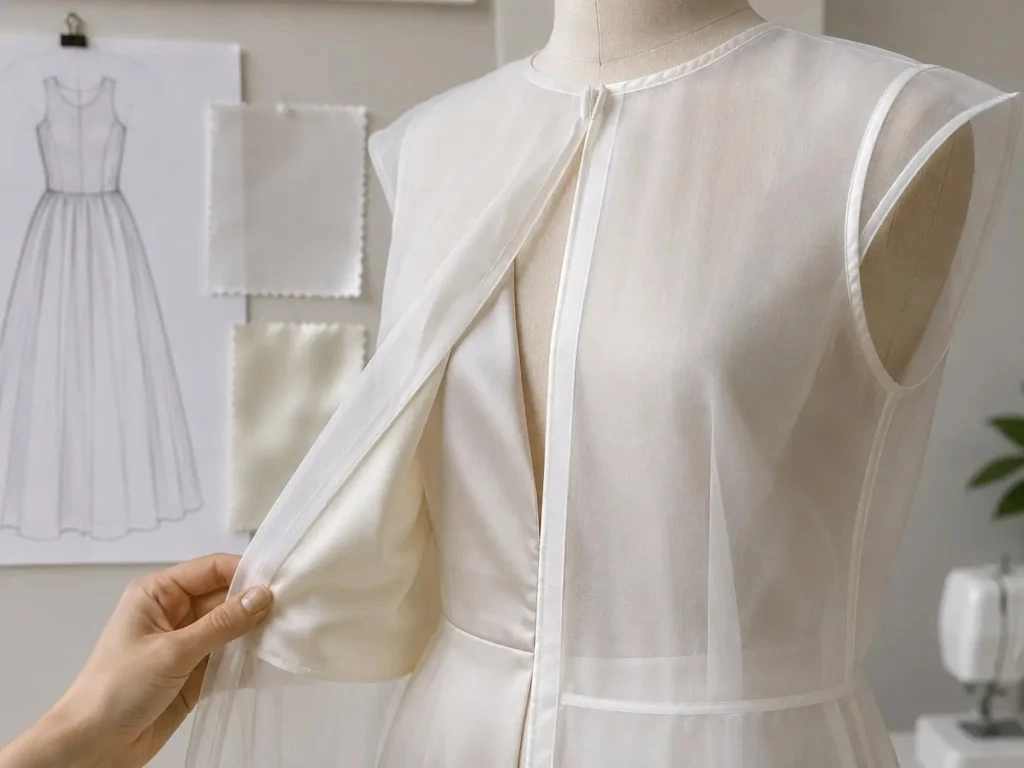
Include your reference sample or tech pack together with the fabric composition, target GSM, fabric width, color reference, lining requirement, finished measurements and size range.
If you already have a physical chiffon or georgette swatch, send it whenever possible.
It is also useful to explain what you are trying to achieve with the fabric. For example, you may want the skirt to move more softly, reduce transparency, create a heavier drape or keep the finished garment within a certain target cost.
Having this information at the beginning makes it easier for a dress manufacturer to judge the fabric against the actual dress requirements. It also reduces the chance of changing the material after the first sample has already been made.
FAQ
Can a chiffon or georgette dress be made without a lining?
Some can, but it depends on the actual fabric, color and dress construction. A heavier or darker quality may need less lining, while lightweight or pale fabrics usually need more coverage.
For a new style, we check the finished garment under normal lighting before deciding whether the lining can be reduced or removed.
Does fabric color affect chiffon and georgette performance?
The basic construction of chiffon or georgette does not change just because the color changes, but different dye lots can still vary in shade, hand feel and finish.
For repeat orders, we keep the approved fabric reference and check the bulk material against it. A replacement that looks close on a screen may not feel the same once it is made into the dress.
Can chiffon and georgette be used for the same dress design?
Yes, but changing the fabric does not guarantee the same silhouette. If you want to change fabrics after sampling, it is safer to make a comparison sample before approving the new material.
Can I change from chiffon to georgette after the first sample?
Yes, but we would normally make another sample before bulk production. Even when the two fabrics have similar GSM and composition, the drape, width, transparency and fabric consumption can be different. A small pattern adjustment may also be needed, especially for gathered skirts, sleeves or fitted sections.
How can a buyer reduce the risk of fabric shortages during production?
Check the usable width, available stock and expected replenishment before confirming the bulk quantity. It is also helpful to keep the approved fabric reference and supplier details on record. If the material is specially produced, confirm the expected production quantity and timing before the dress production schedule is finalized.
Conclusion
Chiffon and georgette can both work well for dresses. The difference becomes much easier to judge once the fabric is made into the actual garment.
For a new B2B collection, we would look at drape, transparency, lining, GSM, usable width, consumption and sewing behavior together rather than approving the fabric from the swatch alone.
A fabric that looks right on the roll is not necessarily the easiest fabric to produce with. We normally recommend testing the fabric on the intended pattern before bulk production, especially when the style has a full skirt, gathers or multiple layers.
Explore More Dress Manufacturing Services
If you are developing a new dress and need support with fabric selection, internal construction, sampling, and bulk production, working with an experienced clothing manufacturer can help reduce unnecessary development changes.
At Xiuyu Apparel, we work with fashion brands, startups, designers, and private label companies from sample development through bulk production.
Get a Clothing Manufacturing Quote Based on Your Design
If you already have a garment design, send us the product photo, tech pack, or reference sample together with your target quantity.
As a dress manufacturer, we can review the fabric, lining, construction, trims, workmanship, and finishing requirements and prepare a quotation based on the actual garment rather than a general price range.

