

A chiffon dress can pass its first fitting and still develop an uneven hem during production. Lightweight fabric is easily affected by sewing tension, fabric feeding and the shape of the skirt edge. As a custom chiffon dress manufacturer, we check these details during sampling rather than waiting until the finished garments come off the production line. Choosing the right hem construction helps you maintain the intended drape, avoid visible rippling and keep the finish consistent across your order.
Rolled Hem vs Baby Hem: Understanding the Difference
Both finishes are used on lightweight fabrics, but they create the edge in different ways.
A rolled hem wraps the raw fabric edge into a very narrow roll and secures it with stitching. A baby hem uses two small folds to enclose the raw edge. The finished width, weight and appearance depend on the fabric thickness, folding method and sewing settings.
For your chiffon dress, neither construction is automatically better. A rolled hem can produce a very fine edge, while a baby hem may offer more control when a slightly wider enclosed finish is needed.
The garment construction also matters. A straight skirt panel, a circular flounce and a bias-cut skirt place different demands on the same sewing technique.
| Chiffon dress detail | Construction to test |
|---|---|
| Straight skirt hem | Rolled hem or baby hem |
| Very lightweight chiffon | Both finishes |
| Narrow sleeve opening | Rolled hem |
| Circular skirt or flounce | Test both on the curved edge |
| Multiple ruffle layers | Baby hem or narrow rolled hem |
| Asymmetrical hemline | Test on the complete pattern |
| Bias-cut skirt | Confirm after hanging and reshaping |
Treat this as a sampling reference, not a fixed construction rule. The approved finish should match the fabric, design and expected appearance of the finished dress.
When Does a Rolled Hem Work Better?
A rolled hem is often chosen when the design calls for a very narrow edge with little added weight.
On a chiffon dress, this is useful for lightweight skirt panels, sleeve openings and flowing sections where a visible folded edge would change the appearance of the design.
However, sewing a narrow rolled hem consistently is not always straightforward. Chiffon can slide under the presser foot, and a small amount of pulling can change the finished width.
During sampling, pay attention to three details.
The width of the finished edge
The roll should remain consistent around the garment. If one section is noticeably wider, the difference may become obvious when the skirt moves.
The feeding of the fabric
The operator should be able to guide the chiffon without stretching it. Pulling the fabric to keep it moving can cause the finished edge to wave after sewing.
The appearance of the stitching
The stitches should secure the rolled edge without making it look gathered or excessively tight. Needle size and thread tension also need to suit the fabric.
A rolled hem that looks neat on a small sample piece may behave differently on a full-length skirt. The longer edge gives you a better indication of whether the construction can be maintained throughout production.
When Should You Consider a Baby Hem?
A baby hem is worth testing when the design needs a narrow enclosed edge but a rolled finish is difficult to control.
The double-fold construction encloses the raw edge, giving the fabric a slightly different finish. It may work well on curved panels, ruffles and other sections where the edge changes direction.
For your dress design, pay particular attention to:
- Circular skirt panels
- Soft chiffon ruffles
- Flounced hems
- Asymmetrical skirt edges
- Lightweight sleeve openings
- Layered chiffon panels
There is one detail worth checking before approving this finish: the additional fold can change how the edge hangs.
On a soft ruffle, even a small increase in edge weight may affect the movement of the fabric. The hem can look perfectly even when laid flat but turn slightly stiff once the garment is worn.
This is why the sample needs to be checked on the actual garment. Look at how the ruffle falls, whether the edge rolls naturally and whether the stitching creates any visible gathering.
A baby hem should solve a construction problem without changing the design’s intended movement.
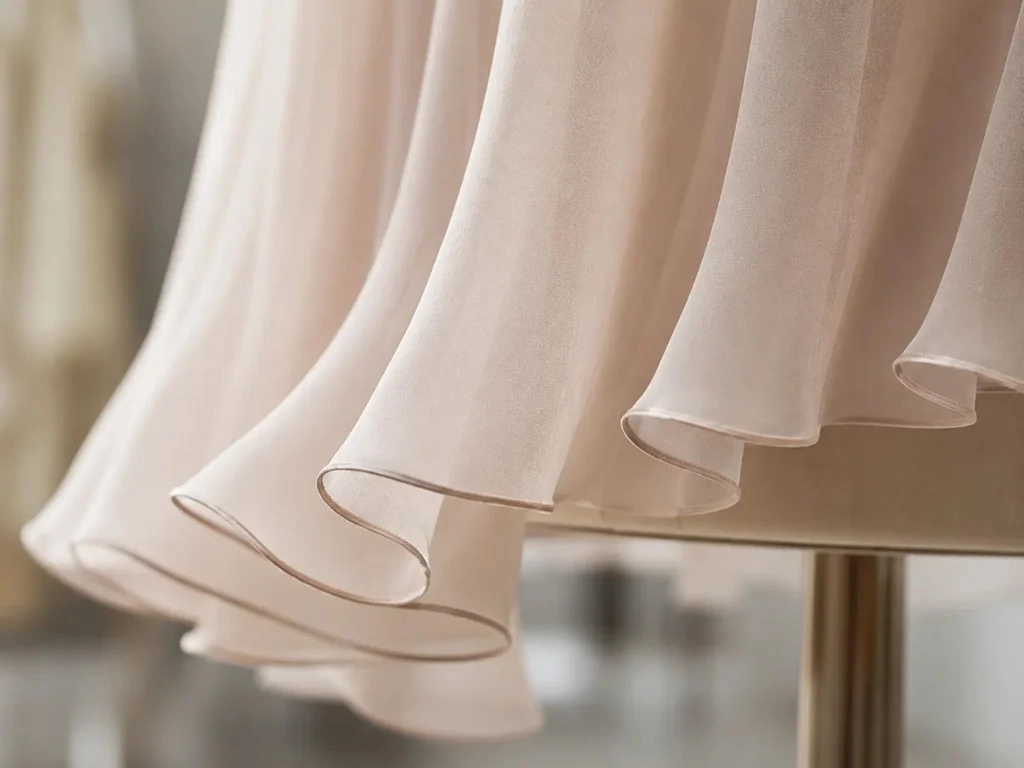
Why the Same Hem Can Look Different on Two Chiffon Fabrics
Chiffon is available in different fiber compositions, yarn constructions and finishes. Polyester chiffon and silk chiffon, for example, do not necessarily respond to sewing and pressing in the same way.
Even when two fabrics have similar GSM, one may be easier to handle while the other shifts under the presser foot.
In our sampling work, fabric hand feel and stability are often more useful than GSM alone when deciding how to finish a narrow edge.
Consider these differences:
Softness: Very soft chiffon may be difficult to control when folding a narrow edge.
Surface friction: Slippery fabric can move during sewing, making the finished width inconsistent.
Fabric stability: Some lightweight fabrics stretch or distort more easily when handled.
Pressing response: Heat and pressure can affect the appearance of delicate chiffon, particularly when the fabric is sensitive to temperature.
If your original fabric is replaced before production, the hem should be checked again. A supplier may provide a fabric with the same composition and weight but a different surface finish or handling performance.
For buyers sourcing from multiple suppliers, this is worth addressing before approving the replacement fabric. A small difference in fabric behavior can become a much larger problem when repeated across a full order.
How Curved Hems Affect Chiffon Sewing
Curved hems require more control because the fabric edge changes direction as it passes through the machine.
On a straight hem, the operator can follow a relatively consistent sewing path. On a curved hem, the fabric needs to be guided gradually so that the fold stays even without stretching the edge.
The tighter the curve, the more attention it requires.
Common problems include:
- Uneven folding around the curve
- Small puckers along the stitching
- Wavy sections after sewing
- Hem width changing between panels
- Fabric being stretched out of its original shape
If your design has a circular skirt or several curved panels, do not approve the hem based on the center front alone.
Check the side sections, panel joins and tighter curves. These are often where the difference between a well-controlled sample and an inconsistent finish becomes visible.
One practical point: a clean stitch line does not necessarily mean the hem is correct. The edge also needs to lie smoothly and follow the intended skirt shape.
What Changes When the Chiffon Dress Is Cut on the Bias?
Bias-cut chiffon needs a different approach because the fabric can lengthen after cutting.
When the panels are cut diagonally to the grainline, they have more give than straight-grain sections. Under their own weight, some parts of a long skirt may drop further than others.
If the hem is finished before the fabric has settled, the dress may end up with an uneven bottom edge.
For this reason, bias-cut dresses need an additional fitting and preparation step before final hemming.
A typical sequence includes:
- Sew the main garment and complete the necessary construction.
- Hang the dress to allow the bias sections to relax.
- Check the garment length at several points.
- Mark and correct the hemline.
- Complete the chosen hem construction.
- Recheck the finished length and appearance.
The settling time depends on the fabric, skirt length and amount of bias construction. A full-length chiffon dress may need more attention than a short skirt with only a few bias-cut sections.
If you are developing a bias-cut collection, include the hanging and final hem correction in your sampling schedule. It should not be treated as an unexpected alteration after the PP sample has been approved.
Why Do Chiffon Hems Become Wavy After Sewing?
A wavy hem is not always caused by choosing the wrong construction. In many cases, the fabric has been distorted during sewing or pressing.
The first thing to check is whether the edge was stretched while being fed through the machine. Lightweight chiffon can change shape with very little pulling.
Other possible causes include:
Incorrect thread tension: Excessive tension can draw the fabric together along the stitching line.
Unsuitable needle: A needle that is too large or not appropriate for the fabric may leave visible holes or damage delicate yarns.
Inconsistent folding: Small differences in the fold become more noticeable over a long skirt edge.
Uneven pressing: Excessive pressure or unsuitable heat can distort the finished hem.
Fabric relaxation: Some sections may change shape after the garment has been sewn and hung.
When inspecting a problem, check whether the waviness follows the stitching line or appears across the entire fabric edge. This helps distinguish a sewing issue from fabric distortion.
Changing the hem construction without identifying the cause can create another problem without correcting the original one.
How to Keep the Hem Consistent in Bulk Production
For a fashion brand, a good first sample is only part of the approval process. The same appearance needs to be maintained across different sizes and production batches.
Before bulk sewing begins, the factory should have a clear reference for the approved hem construction.
Your production specification should cover:
| Item | What needs to be confirmed |
|---|---|
| Hem type | Rolled hem or baby hem |
| Finished width | Agreed measurement and tolerance |
| Fabric | Approved composition and fabric reference |
| Sewing quality | Stitch appearance and tension |
| Hem shape | Straight, curved or asymmetrical |
| Pressing | Suitable heat and pressure |
| Final appearance | Smooth edge without visible distortion |
The approved sample should be available to the sewing team and quality inspectors.
For large orders, checking only the first finished garment is not enough. Inspect garments from different production stages to see whether the hem width and appearance remain consistent.
If a problem appears, identify whether it comes from fabric handling, sewing settings or pressing before making changes to the construction specification.
This makes it easier to correct the process without creating unnecessary differences between production batches.
What Should You Include in the Tech Pack?
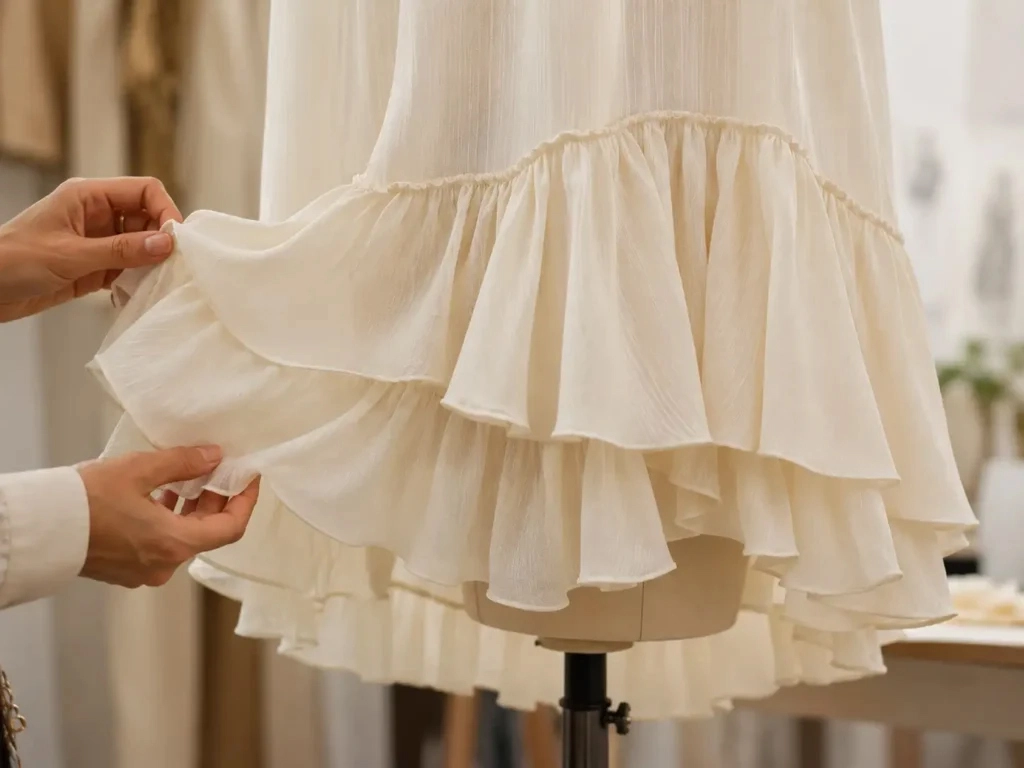
A tech pack should tell the factory what the finished hem needs to look like and how it fits into the overall garment construction.
You do not need to specify every machine adjustment. Those details can be confirmed during sampling with the factory’s pattern and sample teams.
For a chiffon dress, include:
- Fabric composition and GSM
- Fabric reference or supplier information
- Rolled hem or baby hem preference
- Finished hem width
- Skirt shape and hemline measurements
- Bias-cut or straight-grain construction
- Lining and layer details
- Reference photos of the desired finish
If you have a very narrow hem in mind, include a close-up reference or physical sample. The phrase narrow rolled hem can be interpreted differently by different factories.
For an asymmetrical or curved design, mark the important measurement points on the technical drawing.
You should also identify which details are essential for approval. For example, the finished hem width may have a tolerance, while the overall silhouette and edge appearance may need to match the reference sample more closely.
Clear specifications reduce the number of questions during sampling and make it easier to compare the PP sample with the original design.
What to Check Before Approving the PP Sample
Before releasing your chiffon dress for bulk production, review the hem as part of the complete garment.
A few checks can help catch problems that are easy to overlook during a quick fitting.
Hem width and consistency: Measure several positions, especially around curved sections and panel joins.
Edge appearance: Check for loose stitches, skipped stitches, puckering and visible fabric damage.
Garment movement: Let the skirt hang naturally. The edge should not pull the fabric into an unwanted shape.
Finished length: Confirm the length after hanging, particularly for bias-cut dresses.
Pressing result: Inspect the garment after final pressing, not just immediately after sewing.
Size range: If the order includes several sizes, check whether the hem construction remains suitable across the graded patterns.
For buyers, the PP sample is the point where these details should be settled. If the approved hem width, construction or appearance changes later, the factory should receive the revised specification before bulk production continues.
FAQ
1. Can a chiffon dress have a different hem finish on the outer layer and lining?
Yes. The outer chiffon and lining do not always need the same construction. The lining may use a more conventional narrow hem, while the chiffon needs a lighter finish. Check that the two layers do not catch or pull against each other when the dress moves.
2. Does a rolled hem require special sewing equipment?
A rolled hem can be produced with suitable sewing equipment and the correct machine setup. Some factories use specialized narrow-hem attachments or dedicated machines, depending on the fabric and construction. What matters most is whether the equipment can maintain the required width without damaging the chiffon.
3. How should a brand specify hem width when different factories use different methods?
Specify the finished appearance and measurement rather than relying only on a construction name. Include a close-up reference, the intended finished width and any acceptable tolerance. This gives different factories a clearer standard when preparing samples and quotations.
4. Can a chiffon dress hem be checked for durability before production?
Yes. The sample can be handled, gently stretched at the edge and checked after repeated movement. Look for loose stitches, opened folds and damaged yarns. For a design intended for frequent wear, it is also useful to assess whether the finish remains stable after the garment’s planned care process.
5. Should the hem construction be included in the garment costing?
Yes. The finish can affect sewing time, handling difficulty and inspection requirements. A very narrow hem on a full circular skirt may require more work than a simple straight edge. Include the construction details when requesting a quotation so the factory can assess the actual sewing requirements.
Conclusion
A rolled hem and a baby hem can both work on chiffon dresses, but the fabric and garment shape determine which finish is more suitable. Test the construction during sampling, then check the finished edge after sewing, pressing and hanging. These details are worth settling before bulk production. At Xiuyu Apparel, we understand the importance of getting these construction details right as a dress manufacturer.

