
When we review a new dress inquiry, we look at the design, fabric, order quantity and construction details before working out the price. Sometimes a buyer sends a clear reference photo but has not decided on the lining, fabric weight or size range. We can still review the project, but the first quotation may need to be based on a few stated assumptions. Sorting these details out early makes it easier to compare quotes and reduces the chance of pricing the wrong version of the dress.
1. Send Design References That Show What You Want to Produce
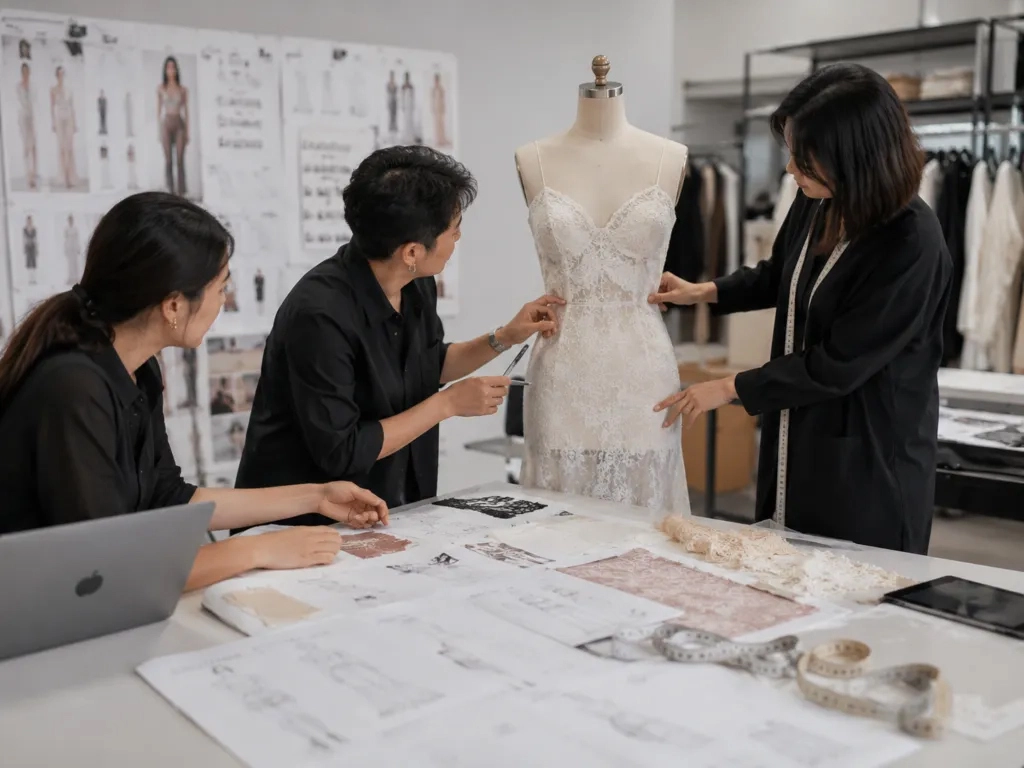
A dress inquiry can start with a sketch, a technical flat, a product photo or a garment you already own. What matters is whether the reference gives our pattern team enough information to understand the silhouette and the main design details. A complete tech pack is helpful, but it is not a requirement for the first conversation.
If you are combining ideas from several garments, explain which details you want to keep. For example, you might prefer the bodice of one dress, the skirt shape of another and a different sleeve length. Without that explanation, the manufacturer may interpret the references differently from you.
Pay particular attention to details that are difficult to judge from one photograph:
- Front and back neckline shapes
- Zipper or other closure positions
- Waist placement and skirt volume
- Slit depth and finished dress length
- Lining coverage and transparency
- Sleeve openings, cuffs and strap placement
If the slit depth, lining coverage or neckline measurements are not final, mark them as pending. Our team can then distinguish between the details that affect the initial cost and those that can be settled during sample development.
An inspiration photo tells us how you want the dress to look, but it does not necessarily tell us how to cut it. For pattern development, we may still need finished measurements, construction details or a sample garment to check proportions and fit.
If you have a sample garment, tell the factory whether you want a close reproduction or a revised version. Reproducing an existing garment and changing its neckline, fit or skirt shape can involve different amounts of pattern work and sample adjustment.
2. Describe the Fabric and Any Materials You Have Selected
Fabric appearance alone is not enough to estimate the cost of a dress. Weight, usable width, stretch and composition all matter when we assess material consumption and sewing requirements. If you have a supplier’s fabric code or a swatch, include it with your inquiry. If you only know the desired look and feel, describe those first and leave the exact material open for discussion.
If the fabric has not been selected, tell us how the dress should hang and feel when worn. A fitted jersey style needs enough stretch and recovery to hold its shape, while a flowing occasion dress may need a lighter fabric with the right drape. Your target price also matters, since two materials that achieve a similar look may have very different costs.
Do not overlook the materials inside the garment. Tell the factory whether you expect full lining, partial lining or no lining, and identify any special requirements for interfacing, elastic, cups or closures.
For printed or embellished styles, provide the artwork or a reference showing the intended placement whenever possible. If you need embroidery, sequins, beading or appliqué, make clear whether the reference shows a required finish or simply an aesthetic direction.
If the fabric is not confirmed, ask the factory to state which material assumption the preliminary quote is based on. Once you select the actual fabric, the price can be checked against its cost, width and suitability for the design. This keeps an early estimate useful without treating it as a final quotation.
3. Identify Construction Details That Could Change the Quotation
A small design detail can add more work than its size suggests. An internally supported bodice, for example, may require extra pattern development, additional layers and more fitting adjustments than a simple lined bodice. Beading, shaped panels and carefully matched seams can also affect the time needed to make each dress.
Tell us which details must stay as designed and which ones you are open to changing. If a beaded bodice is central to the look, we should price that version rather than assume the decoration can be reduced. If you are flexible on the trim or seam finish, we can review those options separately.
Finishing requirements should also be clear. If you need a particular hem finish, visible topstitching or precise placement of decorative details, include those instructions or mark them on the reference images.
You do not need to specify every sewing operation yourself. The purpose of the initial inquiry is to communicate the intended result and highlight the parts that cannot be changed without affecting the design.
If you are requesting several styles, provide separate references for each one. A shared note such as “same fabric as Style A” can be useful, but make sure the relationship between the styles is explicit.
4. Break Down Your Quantity by Style, Color and Size
When a buyer tells us the order is for 500 dresses, we still need to know how those pieces are divided. Five hundred units across one style and one color are different from five styles with several small color allocations. List the quantity for each style and color, then add the size breakdown if you have it.
With that breakdown, the factory can check the MOQ for each style or color and see whether your proposed allocation needs adjusting.
For a new brand, the numbers may still be provisional. That is fine. State your current estimate and explain whether you are testing a small initial release or planning a larger repeat order if sales are strong.
You should also confirm how the manufacturer’s MOQ is calculated. It may apply per style, per color or under another arrangement. Do not assume that the total quantity across an entire collection automatically satisfies the minimum for every style.
If you are still deciding between several designs, ask whether the factory can review them separately. A collection with many small color allocations may require a different purchasing plan from a larger run of one style.
Accurate quantity information also makes supplier comparisons more useful. If one factory quotes a larger run and another quotes a smaller one, their unit prices may not be directly comparable.
5. Provide Your Size Range and Intended Fit
Include your planned size range, such as XS–XL, along with a size chart if one is available. If you use custom measurements, specify whether the figures refer to body measurements or finished garment measurements.
Body measurements describe the wearer; finished garment measurements describe the dress laid flat or measured according to your specified method. The difference is the wearing ease built into the pattern, which affects how closely the dress fits around the bust, waist and hips.
You should also explain whether the dress is designed to fit closely, sit loosely or have a particular silhouette. For a fitted style, identify the areas where the fit is especially important, such as the bust, waist, hip or armhole.
If you have an existing product that fits your customers well, you can share its measurement chart or a reference sample. Explain which measurements should be followed and which need adjustment for the new design.
You can request an initial quote before every measurement is finalized. However, tell the factory if you are still deciding on the size range or fit. Major changes to the pattern or size grading after sampling begins may affect the development cost and schedule.
6. Give Your Target Cost and Clarify What the Quote Should Include
If you have a target manufacturing cost, sharing it can help the factory assess whether your proposed design and material choices are compatible with your budget. You do not have to provide one, but it can make early discussions more focused.
Be clear about what the figure represents. Your target factory price is not the same as your retail price or your total landed cost after freight, duties and other expenses.
If the quote comes in above budget, ask where the main cost difference comes from. Changing the fabric or reducing some embellishment may bring the price down, but simplifying a structured bodice or removing lining can also change the way the dress fits and hangs. Review the cost saving against the finished product you need, not the price alone.
Before comparing quotations, check that both factories are pricing the same specification and order quantity. Confirm whether the price includes fabric, lining, trims, labels, packaging and sample development, and note the currency and any exclusions. If one quote is much lower, check whether the fabric or construction differs before assuming it offers better value.
7. Explain Your Branding and Packaging Requirements
For private label orders, list the items you want to customize, such as woven labels, care labels, hangtags, logo decoration or retail packaging. Send the artwork and label dimensions if they are ready. If not, identify the items that will need customization so the factory can include them in the initial project review.
If the design is still in progress, describe what you expect to customize and identify anything that remains undecided. The factory can then tell you which details are needed before sampling or bulk preparation.
Packaging should be considered separately from the garment itself. A standard polybag and a branded, individually prepared package are different requirements. If your products need specific folding, protective materials, stickers or retail-ready presentation, include those instructions.
For brands selling through multiple retail channels, make sure the factory understands any different labeling or packing requirements. Do not assume that a general request for “custom packaging” explains the full specification.
The final artwork and packaging instructions may be supplied later, but the overall requirement should be clear enough for the initial quotation.
8. Set the Sample and Delivery Milestones
Once the fabric, quantity and sample approval plan are confirmed, ask the factory to update the production schedule. If the material changes or sample revisions take longer than expected, check whether the original delivery date is still achievable.
Allow time for shipping and import clearance after production finishes. The date the factory completes the order is not necessarily the date the dresses will reach your warehouse.
Your inquiry should state whether the launch date is fixed or flexible. If it is fixed, say so at the beginning rather than introducing it after the quotation has been prepared.
The schedule also depends on when materials are confirmed and how quickly you can review samples, provide fit comments and approve the PP sample. Revisions made late in development may affect the remaining production window.
Ask for an initial schedule based on the information available, then confirm the dates once the design, fabric, quantity and approval requirements are established.
If your collection contains several styles, identify which ones must be ready first. This can help the factory understand your priorities when reviewing the proposed production plan.
9. What If You Do Not Have All the Information Yet?
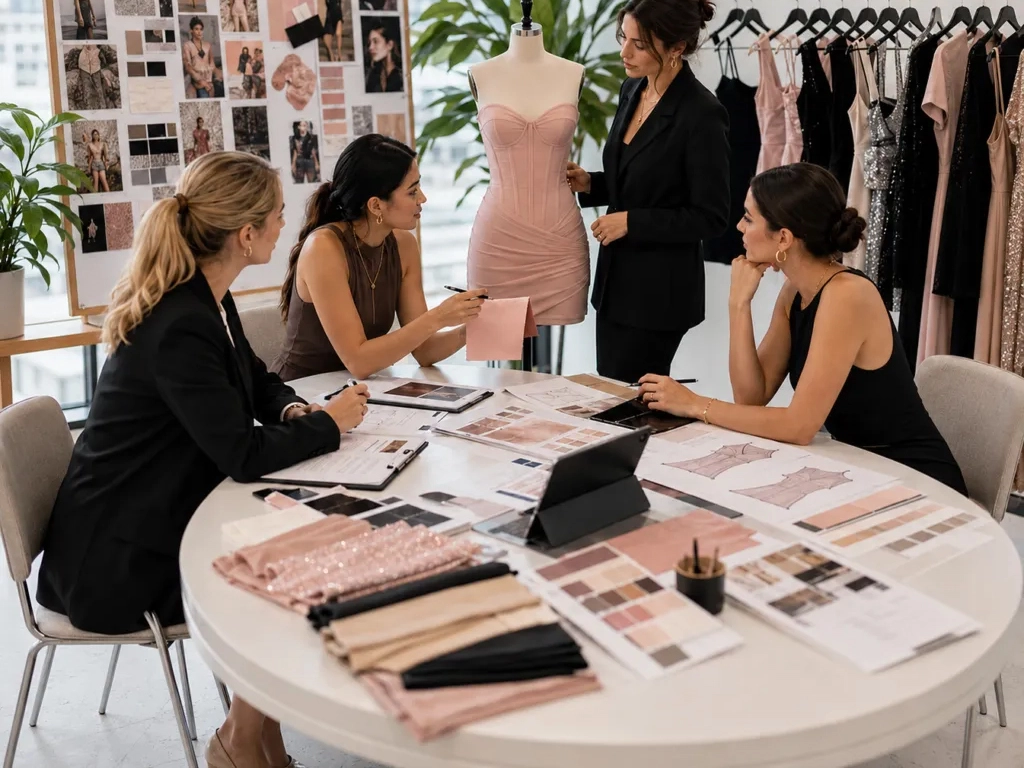
If you are still developing the collection, send the information you already have and mark the open decisions. For example, you may have approved the silhouette and target quantity but still be comparing two fabrics. Ask the factory to quote against a clearly stated fabric assumption, then confirm whether the price will need to change once the material is selected.
For an initial review, a sketch or reference photo, estimated quantity, fabric direction and target delivery date may be enough. Include your size range and target cost if available. Ask the manufacturer which missing details could change the quote and which can wait until sample development.
Keep in mind that an initial estimate may rely on assumptions about fabric, construction or order quantity. Before treating it as a confirmed price, review those assumptions and update any specifications that have changed.
For a more developed project, a tech pack and measurement chart will help the factory review the design in greater detail. The amount of documentation needed depends on the complexity of the garment and the stage of your project.
10. A Final Checklist Before You Send the Inquiry
Before sending your request, check whether you can provide the following:
- Design: Sketches, reference photos, sample garments and important construction details.
- Materials: Fabric composition, weight, swatches, lining and trim requirements.
- Order: Estimated quantity by style and color, plus the planned size range.
- Fit: Size chart, finished measurements or a suitable reference garment.
- Cost: Target manufacturing price, if available, and the scope you expect the quotation to cover.
- Branding: Label, hangtag, logo and packaging requirements.
- Schedule: Sample deadline, approval milestones and required delivery date.
- Open questions: Details that remain undecided and assumptions that need confirmation.
Send the information by email, in a shared folder or as a project brief, with separate references for each style. Use the same style codes on sketches, measurement charts and quantity sheets. Mark revised files with a version number or date so the pattern team can identify the latest specifications.
FAQs
1. Should I contact a dress manufacturer before choosing a fabric supplier?
Yes. You do not need to select a fabric supplier before contacting a dress factory. Share the look, weight, stretch and approximate price range you want. If two fabrics are still under consideration, tell the factory which one should be used as the basis for the first estimate. The final price can be reviewed after the material is confirmed.
2. What should I do if two factories give me very different prices?
First, check whether both factories are quoting the same fabric, lining, embellishments and order quantity. Then compare what is included in the price, such as labels, packaging and sample charges. If the specifications match but the prices are still far apart, ask each factory which item accounts for the biggest difference before making a decision.
3. Do I need a registered company to request a dress manufacturing quote?
Not always. Some factories accept inquiries from founders who are still developing their first collection, while others may have specific business or order requirements. Explain your project stage and expected quantity, then confirm the supplier’s invoicing, payment and documentation requirements before placing an order.
4. Can a manufacturer help me decide which styles to launch first?
Yes, a factory can compare the sampling work, fabric requirements and construction difficulty of your proposed styles. A dress with a straightforward construction may be easier to develop than one requiring extensive fitting adjustments or detailed embellishment. This can help you plan the development sequence, although expected demand and budget should still determine which styles you launch first.
5. What happens if I change the design after receiving a quotation?
Send the revised design and identify the changes clearly. Ask the factory to review whether the material cost, construction, sample work or schedule needs to be updated. Do not assume that an earlier quotation automatically covers a revised design or newly added requirements.
Conclusion
Before requesting a dress manufacturing quote, make sure the factory can identify the version you want to produce, the quantity you plan to order and the details that could affect cost or timing. You can still begin with a sketch and an estimated quantity if the fabric or measurements are not final. At Xiuyu Apparel, we review these project details before moving into sample development, so you can send your current design references and open questions through our dress manufacturing inquiry page.