

When brands send us new midi dress projects, the design idea is usually clear, but production details often need to be checked before sampling begins. before sampling begins. A midi dress may look simple, but the final result depends on details such as fabric behavior, pattern balance, fitting adjustments, and sewing control. Before bulk production starts, these factors need to be reviewed carefully to make sure the design can be produced consistently.
Turning a Midi Dress Design Into a Production Plan
Before a midi dress reaches the sewing line, the factory needs to confirm whether the design details can be produced consistently. The factory first reviews whether the design details can be made consistently in bulk production.
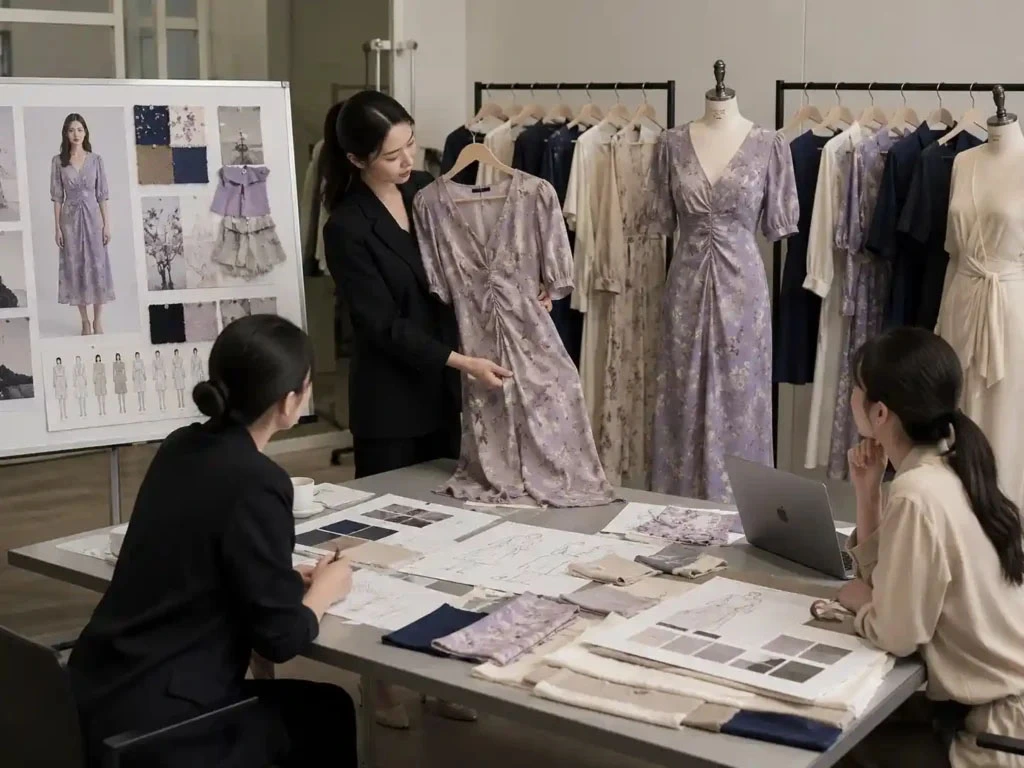
Your sketch or reference sample may show the final appearance, but the factory needs more information to prepare production. Details such as measurements, fabric type, construction method, lining requirements, and finishing expectations all affect how the dress will be made.
In the sample development stage, we often find that unclear details create extra revisions. For example, differences in neckline depth, waist position, or skirt volume may not be obvious from a sketch but can affect the final sample.
Choosing the Right Fabric for Midi Dress Manufacturing
Fabric selection affects the final shape, fitting, and sewing process of a midi dress. The same design can have very different results depending on the material chosen.
For example, satin requires careful handling because the surface can easily show marks during production. Chiffon and other lightweight fabrics may need attention during cutting and sewing because of their movement and structure. Stretch fabrics require proper control to maintain the intended fit.
You should consider fabric behavior, not only appearance. A fabric that looks right in a product photo may behave differently once it goes through cutting, sewing, pressing, and finishing.
Pattern Making and Sample Development
After design details are confirmed, the pattern team develops the measurements and garment structure needed for sampling.
The first sample allows both sides to check whether the design works as expected before moving into bulk production.
- overall silhouette
- neckline and waist position
- skirt shape
- garment length
- fitting balance
Sample development is usually an adjustment process rather than a one-time step. You may need to revise measurements or construction details after reviewing the first sample.
A well-developed PP sample becomes the reference for bulk production. It helps the production team follow the approved standard when making larger quantities.
The production team follows the approved PP sample together with measurement specifications during bulk manufacturing.
Preparing Midi Dresses for Bulk Production
After the PP sample is approved and materials are ready, bulk production can begin. At this stage, the approved sample, measurements, and construction details become the reference for the production team.
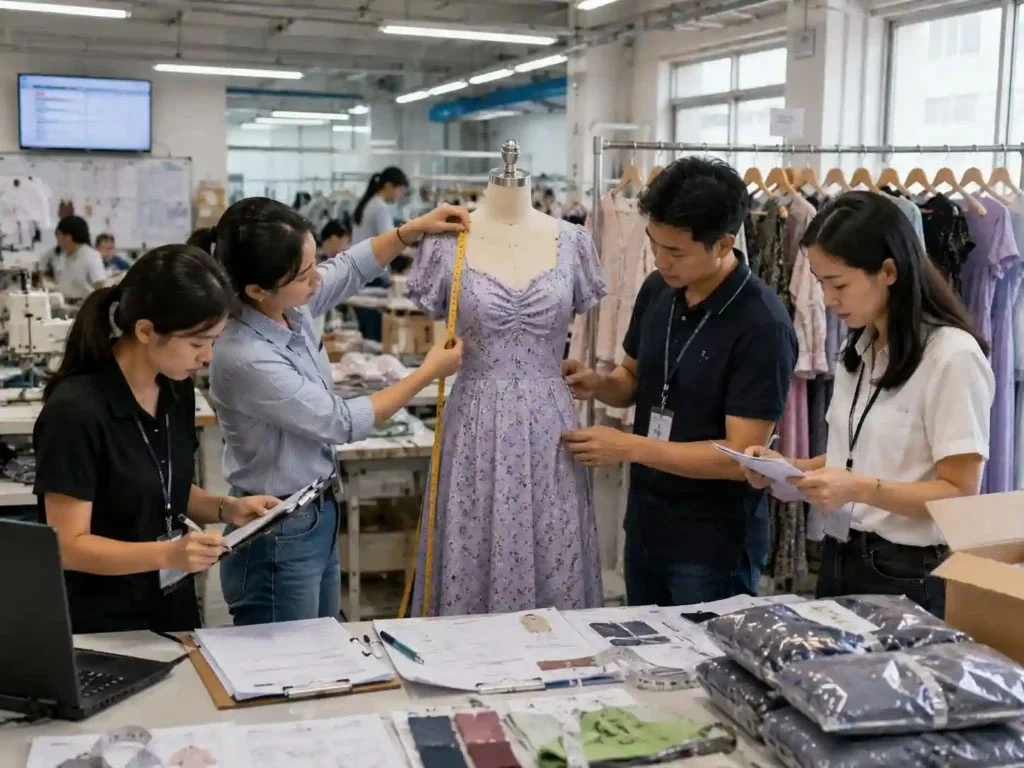
Before cutting, fabric inspection helps identify issues such as color variation, defects, or shrinkage concerns. Accurate cutting is especially important for midi dresses with multiple panels, prints, pleats, or special construction details.
During sewing, production teams follow the approved construction method to maintain consistency across different sizes and quantities. Small differences in stitching, pressing, seam allowance, or panel matching can affect the final appearance of midi dresses.
Quality Checks During Midi Dress Production
Quality control is not only a final step before shipment. It needs to happen during different production stages.
During midi dress production, quality checks usually focus on areas that directly affect fit and appearance:
- fabric inspection before cutting
- measurement checking during sewing
- seam and construction inspection
- pressing and finishing before packing
For brands, the key point is making sure bulk production matches the approved sample. A dress that looks correct on the first sample still needs proper control when hundreds or thousands of pieces are produced.
For midi dresses, quality control also focuses on shape and appearance because small differences in length, seam position, or pressing can change the way the garment falls.
Common Production Challenges When Making Midi Dresses
In many projects, production issues can be traced back to unclear design details or material decisions made before sampling.
Some common examples include:
Fit differences between sample and bulk production
A sample may fit well, but maintaining the same result in bulk requires the same pattern, grading, sewing method, and measurement control.
Fabric behavior changes
Different fabric batches or material characteristics can influence the final garment shape, especially for lightweight or stretch fabrics.
Complex design details
Features such as layered skirts, special necklines, embroidery, or decorative elements usually require more production planning before bulk manufacturing.
By identifying these challenges early, you can reduce unnecessary revisions and production delays.
What Should You Prepare Before Producing Custom Midi Dresses?
Before contacting a manufacturer, you should prepare as much production information as possible.
Helpful materials include:
- design sketches or tech packs
- reference garments or photos
- fabric preferences
- color requirements
- size range
- estimated order quantity
- branding and packaging requirements
Clear information allows the factory to evaluate the design more accurately and provide practical feedback before development starts.
How Long Does Midi Dress Production Take?
Production time changes from project to project. Simple styles may move faster, while dresses with special fabrics, embroidery, layered skirts, or complex construction usually require more development time.
Sample development usually takes several days after receiving complete design information. Bulk production begins after the PP sample is approved and all materials are confirmed.
For brands, a clear development timeline is important because delays often happen when design changes, fabric decisions, or approvals are not completed on schedule.
FAQ
Why do midi dresses require careful pattern development?
Midi dresses often require careful control of proportions because the length, waist position, and overall silhouette strongly affect the final look. Small pattern changes can influence how the dress fits and hangs on the body.
Can a factory help improve my midi dress design before sampling?
Yes. A manufacturer can review production details and point out possible issues related to construction, fabric handling, or manufacturing difficulty. Early communication can help adjust the design before sample development begins.
Why does the same midi dress design look different in different fabrics?
Each fabric has different weight, stretch, drape, and sewing requirements. These characteristics affect the garment shape, fitting result, and production method, so fabric choice should be evaluated together with the design.
What causes quality differences between samples and bulk orders?
Differences usually happen when production standards are not clearly defined or when the approved sample is not properly followed during manufacturing. Clear specifications and production control help keep bulk orders consistent.
How can brands reduce problems when developing new midi dresses?
You can reduce problems by preparing complete design information, confirming materials early, and providing clear sample feedback. A structured development process makes communication easier between your team and the manufacturer.
Conclusion
A midi dress order usually goes through several stages before reaching bulk production, and each stage can affect the final result. Clear communication on design, materials, sampling, and production standards helps brands reduce unexpected changes during manufacturing. Each stage affects the final garment quality and production efficiency. When brands understand these steps before development starts, communication with the manufacturer becomes clearer and unexpected changes can be reduced.
Related Dress Manufacturing Services
If your project involves a specific dress fabric or construction, you can also review our related manufacturing pages:
- Midi Dress Manufacturer
- Bridesmaid Dress Manufacturer
- One Shoulder Dress Manufacturer
- Sequin Dress Manufacturer
- Formal Dress Manufacturer
Get a Quote for an Existing Dress Style
If you are transferring an existing dress style to a new manufacturer, send us the latest approved sample, tech pack, product photos, or measurement chart together with your target quantity.
As a dress manufacturer, we can review the construction, fabric, trims, measurements, and current production status with you before confirming the sampling requirements.

