

When you develop linen skirts for your collection, choosing an attractive fabric is only part of the job. You also need to consider how it behaves during cutting, sewing, washing, and fitting. Shrinkage, fabric transparency, uneven hems, and inconsistent sizing can turn a simple skirt design into a difficult production order. As a clothing manufacturer, we believe these details should be considered before sampling, not corrected after bulk production has started.
Why Are More Fashion Brands Including Linen Skirts in Their Collections?
Linen skirts have a place in collections that focus on relaxed silhouettes, natural textures, and warm-weather dressing. For fashion brands, the appeal is not limited to the fabric itself. A relatively simple linen skirt can be developed into several different products through changes in length, waist construction, volume, and finishing.
This gives you room to build a collection without making every style depend on a completely different material.
A Natural Look That Does Not Require Complicated Design
Linen has a recognizable woven surface, often with slight variations in yarn thickness and texture. These characteristics give garments a less uniform appearance than many smooth synthetic fabrics.
For your collection, this can be useful when you want to create visually interesting products without adding excessive decoration.
A straight linen skirt with a clean waistband, for example, may need little more than a well-balanced silhouette and carefully finished seams. A more relaxed design can use gathers or panels to create movement.
However, natural texture should not be confused with poor fabric consistency. You still need to distinguish acceptable linen slubs from weaving defects, holes, or irregularities that affect the finished garment.
More Than One Product Direction Within a Collection
Linen skirts can serve different market positions.
If your brand focuses on everyday womenswear, you may develop straight midi skirts, A-line styles, or elastic-waist designs. A resortwear label may prefer wrap skirts, longer silhouettes, or matching skirt-and-shirt sets.
Boutiques and smaller retailers may also find it easier to introduce different skirt shapes within one fabric story.
The important decision is how each style fits your customer and price range. A lightweight, unlined skirt may suit one collection, while another may require lining, a more structured waistband, and additional finishing.
A Suitable Option for Seasonal Product Planning
Linen is frequently used in spring and summer collections, but the development schedule needs attention.
If you plan to launch a collection for a specific selling season, fabric sourcing and sample approval should not be left until the last minute. Custom colors may require additional development time, and changes to fabric composition can affect the original fit.
You should also consider whether the same material can be used across several products. Sharing a fabric between skirts, shirts, and dresses may simplify sourcing, although each garment still needs its own construction and quality checks.
Which Linen Skirt Designs Are Worth Developing?
The style you select will determine how much fabric you need, how the garment moves, and which construction details require attention.
Rather than choosing a silhouette based only on a reference image, consider the relationship between fabric weight, garment volume, and the intended fit.
A-Line Linen Skirts
A-line skirts gradually widen from the waist toward the hem. They are relatively straightforward to develop, but the fabric must fall correctly for the silhouette to look balanced.
If you choose a lightweight linen, the skirt may have a softer movement. A firmer fabric can create a more defined shape.
During pattern development, pay attention to the hip area and side seam balance. If the skirt flares too early, it may create unnecessary volume around the hips. If the flare is insufficient, the finished garment may look closer to a straight skirt.
You should also check how the skirt behaves when the wearer walks, sits, and moves.
Linen Midi Skirts
Midi skirts offer room for several design variations, including straight, flared, gathered, and bias-cut constructions.
For your brand, the finished length is an important specification. A difference in length can change the overall proportion of the garment, particularly when the design sits between the knee and ankle.
The waist-to-hip relationship also needs to be checked across the size range. Simply increasing every measurement by the same amount will not necessarily produce a balanced fit.
If you are developing a graded size range, review the base sample first and confirm the grading rules before bulk production.
Linen Wrap Skirts
Wrap skirts are useful when you want to introduce adjustable waist details or a more relaxed design.
However, the overlapping panels need enough coverage. If the overlap is too narrow, the skirt may open during movement. If it is too wide, additional fabric may create bulk around the waist.
You should specify the overlap depth, tie position, tie width, and fastening method in your tech pack.
For a production sample, we would pay particular attention to how the panels sit when the wearer walks and sits. A skirt that looks correct on a hanger may behave differently once it is worn.
Linen Maxi Skirts
Maxi skirts make good use of linen’s natural drape, but fabric weight and volume become more important as the garment gets longer.
A lightweight material may work for a flowing design, while a heavier fabric may create too much weight around the waist if the skirt is heavily gathered.
You also need to consider fabric consumption. Wide panels, additional lining, and gathered sections can increase material requirements.
Before confirming the design, review the finished length, hem width, and intended footwear. These details help prevent unnecessary adjustments after the first sample.
How Should You Choose Linen Fabric for Skirt Production?
Fabric selection should start with the garment you intend to produce, not simply the label on the fabric roll.
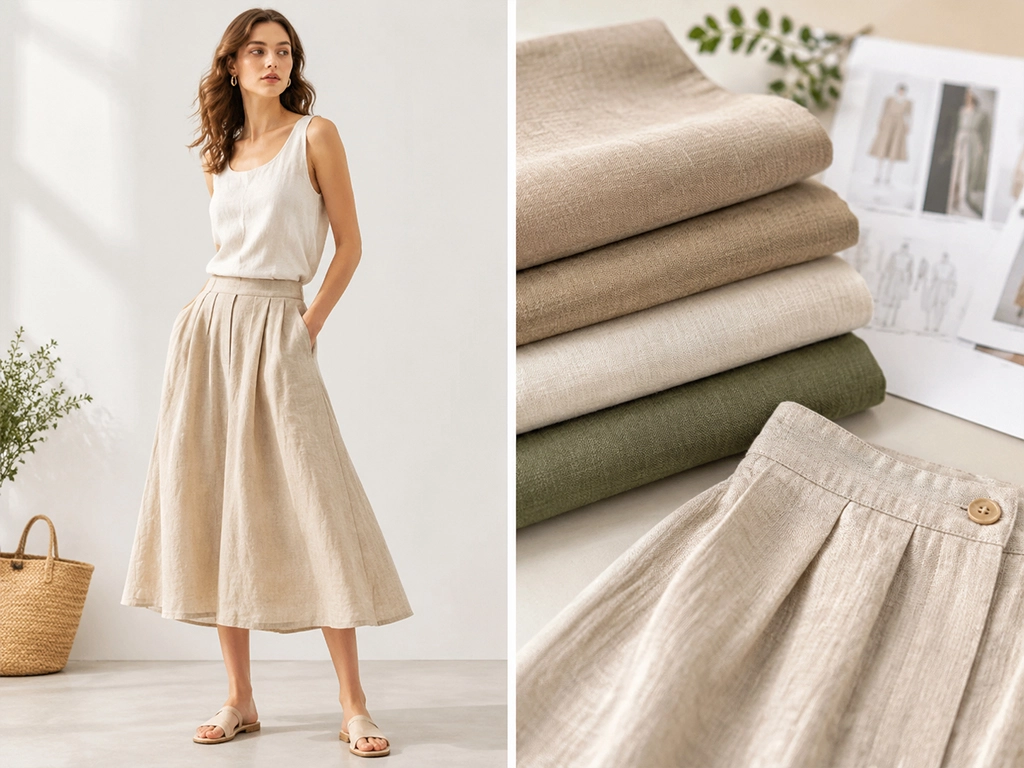
Two materials described as linen can behave quite differently during production. Fiber composition, yarn construction, weave density, finishing, and weight all affect the final result.
Fabric Weight Must Match the Silhouette
Lightweight linen is often suitable for relaxed summer skirts, but it may require lining if the fabric is too transparent.
Medium-weight linen can provide a useful balance between movement and coverage. It is worth considering for A-line, straight, and everyday midi styles.
Heavier linen is more suitable for designs that need additional structure, although it can make a gathered waistband or layered construction feel bulky.
When reviewing fabric options, ask for the composition, usable width, weight, and available colors. A swatch is useful for checking the surface, but it cannot tell you everything about the finished garment.
You should also request enough material for a proper development sample. Small swatches rarely show how a full skirt will hang.
Pure Linen or Linen Blends?
Your choice between pure linen and a blended fabric depends on the product requirements.
Linen-cotton blends may provide a different balance of softness, structure, and handling. Linen-viscose blends can offer a softer drape for certain skirt designs.
However, a blend is not automatically better for every product. Its behavior depends on the fiber percentages and fabric construction.
If you are comparing two materials, check their composition and weight rather than relying on descriptions such as soft, premium, or natural.
For repeat orders, retaining the approved fabric reference is also important. A replacement fabric with a similar appearance may still produce a different fit.
Shrinkage Needs to Be Checked Before Cutting
One of the more expensive mistakes in linen skirt production is treating fabric shrinkage as a problem that can be corrected after the garments are finished.
The amount of shrinkage depends on the fabric construction, finishing process, fiber blend, and washing method. You should not assume that every linen fabric has the same shrinkage rate.
Before bulk cutting, test the actual fabric using a washing method that reflects the intended care instructions.
Measure both lengthwise and widthwise changes. If the material requires pre-shrinking, complete that process before finalizing the cutting specifications.
The pattern allowance should be based on the test results, not on a general percentage copied from another fabric order.
This is especially important for maxi skirts. A small change in finished length can affect the entire silhouette and may cause problems when the garment is worn with the intended shoes.
Color and Fabric Lot Consistency
If your collection includes several colors, approve each shade before bulk production.
Linen’s natural surface texture can make color variation noticeable, particularly on large panels such as skirt fronts and backs.
You should also confirm whether the fabric will be supplied from one dye lot or multiple lots.
If different batches are required, the factory should check their shade consistency before cutting. Mixing noticeably different shades within the same garment can lead to visible panel differences.
For repeat orders, keep the original fabric specification and approved color reference. This makes it easier to compare new material with the previous production run.
What Production Details Affect the Quality of Linen Skirts?
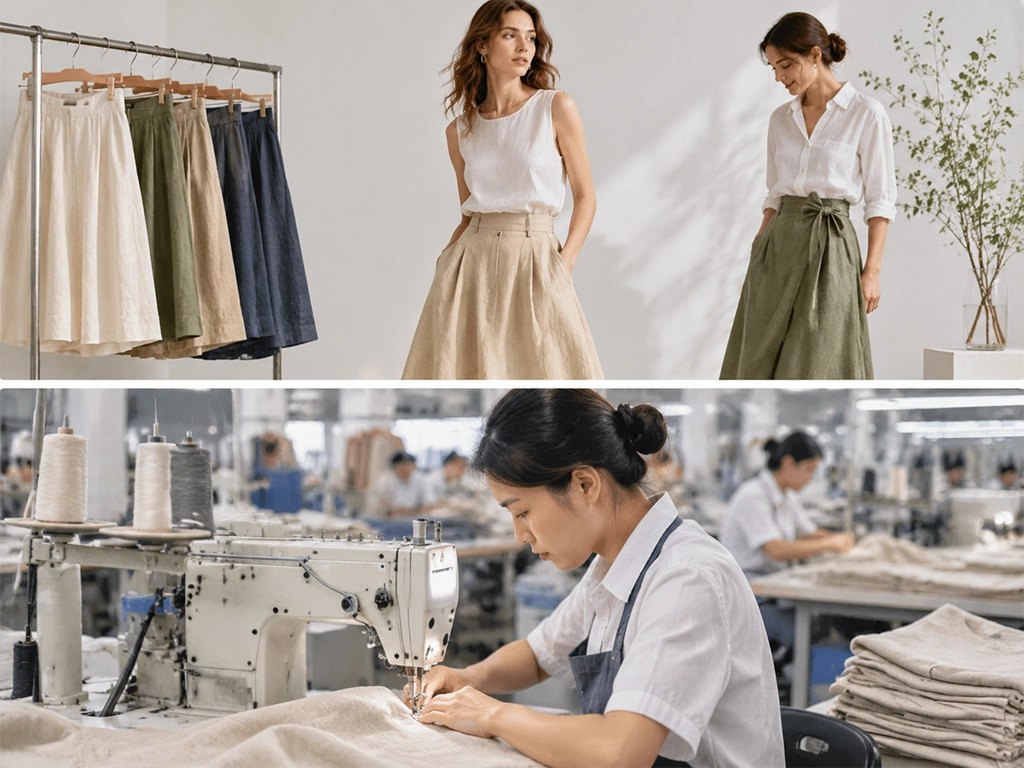
A linen skirt may have fewer components than a tailored dress, but that does not mean its production is automatically simple.
The fabric can shift during handling, seams may show puckering, and the finished shape can change if the pattern does not account for the material’s behavior.
These are the details you should review before approving a production sample.
Pattern Making Should Follow the Actual Fabric
A pattern developed for a cotton skirt may not work exactly the same way when transferred to linen.
Linen has limited stretch in most woven constructions, so the pattern needs to provide sufficient wearing ease without making the skirt look oversized.
During development, check:
- Waist and hip measurements
- Front and back panel balance
- Side seam position
- Finished skirt length
- Hem width and flare
- Movement and sitting comfort
If your design uses pleats or gathers, check whether the selected fabric can hold the intended shape.
A common mistake is to approve a paper pattern before evaluating the fabric sample. The pattern and material should be assessed together.
Waistband Construction Can Change the Finished Fit
The waistband is one of the areas where a linen skirt can lose its shape if the construction is not suitable.
A narrow waistband may work for a lightweight design, while a wider waistband may need additional support to prevent rolling or distortion.
For elastic-waist styles, specify the elastic width, length, recovery, and attachment method. The finished waist should remain comfortable after repeated wear.
For zippered designs, pay attention to the surrounding fabric. If the zipper is installed under uneven tension, the area may pucker or become difficult to close.
These details should be checked on the sample rather than left for the sewing line to interpret.
Sewing Settings and Seam Finishing Matter
Linen’s surface makes stitching irregularities relatively easy to see.
Incorrect thread tension, unsuitable needle selection, or inconsistent fabric feeding can result in puckered seams. Lightweight fabrics may also be damaged by repeated needle penetration.
The sewing method should be suitable for the actual fabric weight and construction.
You should check:
- Stitch appearance and consistency
- Seam allowance
- Overlocking and edge finishing
- Zipper installation
- Waistband attachment
- Hem width and alignment
For loosely woven materials, raw edges may fray more easily. Suitable edge finishing is therefore important, particularly around side seams and other areas that experience regular movement.
Hem Finishing Needs to Match the Fabric Weight
An uneven hem is easy to notice on a long or flared linen skirt.
The problem may come from fabric handling, grain direction, panel construction, or insufficient preparation before hemming.
For a lightweight skirt, a narrow double-fold hem may be appropriate. A heavier material may need a different finish to avoid excessive bulk.
Curved hems require particular attention because the inner and outer edges do not behave in the same way when folded.
During sampling, check the skirt on a suitable form or model and allow the fabric to hang before finalizing the hem length. This helps identify areas that need correction before bulk sewing begins.
How Can You Control Linen Skirt Quality During Bulk Production?
The approved sample is the reference point for the production order, but it should not be the only quality check.
A good bulk production process needs clear specifications and checks at different stages.
Check Fabric Before It Reaches the Cutting Table
Incoming fabric should be reviewed for usable width, shade differences, visible defects, and consistency with the approved reference.
If a fabric defect is discovered after cutting, replacing the affected panels may create additional material waste and delay the order.
You should also confirm that the fabric has completed any required pre-treatment before it is released for cutting.
Keep the Cutting and Sewing Specifications Clear
Your production team needs the latest approved measurement chart and construction details.
If the tech pack changes after sampling, make sure the updated information reaches pattern makers, cutters, sewing operators, and QC staff.
We have seen how a small communication gap can create unnecessary rework: a corrected waistband measurement may be included in the sample comments but missed on the cutting or sewing instructions.
A clear revision record helps prevent this kind of problem.
Inspect During Sewing, Not Only at the End
In-line inspection allows problems to be identified before a large quantity of garments is completed.
For linen skirts, checks can include waistband attachment, zipper installation, seam puckering, panel alignment, and garment measurements.
If one sewing operation is producing repeated defects, it is better to stop and correct the process than continue and inspect the entire order later.
Final inspection should then verify the finished measurements, appearance, labels, and packing requirements against the approved specifications.
What Determines the Cost of Custom Linen Skirts?
The cost of a custom linen skirt depends on the complete product specification rather than the fabric price alone.
When requesting quotations, you should consider the following factors.
Fabric composition and weight: Pure linen and blended fabrics have different material costs. Fabric width and consumption also affect the cost per piece.
Pattern and construction: A basic straight skirt generally requires fewer operations than a layered design with several panels, lining, pleats, or decorative details.
Size range: A wider size range may require additional pattern development and grading work.
Order quantity: Fabric purchasing, cutting preparation, and production setup need to be considered alongside the number of finished pieces.
Trims and packaging: Zippers, buttons, elastic, labels, hangtags, barcodes, and customized packaging should be included in the quotation.
For an accurate price, provide your manufacturer with a sketch or reference image, fabric requirements, size chart, colorways, estimated quantity, and finishing details.
If some specifications are not finalized, identify them clearly. Otherwise, two quotations may appear different simply because the suppliers have included different materials or construction requirements.
What Should You Prepare Before Sending a Linen Skirt Order to a Manufacturer?
A clear product brief helps reduce unnecessary sample revisions and makes the quotation process more straightforward.
Before contacting a factory, prepare as much of the following information as possible:
- Design sketch or reference garment
- Technical pack, if available
- Fabric composition and preferred weight
- Size range and measurement chart
- Color references or Pantone codes
- Closure and waistband details
- Lining and finishing requirements
- Estimated order quantity
- Label and packaging requirements
- Target delivery date
You do not need to have every detail finalized before the first discussion. However, you should distinguish confirmed specifications from items that still need development.
For example, if you know the desired silhouette but have not selected the fabric, ask the manufacturer to review suitable options before the first sample is made.
This is more efficient than producing a sample in an unsuitable fabric and then changing the material after the fit has been approved.
Frequently Asked Questions
Can you develop linen skirts from an existing garment sample?
Yes. A physical garment can be used as a reference for pattern development. However, you should clarify whether the new version needs to match the original measurements exactly or be adjusted for a different size range, fabric, or fit preference.
What information should you provide if your design is not fully developed?
Start with a sketch, reference photo, target customer, preferred silhouette, and estimated quantity. Your manufacturer can review what additional details are needed. Before sampling, agree on the unresolved design points so neither side makes assumptions about the finished product.
Can you order different linen skirt styles in the same production order?
This depends on the manufacturer’s production arrangement, material availability, and quantity for each style. Different designs may require separate patterns, samples, and cutting preparations. Ask for style-level quantities and setup requirements rather than discussing only the total order volume.
Who is responsible for approving the fabric before bulk production?
You and your manufacturer should agree on the approval process before production. The buyer normally confirms the fabric reference, color, composition, and relevant performance requirements, while the factory checks incoming material against those approved specifications.
What happens if the bulk garments do not match the approved sample?
The approved sample, measurement chart, and written construction specifications should be used to identify the difference. First establish whether the issue comes from fabric variation, pattern changes, sewing, or finishing. Agree on inspection and correction responsibilities before production starts to avoid disputes.
Conclusion
Linen skirts give you room to develop different silhouettes and seasonal collections, but fabric selection alone does not guarantee a consistent finished product. Shrinkage testing, pattern accuracy, sewing details, and bulk inspection all need attention before production. If you are planning a custom skirt collection, you can explore Xiuyu Apparel and our skirt manufacturer services to discuss your product specifications and manufacturing requirements.

