

A bodycon dress can look right on the fitting model and still cause problems once it goes into production. The fabric may stretch more than expected, the waist may lose its shape after wear, or the skirt may pull across the hips when the wearer moves. These are issues we pay attention to during pattern development and sample fitting, because the fabric’s stretch, recovery and finished garment measurements all affect the final result.
1. What Is a Bodycon Dress?
A bodycon dress follows the body’s shape closely through the bust, waist and hips. Unlike a loose-fitting dress, its fit relies heavily on the fabric’s stretch and recovery, as well as the measurements and proportions used in pattern development.
For your collection, it is worth distinguishing bodycon dresses from two similar styles:
- Bodycon Dress: Usually made from stretch jersey, rib knit or other elastic materials. The fabric follows the body without necessarily providing strong compression.
- Bandage Dress: Uses structured stretch panels, often with a heavier fabric construction, to create a firmer and more sculpted appearance.
- Sheath Dress: Usually has a straighter silhouette with less emphasis on stretch and body-hugging fit than a typical bodycon dress.
These styles also require different development methods. A lightweight jersey bodycon dress needs enough stretch and recovery to follow the body comfortably, while a bandage dress relies more on the structure and tension of its fabric panels. The pattern, material selection and sewing requirements should be decided according to the intended silhouette.
2. Popular Bodycon Dress Styles for Fashion Brands
Bodycon dresses can be developed in several lengths and silhouettes. Mini, midi and maxi versions serve different retail needs, while details such as ruching, sleeves and off-shoulder necklines bring additional pattern and construction requirements.
Mini Bodycon Dresses
Mini bodycon dresses are commonly used in partywear and clubwear collections. Their shorter length puts more attention on the hip, thigh and hem fit.
During fitting, check whether the skirt rides up when the model walks or sits. If the hip area is too tight, the fabric may pull upward instead of allowing the skirt to move naturally. This is particularly noticeable in short styles with limited stretch.
Midi Bodycon Dresses
Midi bodycon dresses usually fall around the knee or mid-calf. They are suitable for occasionwear, eveningwear and more versatile fashion collections.
Fabric weight makes a noticeable difference at this length. Lightweight jersey tends to follow the body more closely, while a heavier ponte knit gives the dress a firmer outline. Even with identical garment measurements, the two fabrics can hang quite differently once the dress is worn.
Maxi Bodycon Dresses
Maxi bodycon dresses extend toward the ankle or floor and are often developed for eveningwear and resort collections.
A narrow maxi skirt needs enough room for walking, particularly when the fabric has limited stretch. A side or back slit can provide additional movement, but its position and length need to work with the skirt’s overall shape. During fitting, check whether the hem hangs evenly and whether the slit opens comfortably when the model walks.
Ruched Bodycon Dresses
Ruched styles use gathered fabric to create texture and shape around selected areas, such as the waist, abdomen or hips.
The amount of fabric used for gathering affects the finished appearance. Too much gathering can create bulk around the seams, while too little may leave the surface looking uneven. Mark the gathering area and direction clearly in your tech pack or reference images so the sample room can follow the intended effect.
Long Sleeve and Off-Shoulder Bodycon Dresses
Long sleeve styles require a close fit through the upper arm without restricting normal movement. Sleeve width, armhole depth and fabric recovery all contribute to comfort.
Off-shoulder designs have a different fitting concern. The neckline must stay in position without digging into the upper arms. If the opening is too wide, it may slip during wear; if it is too narrow, the wearer may feel excessive pressure.
3. Which Fabrics Are Best for Bodycon Dresses?
Choosing fabric by composition alone is not enough for a fitted dress. Two polyester-spandex fabrics can have the same fibre content but behave differently because of their knit construction, weight, finishing and elastic recovery.
When reviewing fabric samples, check the stretch in both directions, how well the material returns after extension, and whether the surface remains covered when stretched over the body. The supplier’s composition details alone will not tell you how the finished dress will perform.
Polyester Spandex
Polyester-spandex blends are widely used for bodycon dresses because they offer stretch and are available in different weights, textures and finishes.
The weight and knit density make a noticeable difference in the finished dress. A lightweight fabric may follow every body contour, while a denser construction can give the garment a smoother appearance and more coverage.
For light-colored styles, check opacity across the hip and bust areas. A fabric that looks sufficiently covered on the cutting table may become transparent when stretched over the body.
Nylon Spandex
Nylon-spandex fabrics are often selected for their smooth hand feel and close-fitting performance.
Nylon-spandex blends are often selected for their smooth surface and close-fitting performance. Recovery varies between fabric qualities, so stretch each sample and check how well it returns to its original dimensions. A material that stays extended after repeated use can cause the dress to loosen around the waist or hips.
Rib Knit Fabric
Rib knit has a textured surface created by its knitted structure. It is commonly used for casual fitted dresses, sleeveless styles and long-sleeve bodycon designs.
The direction of stretch and recovery both matter with rib knit. Some rib fabrics can lengthen during spreading, cutting or sewing, which may leave the finished dress longer than the pattern measurements suggest.
If your design uses narrow vertical ribs, check whether the lines remain straight when the garment is worn. Distortion around the waist and hip can make an otherwise simple design look poorly balanced.
Ponte Knit
Ponte is a more stable double-knit fabric that generally has greater body than lightweight jersey.
It works well when you want a fitted dress with a slightly structured appearance rather than a very soft, body-hugging effect. It can also help reduce excessive outlining.
The trade-off is that heavier ponte may feel restrictive if the pattern is too small. Check the fabric around curved seams and high-movement areas before confirming the final measurements.
Mesh and Double-Layer Fabrics
Stretch mesh is often used for sheer sleeves, neckline panels, overlays and decorative sections of bodycon dresses.
If your design includes mesh, specify where transparency is intended and where coverage is required. This helps determine whether the garment needs a separate lining, an inner layer or a combination of materials.
The lining also needs to stretch with the outer fabric. If it has less extension, it can pull against the shell and restrict movement, even when the outer layer fits correctly. Check both materials together during sampling rather than approving them separately.
4. How Should a Bodycon Dress Fit?
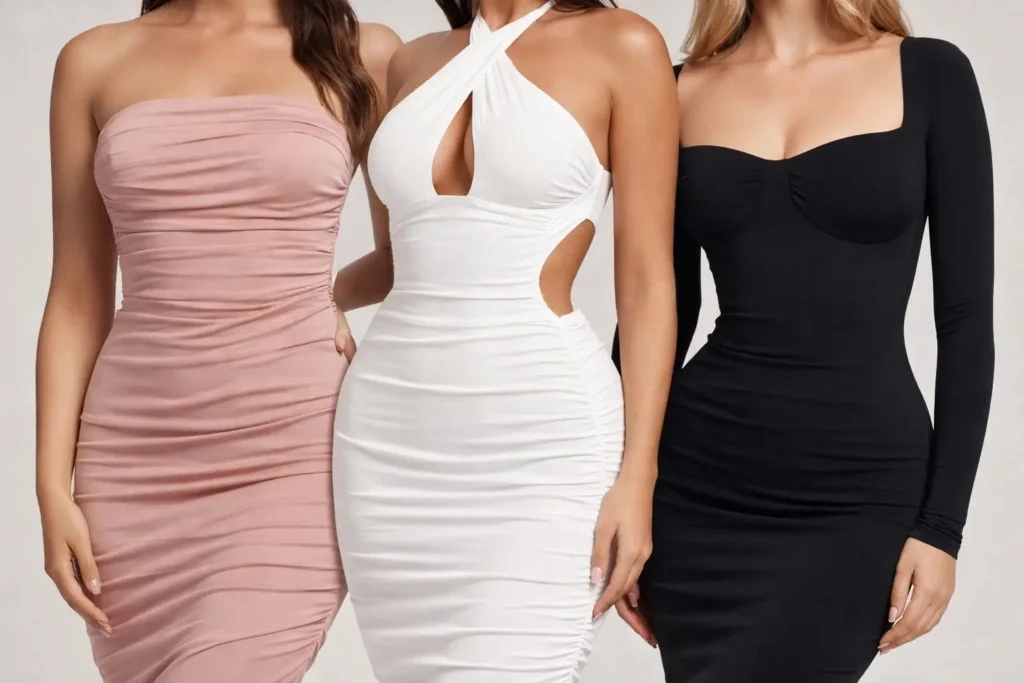
A bodycon dress needs to sit close to the body while still allowing the wearer to walk, sit and move comfortably. Excessive tension can distort the fabric or pull the seams out of position, even if the garment measurements appear correct.
For your fit review, concentrate on how the garment behaves at the bust, waist, hips and hem. A measurement chart alone cannot show whether the dress will remain balanced when worn.
Bust, Waist and Hip Balance
The relationship between these three areas determines much of the finished silhouette.
If the bust measurement is too small, you may see horizontal tension lines or excessive pulling around the armhole. If the waist is too loose, the dress can lose its fitted appearance. At the hip, insufficient room can pull the side seams forward and cause the hem to rise.
A fitting correction does not always mean making the whole dress smaller. The waist may need to be reduced while the hip measurement stays the same or increases. Adjustments should follow the problem area rather than changing the entire size.
Understanding Negative Ease
Negative ease means that the finished garment measurement is smaller than the corresponding body measurement. The fabric stretches when worn to create the close-fitting shape.
For example, if the target hip measurement is 100 cm and the finished garment hip is 94 cm, the garment has approximately 6% negative ease at that measurement point.
However, this figure should not be copied directly into another design. A soft jersey, firm rib knit and structured ponte fabric will produce different levels of tension even when the negative ease is identical.
In our pattern development process, we assess the fabric’s stretch and recovery before deciding how much to reduce each garment measurement. The bust, waist and hip do not necessarily need the same percentage of negative ease, particularly when the fabric stretches differently in each direction.
Stretch and Recovery
Stretch determines how far the fabric can extend. Recovery determines how well it returns after the stretching force is removed.
Both affect the long-term fit of a bodycon dress.
A fabric with insufficient stretch can create excessive tension around the hips and bust. A fabric with poor recovery may initially fit well but become loose after sitting, walking or repeated wear.
When you compare fabric samples, mark a fixed section, such as 10 cm, and record how far it extends under a consistent practical pull. Release it and check whether it returns close to its original length. This is a useful preliminary check, although it does not replace a proper fabric test.
Fit Problems Worth Checking During Sampling
During a fitting review, we pay particular attention to the following issues:
- Twisting side seams: Check the fabric grain, pattern balance and cutting direction.
- Hem riding up: Review the hip and thigh measurements, especially when the dress has limited stretch.
- Neckline gaping: Check the neckline opening and the support provided by the construction.
- Horizontal pulling: Identify whether the problem comes from insufficient bust, waist or hip allowance.
- Waist losing shape: Compare the fabric’s recovery with the pattern reduction used in the sample.
A useful correction starts with identifying the cause. For example, increasing the hip measurement may solve a riding-up problem more effectively than simply adding length to the skirt.
5. How to Develop a Bodycon Dress Collection for Your Fashion Brand
Once you have decided on the styles, the next step is turning your design ideas into information that the pattern and sample teams can work with.
Define the Collection Direction
The styles in your collection should reflect the customers you sell to and the price range you are targeting. For example, a partywear range may include mini dresses with cut-outs and ruching, while an eveningwear collection may use longer silhouettes, heavier stretch fabrics and more detailed construction.
You should also consider the target retail price. Fabric quality, lining, embellishment and sewing operations all influence the final manufacturing cost.
Plan Fabrics and Colorways
Decide whether your styles will share a common fabric or use different materials.
Using the same fabric across several designs can simplify sourcing, but it is not always the best option. A ruched mini dress may need a softer knit, while a structured midi dress may work better in a heavier material.
Before sampling, confirm the fabric composition, weight, color and stretch requirements. For orders involving several colorways, discuss dye-lot consistency with the fabric supplier. Differences in shade or fabric performance between lots can become noticeable when garments from the same collection are displayed together.
Prepare Your Measurements and Design Details
Your tech pack should give the manufacturer enough information to develop the pattern without guessing.
For a bodycon dress, include:
- Bust, waist and hip measurements.
- Shoulder, armhole and sleeve measurements where applicable.
- Front and back dress length.
- Neckline shape and depth.
- Slit position and length.
- Ruching or gathering placement.
- Fabric composition and preferred weight.
- Lining, closure and finishing details.
- Size range and grading requirements.
Reference photos can show the overall silhouette, but details such as seam placement, neckline construction and gathering direction may not be clear. Add close-up images or written notes for these areas so the pattern maker and sample team can follow your intended design.
Review the First Sample Before Finalizing the Pattern
The first sample shows whether the pattern, fabric and design details are working as intended. Fit it on a suitable model and record any corrections to the measurements, seam positions, fabric tension and overall length.
If you change the fabric after the first sample, review the pattern again. A replacement material with similar fibre content may still have different stretch and recovery, so the original pattern may no longer produce the same fit.
6. Common Bodycon Dress Manufacturing Problems
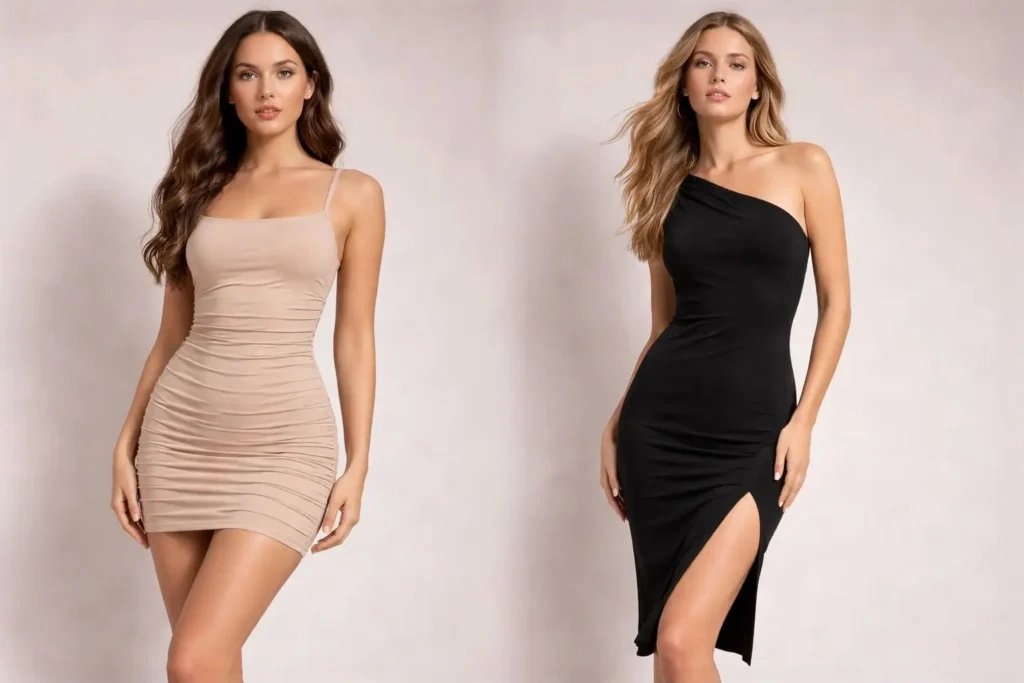
With bodycon dresses, small fabric or sewing defects can be more visible because the material sits close to the body. Before bulk cutting, it is worth checking how the fabric behaves under tension and whether the seams can withstand normal movement.
Fabric Becomes Transparent When Stretched
This issue is particularly common with light-colored and lightweight stretch fabrics.
Before adding a lining, check whether a heavier fabric or denser knit can provide sufficient coverage. This may solve the transparency issue without making the dress unnecessarily bulky or restricting its stretch.
Seams Pucker or Break
Stretch fabrics need stitching that can accommodate movement.
If the thread tension is too high, seams may pucker. If the stitch formation cannot extend with the fabric, stitches may break when the garment is pulled over the body.
During sample review, stretch the seam gently in the direction the garment will be worn. Check whether the stitching remains intact and whether the seam returns to a flat appearance afterward.
Before bulk production, confirm the machine settings with the approved production fabric. A similar-looking substitute may behave differently during sewing, particularly when the stretch and thickness are not the same.
Fabric Loses Its Shape After Wear
A dress may look correct during the first fitting but become loose around the waist, hips or knees after repeated movement.
Poor fabric recovery is one possible cause. Excessive tension in the pattern can also contribute to fabric growth, particularly in areas that are stretched repeatedly.
For this reason, compare how the fabric performs after repeated extension before approving it for bulk cutting. A single stretch test may not reveal how well it holds its shape over time.
Side Seams Twist or the Hem Becomes Uneven
A twisting side seam is not always a sewing problem. Fabric torque, incorrect cutting direction and insufficient relaxation can all affect how the garment hangs.
For lightweight knits, allow the fabric to relax according to the material and production requirements before cutting. Check that pattern pieces follow the intended grain direction.
After sewing, check the dress on a hanger and during a fitting. The hem may look level on the cutting table but shift once the garment is worn, particularly when the fabric has not been properly relaxed or the side seams are unbalanced.
Sample and Bulk Garments Look Different
A difference between the approved sample and bulk garments can create problems for the entire collection, particularly when several sizes or colorways are involved.
The approved sample may use a different fabric lot, cutting condition or sewing setting from the bulk order. Even when the style number stays the same, these changes can affect the finished measurements and appearance.
Before production starts, confirm the bulk material against the approved fabric, keep the measurement specifications consistent and use the approved PP sample as the reference. In-line inspection should catch deviations before the full order is completed.
7. How to Check a Bodycon Dress Sample Before Bulk Production
Start with the measurements. Compare the bust, waist, hip, shoulder, armhole and total length against the approved size chart, and record any differences for correction.
The sewing and fabric condition also need attention. Look for skipped stitches, puckering and distortion around curved seams. Stretch the main seams gently to check whether the stitching can accommodate normal movement.
A fitting model should walk, sit, bend and raise their arms while wearing the sample. Watch for changes in the neckline, side seams and hem that may not be visible when standing still.
Once approved, keep the final measurements, fabric details and finishing requirements as the production reference. Any subsequent changes should be recorded before bulk cutting begins.
8. How to Choose a Bodycon Dress Manufacturer
A manufacturer’s experience with stretch fabrics is worth checking before you place a development order. A factory may offer an attractive sample price, but you also need to know whether its pattern and sample teams can handle close-fitting garments, fabric recovery and fitting corrections.
You can also ask how fabric inspection, cutting and finished garment measurements are controlled. For stretch dresses, it is useful to understand how the factory checks seam performance and keeps the approved sample consistent with bulk production.
For your purchasing decision, confirm the following details:
- MOQ per style and color.
- Sample development cost and lead time.
- Bulk production schedule.
- Fabric sourcing and inspection arrangements.
- Size grading and measurement control.
- OEM, ODM and private label capabilities.
- Label, hangtag and packaging options.
If your order includes several bodycon styles, provide the estimated quantity, fabric choice and color breakdown for each design. A factory can then assess material requirements and arrange the sampling and production schedule more accurately.
Discuss difficult construction details before approving the sample. For example, a narrow skirt with limited stretch, mesh panels joined to a heavier knit, or an off-shoulder neckline may need pattern or construction adjustments. Resolving these points during development is easier than correcting them after bulk production has started.
9. Frequently Asked Questions About Bodycon Dress Development
1. Can you combine different bodycon dress styles in one purchase order?
Yes. You can usually include several bodycon dress styles in one purchase order. Each style still needs its own specifications, fabric details and quantity breakdown. If the designs use different materials or construction methods, the factory will need to arrange sampling and production according to each style’s requirements.
2. What information affects the quotation for a custom bodycon dress?
The quotation depends on the fabric, garment construction, order quantity, lining, embellishments and size range. For example, a simple sleeveless jersey dress requires fewer sewing operations than a lined bodycon dress with mesh panels or decorative ruching. Providing a reference photo, tech pack and estimated quantity helps the factory prepare a more accurate quotation.
3. Can you order different sizes and colors within the same style?
Yes. Different sizes and colors can generally be included within the same style order. Before confirming production, provide the size breakdown and quantity for each color. If you need custom-dyed fabric or several small color quantities, fabric availability and dye-lot requirements should be checked first.
4. What happens if the approved fabric becomes unavailable?
Ask the manufacturer to provide an alternative with similar weight, stretch, recovery and surface appearance. Fibre composition alone is not enough to confirm that two fabrics will perform the same way. The replacement should be reviewed during sampling, and the pattern may need adjustment before bulk production is approved.
5. How can you reduce delays when developing a new collection?
Send your reference designs, measurement charts, fabric preferences, size range and estimated quantities before sampling starts. Once the first sample is ready, provide clear fit comments and confirm any changes promptly. Waiting to decide on fabric, measurements or construction details can push back the sample approval date and the bulk production schedule.
Conclusion
A bodycon dress that fits well in the sample room should deliver the same fit and appearance in the finished order. Fabric recovery, seam performance and measurement consistency all need attention before bulk cutting begins.
At Xiuyu Apparel, we have been manufacturing dresses since 2007, with in-house pattern makers and sample sewers supporting OEM, ODM and private label development. If you have bodycon dress designs to develop, send us your reference photos, fabric requirements, estimated quantities and size range. Our team can review the details and discuss the next steps for sampling and production.