

When you develop a ruffle dress collection, the challenge is not simply adding extra fabric to create volume. The amount of fullness, fabric weight, tier placement and seam construction all influence how the dress looks once worn. These details also affect fabric consumption and sewing time, so they are worth checking during sampling rather than after bulk production begins. Sorting out these details during sampling makes it easier to estimate costs and avoid changes once bulk production begins.
1. Start with a Clear Ruffle Dress Design Brief
Before asking for a quotation, decide which design details need to be retained in the finished dress. Reference photos help explain the overall look, but they rarely show the measurements, seam positions or construction details needed for pattern development.
For example, a photograph of a tiered maxi dress may show three layers of ruffles, but it does not tell the factory their finished widths, gathering amounts, attachment positions or seam construction.
Start by defining the main elements of your design.
Silhouette and overall shape
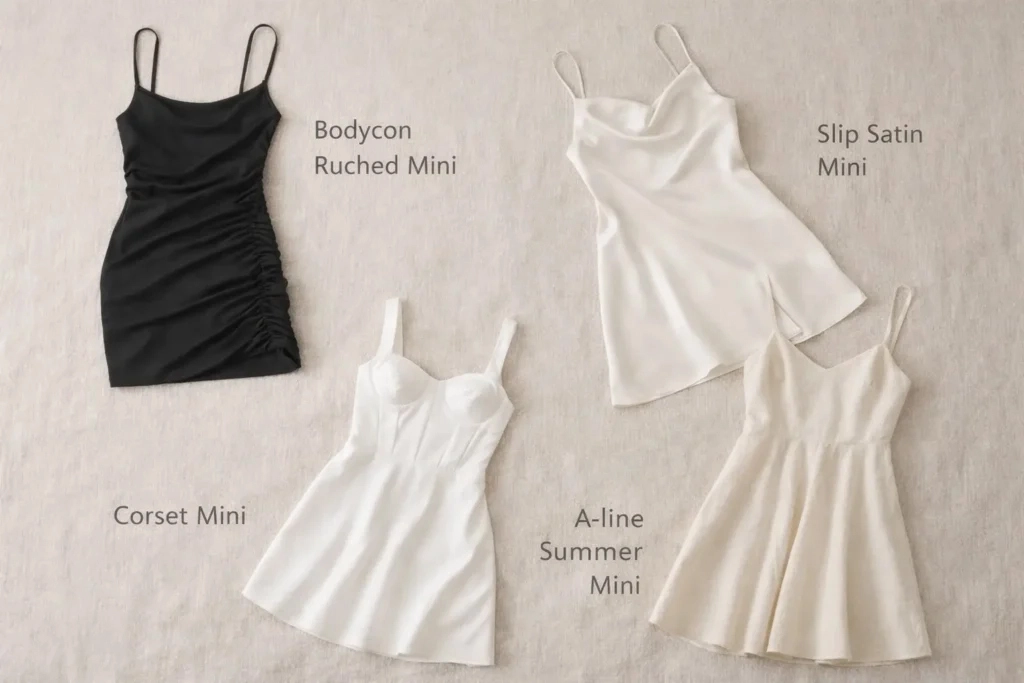
Decide whether you want an A-line, fitted, wrap, slip or tiered silhouette. The base silhouette also affects how the added fabric sits. A fitted bodice, for example, may need a controlled amount of fullness around the waist, while a loose summer dress can accommodate more volume through the skirt.
Ruffle placement
Identify the areas where you want the details:
- Shoulder and neckline ruffles
- Sleeve and cuff ruffles
- Waistline or bodice ruffles
- Asymmetric front or side ruffles
- Tiered skirt panels
- Hemline ruffles
If a ruffle runs along a curved neckline or armhole, mark exactly where it starts and ends. Without these reference points, the pattern maker has to estimate its position, and the first sample may not match your intended design.
Finished length and proportions
Specify whether the dress is mini, midi or maxi, and mark the intended position of each tier.
On a tiered maxi dress, even a small change in tier position can affect the skirt’s proportions. It also changes the panel lengths and may require adjustments to the fabric allowance.
If you are developing several colorways or related styles for one collection, keep the basic design specifications consistent so that the factory can assess the styles together.
2. Choose Fabric Based on the Finished Ruffle Effect
Fabric selection has a direct effect on the shape of a ruffle. A lightweight material can produce soft, closely spaced gathers, while a firmer fabric may hold its shape and create more pronounced volume.
A fabric swatch alone cannot tell you how a finished ruffle will look. Once gathered and sewn, the material may behave quite differently, especially around curved seams and layered sections.
Chiffon and Georgette
Chiffon and georgette are common choices for flowing occasionwear and summer dresses.
Their lightweight construction allows ruffles to move naturally, making them suitable for layered skirts, sleeve details and soft neckline finishes.
Both fabrics can move during cutting and sewing. On long gathered panels, uneven feeding or sewing tension may cause the gathers to bunch up in some areas and look sparse in others.
For a tiered chiffon dress, hang the sample before approving the tier lengths. The fabric may drop differently under its own weight, and a skirt that looks balanced on the table can appear uneven once hanging.
Organza and Tulle
Organza holds more shape than chiffon, so it works well when you want ruffles to remain visible and slightly structured.
Tulle is often used for layered or decorative designs where additional volume is needed without relying on heavy fabric.
Pay attention to the finished edges when working with these materials. An overly thick hem or exposed seam allowance can show through the outer layers, especially where several ruffles overlap.
Satin and Crepe
Satin is a popular option for party dresses and occasionwear. It gives ruffles a smoother appearance, but its surface can show pressing marks, seam puckering and handling damage.
Crepe offers a different result. Depending on its weight and drape, it can create softer folds without looking overly shiny.
Before confirming the construction, sew a test section around the gathered seam and press it as you would on the finished garment. This helps reveal puckering, pressure marks or unwanted bulk that may not show on an unsewn swatch.
Cotton and Viscose
Cotton voile and lightweight viscose are suitable for casual, resortwear and everyday ruffle dresses.
Cotton can provide more body, while viscose often gives a softer drape. However, shrinkage and fabric stability need to be checked before the pattern is finalized.
Before bulk cutting, check the shrinkage of the selected fabric. If cotton or viscose shrinks after washing or steaming, the finished dress length and tier measurements may no longer match the approved sample.
Test the Fabric Before Finalizing the Pattern
When two fabric options are available, make a small gathering test with each one.
For example, attach two test strips to the same 50 cm seam line, using different gathering amounts. Compare how much volume each creates and whether the fabric pulls or becomes too bulky at the seam.
Record the selected fabric and construction method before proceeding with the full sample.
3. Develop the Ruffle Pattern and Control the Fullness
Once the silhouette, fabric and ruffle positions are confirmed, the pattern maker can work out the dimensions of each ruffle and how it will be attached to the main garment.
A ruffle can be cut as a straight strip and gathered along one edge, or developed as a curved or circular piece to create a different type of movement. These constructions do not produce the same appearance.
For your collection, the choice should depend on the reference design, fabric and intended silhouette.
Gathering Ratio and Fabric Consumption
The gathering ratio compares the original length of the fabric strip with the finished length after gathering.
For example, a 100 cm strip gathered into a 50 cm attachment line has a 2:1 ratio.
Increasing the ratio adds fullness, but it also means more fabric has to be controlled along the same attachment line. On a narrow waist seam, too much gathered material can create a thick join that is difficult to press flat.
There is no single ratio that works for every ruffle dress.
A lightweight chiffon may need more fullness to achieve the desired appearance, while a heavier satin can become bulky if too much fabric is gathered into a short seam.
During development, sew two or three test strips using different ratios. Compare their fullness after attaching them to the same length of fabric, then record the selected ratio for the production pattern.
Ruffle Width and Layer Spacing
A wider ruffle creates a more visible layer, while a narrow one gives a lighter finish. The right width depends on the dress length, fabric weight and amount of gathering.
For tiered designs, the distance between layers also matters. If the tiers are too close together, the skirt can look crowded. If they are too far apart, the overall design may lose the intended layered effect.
Review the sample from the front, side and back. On a flared skirt, the lower tiers may hang differently around the side seams, so front-view photographs alone are not enough to approve the proportions.
Straight Ruffles and Circular Flounces
A gathered ruffle has fullness distributed along its attachment edge. A circular flounce creates waves through its curved pattern shape instead of relying on gathering at the seam.
This distinction is useful when developing asymmetric hems, cascading skirt details or soft sleeve finishes, where you may want waves without adding a gathered seam.
A circular flounce can create a cleaner attachment line with less gathered bulk, but its pattern requires more careful calculation and may use more fabric.
For example, a gathered strip may be easier to use on a tiered skirt, while a circular flounce is often better suited to a flowing hem detail. The pattern should be developed around the intended shape and the fabric’s drape.
Edge Finishing and Seam Construction
The exposed edge of a ruffle needs to suit the fabric and overall design.
A narrow rolled hem may work well on chiffon, while a turned hem or overlocked finish may be more appropriate for other materials. Lace with a decorative border may need to retain its original edge rather than be cut and finished again.
When several ruffles meet at the waist or bodice, plan the attachment order and seam allowance positions during pattern development. Otherwise, overlapping layers can create a thick joining area that is difficult to sew and press neatly.
4. Sample Development: Check More Than the Appearance
The first sample shows whether the proposed fabric, pattern and sewing method produce the look you expect. It is also the stage to identify problems with fit, ruffle placement and fabric weight before approving the construction.
During development, the sample room needs clear instructions about which details are fixed and which can still be adjusted.
For a new ruffle dress, the first sample should answer several practical questions.
Does the ruffle sit in the right position?
Check the neckline, shoulders, waist and skirt attachment points. A ruffle may sit correctly on the pattern but shift when the dress is worn, especially around the shoulders, neckline and waist.
Is the fullness distributed evenly?
Look for sections where the gathers become too dense or disappear. On a long skirt, uneven gathering can make one side look heavier than the other.
Does the garment carry too much weight?
Check the waist carefully when several ruffle layers are attached to the same area. Too much weight can pull the skirt downward, while multiple seam allowances may leave the waist looking thick.
Does the dress move naturally?
Ask the fitting model to walk, sit, raise her arms and turn. Sleeve ruffles, shoulder details and fitted waist sections can behave differently during movement than they do when standing still.
Record Revisions Clearly
When you request a second sample, avoid general instructions such as “make the ruffles softer” or “add more volume.”
Instead, mark the exact area that needs adjustment.
For example:
- Reduce the fullness on the lower skirt tier.
- Increase the finished width of the sleeve ruffle.
- Move the waist attachment point slightly lower.
- Adjust the hem length after the skirt is hanging.
- Reduce the bulk at the bodice joining seam.
Send the sample room marked-up photos with the requested measurements. This allows the pattern maker and sewing team to work from the same revision notes instead of interpreting written comments differently.
Once the revised sample meets your requirements, the confirmed measurements and construction details should be recorded for the PP sample and bulk production.
5. Turn the Approved Sample into a Bulk Production Plan
Before bulk production, the approved construction needs to be translated into repeatable cutting and sewing instructions. This is especially important for styles with several tiers or gathered panels.
Ruffle dresses can involve many individual fabric pieces, especially when the design includes multiple skirt tiers, gathered sleeves or decorative panels. The factory needs to know exactly how these pieces are cut, assembled and finished.
Review Fabric Consumption and Cutting Layout
On a tiered ruffle dress, the skirt panels and gathered strips can use more fabric than the main bodice. Their dimensions need to be included when calculating the total consumption per piece.
When estimating consumption, the pattern maker needs to consider:
- Finished ruffle width and gathering amount.
- Number of layers and their individual lengths.
- Fabric width and usable cutting area.
- Seam allowances and joining seams.
- Fabric shrinkage and cutting waste.
- Print direction and pattern matching.
Printed fabrics require additional attention. If you are using large florals, stripes or directional prints, the cutting layout may need to be adjusted to keep the visual pattern consistent.
This can change the material estimate even when the dress measurements remain the same.
If the initial quotation is above your target, review the ruffle width, tier length and fabric layout with the factory. These details may offer room to adjust material usage without changing the overall silhouette.
Prepare Clear Sewing Instructions
The sewing team should not have to guess how much fullness to create or where each ruffle belongs.
The production information should include the approved pattern, measurements, gathering ratio, attachment positions, seam allowances and finishing methods.
For tiered dresses, mark the assembly order and the finished length of each section. For asymmetric designs, clearly identify left and right panels.
Without consistent instructions, different operators may produce slightly different gathering widths or attachment positions, even when they are working on the same style.
Check the First Production Pieces
Before the full quantity moves forward, inspect the first completed pieces against the approved sample.
Check the gathering distribution, tier spacing, seam appearance and overall garment balance.
Before the full quantity moves forward, inspect the first completed pieces against the approved sample. Check the gathering distribution, tier spacing, seam appearance and overall garment balance. If the first pieces show uneven fullness or inconsistent tier lengths, adjust the sewing instructions before the remaining quantity enters production.
6. Quality Control for Ruffle Dresses
Quality inspection needs to cover the decorative construction as well as the basic garment measurements.
A dress can pass a simple measurement check and still look noticeably different from the approved sample.
For ruffle dresses, pay particular attention to the following areas.
Ruffle Distribution
Check whether the gathers are spread evenly along the attachment line. Pay attention to the beginning and ending points, where fullness can become concentrated.
Layer Alignment
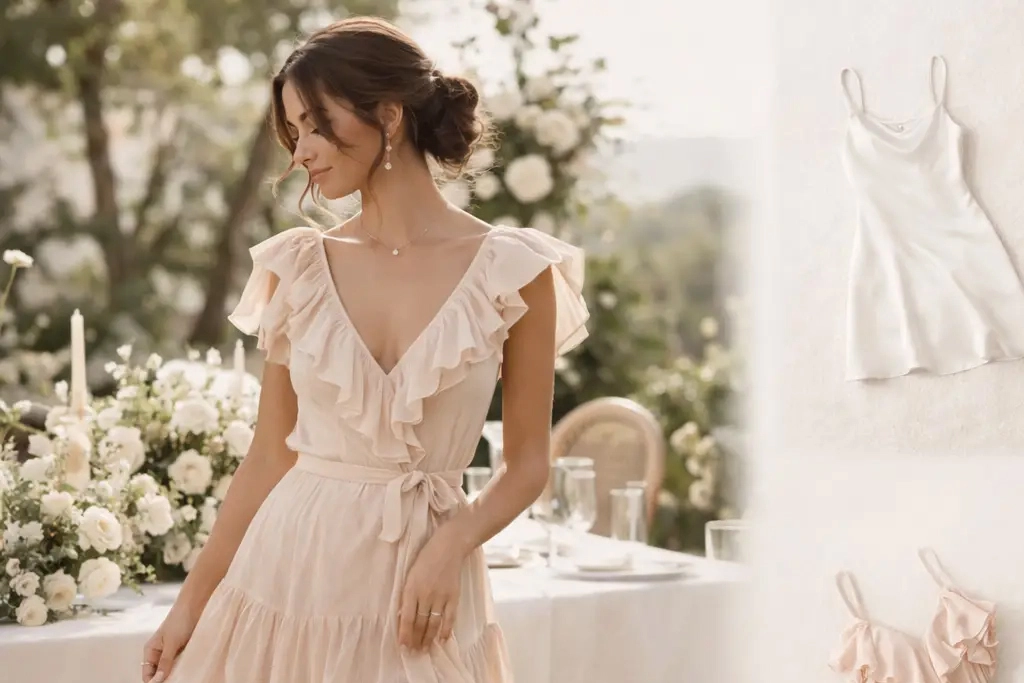
On tiered dresses, compare the finished lengths and positions of each layer. The tiers should sit evenly around the body, with no visible difference in length between corresponding sections.
Seam and Edge Quality
Inspect the joining seams for skipped stitches, loose threads, puckering and excessive bulk. The exposed edges should have a consistent finish suitable for the selected fabric.
Garment Measurements
Check the finished length, bust, waist, sleeve and other specified measurements against the approved size chart.
For graded sizes, review whether the ruffle proportions still look appropriate across the range. Increasing the body measurements does not automatically mean every decorative detail should be enlarged by the same amount.
Final Appearance
Inspect the dress on a hanger and, where necessary, on a fitting model. Look at the overall silhouette, hem balance and fabric drape.
Before packing, inspect the zippers or other closures, lining, trims and garment surface. Check for stains, loose threads and damage, then confirm that each dress is folded and packed according to the approved packing instructions.
7. Information to Prepare Before Contacting a Ruffle Dress Manufacturer
You do not need a complete tech pack to start discussing a ruffle dress project with a factory. However, the more information you can provide about the design, fabric and order quantity, the easier it is to assess the development work and prepare a quotation.
Prepare these details where possible:
| Information | What the manufacturer needs |
|---|---|
| Design reference | Sketches, photos or an existing garment |
| Fabric | Preferred composition, weight, color or swatch |
| Measurements | Size chart or basic garment dimensions |
| Ruffle details | Placement, width, number of tiers and fullness |
| Quantity | Estimated pieces per style and color |
| Size range | Intended sizes and size breakdown |
| Branding | Labels, hangtags and packaging requirements |
| Target date | Sample approval and expected delivery date |
| Target price | Expected unit cost or budget range |
If you only have reference photos, explain which parts of the design are essential and where you are open to suggestions.
For example, you may want to keep the overall silhouette but allow the factory to suggest a more practical edge finish or fabric alternative.
The factory can then review whether the proposed fabric, ruffle construction and order quantity are workable, while keeping the main design features unchanged.
Frequently Asked Questions
1. Can a ruffle dress be developed from a reference photo without a technical pack?
Yes. We can start from reference photos, even if you do not have a complete tech pack. Front and back views, together with close-ups of the ruffles, neckline and seams, help our pattern team estimate the construction. Measurements and fabric details can then be confirmed during development.
2. What is the usual MOQ for a custom ruffle dress?
Our usual MOQ is 50–100 pieces per style and color. Before placing the order, confirm the quantity for each style and color, along with your fabric choice and size breakdown.
3. How long does ruffle dress sample development take?
Our standard sample development time is 3–7 days, starting from the confirmed design information and available materials. Styles involving multiple fit adjustments, special trims or fabric substitutions may need extra sampling time before the PP sample is approved.
4. What determines the unit price of a ruffle dress?
Fabric consumption, sewing operations, construction complexity, trims and order quantity all affect the quotation. Several gathered tiers increase the fabric required per piece and add sewing operations at the joining seams. The selected fabric and finishing method also influence the final cost. Providing a clear design reference and fabric specification helps us prepare a more reliable quotation.
5. Can I change the fabric or ruffle details after approving the sample?
Yes, but the revised details need to be checked before bulk cutting. Changing the fabric can affect how the ruffles hang, while adjusting the tier width may change fabric consumption and the finished skirt proportions.
Conclusion
Before placing a bulk order for ruffle dresses, make sure the fabric, gathering ratio, tier measurements and sewing details have all been confirmed against the approved sample. These specifications will be used by the cutting and sewing teams throughout production.
At Xiuyu Apparel, we develop custom dresses for fashion brands, retailers and private label businesses. Our team handles pattern development, sample making and bulk manufacturing, with a usual MOQ of 50–100 pieces per style and color. If you have a ruffle dress design in progress, send us your reference photos, fabric details and estimated order quantity to discuss the next development steps.