

Ruched and smocked dresses can look quite similar in product photos, especially when both feature gathered fabric. However, the construction method affects the fit, fabric consumption, sewing operations and finished garment measurements. For a fashion brand or private label buyer, choosing the right technique before sampling can save time later. For example, changing the gathering depth or switching from decorative smocking to elastic shirring after the first sample may require new pattern adjustments and a revised quotation.
Ruched Dress vs Smocked Dress: Understanding the Main Differences
Both techniques involve gathered fabric, but they are not constructed in the same way.
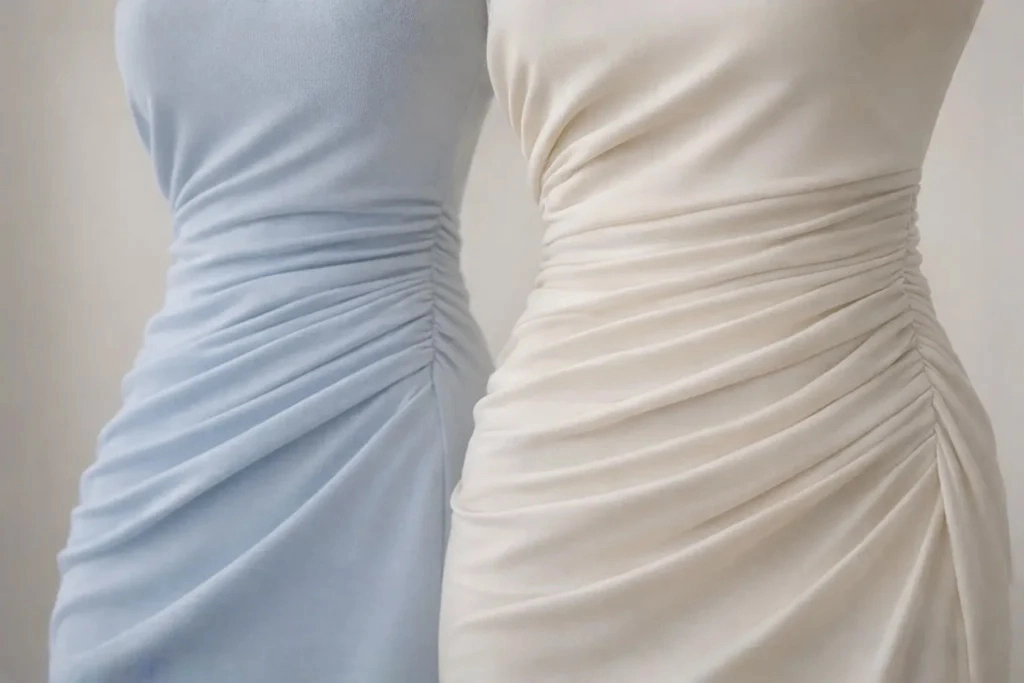
Ruching is created by drawing excess fabric together along selected stitching lines. On a dress, this is commonly done around the waist, bust, hips or sleeves. Depending on the design, these folds can shape the silhouette, create a closer fit or add texture around selected areas of the dress.
Traditional smocking starts with fabric arranged into small pleats. Decorative stitches are then worked across the pleats to hold them in a repeated pattern, often creating a honeycomb or diamond texture. The amount of stretch varies with the method used. Traditional decorative smocking and elastic-thread shirring do not provide the same level of flexibility.
Another term you may encounter is shirring. In commercial dress production, it usually refers to parallel rows of gathering made with elastic thread. Some suppliers and retail listings also use the term smocking for this construction, which is why the stitching method should be specified clearly. When requesting a quotation, specify whether you want decorative smocking or rows of elastic-thread stitching.
| Comparison | Ruched Dress | Smocked Dress | Shirred Dress |
|---|---|---|---|
| Construction | Controlled fabric folds | Decorative stitches over gathered fabric | Multiple rows of elastic-thread stitching |
| Main purpose | Shaping and surface texture | Decorative texture and controlled fullness | Gathering and flexibility |
| Appearance | Directional, irregular or flowing folds | Defined stitched patterns | Parallel rows of soft gathers |
| Common placement | Waist, bust, hips, side seams | Bodice, neckline, sleeves | Bodice, waist, cuffs |
| Stretch | Depends on fabric and construction | Depends on pleat and stitch structure | Mainly depends on elastic thread |
| Production considerations | Gathering distribution and panel balance | Pleating, stitch pattern and labor | Elastic tension and row consistency |
A ruched bodice usually needs controlled gathering along specific sections, while a smocked bodice requires a defined pleating or elastic-stitch arrangement. These details should be settled before pattern development begins.
How the Construction Changes the Finished Dress
Ruched Dress: Controlling the Folds
To create ruching, the pattern includes extra fabric along the section that will be gathered. During sewing, this excess length is drawn together along the marked stitching lines, creating the folds seen on the finished dress.
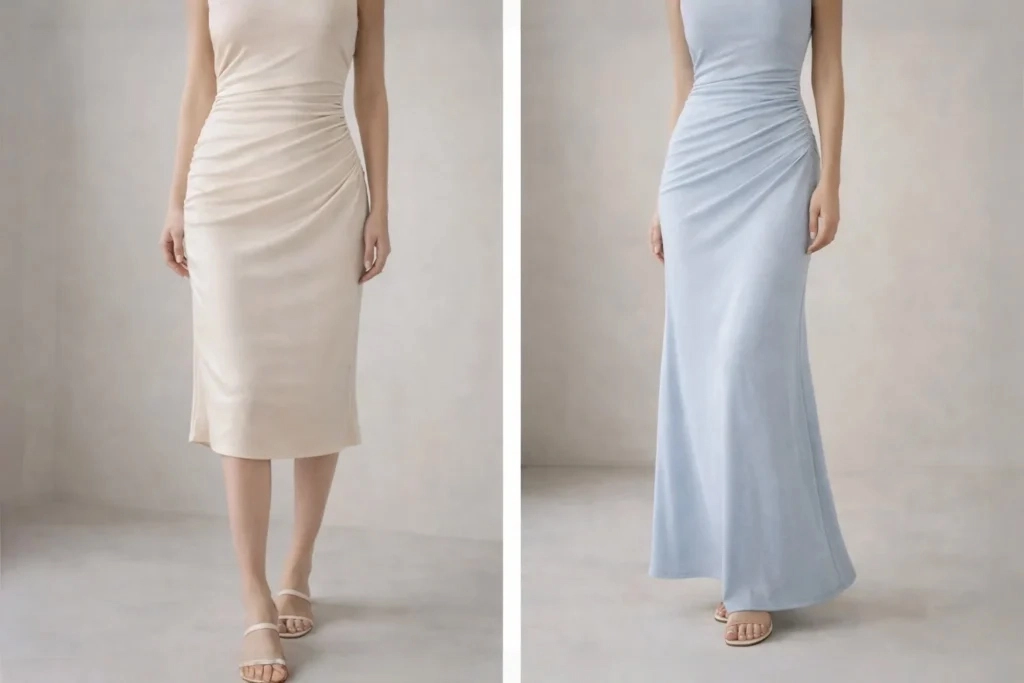
For example, a side-ruched bodycon dress may have adjustable drawstrings running through a gathered section. A waist-ruched midi dress may use fixed gathering to create soft folds across the front or sides.
During pattern development, the pattern maker calculates how much fabric is needed to achieve the intended finished length. A heavier fabric may require a different gathering ratio from lightweight jersey or mesh, particularly when the design calls for dense folds.
If you use too little fabric, the gathers may look flat and fail to create the intended effect. Too much fabric can produce unnecessary bulk, particularly around the waist and hip.
When checking a ruched sample, we look closely at five areas:
- Gathering distribution: The folds should be spread evenly rather than concentrated at one point.
- Direction: Horizontal, diagonal and vertical ruching produce different visual effects.
- Panel balance: Left and right sides should follow the same design measurements where symmetry is required.
- Seam placement: Gathering near a side seam or waist seam should not pull the surrounding panels out of position.
- Fabric recovery: Stretch fabrics should return properly after being extended.
A ruched panel can look even when laid flat but pull to one side once the sample is fitted on a mannequin. We check whether the gathers are uneven or whether tension from the adjoining seams is affecting the panel. These adjustments are easier to make during sample fitting than after bulk sewing has started.
Smocked Dress: Keeping the Pattern Consistent
In traditional smocking, the fabric is first arranged into small, even pleats. Decorative stitches are then worked across the pleats to form patterns such as honeycomb, diamonds or cables.
In commercial clothing, you may also encounter machine-made smocking and elastic shirring sold under the same product description. These methods should not automatically be treated as identical.
On a smocked sample, the main checks are:
- The width and height of the finished gathered panel
- The spacing and regularity of the pleats
- The stitch pattern and thread specification
- The thickness of the fabric after gathering
- The amount of flexibility required
- The transition between smocked and non-smocked sections
Uneven contraction can become visible when one side of the bodice gathers more tightly than the other. The result may be a twisted panel or a neckline that no longer sits level.
Elastic shirring needs consistent thread tension and feeding. If the elastic thread pulls too tightly, the bodice may contract more than intended and lift the neckline. If the tension is too loose, the panel may not recover properly after being stretched.
We check the panel width, contraction and recovery on the sample before approving the construction for bulk sewing.
Which Fabric Should You Choose for Each Style?
A ruched panel made from jersey will behave differently from one made in satin or cotton voile. Weight, stretch and surface texture all influence how the gathers sit and how much thickness builds up around the seams.
Fabric Options for Ruched Dresses
Stretch Jersey
Stretch jersey is widely used for fitted ruched dresses, including bodycon and mini styles. The fabric follows the body while allowing gathered sections to move with the garment.
Before finalizing the pattern, test how far the jersey stretches and whether it returns to its original dimensions. A fabric with poor recovery can leave the ruched area looking stretched out after repeated wear.
Stretch Mesh
Stretch mesh is frequently used for fitted party dresses and layered designs with visible ruching. Lightweight mesh can shift during sewing, especially around curved seams and densely gathered sections.
For lined styles, check how the outer mesh and lining behave together. The two layers may not stretch or recover at the same rate.
Satin
Satin is a common option for ruched evening dresses. Its smooth surface makes irregular folds and exposed stitching more noticeable, so the gathering lines need to be kept even.
You should also check seam appearance, fabric slippage and pressing requirements during sampling.
Rayon and Viscose
Rayon and viscose drape well in gathered skirts and soft ruched panels. Check the fabric’s shrinkage before cutting. Even small changes in length or width can affect the finished measurements, particularly on fitted styles.
Fabric Options for Smocked Dresses
Cotton Poplin
Cotton poplin offers a relatively stable surface for gathered and stitched sections. It is suitable for summer dresses, casual styles and designs with structured bodices.
A heavier poplin can build up considerable bulk where several layers meet, particularly around the gathered bodice.
Cotton Voile
Voile is lightweight and works well for soft, delicate smocked details. The fabric allows the gathered panel to remain relatively light, which is useful for summer and vacation collections.
Fine voile can pull or pucker around closely spaced stitching, particularly when the thread tension is too high.
Rayon and Viscose
These fabrics offer fluid drape for dresses with a smocked bodice and flowing skirt. They can work particularly well when the upper section needs some flexibility while the lower section remains loose.
Check shrinkage and finished measurements after fabric preparation.
Lightweight Fabric Blends
Cotton-polyester and other lightweight blends may also be suitable. Their performance depends on the fabric construction, surface finish and thread compatibility.
| Fabric | Ruched Dress | Smocked Dress | What to Check |
|---|---|---|---|
| Stretch Jersey | Very suitable | Design-dependent | Stretch and recovery |
| Stretch Mesh | Very suitable | Less common | Distortion and lining |
| Satin | Suitable | Design-dependent | Surface marks and seam control |
| Cotton Poplin | Design-dependent | Suitable | Fabric stiffness and bulk |
| Cotton Voile | Less common | Very suitable | Stitching and fabric stability |
| Rayon / Viscose | Suitable | Suitable | Shrinkage and drape |
For example, stretch jersey may work well for a fitted ruched dress, while cotton voile is often easier to use for a lightweight smocked bodice. The fabric should be tested with the intended construction before the final specification is confirmed.
Which Style Fits Your Brand’s Collection?
Ruched styles are often associated with fitted occasionwear, while smocked dresses are widely used in summer and casual ranges. The choice also depends on your existing product mix and the retail price you are targeting.
If You Are Developing Fitted and Occasion Dresses
Ruched styles work particularly well in body-conscious collections, including fitted party dresses and occasionwear.
You may use them for:
- Bodycon mini dresses
- Ruched midi dresses
- Side-ruched maxi dresses
- Draped evening dresses
- Fitted party dresses
For these styles, the placement of the gathers is often an important part of the design identity. Even a small change in the gathering position can alter the overall silhouette.
If You Are Developing Summer and Casual Collections
Smocked bodices are common in summer dresses because the gathered section can accommodate different body measurements while keeping the silhouette relatively relaxed.
Common options include:
- Smocked mini dresses
- Smocked midi dresses
- Floral summer dresses
- Square-neck dresses with gathered bodices
- Puff-sleeve dresses with smocked cuffs
If your collection includes several prints or colorways, you should also check whether the selected fabric maintains the same appearance and stitching quality across all options.
Should You Include Both in One Collection?
Both techniques can work in the same seasonal collection.
For example, you could develop a smocked cotton bodice with a flowing skirt, alongside a fitted jersey dress with side ruching. Both styles can belong to the same seasonal collection while serving different customer preferences.
The two styles may also involve different fabric orders and sewing operations. When preparing your purchase order, list the quantities, colorways and construction details separately so the factory can calculate the requirements for each style.
What Buyers Should Check Before Approving a Sample
Reference photos help communicate the design, but they rarely show the exact gathering method, stitch details or finished measurements required for sampling. Before sending a style to a factory, you should prepare the construction details that are difficult to judge visually.
1. Provide Clear Gathering and Stitching References
For a ruched dress, mark the exact areas where you want the fabric gathered. If the design includes drawstrings, specify whether they should be functional or simply decorative.
For a smocked dress, provide a close-up reference of the desired stitch pattern. If you are referring to elastic shirring rather than traditional decorative smocking, make that clear in the tech pack.
Without these details, the sample room may use a different gathering method from the one your designer had in mind.
2. Confirm the Finished Measurements
For gathered styles, flat fabric dimensions and finished garment measurements need to be recorded separately.
Your tech pack should identify the finished garment measurements, particularly around the bust, waist and hips. For gathered panels, it is useful to show both the intended finished dimensions and the construction area.
For smocked sections, clarify whether the measurements are taken in a relaxed or stretched state. Record both measurements where necessary, so the factory and your quality team use the same measuring condition.
3. Check the Sample After Washing
Washing can change both the fabric dimensions and the contraction of gathered sections, particularly on viscose styles and dresses with elastic shirring. After washing the sample, check whether the folds remain balanced, the smocked panel recovers evenly and the garment measurements stay within the required tolerance.
4. Review Construction Across the Size Range
Grading can change the position and appearance of ruching, particularly around the waist and hips. A sample that fits well in the base size still needs to be reviewed across the intended size range.
For ruched dresses, check whether the gathering still sits in the intended position as the pattern is graded.
For smocked dresses, confirm that the elastic or pleated area provides the intended flexibility without becoming excessively tight or loose.
Simply adding width to the pattern is not always enough. The gathering position, panel length and finished proportions may also need adjustment across the size range.
5. Confirm the Production Standard Before Bulk Cutting
Once the PP sample is approved, the bulk team should follow its confirmed fabric, measurements, gathering placement and sewing details.
For ruched designs, record the gathering placement and finished panel dimensions.
For smocked or shirred designs, document the stitch arrangement, thread requirements and finished panel measurements.
The sewing team and QC inspectors can then check the bulk garments against the same approved construction and measurement records.
Frequently Asked Questions
1. Can you develop a ruched dress from a reference photo without a tech pack?
Yes. Front and back photos, together with close-ups of the gathered areas, usually provide enough information for an initial pattern assessment. The factory may need to clarify the gathering position, finished length, lining and closure details before preparing a sample. A photo alone rarely communicates every construction requirement.
2. Can you order different colors in the same dress style?
Yes, provided the fabric is available in the required colors and quantities. For custom-dyed fabrics, minimum dyeing quantities may apply to each color rather than the entire dress order. Fabric shade variations and finishing differences should also be checked when approving multiple colorways.
3. How can you reduce fabric waste when developing gathered dresses?
Fabric width, marker efficiency and the amount of fullness built into each panel all affect consumption. The pattern maker should review the layout before cutting, particularly on dresses with extensive ruching across the waist or hips. Removing unnecessary fullness can reduce fabric use without changing the intended appearance.
4. What happens if the approved fabric becomes unavailable before production?
A visually similar replacement is not necessarily suitable. Differences in weight, stretch and shrinkage can change the way the gathers sit. Request a replacement swatch and, if the fabric behaves differently, approve a revised sample before bulk cutting.
5. Can you combine multiple dress styles in one production order?
Yes. A mixed-style order is possible, provided the factory receives a separate quantity and fabric breakdown for each style. Different styles may require separate patterns and sewing operations. Providing a clear quantity breakdown by style, color and size helps the factory assess the order more accurately.
Conclusion
Ruched and smocked dresses both use gathered fabric, but the sewing methods, fit and finished appearance are quite different. Choosing the fabric and confirming the gathering method before sampling makes it easier to keep the finished measurements and appearance consistent during bulk production. If you are developing a ruched or smocked dress collection, Xiuyu Apparel can help review your fabric options, develop samples and arrange OEM or private label bulk production.