

When brands compare China and Vietnam for dress manufacturing, cost is often the first factor they consider. But from our experience working on different dress projects, the final result is often decided by factors beyond the initial quotation. Fabric sourcing, sample development, fitting adjustments, and communication during production can all influence the final outcome.
China vs Vietnam Dress Manufacturing: The Difference Is More Than Labor Cost
Many brands begin their China vs Vietnam comparison with labor cost. However, once a dress moves into sampling and bulk production, other factors often become equally important.
The differences usually become clearer during sampling, material preparation, and bulk production. Sampling speed, fabric sourcing, technical communication, and the ability to handle design changes can directly affect your collection timeline.
China and Vietnam both have strong garment manufacturing industries, but they are suitable for different production situations.
China has developed a complete apparel supply chain where fabric suppliers, trim suppliers, pattern makers, sample rooms, and garment factories are closely connected. This makes it easier to adjust fabrics, patterns, and construction details when a design changes during development.
Vietnam has grown as an important garment export base, especially for stable production programs and larger-volume orders. It is often a practical option when styles are already finalized, repeat orders are predictable, and production changes are limited.
Before choosing a supplier, you need to consider not only where the dress is sewn, but also how the entire development process will be managed.
Fabric Sourcing: Why It Matters More in Dress Manufacturing
Dress production is highly affected by fabric behavior.
A satin dress, chiffon dress, lace dress, or stretch bodycon dress may look simple from a design image, but the final result depends heavily on fabric weight, elasticity, drape, and sewing performance.
In China, many dress manufacturers work closely with local fabric markets and suppliers, which makes it easier to test different materials during development. If your first fabric choice does not achieve the expected result, adjustments can often be made faster through local fabric resources.
Vietnam has developed strong garment production capacity, but many fabrics are imported from other countries. This works well for planned production, but it may create longer waiting times when you need special fabrics, new colors, or quick material adjustments.
For brands developing seasonal collections, fabric flexibility can directly affect how quickly you move from idea to finished sample.
Sampling Process: A Key Difference Between China and Vietnam Manufacturing
Sampling is one of the most important stages when developing dresses.
You may provide a sketch, reference image, or tech pack, but turning that idea into a wearable garment requires pattern adjustment, fitting corrections, and construction testing.
In China, many dress factories have sample rooms, pattern teams, and production departments working closely together. When you request changes to the neckline, waist shape, sleeve construction, or garment fitting. Changes can often be discussed directly between the pattern team, sample room, and production department instead of passing through multiple supplier layers.
Vietnamese factories can also produce quality samples, especially for simpler styles. However, when a design requires several adjustments or involves complicated construction, the development process may require more coordination.
For emerging fashion brands, the first production challenge is often not manufacturing quantity—it is getting the first approved sample right.
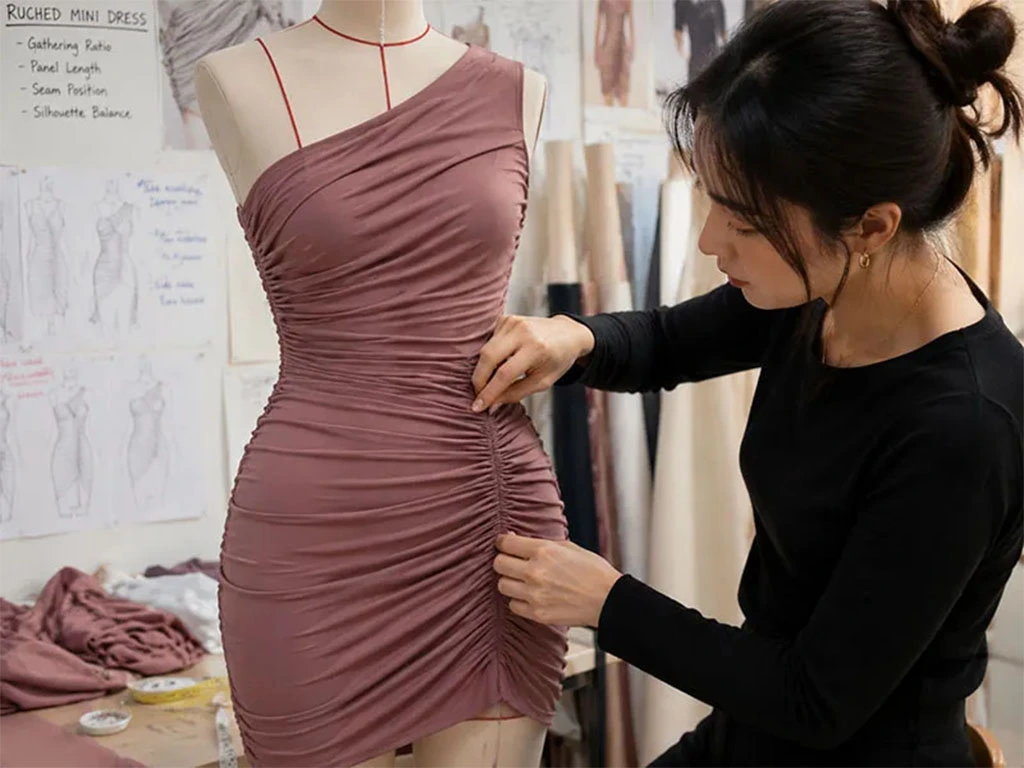
Which Country Is Better for Complex Dress Designs?
Dress complexity is one of the first things buyers should evaluate before selecting a manufacturing location.
Simple styles such as:
- Basic slip dresses
- Jersey dresses
- Straight-cut dresses
- Standard A-line dresses
can often be produced efficiently in both countries.
However, more complicated designs usually require stronger technical support, including:
- Corset structures
- Boning and internal support
- Draping construction
- Multiple fabric combinations
- Embroidery and embellishment
- Detailed pattern panels
For these styles, production experience becomes more important than sewing capacity.
A factory needs to understand how fabric behavior, pattern structure, and sewing techniques affect the final fit. Small mistakes in these areas can affect fitting, appearance, and customer returns after bulk production.
China vs Vietnam Dress Manufacturing Cost: Which One Is More Affordable?
Vietnam is often recognized for lower labor costs, but production cost should not be judged only by the garment price.
Your final cost may also include:
- Extra sample rounds caused by fitting issues
- Waiting time for special fabrics or trims
- Additional production changes after approval
- Rework caused by quality problems
- Delayed product launches
For basic, high-volume styles, Vietnam may provide competitive pricing advantages.
For complex dress collections, China can sometimes reduce hidden costs because development, sourcing, and production adjustments can happen faster.
A lower quotation may look attractive at the beginning, but extra revisions, delays, or quality issues can increase the final cost.
Quality Control and Bulk Production Consistency
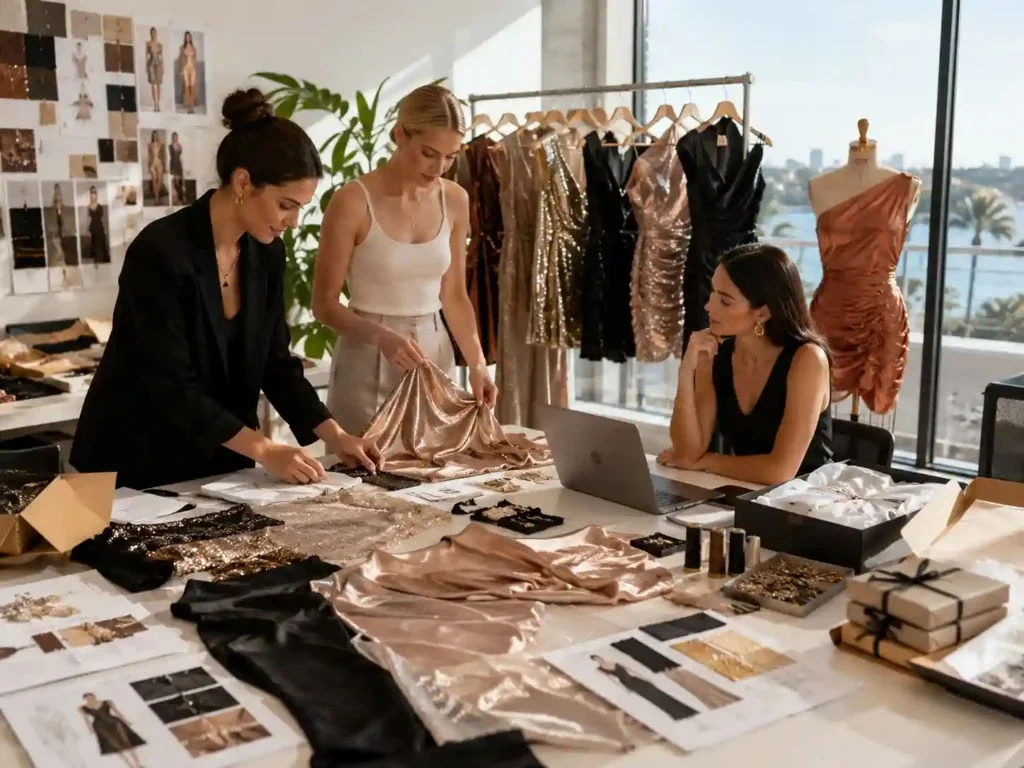
For fashion brands, quality problems usually appear during bulk production rather than the first sample stage.
A dress factory needs to control many details:
- Measurement accuracy
- Seam quality
- Fabric handling
- Color consistency
- Finishing details
- Packaging standards
China’s manufacturing clusters provide easier communication between different production stages. Problems found during cutting, sewing, or inspection can often be corrected faster.
Vietnam has strong experience in export garment production and performs well with repeat styles. However, brands producing frequently changing collections may need to pay more attention to supplier flexibility and technical support.
The key is whether the factory’s production system matches your product requirements and order expectations.
Speed and Flexibility for Fashion Collections
Fashion brands rarely produce only one style.
You may need to launch several dresses in one season, test new designs, adjust colors, or develop follow-up orders based on market response.
China’s connected supply chain allows factories to respond faster when you need:
- New sample revisions
- Fabric changes
- Pattern adjustments
- Multiple style development
Vietnam is often more efficient when production planning is stable and designs remain unchanged.
If your business model depends on fast product updates, supplier flexibility can influence your ability to respond to market trends.
Should You Choose China or Vietnam for Dress Manufacturing?
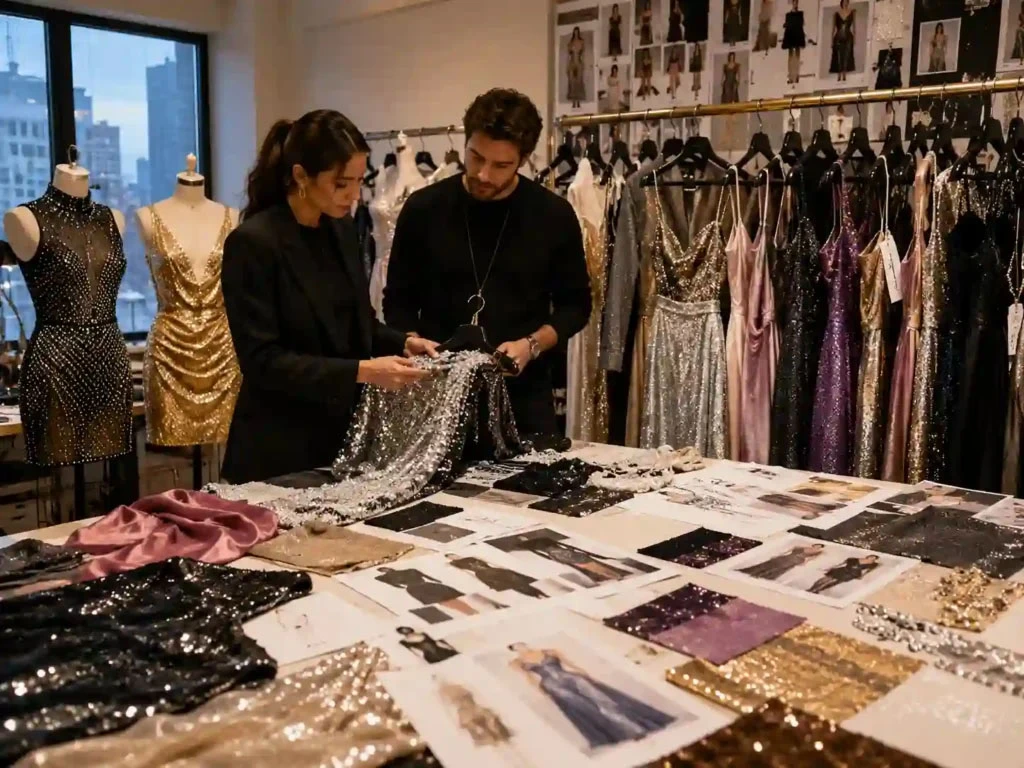
The better choice depends on what stage your brand is in and what type of dresses you plan to produce.
China may be a better choice when you:
- Develop new dress collections regularly
- Need technical support during sampling
- Produce complicated dress designs
- Require flexible order planning
- Test styles before scaling production
Vietnam may be suitable when you:
- Produce simpler dress styles
- Have confirmed designs
- Focus on larger production quantities
- Prefer stable repeat manufacturing
Some brands also use different production strategies at different stages. For example, they may focus on flexible development first and move proven styles into larger production programs later.
The right supplier location should support your business model, not only your current order.
FAQ About China vs Vietnam for Dress Manufacturing
1. Is China or Vietnam better for a startup fashion brand?
Startup brands often change styles, quantities, or details during their first collections. During early development, a factory that can handle sample adjustments and smaller production decisions can help avoid unnecessary delays.
2. Does choosing a cheaper manufacturing country always reduce costs?
Not always. A lower factory price may increase total expenses if you experience repeated sampling, delayed materials, quality corrections, or missed selling seasons. Buyers should compare the total production process, not only the first quotation.
3. Which country is better for custom dress development?
Custom dress development requires more than sewing ability. You should evaluate whether the factory can support pattern adjustments, fabric testing, fitting improvements, and construction changes during the sampling stage.
4. Can Vietnam handle private label dress production?
Yes, many Vietnamese factories work with private label programs. The key is checking whether their production experience matches your fabric, customization level, and quality requirements.
5. What should buyers check before selecting a dress manufacturer?
You should review more than price. Important factors include sample quality, communication efficiency, production experience with similar styles, quality control process, and whether the factory can support your future growth.
Conclusion
China and Vietnam both play important roles in dress manufacturing. Vietnam can offer advantages for stable, volume-focused production, while China provides stronger flexibility for design development, complex styles, and faster adjustments. Before choosing a manufacturing country, consider your design complexity, sampling requirements, order volume, and how much production support your brand needs during development.
Related Dress Manufacturing Services
If your project involves a specific dress fabric or construction, you can also review our related manufacturing pages:
- Party Dress Manufacturer
- Satin Dress Manufacturer
- Formal Dress Manufacturer
- Mesh Dress Manufacturer
- Off Shoulder Dress Manufacturer
Get a Quote for an Existing Dress Style
If you are transferring an existing dress style to a new manufacturer, send us the latest approved sample, tech pack, product photos, or measurement chart together with your target quantity.
As a dress manufacturer, we can review the construction, fabric, trims, measurements, and current production status with you before confirming the sampling requirements.

