

As a clothing manufacturer, we often work with fashion brands that have a mini dress idea but are unsure how to move from design development to bulk production. You may already have sketches, references, or a collection concept, but turning them into finished garments requires decisions about fabric, patterns, fitting, and construction. Understanding this process helps brands prepare better production information, reduce avoidable revisions during sampling, and have more efficient communication with their factory.
1. Design Review and Production Preparation
When brands send us a mini dress project, we normally start by checking the design details and production requirements before moving into development. A sketch shows the overall appearance, but it does not always explain how the garment should be constructed.
Before pattern development begins, the factory normally needs to confirm details such as:
- Measurement specifications
- Fabric requirements
- Lining or stretch needs
- Closure details
- Decorative elements
- Target quantity
From a factory perspective, this stage is where many potential issues can be identified. For example, a fitted mini dress may look simple from the outside, but the pattern structure and fabric stretch can directly affect the final fit.
Clear production information at this stage gives the pattern team a better direction for sample development.
2. Fabric Selection and Fabric Preparation
Fabric selection affects not only the appearance of a mini dress but also how easily it can be cut, sewn, fitted, and produced in bulk.
When you choose a fabric, you need to consider more than color and surface appearance. In production, we pay attention to details such as fabric thickness, stretch recovery, drape, shrinkage, and whether lining is needed, because these details directly affect fitting and sewing performance.
For example, lightweight fabrics may require additional support to maintain the shape, while stretch materials need accurate measurements to avoid fitting problems.
Before cutting starts, the fabric is checked and prepared according to the approved requirements. This step helps avoid unexpected changes after cutting starts.
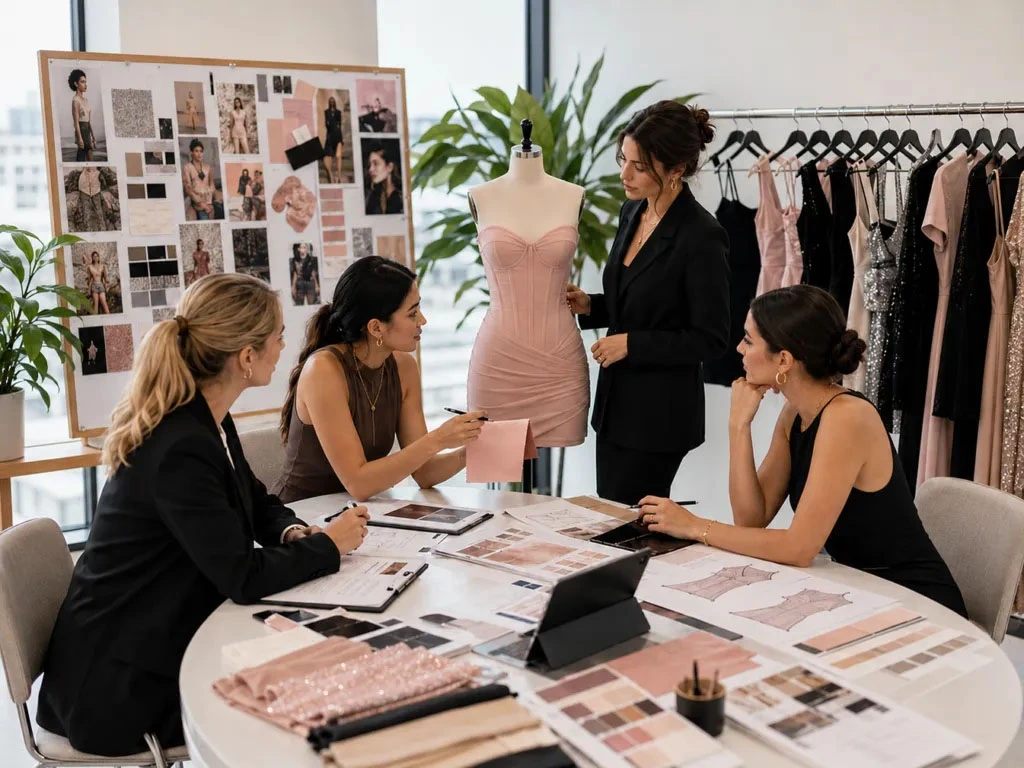
3. Pattern Making and Sample Development
After reviewing your design details, the pattern team creates the garment structure based on measurements and construction requirements.
The pattern affects:
- How the dress fits the body
- Where seams are placed
- How different panels connect
- How the fabric falls when worn
During sampling, you can check whether the garment matches your original direction. Some adjustments are common at this stage, especially for fitted silhouettes, special necklines, or fabrics with different levels of stretch.
The sample stage also allows the factory to confirm whether the pattern, sewing method, and construction details are suitable for bulk production.
4. Fabric Cutting and Production Preparation
After the sample is approved, the production team prepares the fabric for bulk cutting.
The cutting stage requires accurate control because each panel needs to match the approved pattern. Cutting accuracy directly affects size consistency, fabric usage, and the stability of the bulk production process.
During bulk cutting, the production team controls:
- Fabric laying
- Pattern placement
- Cutting accuracy
- Size separation
For mini dresses with multiple panels, curved shapes, or special designs, accurate cutting is especially important because small differences can affect the final appearance.
5. Sewing and Garment Construction
The sewing stage is where separate fabric pieces become a complete mini dress. The construction method depends on the design, fabric type, and required finishing.
Common areas that require attention include:
- Neckline shape
- Shoulder construction
- Zipper installation
- Seam finishing
- Lining attachment
In actual production, many quality issues are related to small construction details. A neckline that does not hold its shape or a poorly finished seam can change the overall look of the garment.
Experienced production teams check workmanship during sewing so issues can be corrected before garments move to final inspection.
6. Quality Control During Mini Dress Production
In dress production, quality checks are carried out at different stages rather than only before shipment.
During production, the factory usually checks:
- Measurements against approved specifications
- Sewing workmanship
- Fabric appearance
- Color consistency
- Construction details
Before shipment, the finished garments are checked again to confirm they match the approved sample and production requirements.
For brands launching a new collection, this helps ensure the bulk order stays consistent with the approved sample and production requirements.
7. What Information Should You Prepare Before Working With a Manufacturer?
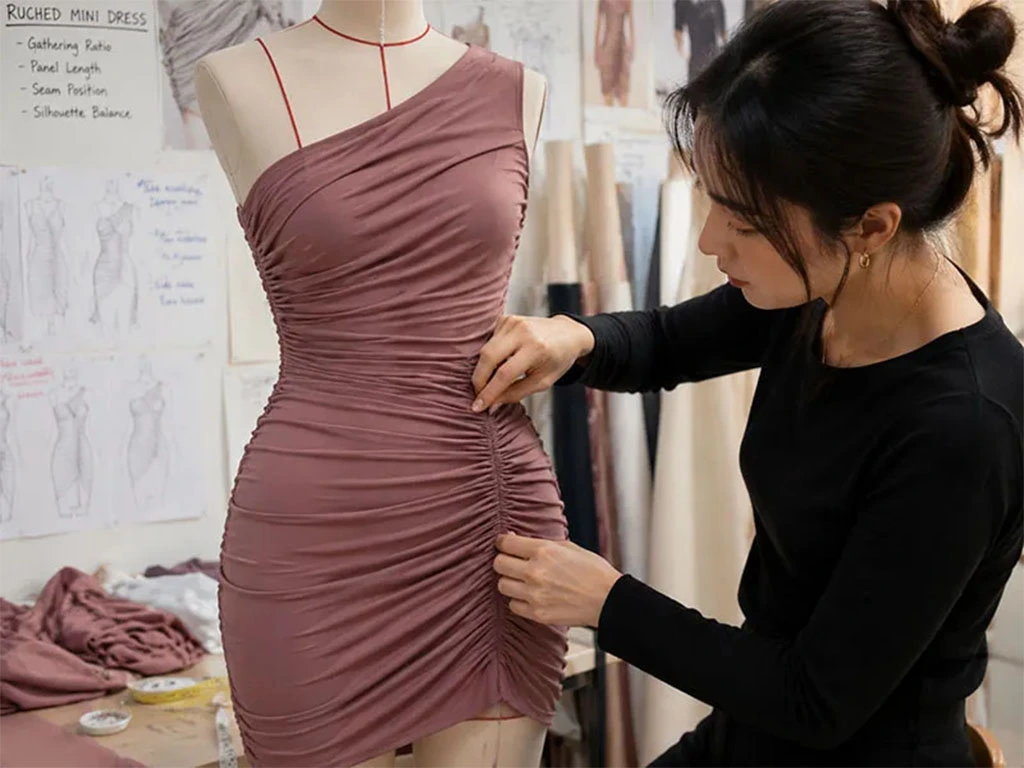
Having these details ready helps the factory review the project and provide more practical feedback before sampling.
You can provide:
- Design sketches or reference garments
- Tech packs
- Measurement charts
- Fabric preferences
- Expected order quantity
- Target delivery schedule
If you only have an initial concept, a manufacturer can still help evaluate production possibilities. However, more detailed information usually allows the factory to provide more accurate suggestions during development.
8. How Long Does It Take to Manufacture Mini Dresses?
The production timeline usually depends on design complexity, fabric readiness, sample approval, and order quantity.
A typical development and production process includes:
- Design review
- Pattern development
- Sample making
- Sample approval
- Bulk production
- Final inspection
For brands planning seasonal collections, allowing enough time for sample adjustments is important. Rushing the development stage may create more problems during bulk production.
FAQ
1. What is the minimum information needed to start a mini dress project?
You can start with basic information such as design references, expected quantity, preferred fabric direction, and target market. A complete tech pack is helpful, but manufacturers can often discuss production possibilities before all details are finalized.
2. Why does the first mini dress sample sometimes need changes?
The first sample is based on the provided information and initial pattern development. After the first fitting, the factory may adjust the pattern, measurements, or construction details based on the actual sample result.
3. How do manufacturers handle changes after sample review?
Changes are usually recorded through updated measurements, comments, or revised samples. Clear approval records help both sides understand the final requirements and avoid differences between the approved sample and bulk production.
4. What causes mini dress production delays?
In many projects, delays come from late fabric confirmation, changes after sampling, unclear production details, or slow approval during development. Preparing production details early and responding quickly during development can help keep the timeline on track.
5. Can small fashion brands order custom mini dresses?
Many manufacturers work with emerging brands, but production requirements depend on the style, materials, and quantity. Discussing your design details early allows the factory to understand whether the project is suitable for production.
Conclusion
Producing mini dresses requires coordination between design development, pattern making, sampling, production, and quality control. Each stage affects the final fit, appearance, and production consistency of the finished garment. When you understand how the process works, you can communicate more effectively with your manufacturer and make better decisions before starting production.
Related Dress Manufacturing Services
If your project involves a specific dress fabric or construction, you can also review our related manufacturing pages:
- Bodycon Dress Manufacturer
- Halter Dress Manufacturer
- Prom Dress Manufacturer
- One Shoulder Dress Manufacturer
- Velvet Dress Manufacturer
Get a Quote for an Existing Dress Style
If you are transferring an existing dress style to a new manufacturer, send us the latest approved sample, tech pack, product photos, or measurement chart together with your target quantity.
As a dress manufacturer, we can review the construction, fabric, trims, measurements, and current production status with you before confirming the sampling requirements.

