

When you send a new dress project to a clothing manufacturer, you may already have a clear design direction, but many production details still need to be confirmed before sampling begins. Fabric selection, lining construction, and trim details can affect how the pattern is developed, which sewing methods are used, and how the final dress fits. From our experience developing different dress collections, many sample revisions happen because fabric, lining, or trim details were not fully confirmed at the beginning.
Why Fabric, Lining and Trim Details Matter in a Dress Tech Pack
A sketch can show the appearance of a dress, but it cannot explain every detail needed for production. Your dress tech pack should give the factory enough production information before pattern making and sampling begin.
Before sampling starts, the pattern team, sample room, and production team need to understand how the fabric behaves, how the garment should be lined, and how trims will be applied. These factors affect how patterns are adjusted, which sewing methods are suitable, and whether the original design can be produced as expected.
Many sample issues we see are not caused by the design itself, but by unclear production details during the early development stage.
How to List Fabric Details in a Dress Tech Pack
Fabric is one of the first areas your manufacturer reviews because it affects both the appearance and construction of the dress.
Fabric Type
You should clearly specify the main fabric used for your dress, such as:
- Satin
- Chiffon
- Cotton
- Jersey
- Linen blend
- Velvet
Different fabrics require different handling during sampling and production. A lightweight chiffon dress may need different handling compared with a structured woven dress. Fabric type helps the pattern and sample teams decide how the garment should be handled during development.
Fabric Composition
Your tech pack should include the fabric composition whenever possible.
Examples:
- 100% polyester
- 95% polyester / 5% elastane
- Cotton blend
Fabric composition influences stretch recovery, shrinkage, drape, and how the dress keeps its shape during production and use. A description like “soft fabric” or “luxury material” may explain your preference, but it does not provide enough information for production evaluation.
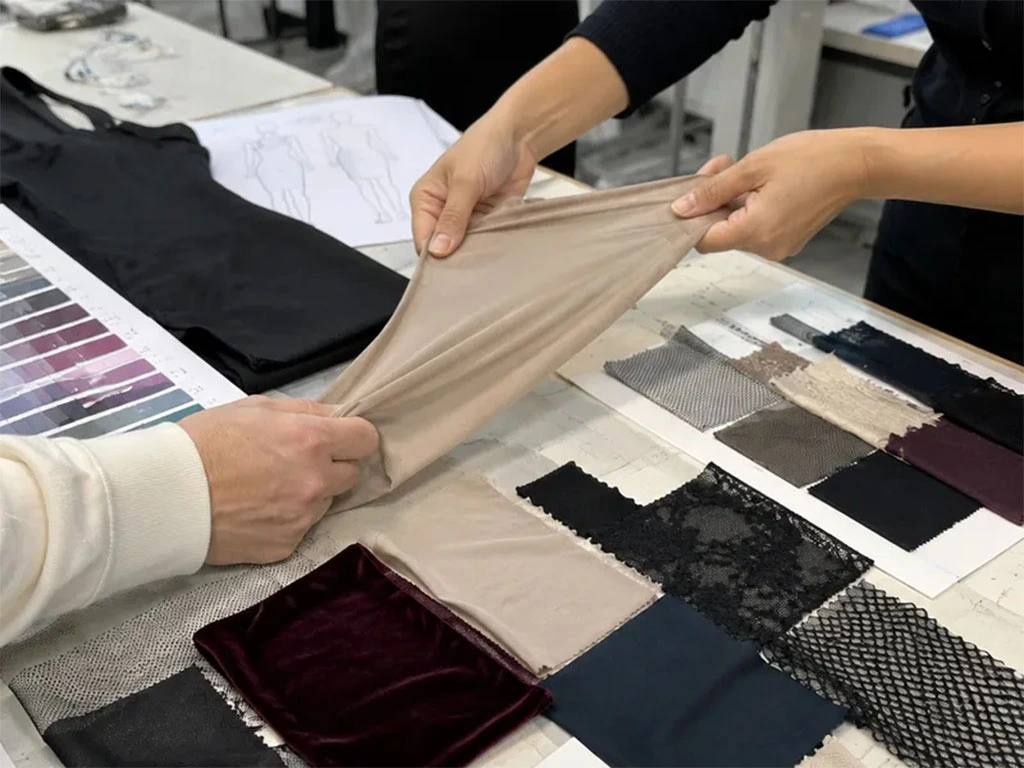
Fabric Weight and Construction Requirements
Fabric weight can change how a dress falls on the body, especially for styles with draping, pleats, or a flowing skirt.
You can include:
- GSM
- stretch level
- thickness
- transparency
- fabric finish
For example, two satin fabrics may look similar in photos but create different results after sewing. One may have a softer drape, while another may require additional support or lining adjustment.
Fabric Color Information
Your tech pack should include clear color references.
Useful information includes:
- Pantone color number
- fabric swatch
- approved color sample
- reference image
This helps the factory confirm colors during fabric sourcing and approval.
How to List Lining Details in a Dress Tech Pack
Lining may not be visible from the outside, but it plays an important role in how the dress feels, fits, and keeps its shape.
Lining Material
You should specify the expected lining type, such as:
- Polyester lining
- Stretch lining
- Mesh lining
- Cotton lining
If you do not have a fixed lining choice, you can describe the purpose, such as improving comfort, reducing transparency, or supporting the garment shape.
Lining Placement
Your tech pack should show where lining is required.
Examples:
- Full body lining
- Bodice lining only
- Skirt lining only
- Sleeve lining
Without clear lining placement, the factory may need to confirm construction details during sampling, which can slow down sample approval.
Lining Color and Finish
You should also include:
- lining color requirement
- hand feel preference
- lightweight or structured requirement
These details may seem minor, but they affect how the customer experiences the finished garment.
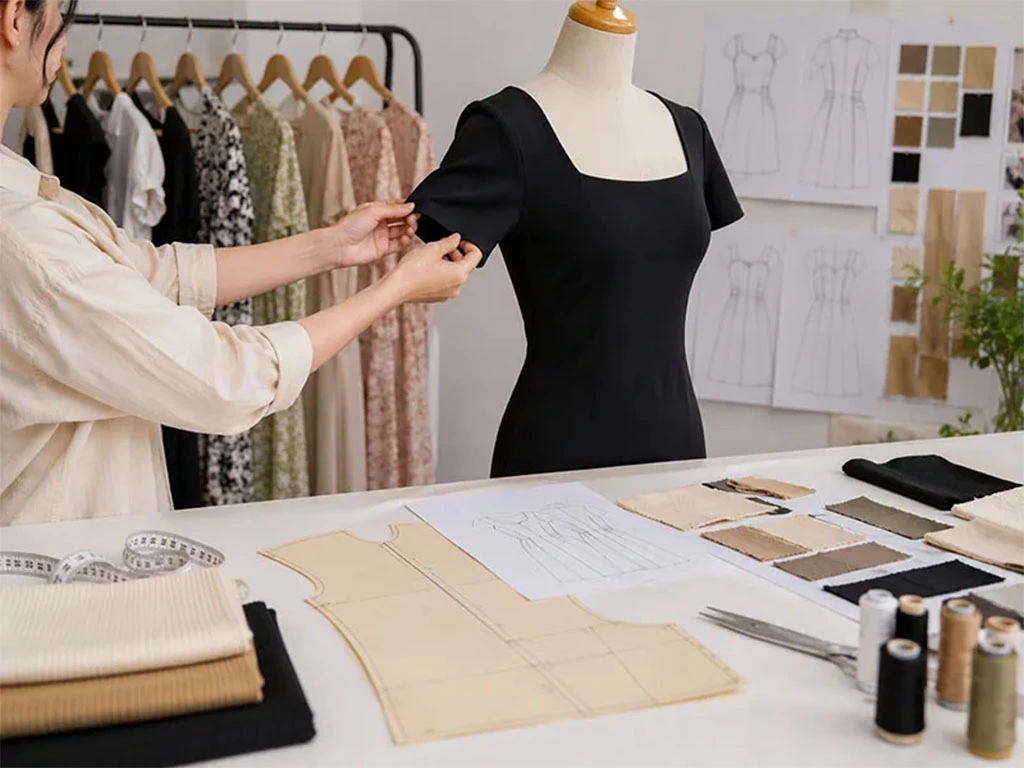
How to List Trim Details in a Dress Tech Pack
Trims are small components, but they can influence both the appearance of the dress and the production methods required for finishing.
Zipper and Closure Details
For zippers or closures, include:
- zipper type
- zipper length
- zipper color
- placement
An invisible zipper, metal zipper, or exposed zipper may require different sewing processes and construction methods.
Decorative Trim Details
For dresses with decorative elements, you should include:
- lace
- beads
- sequins
- rhinestones
- appliqué
Your tech pack should describe:
- material
- size
- color
- placement
- quantity
This is especially important for dresses with heavy decoration. The number of beads, sequins, or appliqué pieces can affect handwork time, sample cost, and bulk production planning.
Label and Packaging Details
For private label projects, you may also include:
- brand labels
- care labels
- hangtags
- barcode labels
- packaging requirements
These details should be confirmed before bulk production to avoid changes after garments are completed.
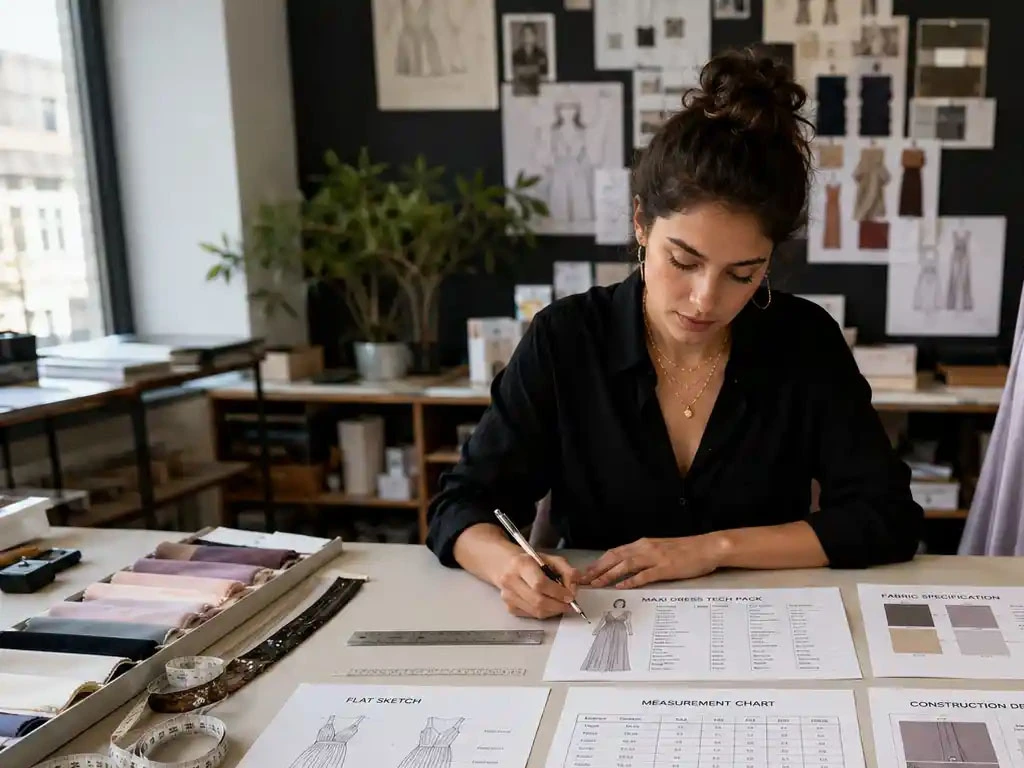
Common Mistakes Brands Make When Preparing Fabric, Lining and Trim Information
During dress development, we often see brands provide strong design references but incomplete production information.
Only Sending Images Without Specifications
Reference images are useful, but they cannot always explain fabric weight, lining requirements, or trim construction.
A factory may understand the overall style from the images, but still cannot confirm fabric, construction, or finishing details without additional information.
Using General Descriptions
Terms like:
- premium fabric
- soft material
- high-quality zipper
describe expectations but do not define production requirements.
More specific information helps the manufacturer evaluate materials and construction options.
Changing Material Details After Sampling
Late changes to fabric, lining, or trims can affect fitting, construction, and sample approval.
Confirming these details before sampling reduces the chance of changing materials after the sample has already been made.
How Manufacturers Review These Details Before Sampling
Before making the first dress sample, your manufacturer usually reviews the tech pack from several production perspectives.
The pattern team checks construction details and measurements. The fabric sourcing team reviews material availability and suitability. The sample room evaluates sewing methods and finishing requirements.
For example, the sample room may find that a fabric choice requires a different seam allowance, lining adjustment, or sewing method after the first review.
In our daily production work, we often find that small details in the tech pack can influence the entire sample result. Reviewing these details before sampling allows the factory to solve potential issues earlier, instead of finding them after the sample is completed.
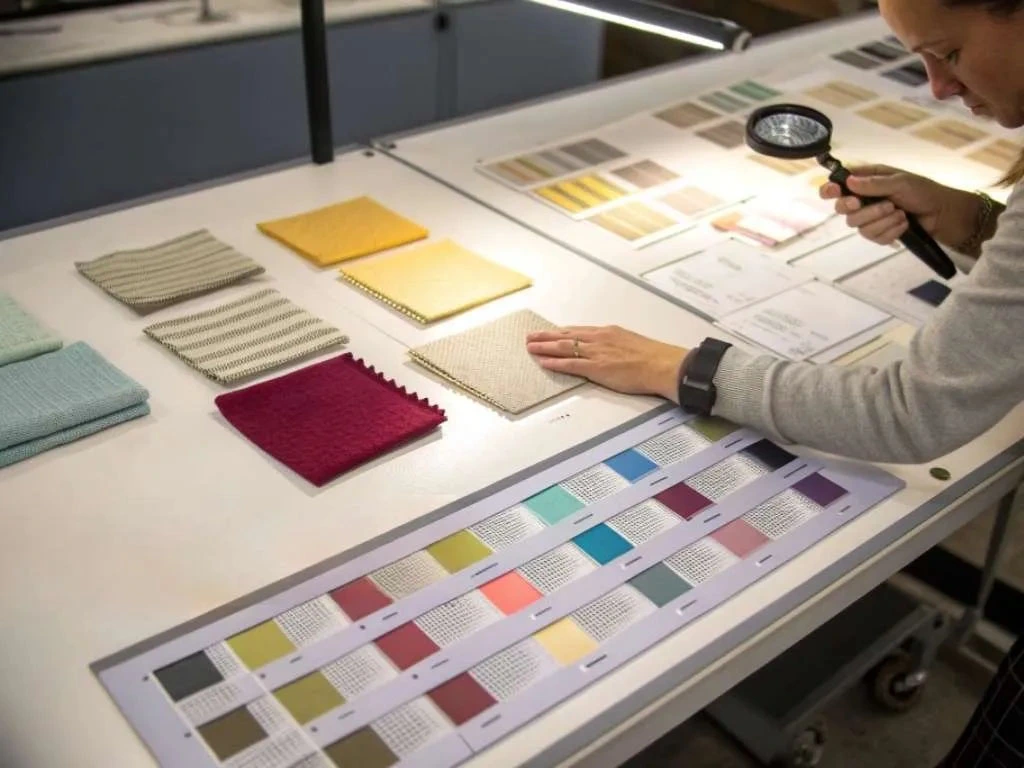
What If You Do Not Have Complete Fabric or Trim Information?
Many new brands start with a design concept rather than a complete tech pack. This is common, especially for first collections.
You can begin with:
- sketches
- reference images
- existing garments
- fabric ideas
- design notes
Your manufacturer can review the available information and help identify which details need confirmation before sampling begins.
The goal is not always to have a perfect tech pack at the first step, but to make sure important production decisions are discussed before development moves forward.
FAQ
Can a manufacturer help review my dress tech pack before sampling?
A manufacturer can review whether the fabric, construction details, and specifications are practical before sampling starts. This helps identify missing information early and avoids unnecessary sample adjustments later.
What fabric information is most important for dress production?
The most important details usually include fabric type, composition, weight, stretch, and color requirements. These details allow the production team to evaluate how the material will behave during pattern making and sewing.
Do lining details affect the final fit of a dress?
Yes. Lining can influence comfort, shape, and how the outer fabric falls on the body. Incorrect lining choices may change the fitting result or require adjustments during sampling.
Should trim details be included before requesting a sample?
It is better to include trim information before sampling whenever possible. Details such as zippers, beads, or decorative elements can affect construction methods and should be considered during sample development.
Can I start a dress project if I only have a design idea?
Yes. Many brands begin with sketches or reference images. However, production details need to be clarified step by step before the manufacturer can create an accurate sample.
Conclusion
Fabric, lining, and trim details are important parts of a dress tech pack because they connect your design idea with actual production requirements. When these details are clearly prepared before sampling, your manufacturer can better evaluate materials, construction, and finishing methods. This reduces unnecessary revisions and creates a smoother path from design concept to finished dress.
Related Dress Manufacturing Services
If your project involves a specific dress fabric or construction, you can also review our related manufacturing pages:
- Skater Dress Manufacturer
- Maxi Dress Manufacturer
- Evening Dress Manufacturer
- A Line Dress Manufacturer
- Midi Dress Manufacturer
Get a Quote for an Existing Dress Style
If you are transferring an existing dress style to a new manufacturer, send us the latest approved sample, tech pack, product photos, or measurement chart together with your target quantity.
As a dress manufacturer, we can review the construction, fabric, trims, measurements, and current production status with you before confirming the sampling requirements.

