

When you develop a dress with a clothing manufacturer, some changes can be checked without cutting another sample. A neckline, hem length, skirt volume, or panel position can often be reviewed in 3D first. Other points still need to be checked on a physical garment, especially fit, fabric behavior, construction, and finishing.
This distinction matters during sampling because each physical revision takes time. The pattern needs to be changed, the sample room needs to make the new version, and an overseas sample may then need to be shipped back for review. Using 3D where it makes sense can reduce some of those extra sample rounds without removing physical approval where it is needed.
Physical Samples vs 3D Dress Samples: What Is the Difference?
If you are developing dresses for your brand, you are usually checking two different things.
A 3D dress sample helps you review the design before another garment is cut and sewn. You can look at the silhouette, proportions, length, neckline, sleeve shape, and placement of certain details.
A physical sample lets you check what actually happens when the pattern is cut in the selected fabric and assembled on the sewing line.
| What You Need to Check | 3D Sample | Physical Sample |
|---|---|---|
| Overall silhouette | Yes | Yes |
| Dress length | Yes | Yes |
| Proportion | Yes | Yes |
| Neckline and sleeve shape | Yes | Yes |
| Detail placement | Yes | Yes |
| Fabric drape | Limited | Yes |
| Stretch and recovery | Limited | Yes |
| Transparency | Limited | Yes |
| Real-body fit | Limited | Yes |
| Sewing construction | Limited | Yes |
| Lining and closures | Limited | Yes |
| Final workmanship | No | Yes |
A higher waistline or narrower skirt can often be reviewed in 3D before another sample is made.
Problems such as pulling at the hip or incorrect sleeve drape need to be checked on the actual garment.
Why Can Dress Sampling Take More Time Than Expected?
When you send a sketch to a factory, the sketch is only the starting point.
The pattern still has to be developed. Fabric needs to be confirmed. Construction needs to be worked out. Then the first sample is made and fitted.
A typical development sequence may look like:
Design → Pattern → First Sample → Fit Review → Pattern Revision → Revised Sample → PP Sample → Bulk Production
The extra time often comes from the revisions between these steps.
You may receive the first sample and find that the waist is too low. The skirt may have more volume than you expected. The neckline may need to be opened up. The sleeve may not sit correctly.
These are common comments during the first sample review.
The issue is that a physical revision takes several steps. The pattern maker changes the pattern, the sample room cuts and sews another garment, the sample is finished, and if you are working overseas, it then has to be shipped to you.
That is where a 3D review can be useful.
Where Can 3D Sampling Save Time?
3D sampling is useful when a change can be reviewed before the sample room cuts another garment.
Take a fitted midi dress where the first sample looks too long through the bodice.
You could immediately ask the factory to revise the pattern and make another sample.
Or you could first review the shorter bodice in 3D and decide whether the new proportion is closer to what you want.
The same approach can work when you are reviewing:
- Dress length
- Waist position
- Skirt volume
- Neckline depth
- Sleeve length
- Shoulder proportion
- Panel placement
- Pleat position
- Gather placement
If the change is mainly visual, you can often make the decision earlier.
The time adds up quickly when several styles are being developed at once. If five dresses each go through one unnecessary physical revision, the extra time is not only sewing time. You also have shipping, communication, fitting, and approval to deal with.
If the change can be judged from the digital version, there is little value in cutting and sewing another sample just to review that change.
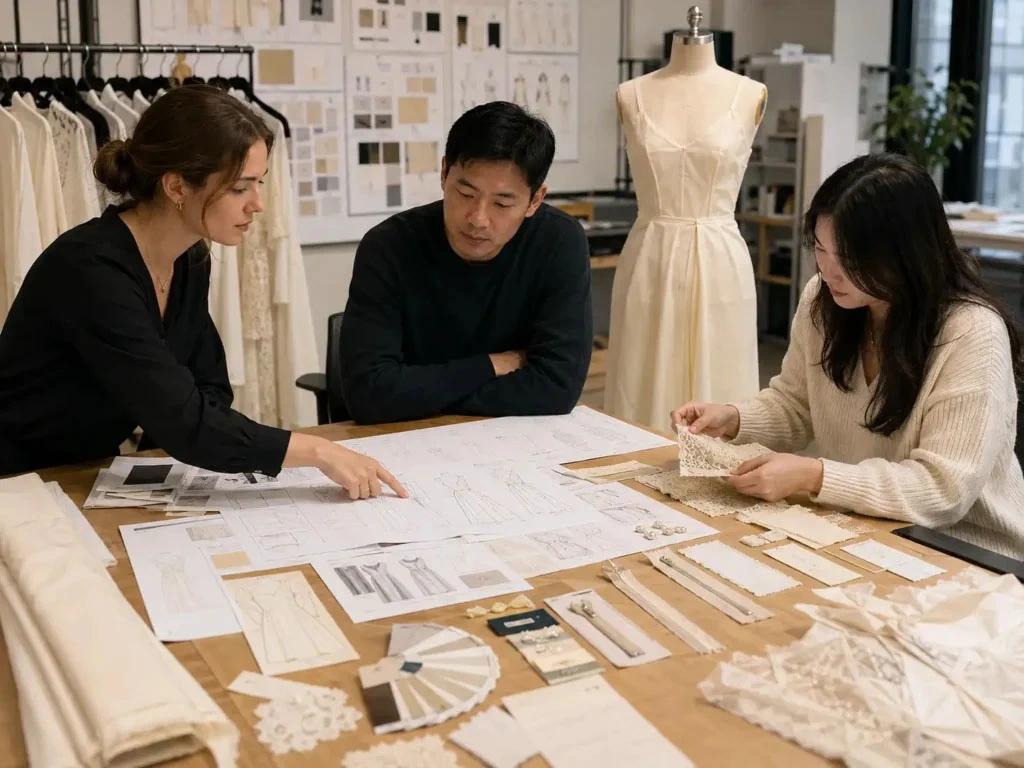
What Can You Check in a 3D Dress Sample?
3D sampling is most useful while you are still making design and proportion decisions.
Dress Silhouette
The 3D version lets you compare the overall shape with the intended design.
For example, you may want to see whether an A-line dress has enough skirt volume, whether a bodycon dress looks too loose through the waist, or whether a slip dress needs a different proportion between the bodice and skirt.
These changes can be reviewed before the sample room cuts the fabric again.
Length and Proportion
Length is one of the easier changes to review visually.
You may be deciding between a mini and midi version, changing the bodice length, or moving the waistline slightly.
Instead of explaining the change only through measurements, you can review the revised proportion and then confirm the measurement change with the factory.
Neckline and Sleeve Shape
A neckline can look too high on the first version, but describing exactly how much lower it should go may take several rounds of comments.
The same applies to sleeves.
A visual version gives you and the pattern maker a common reference before the next physical sample.
Placement of Design Details
You can also use the 3D file to check the position of pleats, ruffles, gathers, panels, cut-outs, pockets, decorative seams, and draped sections.
This is particularly useful when you are comparing several versions of one dress design.
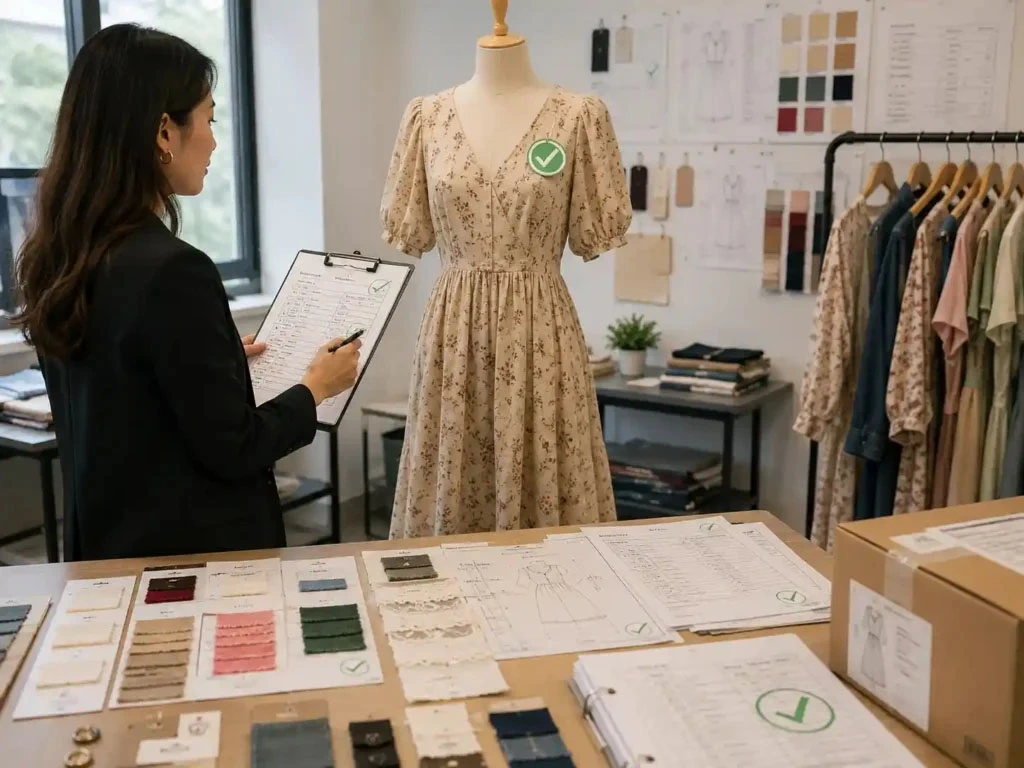
What Can a Physical Dress Sample Tell You?
Once you move from visual design decisions into actual product development, the physical sample becomes much more important.
Fabric Behavior
A digital garment cannot fully reproduce the behavior of your selected fabric.
You may find that a chiffon skirt falls differently from the digital version. Stretch satin may need different ease. A heavier woven fabric can change the balance of the dress.
The fabric also affects how seams, gathers, pleats, and hems behave.
This is why a physical sample is still necessary when fabric performance is part of the decision.
Fit on a Real Body
A 3D avatar is useful for proportion checks, but fit still needs to be confirmed on the intended size and a physical garment.
You may discover:
- Too much pressure around the bust
- Insufficient ease at the hip
- An armhole that restricts movement
- A waistline that sits differently when worn
- Straps that need adjustment
- A back opening that does not sit correctly
These issues are difficult to confirm from a screen.
Construction
The physical sample also shows whether the planned construction works in practice.
You can check:
- Seam construction
- Zipper installation
- Lining attachment
- Elastic
- Interfacing
- Boning
- Closures
- Hem finishing
Sometimes a detail looks simple in the design file but needs a different construction method once the pattern reaches the sample room.
Finishing
You should also look at the garment after it has been sewn and pressed.
Loose threads, uneven seams, puckering, lining problems, pressing marks, and finishing issues are all easier to identify on the actual garment.
For a style going into bulk production, these checks matter because the approved sample becomes a reference for the production team.
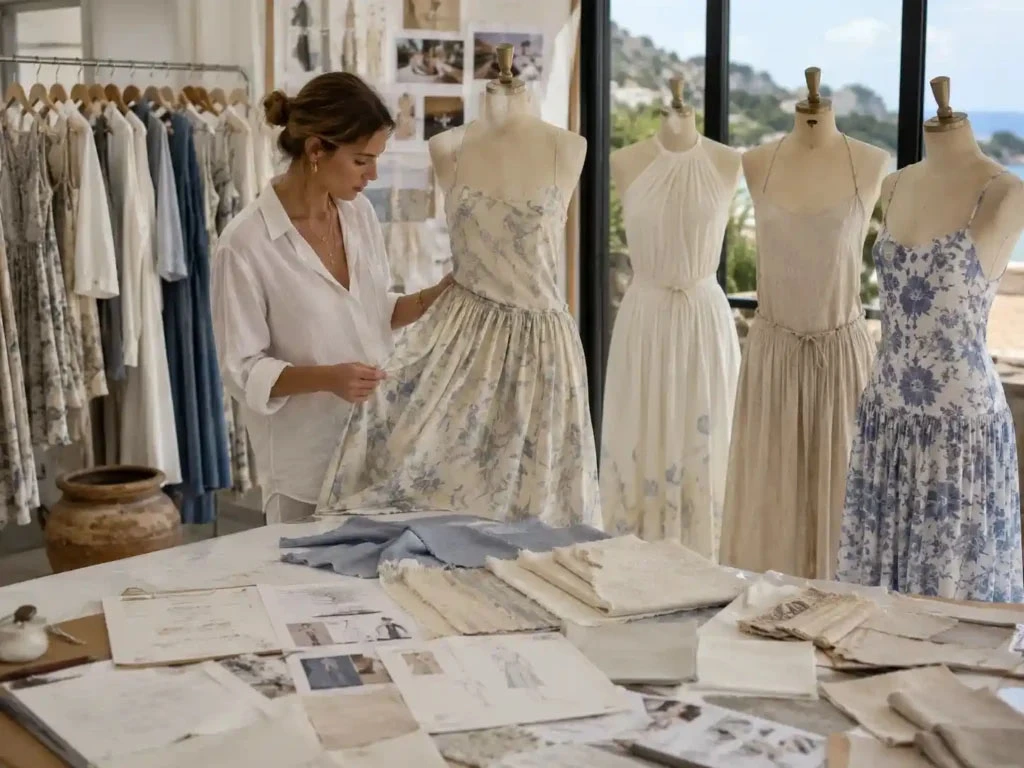
Can 3D Sampling Replace a Physical Dress Sample?
For most custom dress projects, it should not be treated as a complete replacement.
If you are changing the skirt length, neckline, or overall proportion, 3D may be enough for an early review.
If you are changing the fabric, fit, lining, boning, closure, or sewing construction, you need to see the physical result.
The difference becomes more important on dresses with complex construction.
A simple A-line dress may have relatively few points that require physical validation.
A corset dress can involve boning, panel shaping, lining, bust support, and close fitting. A beaded dress adds weight and embellishment placement. A chiffon dress can behave very differently depending on the fabric weight and construction.
The more the finished result depends on actual material and construction, the more important physical sampling becomes.
Which Dress Styles Need More Physical Checking?
The sampling approach can change considerably from one dress category to another.
Simple Casual and A-Line Dresses
You can often use 3D to review basic silhouette, proportion, and length.
Physical sampling is still needed to confirm the fabric, fit, and construction before production.
Satin and Slip Dresses
The fabric can show drape, shine, tension, and movement differently from the digital version.
A physical sample is useful for checking the actual fall of the garment and how the fabric reacts around seams and the body.
Chiffon and Lightweight Dresses
Chiffon, mesh, lace, and similar materials can raise questions about transparency, lining, seam finishing, and movement.
These are difficult to settle from a digital garment alone.
Corset and Structured Dresses
For structured styles, you need to check internal construction, boning, panel balance, lining, and bust support.
A 3D version can help with the outer shape, but it does not replace physical construction checks.
Beaded and Sequin Dresses
Embellishments add weight and can affect how the garment hangs.
You also need to check attachment, placement, seams, lining, and movement.
For these styles, physical development carries more of the approval process.
When Should You Use 3D Instead of Making Another Sample?
Before asking for another physical sample, look at the reason for the revision.
Silhouette Changes
For example, you want a fuller skirt or a closer-fitting waist.
A 3D review can show the direction of the change before the pattern is cut again.
Proportion Changes
You may want to move the waistline, change the bodice length, or adjust the relationship between the top and skirt.
These are good candidates for an early digital review.
Comparing Design Option
You may be choosing between two necklines or several sleeve shapes.
Seeing the options side by side can make the decision easier before physical development.
Detail Placement
Moving a pleat, panel, ruffle, or cut-out may not require another physical garment just to see whether the new position looks right.
But once the change affects fabric behavior, fit, or construction, the decision needs to move back into physical development.
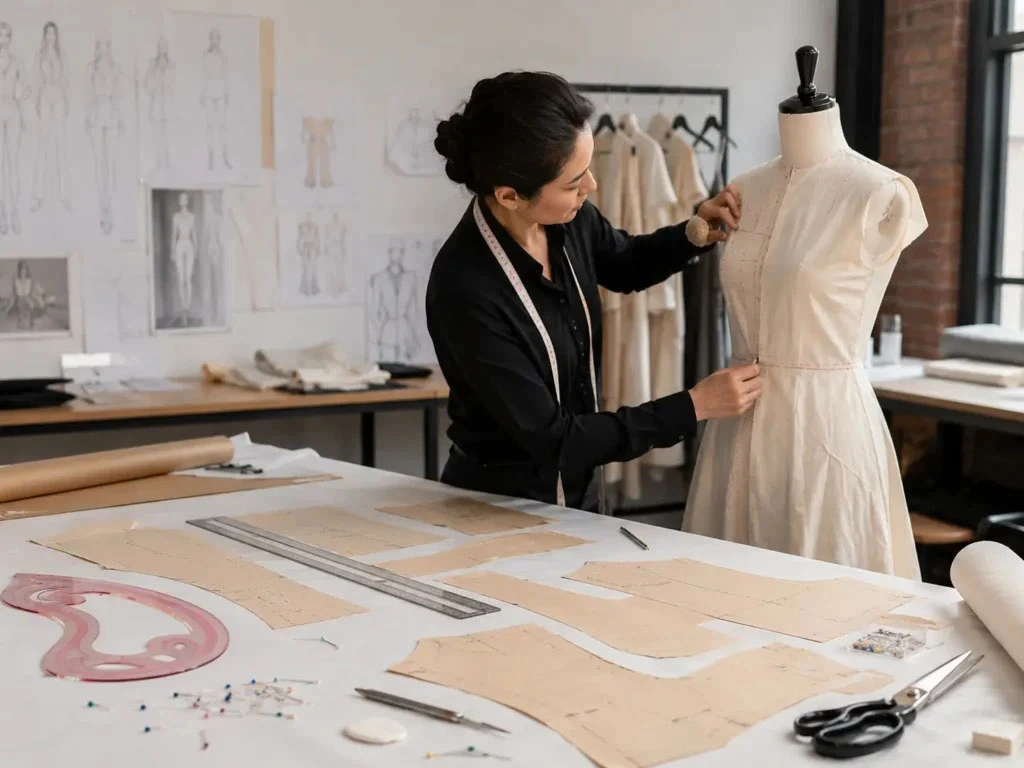
When Should You Make Another Physical Sample?
Another physical sample is useful when the change affects the finished garment rather than only its appearance.
The fabric has changed
A new fabric can change drape, stretch, weight, transparency, and fit.
The fit has changed significantly
If the bust, waist, hip, shoulder, armhole, or overall ease changes, you need to see the result on the actual garment.
The construction has changed
A new zipper, lining, boning, closure, seam treatment, or internal support can affect the garment in ways that are not obvious in 3D.
The embellishment has changed
Adding beads, sequins, appliqué, or other details can change garment weight and construction.
The production method has changed
If the revised design requires a different sewing operation or finishing method, physical validation becomes more important before bulk production.
The aim is not to remove physical sampling. It is to use it when the garment itself needs to be checked.
How Does 3D Sampling Work With an Overseas Clothing Manufacturer?
When you work with an overseas clothing manufacturer, every physical sample can add time to the development calendar.
You may send fitting comments on Monday. The factory receives them, the pattern department reviews the changes, the sample room prepares the next version, and then the finished garment has to travel back to you.
If you find another issue after receiving it, the cycle starts again.
A 3D review can move some of the visual discussion earlier.
A practical sequence can be:
Pattern → 3D Review → Pattern Adjustment → Physical Sample → Fit Review
For overseas development, this gives the designer, buyer, and factory a shared visual reference before the next physical sample.
You can review the silhouette together, agree on the change, and then have the pattern department work on the next physical version.
But revision control still matters.
If your designer is reviewing version 03 while the buyer is commenting on version 02, the factory can easily receive mixed instructions. The digital workflow only saves time when the information going into it is clear.
What Information Should You Give the Factory Before Sampling?
You do not always need a finished tech pack to start discussing a dress.
The information available at this stage may include:
- Sketch
- Reference photo
- Existing garment
- Tech pack
- Measurement chart
- Fabric direction
- Color reference
- Construction notes
- Artwork
- Target fit
- Size range
At this stage, make it clear which details are confirmed and which ones are still open.
For example, you may have approved the silhouette but not selected the final fabric.
In that situation, the 3D version can be used to review the design direction, but it should not automatically become the final production reference.
Otherwise, you can approve the digital appearance first and only discover during physical sampling that the fabric or construction changes the result.
How Does Dress Sampling Move Toward Bulk Production?
Once the sample is approved, the development work has to be transferred clearly into bulk production.
1. Design and Technical Information
You provide the sketch, tech pack, measurements, reference garment, or other available information.
2. Pattern Development
The pattern department develops the garment pattern and works through the construction.
3. 3D Review
Where the change is mainly visual, the silhouette, proportion, and selected details can be reviewed before another physical sample is made.
4. First Physical Sample
The sample room makes the garment so you can check actual fit, fabric behavior, and construction.
5. Fit Revision
Your fitting comments are converted into pattern and construction changes.
6. Revised Sample
The updated garment is checked again where the changes require physical confirmation.
7. PP Sample
Once the fabric, measurements, construction, and other specifications are settled, the PP sample provides the production reference before bulk manufacturing.
8. Bulk Production
The approved sample and specifications are carried into bulk cutting, sewing, finishing, and QC.
What Should You Confirm Before the PP Sample?
Before the PP sample is approved, you should have the important production details under control.
These can include:
- Final measurement chart
- Approved fabric
- Color
- Lining
- Trims
- Construction details
- Label requirements
- Artwork placement
- Size range
- Fit comments
- Approved sample reference
If these details are still changing, the PP sample may not represent the garment you eventually want to produce.
From the factory side, this is one of the points where clear communication makes a real difference.
Once bulk production starts, the sewing team cannot work from a collection of old comments, different files, and several sample versions. They need a clear approved reference.
That is what allows the approved sample and specifications to carry through bulk cutting, sewing, finishing, and final inspection.
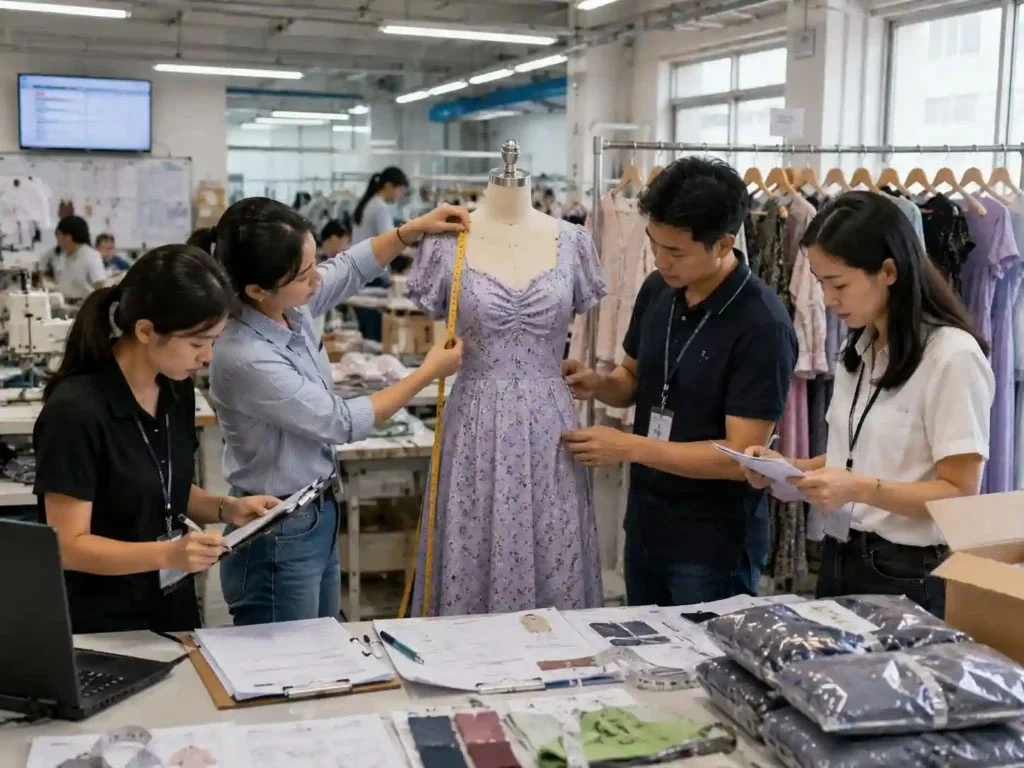
How Can You Decide Whether Another Physical Sample Is Necessary?
Before requesting another sample, identify what you are actually trying to confirm.
Is it mainly a visual change?
A change to length, neckline, skirt volume, or detail placement may be suitable for 3D review first.
Does it involve the actual fabric?
Changes to drape, stretch, transparency, weight, or hand feel need physical checking.
Does it affect fit?
Changes around the bust, waist, hip, shoulder, or armhole should be checked through physical fitting.
Does it affect construction?
Changes to lining, closures, boning, seams, embellishment, or finishing may require another physical sample.
The decision should be based on what needs to be verified, not simply on whether the next step in the sampling schedule is another physical sample.
What Should You Ask a Clothing Manufacturer About Sampling?
If you are a startup brand, designer, buyer, boutique, retailer, wholesaler, or private label company, it is useful to understand how the factory handles development before you start.
Ask questions such as:
- Is pattern making handled in-house?
- Does the factory have a dedicated sample room?
- Can the team develop from a sketch, tech pack, or reference garment?
- How are fitting comments recorded?
- How are pattern revisions controlled?
- Can 3D review be used during development?
- Which changes require a new physical sample?
- What does the factory use as the PP sample reference?
- How are approved specifications transferred to bulk production?
- How are fit and construction checked before bulk cutting?
You are not simply checking whether a factory can sew the dress.
A factory’s sampling capability is not only about sewing the garment. It also determines how well the design can move from an early idea to an approved production reference without losing important details.
FAQ
1. Is 3D sampling useful for a new fashion brand with a small collection?
It can be, especially if you are developing several styles or expect design changes before approval. You do not necessarily need 3D for every dress.
2. Can a factory make a 3D dress sample from a reference photo?
A reference photo can be used as a starting point, but it does not contain all the technical information needed for production. The factory may still need measurements, construction details, fabric direction, and fit requirements before the design can move into a reliable pattern and physical sample.
3. Does 3D sampling reduce sample costs for wholesale dress orders?
3D review can remove some unnecessary sample work, but you will still need physical samples for fit, fabric, and construction checks. The saving usually comes from avoiding a physical sample for a change that could have been reviewed digitally first.
4. What should you do if your first physical sample looks different from the 3D version?
Compare the pattern, fabric, measurements, and construction before deciding what to change. The difference may come from fabric drape, pattern balance, or sewing. Your factory should identify the cause first, then revise the appropriate part rather than changing several details at the same time.
5. Do private label companies still need a PP sample when using 3D development?
Yes, when the product is moving into bulk production, the PP sample is still important for confirming the production version. Your 3D file can support earlier development and communication, but the approved physical reference and final specifications are what the production team can use to check the bulk garments.
Conclusion
3D sampling and physical sampling serve different purposes during dress development. A 3D version can help settle visual changes such as silhouette, proportion, length, and detail placement before another sample is cut. The physical garment is still needed when fit, fabric behavior, construction, or finishing needs to be confirmed.
Once those points are approved, the PP sample and final specifications can be used as the production reference for bulk cutting, sewing, finishing, and QC.
Related Dress Manufacturing Services
If your project involves a specific dress fabric or construction, you can also review our related manufacturing pages:
- Silk Dress Manufacturer
- Velvet Dress Manufacturer
- Party Dress Manufacturer
- Slip Dress Manufacturer
- Corset Dress Manufacturer
Get a Quote for an Existing Dress Style
If you are transferring an existing dress style to a new manufacturer, send us the latest approved sample, tech pack, product photos, or measurement chart together with your target quantity.
As a dress manufacturer, we can review the construction, fabric, trims, measurements, and current production status with you before confirming the sampling requirements.

