

When you develop dresses with adjustable straps, choosing the wrong slider can lead to slipping straps, fabric damage, or uncomfortable fitting. As a clothing manufacturer, we check strap hardware alongside fabric and construction during sample development. The right adjuster needs to hold its position, move smoothly, and suit the weight and structure of your dress. Getting this detail right before bulk production helps you avoid unnecessary alterations and quality complaints.
Why Strap Adjuster Selection Matters in Dress Manufacturing
A strap adjuster may look like a minor trim, but it affects how your dress fits and performs after repeated wear.
If the slider is too loose, the strap can gradually lengthen during wear. If it is too tight, adjusting the strap becomes difficult, and the fabric may bunch around the hardware. You may not notice these problems from a product photograph, but they often become clear during fitting.
The fabric also makes a difference. A lightweight chiffon dress cannot always use the same hardware as a satin slip dress or a structured evening gown. Strap width, fabric thickness, garment weight, and the position of the hardware all need to be considered together.
For your collection, the goal is not simply to find an attractive adjuster. You need hardware that works with the complete garment and can be sourced consistently for repeat production.
Metal Strap Adjusters for Dresses
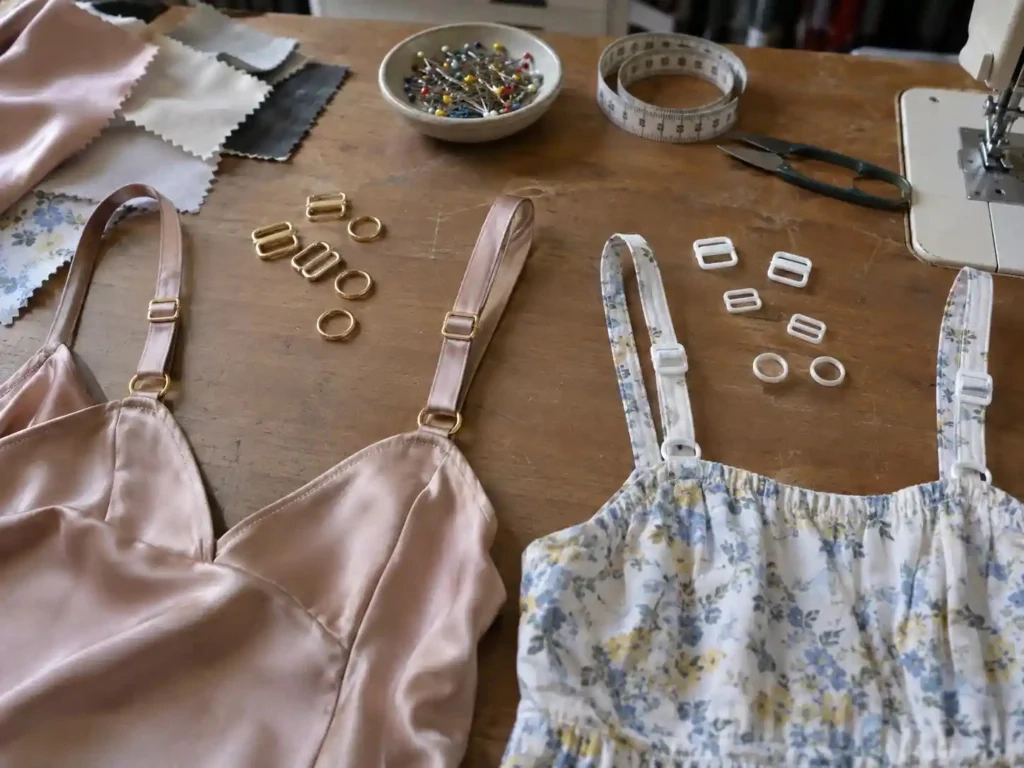
Metal strap adjusters are frequently used in satin slip dresses, eveningwear, bridesmaid dresses, and other styles where the hardware is visible.
Why Choose Metal Strap Adjusters?
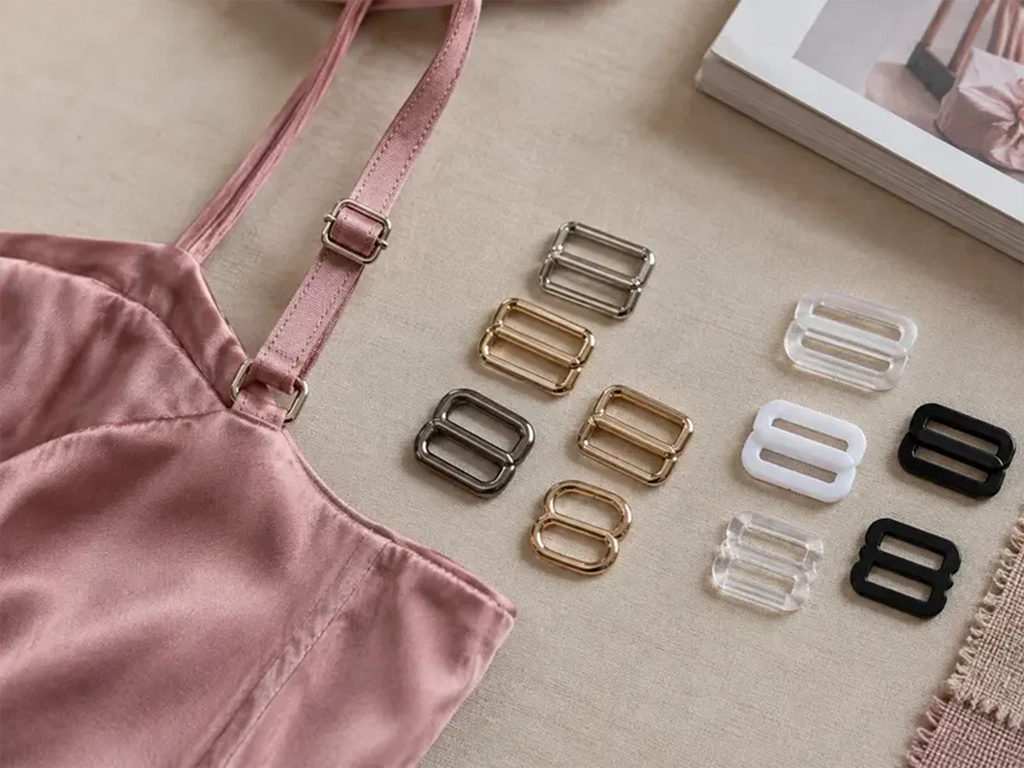
Metal hardware gives adjustable straps a more defined appearance. Gold, silver, and other finishes can complement decorative details, zippers, buttons, and other metal trims on your dress.
Another consideration is structural stability. A well-made metal slider generally retains its shape under normal strap tension and repeated adjustment. This can be useful when your dress has relatively long straps or needs the adjuster to remain in a fixed position throughout wear.
However, a metal component is not automatically better because it is heavier or more expensive. Its dimensions, surface finishing, and compatibility with the strap determine whether it performs properly.
What Should You Check Before Using Metal Hardware?
1. Edge Finishing
Run the strap through the adjuster and inspect the contact points. Rough edges, uneven plating, or poorly finished corners can scratch satin or catch delicate chiffon threads.
During sample development, we pay particular attention to the area where the strap enters and exits the slider. This is where friction problems are most likely to appear.
2. Hardware Weight
A heavy metal adjuster can pull against narrow shoulder straps, especially on lightweight dresses. You may notice the strap twisting or the shoulder area sitting differently after the hardware is attached.
Check the garment on a fit model rather than evaluating the component separately on a table.
3. Surface Finish and Color
Metal finishes should be checked against the other trims used in your collection. A gold slider that looks slightly different from the gold zipper or decorative chain can make the finished garment look inconsistent.
Also confirm that the finish does not scratch or peel easily during handling and adjustment.
4. Slider Dimensions
The internal opening needs to accommodate your actual strap thickness and width. A slider that is too wide may allow the strap to move unnecessarily, while one that is too narrow can make adjustment difficult.
Plastic Strap Adjusters for Dresses
Plastic strap adjusters are commonly used in lightweight dresses, casual styles, and commercial collections where keeping the garment light and controlling trim costs are important.
Why Choose Plastic Strap Adjusters?
One practical advantage is their low weight. If you are developing dresses with narrow straps and soft fabrics, plastic hardware can help avoid adding unnecessary weight around the shoulder area.
Plastic components also offer flexibility in color selection. Depending on the supplier and material, you may be able to match the adjuster more closely to the strap or use a less noticeable finish.
For larger orders, plastic hardware can also help manage trim costs. However, the lowest-priced option is not always the most economical. Poor-quality sliders may crack, deform, or fail to hold the strap securely, creating problems during wear and after delivery.
What Should You Check Before Using Plastic Hardware?
1. Material Strength
Check whether the adjuster bends excessively when you pull the strap through it. The component should maintain its shape under normal adjustment pressure.
Thin or poorly molded plastic can crack around the connecting sections, particularly after repeated use.
2. Molded Edges
Inspect the inside opening and outer edges for sharp seams or excess material left from molding. These imperfections can catch delicate strap fabrics or interfere with smooth adjustment.
3. Color Matching
If your design uses colored straps, confirm that the hardware matches the approved color standard. Do not rely only on photographs, as plastic colors can appear different under different lighting conditions.
4. Repeated Adjustment
Move the strap through the slider several times and check whether it remains in position. A component that works once during sampling may not perform as well after repeated adjustment.
Metal vs Plastic Strap Adjusters: Which Option Is Better for Your Dress?
The decision depends on the design, fabric, strap construction, and target retail price of your collection.
| Consideration | Metal Adjuster | Plastic Adjuster |
|---|---|---|
| Appearance | Visible decorative detail | Usually more understated |
| Weight | Generally heavier | Generally lighter |
| Cost | Usually higher | Usually more economical |
| Shape retention | Generally rigid | Depends on material quality |
| Color options | Plated or coated finishes | Molded color options |
| Common applications | Satin and evening dresses | Casual and lightweight dresses |
You should also consider the rest of the garment. If your dress already includes a metal zipper, chain, or decorative buckle, metal strap hardware may create a more consistent appearance.
For a simple summer dress with narrow straps, a lightweight plastic slider may be a more practical choice.
Neither material is suitable for every design. The actual component should be tested with your strap fabric before you confirm the specification.
How to Choose Strap Adjusters for Different Dress Types?
Satin Slip Dresses
Satin slip dresses often use visible adjustable straps, making the hardware part of the overall design.
If you are developing a satin collection, metal adjusters can complement the smooth surface and minimalist silhouette. However, satin is sensitive to scratches, pressure marks, and friction.
Pay attention to the inside edges of the slider and the way the strap moves through it. A component that catches the fabric can leave visible damage that is difficult to correct after sewing.
You can also review the construction requirements with a slip dress manufacturer when developing your strap design.
Chiffon Dresses
Chiffon is lightweight and has a soft drape. Adding heavy hardware to narrow shoulder straps may cause the fabric to pull or distort around the attachment point.
For many chiffon styles, lightweight plastic adjusters are worth considering. You should also check the strength of the strap attachment, because the fabric itself may need reinforcement to support repeated movement.
A chiffon dress manufacturer can help assess how the strap construction and fabric weight work together during sampling.
Bridesmaid Dresses
Bridesmaid collections often include several colorways or multiple dress styles within one order. This makes trim consistency particularly important.
You should confirm whether the same hardware can be used across all styles without affecting the fit or appearance. A metal slider may suit a satin design, while a lighter plastic option may work better on a soft chiffon dress.
If you are ordering several styles, keep the hardware specifications separate in your tech pack rather than assuming every dress uses the same component.
What Should Brands Confirm Before Bulk Production?
A strap adjuster should not be approved separately from the strap itself. During sample development, we check the complete construction because a component can perform differently after it has been sewn into the garment.
Here are four points worth including in your approval process.
1. Strap Width and Attachment
Confirm the finished strap width, adjuster dimensions, and attachment method. Check whether the strap passes through the slider without twisting or folding.
For narrow straps, even a small difference in hardware dimensions can affect how easily the strap moves.
2. Fabric and Strap Interaction
Test the actual fabric rather than relying on a similar material. Satin, chiffon, mesh, and other lightweight fabrics have different surface characteristics and resistance to friction.
Check for pulling, snagging, visible marks, and distortion around the attachment point.
3. Adjustment and Holding Performance
Adjust both straps several times and check whether they remain at the required length. The slider should move when you want to adjust it but should not gradually loosen during normal wear.
You should also check whether both sides can be adjusted to matching lengths.
4. Bulk Trim Consistency
Your approved sample should specify the hardware material, size, color, finish, and supplier reference where available.
For OEM and private label orders, record these details in the tech pack and keep an approved trim sample for production comparison. This gives your purchasing team and factory a clear reference when checking incoming components and finished garments.
Common Strap Adjuster Problems in Dress Production
Some hardware problems only become obvious after the dress has been sewn and fitted. The following issues are worth checking during sample inspection:
- Strap slipping: The slider does not hold the strap securely, causing the shoulder length to change during wear.
- Uneven strap lengths: Differences in adjustment or sewing position make the garment sit unevenly.
- Fabric snagging: Rough edges or an unsuitable slider opening catch the strap material.
- Shoulder distortion: Hardware weight or poor reinforcement pulls the fabric around the attachment point.
- Inconsistent trim appearance: Color, finish, or component dimensions vary between production batches.
When these issues are discovered during sampling, you still have time to change the component, adjust the strap construction, or revise the specification. Once the bulk garments have been sewn, correcting the same problem becomes much more time-consuming.
FAQ
1. Can I provide my own strap adjusters to the clothing manufacturer?
Yes. You can supply your preferred hardware if you already have an established trim supplier. Provide the component specifications, sample quantity, and any available supplier information. We recommend sending physical samples so the factory can check dimensions and compatibility with the actual strap material.
2. What if my chosen strap adjuster is unavailable during repeat orders?
This can become a problem when you reorder a successful style several months later. Keep the original supplier reference, dimensions, finish requirements, and an approved physical sample. If the component is discontinued, your factory can compare alternatives before changing the approved specification.
3. Can I change the strap hardware after approving the first sample?
Yes, but the change should be evaluated rather than treated as a simple trim replacement. Different hardware can affect strap thickness, sewing positions, appearance, and adjustment performance. Request an updated sample or at least a construction check before authorizing the revised component for bulk production.
4. Does changing the strap adjuster affect the garment quotation?
It can. The difference depends on the component price, sourcing quantity, finishing requirements, and whether the change requires additional sampling or construction adjustments. If you are working with a strict target price, discuss the hardware options before finalizing the quotation.
5. What should I do if my design uses a custom-shaped strap adjuster?
Provide a drawing, reference photograph, or physical component showing the required shape and dimensions. Custom hardware may involve tooling costs and minimum order quantities. Confirm these requirements with the trim supplier early, especially if your collection has a fixed development schedule.
Conclusion
Strap adjusters may be small components, but they affect fit, comfort, and the finished appearance of your dress. Check the hardware together with the actual strap and fabric during sample development, and keep the approved specifications for repeat production. If you are developing a new collection, Xiuyu Apparel can support your project as a dress manufacturer, from pattern development and sampling to bulk garment production.

