

When you develop a new clothing collection, a sample that looks right is not necessarily ready for production. As a clothing manufacturer, we check how the pattern, fabric, measurements, and sewing construction work together before bulk cutting begins. If you are preparing a new collection, understanding each sampling stage helps you avoid repeated revisions, unexpected development costs, and differences between your approved sample and finished order.
What Is the Garment Sampling Process?
The garment sampling process is the development and approval work that takes place before bulk manufacturing. It allows you to check whether your design can be made to the required specifications and whether the factory can reproduce the approved version consistently.
A tech pack gives the factory the design information, but some problems only become visible after the first garment is sewn. A neckline may sit differently on the body, a fabric may stretch more than expected, or the original pattern may need adjustment around the waist and hips.
From the factory side, sampling is not simply about making a garment look like a reference picture. It involves checking pattern accuracy, fabric suitability, construction methods, measurements, and production feasibility.
The sample stages you may encounter include:
- Development or Proto Sample
- First Fit Sample
- Revised Fit Sample
- Size Set Sample
- Photo Sample
- Salesman Sample
- PP Sample (Pre-Production Sample)
- Golden Sample
- TOP Sample (Top of Production Sample)
Not every order requires all these stages. A simple loose-fitting dress may need only a development sample, fit approval, and PP sample. A structured evening dress with boning, multiple layers, or detailed embellishment may need additional rounds.
Garment Sampling Process: From Design to Bulk Production
Although sample names and approval procedures vary between factories and brands, a typical development workflow follows this sequence:
Design and Tech Pack Review
↓
Pattern Development
↓
First Fit Sample
↓
Fit Corrections and Revised Sample
↓
Size Set or Additional Samples (If Required)
↓
Photo or Sales Sample (If Required)
↓
PP Sample Approval
↓
Golden Sample Confirmation
↓
Bulk Production
↓
TOP Sample Check (If Required)
Each stage should answer a specific question. You need to know whether the garment fits correctly, whether the materials are final, and whether the approved construction can be followed during bulk production.
What Is a First Fit Sample?
A First Fit Sample is an early physical garment made after the pattern has been developed. It allows you to check the garment’s proportions, measurements, and fit before finalizing the design.
When reviewing your first sample, pay attention to:
- Overall silhouette: Does the garment have the shape you intended?
- Bust and waist: Are there pulling lines, excess fabric, or uneven shaping?
- Shoulder and neckline: Are the positions, width, and depth correct?
- Hip and hem: Does the garment hang evenly?
- Movement: Can the wearer sit, walk, and move comfortably?
For example, a fitted dress may look balanced on a mannequin but pull across the hips when worn. A neckline may also shift when the wearer moves, even if it looks correct in a flat photograph.
Our pattern makers pay close attention to these areas during dress development. Changing the waist position or bust shaping can affect other connected pattern sections, so corrections need to be considered together rather than made independently.
This is particularly important when you are developing fitted silhouettes or structured styles with a professional dress manufacturer.
How Should You Give Feedback on a Fit Sample?
Avoid sending comments such as “make it tighter” or “the waist does not look right” without explaining what needs to change.
Instead, mark the problem areas on sample photographs and provide updated measurements wherever possible. Tell the factory whether the issue appears when standing, sitting, or moving.
For example, if the waist is too loose, specify the requested measurement change and whether it applies to the front, back, or both sides.
If several people from your design and buying teams are reviewing the sample, collect their comments into one document before sending them to the factory. This prevents conflicting instructions and unnecessary pattern revisions.
What Is a Revised Fit Sample?
A Revised Fit Sample is made after the factory receives your comments on the first sample.
The pattern maker adjusts the pattern and the sample room produces another garment to check whether the requested corrections have worked.
Common revisions include:
- Adjusting bust, waist, or hip measurements
- Changing neckline depth or shoulder width
- Correcting sleeve length and armhole shape
- Changing garment length or hem proportions
- Adjusting seam placement and garment balance
One detail that deserves attention is how a correction affects the rest of the garment.
For example, reducing the waist measurement of a fitted dress may change the position of the side seams and create tension across the hips. Shortening the bodice can also affect the relationship between the bust and waist shaping.
When you receive the revised sample, compare it with the previous version and the original measurement chart. Check whether the requested changes have been completed without creating new fitting problems.
Keep the comments and approved measurements for each revision. This gives your manufacturer a clear record of what has changed.
What Is a Size Set Sample?
A Size Set Sample is used to check whether the garment fits correctly across the intended size range.
Approving one sample in a base size does not automatically mean that every size will fit properly. Pattern grading changes the measurements between sizes, and some design details become more difficult to control as the garment gets smaller or larger.
For example, a fitted dress may have a good bust-to-waist proportion in size M, but the neckline, armhole, or waist position may not look balanced in XS or XL.
If your collection includes several sizes, ask the factory how the grading will be checked before bulk production. You may not need a complete sample in every size, but important sizes should be reviewed when the design or fit makes grading a concern.
This is especially relevant for brands introducing a new size range or changing their existing sizing standards.
What Is a Photo Sample?
A Photo Sample is prepared for product photography and marketing activities.
If your collection needs to appear on your website before bulk production is finished, this sample allows your marketing team to prepare product images and promotional materials.
Common uses include:
- E-commerce product photography
- Social media campaigns
- Website product listings
- Brand catalogues
- Seasonal collection launches
The sample should represent the intended product accurately in terms of silhouette, color, and visible design details.
However, a photo sample is not automatically approved for bulk manufacturing. You may still need to confirm fabric specifications, trims, labels, or construction details before production begins.
If your marketing schedule requires photography before final production approval, keep these two deadlines separate. This prevents pressure to approve an unfinished production standard simply because the product images are ready.
What Is a Sales Sample in Garment Manufacturing?
A Sales Sample, also called a Salesman Sample, is used to present your collection to wholesale buyers, retailers, and potential business partners.
Unlike a fit sample, its main purpose is commercial presentation. Buyers use it to evaluate the design, fabric, workmanship, and overall product direction before placing orders.
You may need sales samples for:
- Wholesale buyer appointments
- Showroom presentations
- Trade shows
- Retailer meetings
- Seasonal collection reviews
If you supply boutiques or department stores, these samples can help buyers understand the collection before confirming quantities and color selections.
One practical point is timing. Your sales sample may be needed before the final bulk order quantity is known. Make sure the factory understands whether the sample is for presentation only or whether it must also follow the final production specifications.
What Is a PP Sample in Garment Manufacturing?
A PP Sample, or Pre-Production Sample, is the sample approved before bulk manufacturing starts.
This stage is different from early fit development because the factory should now be working toward the actual production requirements.
Before approving your PP sample, check:
- Final fabric composition, weight, and color
- Approved print or dyeing standard
- Measurements and tolerances
- Sewing construction and seam details
- Lining and internal finishing
- Labels, hangtags, and accessories
- Embroidery, beading, or other embellishments
- Washing, pressing, and finishing requirements
For example, if your first sample was made with a similar fabric because the actual material was not yet available, the PP sample should be checked again using the confirmed production fabric.
This matters because two fabrics with a similar appearance can behave differently during sewing. Changes in stretch, thickness, or weight may affect the fit and final garment measurements.
You should also confirm that the factory is using the latest tech pack and measurement chart. If you approved a pattern revision but the production team still has an older version, the bulk order may follow the wrong specifications.
When working with an OEM clothing manufacturer, written PP approval helps both sides establish which version of the garment is authorized for production.
What Is a Golden Sample?
A Golden Sample is the approved physical reference used to maintain the agreed garment standard during bulk manufacturing.
It normally represents the final approved version, including:
- Garment appearance and silhouette
- Measurements and proportions
- Fabric and color
- Sewing construction
- Trims and accessories
- Finishing quality
The QC team uses this sample to compare bulk garments during production and inspection.
For example, if a dress has a particular neckline shape, seam position, or decorative detail, the golden sample gives the inspection team a physical reference rather than relying only on written descriptions.
There is an important distinction between the PP sample and the golden sample. The PP sample is the pre-production approval stage. Once approved and retained as the production reference, that same garment can serve as the golden sample.
Some brands require a separately sealed or signed sample, while others use the approved PP sample as their master reference. The arrangement should be agreed before production starts.
What Is a TOP Sample?
A TOP Sample, or Top of Production Sample, is taken from the actual bulk production run.
Unlike a PP sample, which establishes the standard before bulk manufacturing, a TOP sample checks whether the factory is following that standard on the production floor.
You can use it to review:
- Actual bulk fabric and color
- Production sewing quality
- Measurement consistency
- Trims and finishing
- Differences between the approved sample and production garments
This check is useful for larger orders or styles with complicated construction. If the first production pieces show a problem, the factory has an opportunity to correct the process before the same issue affects the remaining quantity.
TOP sample requirements depend on the buyer’s quality procedures and should be agreed before production.
First Fit Sample vs PP Sample vs Golden Sample
These three sample stages have different purposes and should not be treated as interchangeable.
| Sample Type | Main Purpose | When It Is Used |
|---|---|---|
| First Fit Sample | Check pattern, proportions, and fitting | Early development |
| Revised Fit Sample | Correct fitting and construction issues | After fit comments |
| Size Set Sample | Check grading across sizes | Before final approval |
| Photo Sample | Prepare product images | Marketing preparation |
| Sales Sample | Present styles to buyers | Wholesale development |
| PP Sample | Confirm final production requirements | Before bulk production |
| Golden Sample | Maintain the approved quality standard | During production |
| TOP Sample | Check actual bulk production output | Early production |
You do not need to order every sample type for every style. The important thing is to agree on what each sample is expected to confirm and who is responsible for approving it.
Common Problems During Garment Sampling
1. The Sample Looks Different from the Design Drawing
A technical drawing shows measurements and construction details, but it cannot fully demonstrate how a fabric will behave after cutting and sewing.
Fabric weight, stretch, recovery, lining, and seam construction all affect the finished garment.
For example, a lightweight satin dress may drape differently from a heavier satin fabric, even when both materials look similar. This is particularly noticeable in silk dresses, where fabric movement and finishing influence the final silhouette.
When you review the sample, check the actual fabric behavior rather than judging the garment only against the original sketch.
2. Too Many Sample Revisions Delay the Collection
Repeated revisions often happen because the factory receives incomplete or conflicting feedback.
One person may request a shorter hem, while another asks to maintain the original proportion. The pattern maker then has to clarify which instruction should take priority.
Before sending comments, collect feedback from your design, buying, and merchandising teams. Mark the exact areas that need changing and include updated measurements.
If a change affects several connected areas, discuss it with the pattern maker before requesting another sample. This can save a round of development work.
3. The Bulk Order Does Not Match the Approved Sample
An approved sample provides a reference, but consistency still needs to be checked during production.
Fabric lots, cutting accuracy, sewing operations, and finishing can all affect the finished garments.
For larger orders, the factory should compare early production pieces with the approved golden sample. In-line QC should also check measurements and workmanship while sewing is underway.
Waiting until final inspection to discover a repeated construction problem can make corrections much more difficult.
4. Fabric or Trims Are Changed After Sample Approval
Sometimes the original fabric or accessory becomes unavailable, or the buyer requests a replacement to control cost.
A replacement that looks similar may still have a different weight, thickness, stretch, or surface finish.
If you need to change a material after PP approval, ask the factory to review the effect on the garment and obtain approval for the revised specification. Do not assume that an approved sample automatically covers materials that were changed afterward.
How Many Samples Do You Need Before Bulk Production?
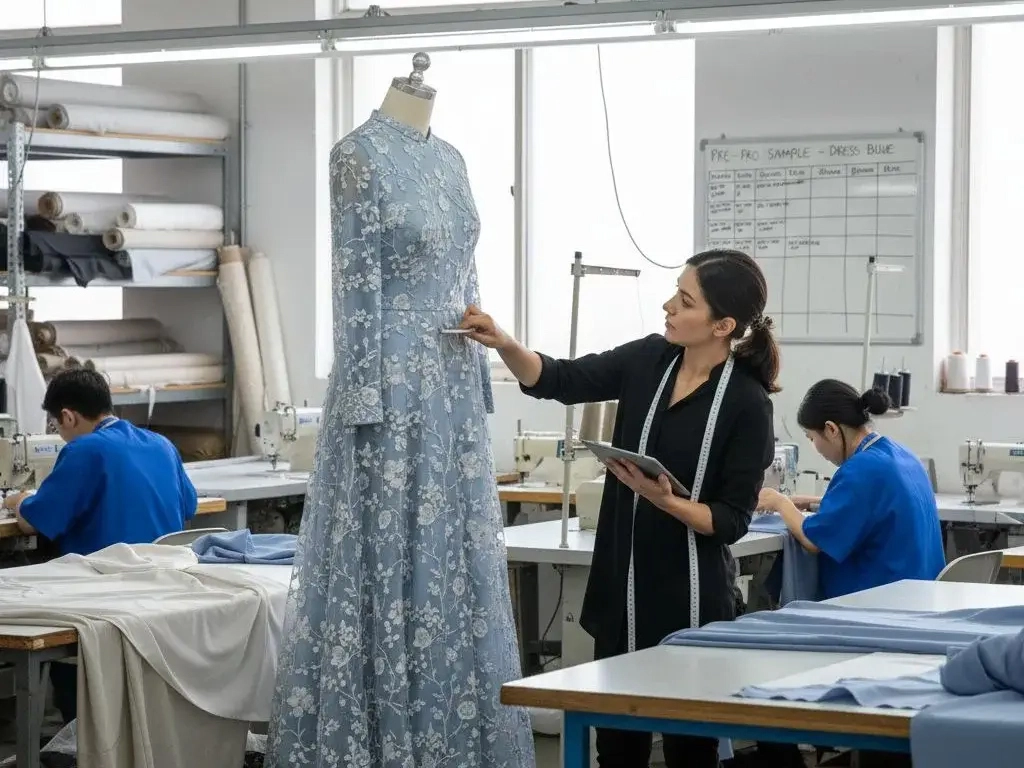
There is no fixed number of sample rounds for every garment. The number depends on the design, materials, fitting requirements, and approval procedures.
A simple loose-fitting dress may move forward after an initial sample and a PP sample. A structured evening dress with boning, multiple lining layers, or detailed embellishments may need additional fitting and construction checks.
You are more likely to need extra sample rounds when your design includes:
- Closely fitted bodices or complicated silhouettes
- Special fabrics with limited stretch or recovery
- Multiple lining or structural layers
- Embroidery, beading, or sequins
- Unusual neckline, sleeve, or hem construction
For example, sequin dresses need particular attention because embellishment weight can affect the garment’s balance and drape. If you are developing party dresses, discuss embellishment placement and construction requirements with your manufacturer before sampling begins.
The objective is not to produce more samples. It is to resolve the important issues before fabric is committed to bulk production.
What Should You Prepare Before Starting Garment Sampling?
Your preparation has a direct effect on how accurately the factory can develop your first sample.
Before sending your design, try to provide the following information:
1. Design References
Send sketches, reference photographs, or an existing garment. Explain which details must be followed and which can be adjusted.
2. Tech Pack and Measurements
Include garment measurements, construction details, size range, and fitting requirements. If your tech pack is incomplete, provide as much information as possible about the intended product.
3. Fabric Requirements
Share your preferred fabric composition, weight, texture, stretch, and color. Physical swatches are useful when the fabric’s hand feel and drape are important.
4. Trims and Branding
List your requirements for labels, hangtags, buttons, zippers, embroidery, and other accessories.
5. Development Schedule
Tell the factory when you need the first sample, when you expect to approve the PP sample, and your planned bulk delivery date.
A clear brief gives the pattern maker and sample room a better starting point. It also makes it easier to identify missing information before development begins.
FAQ About Garment Sampling
1. Who owns the patterns and samples developed by a clothing manufacturer?
Ownership should be agreed in writing before development starts. If you are paying for custom patterns, ask whether the pattern files and physical patterns can be transferred to you. Also clarify whether the factory can reuse those patterns for other customers or future orders.
2. Can I use one manufacturer for sampling and another for bulk production?
Yes, but transferring development work between factories requires proper documentation. You should have the approved measurements, pattern information, construction details, and material specifications. The new factory may still need to check the sample because different production teams can interpret construction details differently.
3. Should I approve a sample before receiving the final quotation?
You can request an initial estimate using your design references and specifications. However, complicated construction, special fabrics, and embellishments may change the final cost after sampling. Ask the manufacturer to identify which parts of the quotation are estimates and which have been confirmed.
4. What happens if my fabric supplier has a minimum order quantity?
Ask the factory to check the fabric supplier’s minimum before confirming your development and bulk schedule. Some materials are available from stock, while custom colors or prints may require a larger purchase. This can affect your order quantity, material cost, and production timing.
5. How can I avoid misunderstandings when several people approve a sample?
Assign one person to collect and send the final approval comments. Keep sample photographs, revision dates, measurement charts, and approval records together. If your designer and buying manager have different opinions, resolve those differences internally before sending the factory another set of instructions.
Conclusion
The garment sampling process gives you the opportunity to resolve fitting, material, and construction issues before investing in bulk production. Clear feedback and documented approvals also make it easier to maintain consistent quality throughout your order. If you are developing a custom dress collection, an experienced dress manufacturer can help you manage these production decisions. At Xiuyu Apparel, we believe careful sample development is the starting point for reliable garment manufacturing.

