

When a new collection goes from sketches to samples, the choice of factory starts to matter. A dress manufacturer may have more experience with fit, fabric behavior and dress construction, while a broader clothing manufacturer may be a better fit when your collection covers several apparel categories.
From our side of production, the difference usually becomes clearer during sampling. It shows up in pattern adjustments, fabric handling, construction details and how quickly problems are found before bulk cutting.
What Is a Dress Manufacturer?
A dress manufacturer spends a large part of its production work on dresses. That usually means more day-to-day experience with dress silhouettes, fitting, lightweight fabrics, linings and the construction details that are common in women’s dresses.
If you are developing fitted dresses, slip dresses, evening dresses, cocktail styles or other silhouette-driven products, the factory needs to understand more than basic garment construction.
Your dress may look correct in a sketch, but the actual result can change once the fabric is cut and sewn.
A satin dress can show puckering if the sewing tension is not controlled properly. A stretch dress may fit differently depending on fabric recovery. A lightweight chiffon style may require a different lining and seam treatment. A bias-cut dress can also behave differently after hanging compared with the first flat pattern check.
A dress-focused factory will usually have more hands-on experience with:
- Pattern adjustments for different dress silhouettes
- Fit and measurement corrections during sampling
- Silk, satin, chiffon, velvet and stretch fabrics
- Linings, zippers and other inner construction
- Gathers, pleats, ruching and bias-cut sections
- Sample revisions before bulk production
- Production inspection and finishing
A dress-focused factory is not automatically the better choice. Previous work that is close to your own designs is usually more useful than a general claim of specialization.
What Is a General Clothing Manufacturer?
A clothing manufacturer usually covers a wider range of apparel products.
Your supplier may produce dresses as well as:
- Tops
- Shirts
- Skirts
- Trousers
- Jackets
- Outerwear
- Knitwear
- Other women’s or men’s clothing
This setup can work well for a brand selling several types of apparel. For example, your collection may include dresses alongside blouses, skirts and lightweight jackets. Using one capable clothing manufacturer can make communication, production planning and shipping easier than splitting the order across several factories.
The name on the factory’s website tells you very little by itself. A more useful question is how much experience the factory actually has with the type of garments you plan to order.
A factory that produces many categories but rarely handles fitted dresses may approach your sample differently from a factory producing dresses every week.
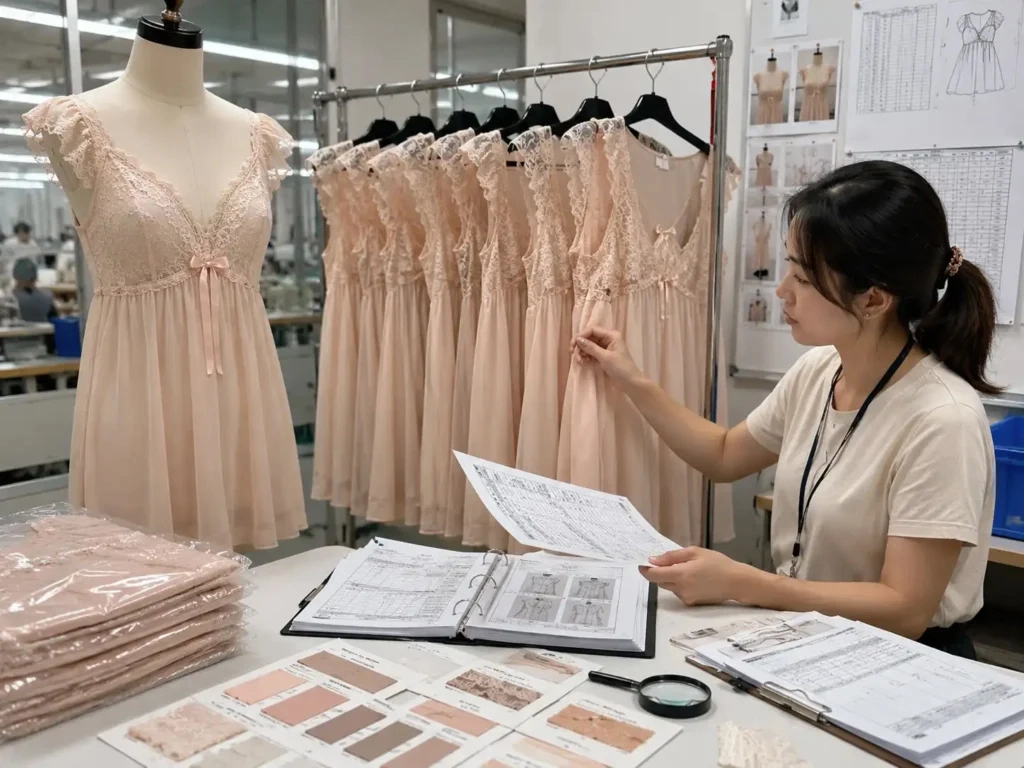
Dress Manufacturer vs Clothing Manufacturer: Where Does the Difference Matter?
The difference usually shows up in the actual production work.
| Production Area | Dress Manufacturer | General Clothing Manufacturer |
|---|---|---|
| Dress-specific experience | Usually stronger | Depends on factory |
| Fit development | Often a major focus | Varies by product range |
| Dress fabric handling | Often more specialized | Depends on experience |
| Pattern development | Strong focus on silhouettes | Usually broader |
| Complex dress construction | Common | Depends on factory |
| Multiple apparel categories | May be more limited | Usually broader |
| Best fit for | Dress-focused collections | Multi-category collections |
You should treat this table as a starting point rather than a rule.
A clothing manufacturer with ten years of dress production experience may be a better option for your collection than a small factory that calls itself a dress specialist but has never produced the construction you need.
What Makes Dress Manufacturing More Technical?
The difficulty of a dress is not always visible from the finished photograph.
Fabric Behavior
You may choose a fabric because the color and surface look right on a swatch. That does not tell you how the material will behave during production.
Before bulk production, we normally look at several things together:
- Fabric weight
- Width
- Stretch direction
- Recovery
- Shrinkage
- Drape
- Surface characteristics
- Lining compatibility
For example, a fabric can feel stretchy enough on the swatch but still cause fitting problems if the recovery is weak. We pay attention to this during sampling because a dress can fit correctly on the fitting table and become noticeably looser after wear.
Fabric specifications alone do not always show this problem. It becomes much easier to identify once the fabric is made into the actual garment.
Pattern and Fit
With dresses, small pattern problems tend to show up quickly on the first sample.
The measurements on the tech pack can be correct and the first sample can still need adjustment.
- Excess fabric around the bust
- Pulling across the hip
- An armhole that feels too tight
- A neckline that does not sit flat
- A waist seam that sits too high or low
- Uneven hem length
These problems are not unusual during development.
The first sample should give the factory enough information to identify these problems and correct the pattern before the production sample is approved.
Construction
Your design may also contain details that require specific production experience.
A dress with an invisible zipper, lining and narrow shoulder straps is handled differently from a simple loose-fit garment.
The same applies to:
- Boning
- Pleats
- Ruching
- Draping
- Multiple layers
- Lace panels
- Decorative trims
- Bias-cut sections
For styles built around these details, previous comparable work is worth reviewing before you place the order.
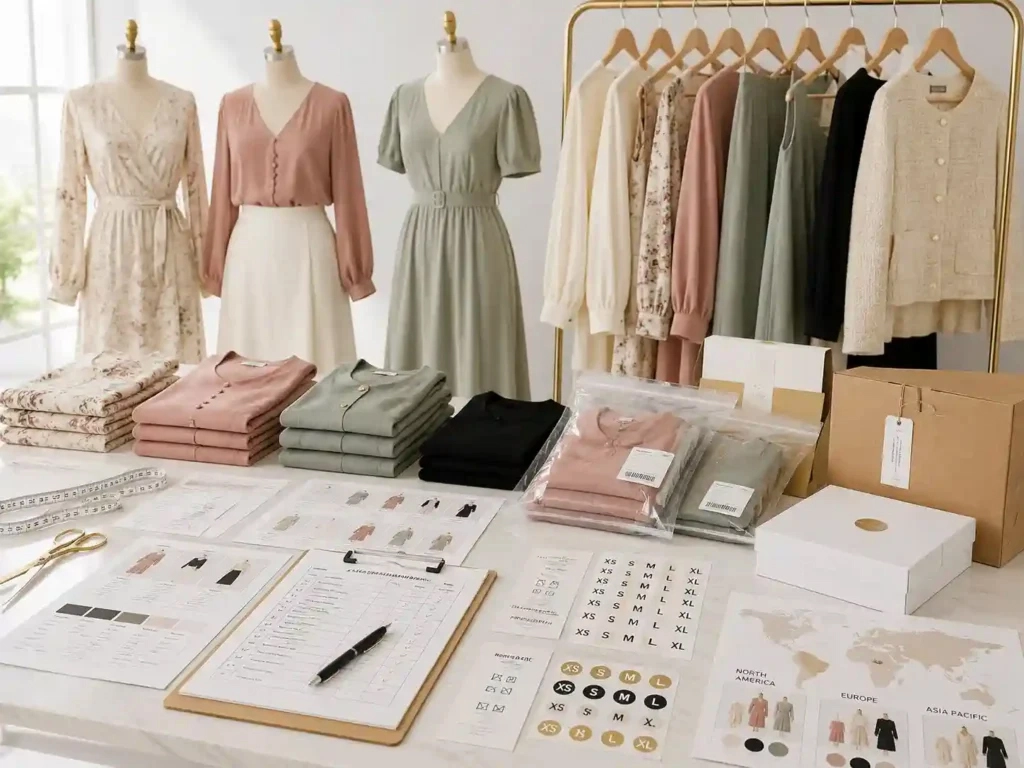
When a Dress Manufacturer Makes More Sense
A dress-focused factory tends to make more sense when most of your collection is built around dresses and fit is important to the final product.
This is especially useful when:
Dresses Make Up Most of Your Collection
If you mainly sell silk dresses, slip dresses, bodycon dresses or other fitted styles, the factory is likely to deal with similar pattern and construction issues on a regular basis.
Fit is part of the product
A loose T-shirt can tolerate some variation without changing its ohttps://xiuyuapparel.com/silk-dress/?utm_source=chatgpt.comverall appearance. A fitted dress usually cannot. Small changes around the bust, waist, hip or armhole can change the way the whole garment looks.
Your fabrics need careful handling
Silk, satin, chiffon, velvet and stretch fabrics each behave differently during cutting and sewing. Previous experience with those materials can reduce trial and error during sampling.
You develop new styles frequently
For brands releasing new dresses every season, sample development is often where the factory adds the most value. During sampling, we would rather identify a production problem than carry it into bulk production.
When a General Clothing Manufacturer May Be the Better Choice
A broader clothing manufacturer can be a practical option when dresses are only one part of your collection.
If the same season includes dresses, tops, skirts, trousers and jackets, keeping production with one capable supplier can reduce the number of factories your team has to coordinate.
That can make communication, production planning, packaging and shipping easier.
Before combining several categories under one supplier, check whether the factory has genuine experience with each type of garment you need.ed.
How Should You Compare Two Factories?
If you are comparing suppliers for a wider apparel collection, it is also useful to review what an OEM clothing manufacturer actually handles before comparing unit prices.
Start with the actual product.
Send both factories the same:
- Tech pack
- Reference images
- Fabric specification
- Size chart
- Construction details
- Quantity
- Packaging requirements
Then compare their responses.
The difference can sometimes be seen before a sample is even made.
One factory may come back with questions about fabric stretch, lining, measurements or zipper placement. Another may simply confirm the quantity and send a price.
The questions themselves can tell you how closely the factory is reviewing your product before sampling starts.
Compare the Sample, Not Just the Quotation
If possible, have the same style sampled by shortlisted factories.
Look at:
- Overall fit
- Fabric behavior
- Seam appearance
- Zipper installation
- Lining attachment
- Hem finish
- Measurement accuracy
- Construction consistency
Paying a little more for a good sample is usually easier than finding a production problem after hundreds or thousands of pieces have been cut.
Ask How Problems Are Handled
A useful question is not only “Can you make this?” but also “What happens if something changes during production?”
For example:
- The fabric behaves differently from the approved sample
- The first sample does not fit correctly
- A trim becomes unavailable
- Bulk fabric differs from the approved fabric
- Measurements move during production
The factory’s response gives you a better idea of how production is actually managed than a general claim such as “we provide high-quality products.”
Before Bulk Production
Before bulk production is approved, the main production references need to be confirmed.
At minimum, check:
Fabric → Color → Measurements → Construction → Trims → Labels → Packaging
For the fabric, a physical swatch is useful whenever possible.
For the garment, the approved sample should become the production reference.
If you change the fabric after approving the sample, you should not assume that the original pattern will still produce exactly the same result.
A difference in weight, stretch or drape can affect the finished measurements and appearance.
For Fashion Startups
For startups that need their own labels, packaging and customized designs, working with a private label clothing manufacturer can also simplify the move from sampling to bulk production.
You may be ordering a few styles, testing the market and making changes as you learn what customers respond to. In that situation, the sampling process and communication with the factory can be more important than having access to a very large production line.
Look for a supplier that can:
- Understand the design before sampling
- Work through sample revisions
- Explain production problems clearly
- Handle your expected order quantity
- Keep approved specifications consistent
- Identify production problems early
For a first collection, a factory that communicates well and catches problems early can be more valuable than one offering the lowest quotation.
For Established Brands
Once orders become repeatable, consistency becomes just as important as the first sample.
A dress that was approved six months ago should not become a slightly different garment simply because it is being reordered. The factory needs a clear record of the approved fabric, measurements, construction details, trims and finishing.
This is where production records and approved samples become important. They give the factory a reference to work from when the same style returns to the production line.
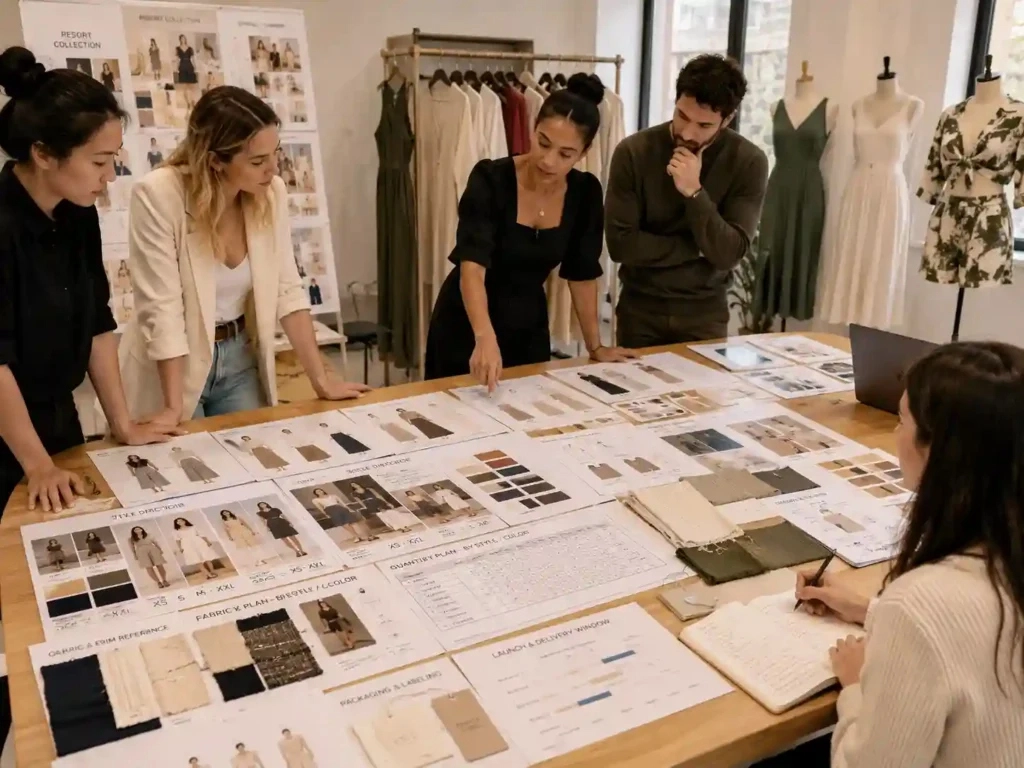
How Do You Decide Between the Two?
Start with the garments you actually plan to produce.
If dresses make up most of your collection and fit, fabric behavior and detailed construction are important to the product, a dress-focused manufacturer may give you an advantage during development.
If your collection covers several apparel categories, a capable clothing manufacturer may be easier to manage as a single production partner.
Whichever route you choose, look beyond the factory’s title. Ask for comparable samples, discuss the fabric, review the sampling process and understand how the factory handles changes before bulk production.
A factory’s website can only tell you so much. Previous samples, production communication and consistency are more useful when you are deciding whether the factory fits your collection.
FAQ
What happens if a factory finds a problem with the design?
A factory with a proper sampling process will normally raise the issue before production rather than simply proceed. A very narrow seam allowance, unstable fabric or difficult zipper placement may create problems during sewing. The factory should explain the risk and suggest a workable alternative before the order moves into bulk production.
Should you send a physical sample when you already have a detailed tech pack?
If you have a physical reference, sending it can still be useful. A tech pack gives measurements and construction information, while a physical garment shows details that are difficult to describe, such as fabric hand feel, drape, seam appearance and finishing. Both together usually give the factory a clearer starting point.
How do you know whether a factory’s previous samples are genuinely comparable to your design?
Ask for samples that match your product in fabric type, construction or silhouette, not just similar-looking photographs. A factory showing a simple cotton dress does not necessarily demonstrate experience with a structured satin evening dress. The closer the previous work is to your style, the more useful the reference becomes.
What happens if your target fabric is not suitable for the design?
The factory needs to explain the problem rather than silently substitute another material. You may need to adjust the pattern, lining, construction or even the fabric specification. For a new style, making a sample with the actual or closest available fabric is usually safer than approving production based only on photographs or a fabric name.
Is it better to use one factory for an entire collection?
Not always. One supplier can simplify communication when your collection contains several categories, but product expertise still matters. If one style requires specialized dress construction while another is a simple knit top, check whether the same factory can handle both categories to the required standard before consolidating the orders.
Conclusion
The choice between a dress manufacturer and a general clothing manufacturer depends mainly on the garments you need to produce.
If dresses make up most of your collection, experience with fit, fabric behavior, pattern adjustments and dress construction can make development easier. If your collection covers several apparel categories, a capable clothing manufacturer may be more practical for managing production through one supplier.
Before placing a bulk order, look at relevant samples, discuss the fabric and construction, review how the factory handles sample revisions and confirm the production references. The right choice is the factory that can consistently produce the garments your brand actually sells.
Explore More Dress Manufacturing Services
If you are developing a new dress and need support with fabric selection, internal construction, sampling, and bulk production, an experienced clothing manufacturer can help you deal with these decisions before they become production problems.
At Xiuyu Apparel, we work with fashion brands, startups, designers, and private label companies from sample development through bulk production.
- Velvet Dress Manufacturer
- Chiffon Dress Manufacturer
- Evening Dress Manufacturer
- Halter Dress Manufacturer
- Off Shoulder Dress Manufacturer
Get a Clothing Manufacturing Quote Based on Your Design
If you already have a garment design, send us the product photo, tech pack, or reference sample together with your target quantity.
As a dress manufacturer, we can review the fabric, lining, construction, trims, workmanship, and finishing requirements before preparing a quotation based on the actual garment rather than a general price range.

