
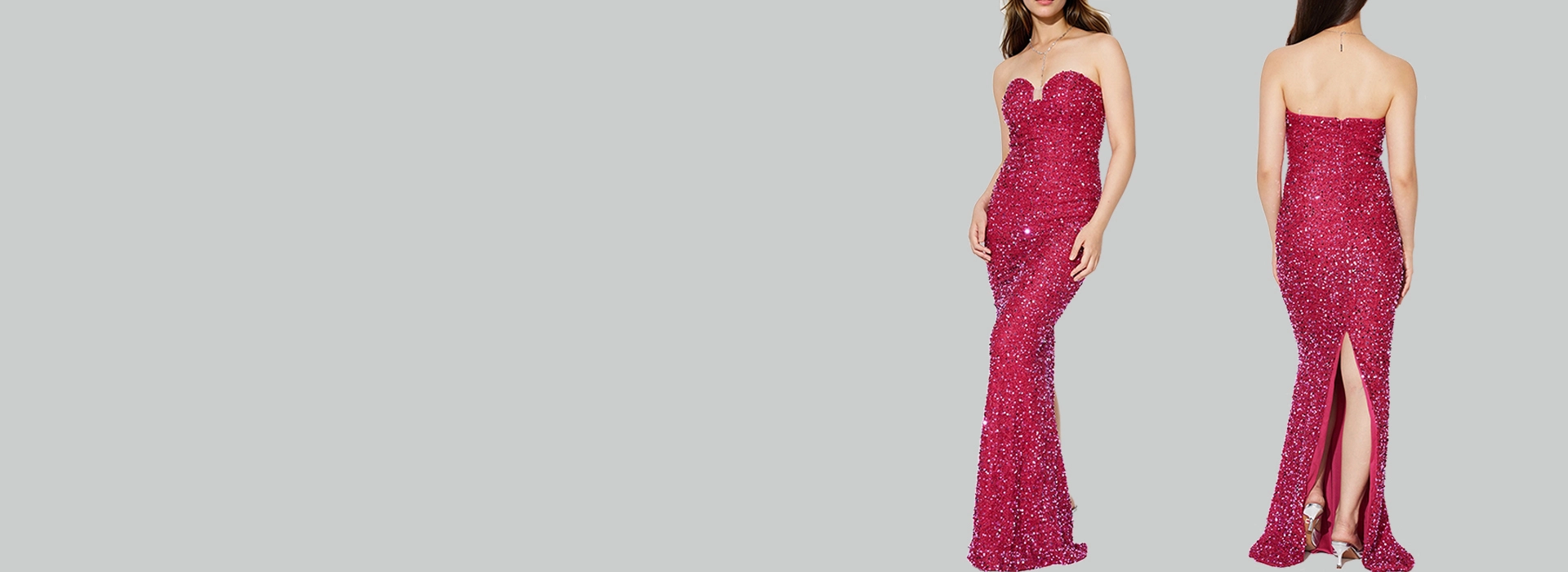
Our Sequin Dress Manufacturing Experience
Sequin fabrics require more attention during production because the decorative surface can affect cutting accuracy, sewing operations and final garment appearance.
For example, some sequin fabrics cannot be pressed like normal fabrics because excessive heat may affect the surface finish.
After receiving your design files, we review key production details, including:
- Fabric type and stretch level
- Dress silhouette
- Seam positions
- Lining requirements
- Embellishment areas
- Production difficulty
Our team checks these points before sampling to reduce adjustments during sample development.
Our Sequin Dress Manufacturing Capacity
Producing sequin dresses requires coordination between pattern making, sampling, sewing and quality control, especially when working with decorated fabrics.
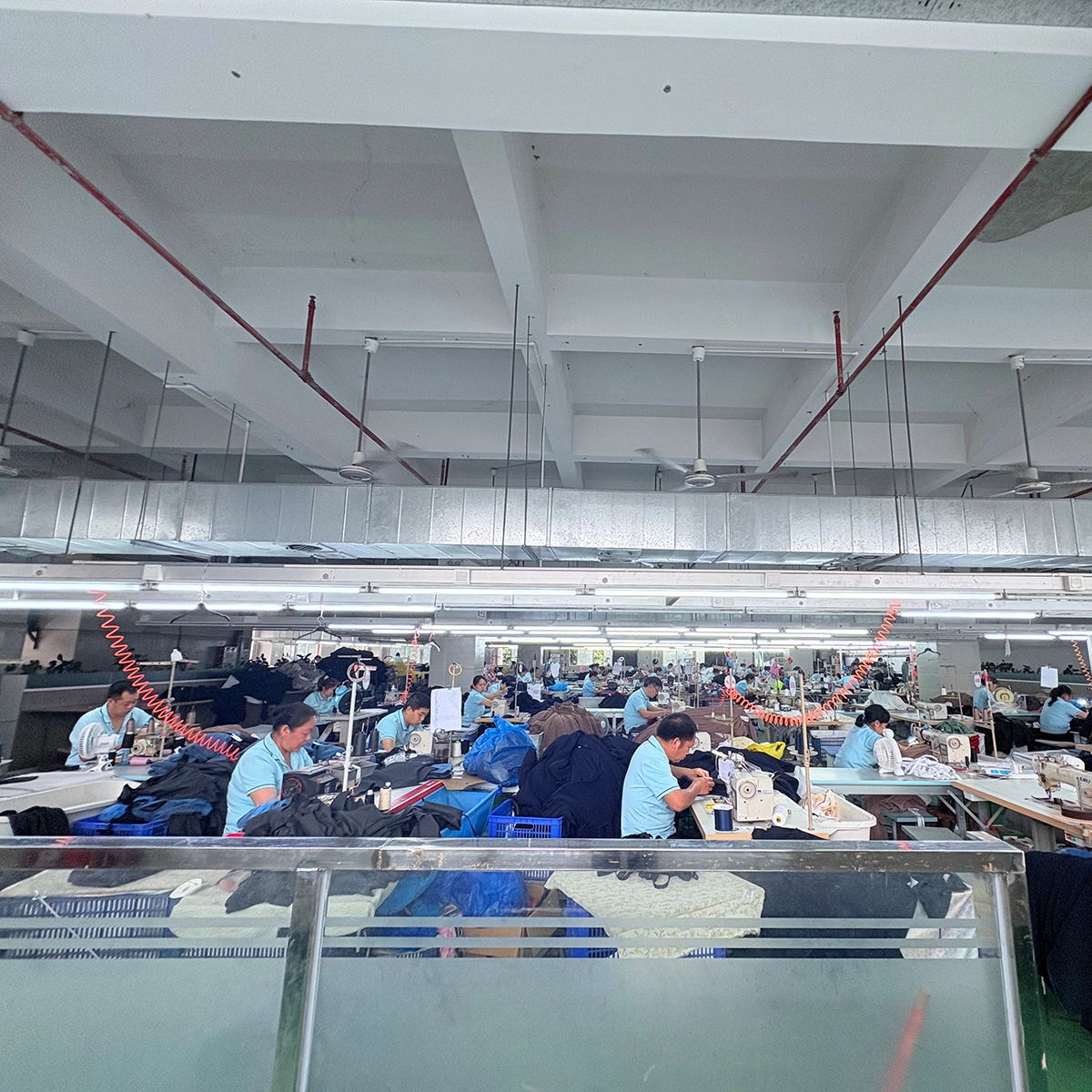
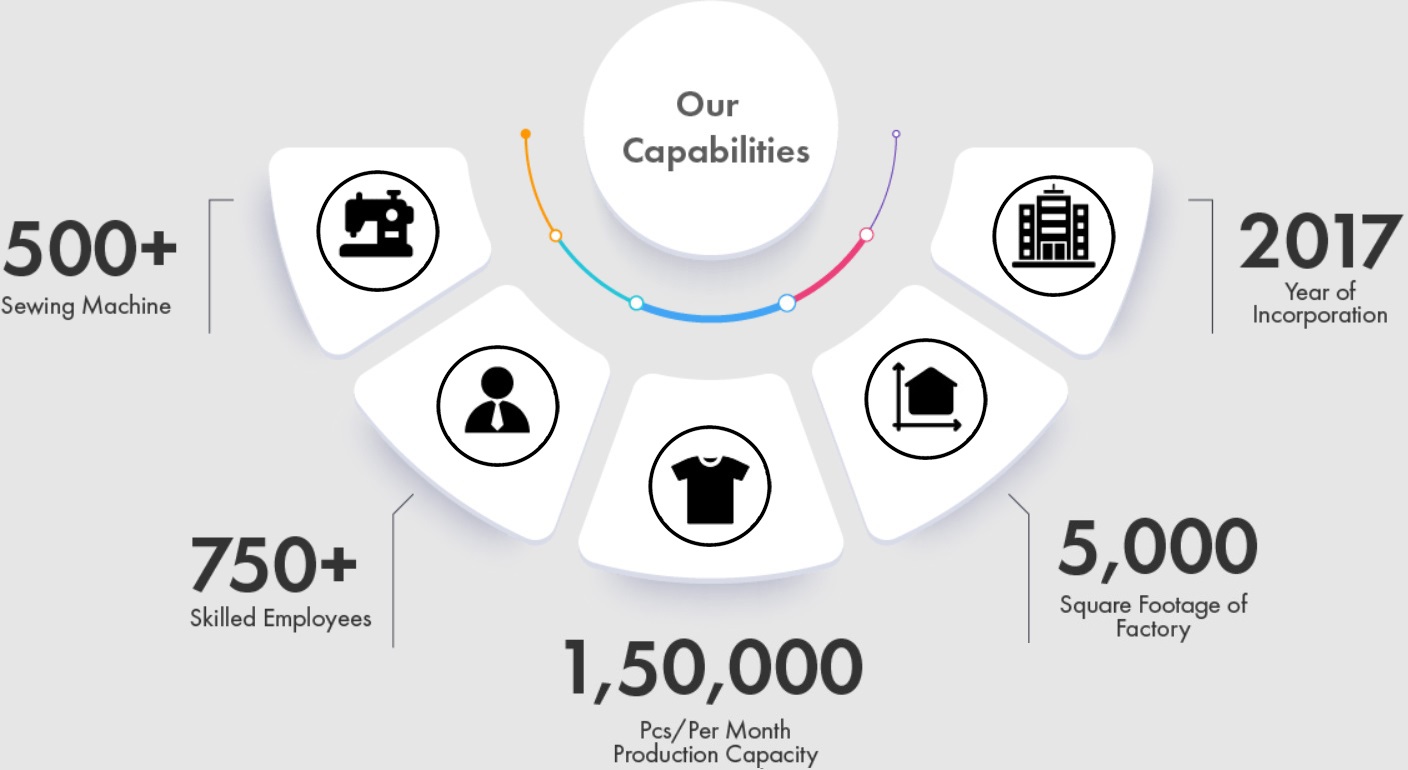
750+ Skilled Production Workers
Our sewing operators handle different dress constructions, including fitted silhouettes, eveningwear styles and detailed decorative designs.
500+ Sewing Machines
Our production teams handle different women’s dress categories, from simple party dresses to fitted evening styles with lining, zippers and decorative details.
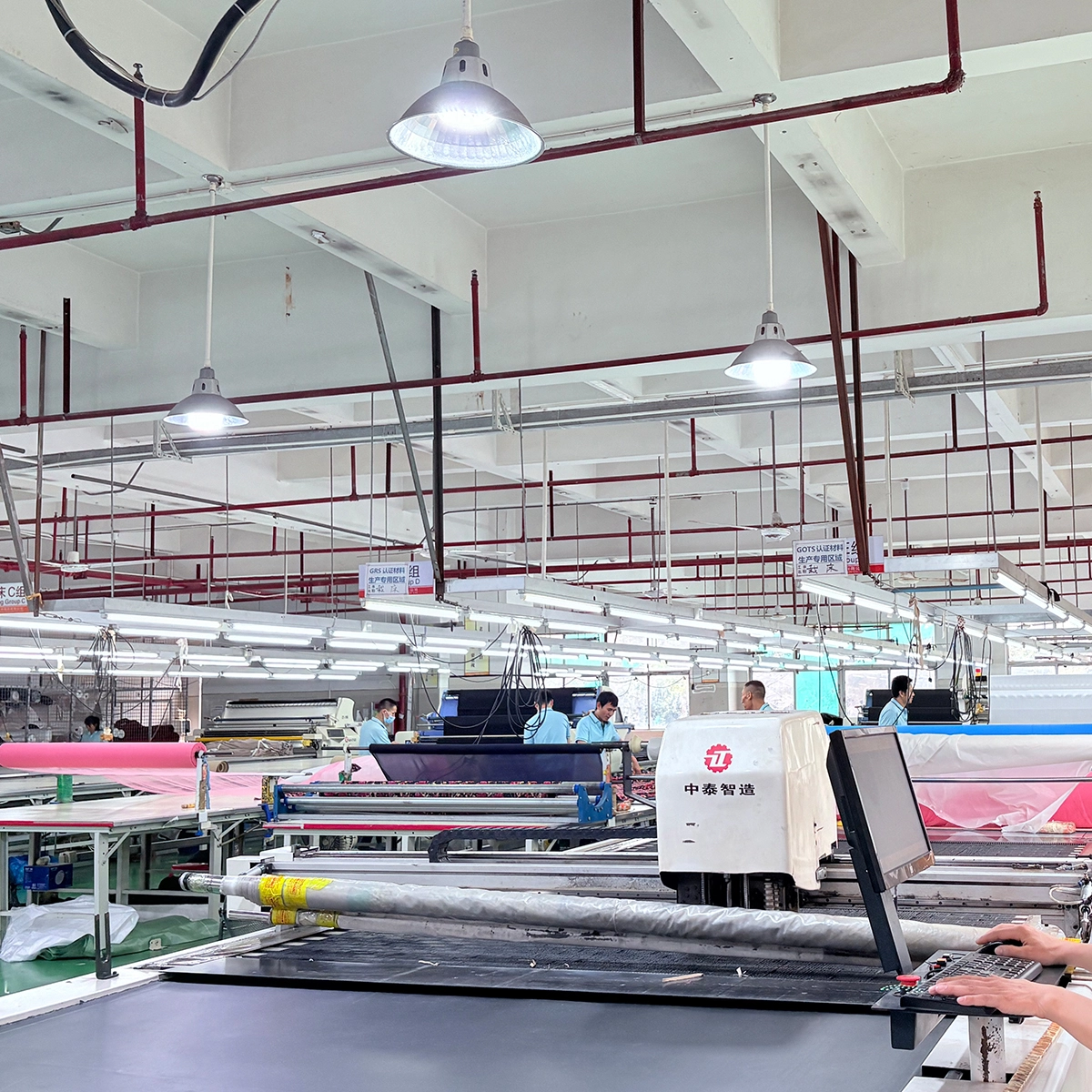
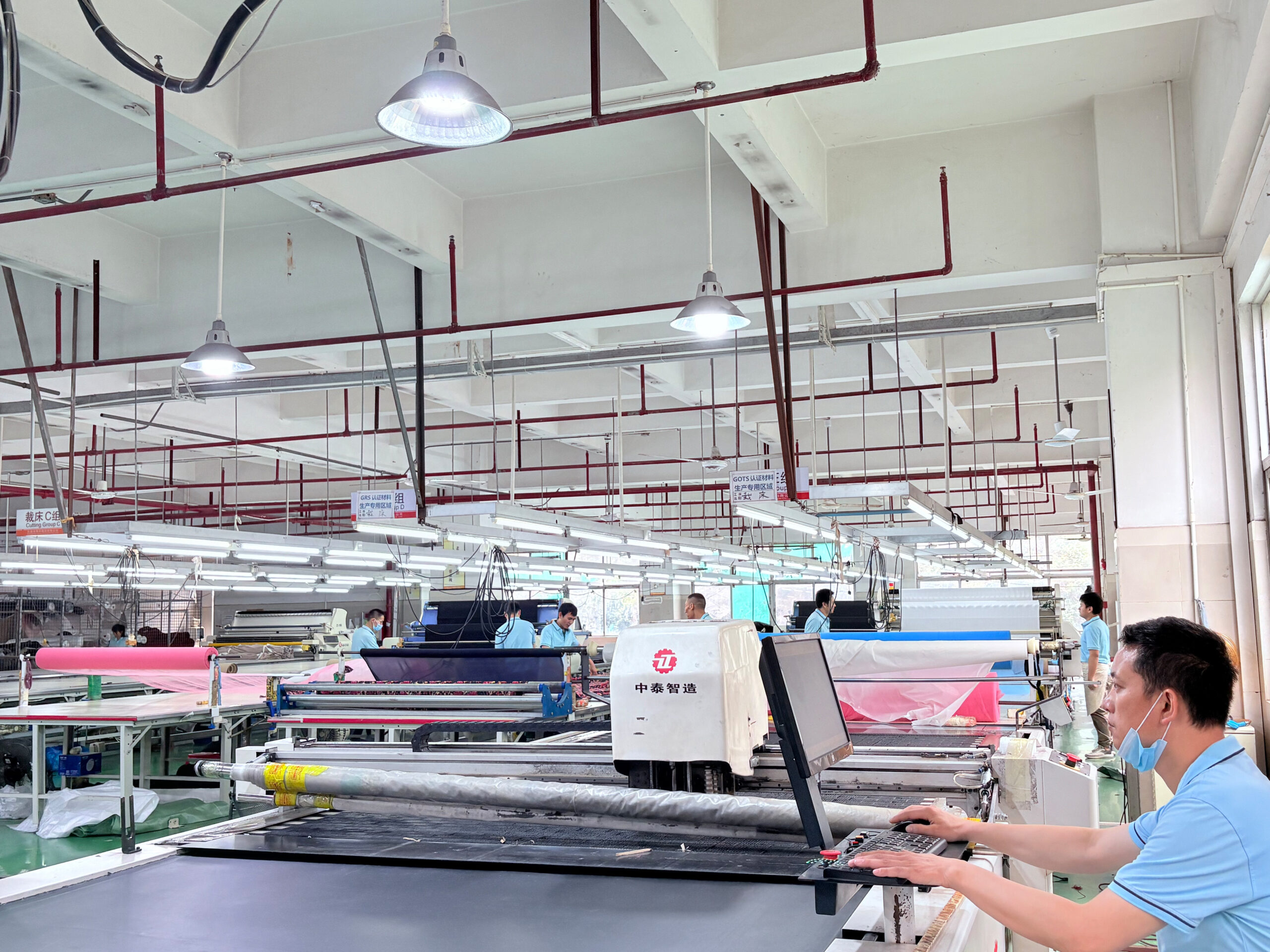
5 Automatic Cutting Lines
Accurate cutting keeps garment measurements consistent and improves fabric utilization during bulk production.
In-house Sample Development
You can send your tech pack, sketch, reference image or existing garment. Our sample room develops the initial sample and adjusts construction details before bulk production.
100% Quality Inspection
Our QC team checks production details from sample approval to finished garment inspection to maintain consistency with your approved requirements.
Custom Sequin Dress Manufacturing For Fashion Brands
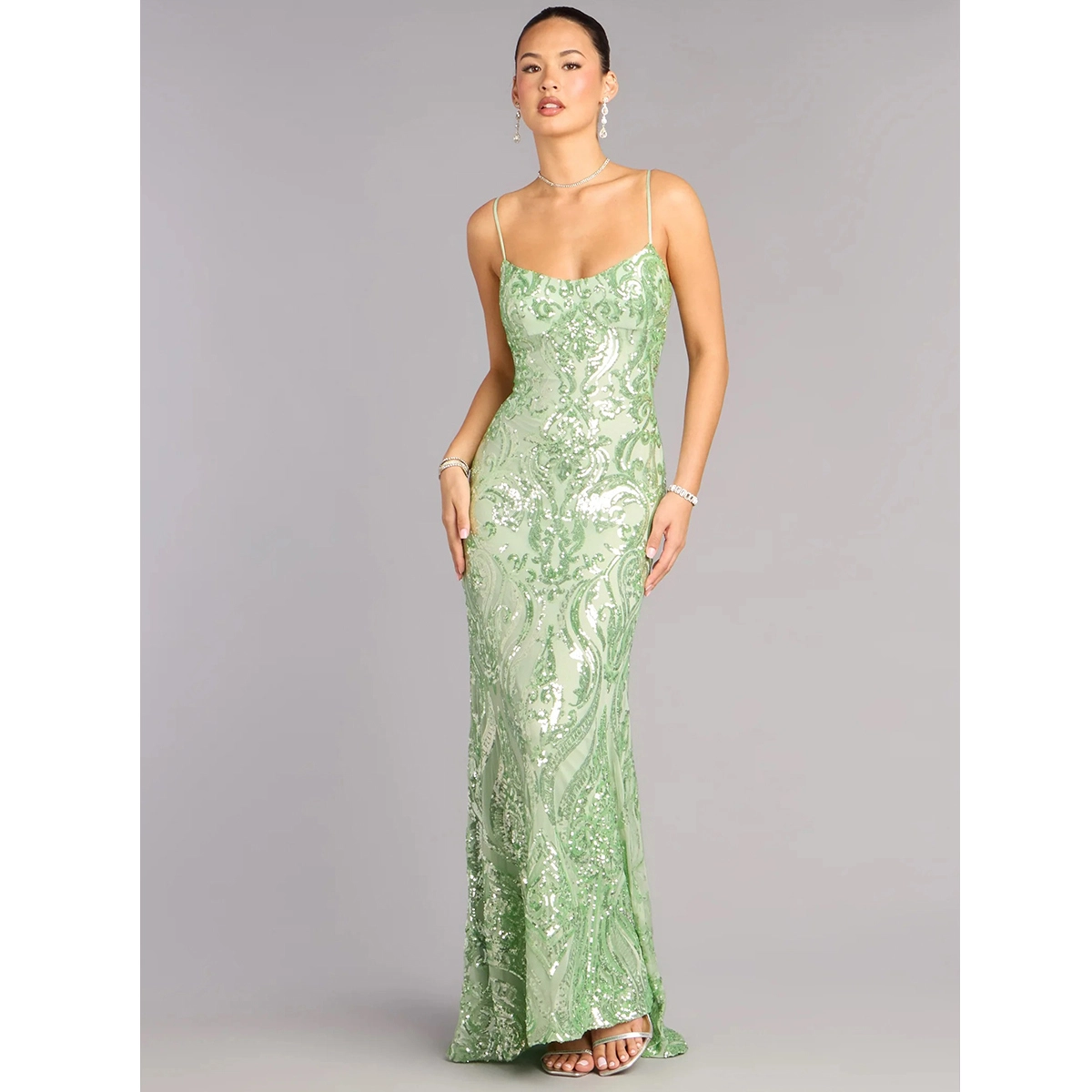
When you develop a sequin dress collection, the appearance is only one part of the production process. During development, the sequin surface, base fabric, fitting and internal construction all affect how the finished dress looks and feels.
You may already have a design idea, reference sample or tech pack, but turning it into a production-ready garment requires experience with sequin materials. Poor handling during cutting or sewing may cause uneven sequin direction, uncomfortable seams or differences between the approved sample and bulk production.
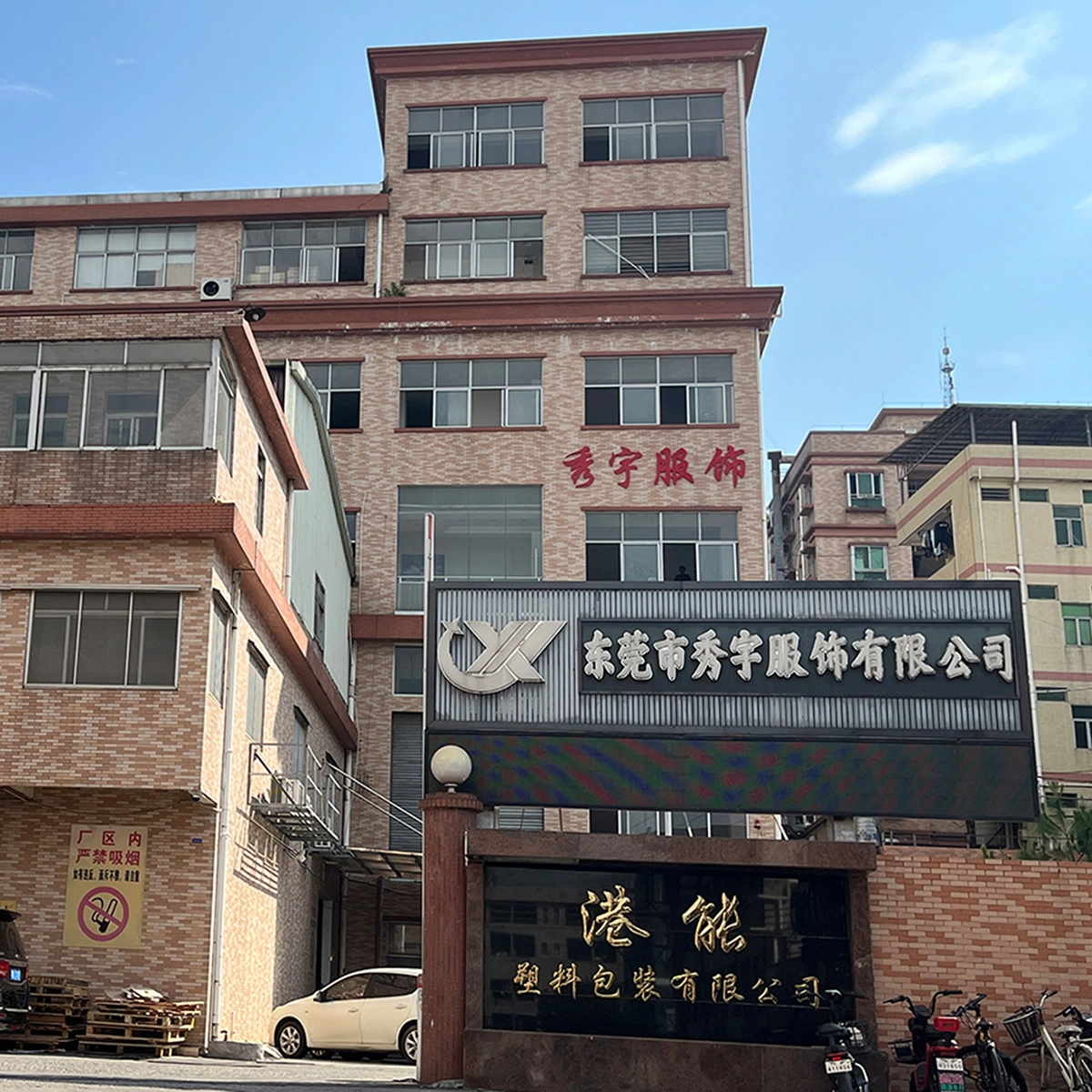
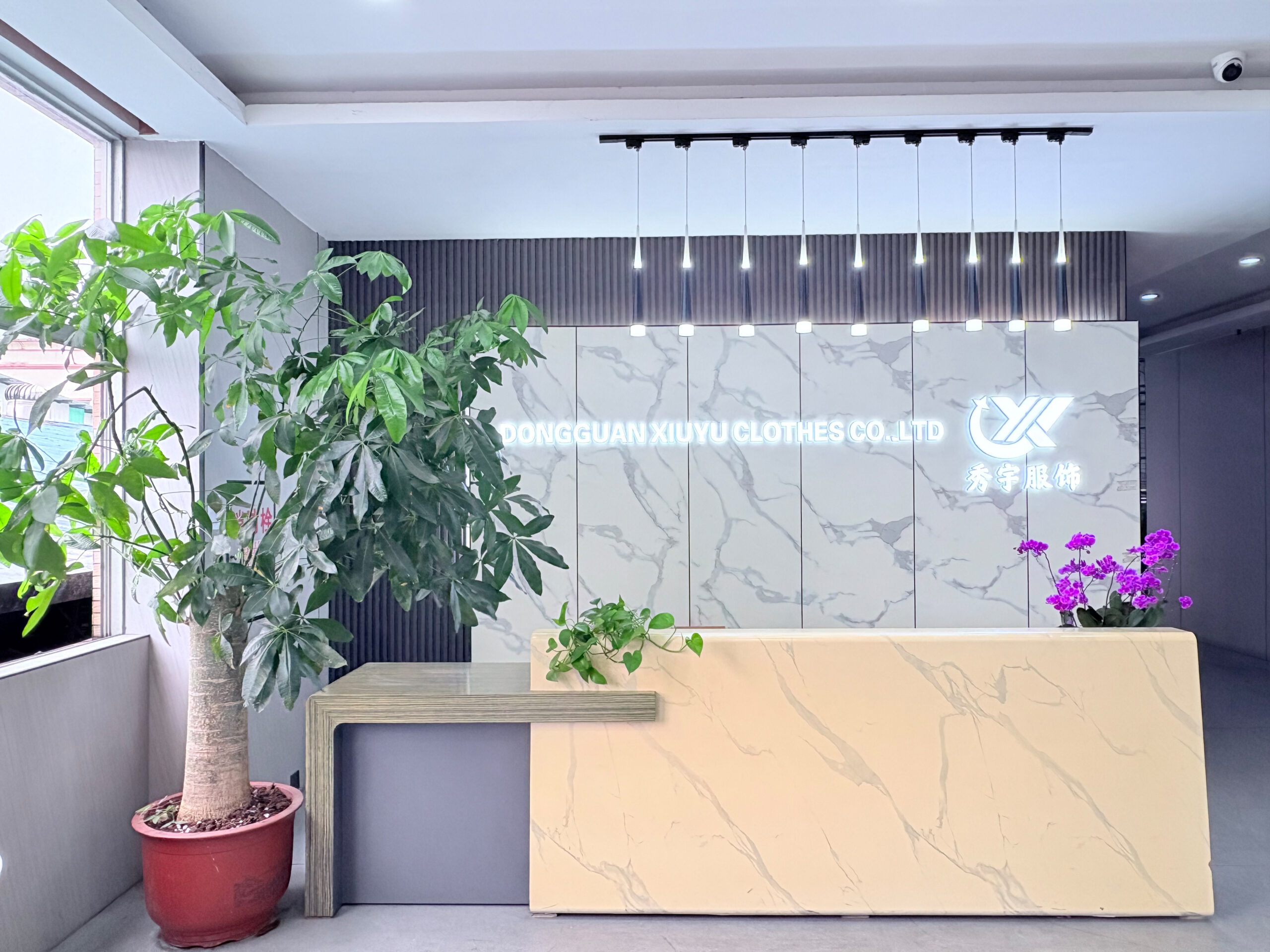
At Xiuyu Apparel, we have been developing and manufacturing dresses since 2007 for fashion brands, boutique owners, retailers, wholesalers and private label companies.
As a direct clothing manufacturer in China, we manage the main production stages in our own facility, including pattern making, sample development, fabric preparation, cutting, sewing, quality inspection and packing. Our experience as a dress manufacturer allows us to handle different silhouettes, fabrics and construction methods for custom dress projects.
For sequin dresses, our team pays close attention to details such as:
- Sequin direction and surface appearance
- Fabric weight and garment balance
- Seam construction
- Lining comfort
- Zipper and closure finishing
- Final garment presentation
Construction details are adjusted based on your design, target price and bulk production requirements.
Sequin Dress Fabric & Production Considerations
Different sequin fabrics behave differently during cutting, sewing and fitting. Before sampling, our team reviews the fabric characteristics with you.
| Sequin Fabric Type | Common Applications | Production Considerations |
|---|---|---|
| Stretch Sequin Fabric | Bodycon dresses, mini dresses | Requires attention to fit and recovery |
| Sequin Mesh Fabric | Evening dresses, sheer designs | Needs suitable lining and support |
| Heavy Sequin Fabric | Maxi dresses, gowns | Requires balance between weight and structure |
| Printed Sequin Fabric | Fashion collections | Requires pattern matching during cutting |
The fabric choice will influence not only the appearance, but also sewing difficulty, fitting adjustment and final production cost.
We can support fabric sourcing and suggest suitable options according to your design requirements and target price range.
Choosing the Right Materials for Sequin Dresses
The base fabric determines the final hand feel, drape and support of a sequin dress after production. It also needs to carry the sequin weight while maintaining the intended fit and wearing comfort.
At the sample stage, the pattern and production teams review fabric stretch, sequin weight, stitching methods and garment structure before confirming the final production version.
Fabric Selection for Sequin Dresses
The same sequin design can have different results depending on the base fabric, especially in terms of drape, weight and fitting.
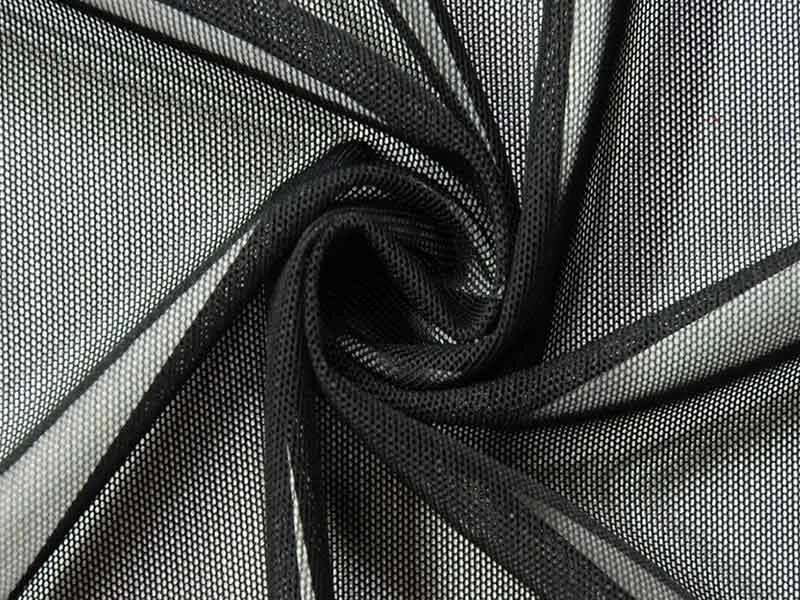
Mesh is often selected for sequin dresses that need lighter weight and better flexibility, especially for styles with full sequin coverage.
Because mesh has a softer structure, stress areas such as armholes, waistlines and side seams may require reinforcement during development.
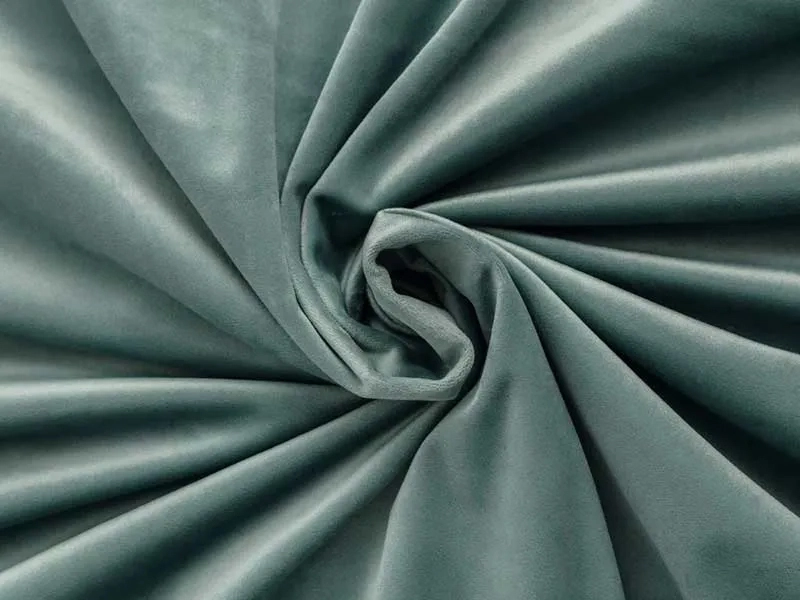
Velvet creates a richer texture and is often selected for evening dresses and special occasion styles.
Because velvet already has a richer and heavier hand feel, the combination with sequins needs careful evaluation. Excessive sequin weight may affect the drape of the fabric, so fabric thickness, sequin density, and garment construction need to be balanced during development.
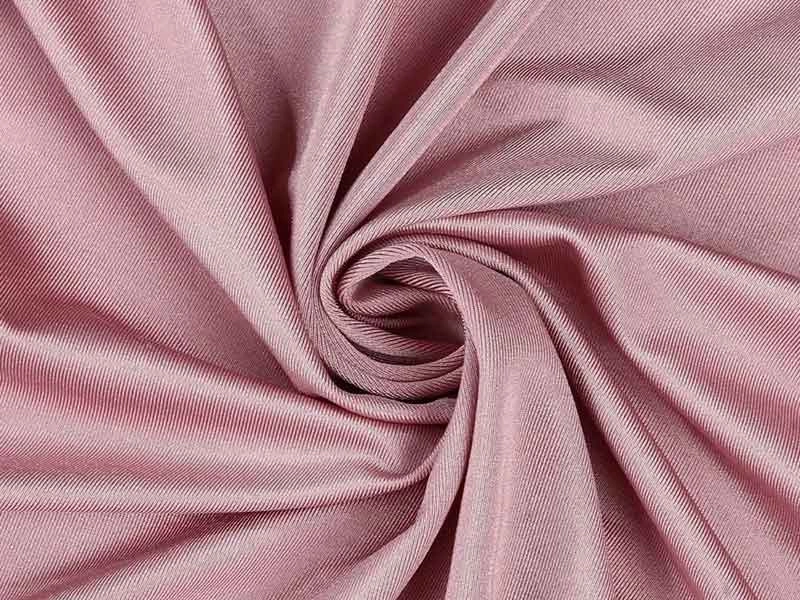
Stretch knit fabrics are widely used for fitted sequin dresses because they provide flexibility and better body contouring.
However, adding sequins can reduce the natural stretch of the fabric. Pattern adjustments and stretch testing are important to ensure the finished dress keeps the correct fit after embellishment.
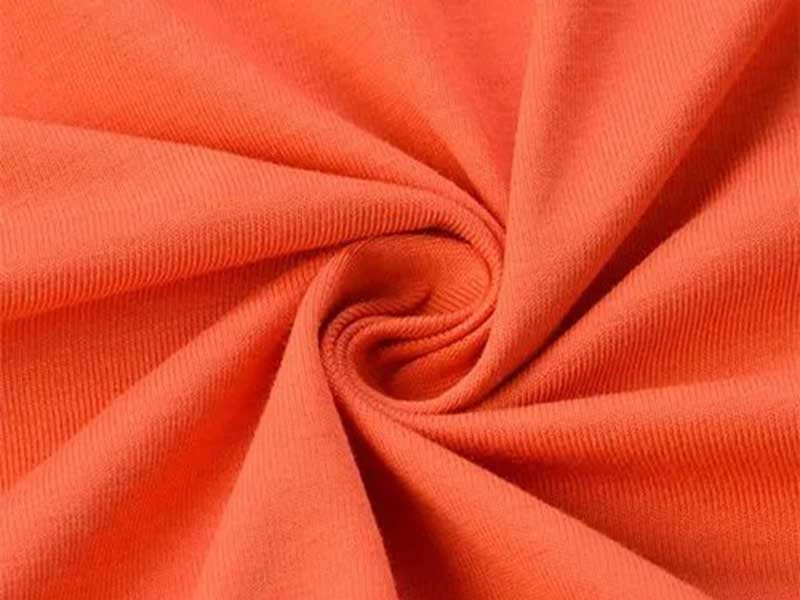
Polyester blend fabrics are commonly selected for commercial sequin dress production because they offer good shape retention and stable production performance.
They work well for brands requiring repeat orders, as the fabric structure is generally easier to control during cutting, sewing, and bulk manufacturing.
Sequin Types and Application Methods
Sequins are available in different shapes, finishes, and surface effects. The choice of sequin type depends on the design effect, garment construction and target market positioning.
Our pattern and production teams also check how the sequin surface works with the base fabric, especially after stitching and fitting.
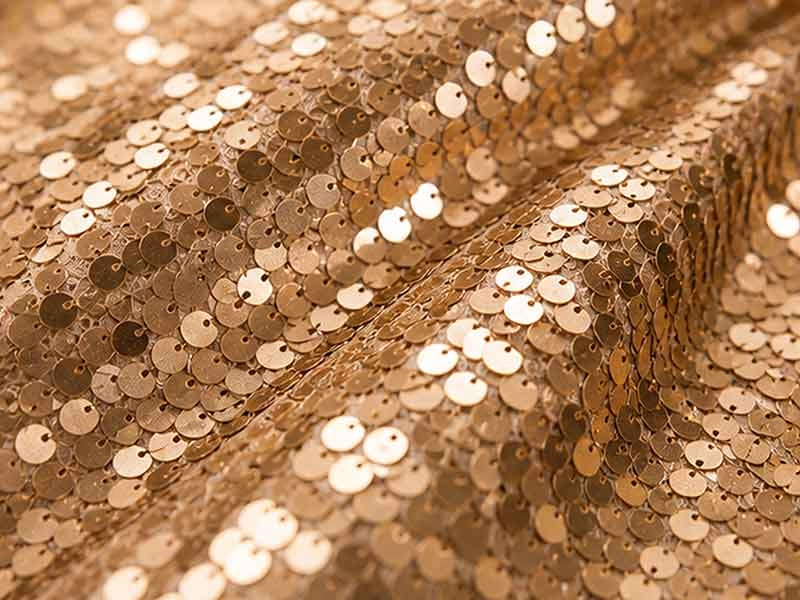
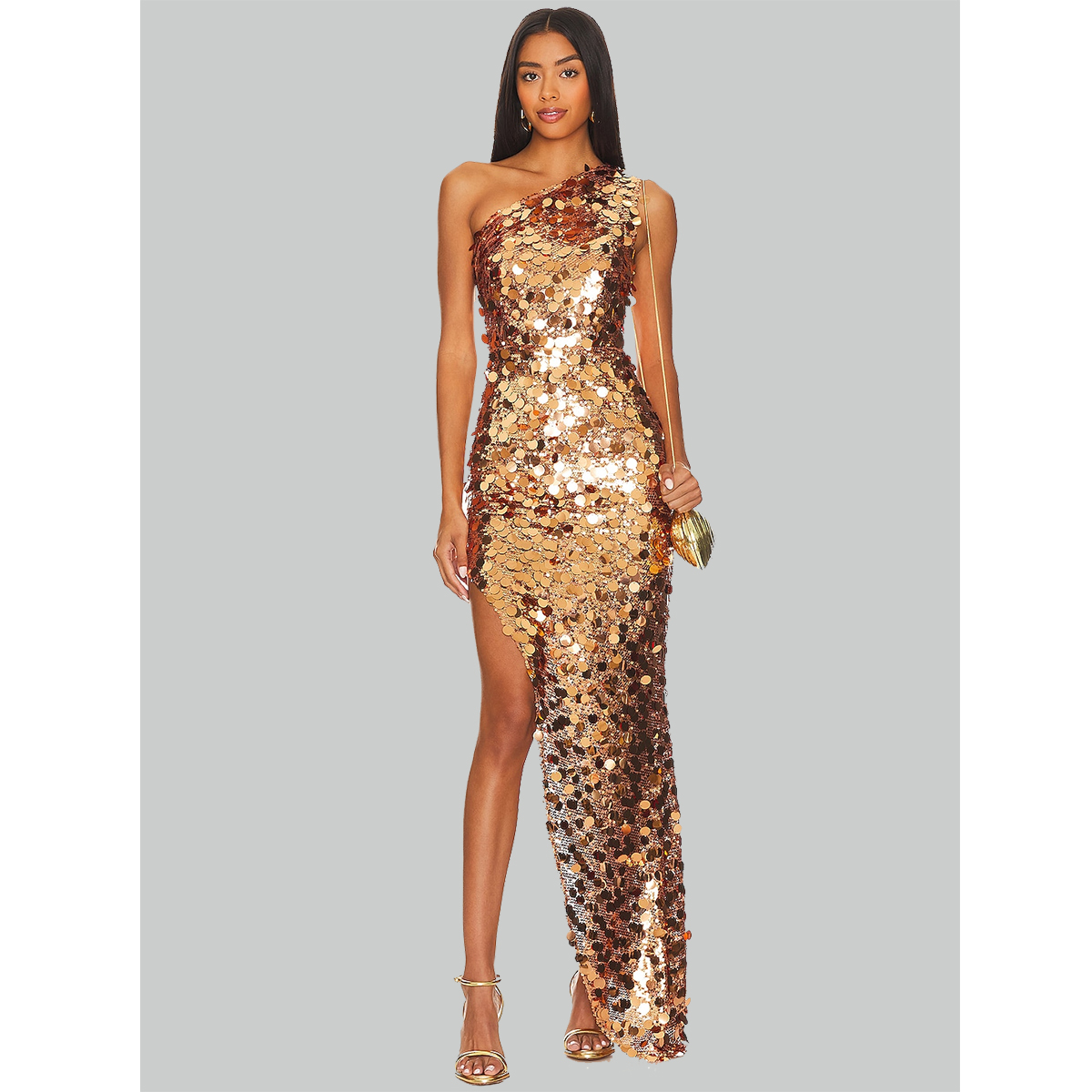
Flat sequins are commonly chosen for commercial production because they provide a more stable surface appearance across larger garment panels.
They are relatively stable during sewing and can achieve consistent results when applied across larger garment areas.
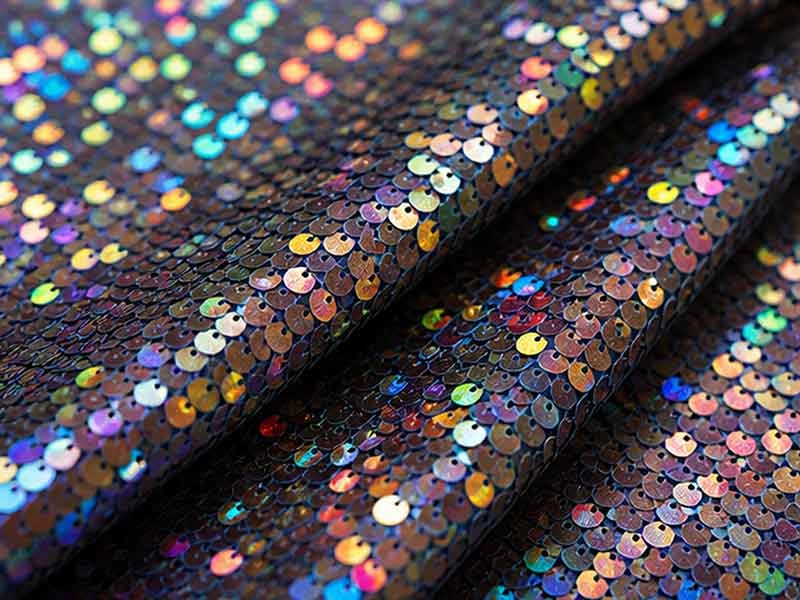
Holographic sequins create stronger reflections and color-changing effects under different lighting.
Because the surface effect is more noticeable, accurate placement and sewing control are important to avoid uneven visual results, especially on larger panels.
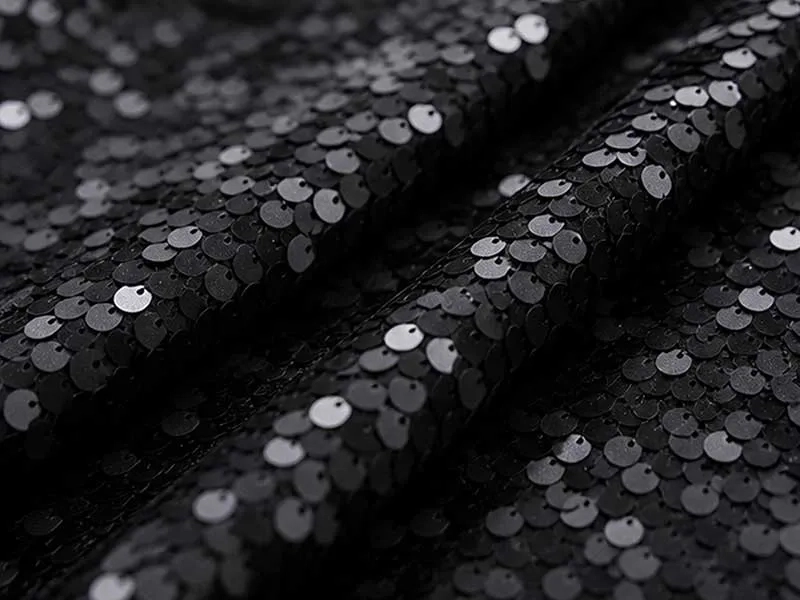
Matte sequins provide a softer and more understated finish compared with highly reflective styles.
They are often used when brands want a more refined look while maintaining a consistent appearance across production batches.
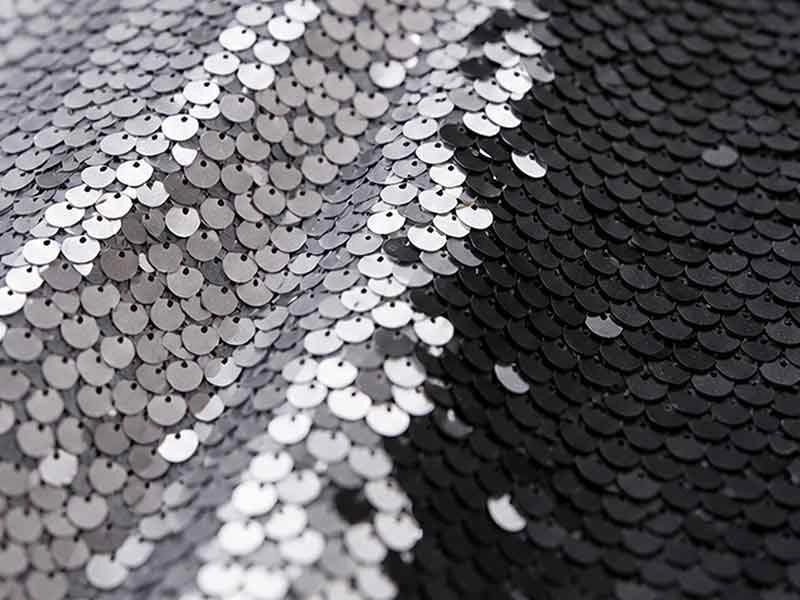
Reversible sequins create interactive designs by allowing the surface direction to change.
This type of sequin requires more detailed sewing control and pattern consideration, as the application process is more complex compared with standard sequin coverage.
Popular Sequin Dress Styles We Manufacture
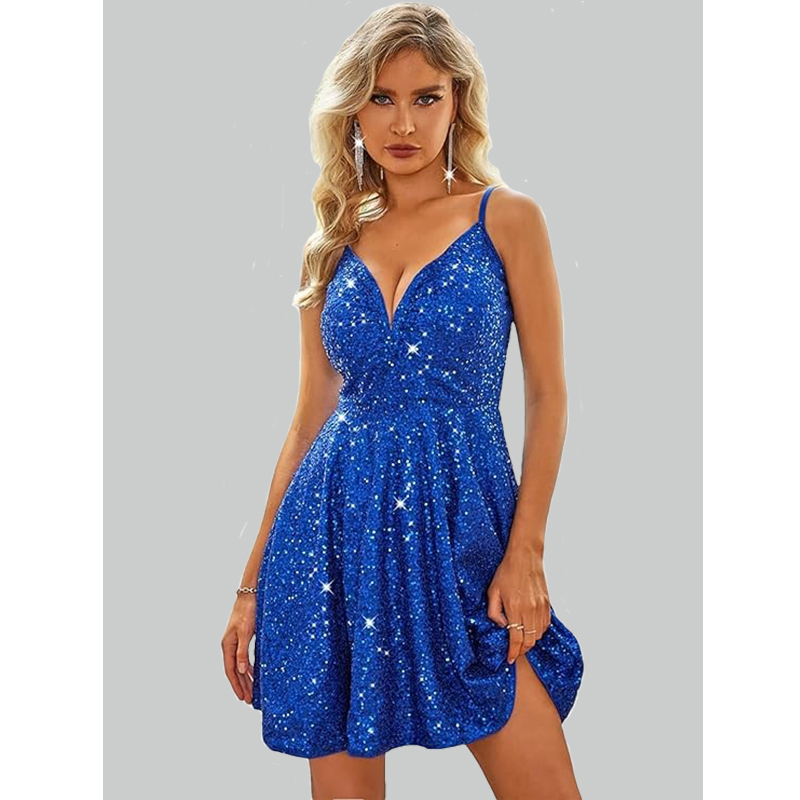
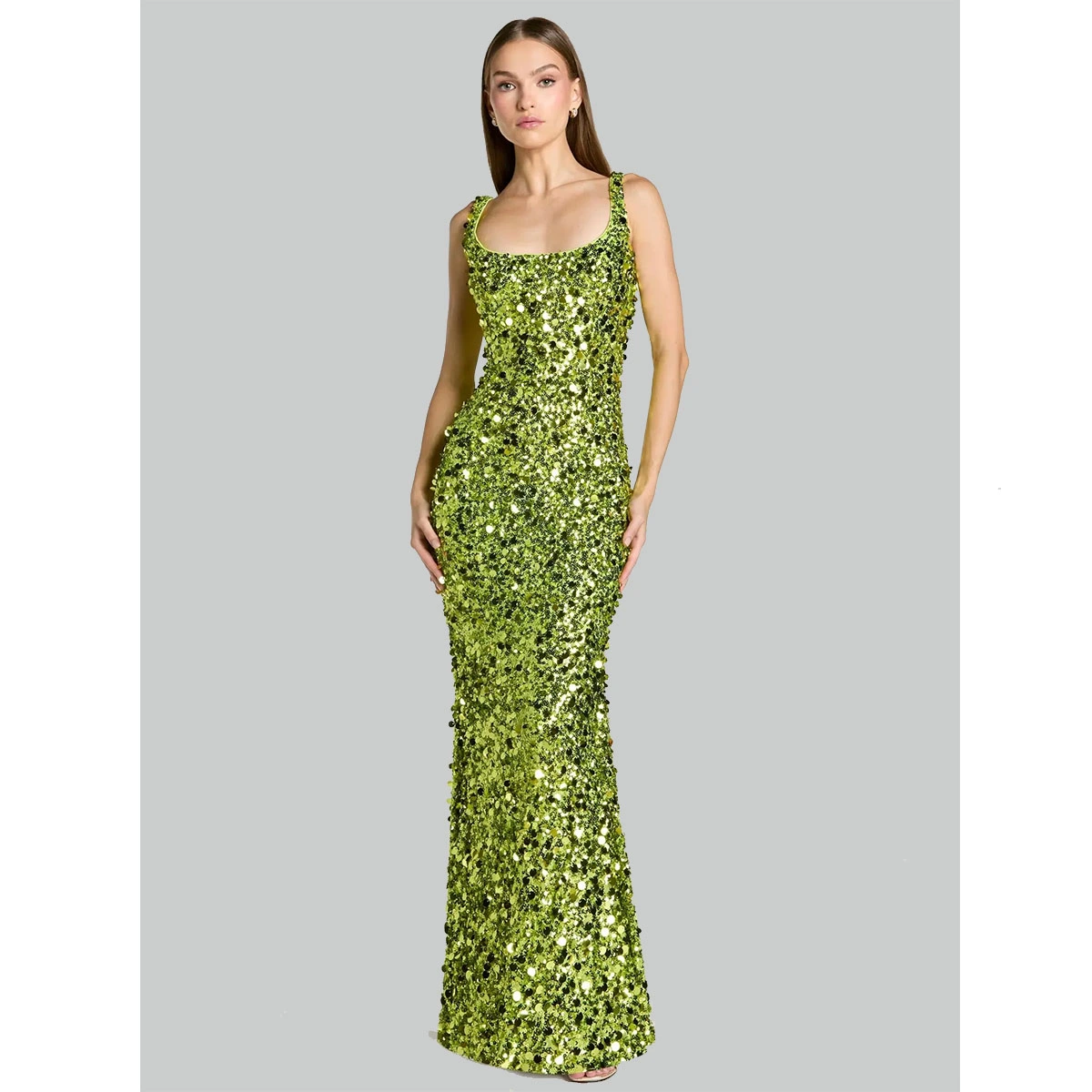
Mini Sequin Dress
For mini sequin dresses, our sample team usually checks hem balance first because the added sequin weight can change how the skirt falls after sewing.
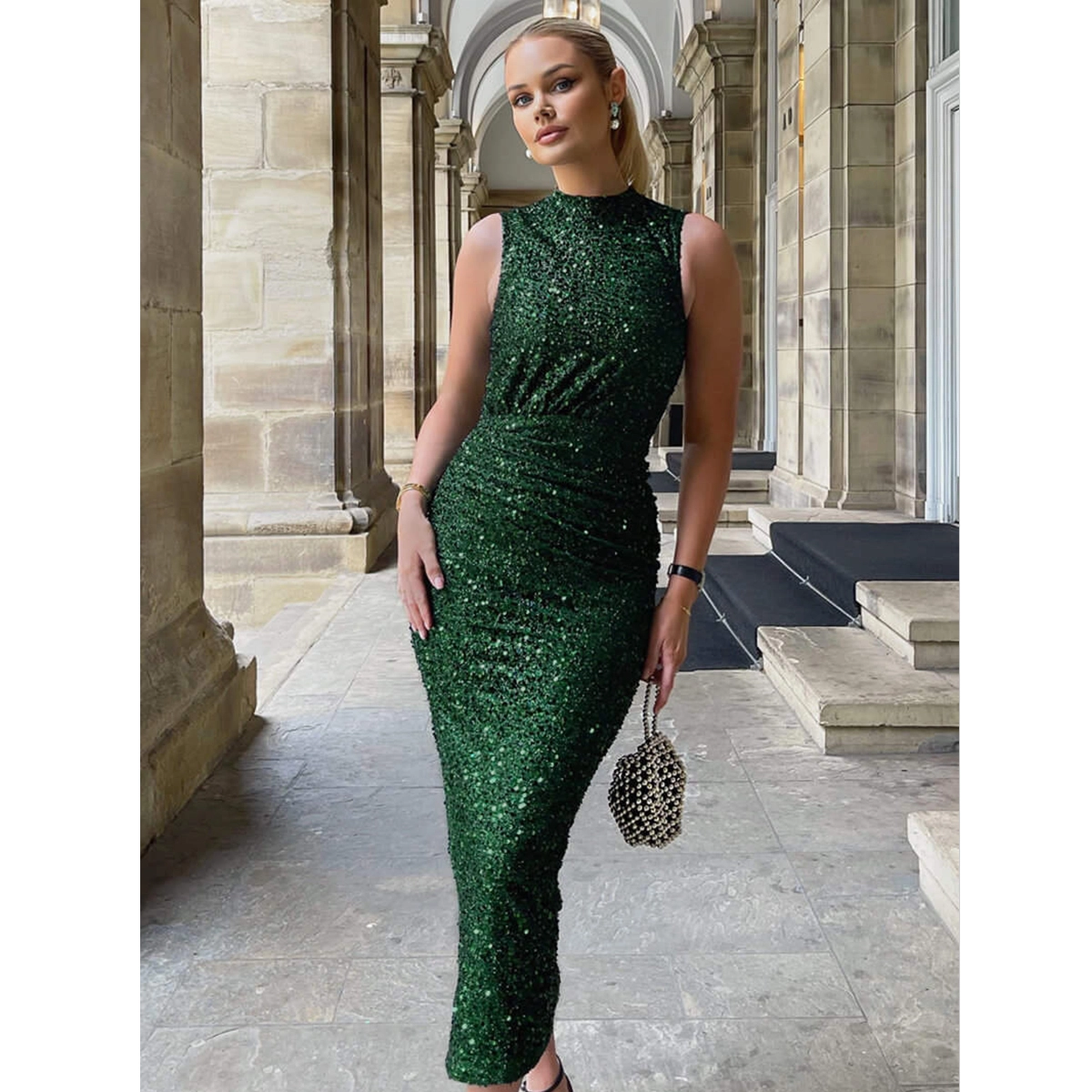
Midi Sequin Dress
Midi lengths need more fitting adjustments around the waist and hip area, especially when the fabric has limited stretch.
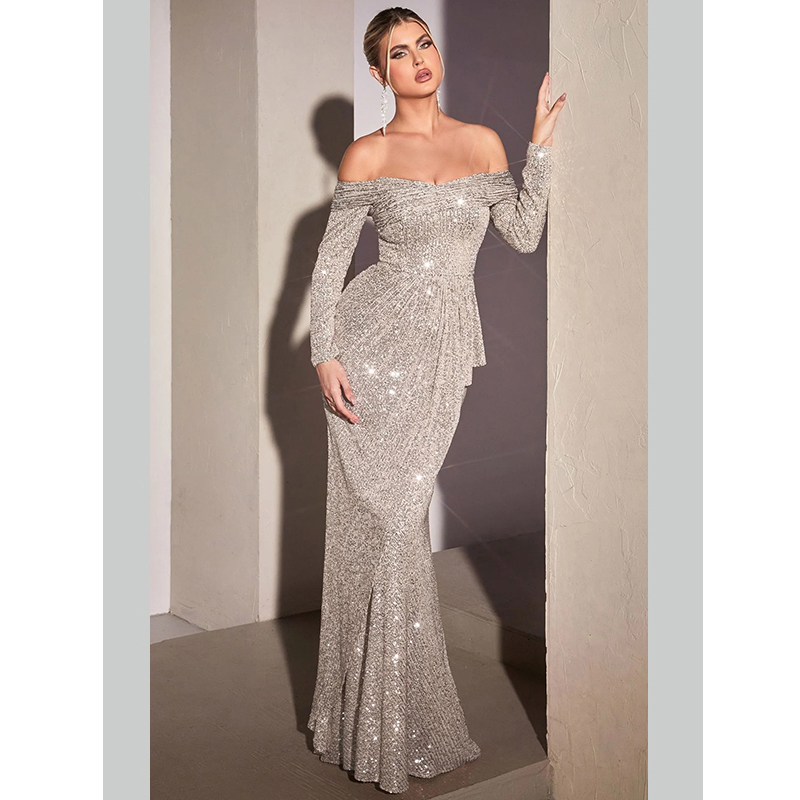
Maxi Sequin Dress
For maxi styles, we pay more attention to garment weight distribution and hem support to avoid pulling the dress downward after production.
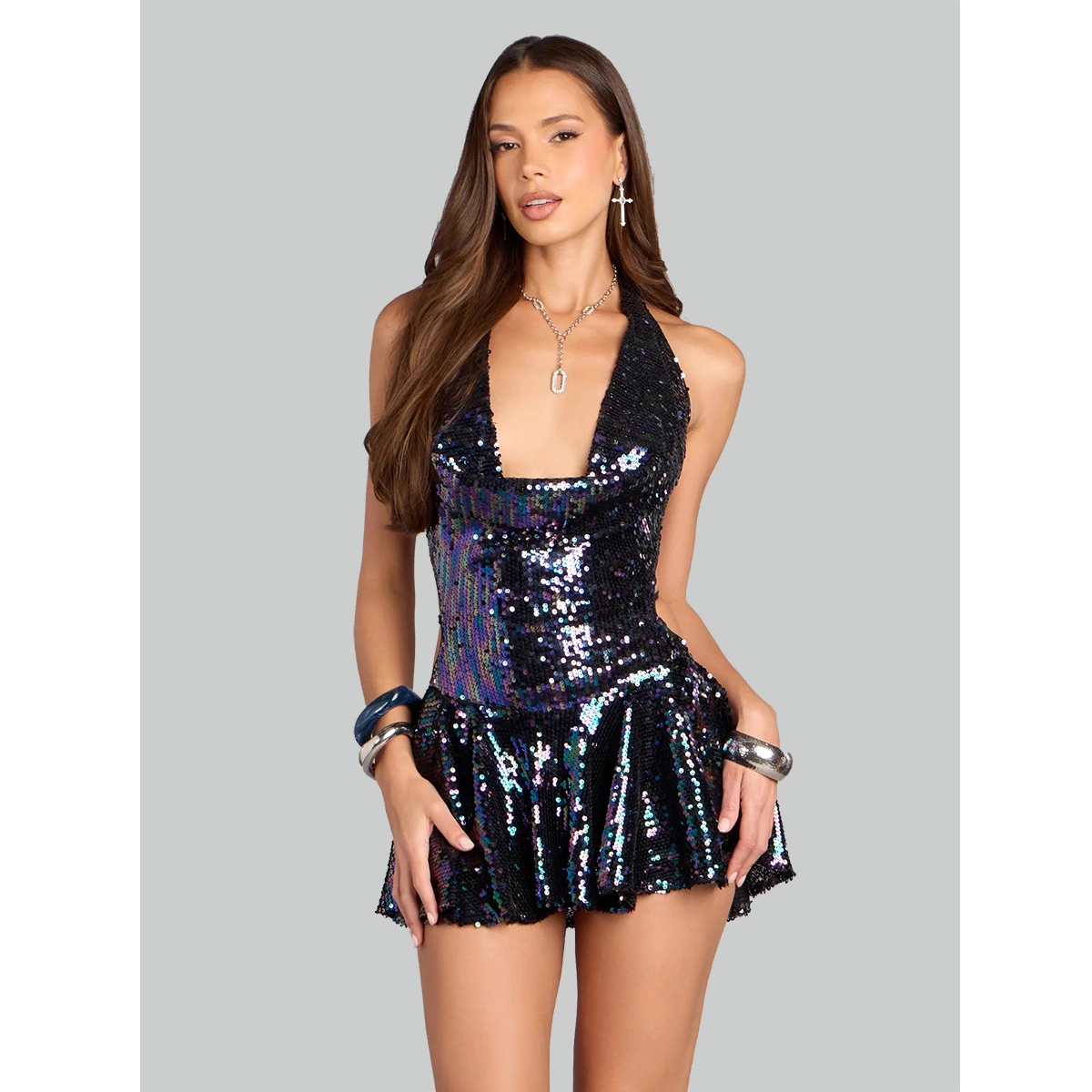
Sequin Party Dress
For partywear collections, buyers often combine different silhouettes, colors and sequin effects to create seasonal drops. We help adjust fabric choice, lining and construction based on the target price level and market requirements.
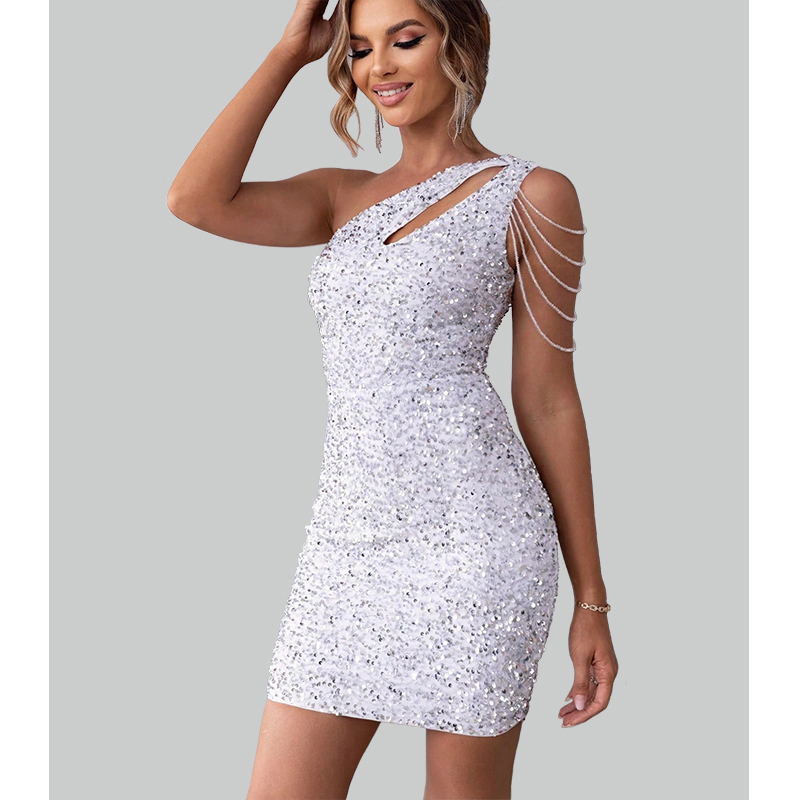
Bodycon Sequin Dress
Bodycon sequin dresses require precise pattern adjustment because sequins can affect stretch, thickness and fitting. These points are adjusted in the sample stage before bulk production.
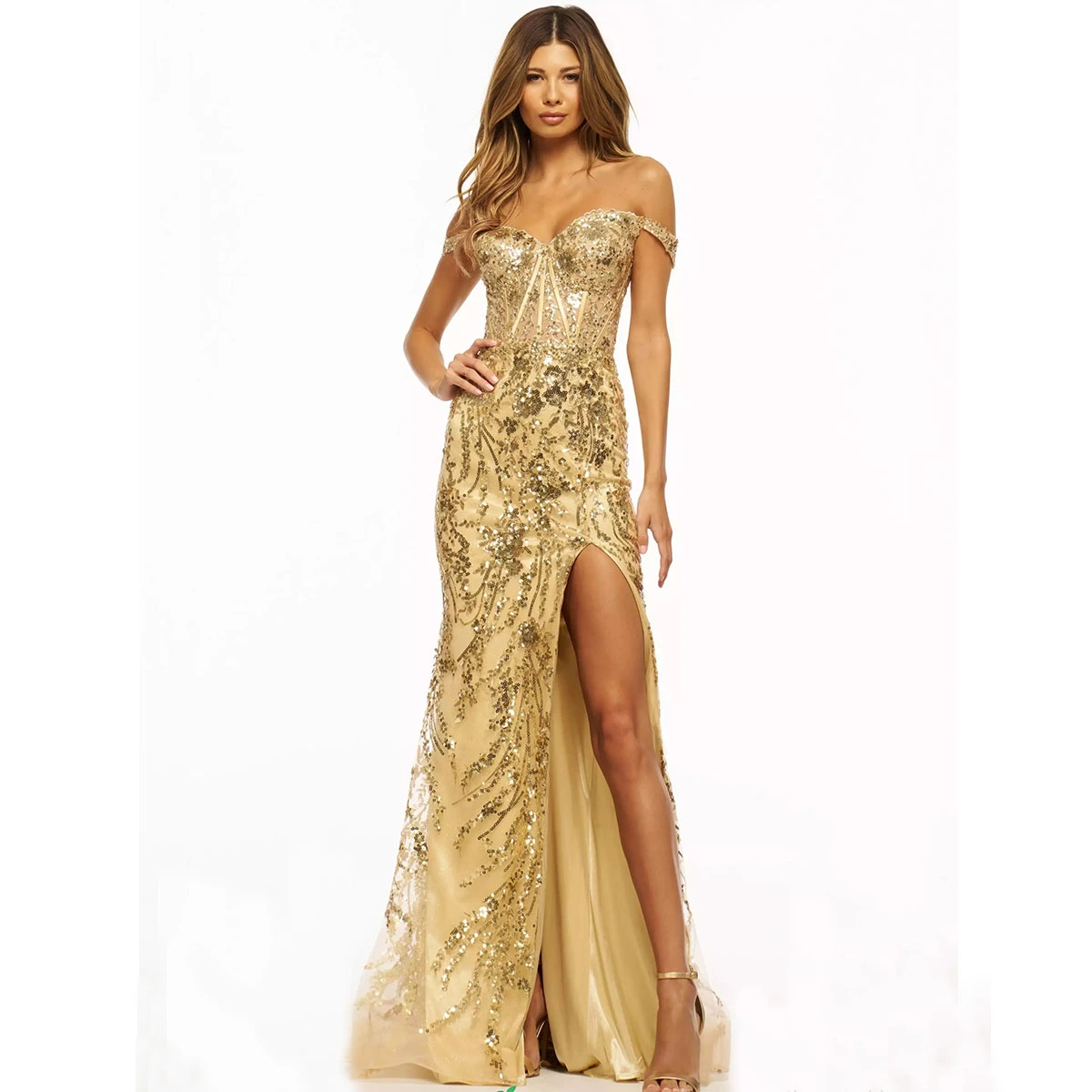
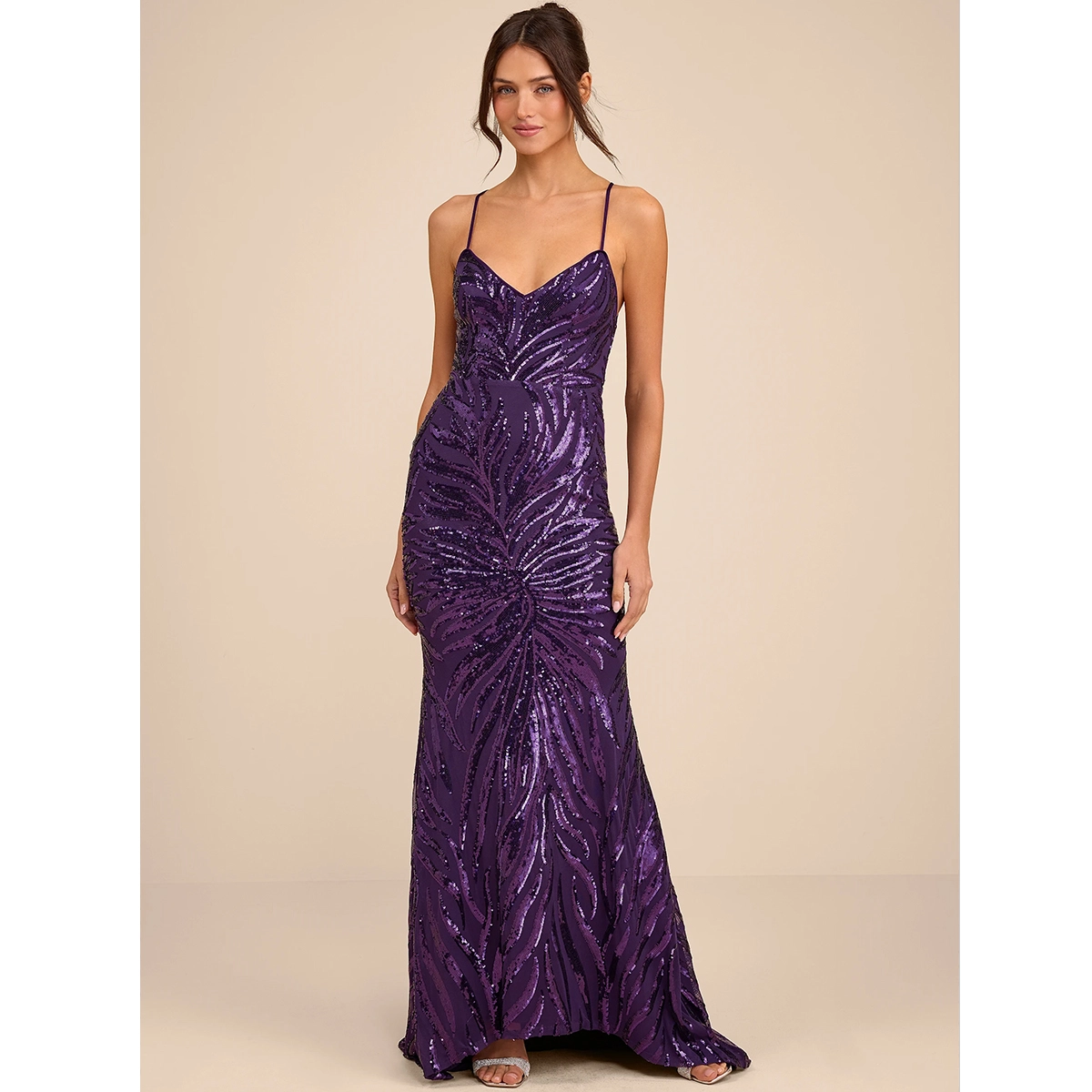
Sequin Evening Dress
Sequin evening dresses usually involve more complex construction, especially for fitted or long styles. Pattern accuracy, lining structure and finishing details are reviewed during sample development.
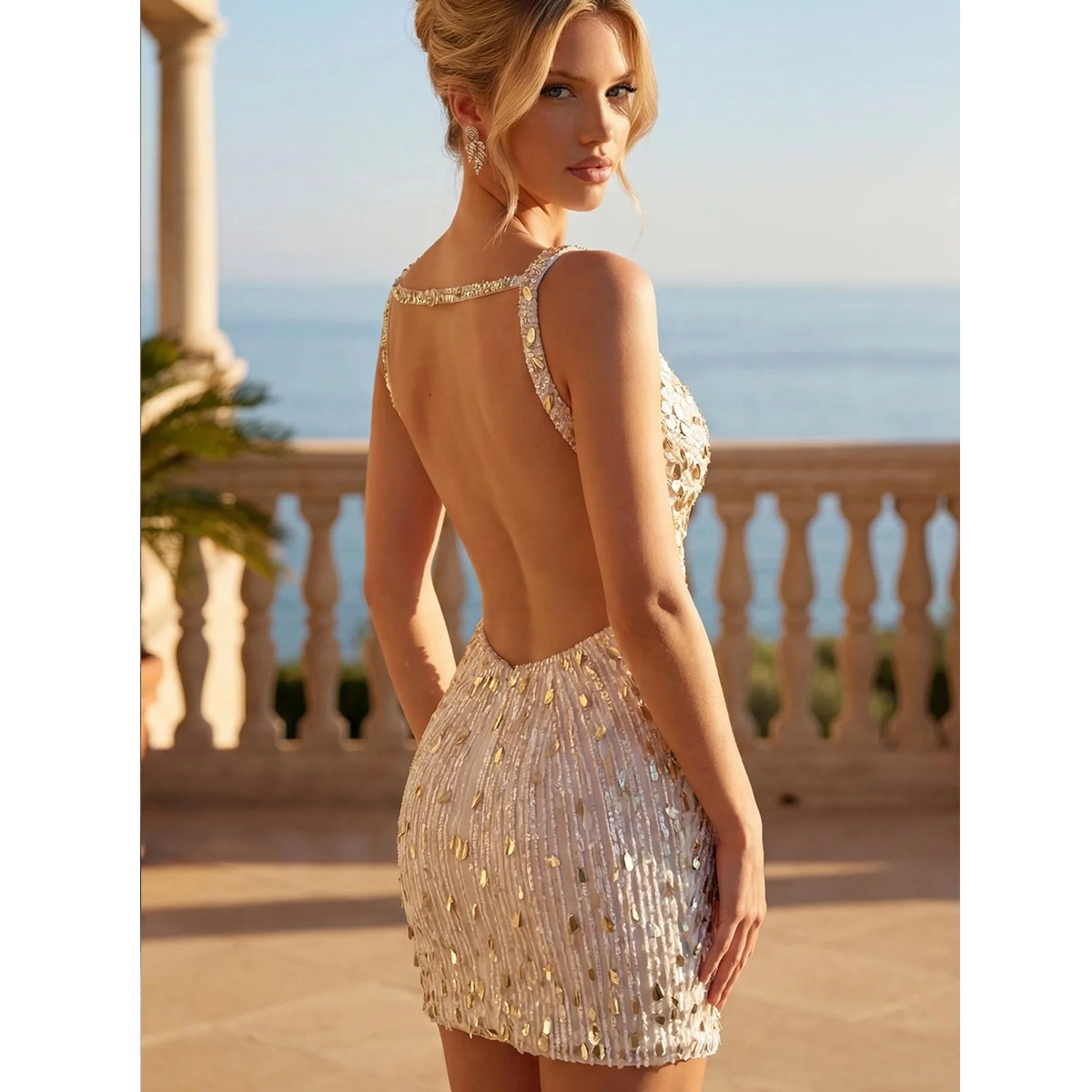
Backless Sequin Dress
Backless sequin dresses need careful handling of support, neckline shape and sequin placement. The back construction is reviewed during sampling to maintain the intended design while keeping the dress wearable.
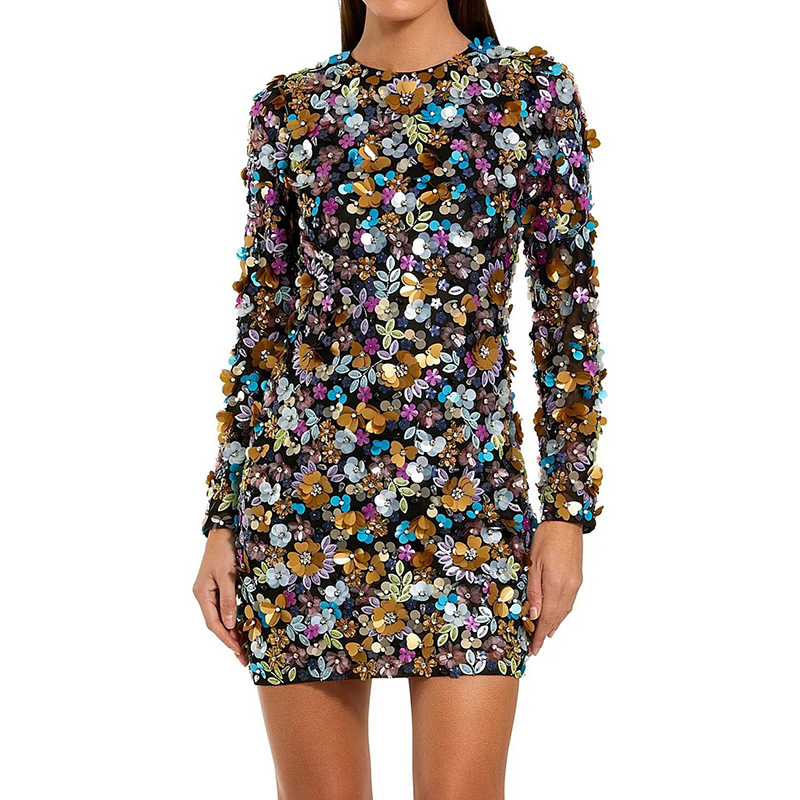
Long Sleeve Sequin Dress
Long sleeve sequin dresses require attention to sleeve shape, arm movement and fabric weight. Pattern and construction details are adjusted to maintain comfort and production stability.
Quality Control for Sequin Dress Production
Sequin garments require additional inspection because surface details are easier to notice.
During production, our QC team checks areas including:
- Missing or loose sequins
- Sewing quality around seams
- Zipper installation
- Lining attachment
- Measurement accuracy
- Overall garment appearance
Before shipment, finished garments go through final inspection to make sure the products match approved samples and production requirements.
Private Label Sequin Dress Manufacturing
If you are building your own fashion label, you can customize more than just the dress design.
We support private label development including:
- Custom woven labels
- Size labels
- Care labels
- Hangtags
- Packaging options
- Barcode labels
You can develop your own sequin dress collection while working with one factory from sample development to final production.
Why Work With Xiuyu Apparel For Sequin Dress Production?
Sequin dress production involves more than attaching decorative materials. Fabric behavior, pattern accuracy and sewing methods all affect the final result.
At Xiuyu Apparel, you can work directly with a factory experienced in women’s dress manufacturing since 2007.
Our advantages include:
- In-house pattern making and sample development
- Experienced sewing and QC teams
- Support for OEM, ODM and private label projects
- Flexible MOQ starting from 50–100 pcs per style/color
- Export experience to customers in more than 40 countries
Whether you are launching a new fashion brand or expanding an existing collection, our team can support your sequin dress production from the first sample to bulk delivery.
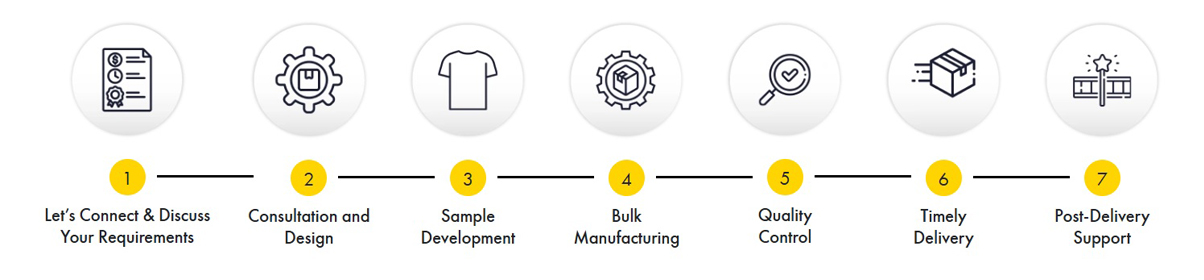
OEM Sequin Dress Development Process
Whether you have a finished design or are developing a new style, you can start production with your existing information.
Design Review
You can provide:
- Tech pack
- Sketch
- Reference image
- Existing garment sample
Our pattern and sample teams review the construction details before sample development.
Pattern Development
The pattern department develops the garment structure based on your measurements and design requirements.
The pattern team checks fitting, seam positions and fabric behavior before moving to sampling.
Sample Development
The sample room creates the first sample for checking:
- fitting
- measurements
- construction
- overall appearance
Sample development usually takes 3–7 days depending on the complexity of the style.
Sample Revision and PP Approval
After you provide feedback, adjustments are made based on your comments.
Bulk production starts after the PP sample is approved.
Bulk Production
Your approved specifications are followed through:
- fabric preparation
- automatic cutting
- sewing
- inline QC
- pressing
- final inspection
- packing
Related Dress Manufacturing Categories
If you are developing different dress silhouettes alongside your chiffon collection, our broader dress manufacturing capabilities cover a range of construction methods and product categories.
Key Quality Checks Before Bulk Sequin Dress Production
A practical quality checklist used by fashion brands, buyers, and garment manufacturers when evaluating sequin dress production.
| Evaluation Area | Quality Standard for Professional Production | Common Issues in Low-Quality Production |
|---|---|---|
| Sequin Material | Sequins should have consistent color, stable surface shine and suitable flexibility for the garment design. Suitable for repeated wear and commercial garment production. | Low-grade sequins may become yellowish, lose shine, or show inconsistent colors after wear and storage. |
| Sequin Edge Finishing | Smooth and well-finished sequin edges reduce snagging risks and improve wearing comfort, especially for fitted dresses. | Sharp or uneven edges may scratch skin, catch on lining, or damage other garments. |
| Sequin Thickness & Flexibility | Sequins should have balanced thickness and flexibility to maintain appearance while allowing natural garment movement. | Thin or brittle sequins can crack, deform, or break during handling and wearing. |
| Surface Shine & Color Consistency | Even reflection, strong color depth, and consistent sequin tone create a clean visual effect under different lighting conditions. | Uneven shine, cloudy surfaces, or inconsistent colors can affect the overall appearance of the garment. |
| Sequin Density & Arrangement | Proper sequin coverage and accurate placement create a full surface effect while maintaining the intended design balance. | Sparse placement, uneven distribution, or exposed base fabric may reduce the visual impact. |
| Sequin Attachment Strength | Professional production uses suitable stitching methods and reinforcement to improve sequin stability during wear and washing. | Weak attachment or insufficient reinforcement can cause sequins to loosen or fall off during use. |
| Surface Flatness & Sequin Direction | Sequins should lie flat with controlled direction and alignment, especially on bodycon or fitted silhouettes. | Raised, twisted, or uneven sequins can create a messy appearance and affect garment fitting. |
| Base Fabric Selection | The fabric should match the sequin weight, providing enough stretch, support, and comfort for the garment design. | Unsuitable base fabrics may feel stiff, lose shape, or fail to support the embellishment weight. |
| Fabric & Sequin Compatibility | Pattern and fabric structure should be developed according to the sequin weight to maintain drape, movement, and fit. | Poor fabric matching may lead to stretching, distortion, sagging, or uneven fitting. |
| Color Fastness & Durability | Materials should be selected and tested according to customer requirements to improve resistance to washing, friction, and daily use. | Poor material selection may cause color transfer, fading, or reduced surface brightness. |
| Garment Construction Quality | Clean seams, accurate pattern cutting, reinforced stress areas, and proper finishing ensure better wear performance. | Rough seams, inconsistent stitching, or poor finishing can affect both appearance and durability. |
| Lining & Wearing Comfort | Soft lining and proper internal finishing help reduce irritation from sequin surfaces and improve customer experience. | Lack of lining or exposed sequin backing may create discomfort during wearing. |
| Weight Distribution & Fit Balance | The garment structure should distribute sequin weight evenly while maintaining the intended silhouette and movement. | Uneven weight distribution can make dresses feel heavy, uncomfortable, or affect the final fit. |
Sequin Dress Production Challenges We Help You Control
Sequin fabrics require different handling compared with normal dress materials. The surface decoration can affect cutting efficiency and fabric usage if the pattern layout is not carefully planned.
You need a manufacturer who considers fabric direction, sequin surface protection and cutting accuracy before production starts.
Our production team checks fabric condition before cutting and follows the approved pattern to reduce unnecessary material waste and maintain consistency between sample and bulk production.
The sewing process is one of the key stages for sequin garments.
If seams, zipper areas or inside finishing are not handled properly, sequins may create discomfort during wearing.
During production, we pay attention to areas that receive more movement, including armholes, side seams, waist areas and zipper openings.
The construction method may also be adjusted according to fabric type and garment design.
Many buyers focus on the outside appearance of a sequin dress but overlook the inside construction.
The lining affects wearing comfort, garment weight and overall fit.
You can discuss different lining options with our team based on your target market and price level.
For example, some designs require a soft lining for comfort, while others need stronger support because of heavier sequin fabric.
For fashion brands, the approved sample needs to represent the final bulk order.
Before bulk production, we review the PP sample, production requirements and quality standards with the relevant teams.
During manufacturing, processes including cutting, sewing, pressing and final inspection are checked to reduce differences between samples and finished garments.
About Our Sequin Dress Factory
Xiuyu Apparel is a China-based clothing manufacturer specializing in custom dress production. We focus on women’s dress manufacturing, including occasion dresses, evening styles and custom private label collections.
Since 2007, we have worked with fashion brands, retailers, wholesalers and private label companies on dress development and bulk manufacturing.
With in-house pattern making, sample development, production and QC teams, we manage the process from initial design review to finished garments.
- How We Manufacture Sequin Dress Production
- Factory Picture
- Our Capabilities
- One-Stop Services
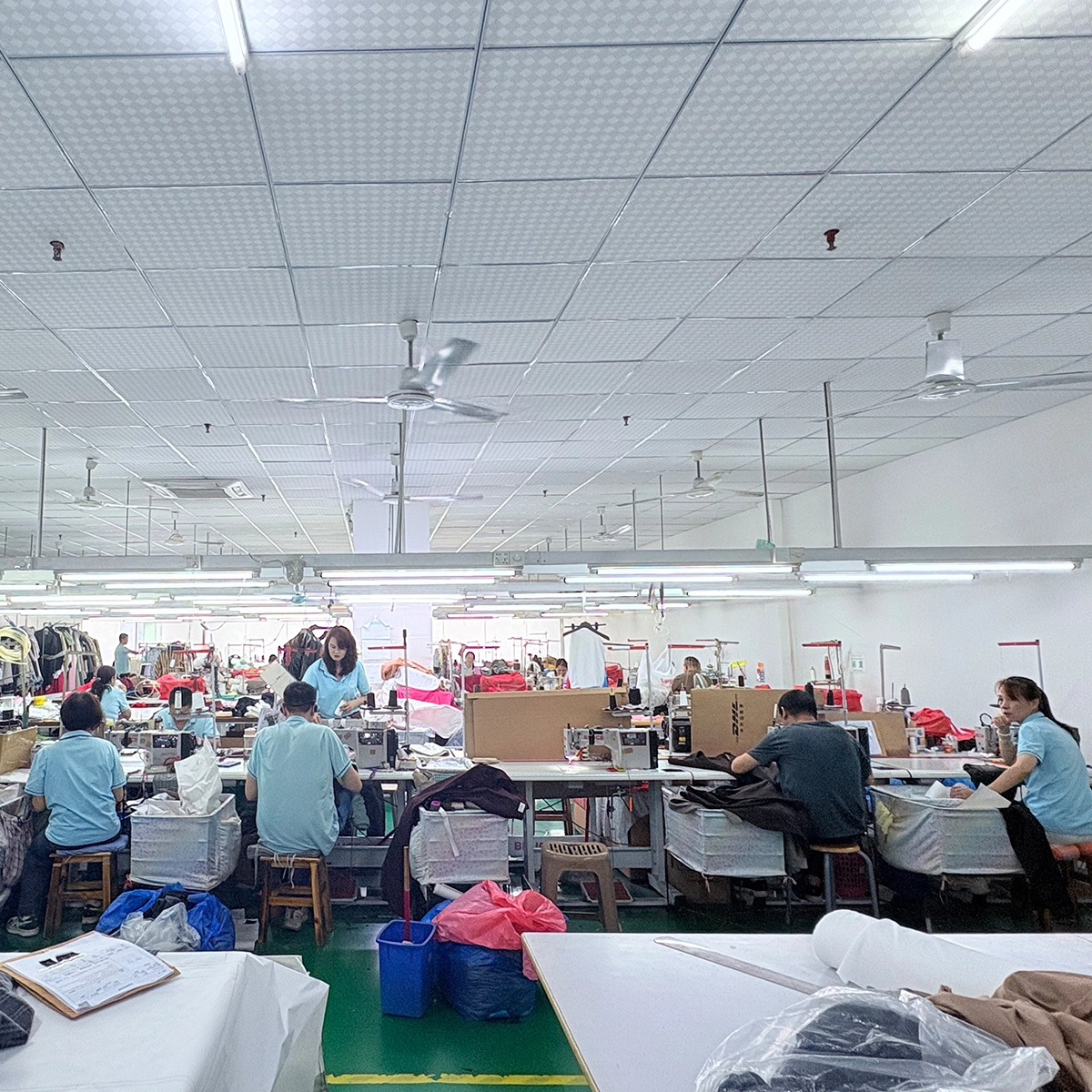
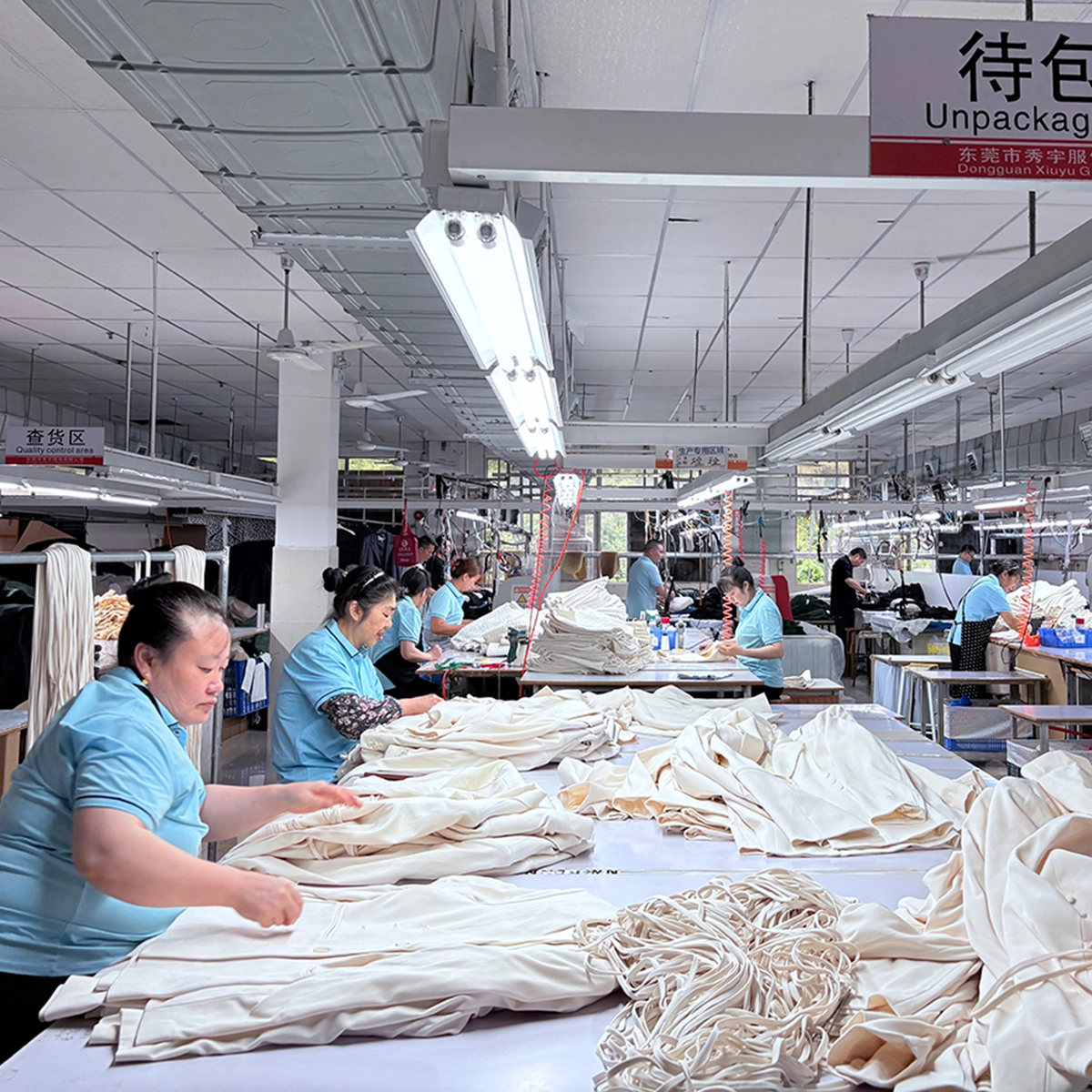
The photos below show the main production steps in our factory, from fabric preparation and cutting to final inspection, packing, and shipment.
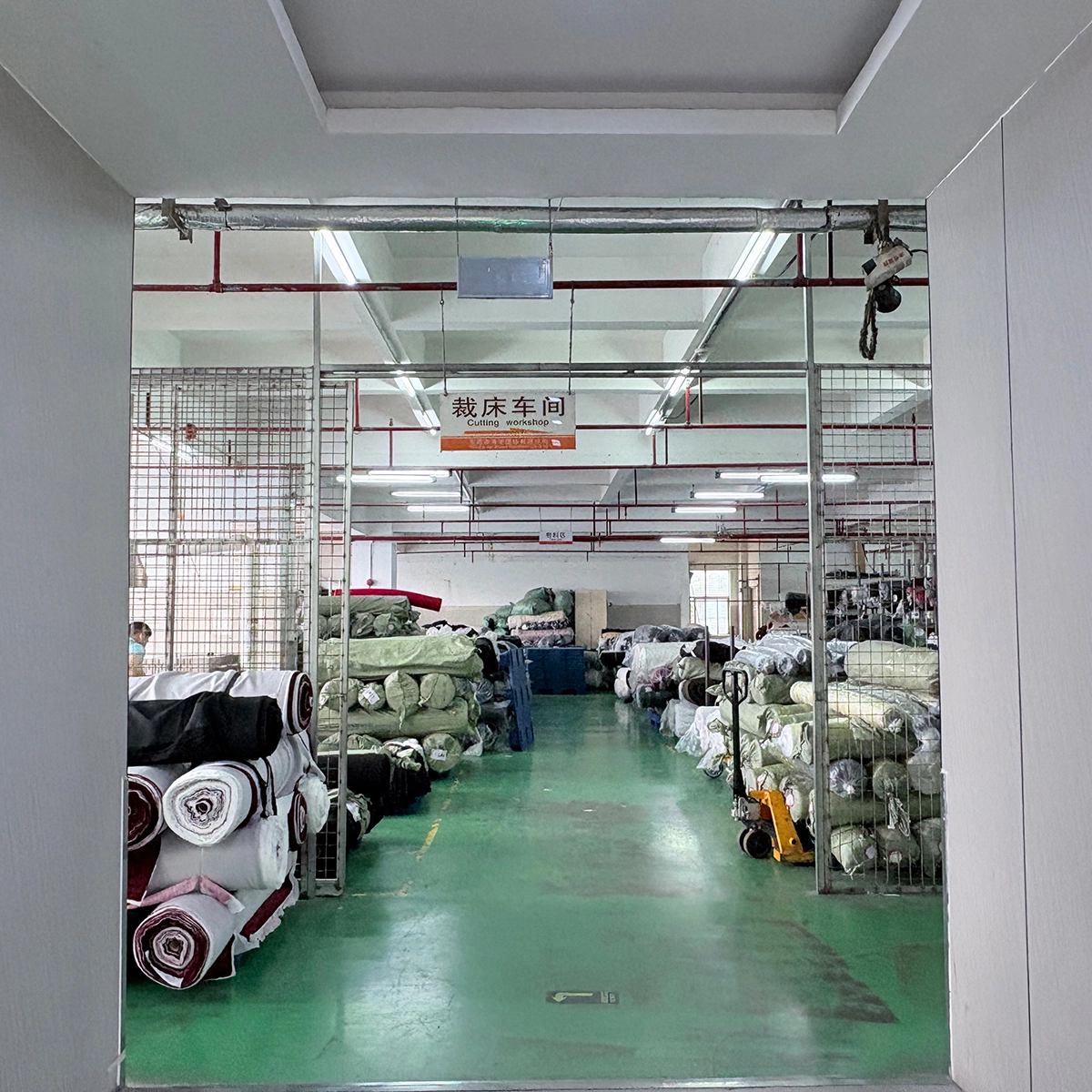
Sequin Fabric Warehouse
Sequin fabrics are received and recorded by color, batch, quantity and fabric type before production. The team checks the condition of decorative surfaces to confirm the material is suitable for the approved design.
↓
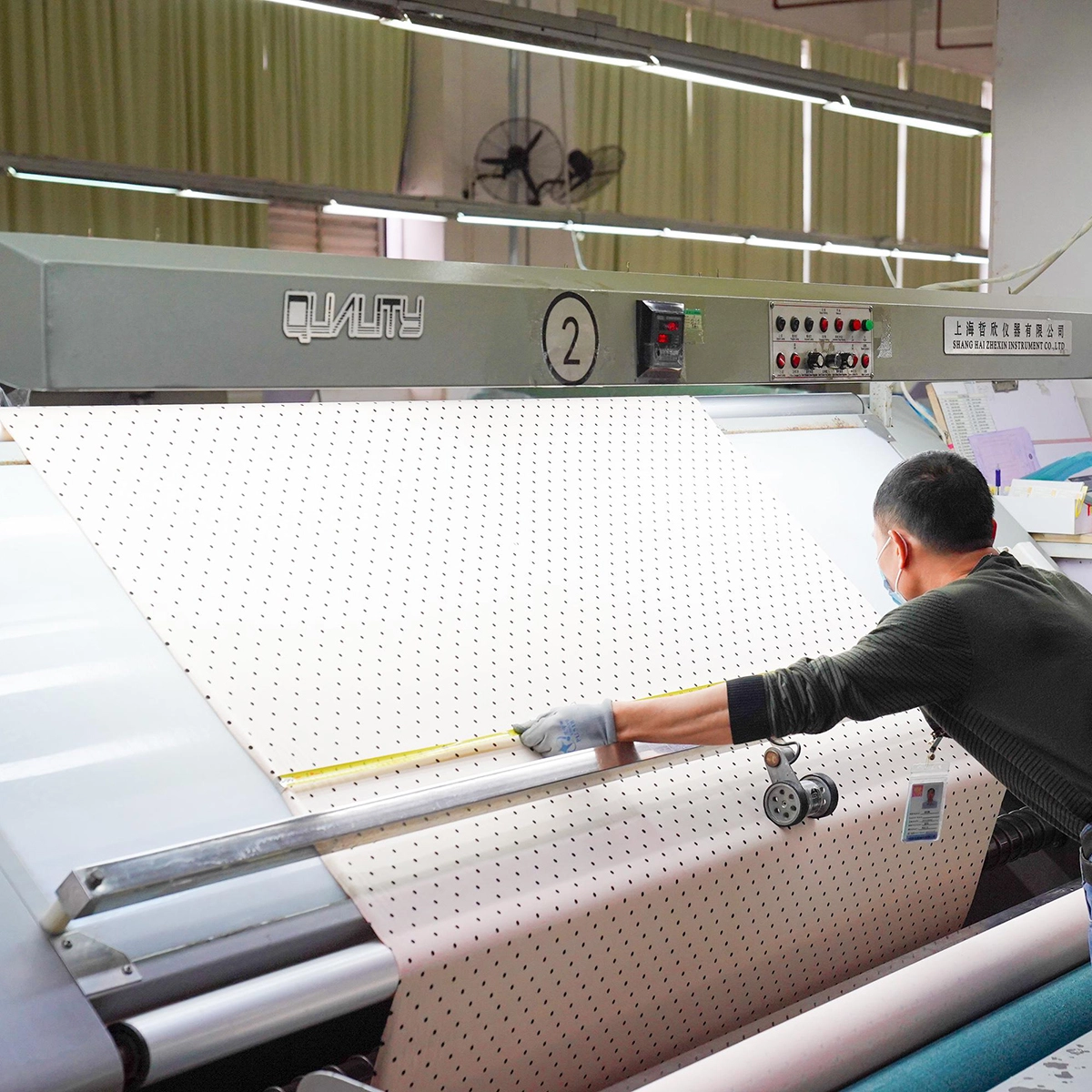
Sequin Fabric Inspection
QC checks sequin attachment, surface appearance, color consistency, fabric width and visible defects before cutting. Any issues with loose sequins or uneven surfaces are identified before production starts.
↓
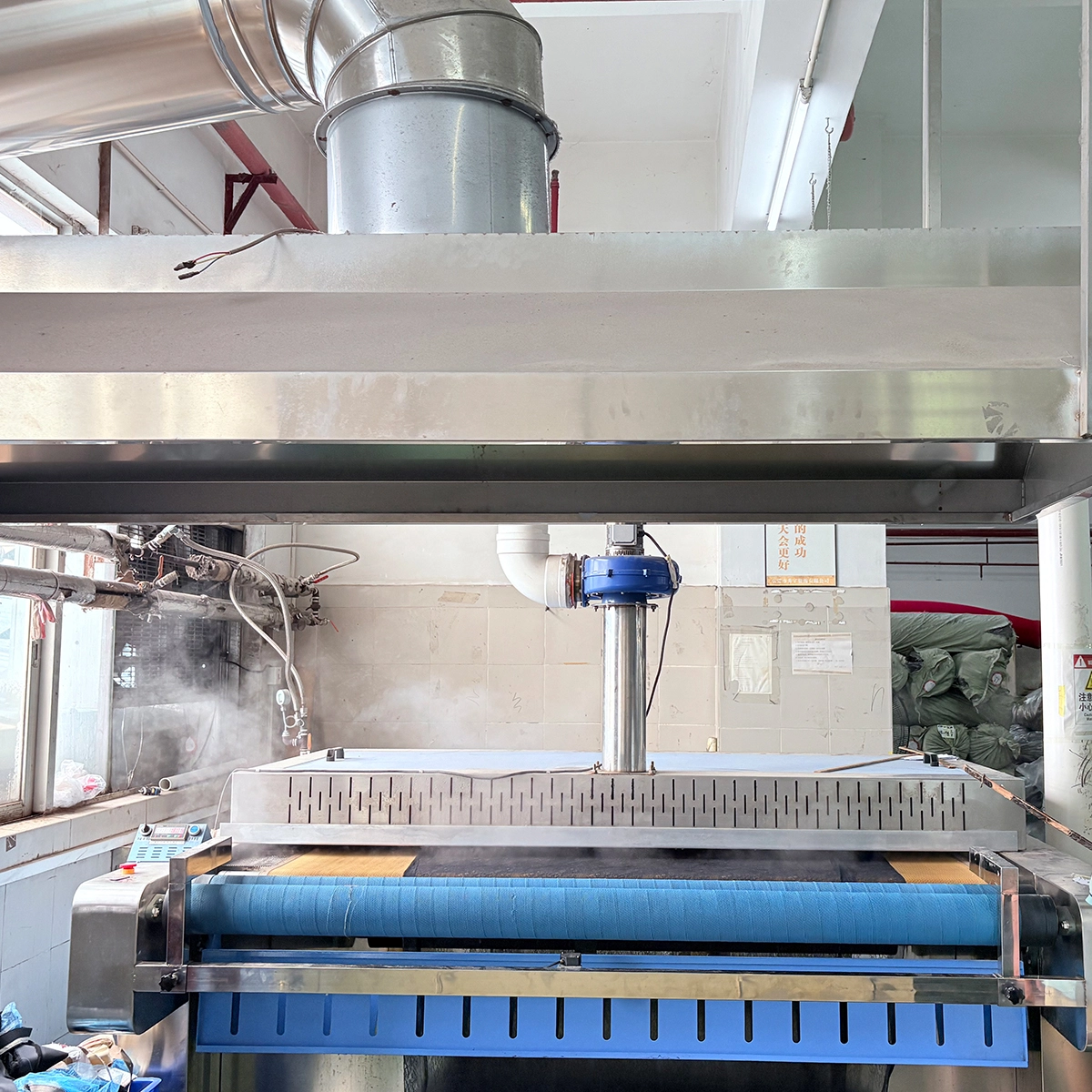
Fabric Pre-shrinking
When required, fabrics can go through pre-shrinking before cutting. This helps control fabric stability and maintain finished garment measurements after production.
↓
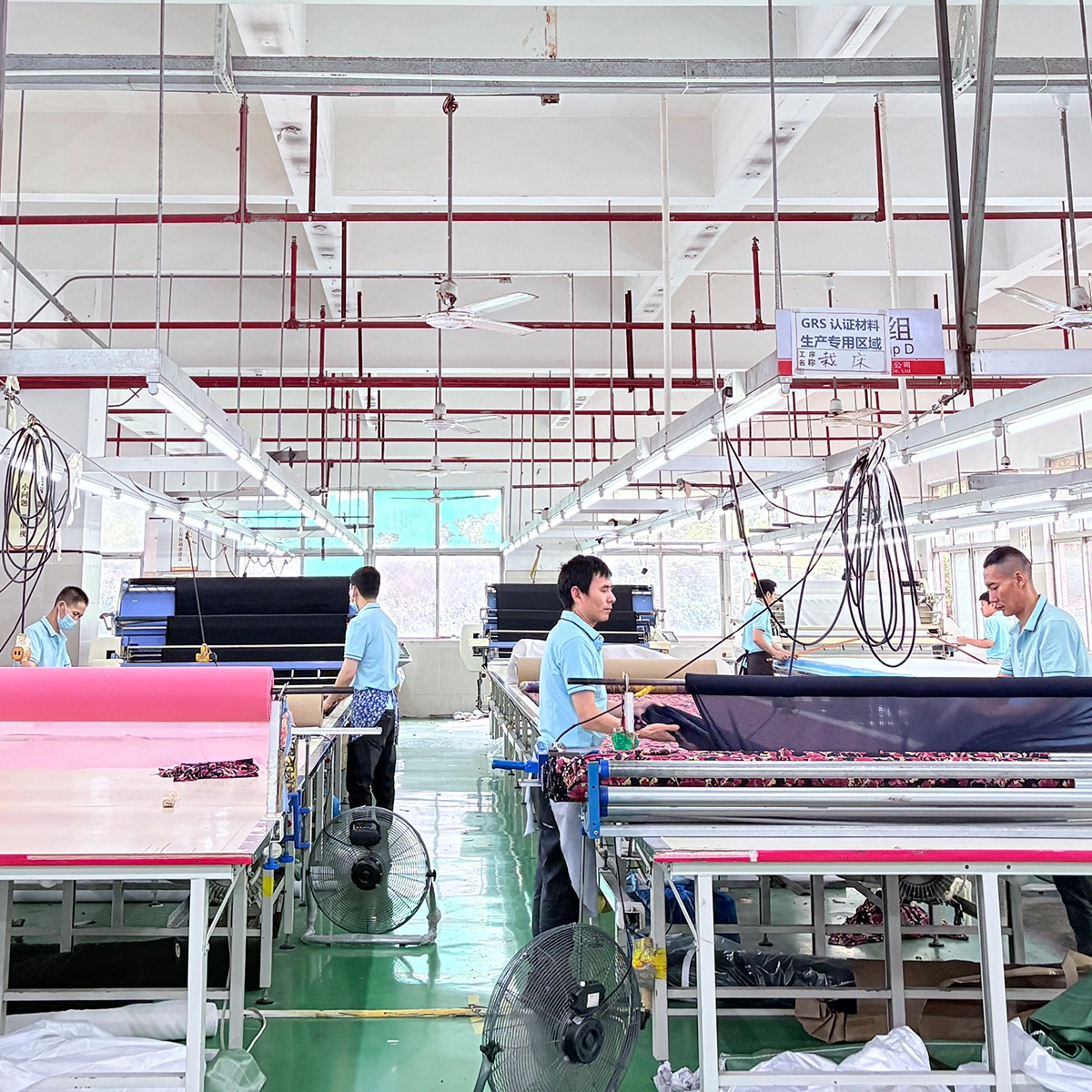
Pattern Making & Fabric Cutting
Sequin dresses often require careful pattern placement to maintain the correct sequin direction and overall appearance. Our cutting team follows the approved pattern and marker layout to reduce material waste and keep each panel consistent.
↓
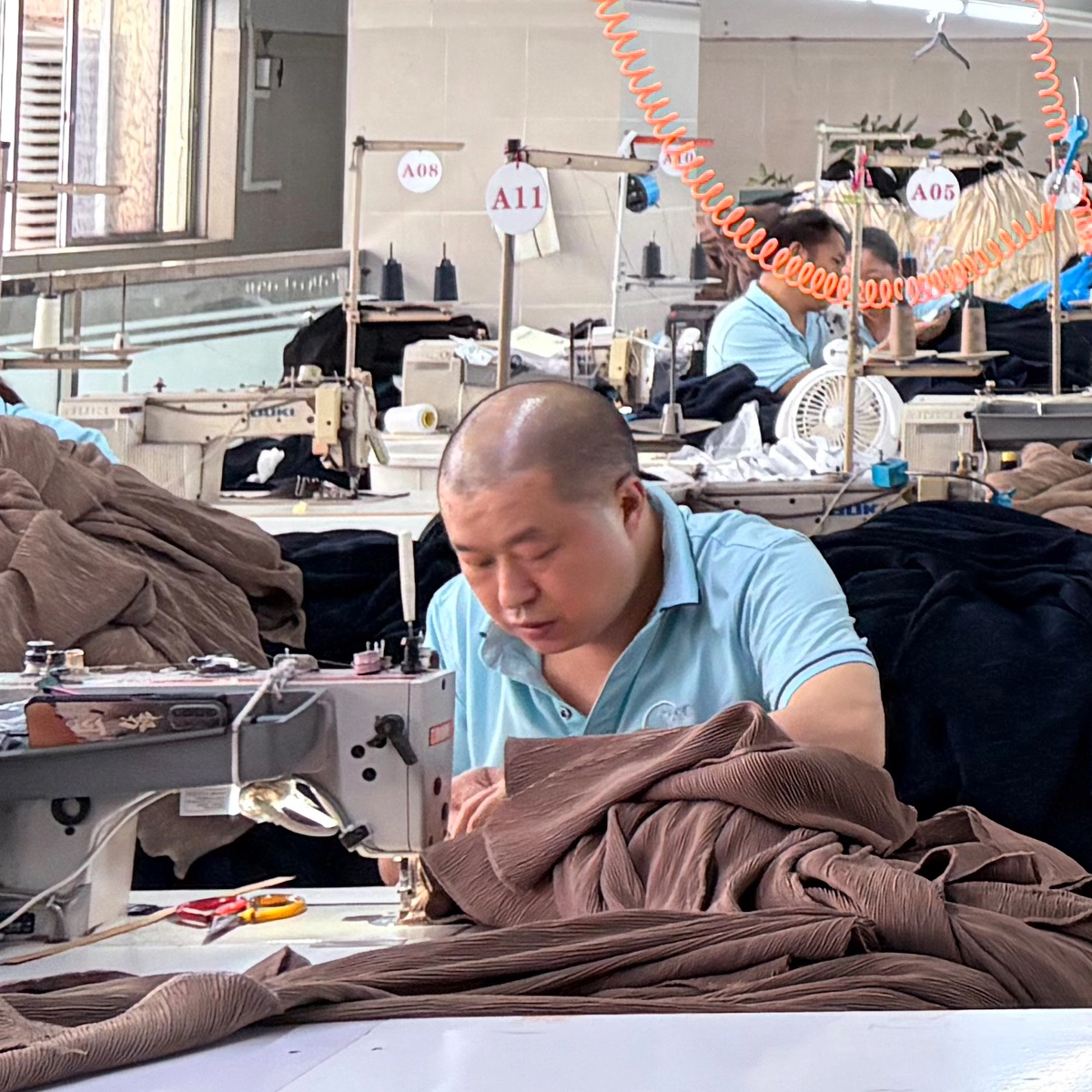
Bulk Production Sewing
Cut panels are assembled according to the approved sample and construction details. Sewing operators pay attention to seam positions, lining attachment, zipper installation and areas where sequins may affect stitching.
↓
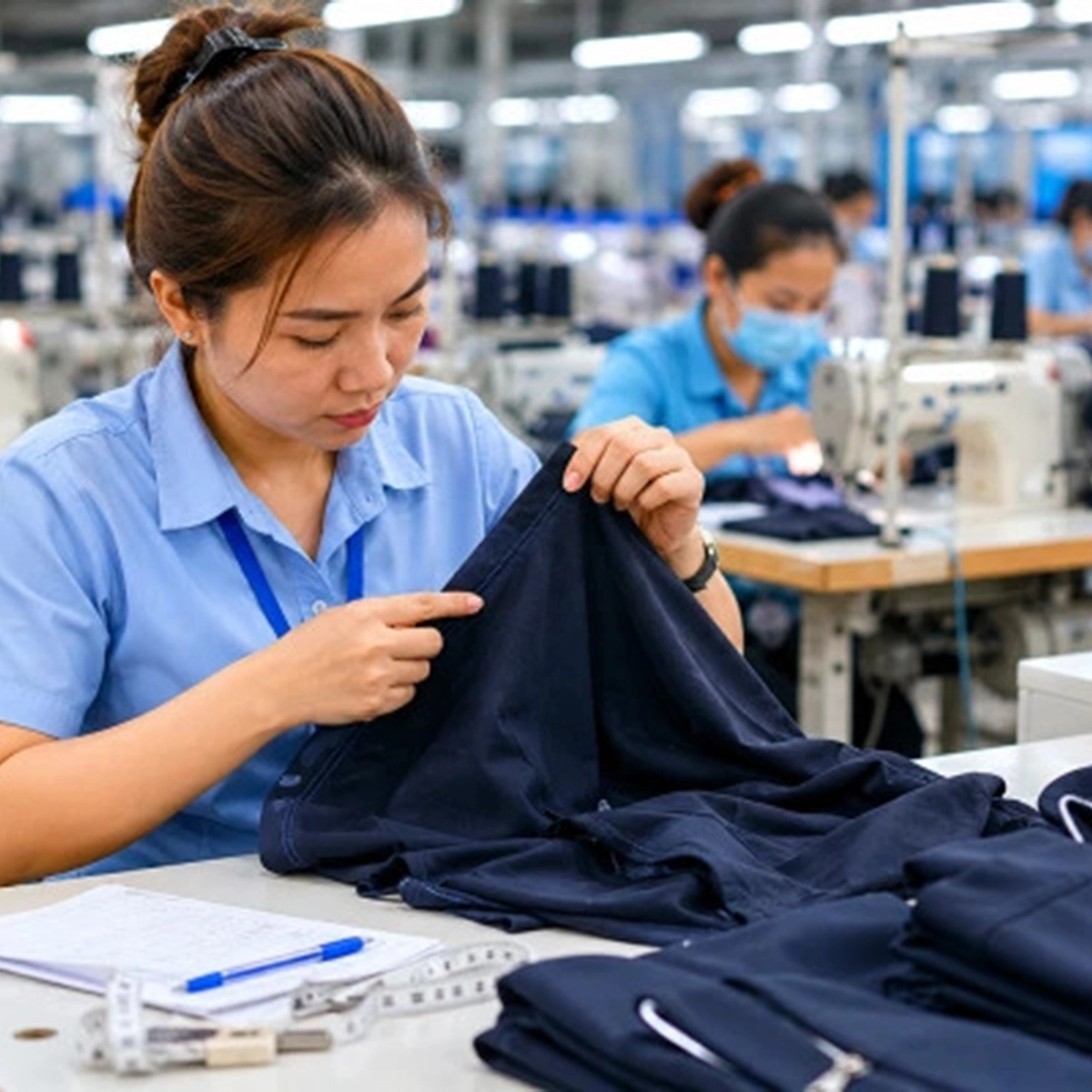
In-line Inspection
QC checks measurements, stitching, sequin attachment and garment shape during production. Any construction issues can be corrected during sewing instead of waiting until final inspection.
↓
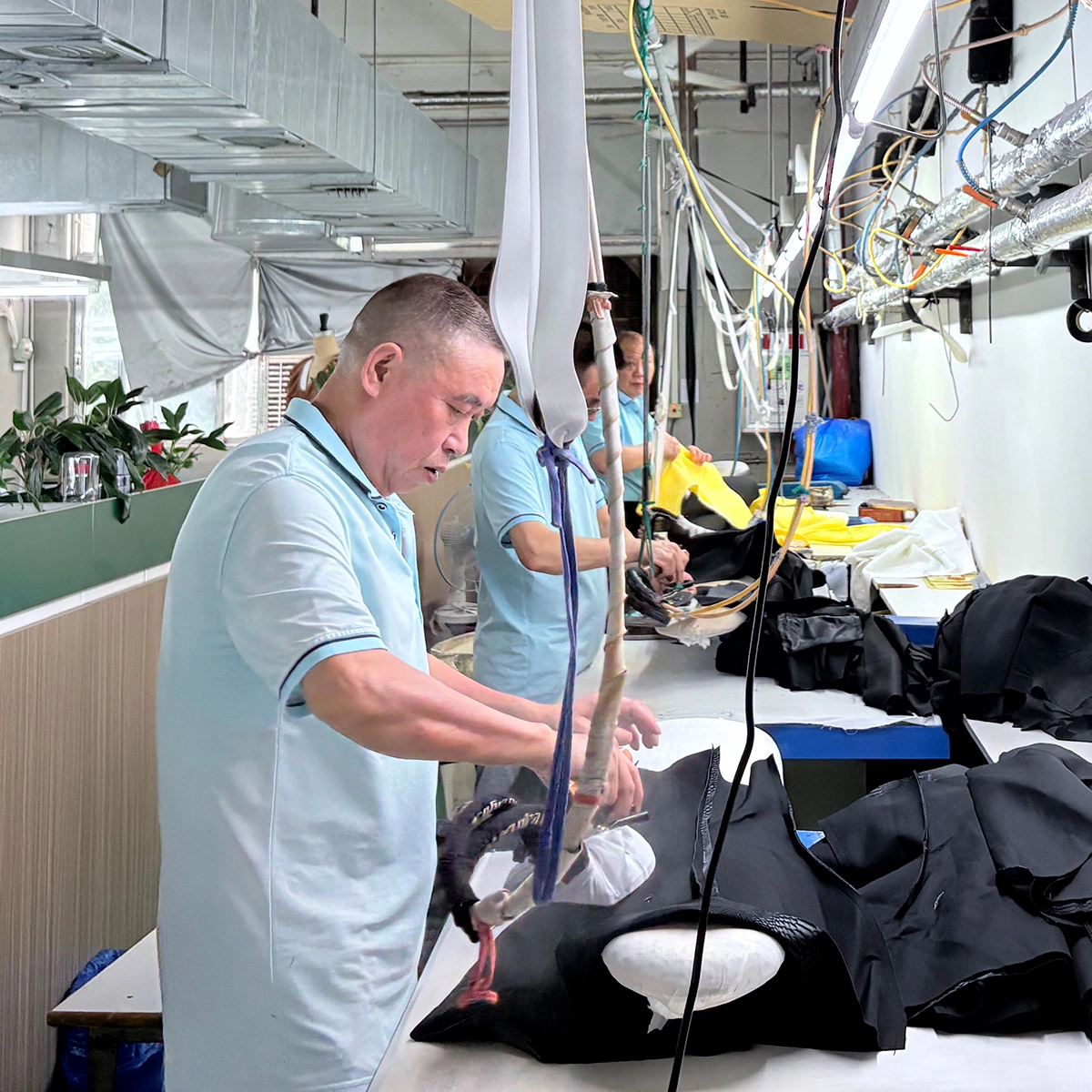
In-line Pressing
Garments are carefully handled during pressing to maintain the correct shape while protecting the decorative surface and preventing unnecessary damage to sequins.
↓
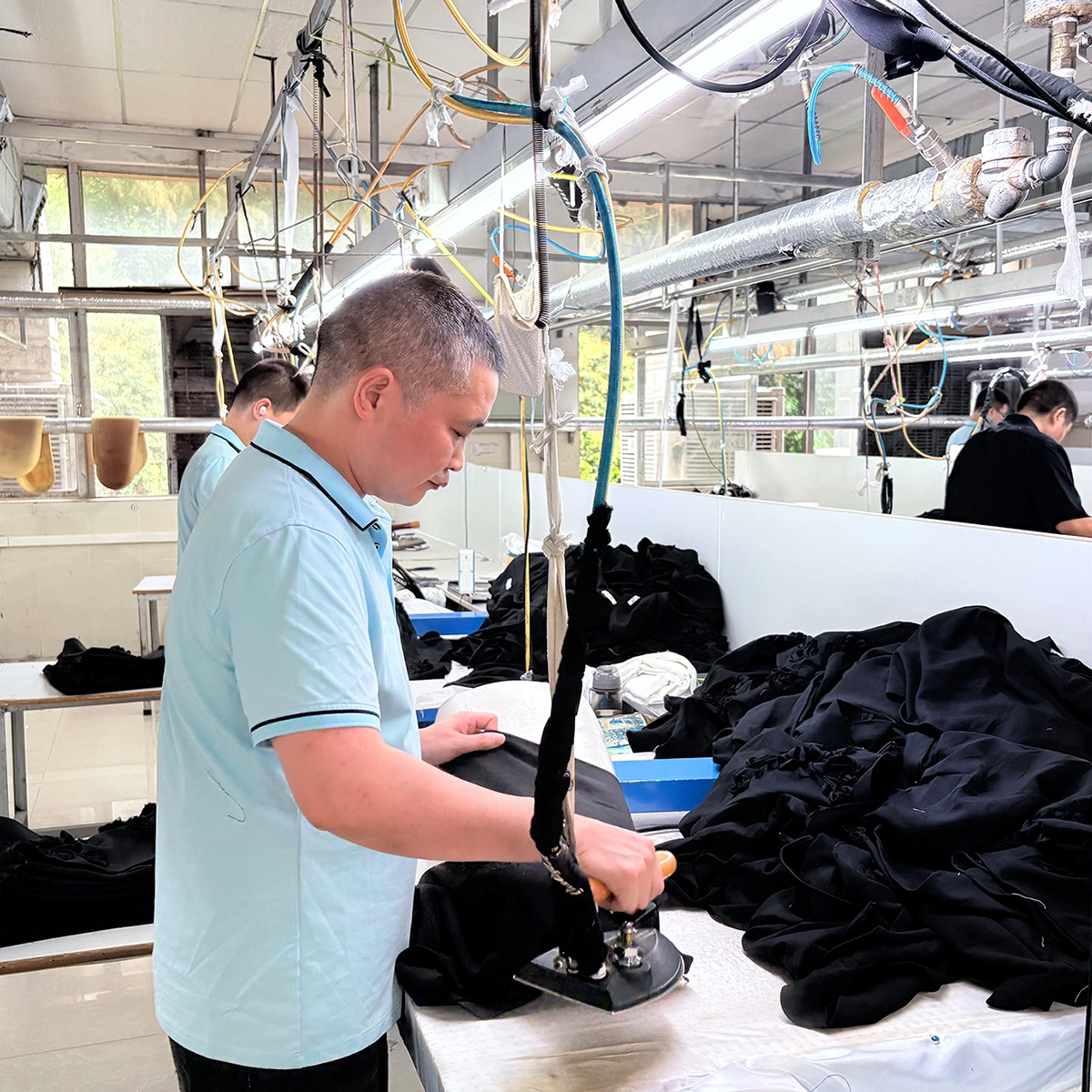
Final Pressing
After assembly, sequin dresses receive final pressing before inspection. The team checks the overall silhouette, seams, lining and visible appearance.
↓
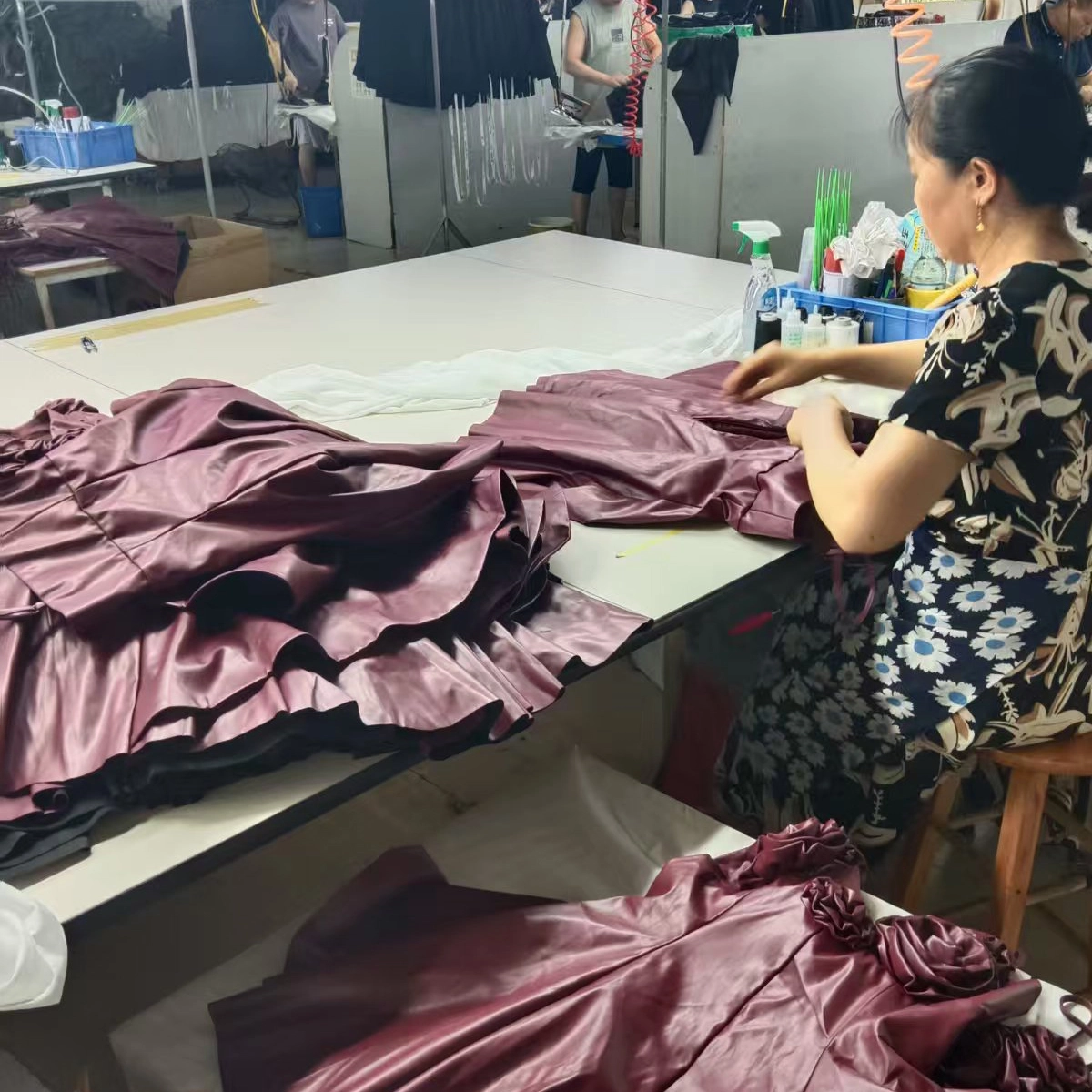
Final Inspection
Finished garments are checked for measurements, stitching, sequin condition, labels, appearance and packing requirements before shipment.
↓
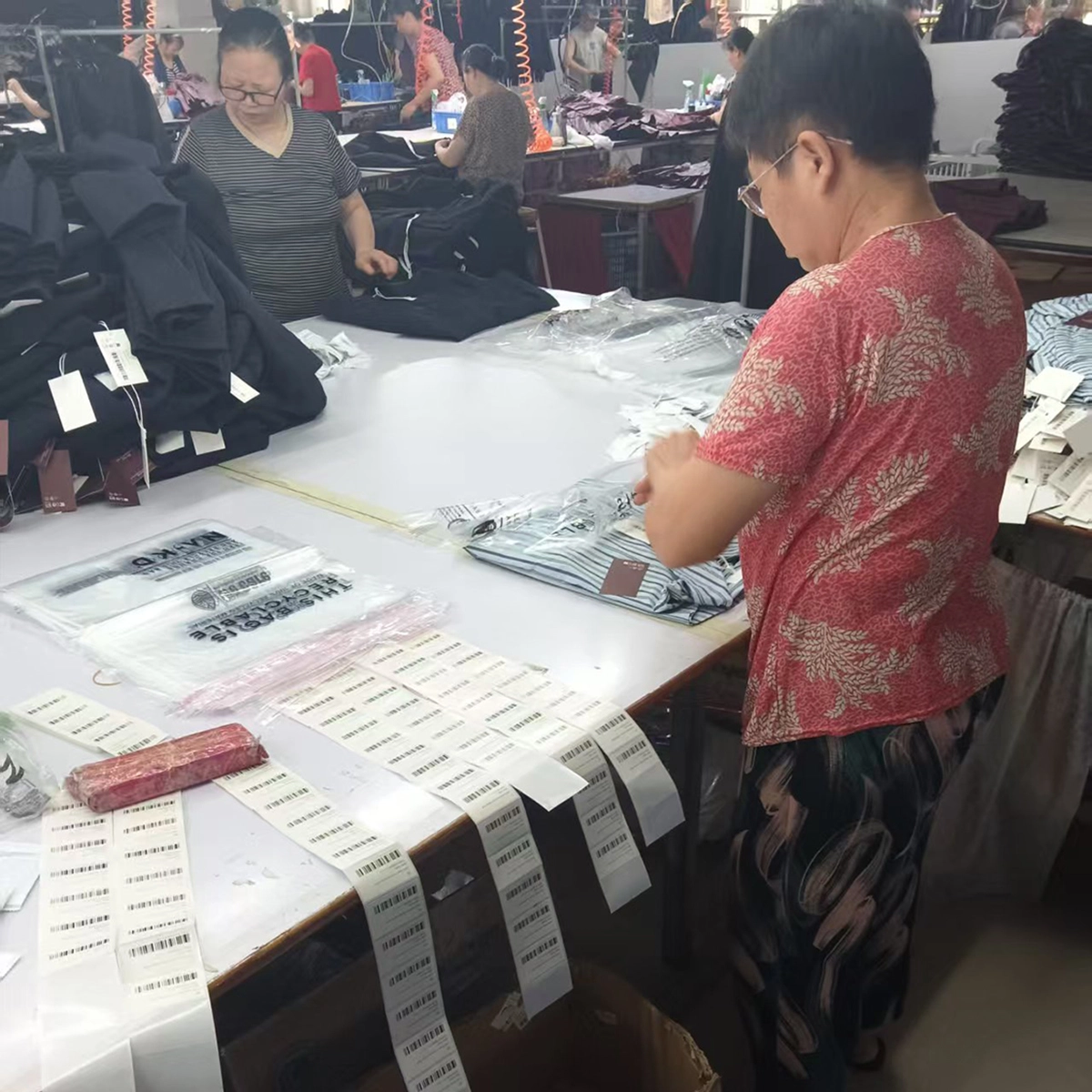
Garment Packing
Finished sequin dresses are folded and packed according to customer requirements. Labels, barcodes and packing details are checked before cartons are sealed.
↓
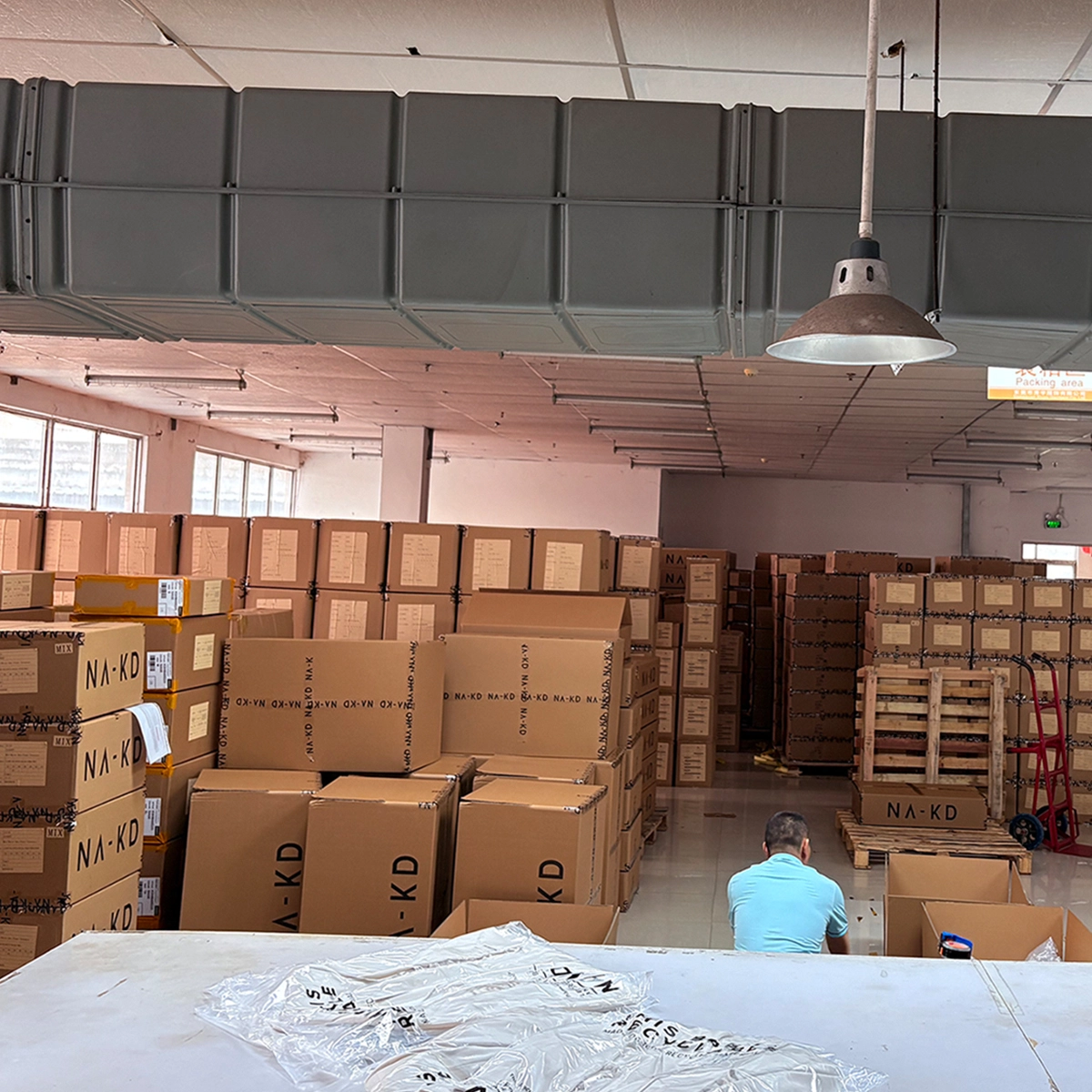
Finished Products
Finished garments are organized by style, color and size. Carton quantities and packing details are confirmed before shipment.
↓
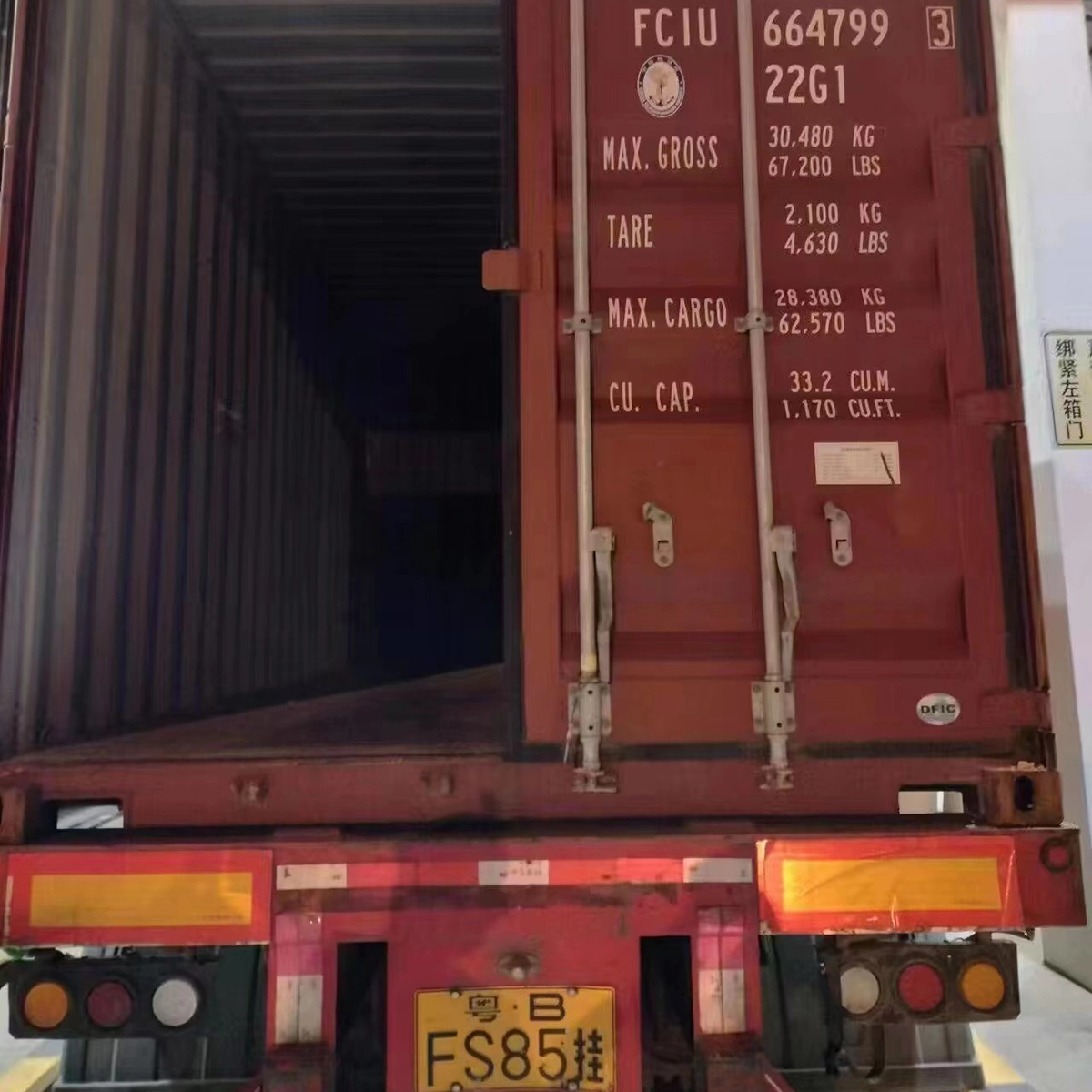
Container Loading
Cartons are loaded according to the shipping plan. Carton numbers, quantities and order details are checked during loading before shipment.
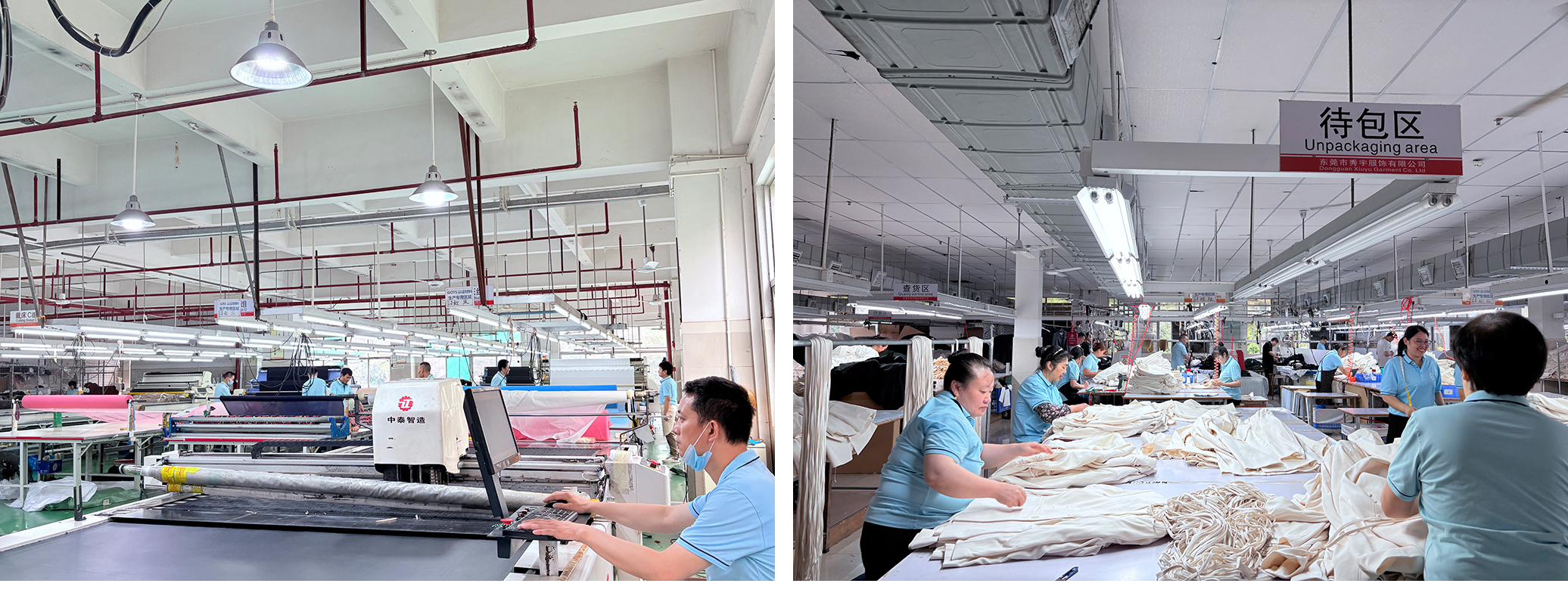 Cutting room & QC inspection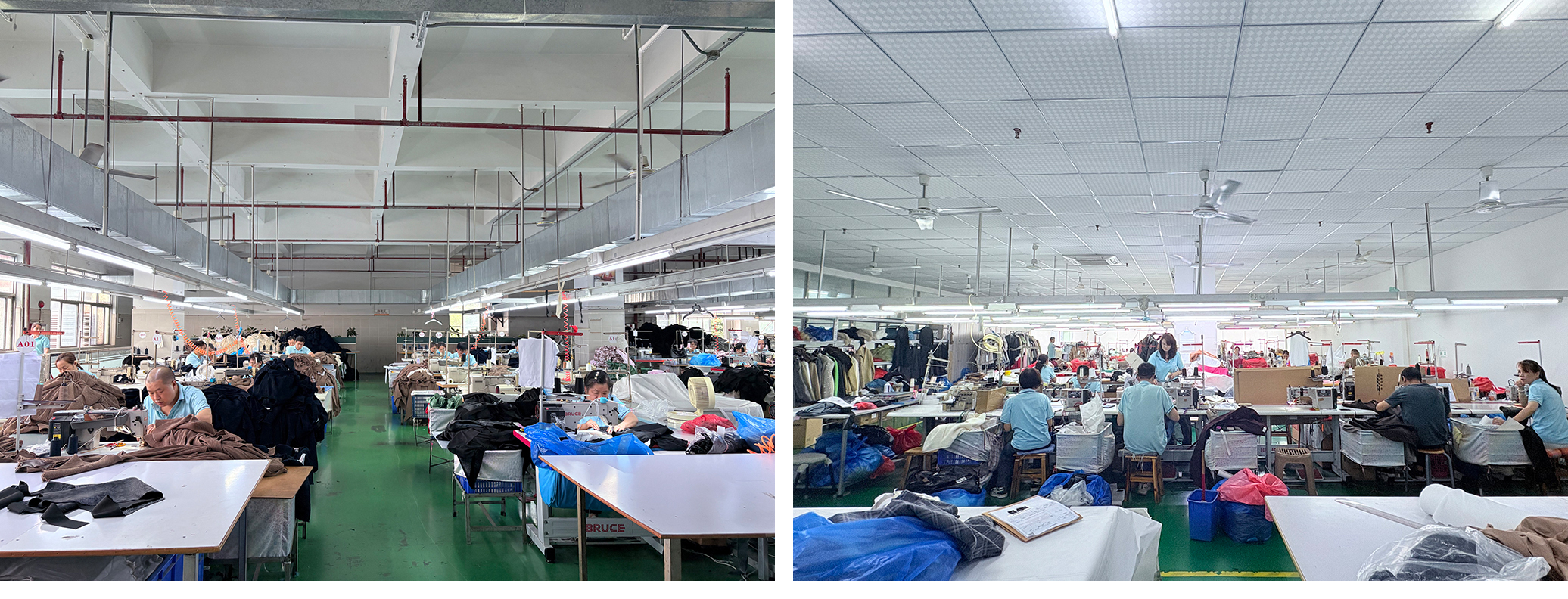
Sewing workshop
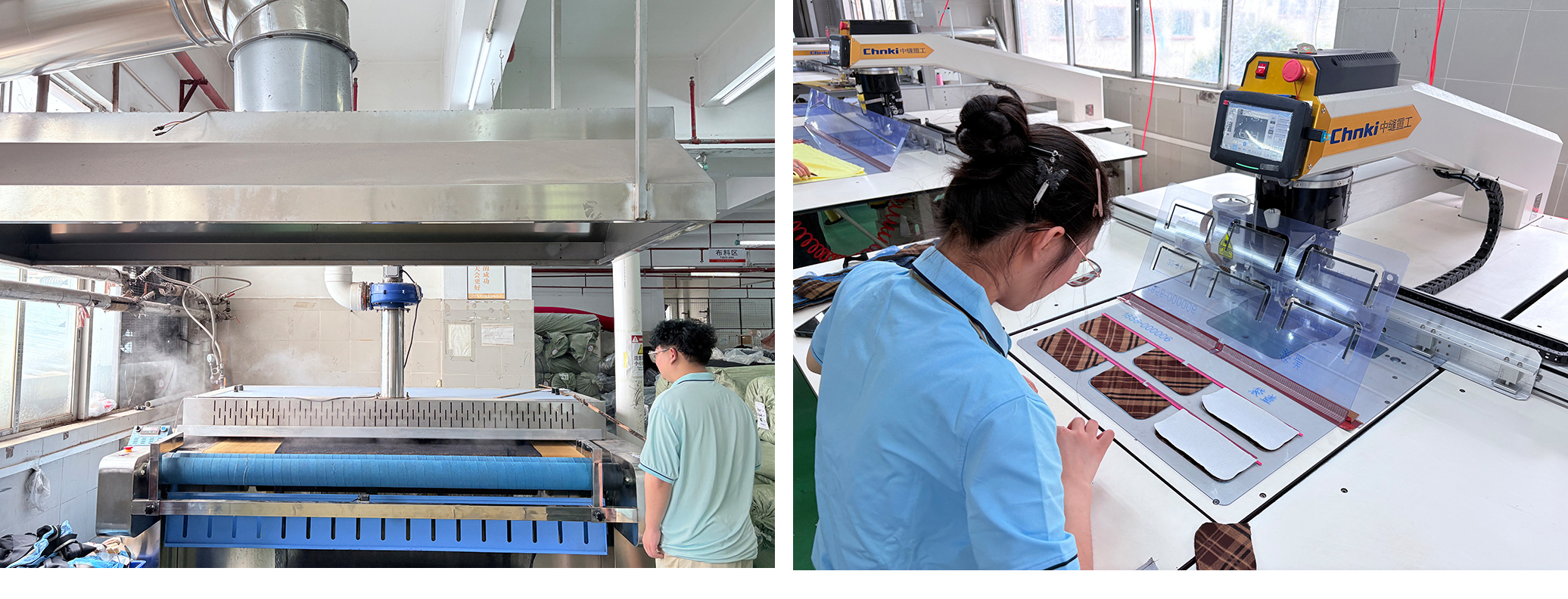 Fabric Pre-shrinking Workshop & Automatic Template Machine Workshop
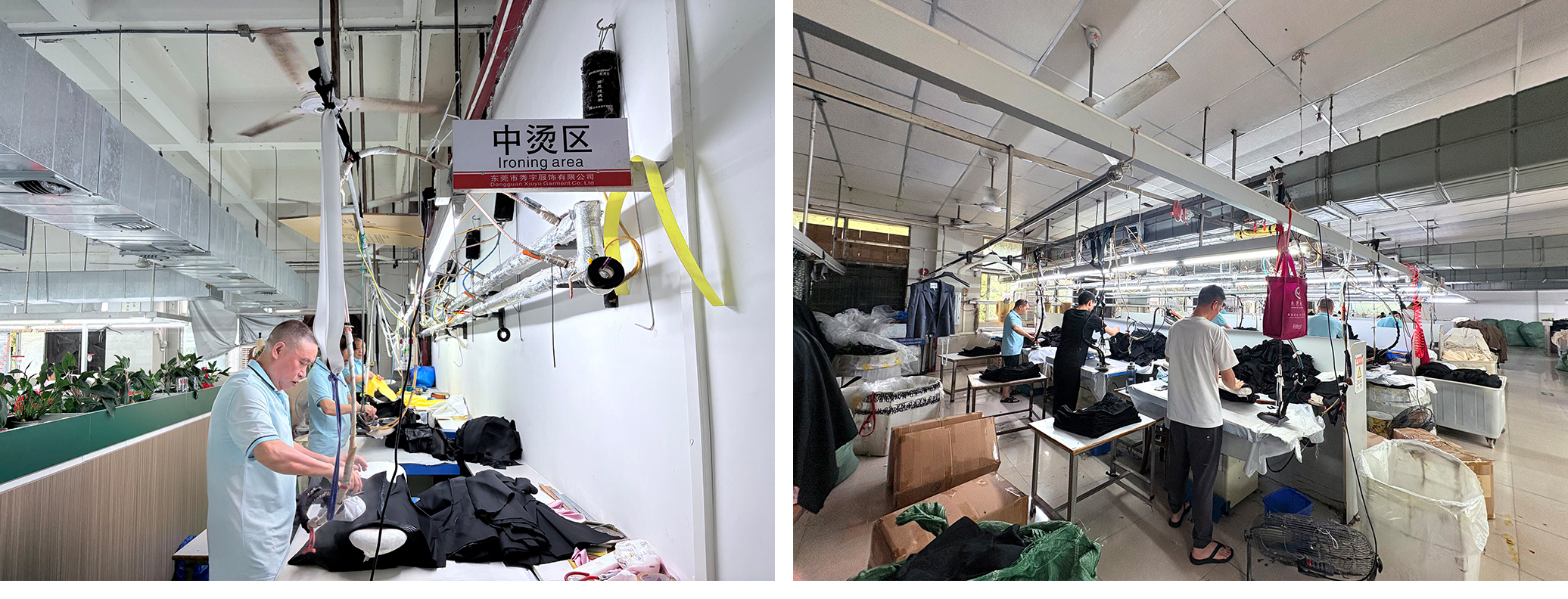 Finishing Workshop
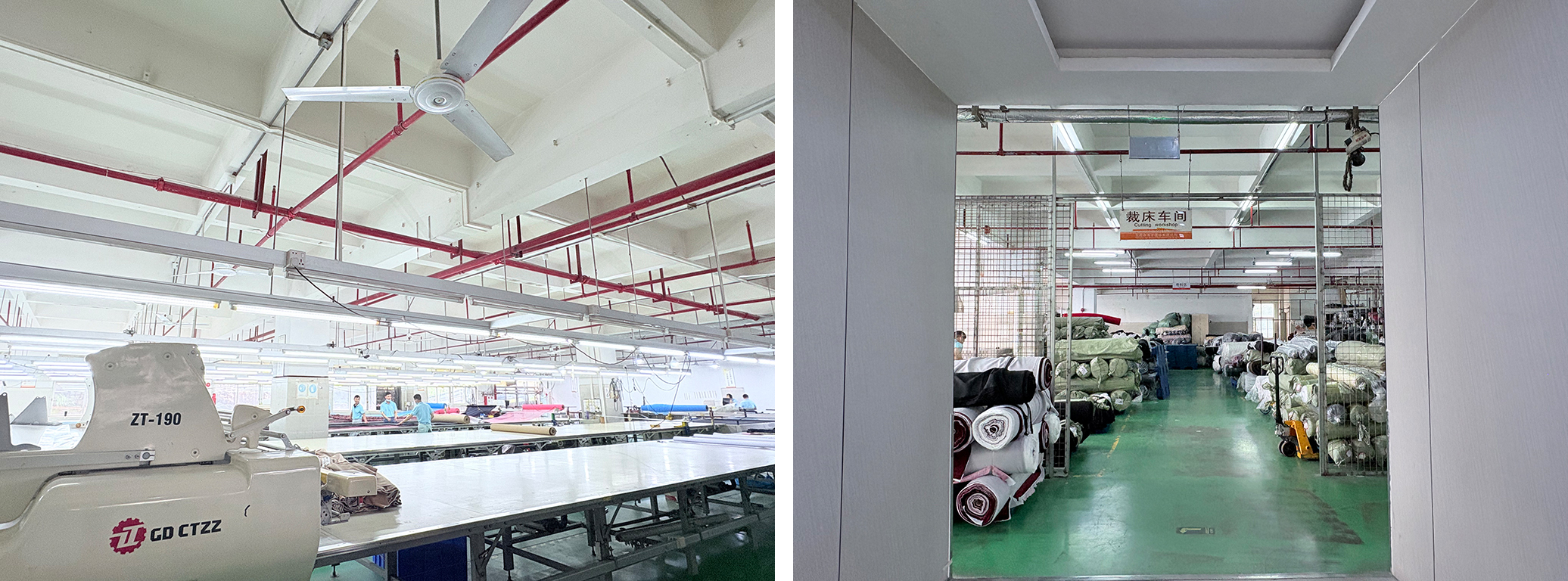
Cutting Room & Fabric warehouse
As a custom clothing manufacturer, we handle the main production steps in-house, from pattern making and sampling through cutting, sewing, finishing, and final inspection. Our team works from your tech pack, sample, sketch, or reference and checks the details before the style moves into bulk production.
Keeping these stages with one production team makes it easier to deal with pattern changes, sample revisions, and construction issues before cutting starts. We can also arrange screen printing and custom embroidery when these details are part of the design.
Ready to Develop Your Sequin Dress Collection?
You can send your project at its current stage, even if some production details are not fully confirmed.
Send us what you already have—a tech pack, sketch, reference garment, fabric sample, sequin artwork idea or collection concept.
We review the design from the manufacturing side, including sequin placement, fabric structure, sewing methods and possible production issues before sampling.
Talk to Our Sequin Dress Manufacturing Team →
Our MOQ is usually 50–100 pieces per style/color. The exact quantity may vary depending on the design, fabric availability and production requirements. For new brands testing a collection, we can discuss suitable options based on your development plan.
Yes. You can provide a tech pack, sketch, product image or existing garment sample. Our team reviews the construction, fabric and measurements before sample development to help convert your design into a production-ready garment.
Sample development usually takes 3–7 days after confirming the design details and materials. More complicated styles with special construction, heavy embellishment or multiple fitting adjustments may require additional time.
We check key production stages including fabric inspection, cutting, sewing, finishing and final inspection. Particular attention is given to loose sequins, seam areas and garment appearance to keep bulk production consistent with the approved sample.
Yes. You can customize your branding with woven labels, care labels, hangtags and packaging requirements. We work with private label companies and fashion brands that need production support from sample development through finished garments.
We can work with different sequin materials, including stretch sequin fabrics, mesh-based sequins and woven sequin fabrics. The suitable option depends on your design requirements, fitting needs and target market positioning.
