
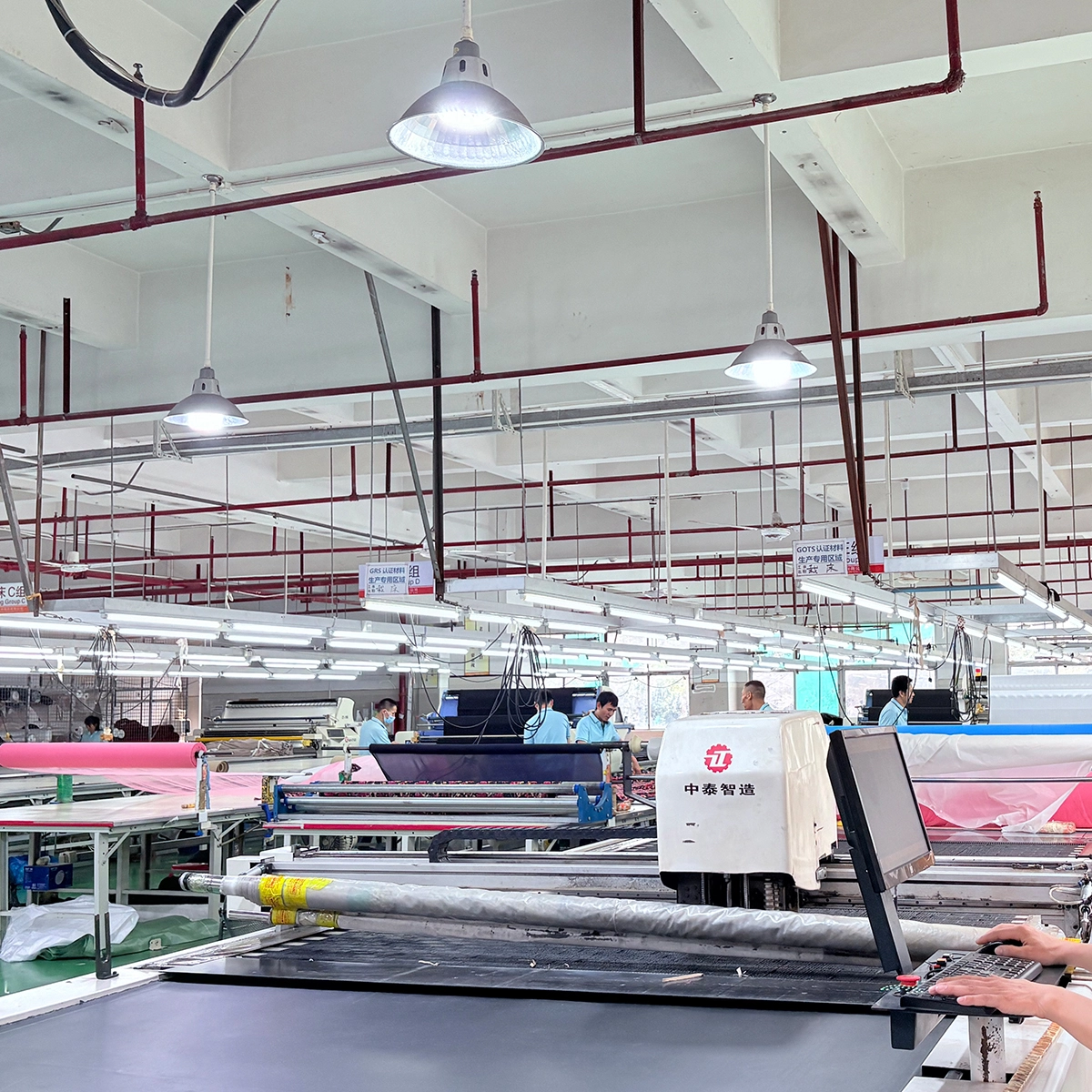
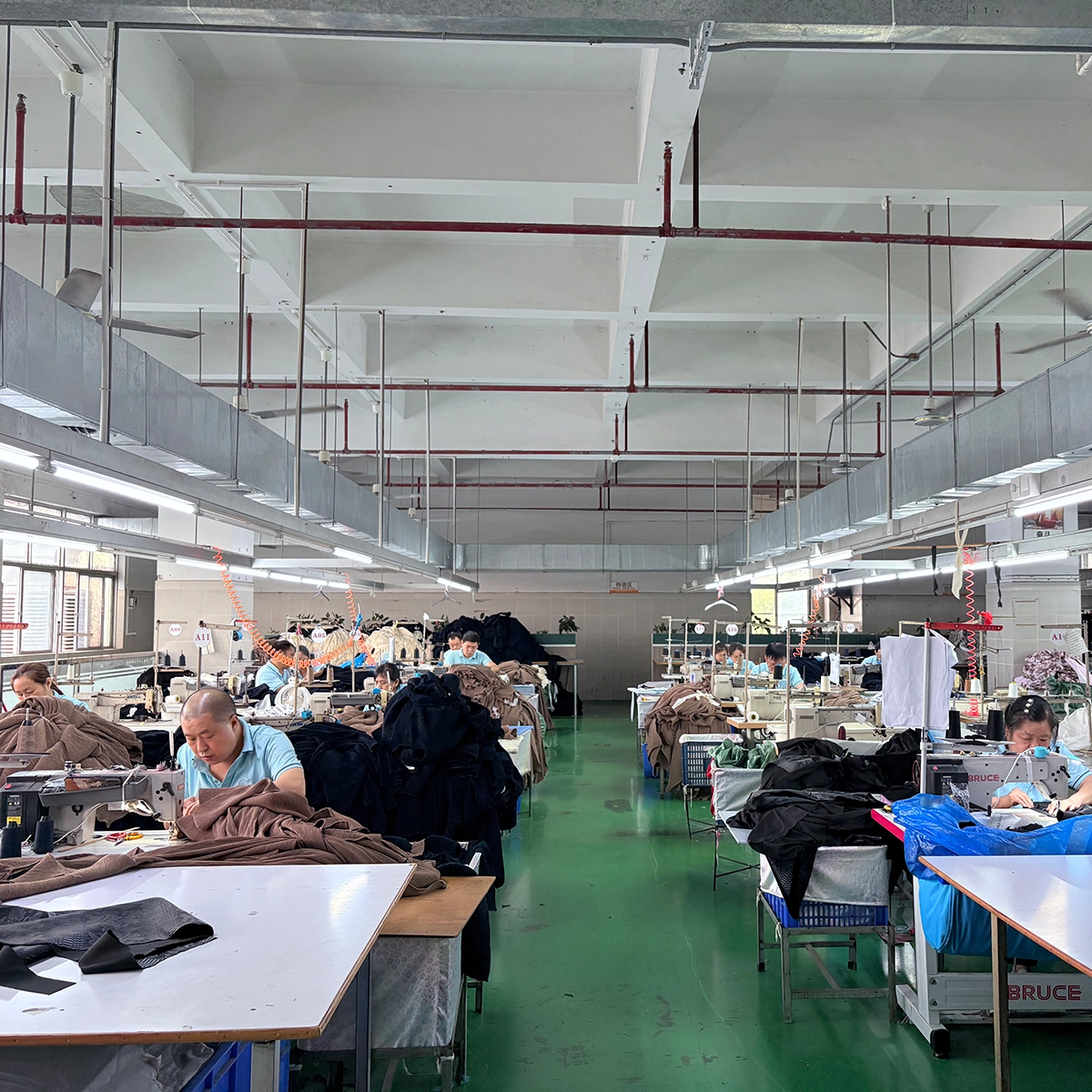
Our Satin Slip Dress Production Capacity
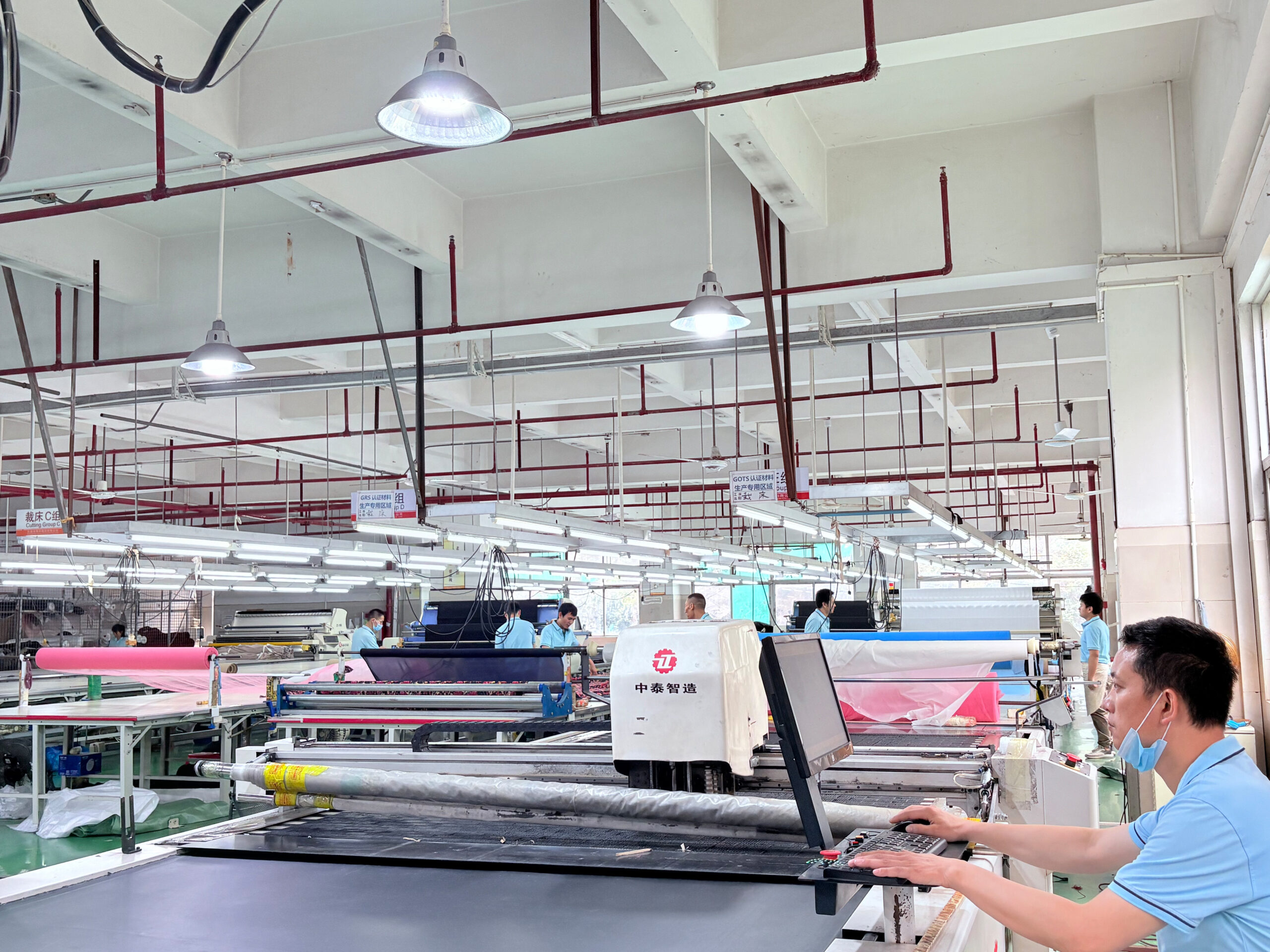
Our factory handles fabric preparation, cutting, sewing, pressing, inspection and packing within the production process. The production team works from the approved sample and confirmed specifications when the same style is reordered.
Factory Capacity
- 18+ years of garment manufacturing experience
- 750+ workers
- 500+ sewing machines
- 5 automatic cutting lines
- Up to 150,000 pieces monthly capacity
Custom Satin Slip Dress Manufacturing For Fashion Brands
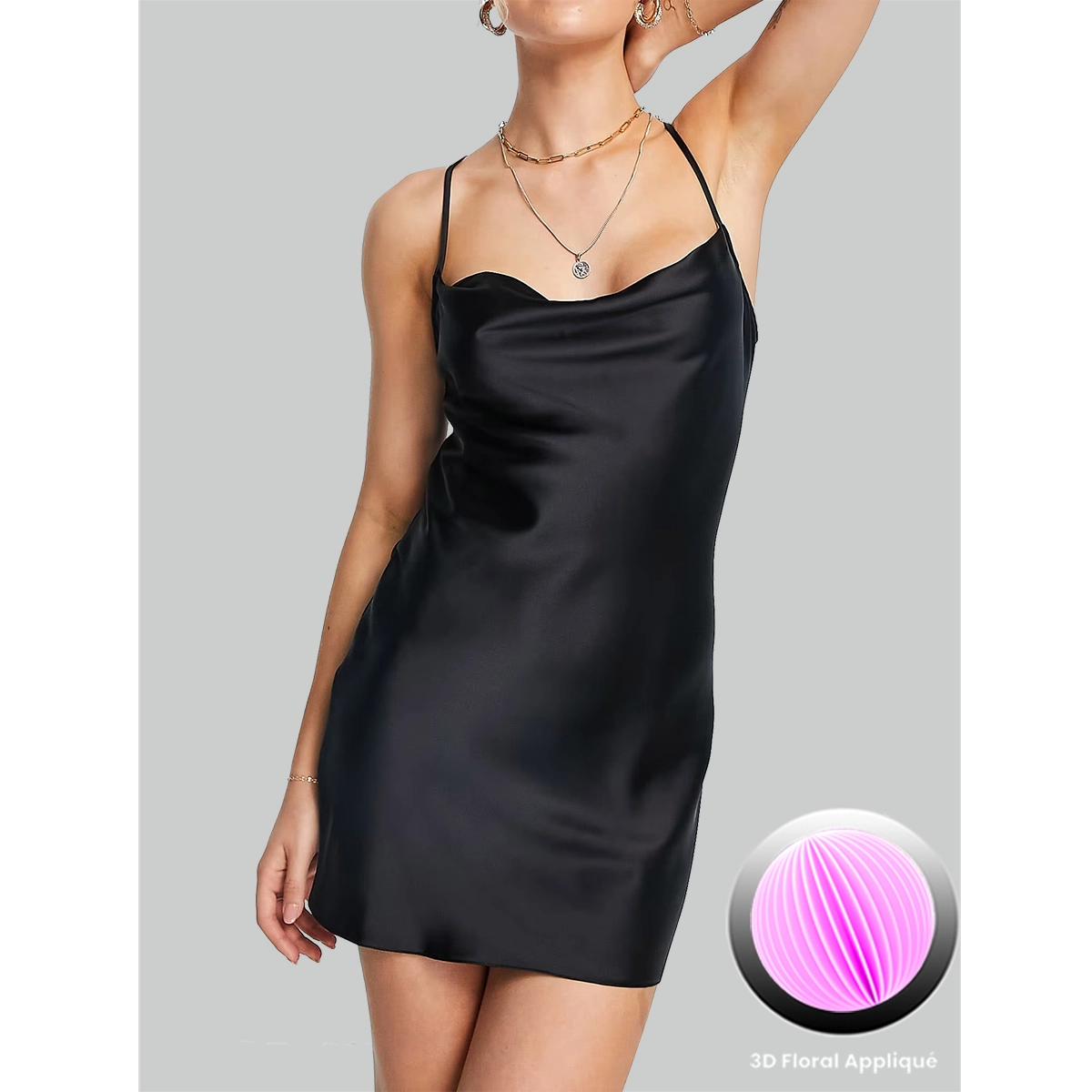
A satin slip dress may have relatively few panels and seams, but the fabric itself can make production more demanding.
Lightweight satin can move during spreading and cutting. Bias-cut panels can change length after the garment has hung. Fine satin also makes seam puckering, needle marks and pressing marks easier to see.
Strap placement is another small detail that can affect the finished fit. A few millimeters at the shoulder can change the neckline position or how the dress sits on the body.
For this reason, we look at the fabric, pattern, measurements and construction together when developing a style. If something needs to be adjusted, it is better to find it at the sample stage than after the bulk pieces have been cut.
Satin Slip Dress Manufacturing Specifications
| Manufacturing Item | Available Options |
|---|---|
| Product | Satin Slip Dress |
| Fabric | Polyester Satin / Silk Satin / Satin Blend |
| Weight | Lightweight / Medium / Heavyweight |
| Silhouette | Bias Cut / Straight / A-Line / Body-Skimming |
| Length | Mini / Midi / Maxi |
| Neckline | Cowl / V-Neck / Square / Straight |
| Straps | Spaghetti / Adjustable / Custom |
| Details | Lace / Slit / Open Back / Ruched |
| Lining | Unlined / Partial / Full |
| MOQ | 50–100 Pieces Per Style |
| Sampling | 3–7 Days |
| Production | OEM / ODM / Private Label |
The final specifications are confirmed from the approved sample, tech pack or reference garment before bulk production.
Who We Manufacture Satin Slip Dresses For
Our customers come to us at different stages. Some are developing their first collection, while others already have approved styles that need to be reproduced in new colors or quantities.
Fashion Startups
For a new label, the first order is often used to test a style before committing to larger quantities. Smaller production runs can be useful when you are still finding the right silhouette, color or price point.
Fashion Brands
Repeat production requires the fit and construction to stay consistent. Once a style is approved, the confirmed measurements and production details can be used as the reference for later orders.
Designers
A sketch, tech pack or reference garment can be used as the starting point. Pattern development and construction details are worked out during sampling before the style moves into bulk.
Boutique Owners
Boutiques often need smaller quantities across selected styles and colors. We can produce according to the quantities, fabric and measurements agreed for the collection.
Retailers & Wholesalers
For larger orders, fabric consistency, measurements, color matching and packing become more important. These production details are confirmed before cutting starts.
Private Label Companies
Private label orders can include the garment as well as woven labels, care labels, hangtags and specified packaging.
Satin Slip Dress Styles We Manufacture
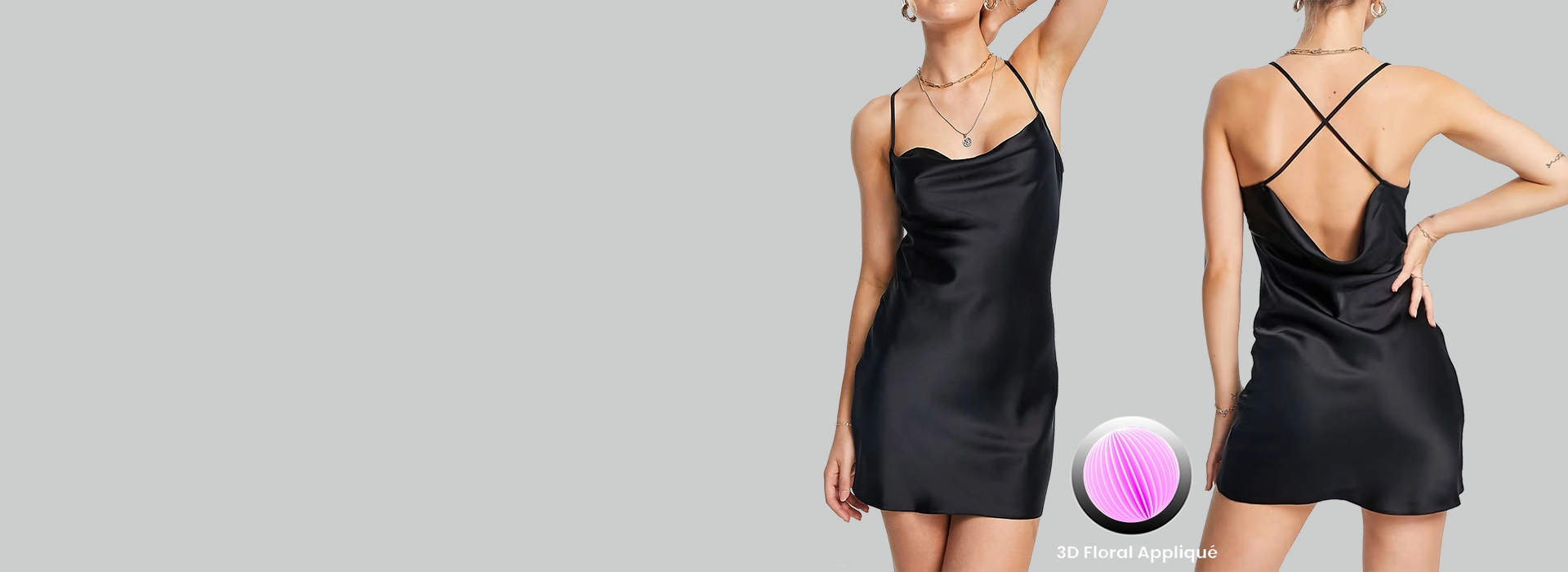
Your satin slip dress does not have to follow a standard factory pattern. The silhouette, neckline, back, straps and length can all be developed around your design.
The fabric and construction are considered at the same time. A change to the neckline, for example, can affect the strap position, lining, seam construction and final fit.
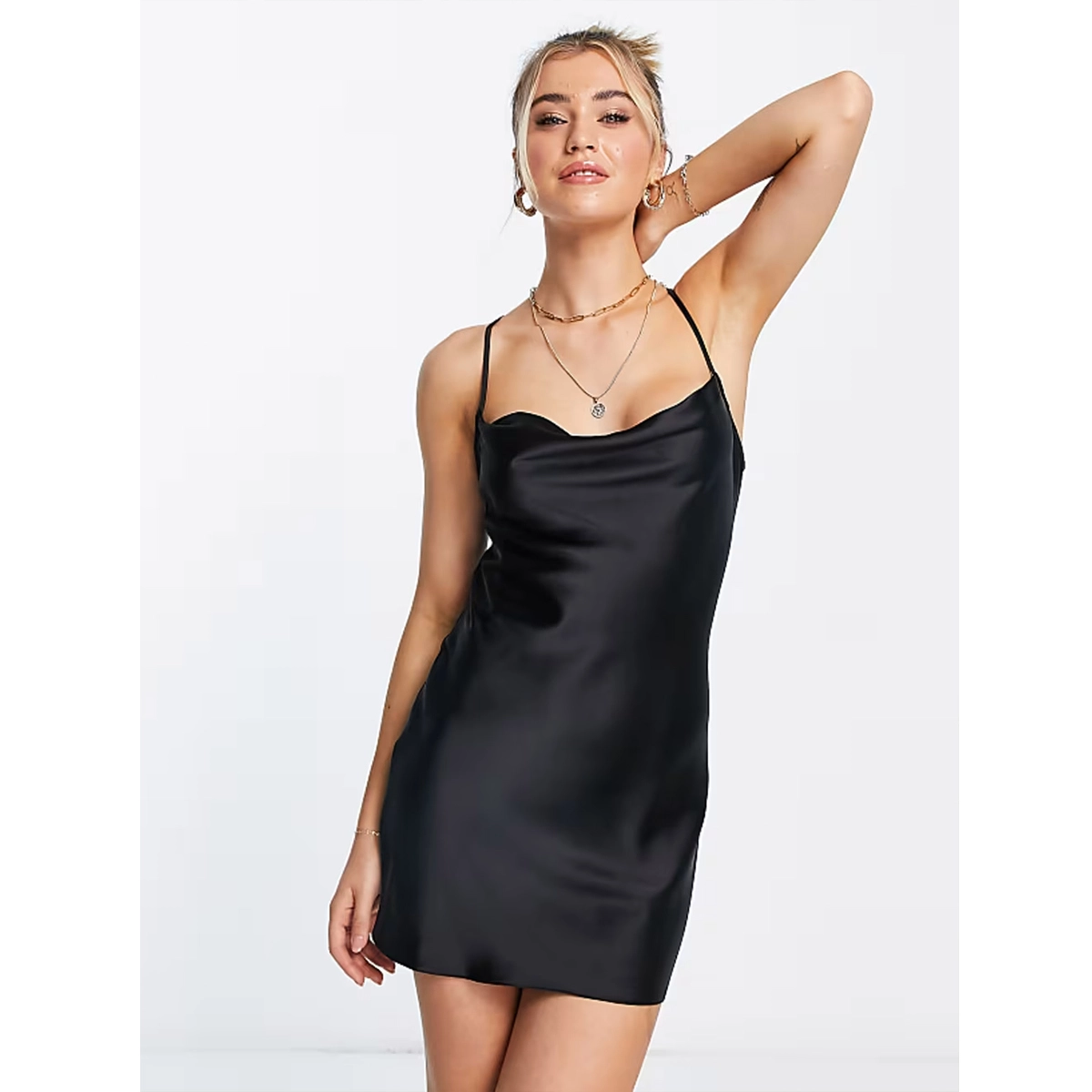
Cowl necks are particularly sensitive to fabric weight and neckline allowance. We normally test the drape using the actual satin before settling on the final cowl depth and construction.
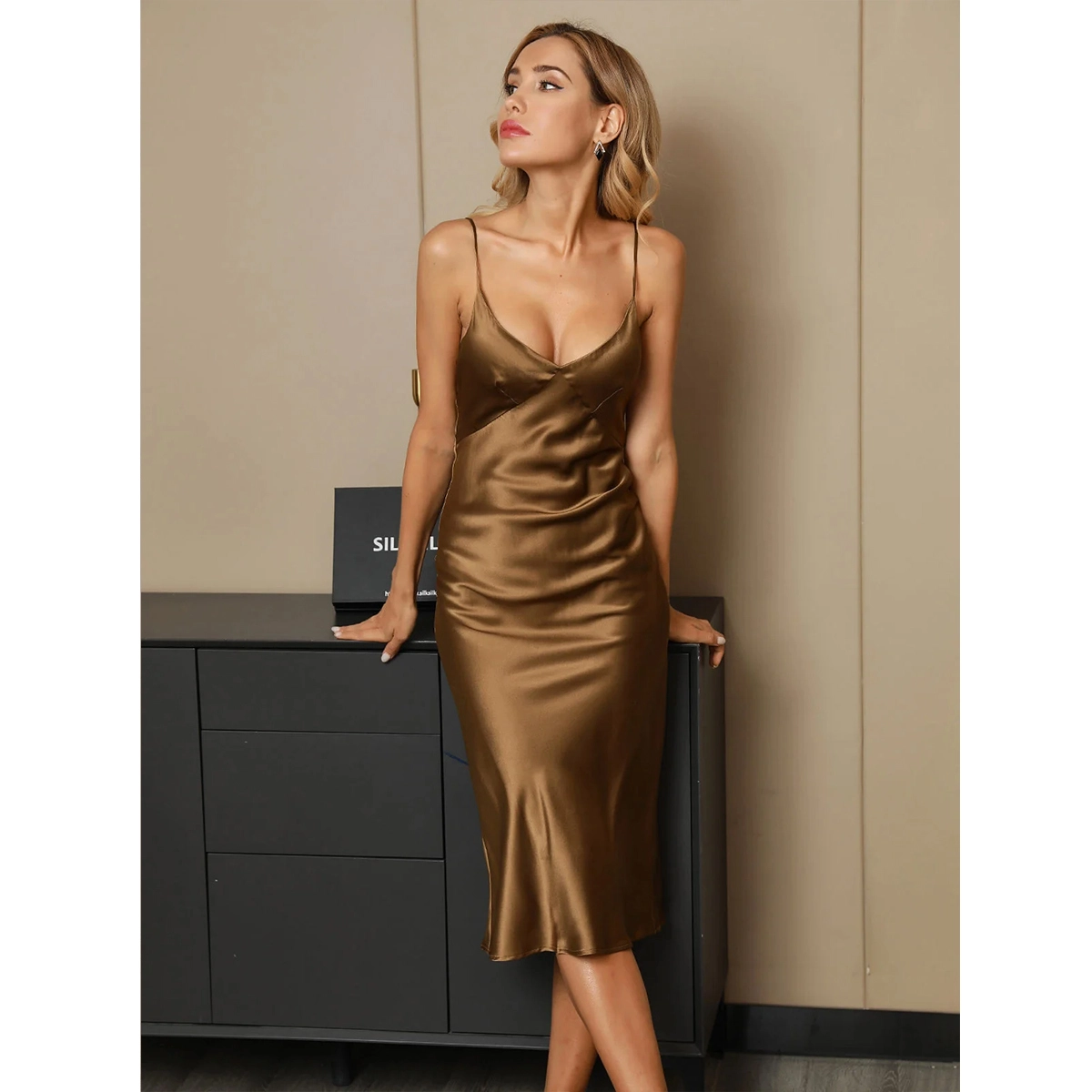
The V needs to remain clean without pulling across the bust. During sample development, the neckline depth, shoulder point and strap position are checked together.
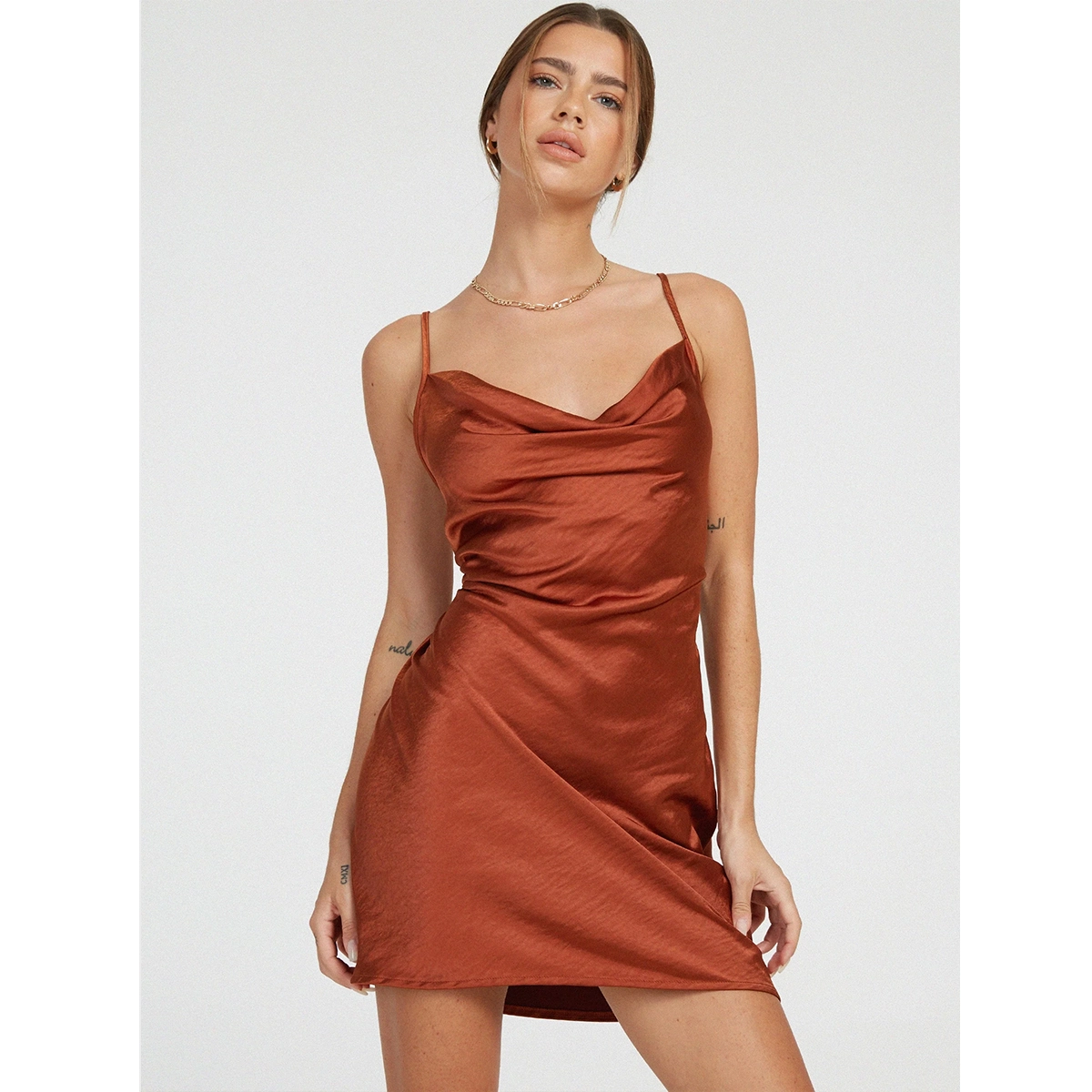
With a mini style, even a small change in finished length can alter the proportions. The finished measurement is confirmed from an agreed measurement point before the bulk pattern is released.
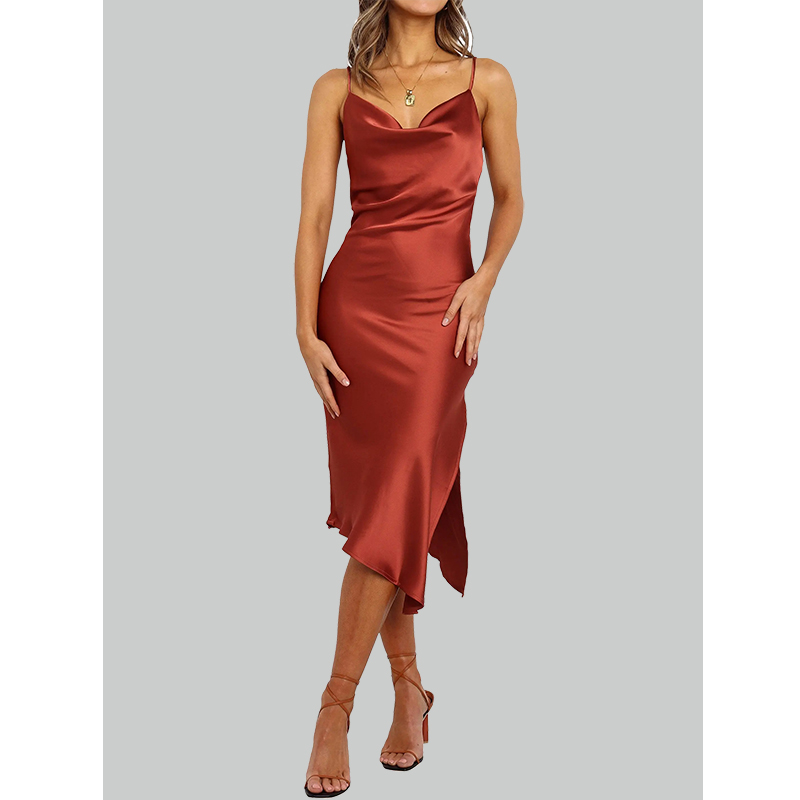
Midi satin dresses can be kept clean and minimal or developed with details such as a side slit, adjustable straps or a cowl front. The pattern follows the approved measurements rather than a fixed standard shape.
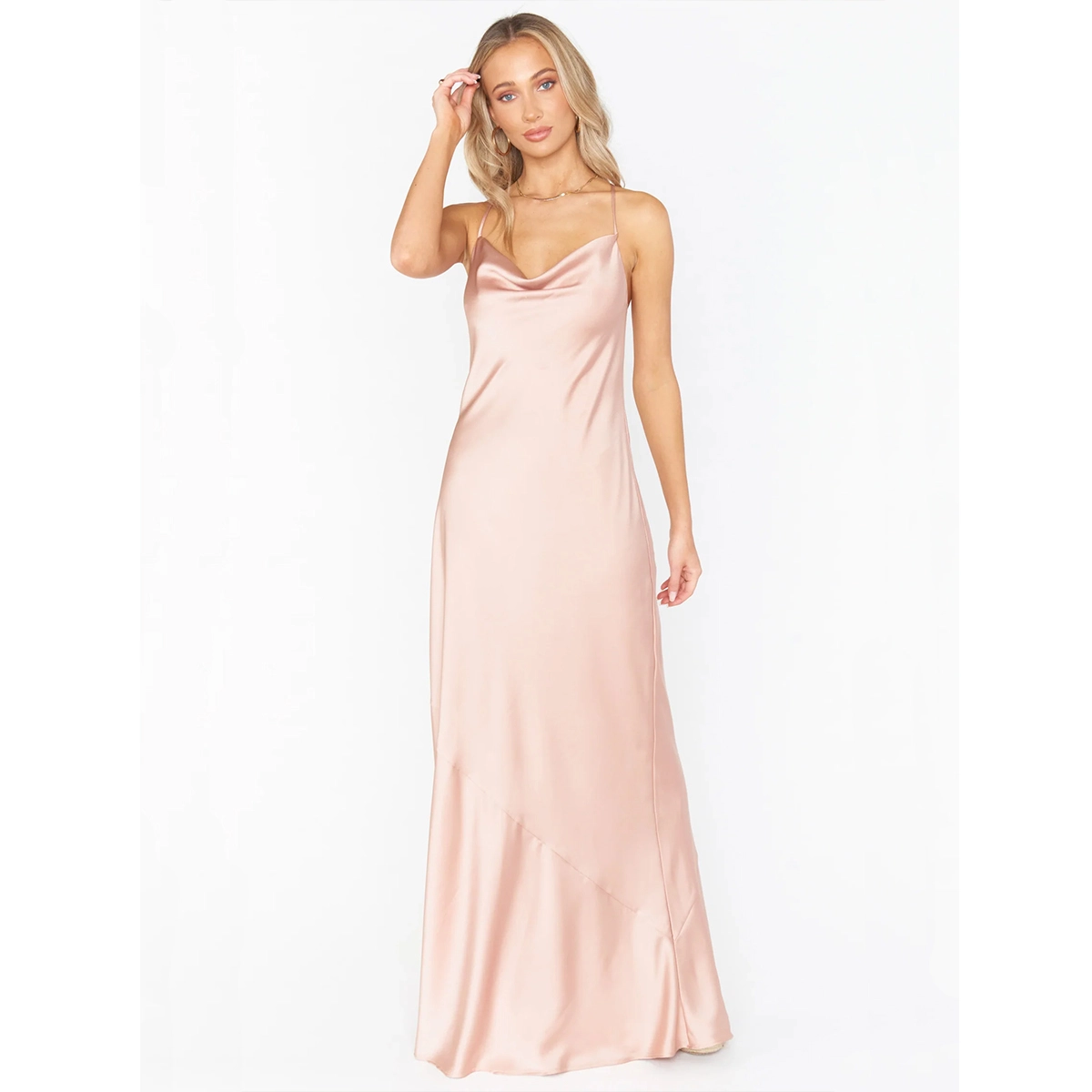
Long satin styles make uneven hems easy to see. Fabric direction, hem balance and finished length are checked during development, particularly when the fabric has a soft or fluid drape.
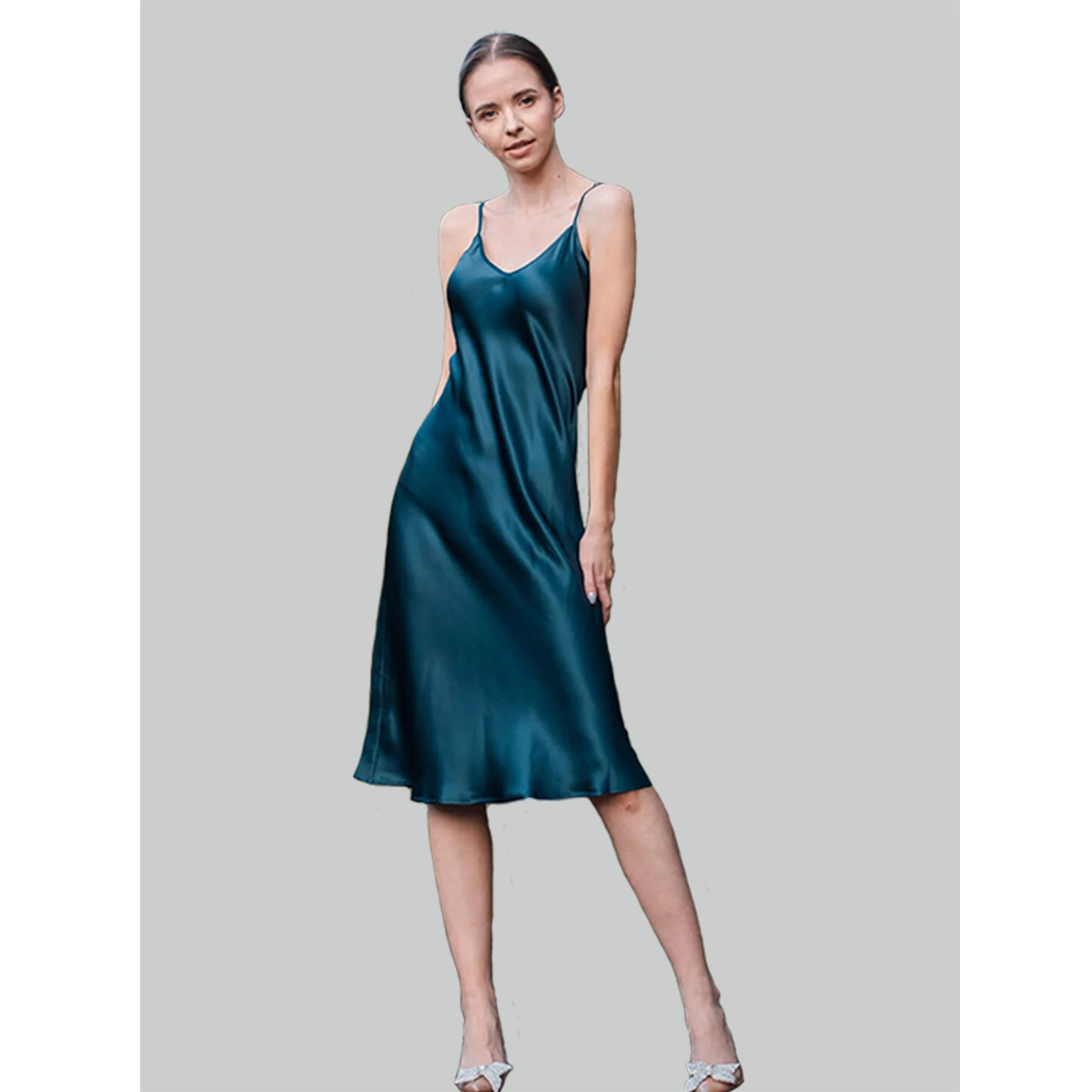
Bias-cut satin needs more control during cutting because the fabric is less stable than a straight-grain layout. Grain direction, fabric relaxation and finished measurements are checked before bulk cutting.
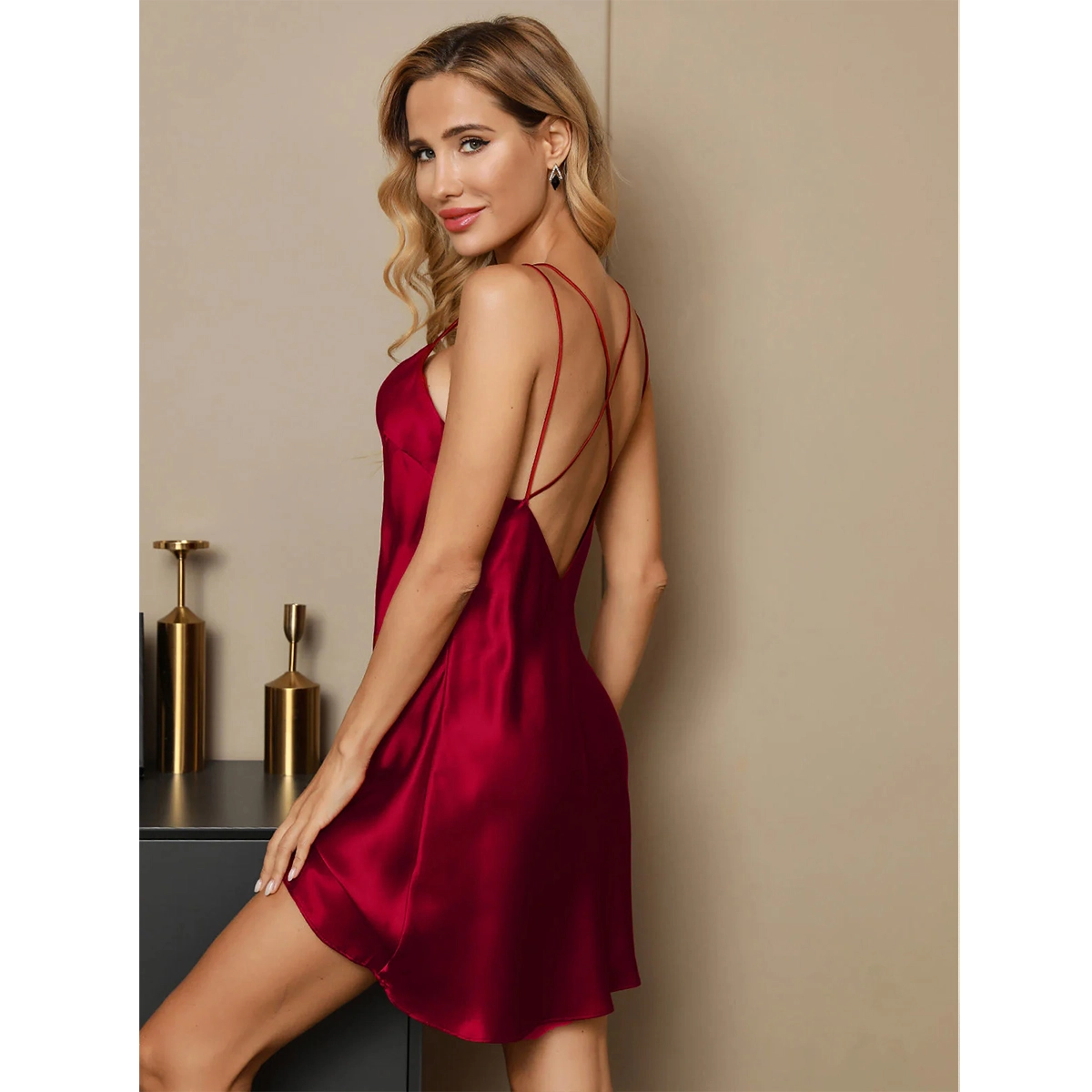
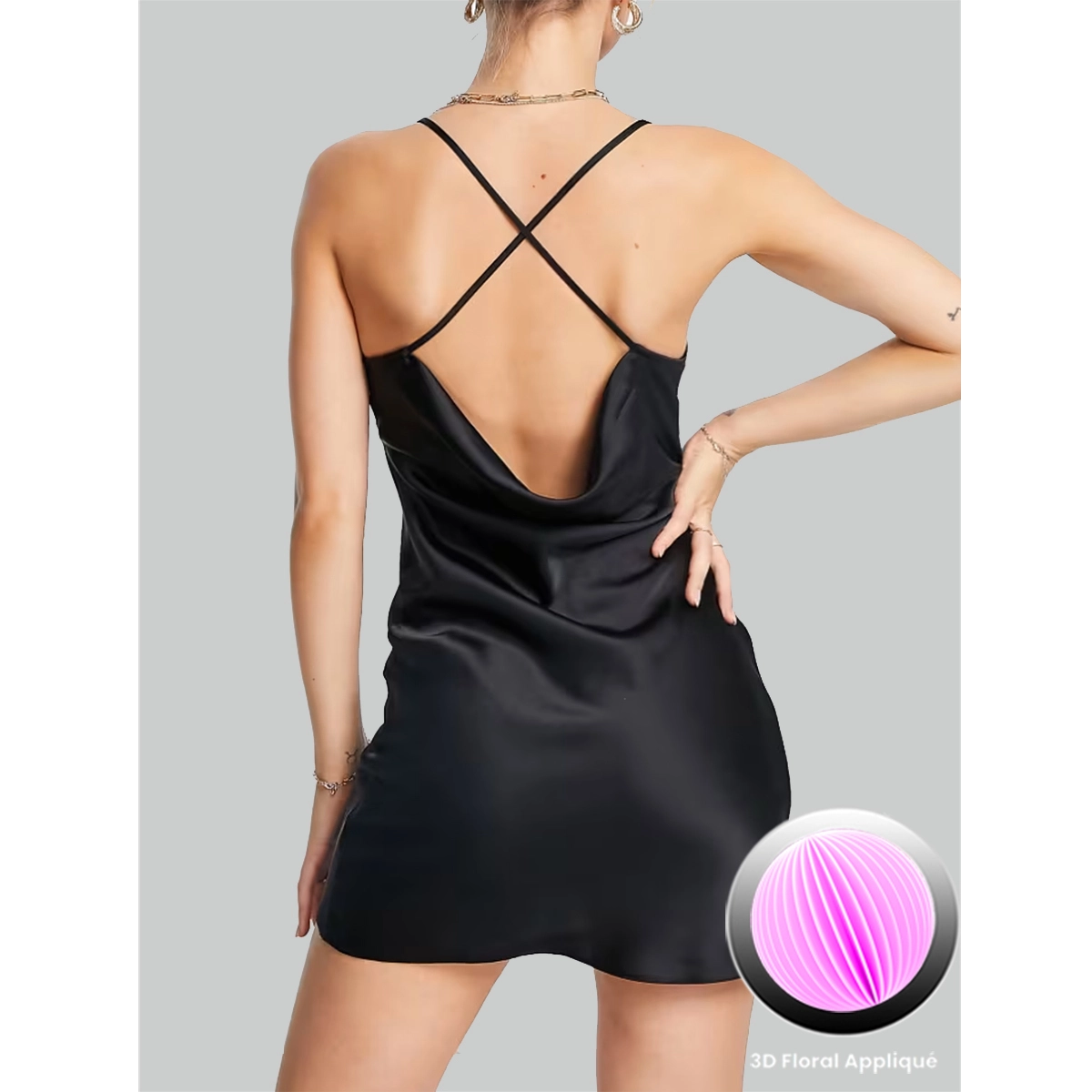
With a backless style, the opening, straps and bust fit need to work together. The back shape is checked on the sample so the finished dress stays in position without adding unnecessary construction.
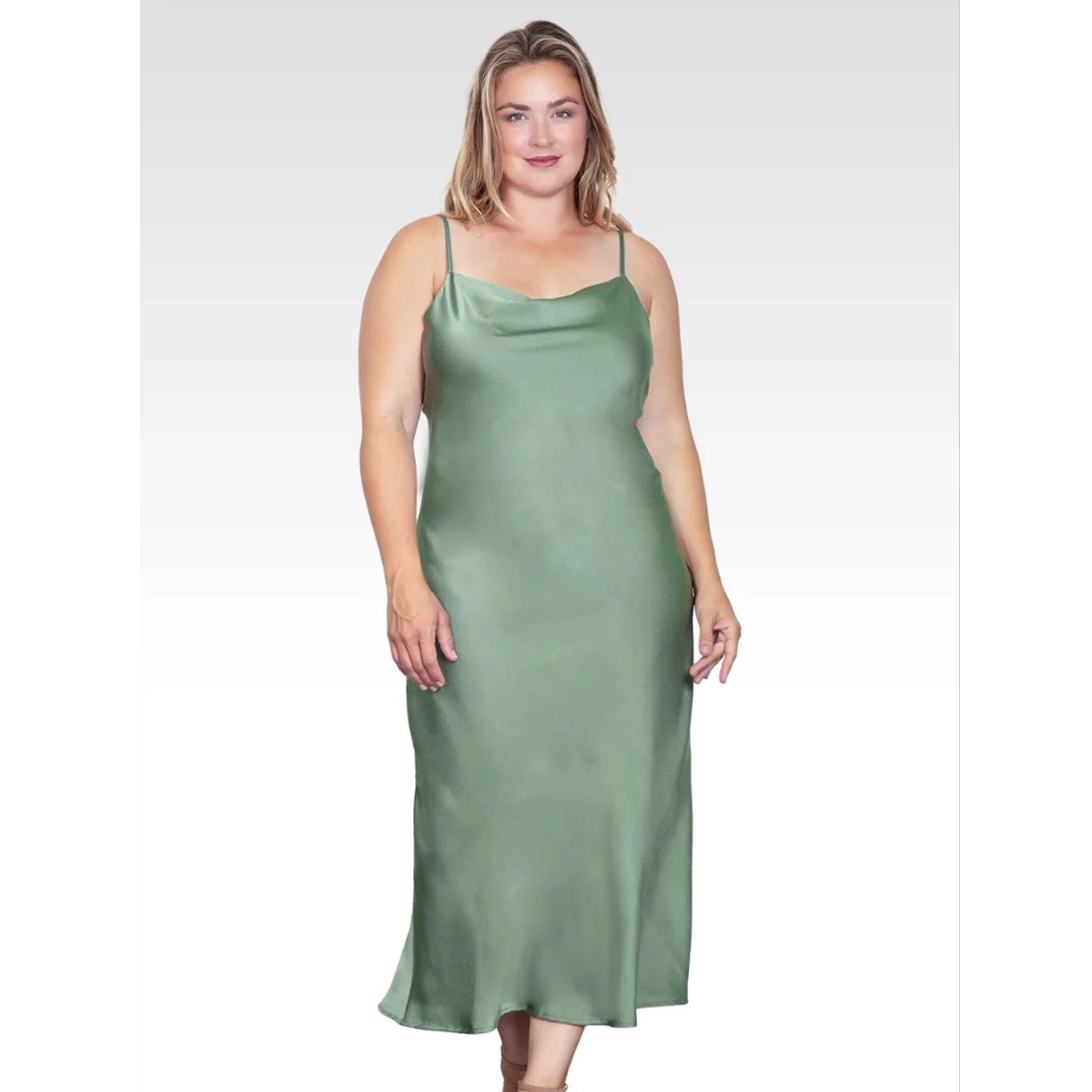
Plus Size Satin Slip Dress
Plus size satin dresses need more than simply grading up the basic pattern. Bust shaping, strap placement, armhole room and fabric drape are checked before the production pattern is approved.
Factory Certifications
Our factory works with applicable BSCI, GOTS, ISO 9001 and OEKO-TEX requirements. The relevant certification or documentation depends on the product, fabric and order requirements, and can be confirmed during the sourcing process.
 OEKO Certificate
 ISO9001 Certificate
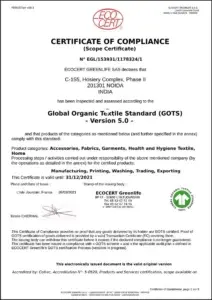 GOTS Certificate
 BSCI Certificate
Satin Slip Dress Construction Options
Most details can be developed around your existing sample or tech pack. Construction is normally settled at the sample stage, where the pattern, fabric and finishing method are checked together before the style goes into bulk.
- Cowl neck
- V-neck
- Square neck
- Straight neck
- Scoop neck
- Spaghetti straps
- Adjustable straps
- Fixed straps
- Wider straps
- Custom strap width
- Bias cut
- Body-skimming
- Straight
- Relaxed
- A-line
- Fitted
- Mini
- Above knee
- Midi
- Ankle
- Maxi
- Side slit
- Open back
- Low back
- Lace trim
- Ruched detail
- Bow detail
- Clean hem
- Rolled hem
- Lace hem
- Bound edge
- Custom edge finish
Why Bias-Cut Satin Slip Dresses Use More Fabric
A bias-cut slip dress is laid diagonally across the fabric instead of following the normal grain. The diagonal layout leaves more unused space between pattern pieces, which increases fabric consumption.
Depending on the pattern shape, size range and fabric width, consumption can be around 25%–40% higher than a comparable straight-cut style.
We check fabric width and marker efficiency when costing the style. If you have a target garment cost, the pattern layout can also be reviewed before bulk production to see where fabric use can be reduced without changing the intended fit.
Private Label Satin Slip Dress Manufacturing
Private label production can include the garment as well as your branding and packing requirements.
You can specify:
- Woven label
- Care label
- Hangtag
- Packaging
- Folding method
- Polybag requirements
- Carton markings
These details are confirmed before bulk production and added to the production and packing instructions. Labels, hangtags and packing requirements are then handled together with the finished garments.
Common Satin Slip Dress Production Issues
Satin tends to show small production problems clearly. These are some of the points that receive extra attention during development and bulk production.
Fabric Slippage During Cutting
Lightweight satin can move while the fabric is being spread and cut. This is more noticeable with bias-cut styles. The fabric lay, grain direction and cutting layers need to be checked before the panels enter sewing.
Seam Puckering
Puckering stands out on a smooth satin surface. Needle selection, thread tension and machine settings all affect the seam, so the setup needs to suit the actual fabric being used.
Bias Hem Distortion
A bias-cut garment can drop after sewing and handling. For longer styles, the dress may need time to settle before the final hem is checked and corrected.
Pressing Marks
Too much heat or pressure can leave shine or marks on satin. Pressing temperature and handling are adjusted according to the fabric, especially around visible seams and hems.
Shade Differences
Color consistency becomes important when one style is produced in several colors or reordered later. Bulk fabric is checked against the approved color reference before cutting.
Satin Slip Dress Production Example
Product: Bias-Cut Satin Slip Dress
Fabric: Satin
Construction: Cowl Neck + Adjustable Spaghetti Straps
Order Quantity: 300 Pieces
Color: Custom Color
Application: Fashion Brand Collection
For this production run, the bias cut required the most attention. The satin could shift during cutting, while the hem needed time to settle before the final length was confirmed.
The sample was checked first for drape, hem balance, fit and strap position. Once approved, the same sample and production measurements were used as the reference for the 300-piece bulk order.
Satin Fabric Options for Slip Dresses
The satin you choose affects more than the appearance of the finished dress. Fabric weight, drape, stretch, surface finish and price can all change the way the style needs to be cut and sewn.
| Fabric | Suitable For | Manufacturing Consideration |
|---|---|---|
| Polyester Satin | Commercial collections | Cost, color availability and bulk consistency |
| Silk Satin | Premium collections | Soft hand feel, drape and careful handling |
| Silk-Blend Satin | Mid-to-premium collections | Balance between fabric feel, performance and cost |
| Stretch Satin | Fitted silhouettes | Stretch recovery, fit and seam stability |
| Satin Crepe | Less fluid silhouettes | Structure, surface texture and pressing |
| Charmeuse | Fluid slip dresses | Lightweight drape, cutting and sewing control |
If you already have a fabric specification, we can work from it. If you are still choosing, the target price, hand feel, drape and order quantity give us a better starting point for recommending suitable options.
The most expensive satin is not automatically the best choice. The fabric needs to work with the pattern and construction while still making sense for the final garment cost.
Explore More Slip Dress Styles
Satin is one option for a slip dress collection. If you are comparing different fabrics and constructions, you can also explore our slip dress manufacturer and other slip dress production options:
Inside Our Satin Slip Dress Manufacturing Factory
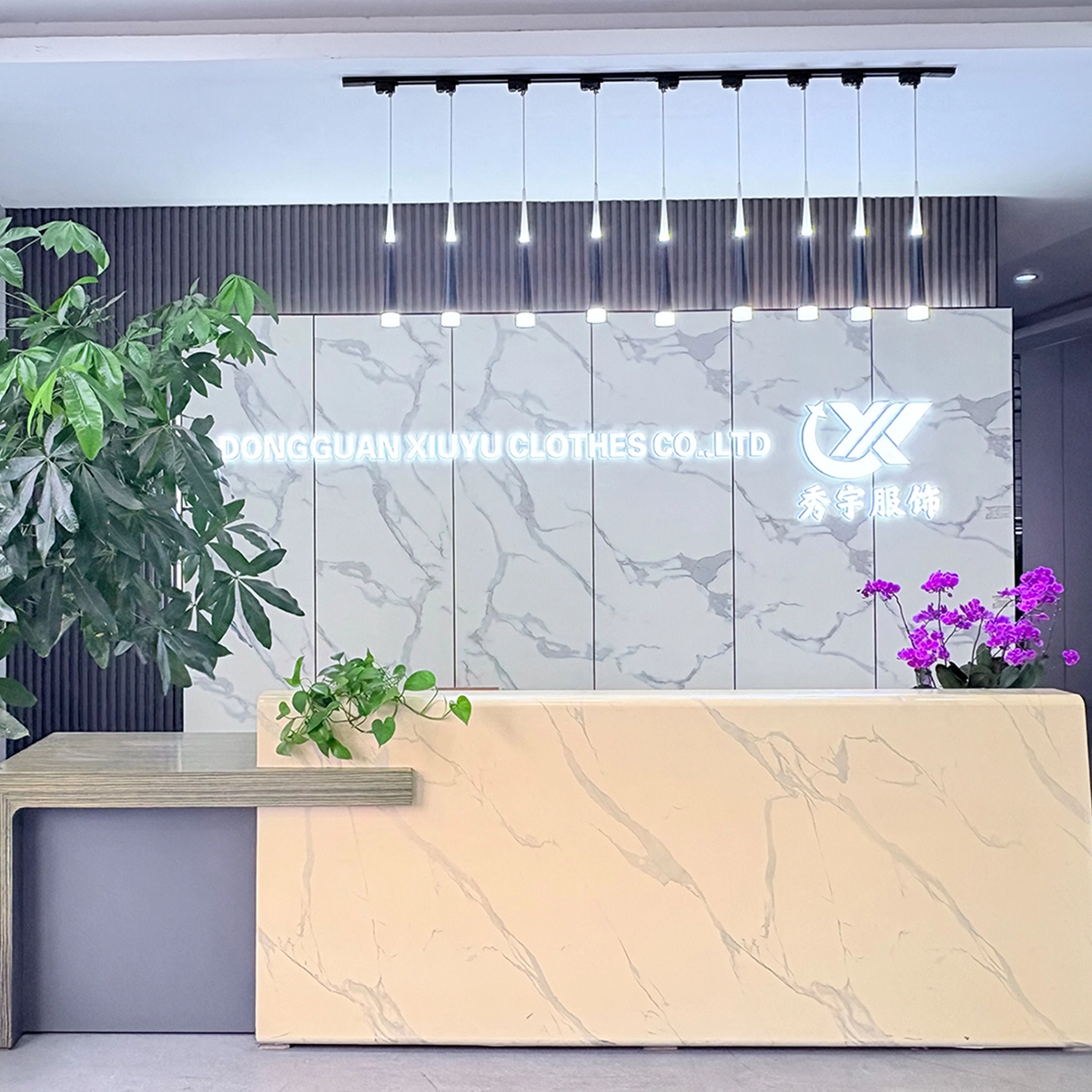
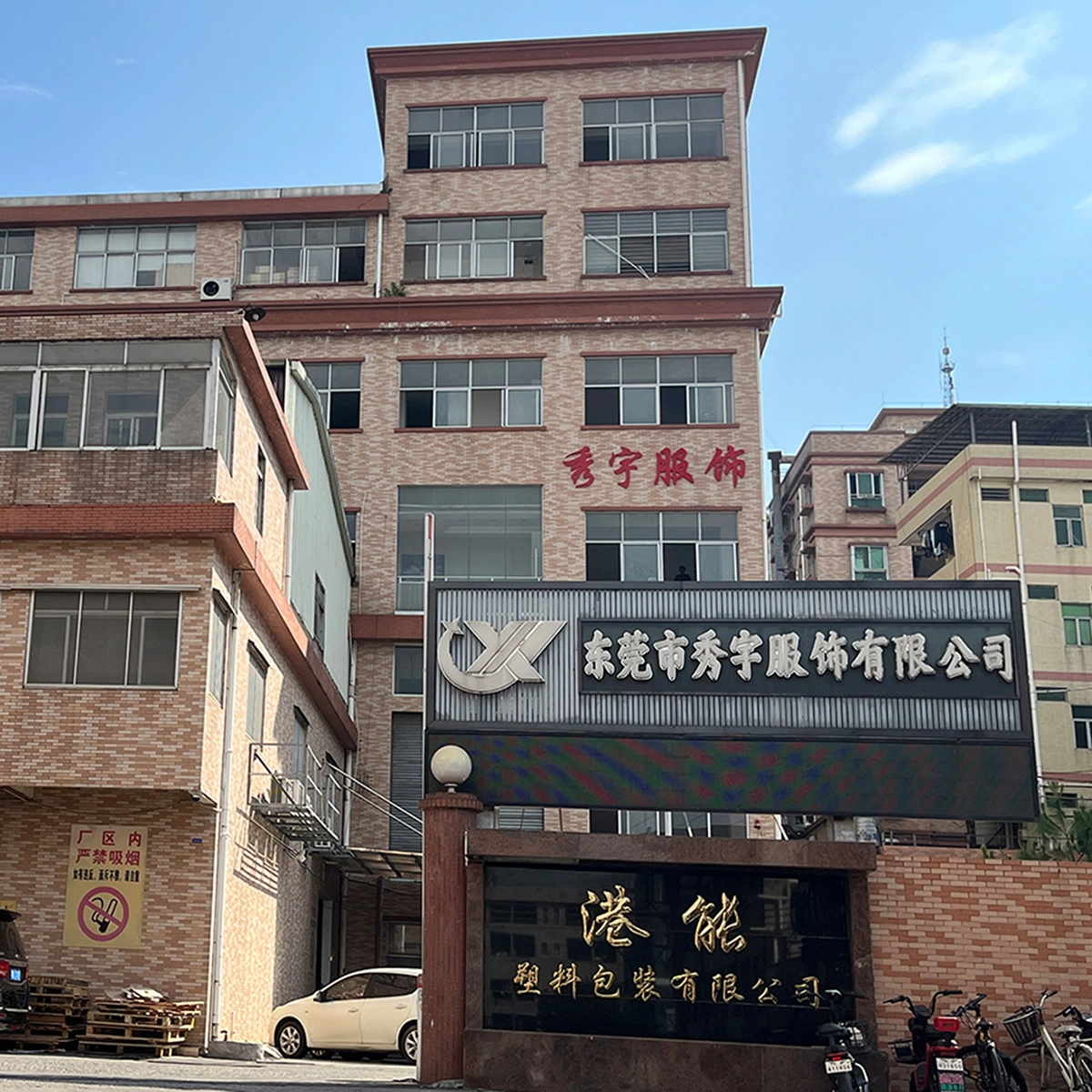
Xiuyu Apparel is a China-based clothing manufacturer with more than 18 years of garment manufacturing experience. Our production covers fabric preparation, cutting, sewing, finishing, inspection and packing. Since 2007, we have worked with fashion brands and private label customers on custom dress production, from initial samples through repeat bulk orders.
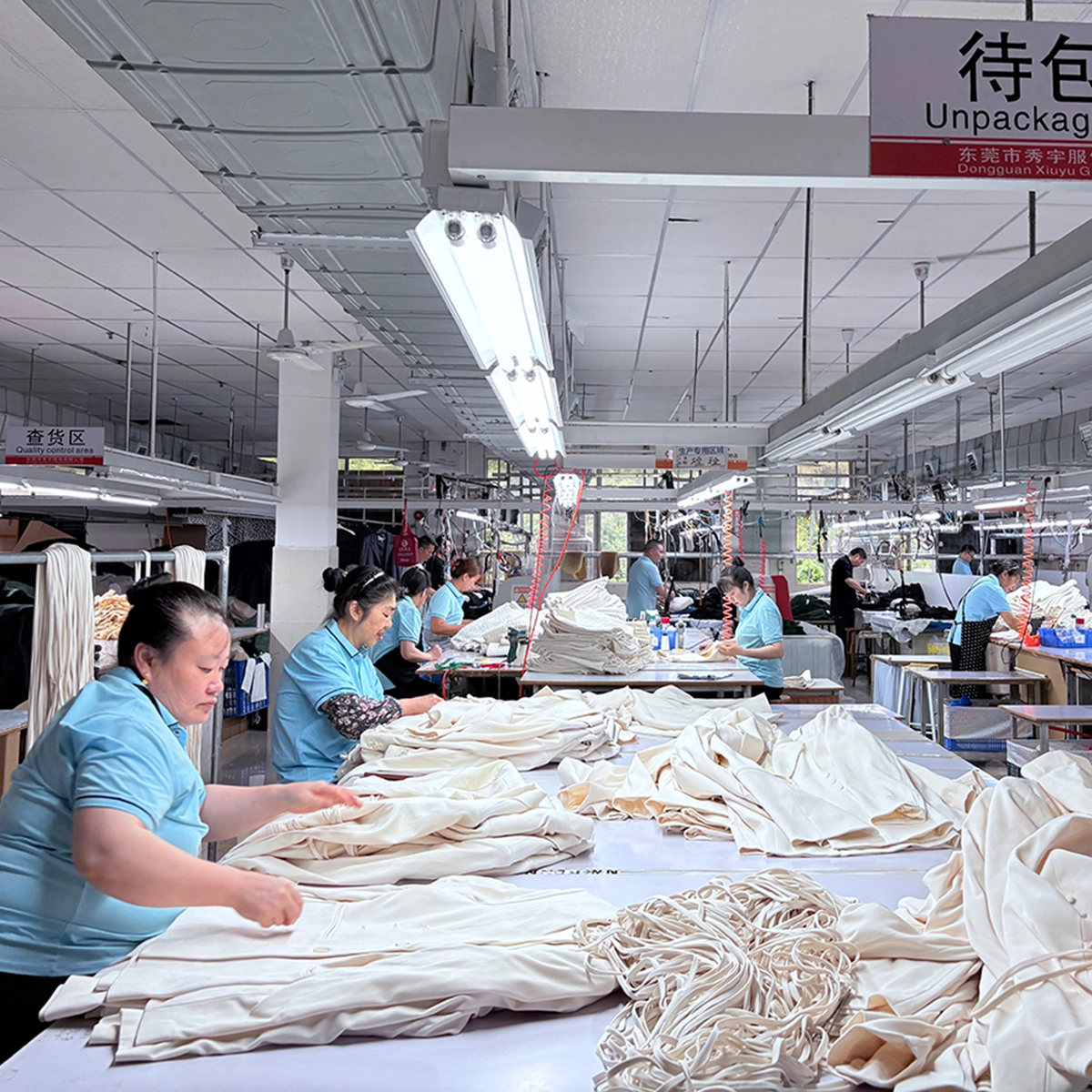
The workshop photos below show the main steps involved in our dress production, from fabric preparation and cutting to sewing, inspection, and packing.
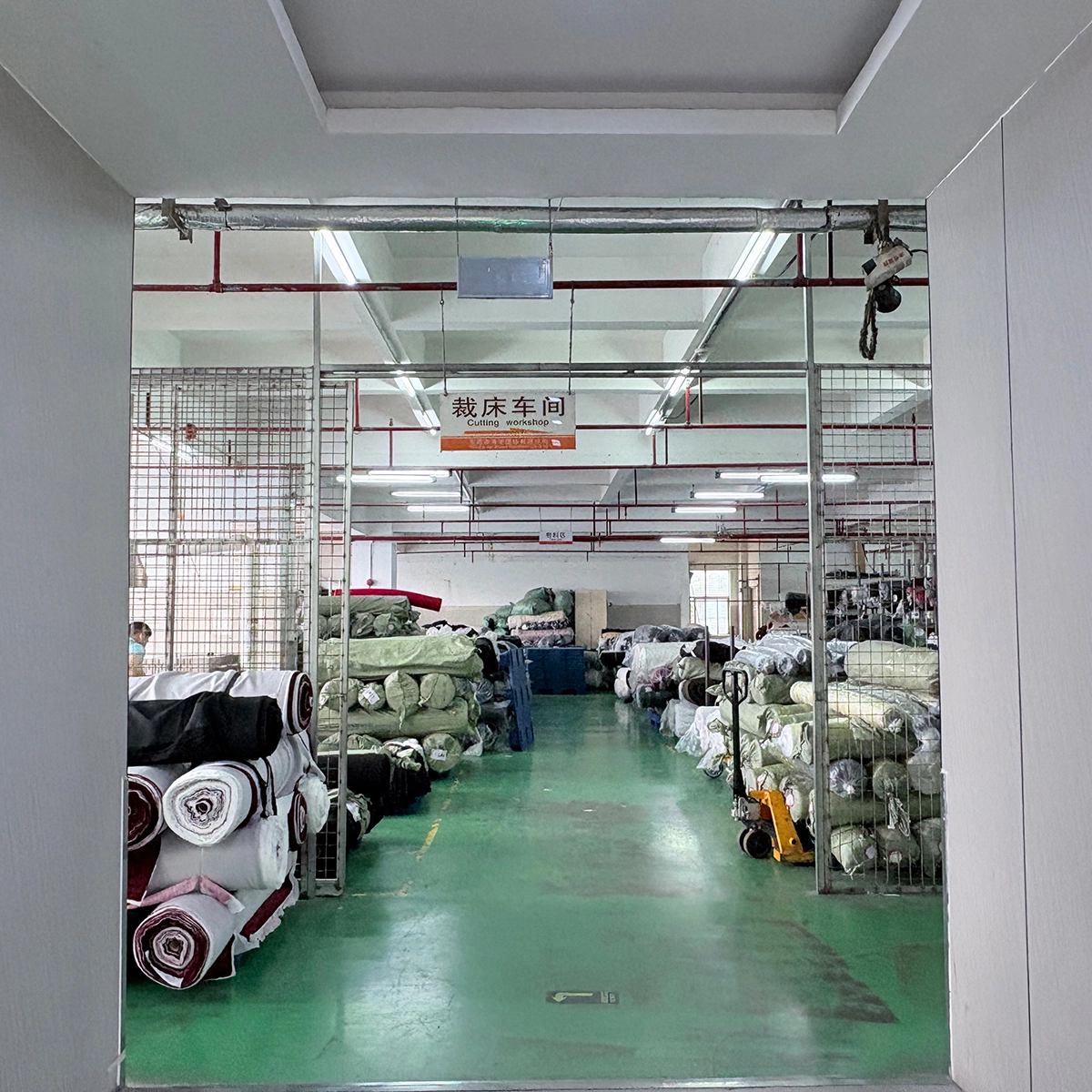
Fabric Warehouse
↓
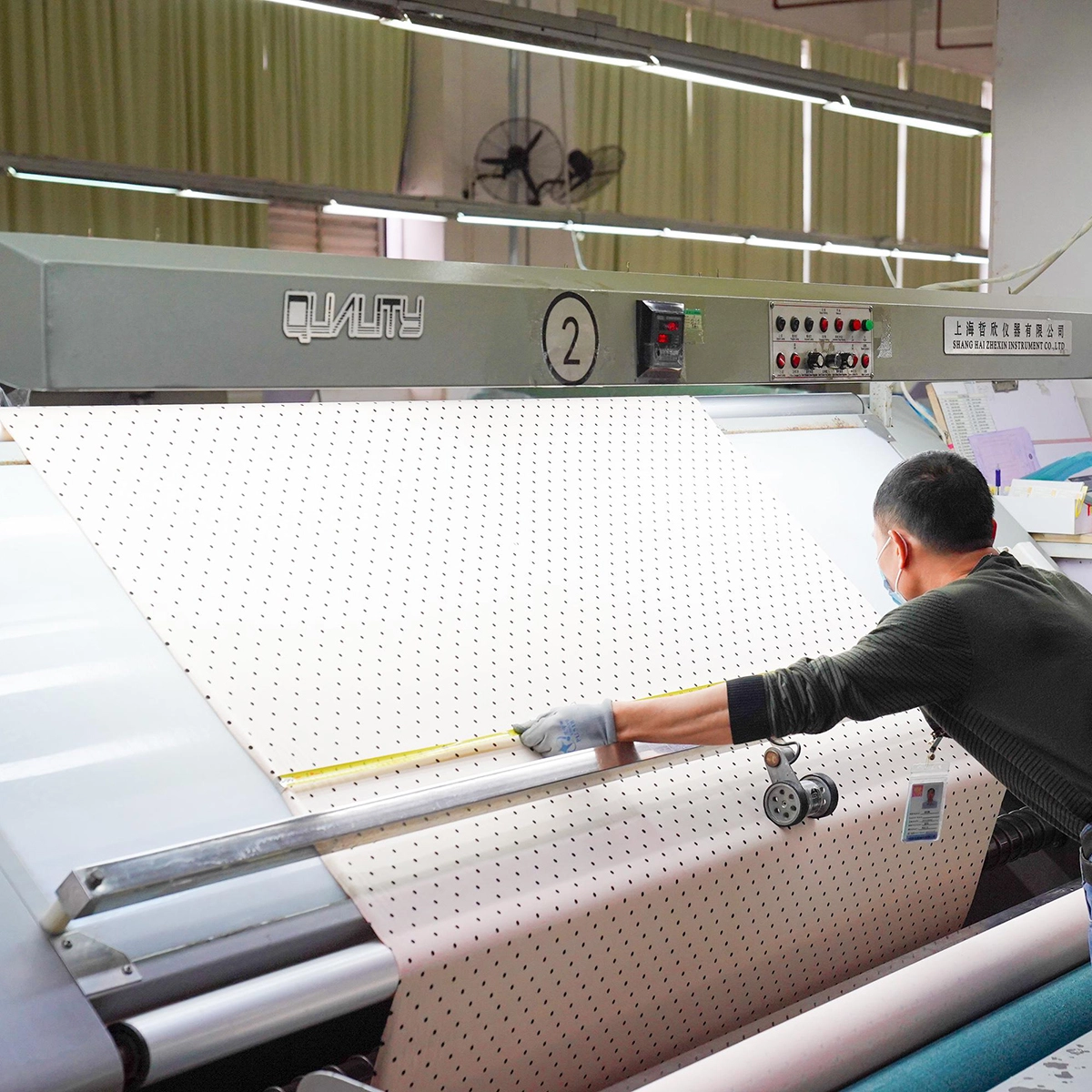
Fabric Inspection
↓
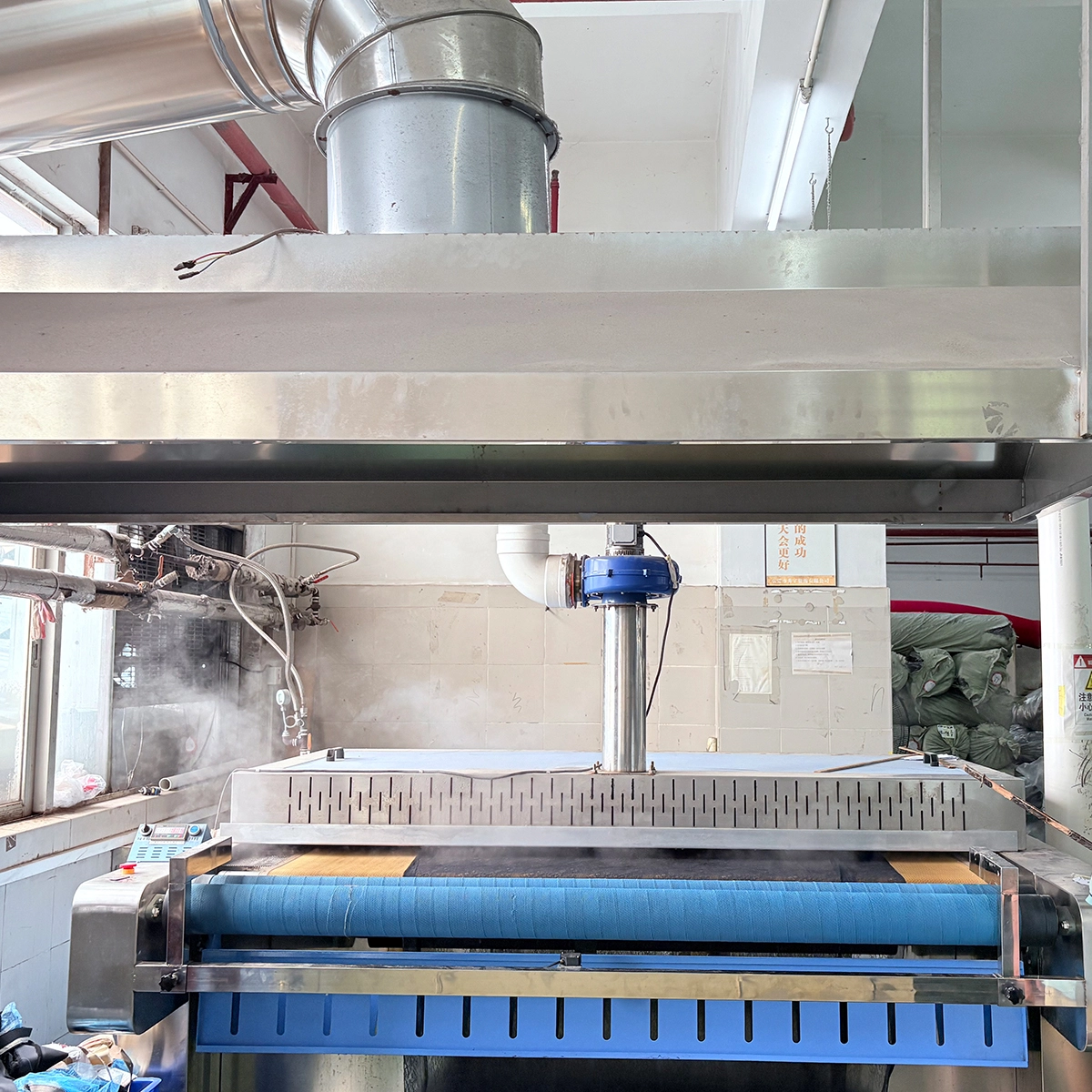
Fabric Pre-shrinking
↓
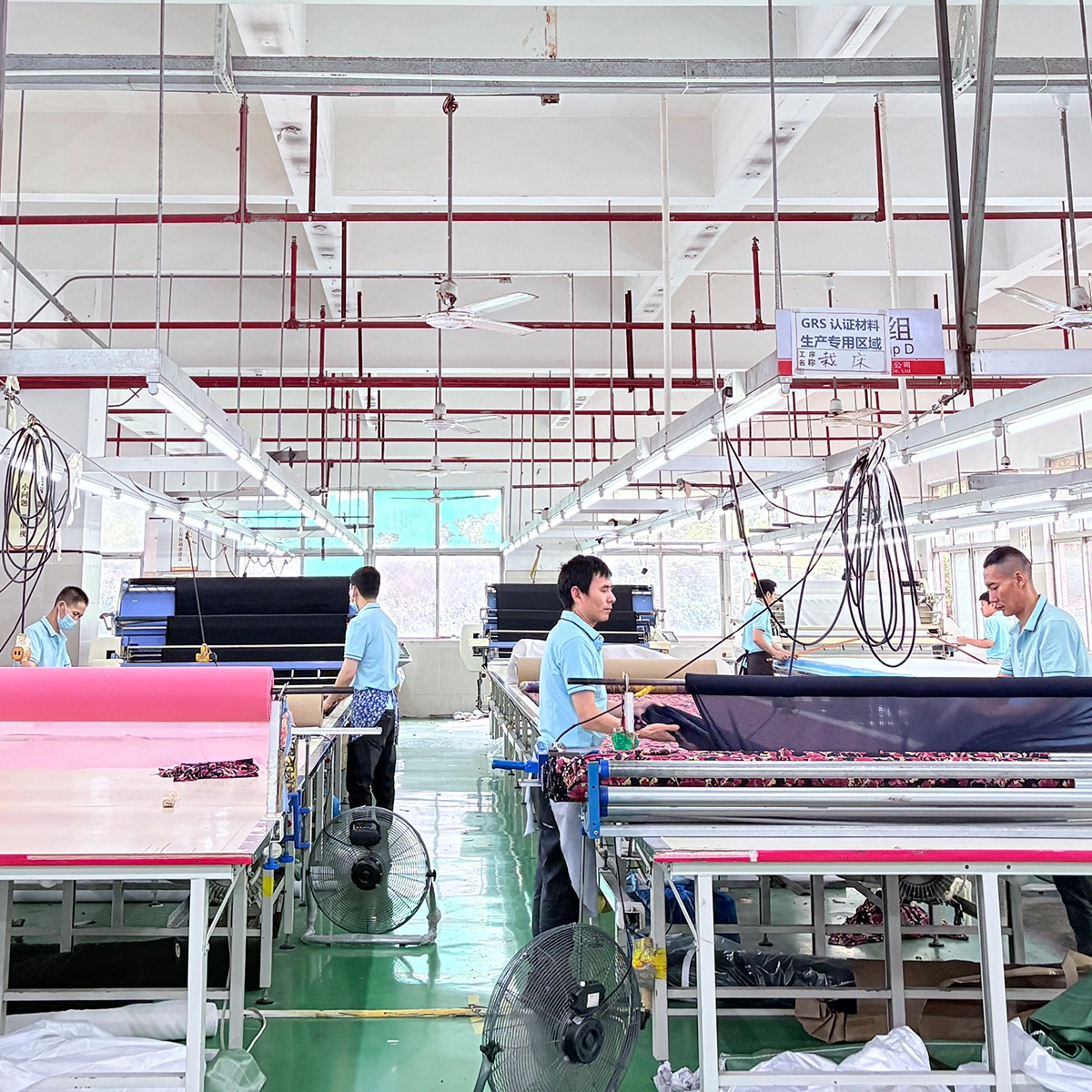
Automatic Cutting
↓
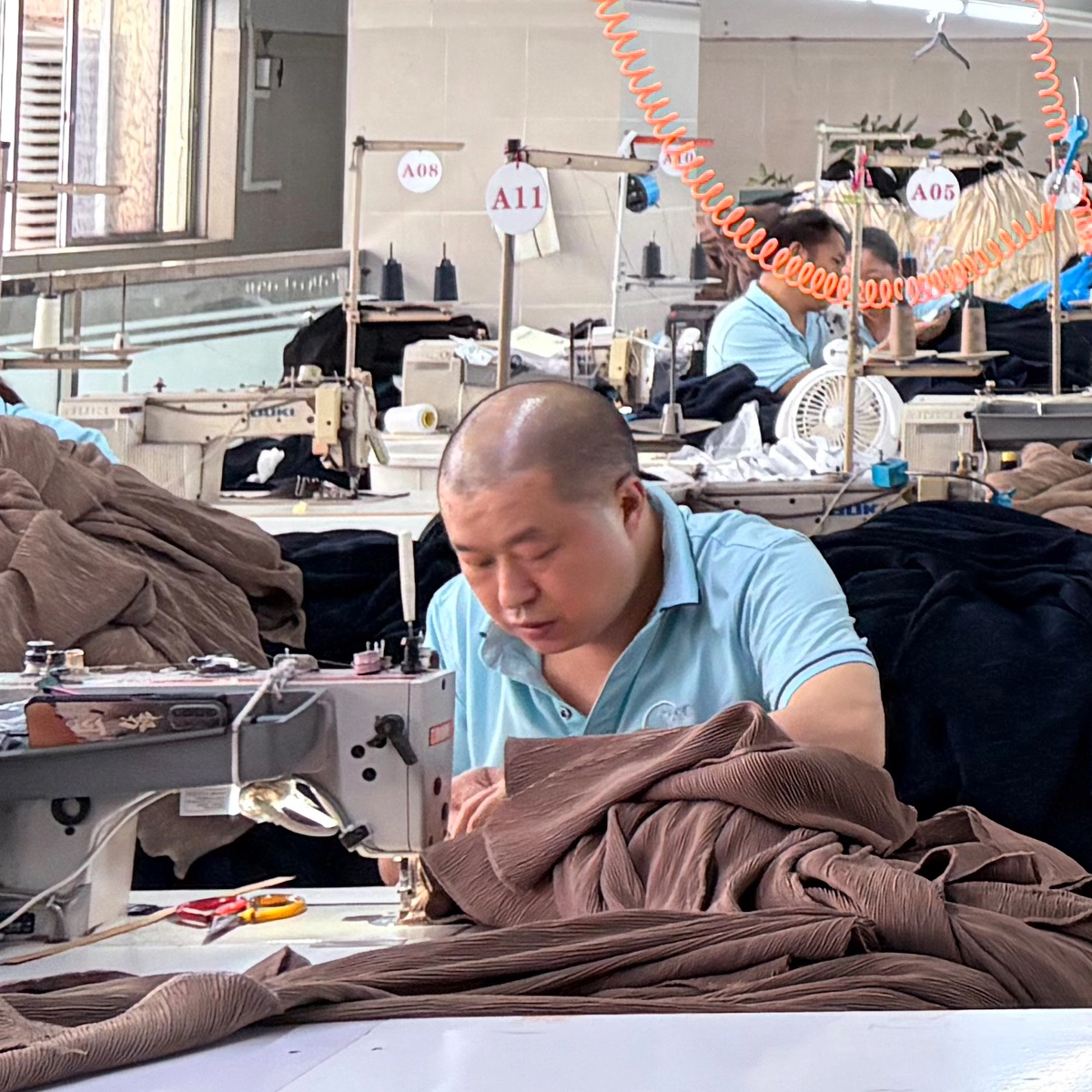
Sewing Workshop
↓
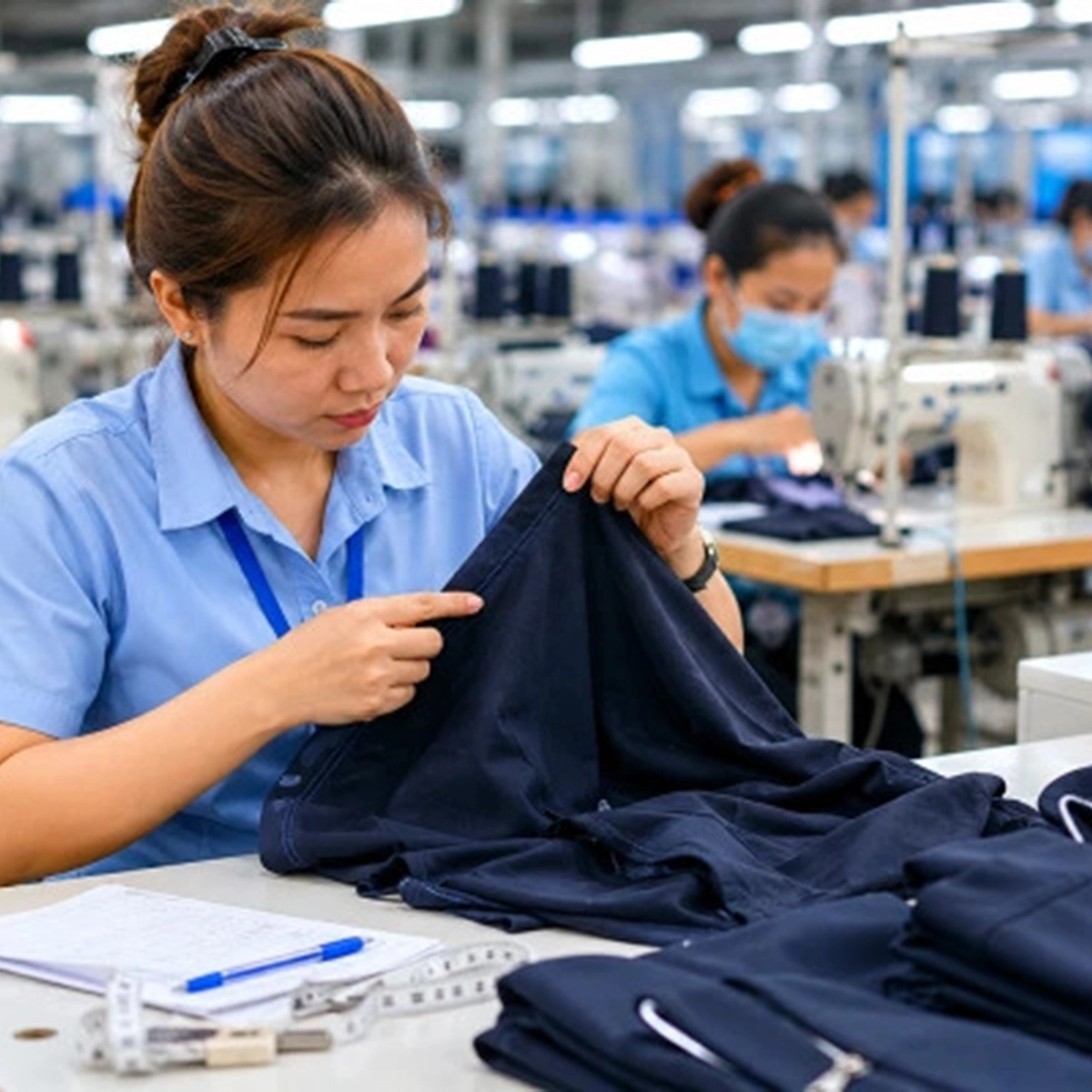
In-line Inspection
↓
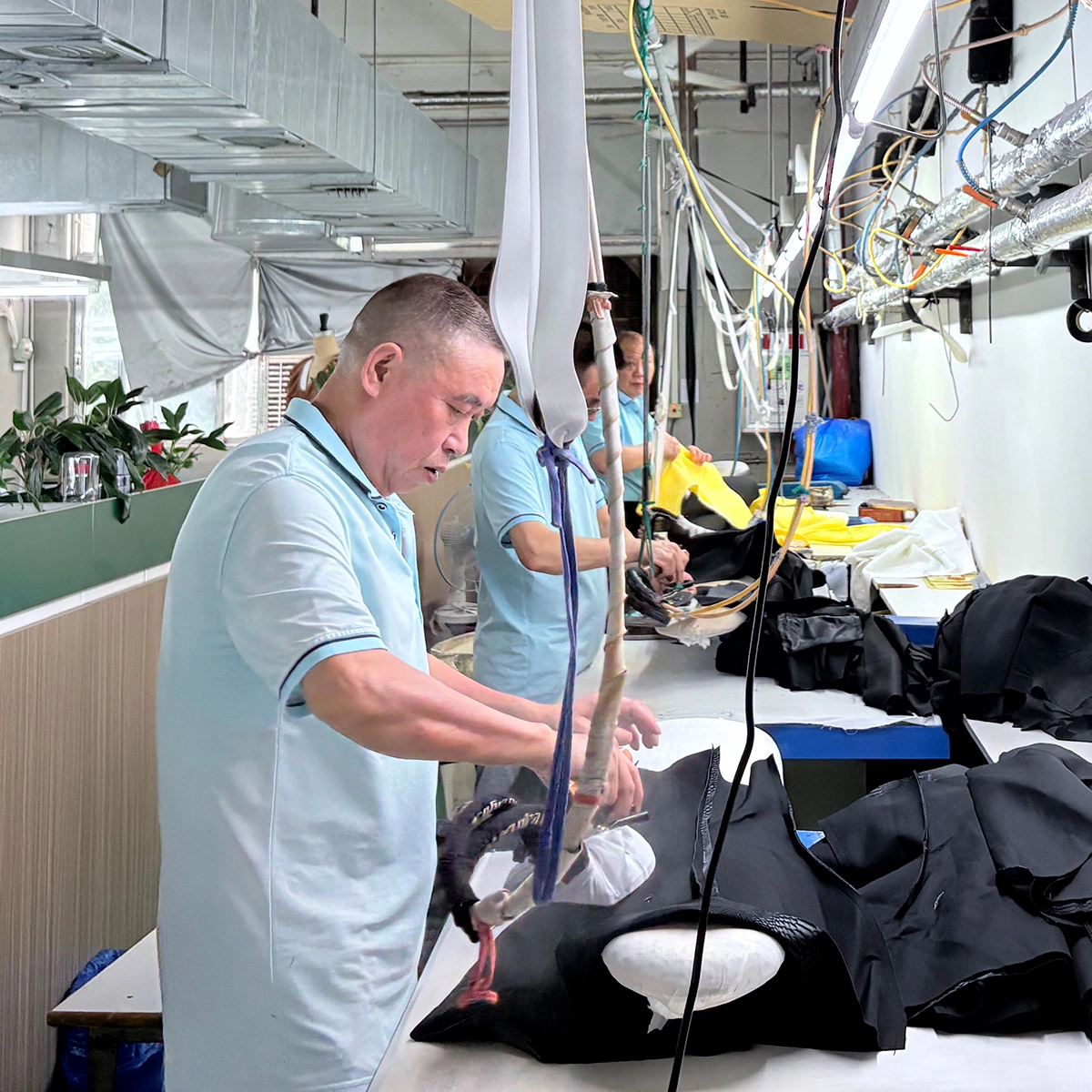
In-line Pressing
↓
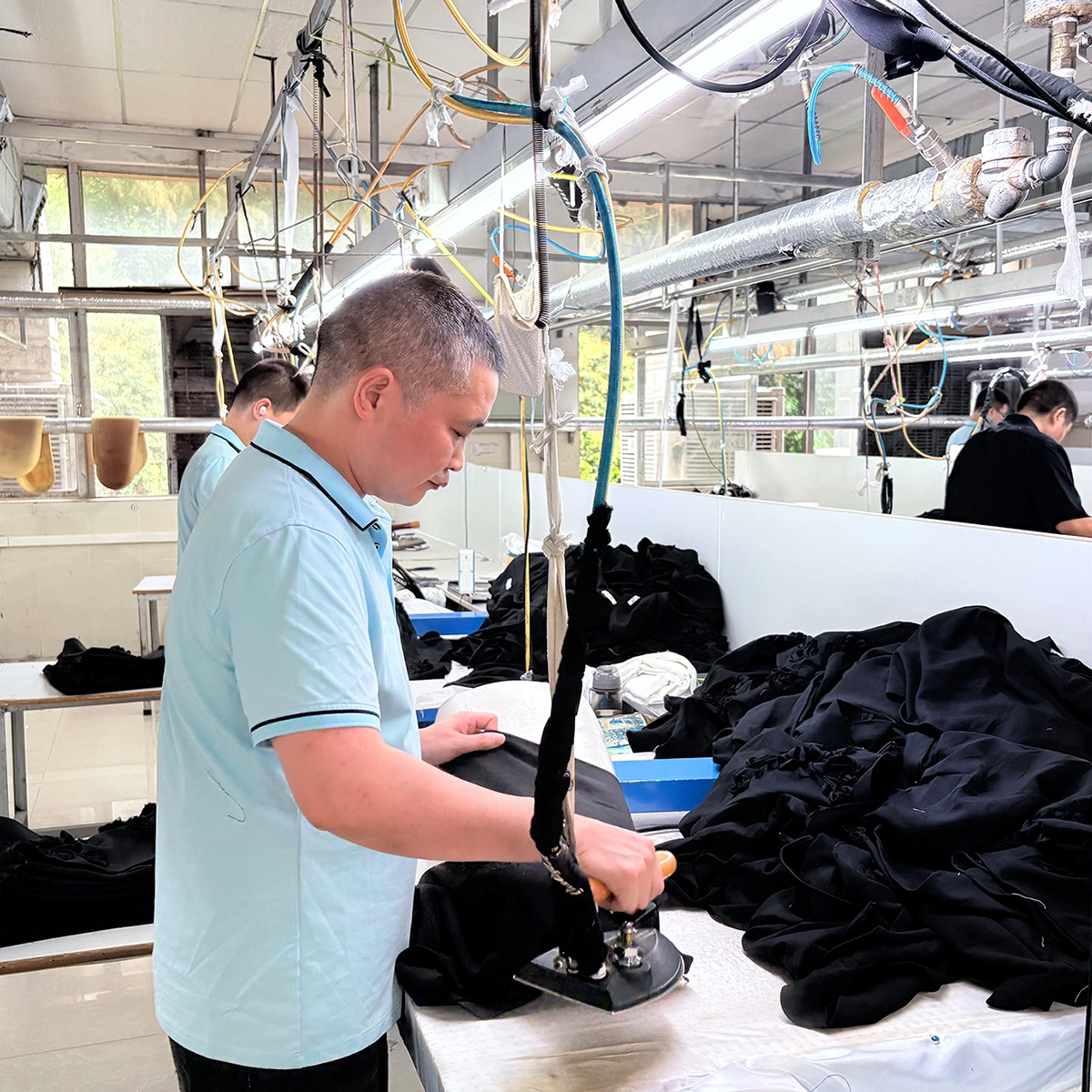
Final Pressing
↓
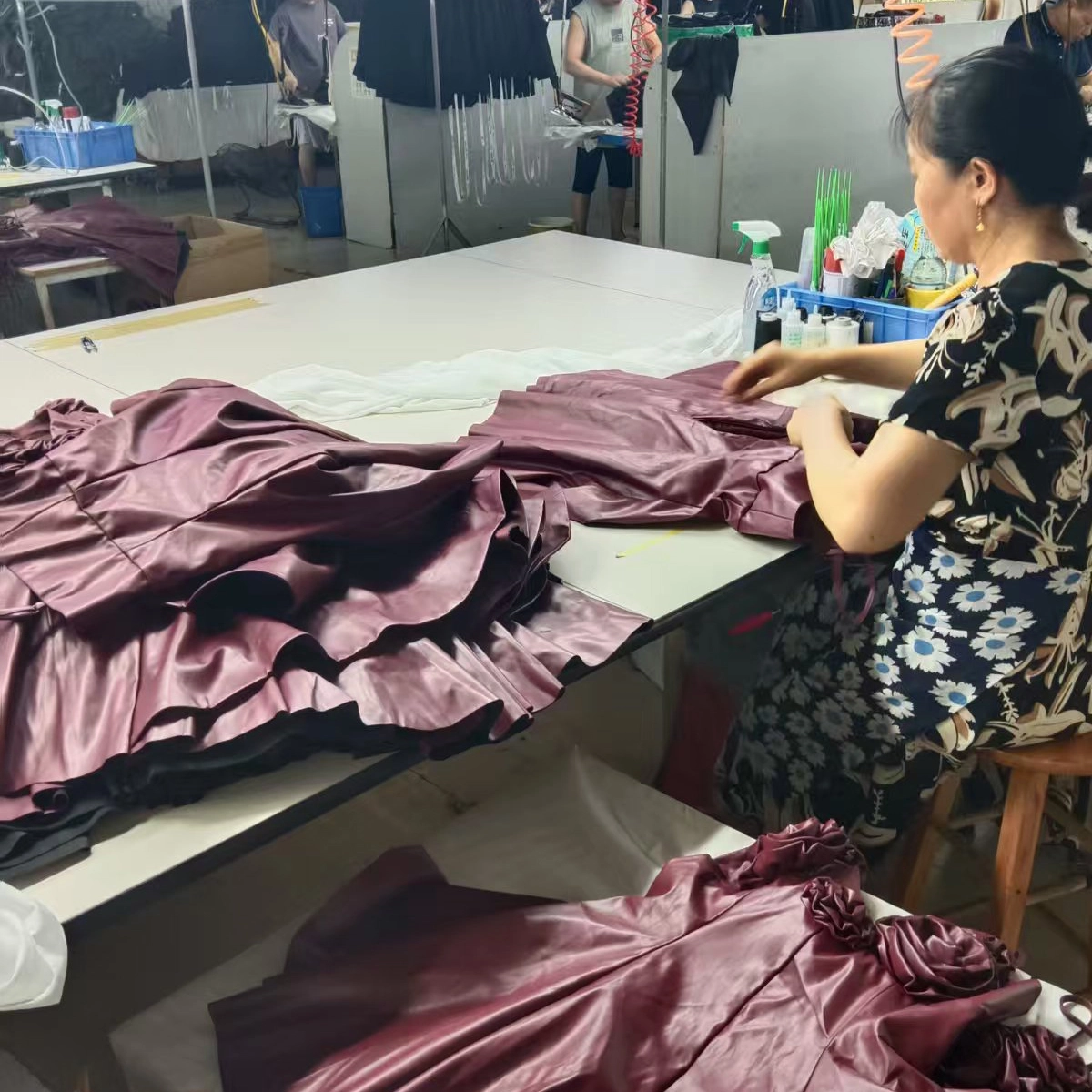
Final Inspection
↓
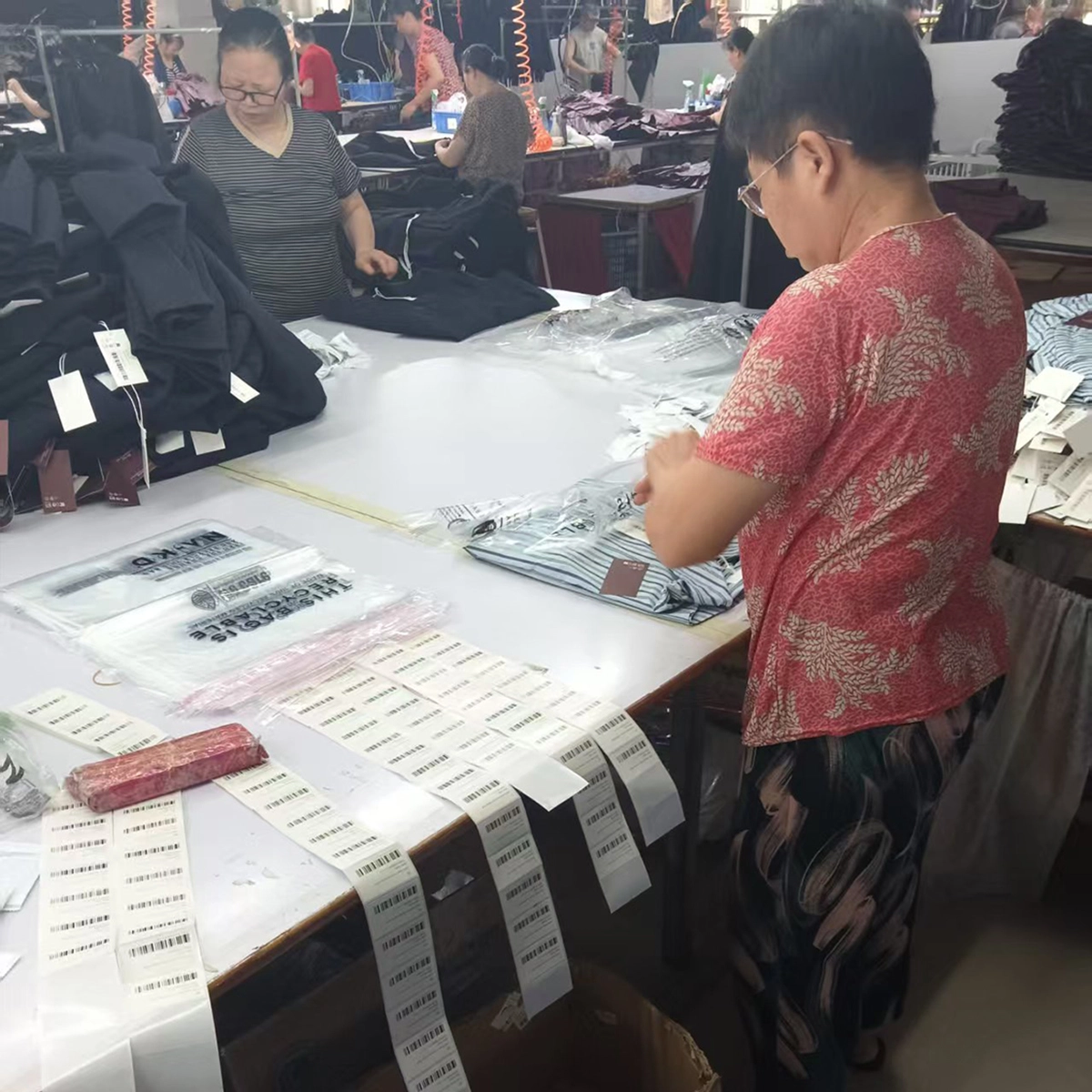
Garment Packing
↓
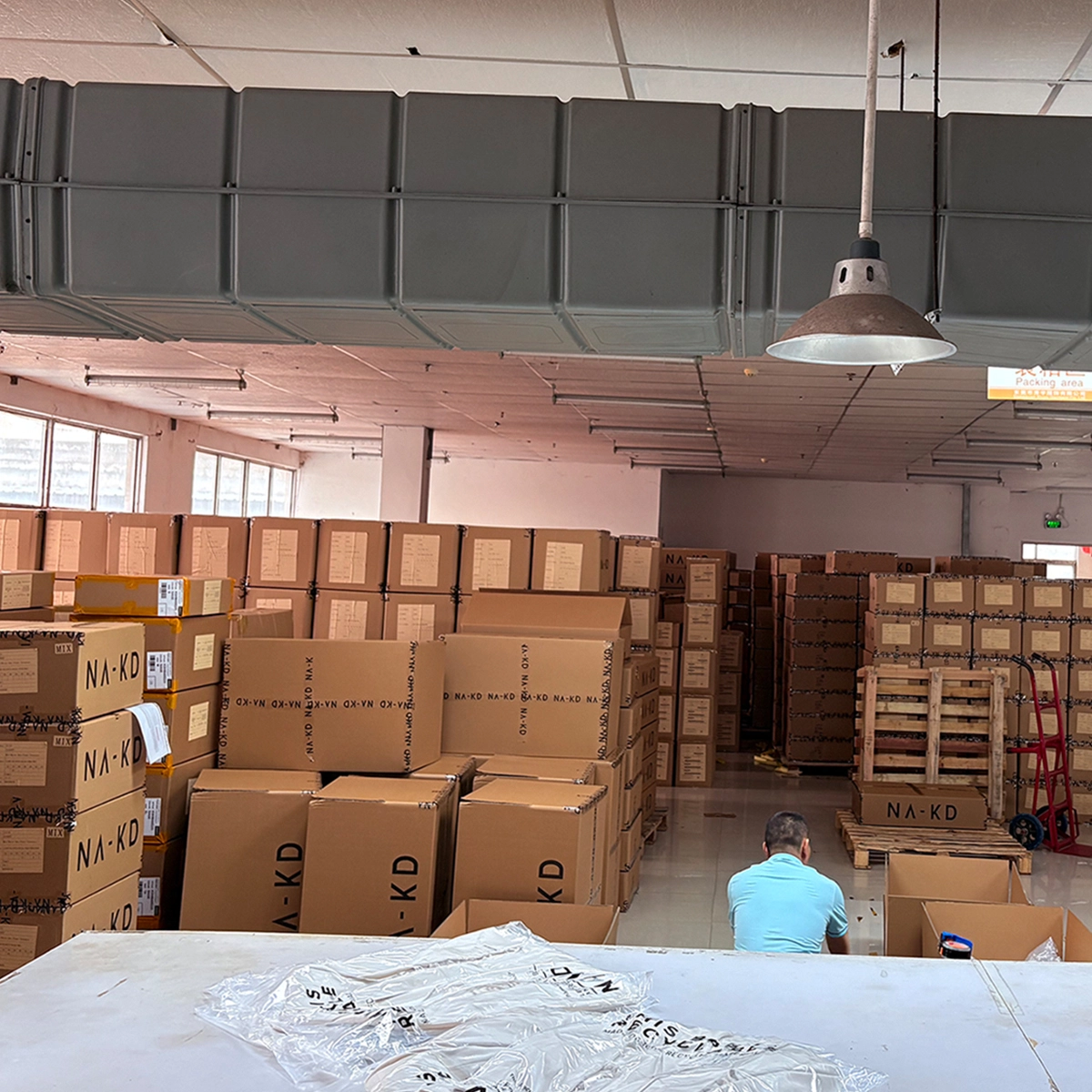
Finished Products

More About Our Company
With more than 18 years of dress manufacturing experience, our factory has been producing garments since 2007. The 5,000㎡ facility has 500+ sewing machines and a production team of more than 750 workers, with monthly capacity of around 150,000 pieces depending on the styles and order volume.
- Factory Picture
- Our Capabilities
- One-Stop Services
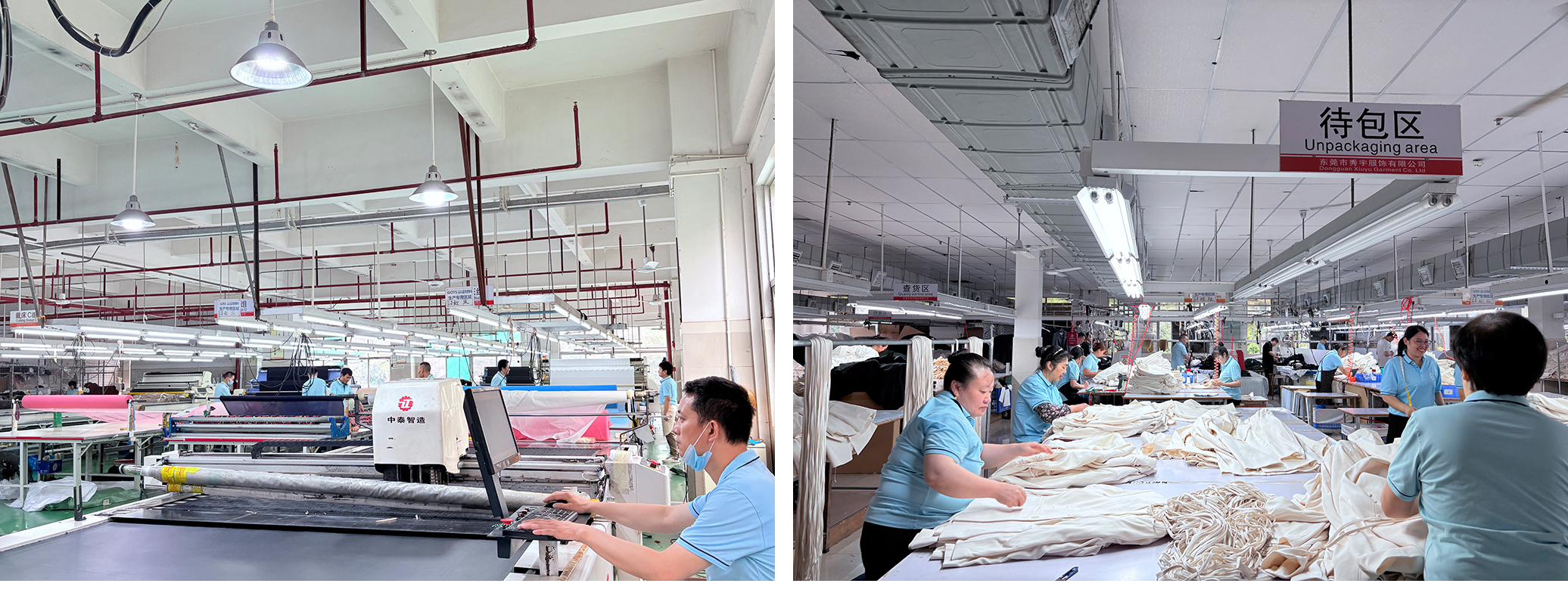 Cutting room & QC inspection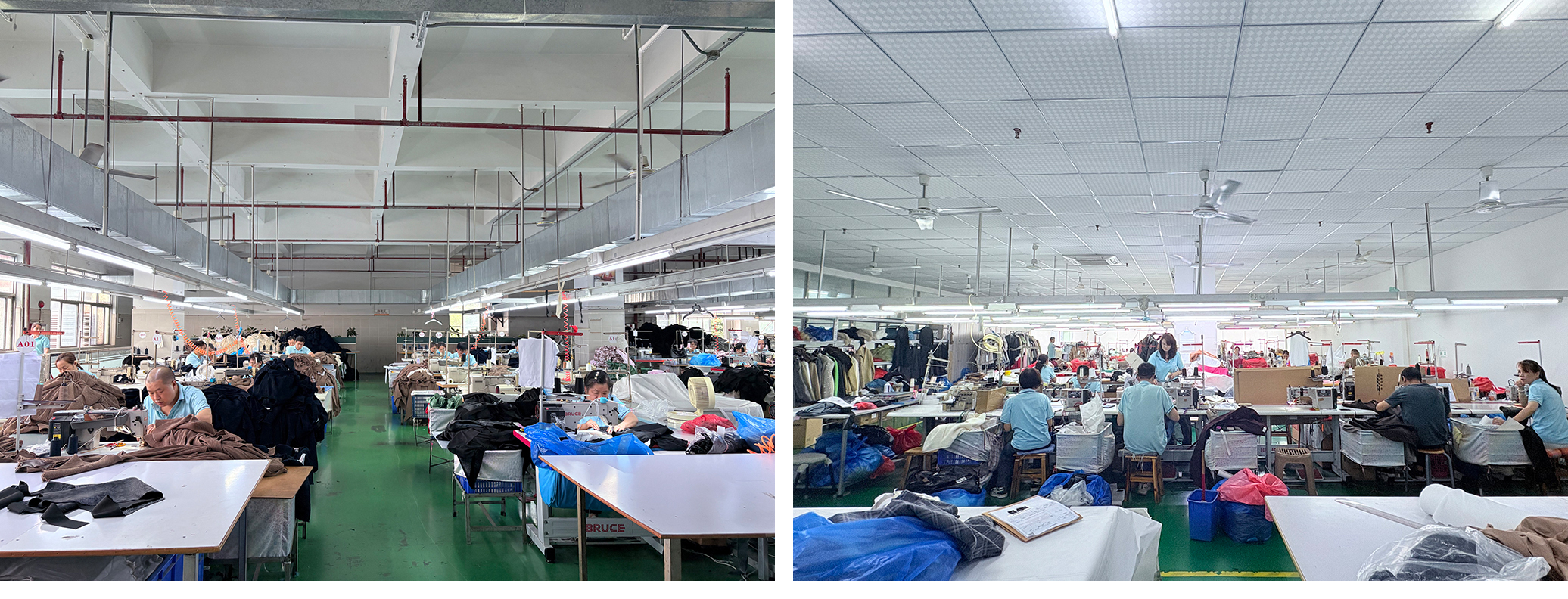
Sewing workshop
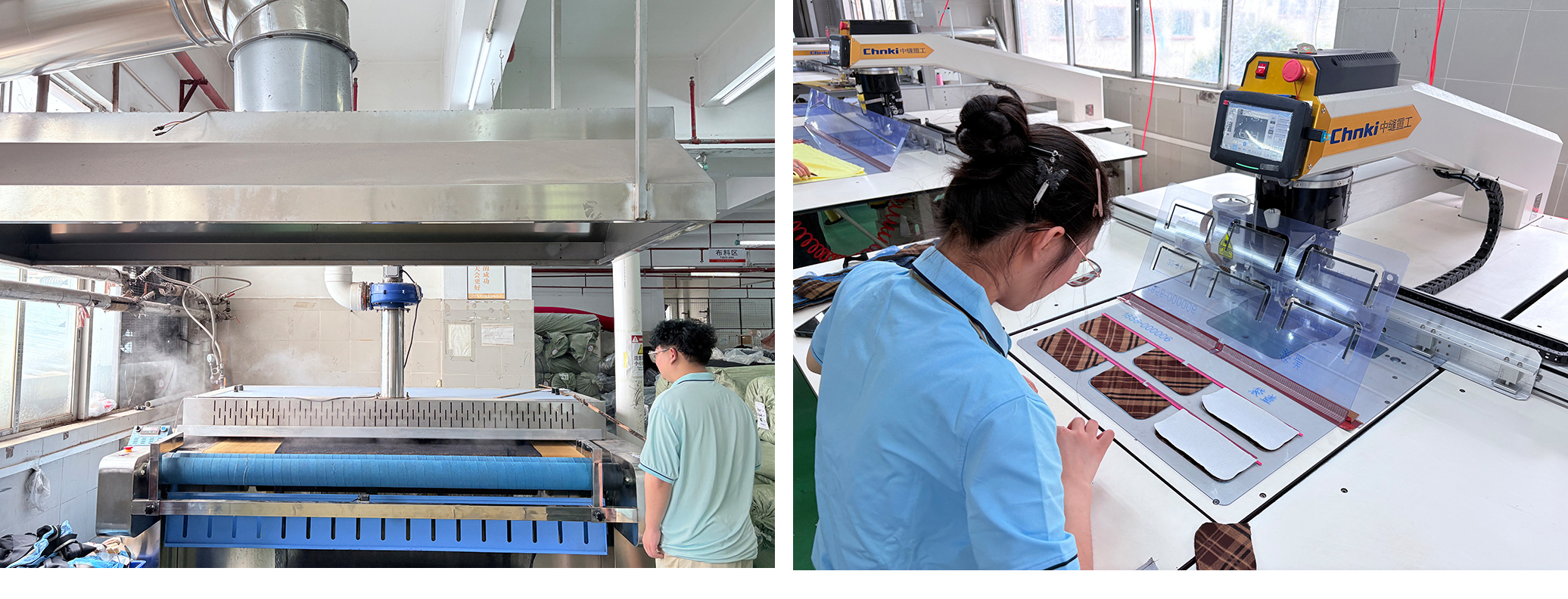 Fabric Pre-shrinking Workshop & Automatic Template Machine Workshop
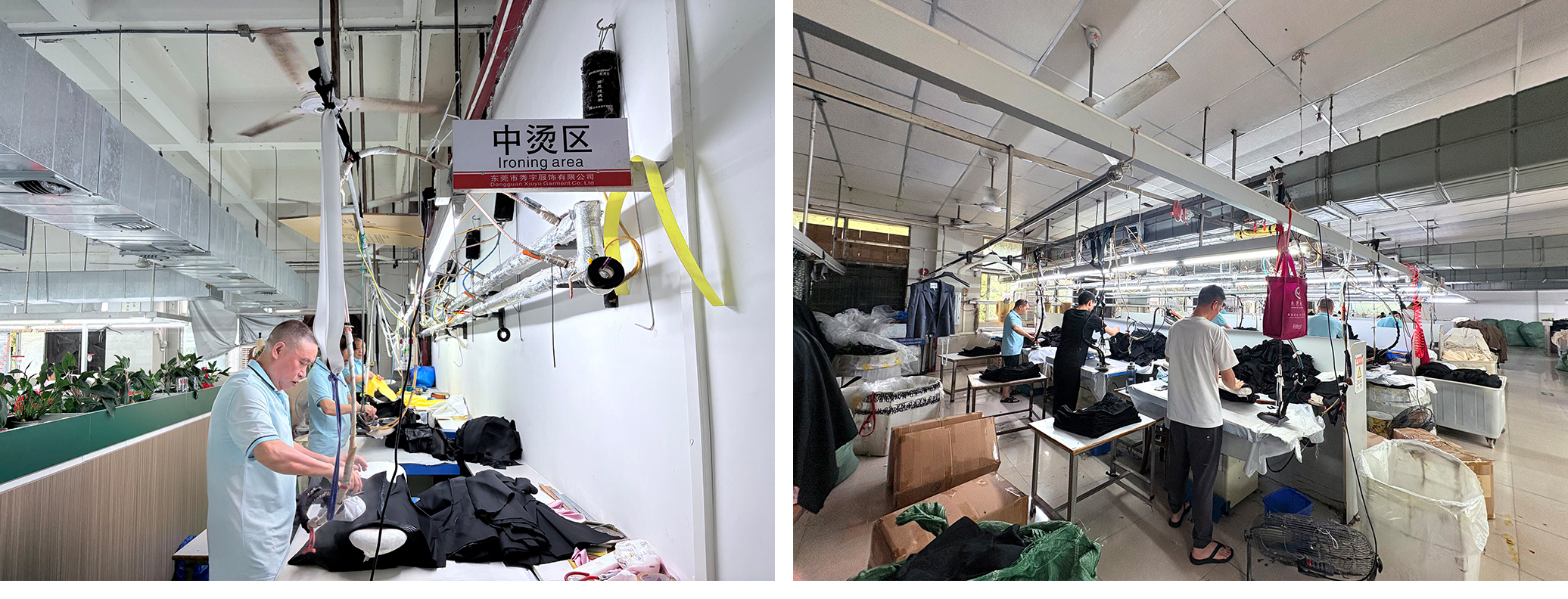 Finishing Workshop
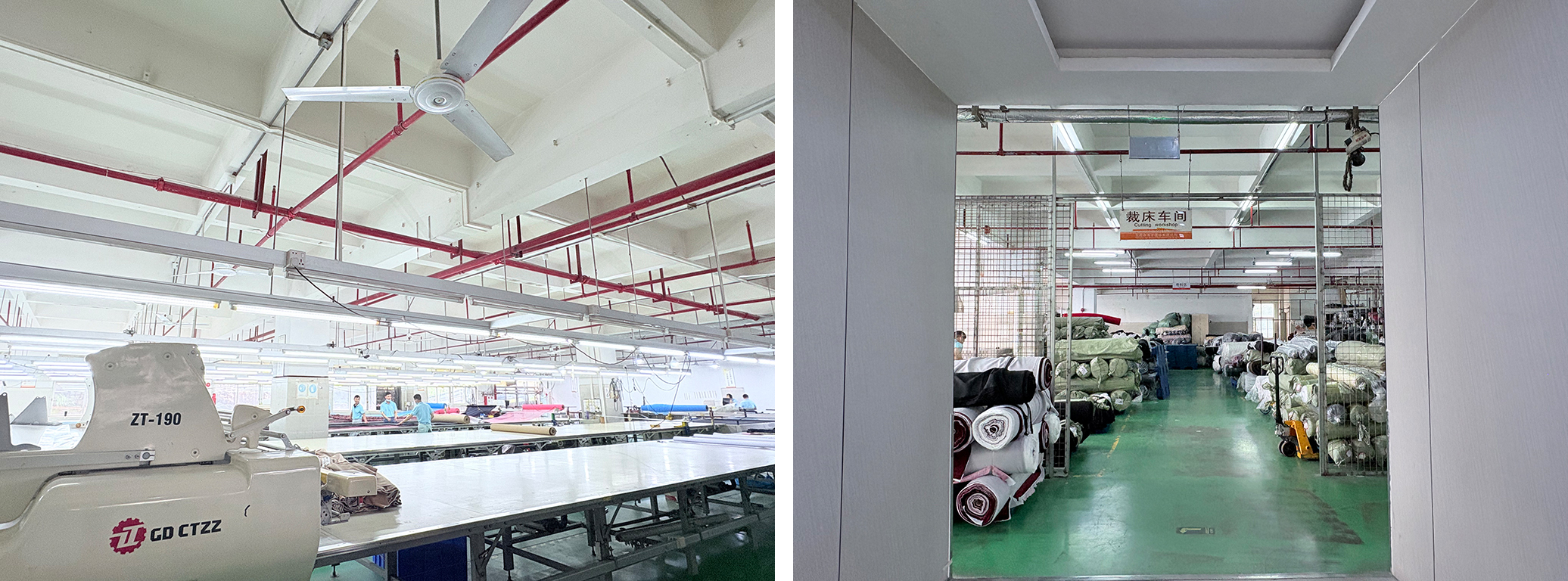
Cutting Room & Fabric warehouse
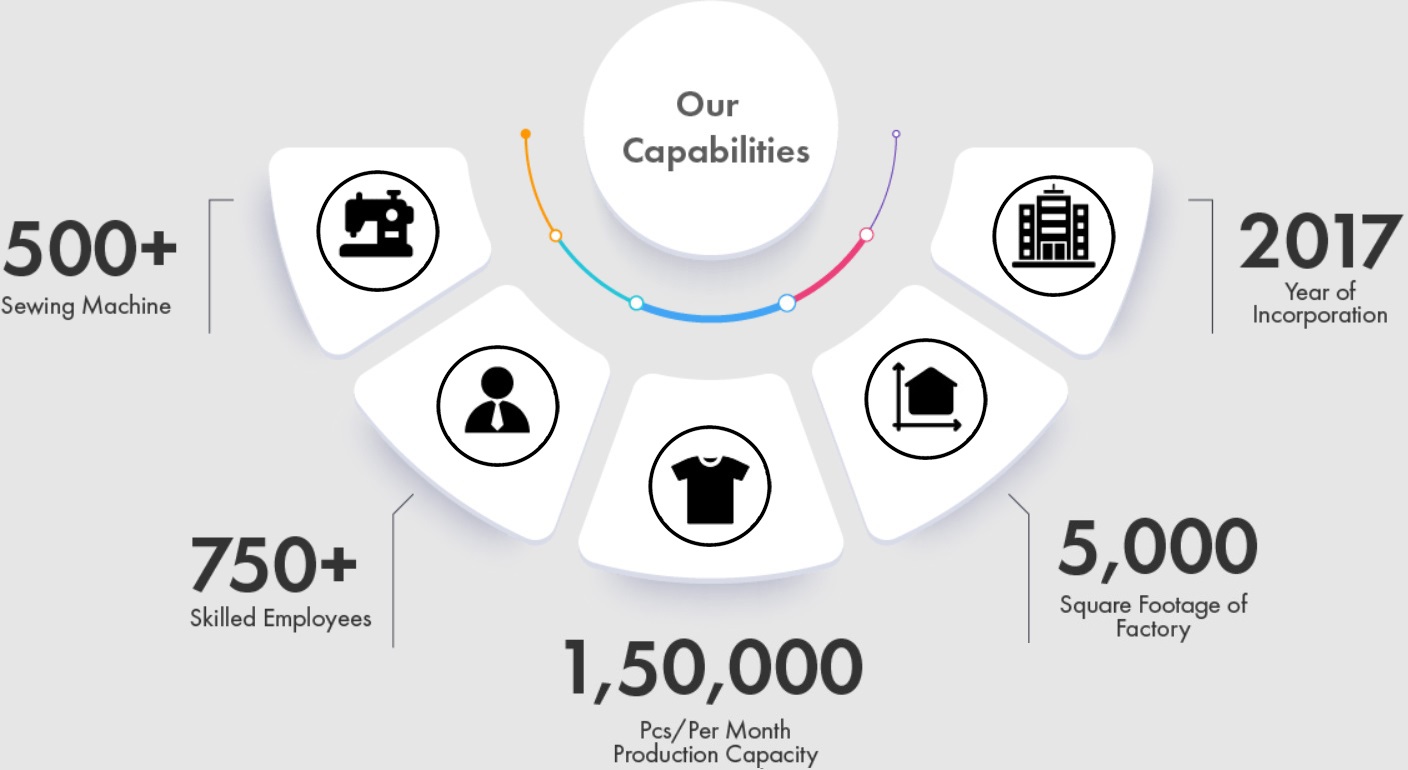
As a custom dress manufacturer, we handle the main production steps in-house, from pattern making and sampling through cutting, sewing, finishing, and final inspection. Our team works from your tech pack, sample, sketch, or reference and checks the details before the style moves into bulk production.
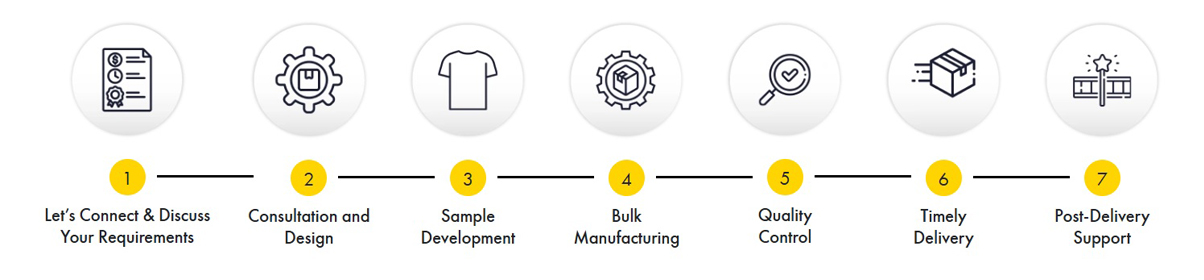
Keeping these stages with one production team makes it easier to deal with pattern changes, sample revisions, and construction issues before cutting starts. We can also arrange screen printing and custom embroidery when these details are part of the design.
Related Dress Manufacturing
If you are developing several dress styles for the same collection, you can also work with our dress manufacturer for other constructions and fabrics:
- Silk Dress Manufacturer
- Velvet Dress Manufacturer
- Mini Dress Manufacturer
- Cocktail Dress Manufacturer
- A-Line Dress Manufacturer
Develop Your Satin Slip Dress With Our Factory
Already have a tech pack? Send it over with your estimated quantity and required delivery date.
Still working on the design? A sketch, reference garment or product photo is enough for us to start with.
We can check the satin, construction, measurements and production details first, then advise on the sample and bulk order.
Our usual MOQ is 50–100 pieces per style, but it can vary with the fabric, color and construction. If you are starting with a new style, send us the design or sample first. We can check the fabric and production details and then give you the MOQ that makes sense for that style.
Yes. You can send us an existing garment for development. We can measure the sample, check the construction and make a pattern from it, then adjust the fit, length or details you want changed. Your reference sample can also be used as the fitting standard during sample development.
Bias-cut satin needs to be handled differently from a straight-grain style. Before cutting, we check the grain and marker placement, then allow the fabric to relax where needed. After the sample is sewn, we let it hang before checking the final length and hem.
A standard satin slip dress sample usually takes 3–7 days once we have the fabric, measurements and construction details. If the style has complex draping, lace or unusual finishing, we allow extra time and confirm the sample schedule before starting.
Yes. You can add your own woven labels, care labels, hangtags and packaging requirements to the production order. These details should be confirmed before bulk production starts so the correct materials are available when the garments reach the finishing and packing stages.
Yes, we normally make a sample before bulk production. Once the fabric and design details are ready, a standard sample takes around 3–7 days. You can check the fabric, fit, measurements and sewing details first, then approve the sample before we start the bulk order.