
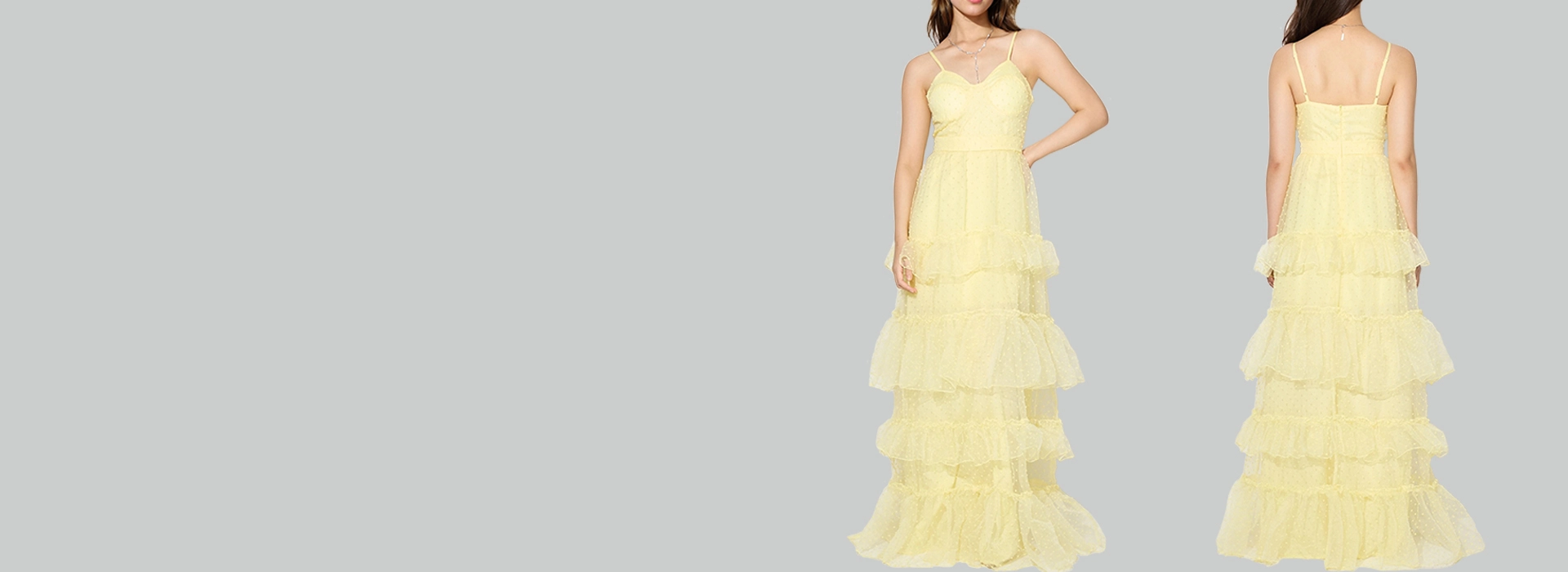
Why Choose Xiuyu Apparel for Ruffle Dress Production?
A ruffle dress can look simple in a product photo, but small differences in pattern, gathering and fabric handling can change the finished garment.
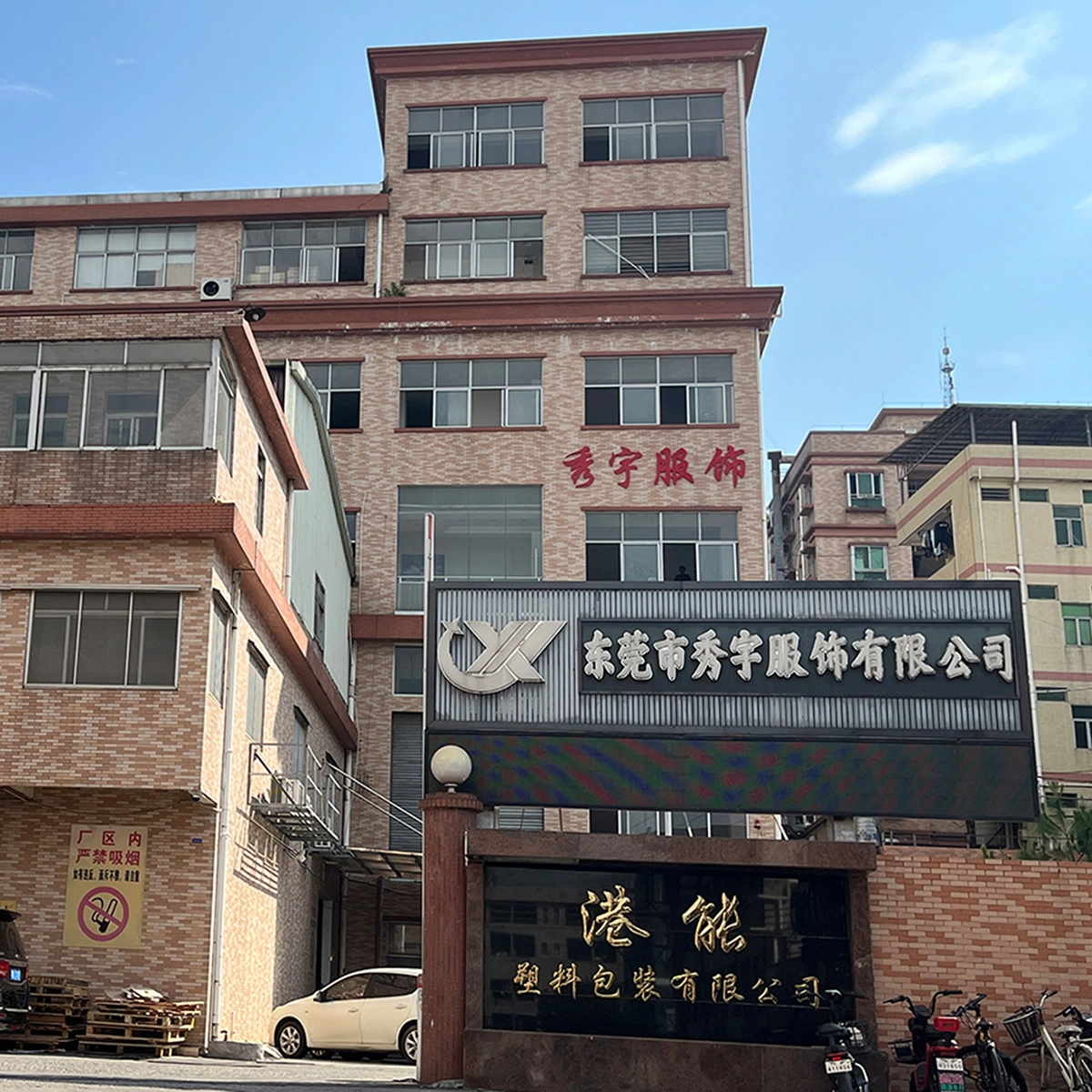
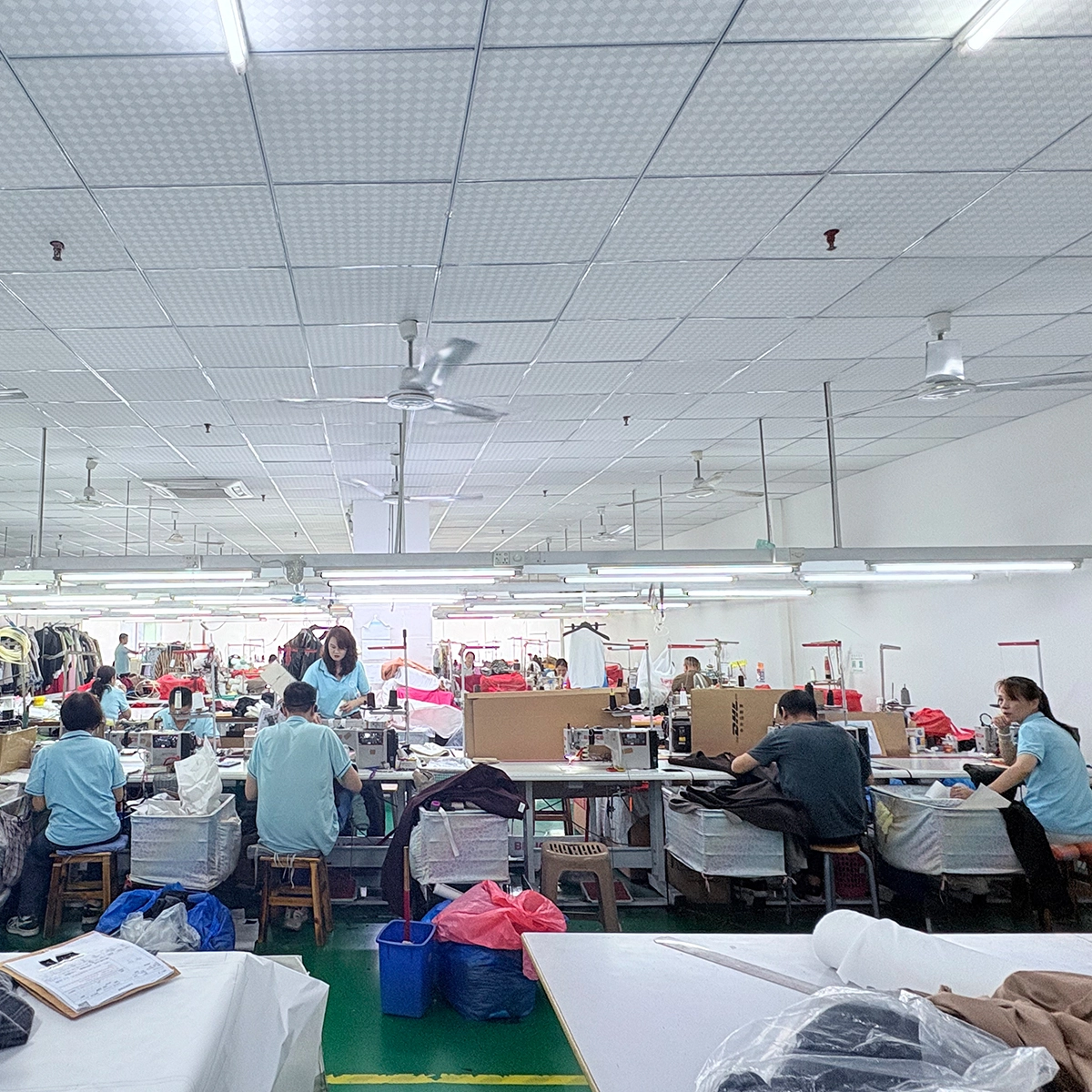
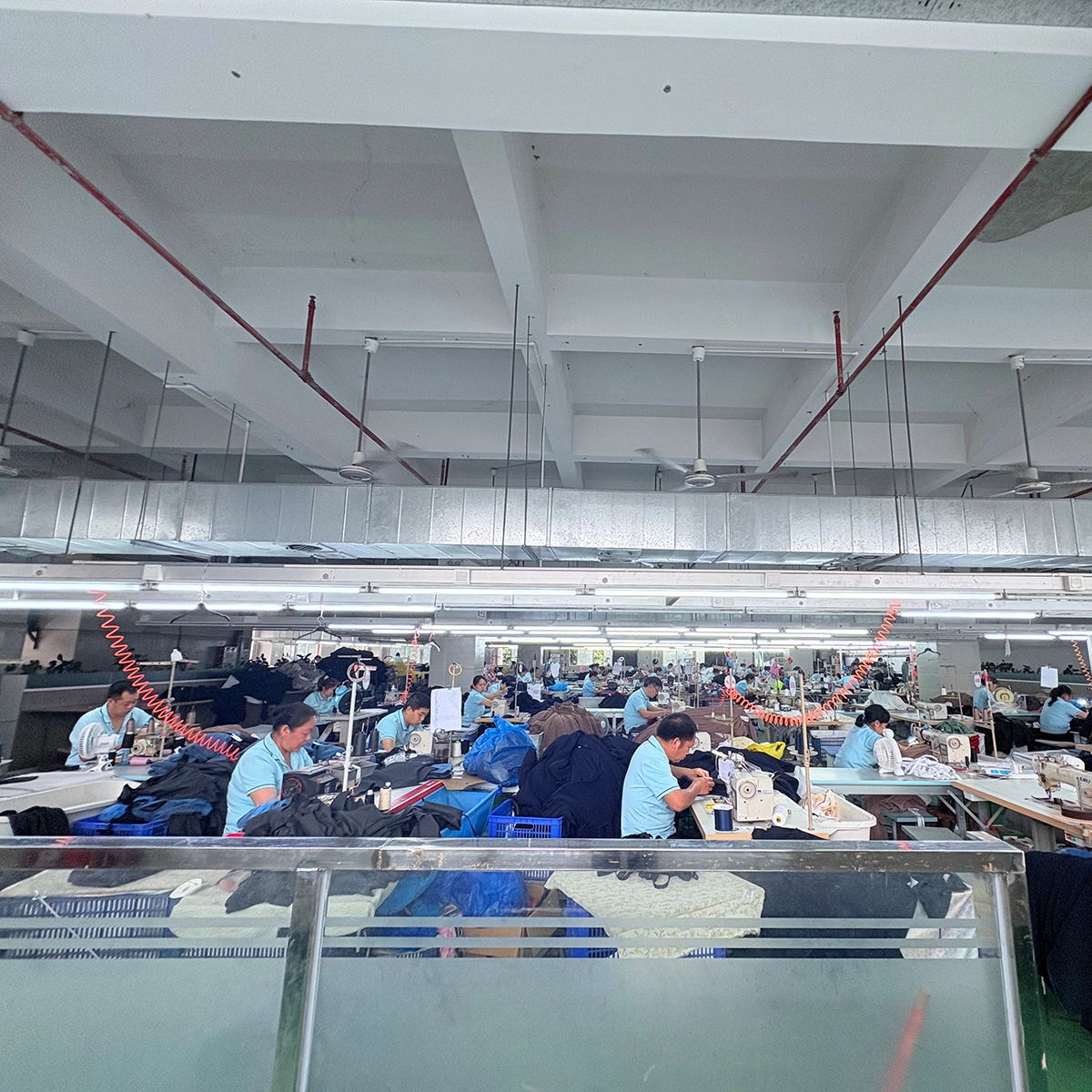
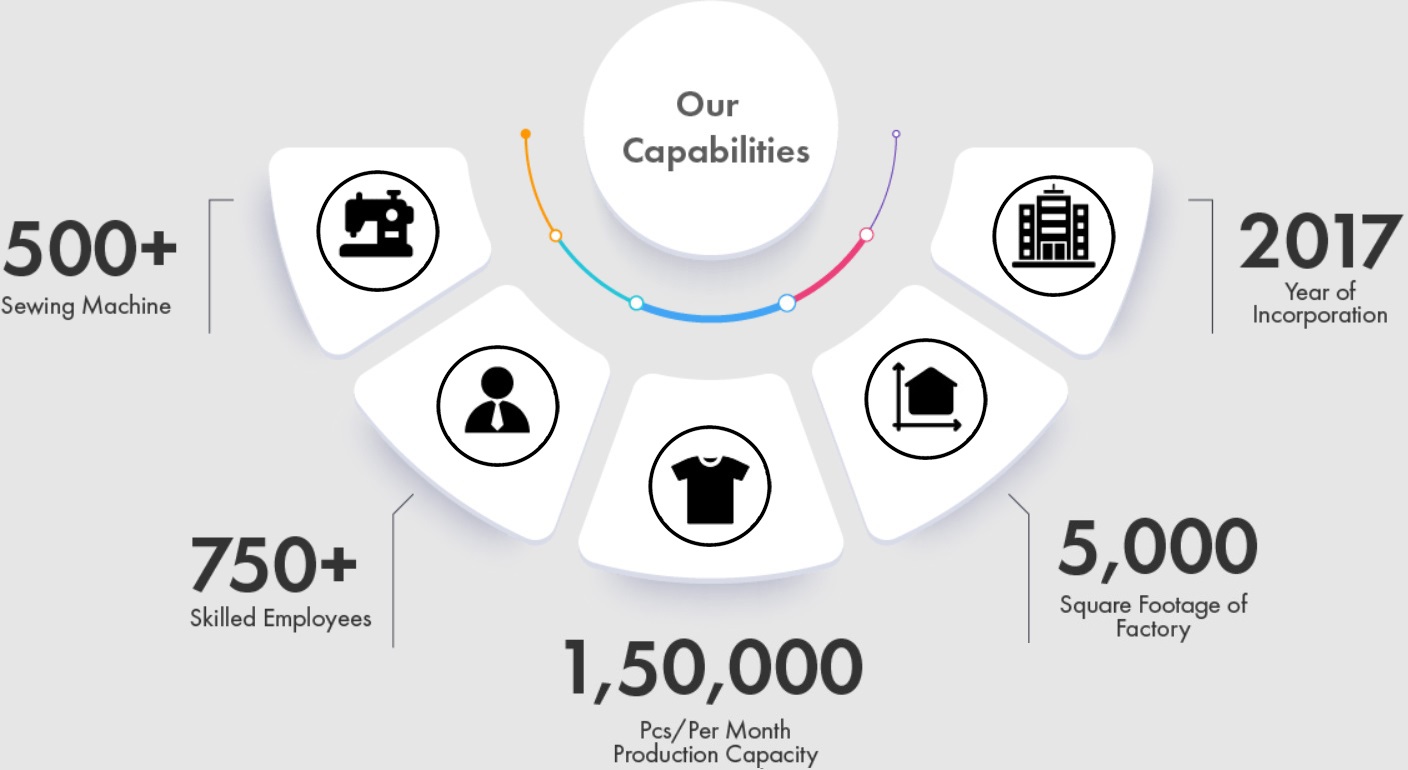
Xiuyu Apparel has been making dresses since 2007. Our factory includes:
- 750+ production workers
- 500+ sewing machines
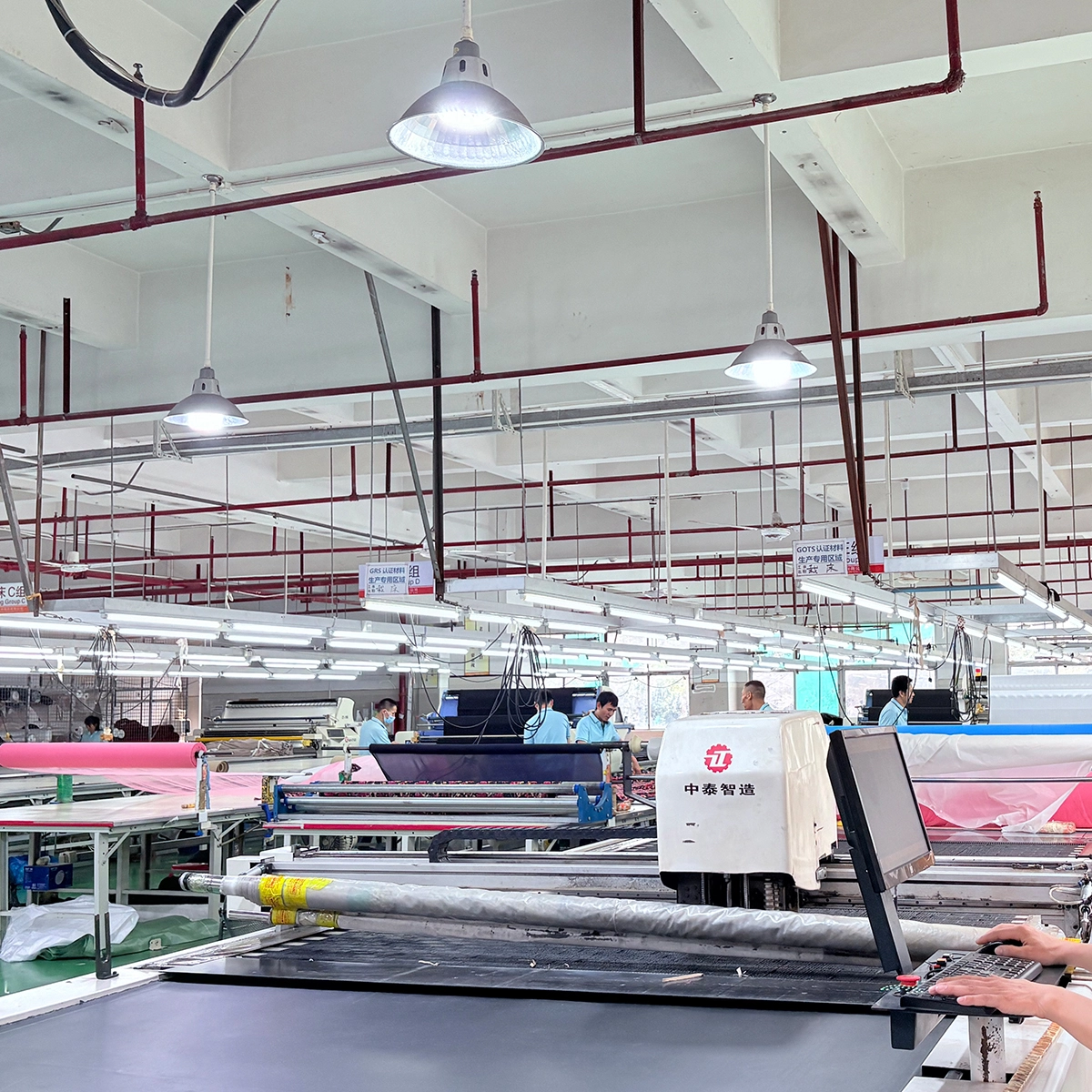
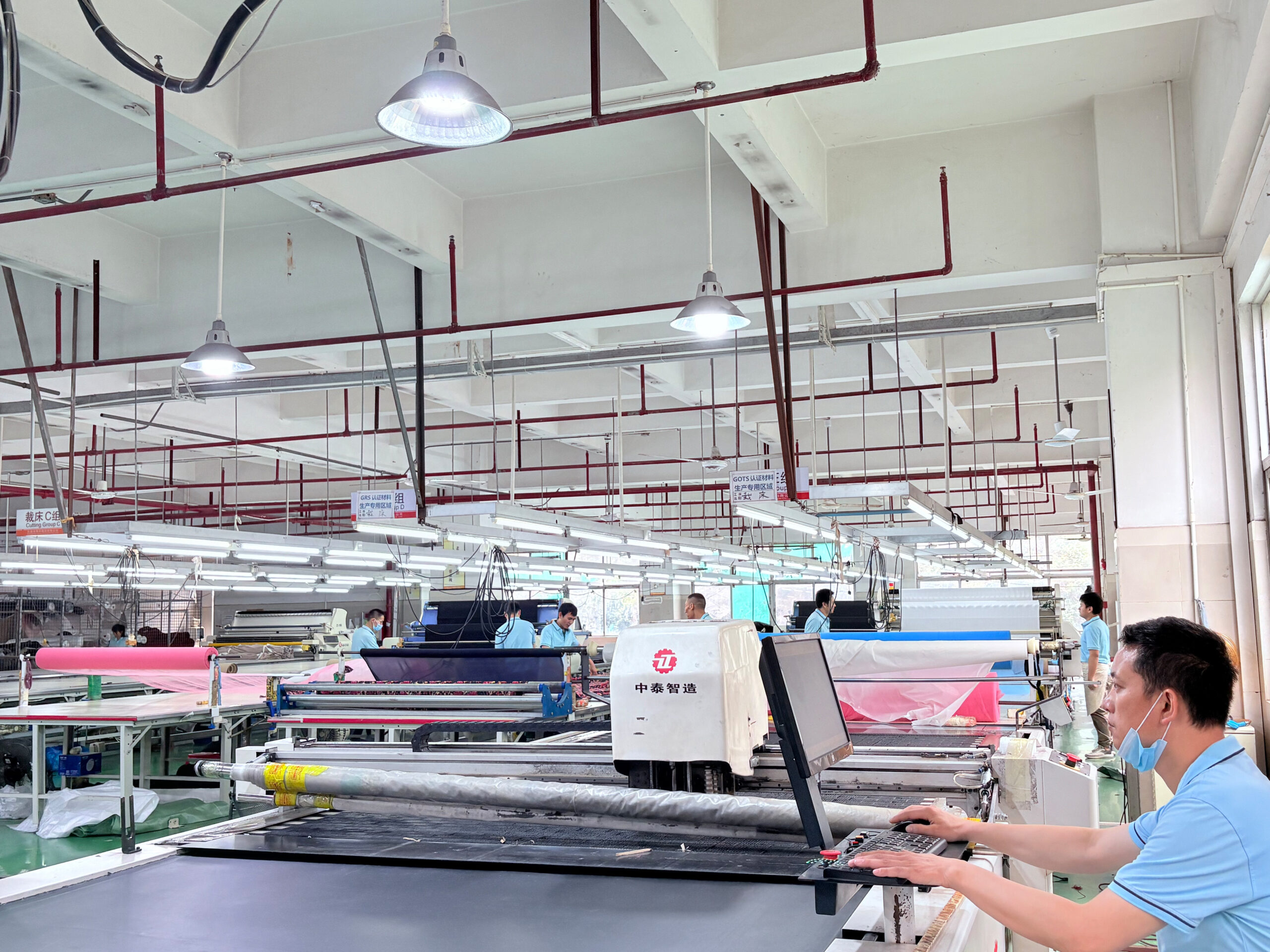
- 5 automatic cutting lines
- 5,000㎡ production facility
- 15 pattern makers and 35 sample sewers in our sample room
- Export experience to 40+ countries
Our production team handles fabric sourcing, pattern making, sampling, bulk cutting, sewing, inspection and private label packing.
Custom Ruffle Dress Manufacturing
Ruffle width and fullness affect more than the appearance of the dress. They also change fabric usage, garment weight and, in some constructions, the fit around the attachment area.
You can send a tech pack, sketch, reference photo, existing garment or even an early design idea. We review the measurements, construction and fabric before pattern development. The first sample is then made to check fit, ruffle volume and overall proportion before further revisions.
Our production team works with different dress fabrics and constructions, including lightweight chiffon, satin, mesh, lace and stretch materials. Ruffle fullness, balance, seam joining and edge finishing are checked at the sample stage.
Product Specifications
| Item | Details |
|---|---|
| MOQ | Usually 50–100 pcs per style/color |
| Sample Development | 3–7 days |
| Bulk Production | 25–30 days after sample approval |
| Fabric Sourcing | Supported |
| OEM / ODM | Supported |
| Private Label | Labels, hangtags and packaging |
| Fabric Options | Chiffon, satin, mesh, lace, silk, stretch and custom fabrics |
| Custom Options | Style, fabric, color, size, ruffle details, labels and packaging |
| Quality Control | In-line and final inspection |
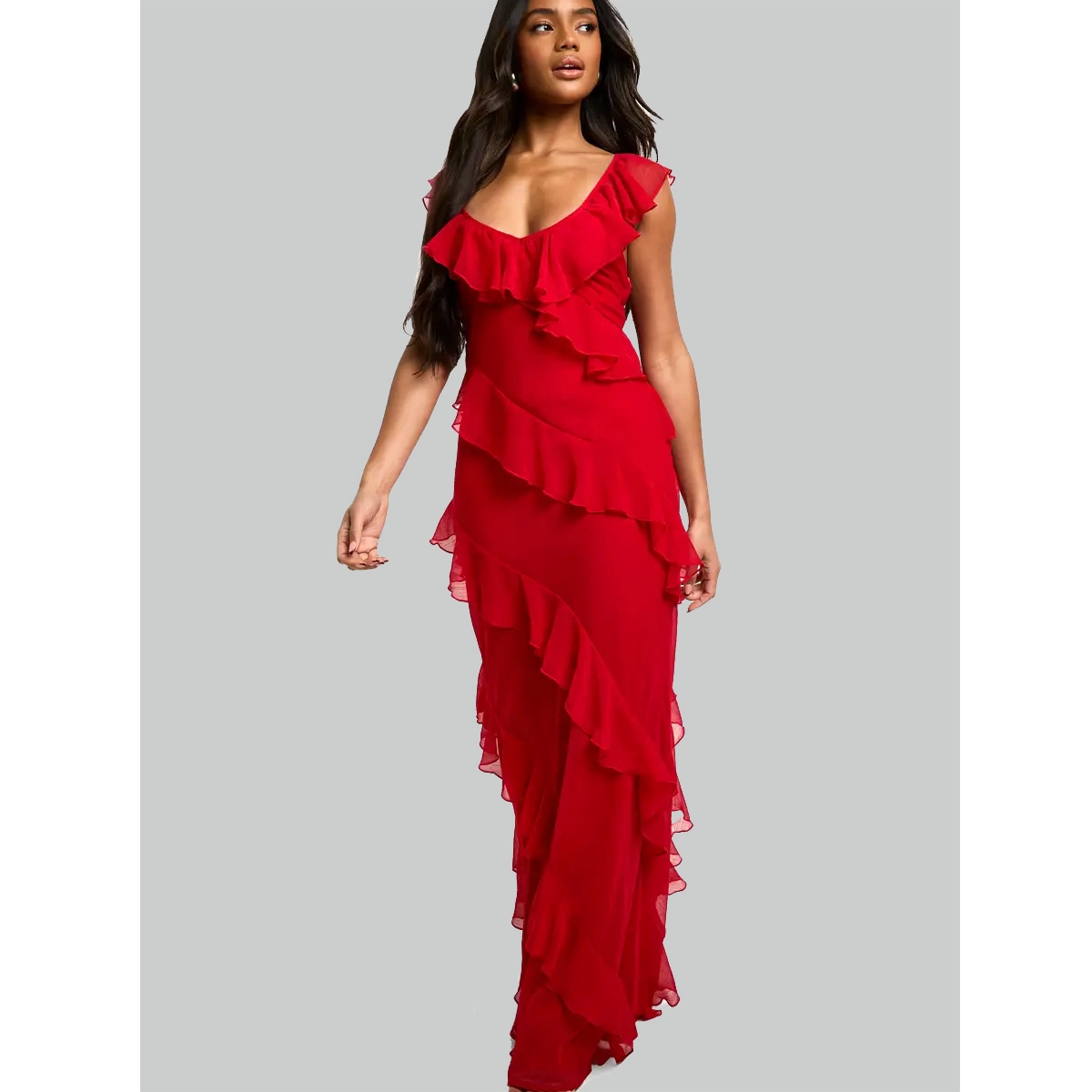
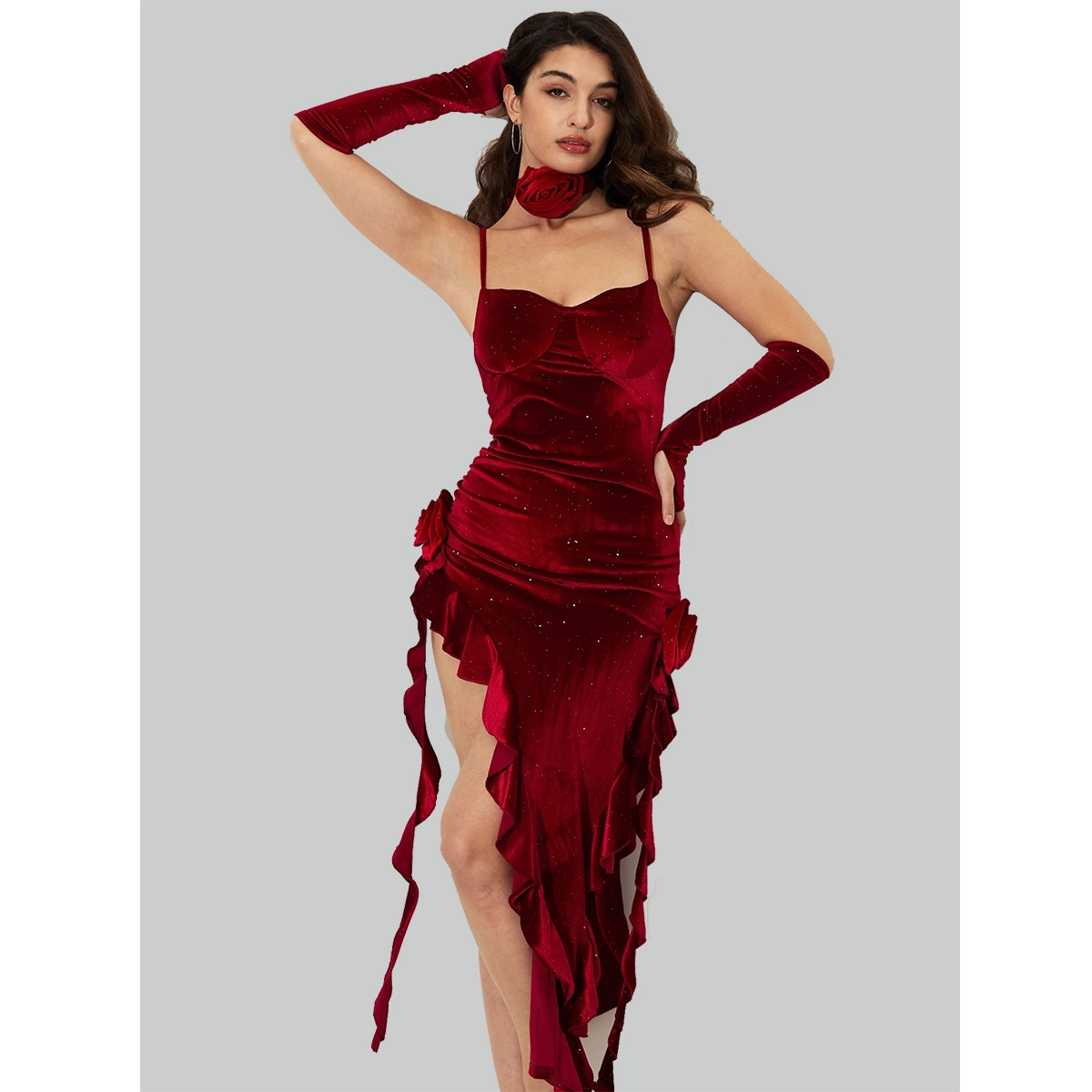
Popular Ruffle Dress Styles We Can Customize
Ruffle construction changes with the silhouette, neckline and fabric, so the pattern needs to be adjusted for each style.
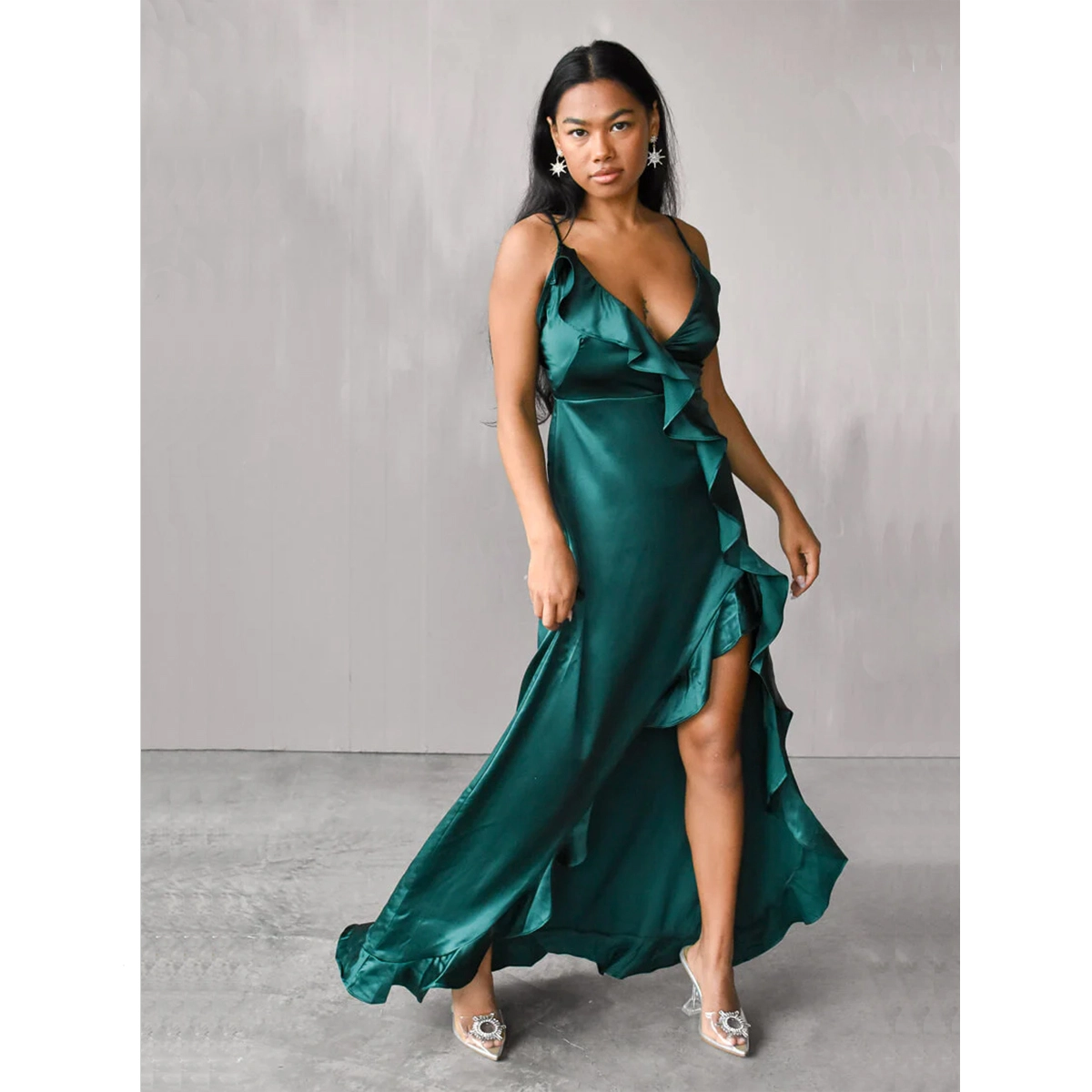
Silk Ruffle Dress
Silk and silk-blend fabrics give ruffles a soft, fluid fall. Lighter weights can shift during sewing, so ruffle fullness and seam allowance should be confirmed on the sample.
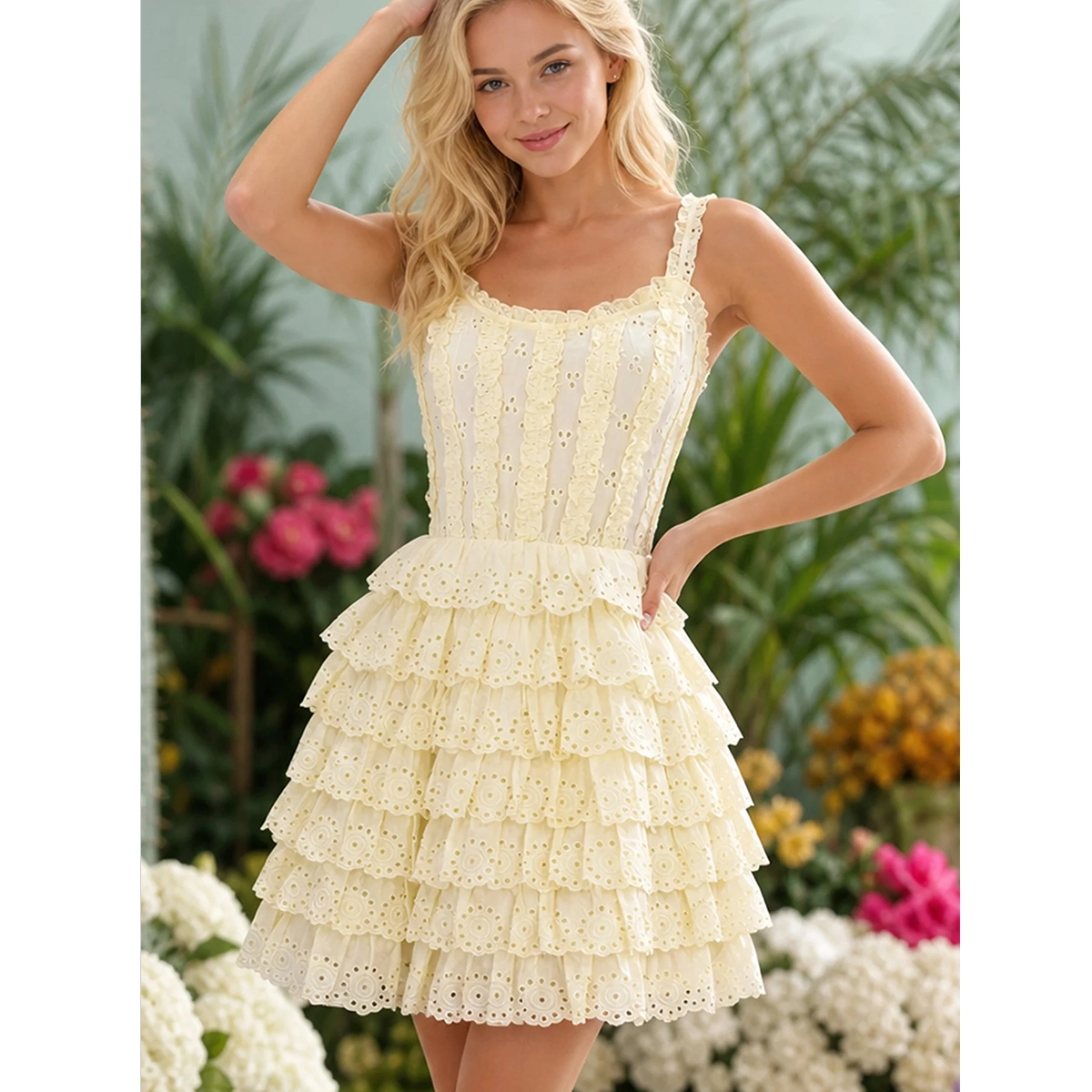
Lace Ruffle Dress
Lace ruffles need careful cutting when the fabric has a scalloped edge or repeating motif. The pattern is positioned to keep the lace border visible and avoid losing key details in the seams.
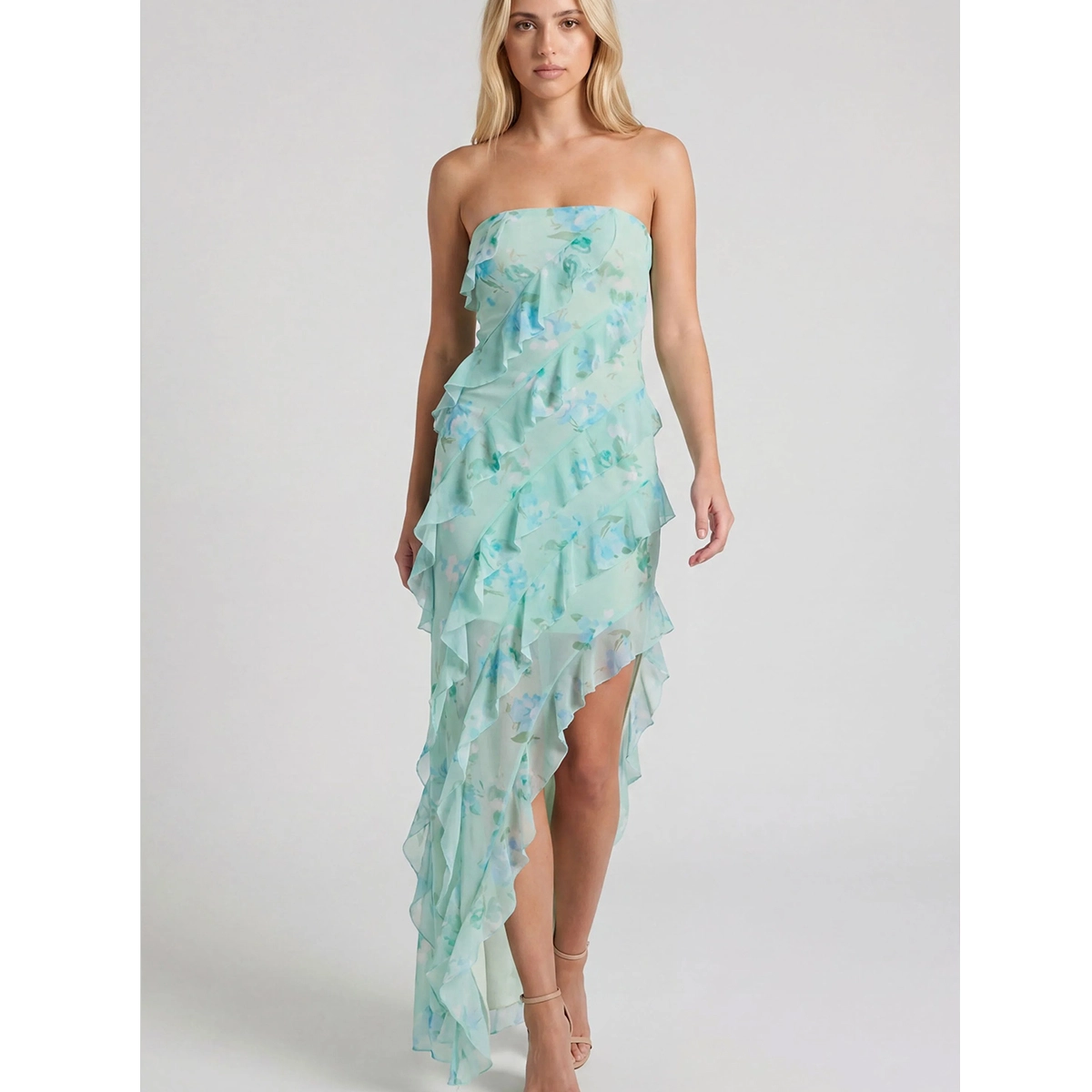
Mesh Ruffle Dress
Mesh is used for sheer layers, sleeves and decorative ruffles. Stretch mesh needs a suitable gathering ratio; using the same ratio as woven fabric can leave the ruffle too loose or distorted.
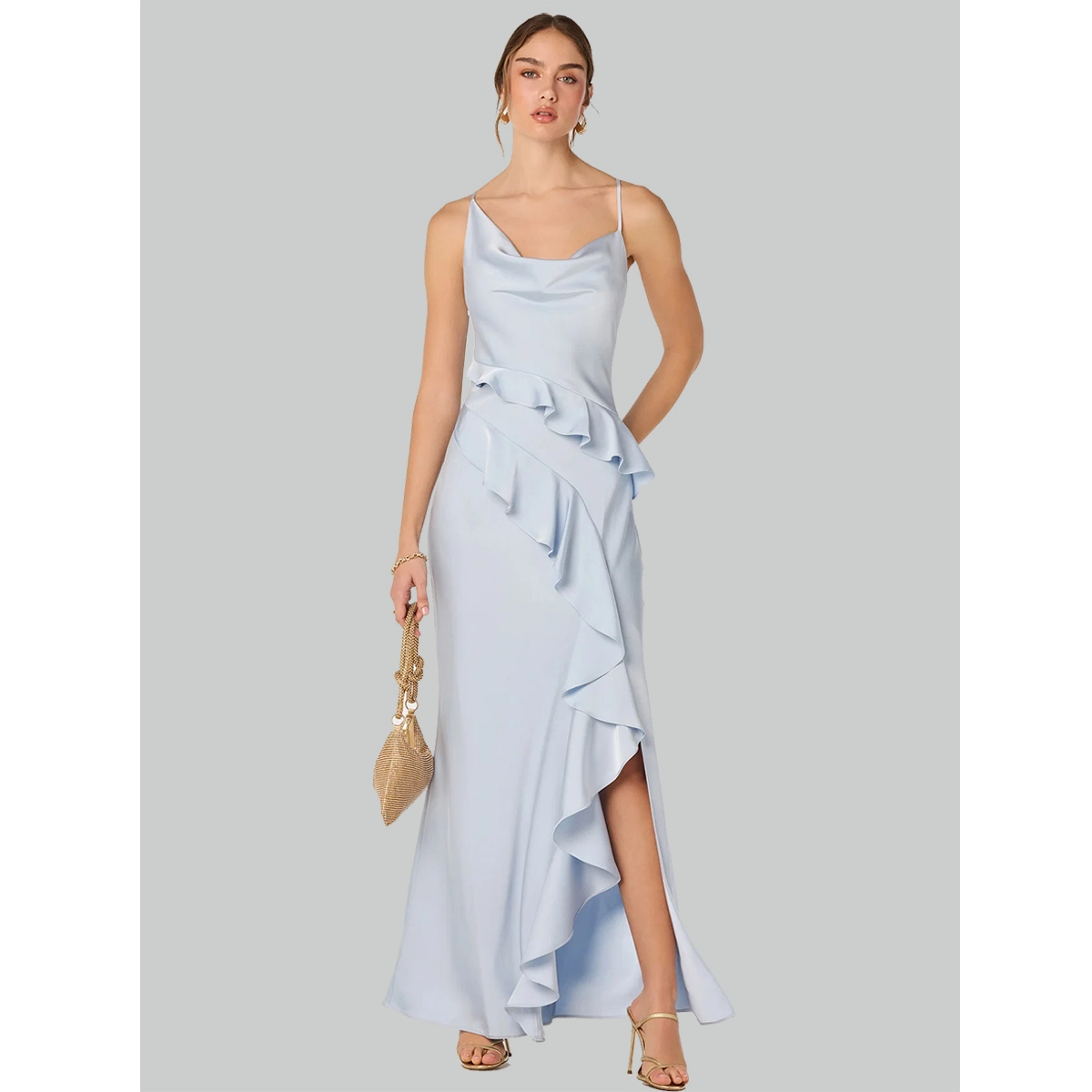
Satin Ruffle Dress
Satin gives ruffles a cleaner shape, but puckering and pressing marks can show easily. Seam construction, fabric direction and ruffle attachment are checked closely on the sample.
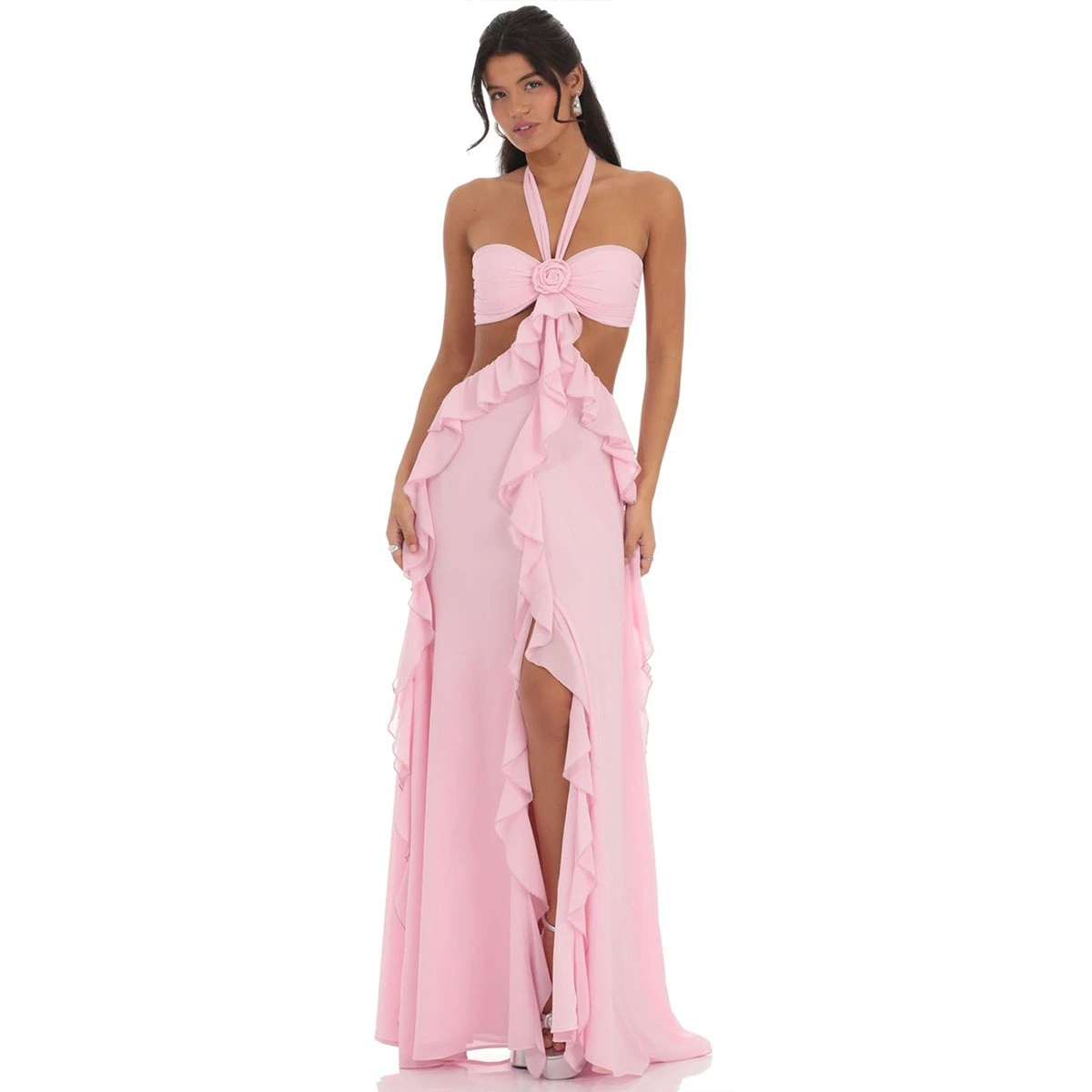
Chiffon Ruffle Dress
Chiffon moves easily during sewing, especially on narrow or heavily gathered ruffles. Gathering needs to stay even, while the edge finish should suit the fabric weight and construction.
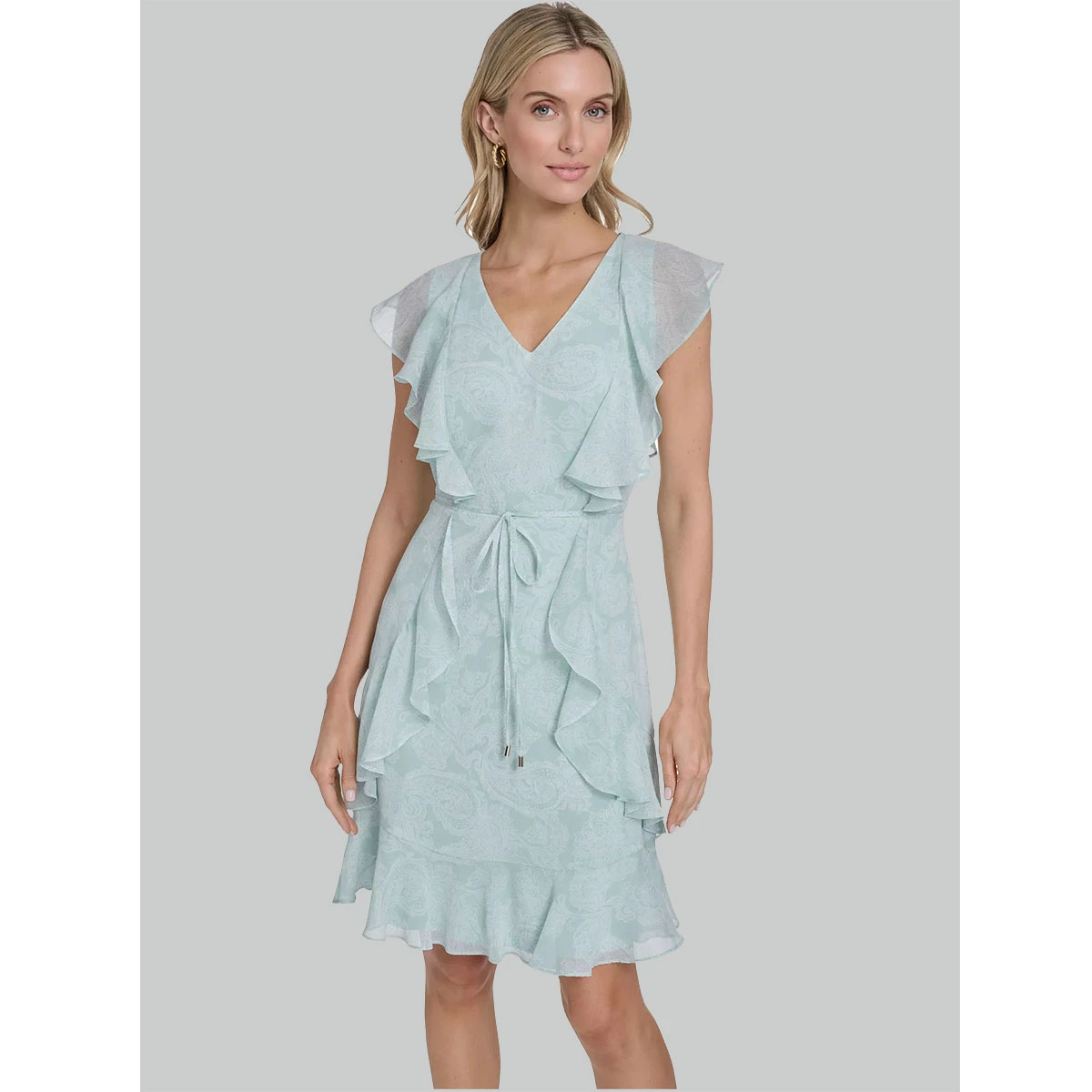
Ruffle Wrap Dress
Ruffles on the neckline, front edge or skirt can affect the wrap opening and waist position. Ruffle width and fullness are adjusted together with the wrap construction on the sample.
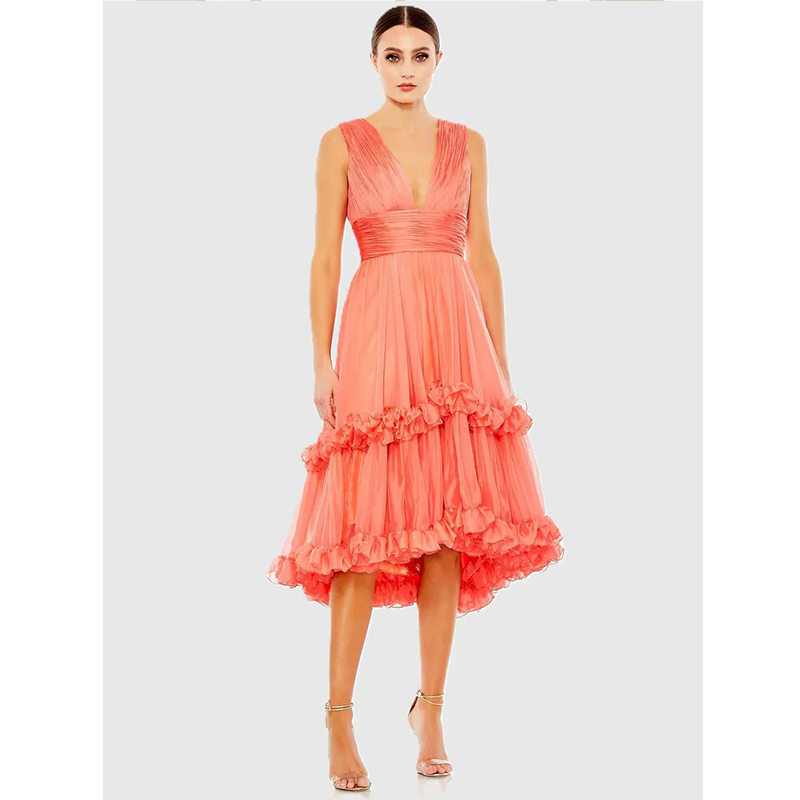
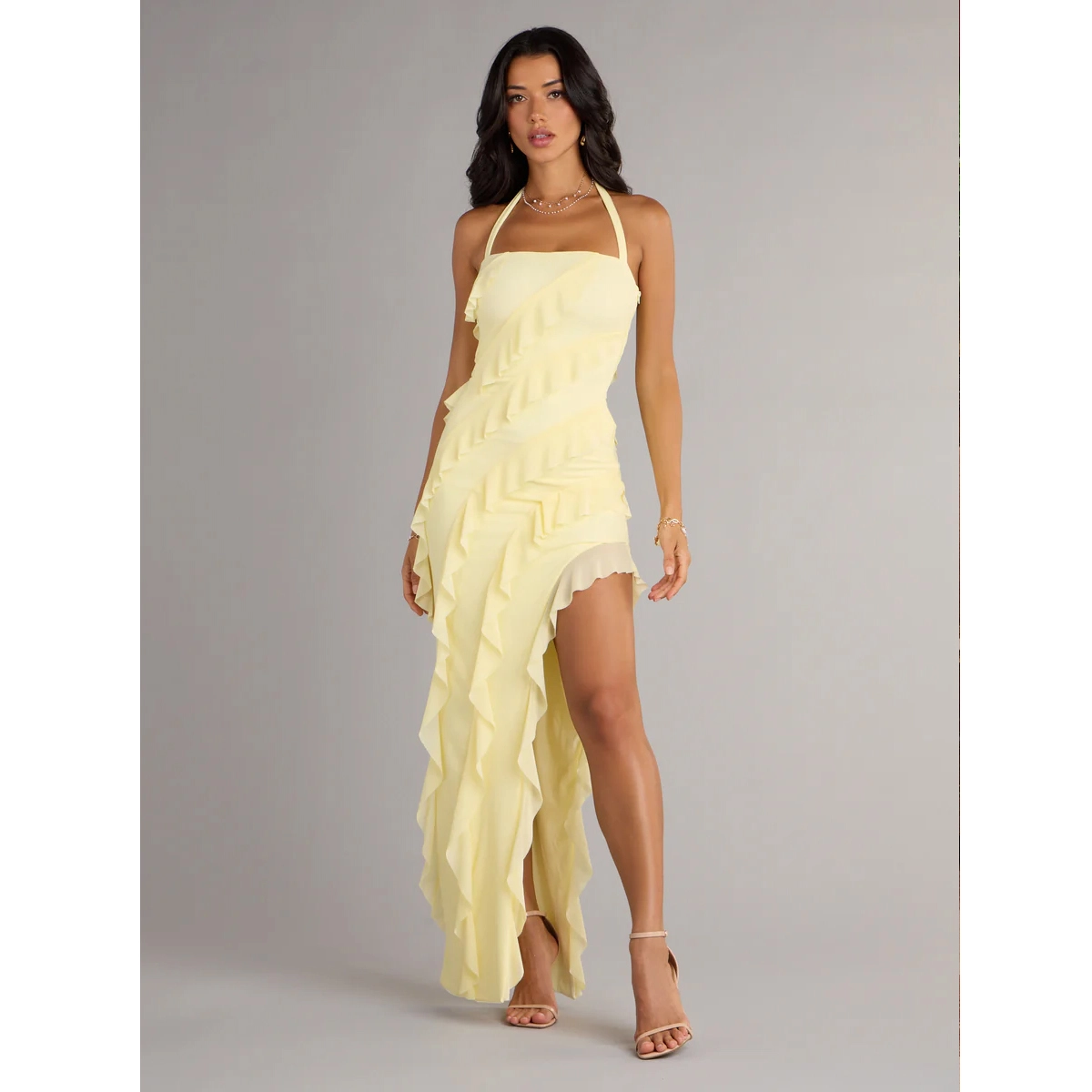
Tiered Ruffle Dress
Multiple ruffle tiers add volume quickly and increase fabric usage. Tier position, finished width and gathering are set against the sample so the skirt does not become unnecessarily heavy.
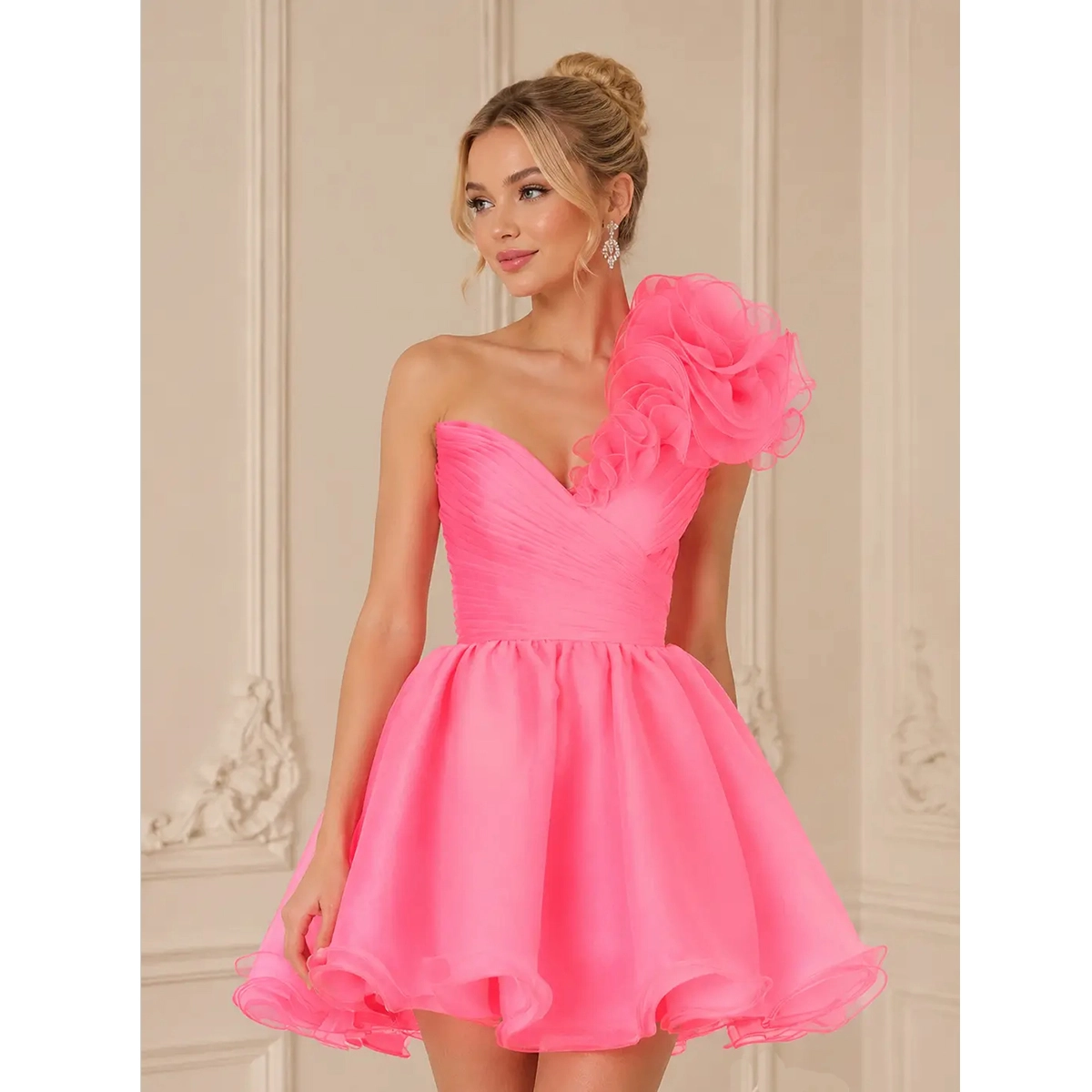
Organza Ruffle Dress
Organza holds more shape than chiffon, so the same gathering ratio can produce a much fuller ruffle. Layer count and ruffle width need to match the fabric’s stiffness.
Popular Ruffle Dress Styles We Can Customize
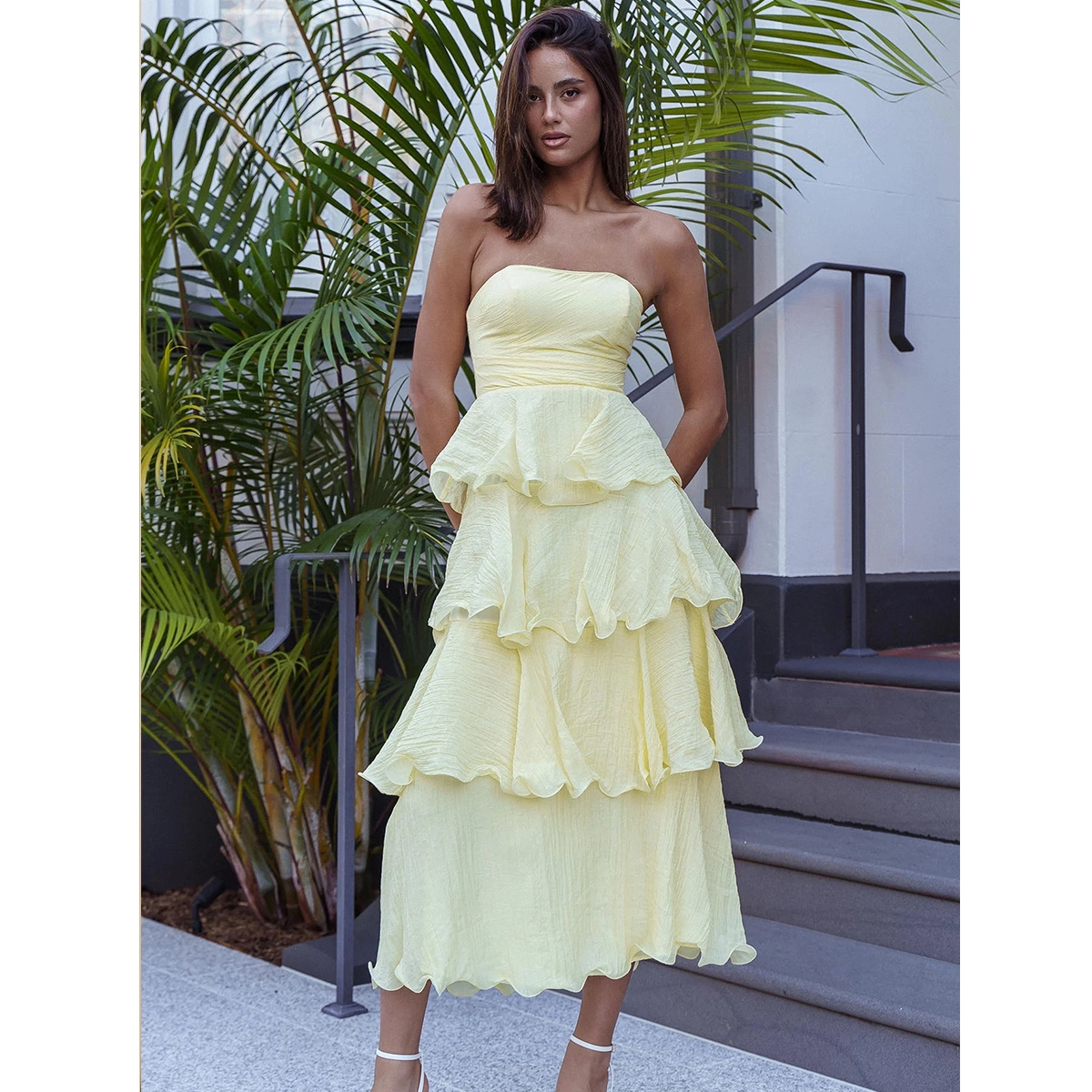
Midi Ruffle Dress
Midi dresses work well with gathered or layered ruffles, but tier positions can change the visual proportion. On fitted bodices, the bodice-to-skirt transition is checked on the sample.
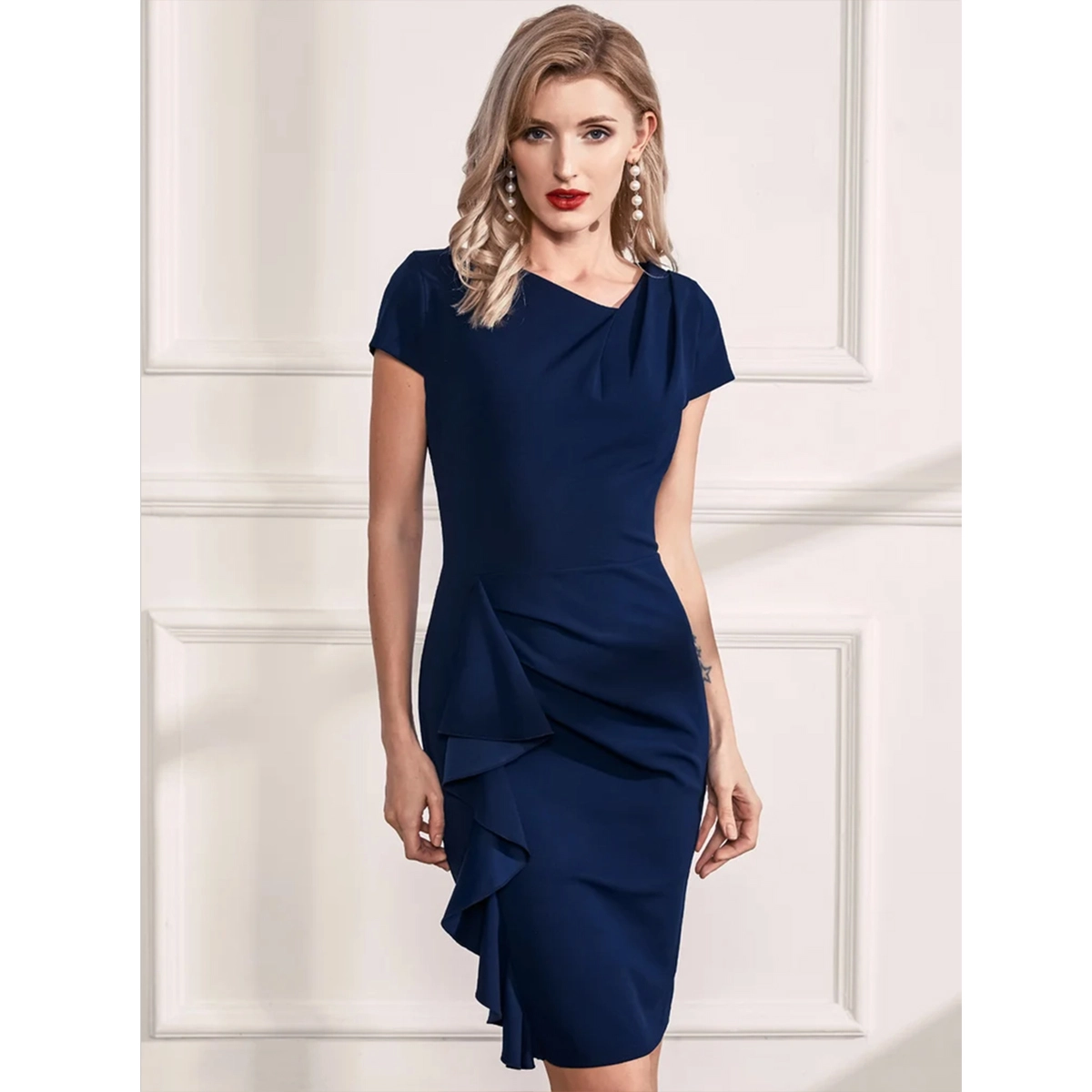
Bodycon Ruffle Dress
A ruffle attached to a stretch bodycon dress must move with the base fabric. Too much restriction at the attachment seam can pull the fitted body out of shape, so stretch and construction are checked together.
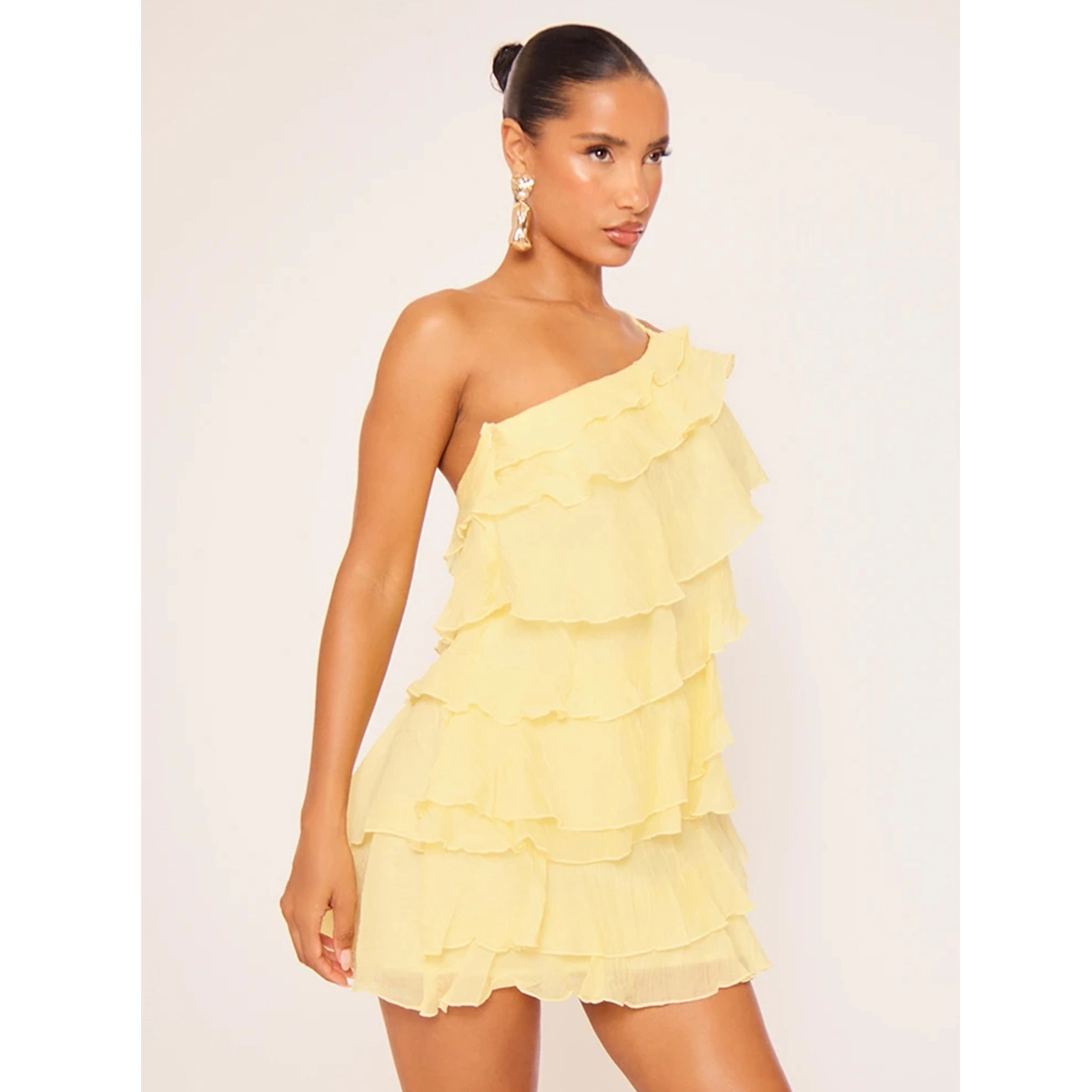
One-Shoulder Ruffle Dress
A one-shoulder ruffle adds weight to one side of the garment. The shoulder construction and ruffle attachment need to stay balanced so the neckline does not shift when worn.
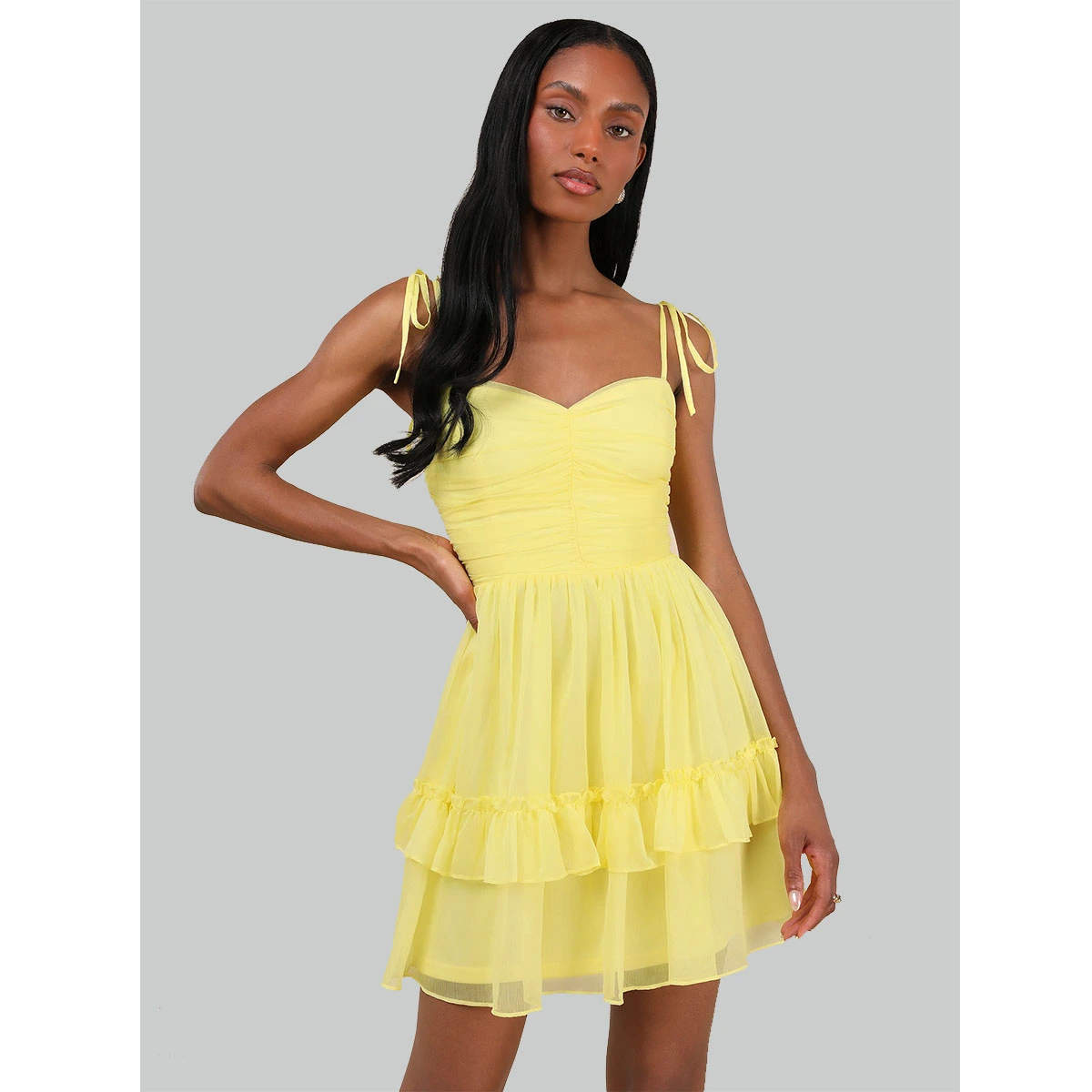
Mini Ruffle Dress
On short dresses, ruffle width has a strong effect on proportion. A heavily gathered or oversized ruffle can make the skirt look bulky, so volume is controlled against the garment length.
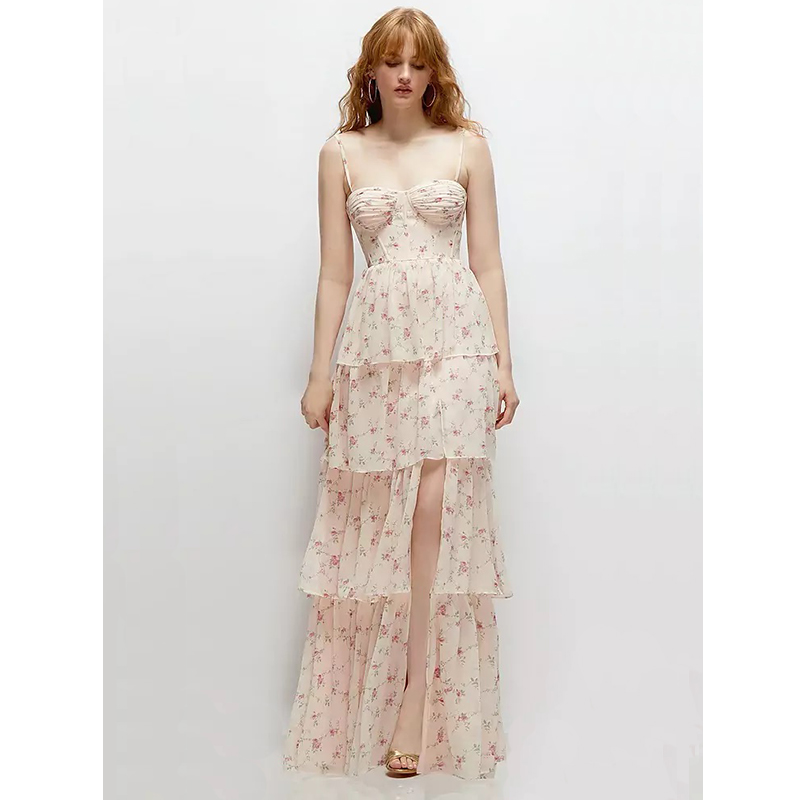
Maxi Ruffle Dress
Maxi ruffle dresses can use a large amount of fabric once several tiers are added. Ruffle width, tier count and gathering are adjusted to control weight and skirt movement.
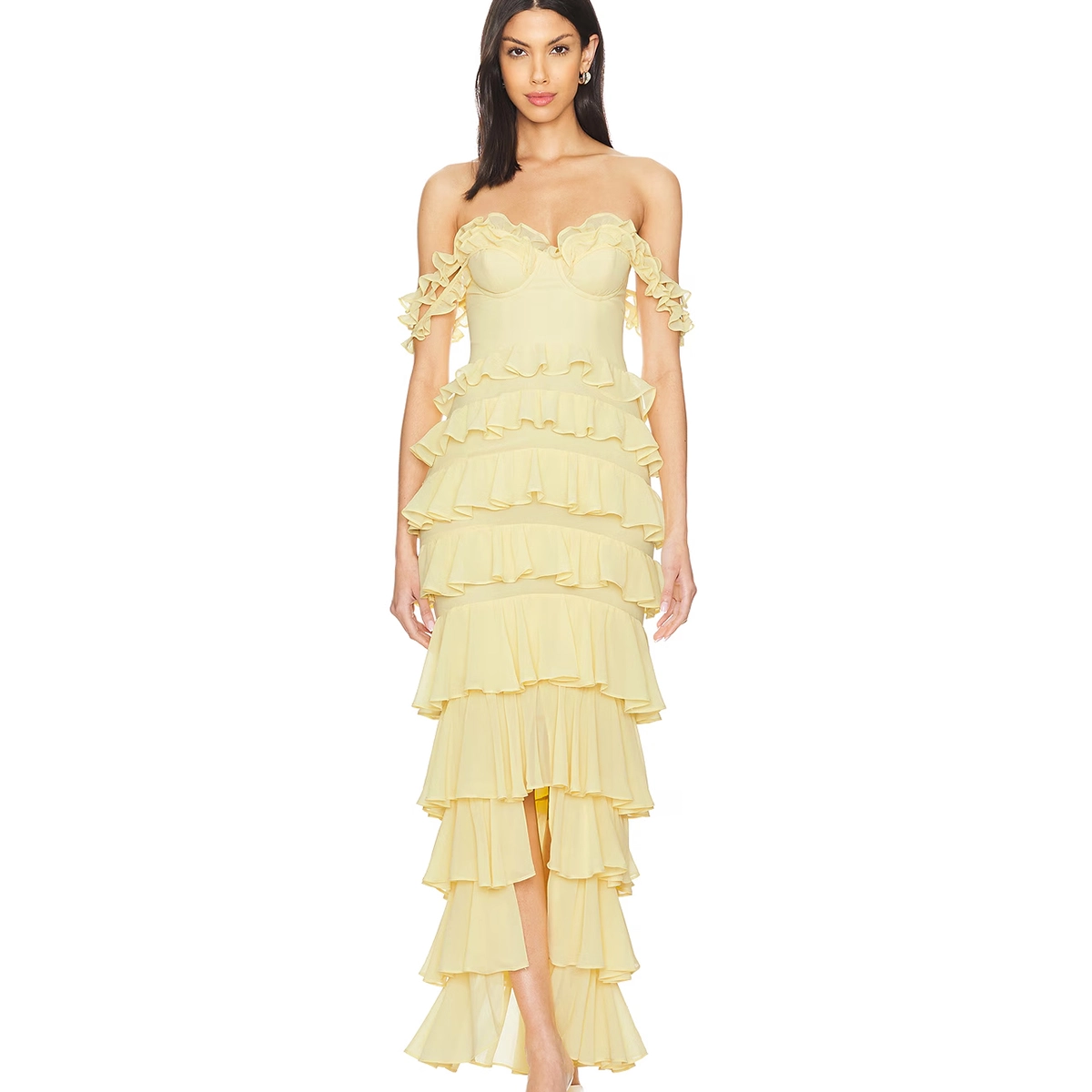
Off-Shoulder Ruffle Dress
The ruffle on an off-shoulder neckline needs to move without pulling the neckline out of position. Elastic, binding and ruffle weight all affect how the finished neckline sits.
Ruffle Dress Customization Options
Ruffle placement, silhouette and garment details can be developed from your existing block or adjusted for a new style.
- Bodycon
- A-line
- Fitted
- Slip
- Wrap
- Tiered
- Relaxed
- V-neck
- Square neck
- Sweetheart
- Off-shoulder
- One-shoulder
- Halter
- Round neck
- Sleeveless
- Short sleeve
- Puff sleeve
- Long sleeve
- Off-shoulder sleeve
- Ruffle sleeve
- Custom colors
- Prints
- Embroidery
- Appliqué
- Sequins
- Beading
- Custom trims
Fabric and Trim Sourcing for Custom Ruffle Dress
If you already have a fabric specification, send it with the design. If not, we can source materials based on the required weight, drape, stretch, hand feel and target price.
For ruffle dresses, fabric choice also needs to account for weight, drape, transparency, stretch and how the fabric reacts to gathering.
Other materials may include:
- Lining
- Zippers
- Buttons
- Elastic
- Lace
- Trims
- Labels
- Packaging materials
Private Label Ruffle Dress Manufacturing
Your own labels, hangtags and packaging can be added to the production order.
Private label options include:
- Woven labels
- Printed labels
- Size labels
- Care labels
- Heat-transfer labels
- Hangtags
- Barcodes
- Custom polybags
- Cartons and boxes
Label and packaging details can be included in the tech pack or confirmed before production.
How to Start a Custom Ruffle Dress Order
A tech pack, sketch, reference garment or basic product concept is enough to start the discussion. Measurements, fabric specifications, colors, ruffle placement, finished width, layers, trims, labels and packaging details can be added as they are confirmed.
For ruffle styles, the most important details are the ruffle position, finished width, number of layers and construction method. Fabric weight and drape also affect the final shape.
If your collection includes styles beyond ruffle dresses, Xiuyu Apparel also works as a clothing manufacturer for broader womenswear production.
Ruffle Dress Quality Control
Ruffle dresses need more than a basic workmanship check. The ruffle itself has to match the approved sample in width, fullness and placement.
During production, we pay attention to:
- Ruffle width
- Gathering distribution
- Ruffle placement
- Seam quality
- Hem and edge finishing
- Garment measurements
- Fabric defects
- Print direction
- Lining construction
- Zipper and closure function
- Overall garment appearance
For styles with several tiers, the relationship between each layer is checked as the garment is assembled. A small difference in one tier can become obvious once the full skirt is completed.
What Affects Ruffle Dress Manufacturing Cost?
Two ruffle dresses with a similar silhouette can still have different production costs because of fabric use, ruffle construction and trims.
- Fabric type and fabric weight
- Ruffle width and gathering ratio
- Number of ruffle layers
- Total garment length
- Lining requirements
- Print or embroidery
- Lace, beading or other trims
- Construction complexity
- Order quantity
- Custom labels and packaging
Ruffle fullness is one detail worth checking early. A wider or more heavily gathered ruffle uses more fabric, and multiple tiers can increase both material consumption and sewing time.
If you have a target price, share it at the development stage. Fabric and construction options can then be compared against the target.
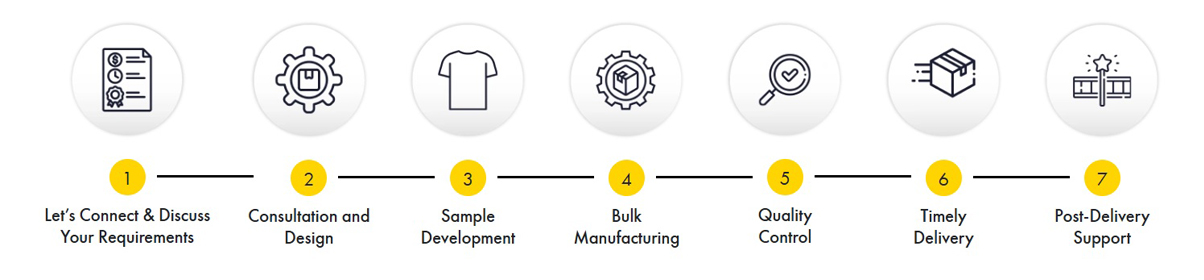
Ruffle Dress Sampling & Production Process
A ruffle dress can look correct in a sketch but behave differently once it is made in fabric. The first sample shows how the fabric, pattern and ruffle construction work together before bulk production.
1. Design or Tech Pack Review
Measurements, construction details, fabric requirements and ruffle placement are reviewed before pattern work starts.
2. Pattern Development
The pattern team builds the base dress pattern and separate ruffle pieces, including the required gathering and seam allowances.
3. First Sample
The first sample shows how the pattern, fabric and ruffle construction work together. Fit, proportion and ruffle volume are checked at this stage.
4. Sample Revision
If you need changes to the ruffle width, gathering, length, neckline or other details, the revision is recorded before the next sample.
5. PP Sample Approval
The approved PP sample becomes the production reference for bulk manufacturing. Fabric, measurements, construction and finishing details should be confirmed before bulk cutting begins.
6. Bulk Cutting
After fabric, trims and specifications are confirmed, the approved pattern is released for bulk cutting.
7. Sewing and In-Line Inspection
During sewing, production staff and QC check construction details, measurements and workmanship as the garments move through the line.
8. Final Inspection
Finished dresses are inspected before packing to check appearance, measurements, workmanship and other agreed requirements.
9. Packing
Your labels, hangtags, barcodes and packaging requirements can be handled as part of the private label production process.
Related Dress Manufacturing Categories
Beyond ruffle dresses, Xiuyu Apparel develops and manufactures custom dresses for fashion brands, retailers, wholesalers and private label companies. You can also explore our dress manufacturer services and related dress categories below.
Ruffle Dress Manufacturing Considerations
A ruffle can look simple in a product photo, but several production details affect the finished result.
Ruffle Gathering
Gathering controls the final volume of the ruffle. Too little can leave it flat; too much adds fabric, weight and bulk. The ratio is best confirmed on the sample before the pattern is finalized.
The sample is used to confirm the finished ruffle width before bulk production.
Ruffle Width
A 3 cm ruffle and a 10 cm ruffle will produce very different results even when attached to the same dress.
Finished ruffle width should be listed in the tech pack or confirmed against the reference sample. It affects the pattern, fabric consumption and final proportion.
Ruffle Placement
The same ruffle behaves differently at the neckline, armhole, waist and hem.
A ruffle attached to a fitted area needs to follow the underlying garment shape. If the placement is not balanced with the pattern, it can pull or distort the base garment.
Ruffle Edge Finishing
Lightweight fabrics such as chiffon and mesh may require a different edge treatment from satin or lace.
Edge finishing is selected together with the fabric because chiffon, mesh, satin and lace can require different treatments.
Fabric Consumption
Multiple ruffle layers can increase fabric consumption significantly.
If you have a target cost, it is useful to confirm the ruffle width and number of layers before the final sample. Reducing one tier or changing the ruffle width can sometimes make a noticeable difference to material usage.
Printed Ruffle Dresses
Print placement becomes more complicated once fabric is gathered.
For floral or directional prints, mark the required print direction on the tech pack or reference sample before cutting.
Fabrics for Custom Ruffle Dresses
Fabric can be supplied by the buyer or sourced according to the design, hand feel, target price and production requirements.
Common fabric options include:
| Fabric | Common Application | Production Considerations |
|---|---|---|
| Chiffon | Flowing and lightweight ruffles | Fabric shifting, gathering and transparency |
| Satin | Party and occasion dresses | Slippage, seam puckering and pressing marks |
| Crepe | Structured or clean ruffle styles | Drape and shape retention |
| Mesh | Sheer panels and decorative ruffles | Stretch and seam handling |
| Tulle | Full and layered ruffles | Layering, cutting and edge finishing |
| Polyester Blends | Commercial fashion collections | Cost, stability and care requirements |
| Cotton Blends | Casual ruffle dresses | Shrinkage and fabric weight |
Fabric choice should be made against the intended ruffle shape, garment weight and target cost. A soft chiffon may create a fluid ruffle, while a firmer fabric can hold a more defined shape.
Common Ruffle Dress Production Issues We Check
Uneven Ruffle Fullness
If the gathering ratio is inconsistent, one side of the ruffle can look fuller than the other. We check the ruffle construction during sampling and production so the finished appearance follows the approved version.
Ruffle Layer Misalignment
For tiered dresses, each layer needs to sit at the intended position. Small differences can become obvious once several layers are placed together, particularly on longer skirts.
Fabric Stretching During Sewing
Lightweight or stretch fabrics can move during sewing. This can affect ruffle length, seam appearance and garment balance. Sewing methods are adjusted according to the fabric’s stretch and stability.
Ruffle Losing Its Shape
A very soft fabric may not hold a structured ruffle, while a heavier fabric can make the garment feel too bulky. Fabric selection and ruffle construction should be considered together during sample development.
Hem and Skirt Imbalance
On maxi and tiered styles, the skirt can look uneven if the layers or hem are not controlled properly. The finished sample gives you a chance to check the actual proportion before bulk cutting begins.
Seam Puckering
Fine fabrics and gathered sections can show puckering more easily. Stitching, seam construction and fabric handling need to be checked during production, particularly around heavily gathered areas.

More About Our Company
Xiuyu Apparel has been making dresses since 2007. Our production covers sample development, pattern making, fabric preparation, cutting, sewing, inspection and packing.
- Inside Our Dress Manufacturing Factory
- Our Capabilities
- Factory Picture
- One-Stop Services
Below are photos from our production workshop, including fabric preparation, cutting, sewing, inspection and packing.
Inside Our Manufacturing Workshop
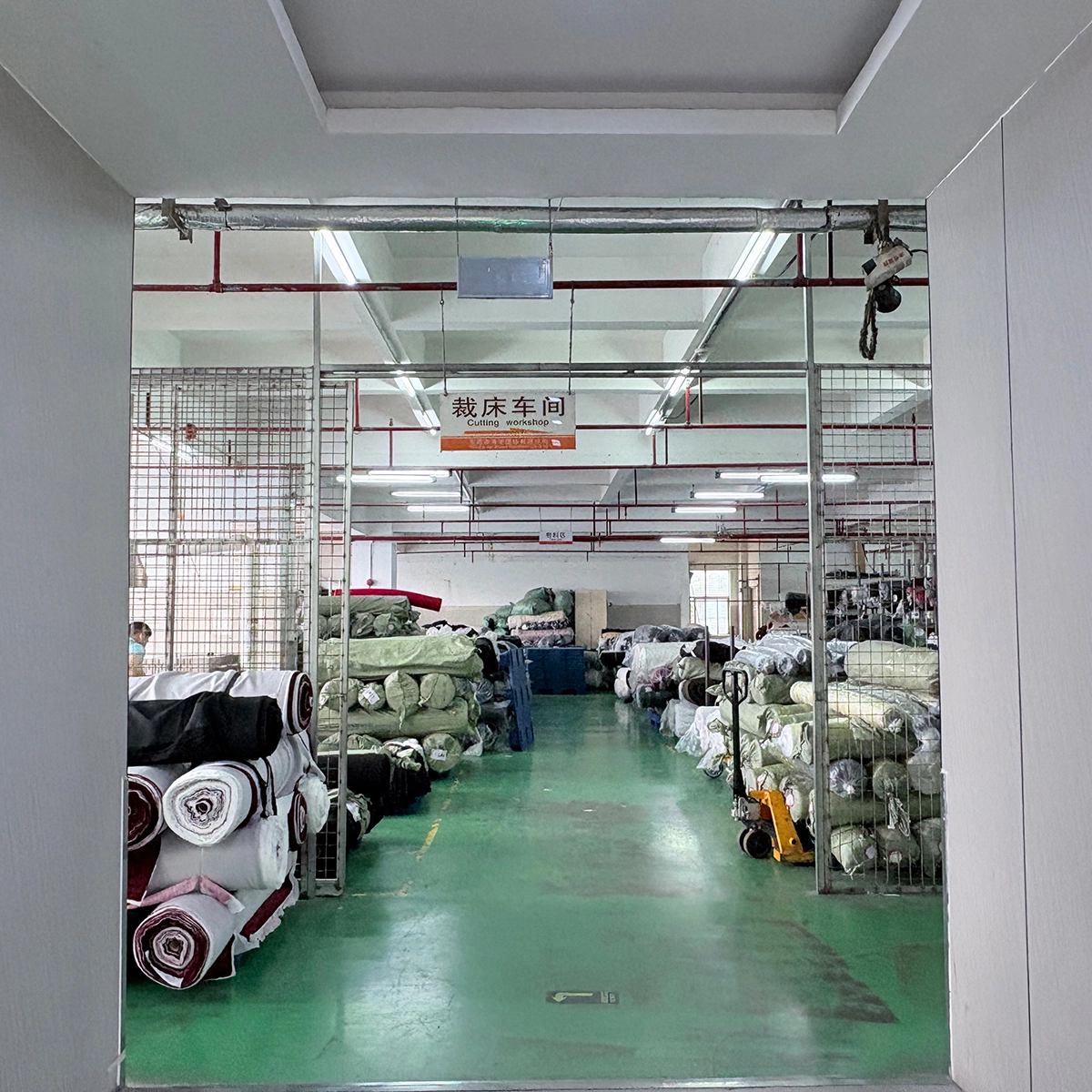
Fabric Warehouse
Fabric rolls are labeled and recorded when they arrive. Batch information is kept with the material records so the correct fabric can be matched to each order.
↓
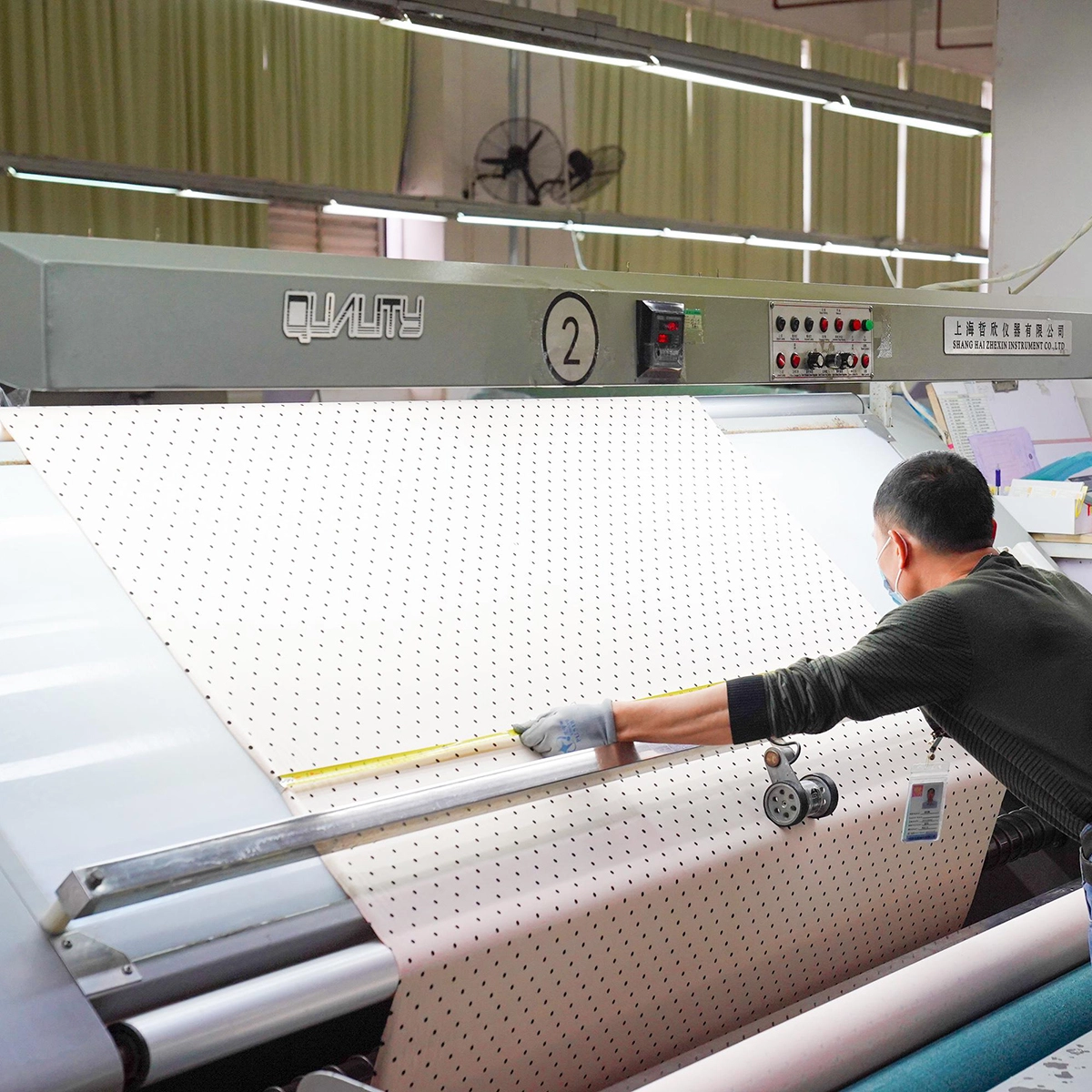
Fabric Inspection
Satin, silk and other smooth fabrics need extra checking because even small marks can remain visible on the finished garment.
↓
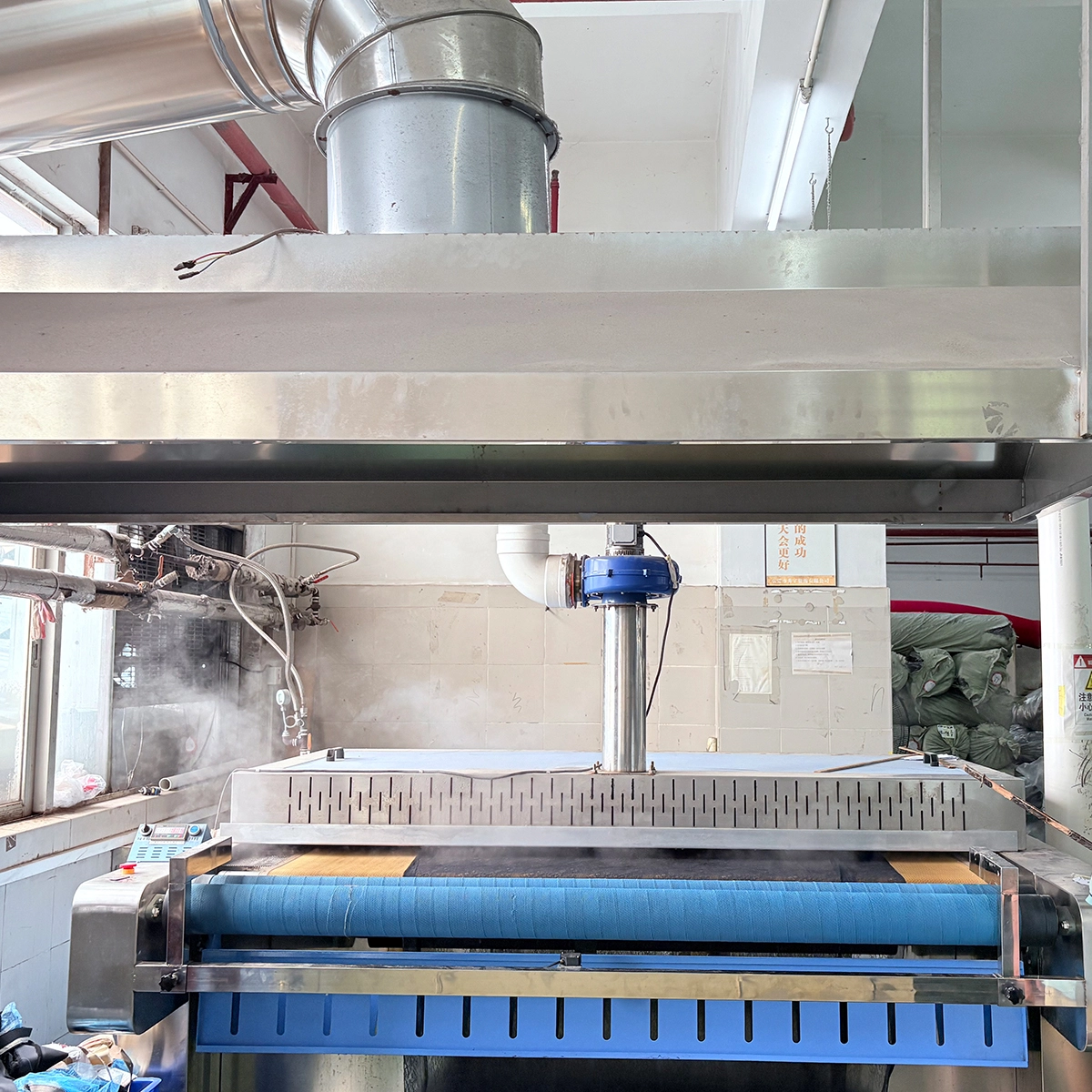
Fabric Pre-shrinking
After fabric inspection, selected fabrics go through a pre-shrinking process before cutting. This helps control shrinkage and keeps finished measurements more consistent across the order.
↓
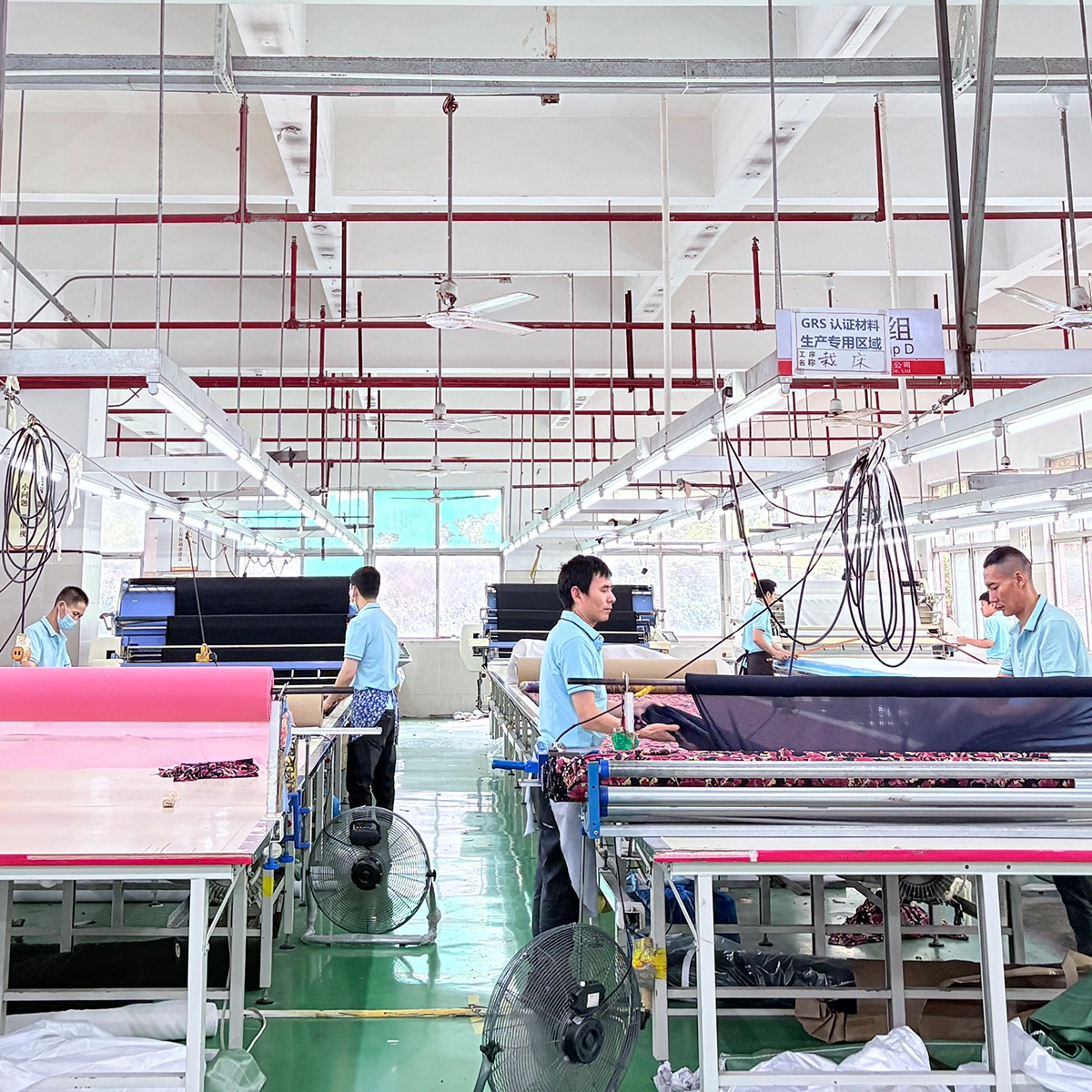
Automatic Cutting
The cutting system keeps pattern pieces consistent across the order and helps control fabric usage, especially when a style has many panels or several sizes.
↓
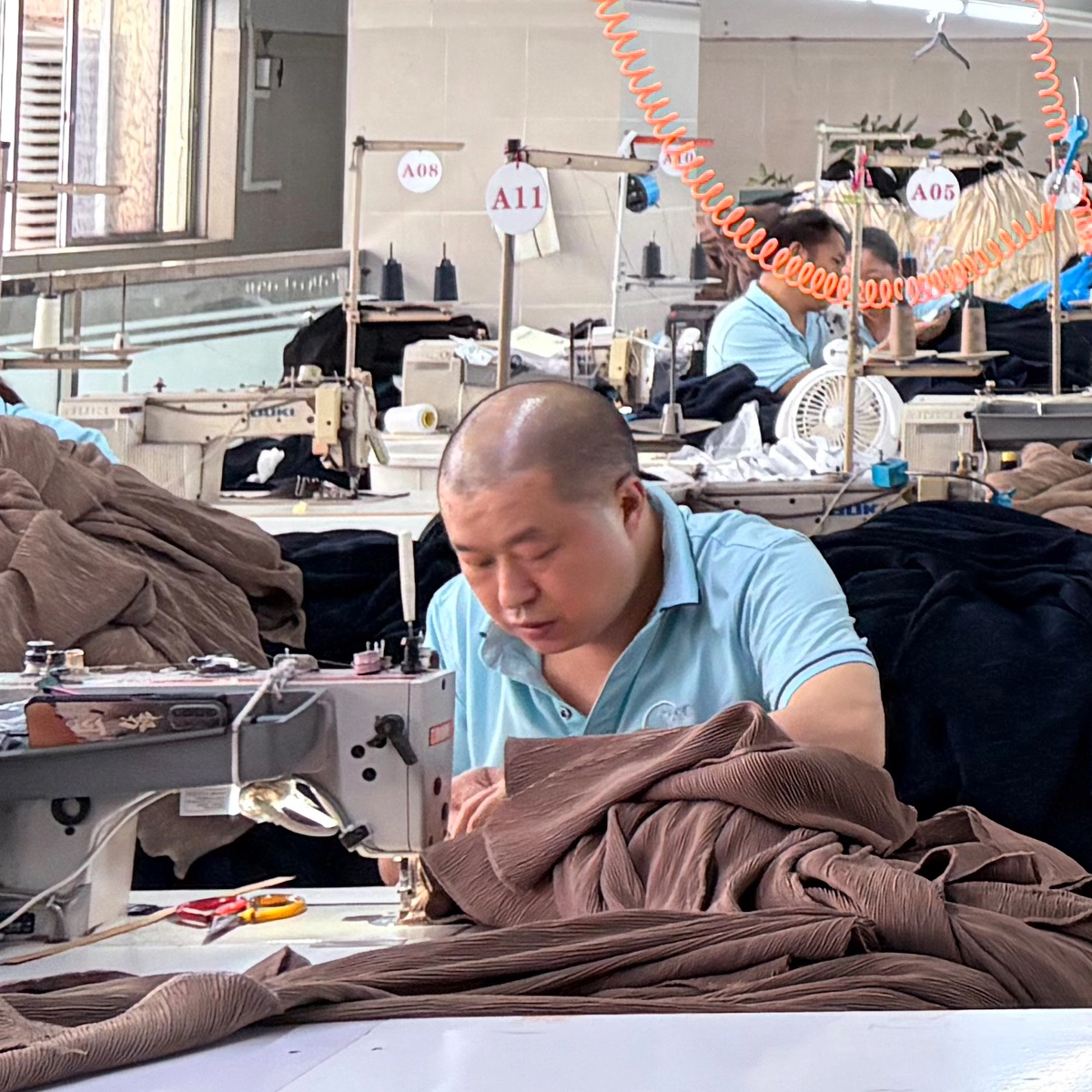
Bulk Production Sewing
Sewing operators work from the approved sample and production specifications, with construction checked as the order moves through the line.
↓
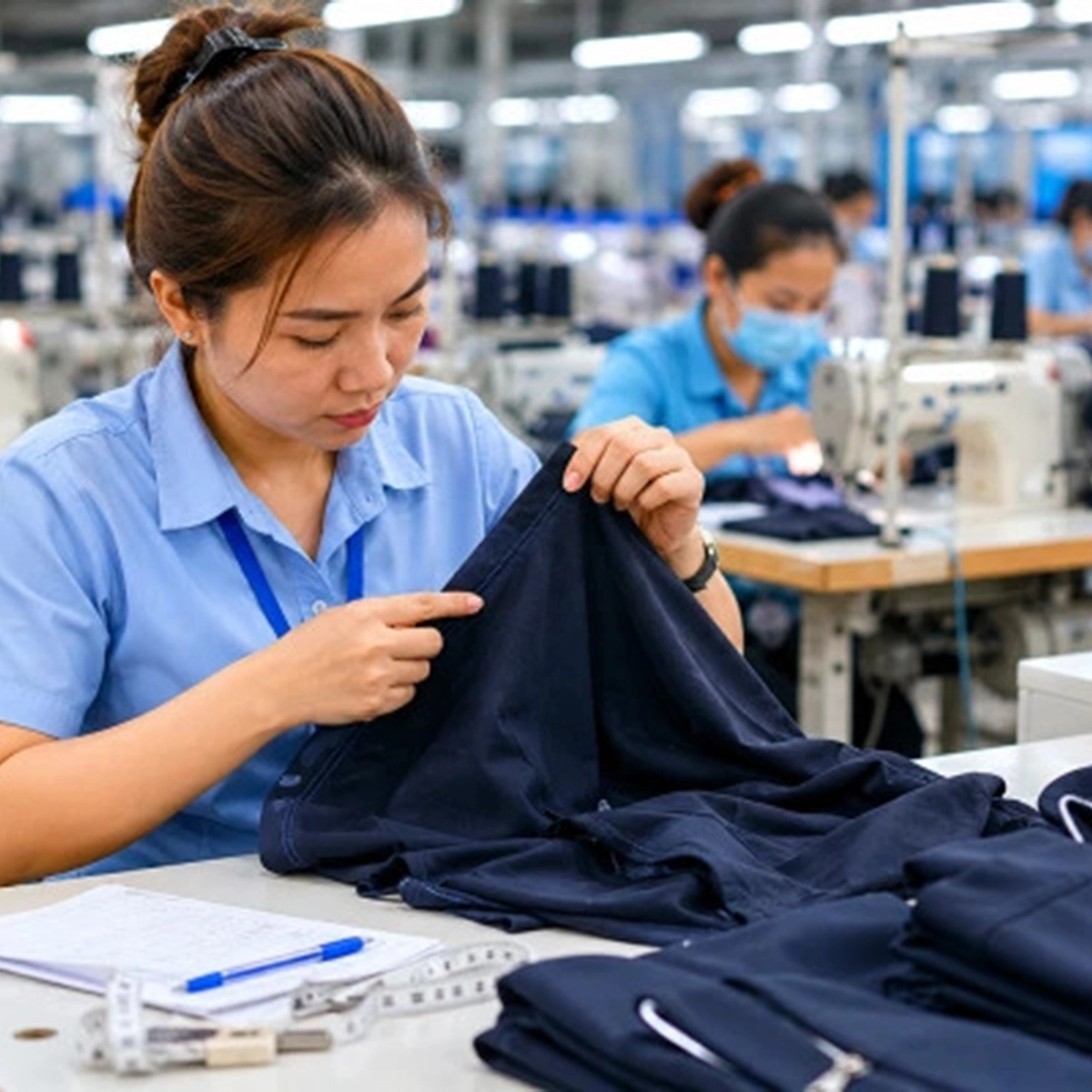
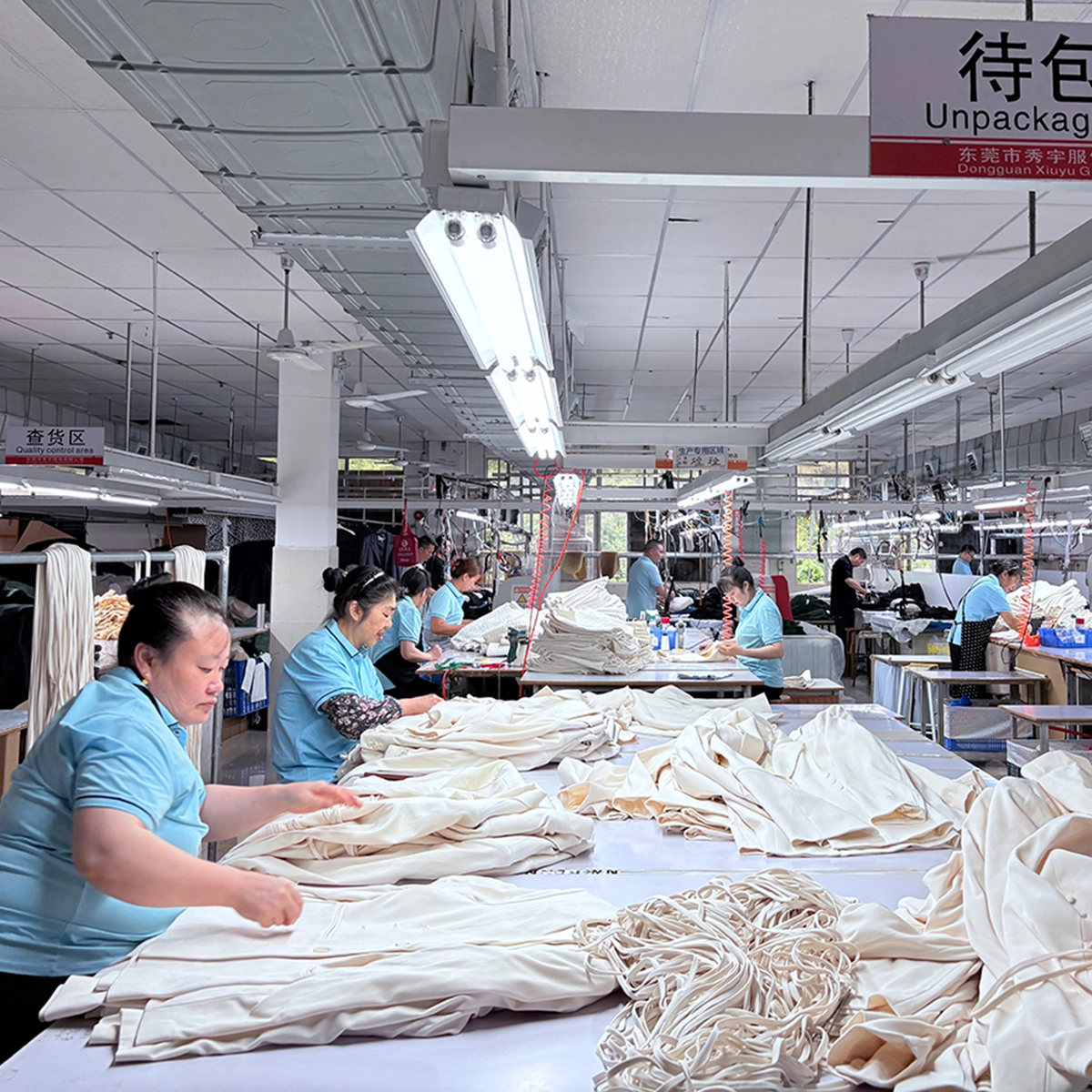
In-line Inspection
QC checks the garment as it moves through production, including stitching, measurements and construction. Problems found on the line can then be corrected before the finished garments reach final inspection.
↓
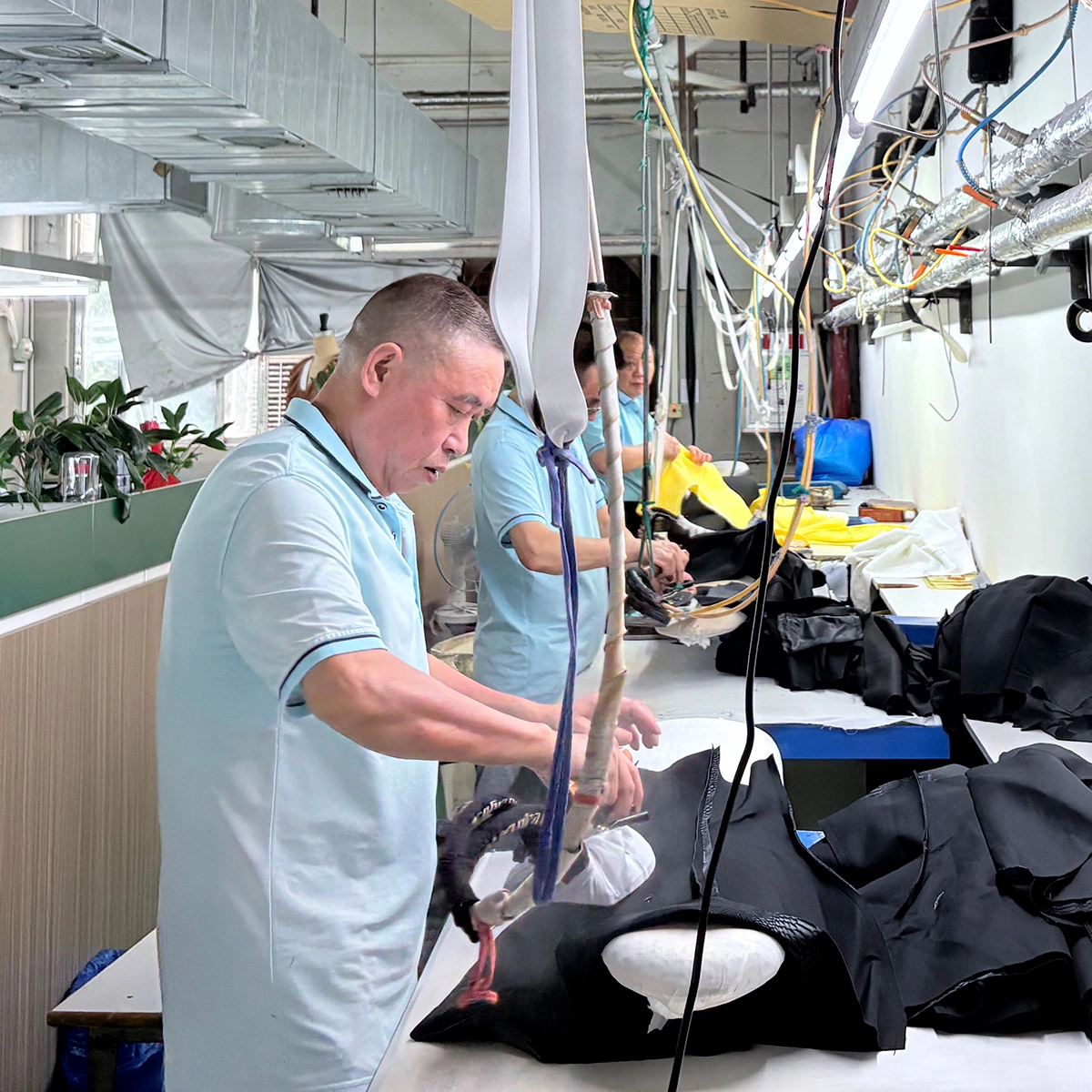
In-line Pressing
Pressing is adjusted according to the fabric and garment construction, especially around seams, hems and shaped areas.
↓
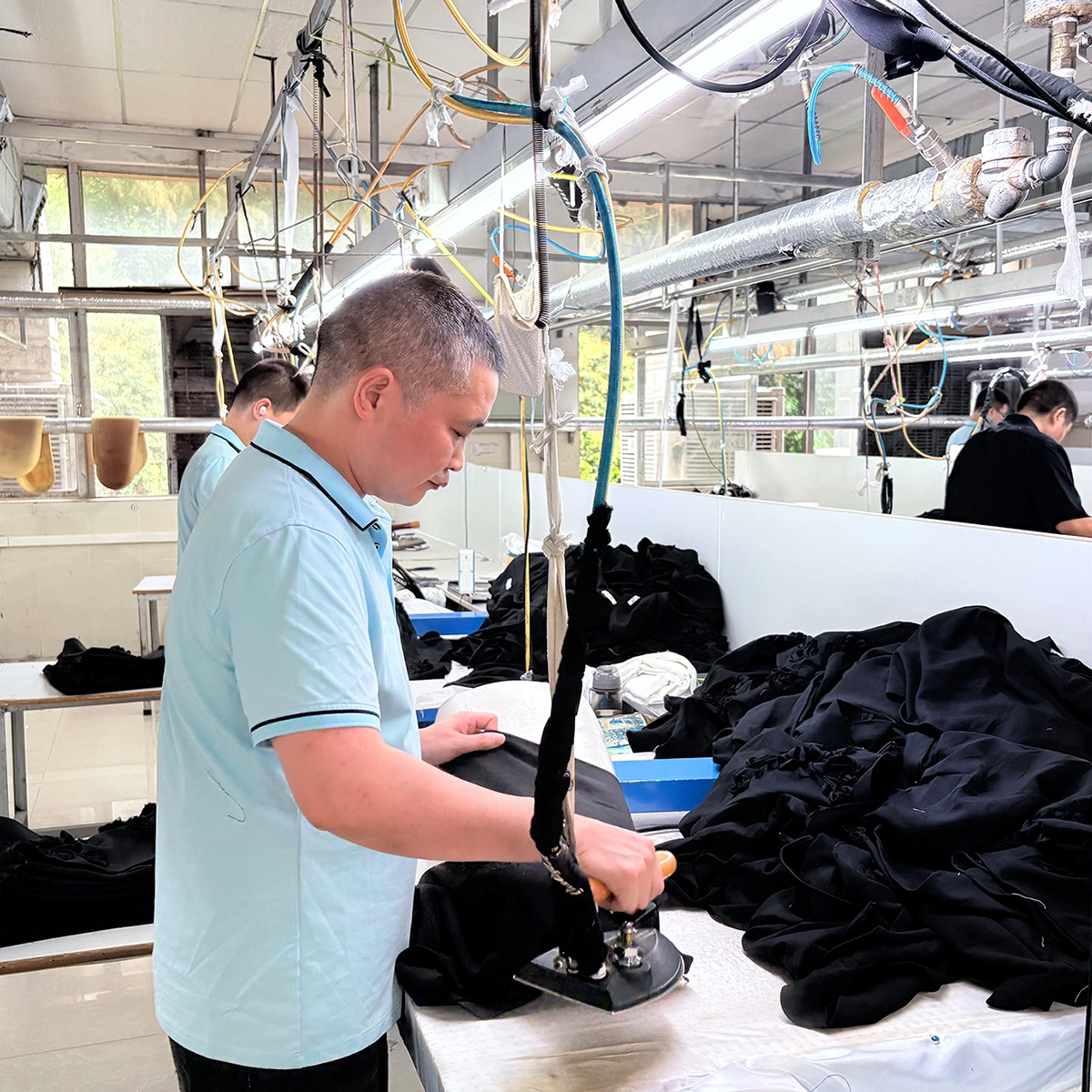
Final Pressing
Before packing, finished garments are pressed to smooth seams and shape key areas before final checking.
↓
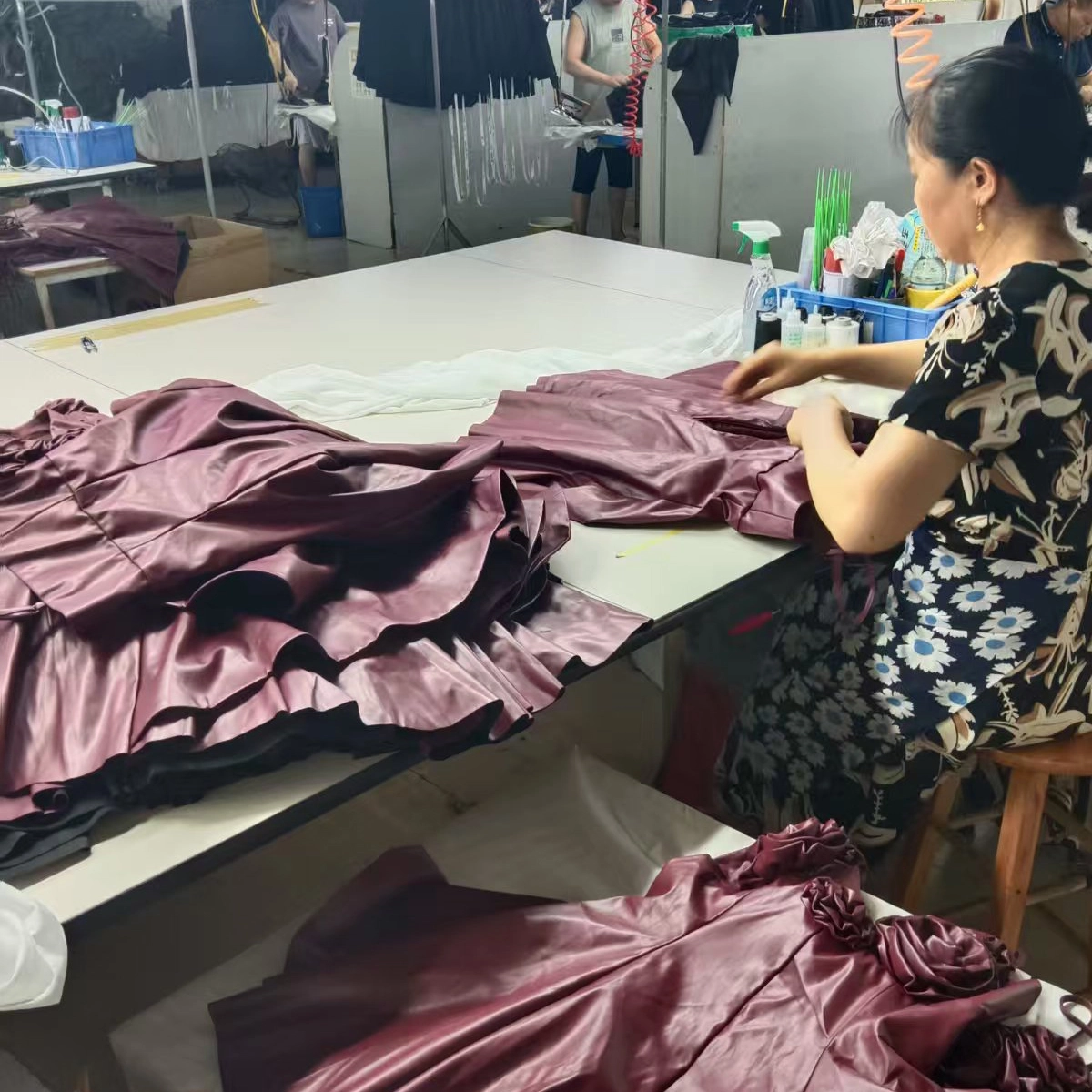
Final Inspection
Before shipment, finished garments are checked for measurements, stitching, labels, packing and quantity by style, color and size.
↓
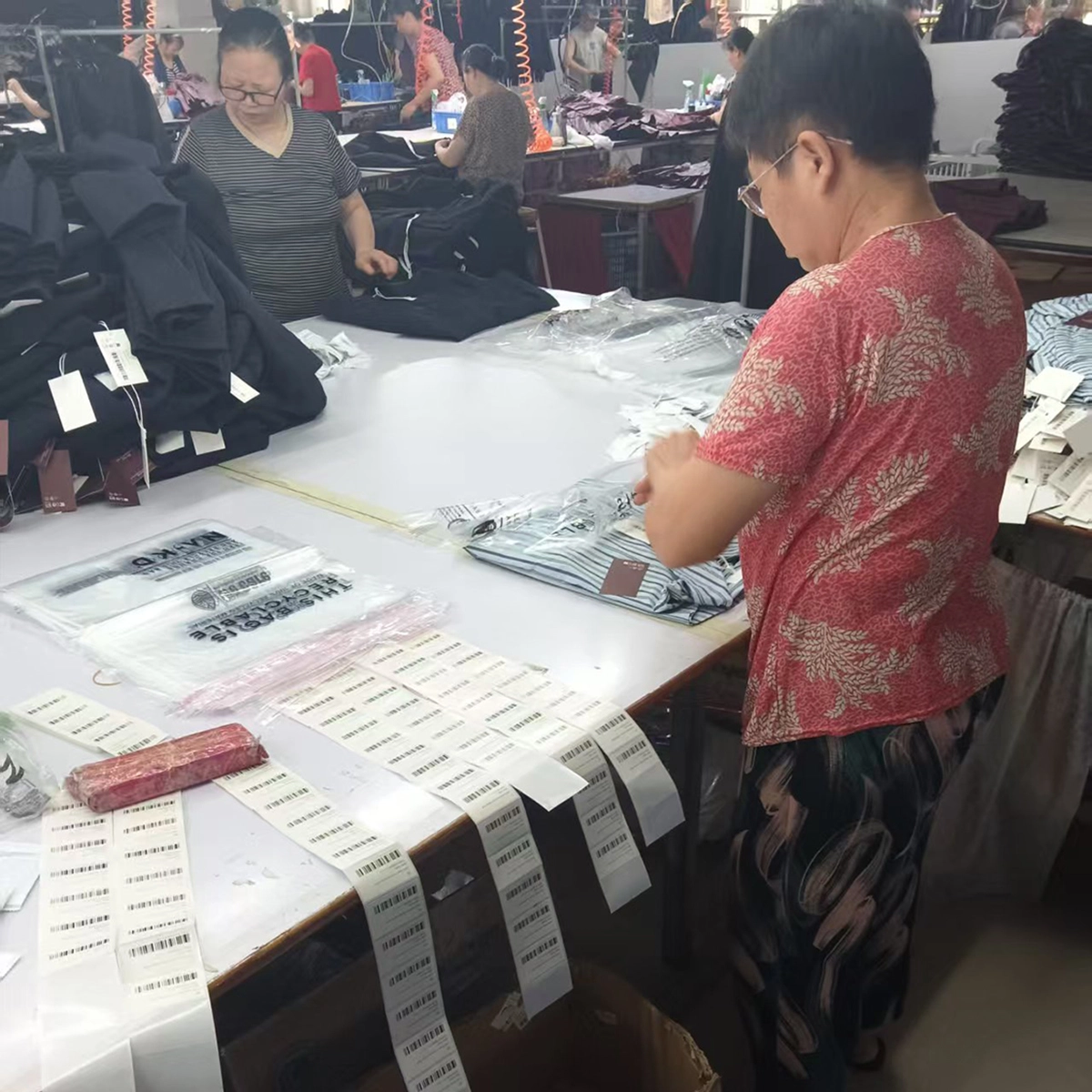
Garment Packing
Finished garments are folded and packed according to each order’s requirements. Labels, tags, barcodes and packaging details are checked before cartons are sealed.
↓
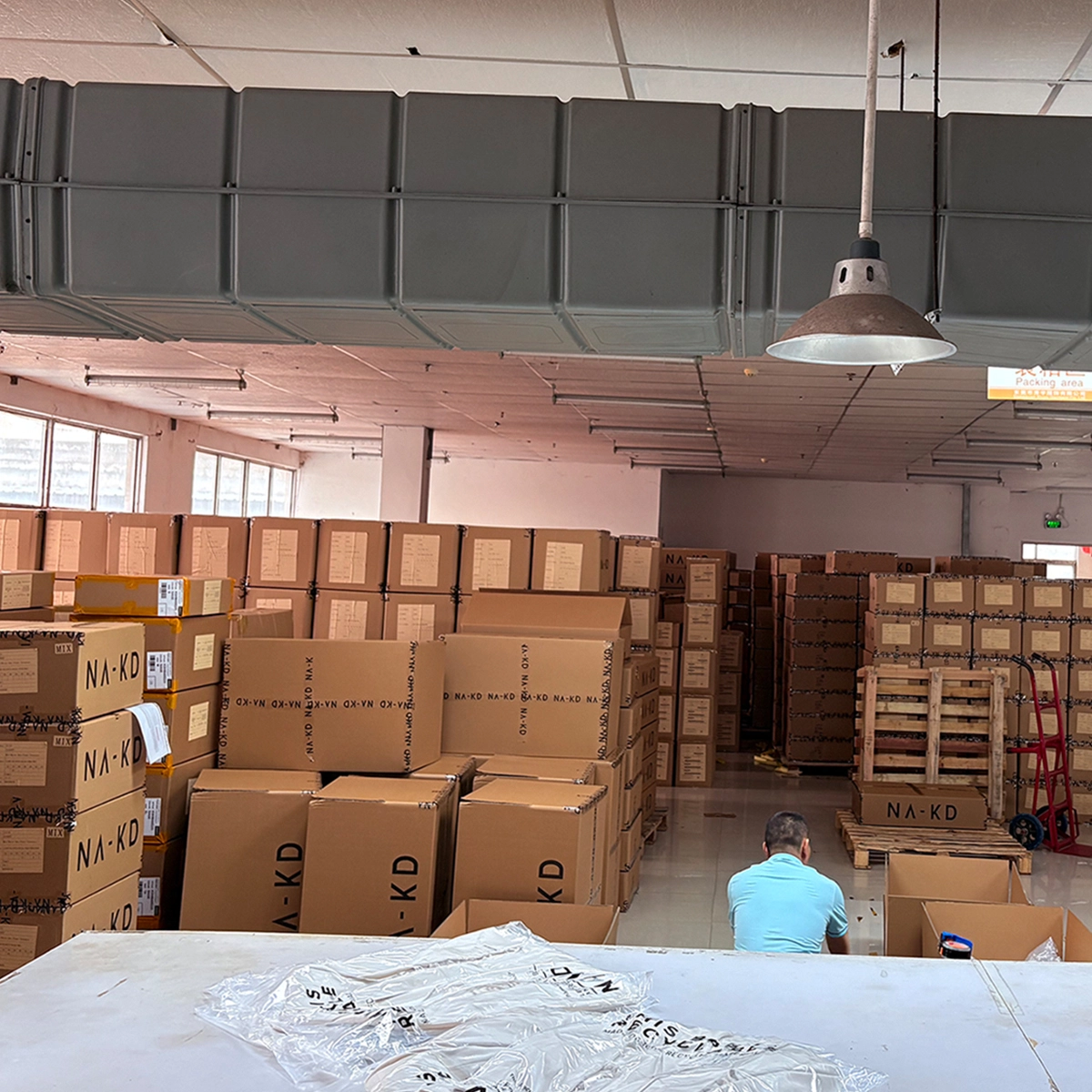
Finished Products
Finished garments are arranged by style, color and size before shipment.
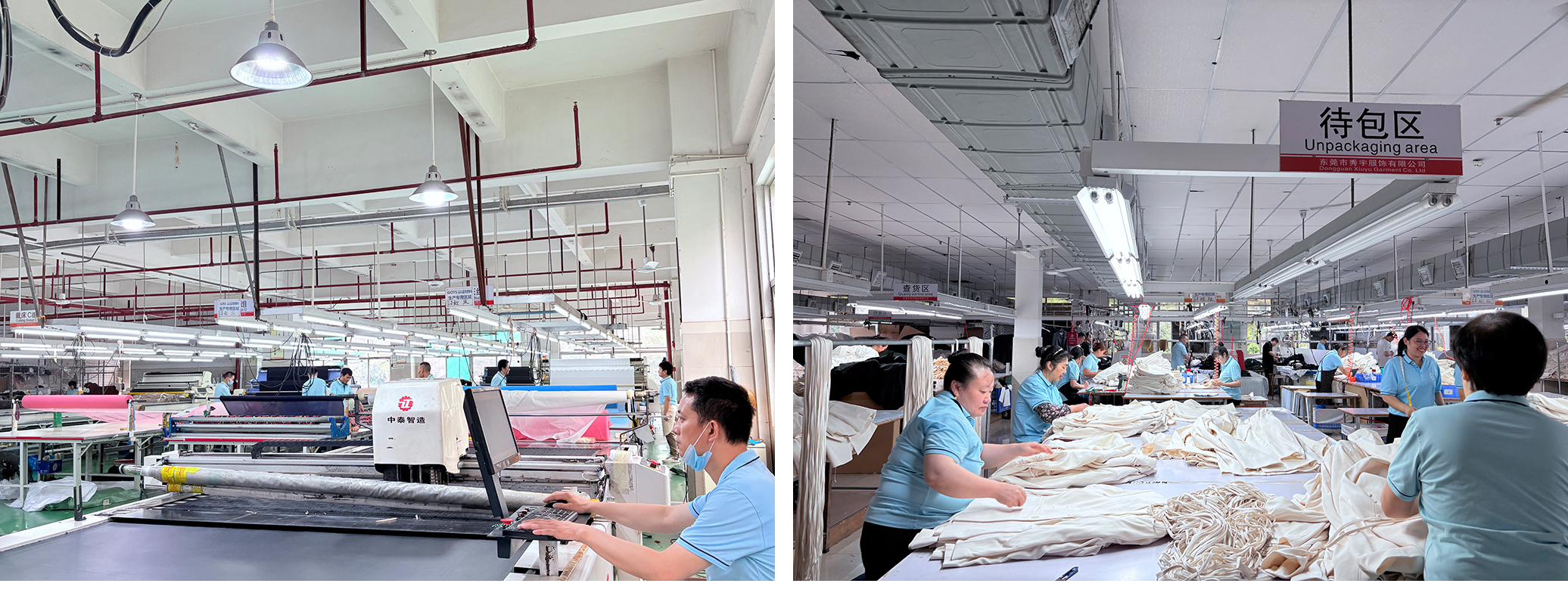 Cutting room & QC inspection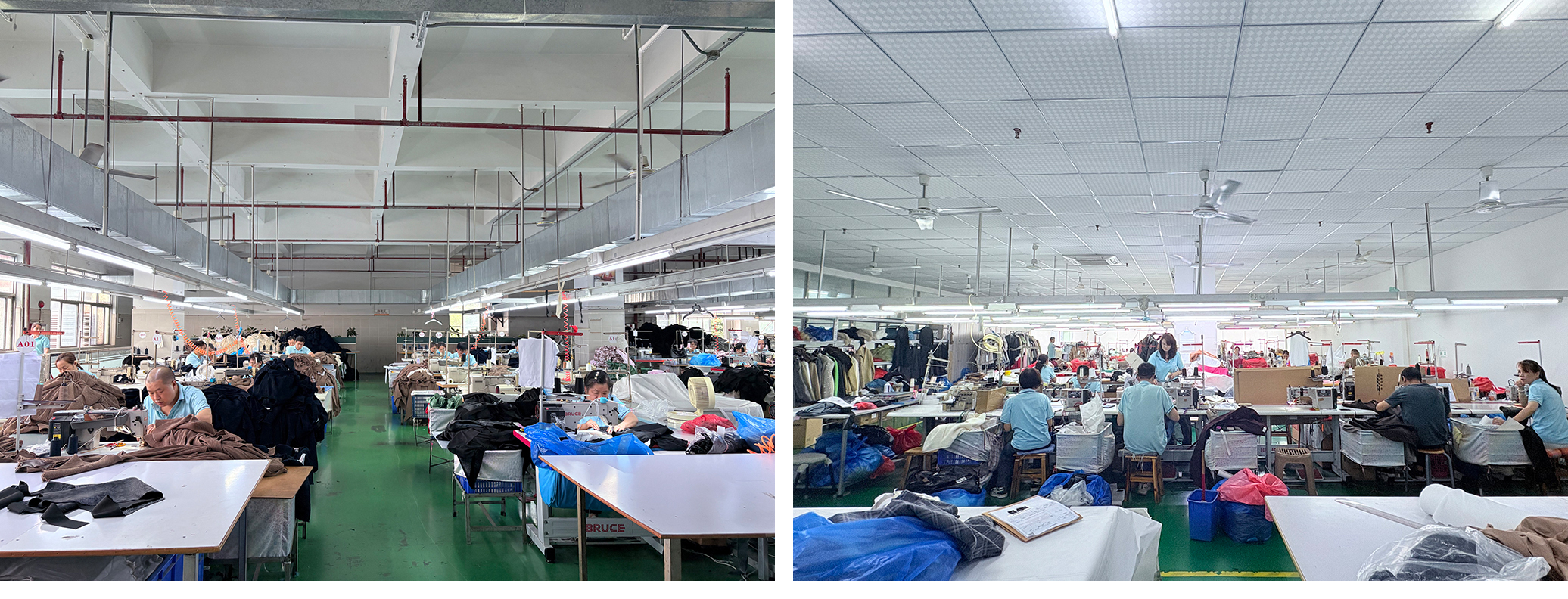
Sewing workshop
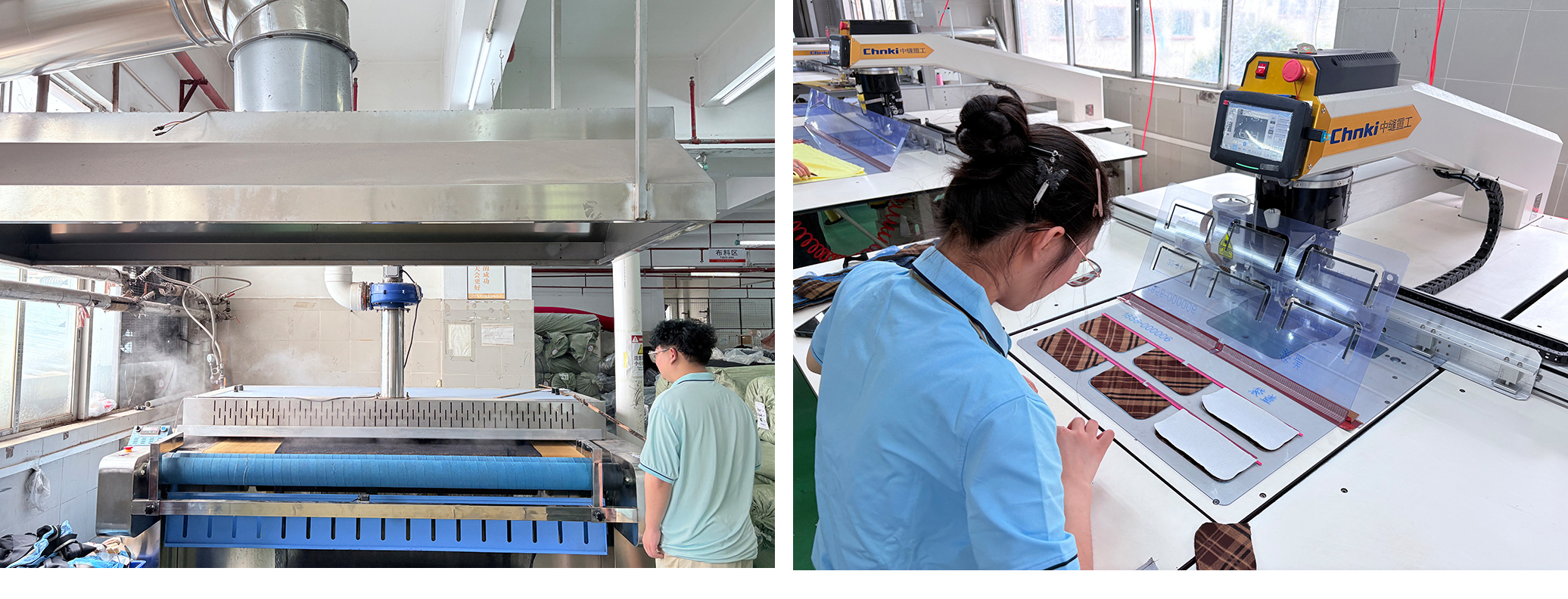 Fabric Pre-shrinking Workshop & Automatic Template Machine Workshop
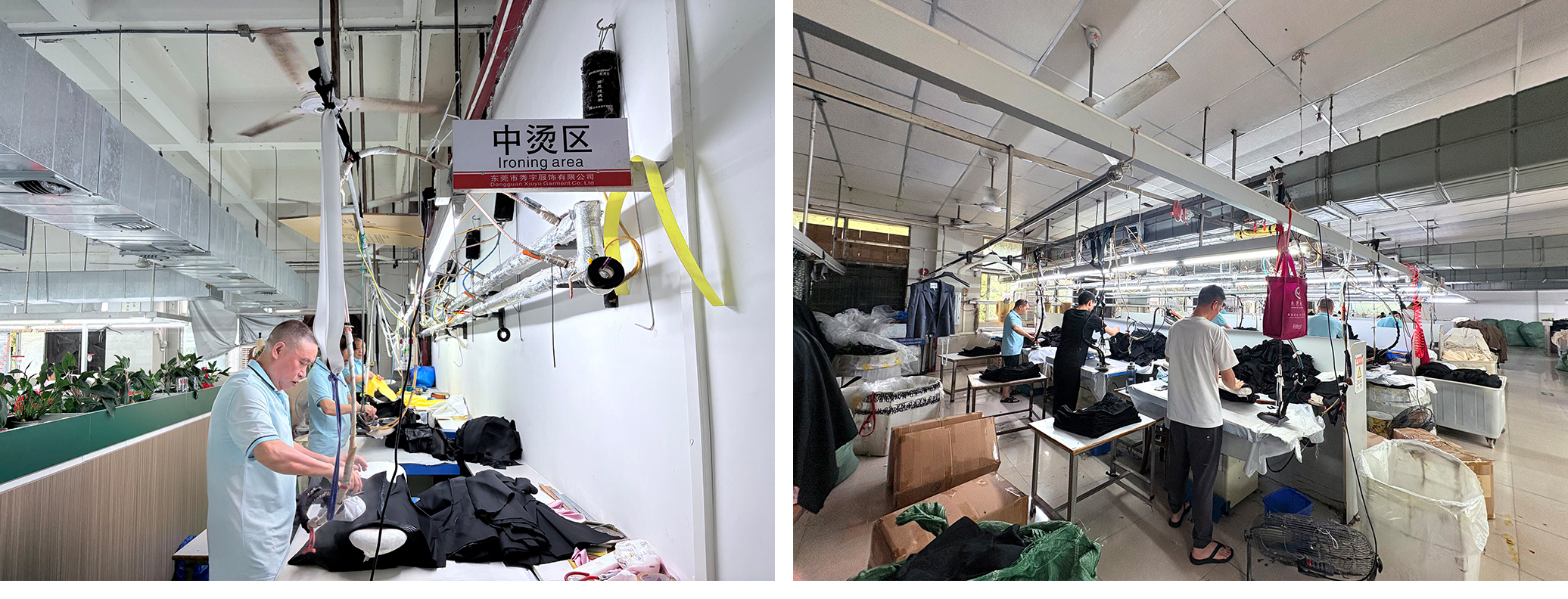 Finishing Workshop
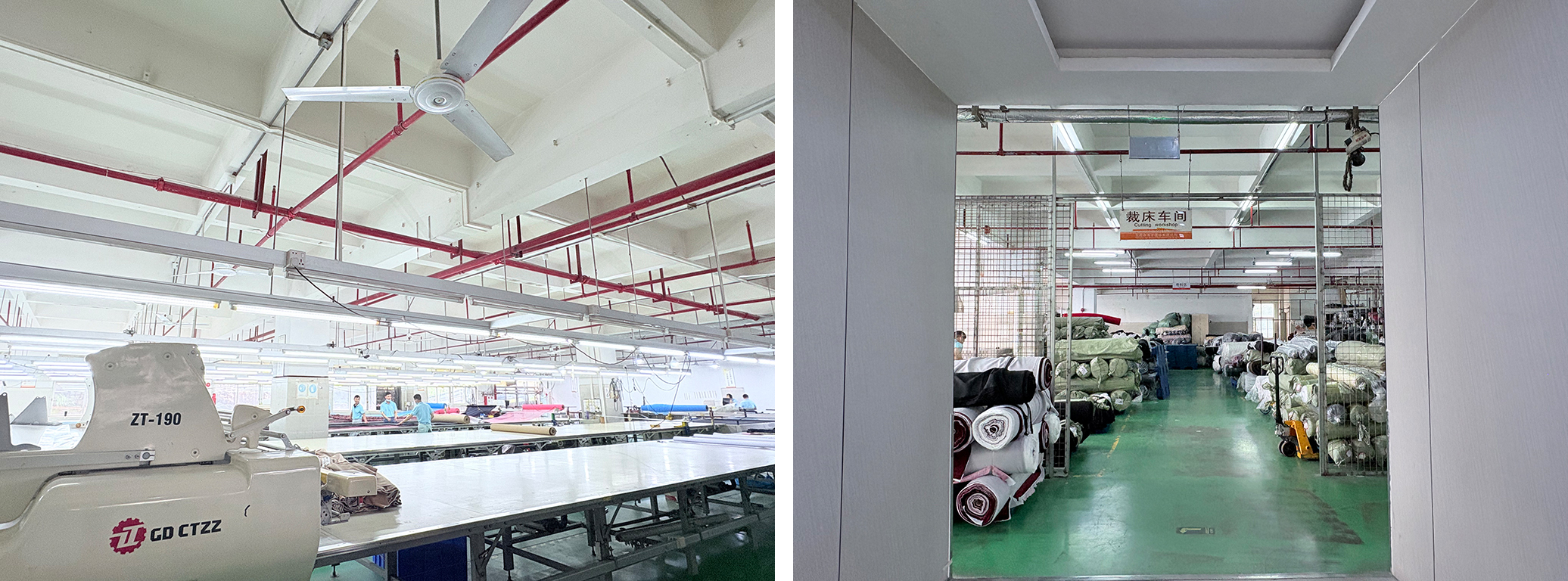
Cutting Room & Fabric warehouse
As a custom dress manufacturer, we handle the main production steps in-house, from pattern making and sampling through cutting, sewing, finishing, and final inspection. Our team works from your tech pack, sample, sketch, or reference and checks the details before the style moves into bulk production.
Keeping these stages with one production team makes it easier to deal with pattern changes, sample revisions, and construction issues before cutting starts. We can also arrange screen printing and custom embroidery when these details are part of the design.
Explore More Dress Manufacturing Options
If you are developing a broader womenswear collection, explore these related dress manufacturing categories:
Ready to Develop Your Ruffle Dress Collection?
Send your current design materials, even if the tech pack or production details are not complete.
We can review the design from the production side and identify the details that need to be confirmed before sampling.
Talk to Our Ruffle Dress Manufacturing Team →
Our MOQ usually starts from 50–100 pieces per style and color. The final order setup can be discussed according to the fabric, construction and customization requirements. For a new brand testing a collection, you can send the planned styles and quantities before confirming production.
The ruffle width and gathering ratio are confirmed during pattern and sample development. Once the sample is approved, the production team follows those specifications during cutting and sewing. In-line inspection checks the ruffle while the garment is being assembled rather than waiting until the finished dress.
Yes. Ruffle width and fullness can be revised during sample development. You can specify a different finished width, gathering amount or number of layers after reviewing the first sample. The pattern is then adjusted before the PP sample is approved for bulk production.
The main cost factors usually include fabric consumption, number of ruffle layers, construction time, trims and order quantity. If you have a target price, tell us before sampling. We can review areas such as ruffle width, tier quantity and fabric choice instead of making changes after bulk production has started.
Yes. An existing garment can be used as a physical reference for pattern development. You can also mark the changes you want, such as a wider ruffle, different skirt length or altered neckline. This is often more useful than relying on photos alone when you need to reproduce a particular fit.
Yes. We can produce ruffle dresses with custom woven or printed labels, size and care labels, hangtags, barcodes and packaging. You can provide your artwork and packaging specifications before production so the branding details can be checked together with the garment requirements.
Sample development generally takes 3–7 days. Bulk production is normally 25–30 days after sample approval, with fabric and production materials confirmed. Your final schedule is reviewed against the order quantity, construction and material availability before bulk production begins.
Yes. You can provide a fabric specification or ask us to source options. For ruffle styles, the material needs to be considered for weight, drape, transparency and gathering behavior. A fabric that looks right on a swatch may not produce the same ruffle volume once it is sewn.
